
COVER
The Curse of Strong Men, Weak Institutions

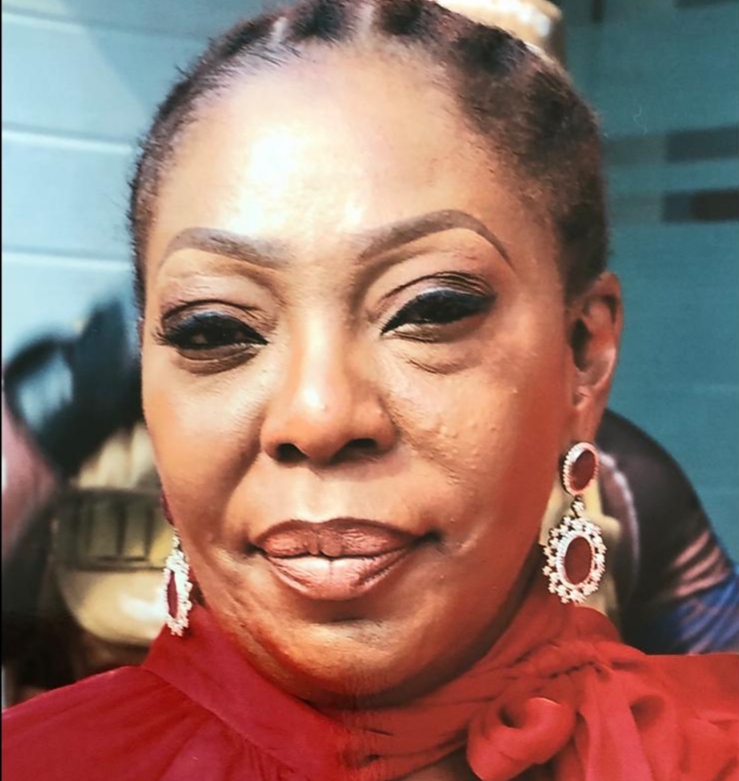
By Onikepo Braithwaite: The Advocate
Dr Olusola Saraki Memorial Lecture
I attended late Dr Abubakar Olusola Saraki’s 10th Year Anniversary Memorial Lecture in Abuja last Monday. The theme of the Lecture was “The Leadership and Followership Debate”; and the Guest Lecturer was Professor Patrick Lumumba, former Director of the Kenyan Anti-Corruption Commission; Director of the The Kenya School of Law.
He talked about our African leaders of old – Chief Obafemi Awolowo, SAN; Dr Nnamdi Azikiwe; the Sardauna of Sokoto, Sir Ahmadu Bello; President Kenneth Kaunda of Zambia and President Julius Nyerere of Tanzania. How the last two leaders, left office with the equivalent of only $4,000 & $8,000 in their personal accounts! A look at most African countries and their condition today, 60 years or more after independence, shows how badly most subsequent African leaders have done. Even South Africa which used to be the Europe of Africa, is now experiencing regular power cuts. Meanwhile, many of our African leaders have been quite successful at one thing – enriching themselves and their cohorts, while making the gap between the rich and the poor wider.A Bad Report: Weakened Institutions
Shining the light on our own country Nigeria particularly, it is obvious that most of the institutions that the British colonialists and our founding Fathers left behind, have been systematically eroded and destroyed by their successors in leadership. Chief Awolowo would be turning in his grave, if he could see what their Free Education Scheme of the 1950s has turned to today (I must also recognise Professor Stephen Awokoya as being part of the origin of the Scheme as well)! As imperfect as the 1999 Constitution of the Federal Republic of Nigeria (as amended)(the Constitution) is, its Section 18 provides for equal and adequate educational opportunities at all levels. However, successive leadership has destroyed our educational system with corruption, quota system, federal character etc. Additionally, while our supposedly free education is not entirely free, the quality has become rather inadequate and low. While Comrade Adams Oshiomhole was Governor of Edo State, it was common knowledge that he caught out a Primary School Teacher who could barely read! The Governor who was shocked, apparently asked the Teacher what she taught the children, and what she wrote on the blackboard if she couldn’t read! What kind of recruitment process was used, to the extent that an almost-illiterate was employed as a Teacher?
Most of our institutions have also been destroyed; we now have weak institutions and strong personalities. The output of our shaky institutions, therefore depends largely on the character and intellect (or lack of it) of the person-in-charge. If not that a country like USA has strong institutions, an unstable person like President Trump would have done irreparable damage to it.
For example, on January 27, 2017, President Trump signed an Executive Order prohibiting the entry of immigrants and non-immigrants for 90 days from certain countries from the date of the Order, citing protection of the American people from terrorist attacks by nationals of the banned countries as his reason. Though the Acting US Attorney-General at the time, Sally Yates was sacked by Trump as a result of her advice to the Justice Department not to implement the travel ban because it was unclear if the ban was legally defensible, a U.S. Federal Judge in Seattle issued a restraining order ordering a nationwide suspension of President Trump’s Executive Order, thereby reopening US borders to the seven countries mentioned in the Executive Order. Again, Trump tried every trick in the book to ensure that he got a second term, including inciting violence. Having failed to prove his spurious electoral malpractice allegations in any court of law because the Judiciary would not cooperate with his nonsense, Trump then tried to truncate the Congressional session headed by Vice President Pence to certify Joe Biden and Kamala Harris as the winners of the 2020 election. Some saw it as a failed coup attempt. Either way, Trump didn’t succeed, because America obviously has strong institutions; institutions that are stronger than any incumbent President. For one, the courts wouldn’t just find in favour of Trump, simply because he was the President. Can we confidently beat our chests, and attest to the fact that this is how it happens in Nigeria? I think not.
While the American Judiciary is obviously not perfect and they also have their bad eggs too, it is for the better part of it made up of fine, mostly qualified jurists. While a good number of our jurists may be top notch, can we say all of them are, when even the recruitment exercises into their positions are usually fraught with controversy?
Sometime between 2020 and 2021, during the recruitment exercise of Court of Appeal Justices, the former NBA President, Olumide Akpata revealed that some of the shortlisted candidates for the job were not familiar with the basic legal concept of ‘Lis Pendens’, and they were told that they would learn on the job! Is the Court of Appeal a Law Faculty or the Law School? Is it then shocking that there are conflicting judgements delivered at that level, when not all those being recruited to the Court even know the basics? How do you then apply what you do not know? Those who are placed in institutions which they are not qualified to be in, can only do one thing – weaken, and maybe even destroy the institution.
Presently, there is another exercise to fill up vacancies at the Court of Appeal. The President of the Court of Appeal invited prospective candidates to participate in a Computer Based Test last Friday, with a request that they bring their laptops or IPads to sit the test. We understand that such a computer based test, was successfully used to recruit Federal High Court Judges. Due to a protest by some people at a prior meeting that some candidates are not computer literate, the test was cancelled. Pray tell, what are people who are not computer literate in 2022, in the age of virtual hearings, electronic law, intellectual property etc; who are unable to carry out research by themselves at the drop of a hat on the internet, doing in such a crucial position as Court of Appeal Justice, when by now, we should be moving away from the outdated manual longhand court system to the computerised? If prospective Court of Appeal Justices do not understand basic legal concepts, nor are they computer literate, nor can they even access LPELR etc for themselves to look up the subject-matter or authorities on matters which are presently before them, or peruse law journals on the internet, then how properly equipped are they, to be in that role?
This is just another example of not putting our brightest and our best forward, whether it be in our institutions, judicial and executive offices, educational sector or even elective positions.
Politicians/Ministers etc were very much present at the Memorial Lecture. I didn’t know whether to laugh or cry, when someone pointed out one of the Government bigwigs to me, and said the person’s nickname in University was the translation of dullard in their language! While I cannot speak authoritatively for other African countries, I think I can safely say that our founding Fathers would be rather disappointed with what Nigeria and her institutions have become today.
“Those of us placed in a position of leadership must be prepared to grasp the nettle if we unite in doing so, and if, in addition, we set a worthy example and a Marat on pace in probity, unselfishness and self-sacrifice, the people will follow, all too readily, in our footsteps.” – Obafemi Awolowo. Unfortunately, our successive leaders have done quite the opposite instead, and set an unworthy example of corruption, kleptomania, greed, selfishness, self-centredness, ineptitude and partiality, amongst many other evils; and sadly, this disgracefully bad example, has been followed by many. Both the leadership and the followership would require something akin to positive brainwashing, to get back on the right track.
Criminal Defamation
As is typical of Nigeria, moving from one drama to another, the other day, I read that a young man, Aminu Adamu, who allegedly defamed/libelled the First Lady of Nigeria, had been arrested. I wrote about Libel and Slander a few weeks ago, and so my interest was piqued.
As I said on this page on November 8, 2022, defamation of character or an allegation of it is a Tort. In Oruwari v Osler 2013 5 N.W.L.R. Part 1348 Page 535 at 556 per Chukwuma-Eneh JSC, the Supreme court held thus: “Defamation as a tort, whether as libel or slander, has been judicially defined to encompass imputation which tends to lower a person defamed in the estimation of right thinking members of society generally, and thus, expose the person so disparaged (the Plaintiff) to hatred, opprobrium, odium, contempt or ridicule”.
However, Section 391 of the Penal Code (applicable in Northern Nigeria and Abuja) and Section 375 of the Criminal Code (applicable in Southern Nigeria) also provide for the offence of defamation of character, which is punishable by fine or imprisonment or both. Aminu Adamu was charged under Section 391 of the Penal Code.
There doesn’t seem to be much of a difference between the definitions of civil and criminal defamation of character; and, while it is trite law that where a matter has civil and criminal aspects, the criminal matter should be handled first, in the case of civil and criminal defamation, it is unclear as to the elements which qualify a defamatory utterance to be civil or criminal. It has been argued by some that where the matter is between individuals or companies, it should be civil matter; but, when it involves an individual and the State, then it should be criminal defamation. If this is so, then Aminu Adamu should not have been charged under Section 391 of the Penal Code, but it should have been a civil matter, seeing as the First Lady is not the State.
However, in a country where there are not too many hard and fast rules, it seems that it may be up to the Complainant to decide which one he/she wants to pursue, that is, civil or criminal. So, for example, if I was defamed by a billionaire, my best line of action would be to pursue a civil case to try to recover juicy damages (monetary), while if it is someone who lacks the financial muscle to compensate me, I would go for criminal defamation, so that he/she at least suffers in prison if convicted.
But, looking at Aminu Adamu’s case, assuming without conceding that it qualified as criminal defamation, should he not have been charged under Section 15(1)(a) & (b) of the Cybercrime Act 2015 (CCA) instead of Section 391 of the Penal Code, since his offensive publication about the First Lady was by way of Twitter, that is, electronic communication, which is more specifically covered by the CCA? If found guilty under the CCA, the Defendant would be liable upon conviction to pay a fine of not less than N2 million, or be imprisoned for a period of not less than a year, or both. Thankfully, the charge against 24 year old Aminu Adamu has been withdrawn.

By Laide Akinboade, Abuja
As part of efforts to reposition the newspaper for optimum corporate performance, the management of Asset Newspapers Limited, Publishers of DAILY ASSET, has announced the appointment of David Torough as the Editor of the Abuja-based national daily.
A statement by the management said the appointments were part of the company’s new strategy to further penetrate the various states in the country and raise its readership and patronage.
“DAILY ASSET is widely acceptable across the country and to maintain our leadership position, we need to increase management presence, hence the need to create new Bureau offices in some locations outside Abuja and Lagos,” the statement quoted the Publisher/ Editor-in-Chief, Dr Cletus Akwaya to have said.
In a statement yesterday, Publisher and Editor-in-Chief of the fast-growing daily, Dr. Cletus Akwaya said the appointment was part of the new strategy to properly situate the paper for better productivity.
“DAILY ASSET has a commitment with the Nigerian people. We are determined to weather the storm and give Nigerian readers a Newspaper that satisfies their yearnings and reading pleasure and we can only do that with the right set of professionals,” the statement said.
Akwaya, a former Commissioner of Information from Benue State said the difficult times being faced by Nigerians posed a great challenge to the media as the people deserved credible information with which to make choices.
“We have a bond with the people, to offer credible information at all times in the best tradition of the Nigerian Press and on this scale of objectivity, truth and fairness, we pledge to remain steadfast no matter the challenges,” Akwaya was quoted to have said.
He said the newspaper will maiantin its daily print run and circulation to all states of the federation and urged advertisers to take advantage of the deep penetration of the Daily Asset brand to send their messages.
Torough, the new Editor has had a steady rise in the Newspaper in the last five years.
A graduate of Mass communication of the Benue State University, Makurdi, Torough joined the company in 2022 as Benue State Correspondent. He was spotted for his brilliance and redeployed to Abuja the following year and promoted to Deputy News Editor. He was subswuently named Deputy Editor of the paper, a position he held until the recent appointment.
Torough has attended several journalistic workshops and trainings to properly equip himself for the task ahead.
The statement also said the Management named Eze Okechukwu as Deputy Editor.
Before his elevation as Deputy Editor, Eze has been Deputy Politics Editor and DAILY ASSET Newspaper correspondent covering the Senate, having joined the organization in 2021.
Born on March 10, 1975, Eze holds a Masters Degree in Mass Communication from the Enugu State University of Science and Technology.
Eze began his journalism career with Daily Star, Enugu and later worked with Daily Trust Newspaper, Abuja as sports reporter.
Aside from his journalistic excellence, he has a great deal of passion for sports.

From Ngutor Dekera, Kaduna and Aliyu Askira, Kano
Northern governors and traditional rulers yesterday called for the suspension of mining activities across the region for six months, blaming illegal mining for worsening insecurity in many states.The resolution was contained in a communiqué issued after a joint meeting of the Northern States Governors’ Forum and the Northern Traditional Rulers’ Council held at the Sir Kashim Ibrahim House, Kaduna.
The meeting, chaired by the Gombe State Governor and NSGF Chairman, Muhammadu Yahaya, had in attendance the 19 northern governors and chairmen of the 19 states’ traditional councils. The Forum expressed concern over the escalating violence in parts of the North, including the killings and abductions recently recorded in Kebbi, Kwara, Kogi, Niger, Sokoto, Jigawa and Kano states, as well as renewed Boko Haram attacks in Borno and Yobe.“The Forum extends its deepest condolences and solidarity to the governments and good people of the affected states,” the communiqué said, noting that the attacks on schoolchildren and other citizens had become “unacceptable tragedies” that required urgent collective action.It commended President Bola Tinubu for what it described as the Federal Government’s “firm response” to recent abductions and insurgency threats, especially the rescue of some abducted pupils.The governors also saluted security agencies for their sacrifices on the frontlines.“We resolved to renew our support for every step taken by the President and Commander-in-Chief to take the fight to insurgents’ enclaves in order to end the criminality,” the Forum stated.A major highlight of the meeting was the North’s renewed push for the establishment of state police, with governors and traditional rulers insisting that decentralised policing had become inevitable.“The Forum reaffirms its wholehearted support and commitment to the establishment of state police,” the communiqué added, urging federal and state lawmakers from the region to “expedite action for its actualisation.”On illegal mining, the governors said criminal mining networks were fuelling violence and providing resources for armed groups.As a corrective measure, they asked Tinubu to direct the Minister of Solid Minerals to impose a six-month suspension of mining activities in order to allow for a full audit and revalidation of licences.“The Forum observed that illegal mining has become a major contributory factor to the security crises in Northern Nigeria. “We strongly recommend a suspension of mining exploration for six months to allow proper audit and to arrest the menace of artisanal illegal mining,” it said.To strengthen the fight against insecurity, the governors also announced the creation of a regional Security Trust Fund.Under the proposed arrangement, each state and its local governments will contribute ₦1bn monthly, to be deducted at source under an agreed framework.They said the fund would help provide sustainable financing for joint operations, intelligence-driven interventions and coordinated security responses across the region.At the end of the meeting, the Forum reaffirmed its commitment to unity and collective responsibility.“Only through unity, peer review and cooperation can we overcome the pressing challenges before us,” it declared.The Forum agreed to reconvene on a date to be announced.Meanwhile, Nigeria’s worsening security crisis took a grim turn on Monday as bandits launched fresh attacks in Kano State, abducting 25 villagers, even as the Federal Government raced to secure the release of more than 300 Catholic school children kidnapped in Niger State.In the early hours of Monday, armed bandits invaded Unguwar Tsamiya—popularly called Dabawa—in Shanono Local Government Area of Kano State, whisking away nine men and two women after shooting into the air and assaulting residents. The attackers also rustled two cows.A resident lamented the community’s helplessness: “We cannot do otherwise; most of us cannot leave because we have nowhere to go. This is our place, our land and everything is here.”The assault came less than 24 hours after a similar attack on Yan Kamaye in Tsanyawa LGA, a community along the volatile Katsina border.In Niger State, National Security Adviser Nuhu Ribadu has assured distraught families of St. Mary’s Co-Education School, Kontagora that the more than 300 students and staff abducted on November 21 will return home “soon.” Ribadu, who led a high-level federal delegation to the school on Monday, said the abductees are safe, though he offered no specifics on their location or the status of rescue operations.According to Daniel Atori, spokesman for the Catholic bishop overseeing the school, the NSA reassured officials: “The children are where they are and will come back safely.”The St. Mary’s attack is part of a worrying resurgence of mass kidnappings reminiscent of the 2014 Chibok schoolgirls’ abduction. Security analysts warn that banditry has evolved into a “structured, profit-seeking industry,” with hundreds of Nigerians abducted in November alone.The Kontagora school abduction occurred the same week 25 girls were kidnapped in Kebbi State—victims who authorities say have since been rescued through “non-kinetic” means. About 50 of the St. Mary’s hostages have also managed to escape.Ribadu’s delegation, which included the Minister of Humanitarian Affairs and the Director-General of the Department of State Services (DSS), reaffirmed the government’s commitment to securing the freedom of all abducted citizens.As communities from Kano to Niger continue to bear the brunt of these violent incursions, the escalating spate of kidnappings underscores the urgent national demand for a more decisive and coordinated security response.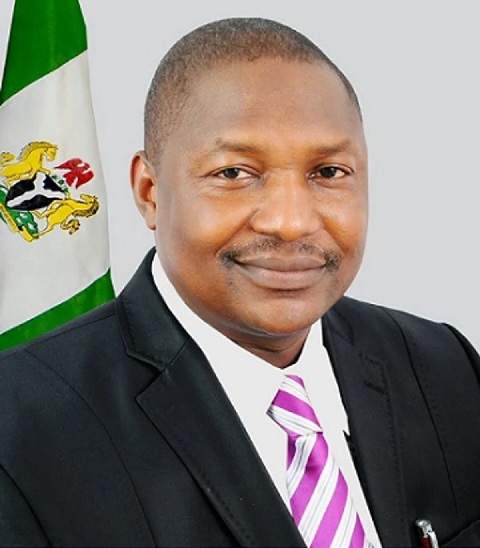
By David Torough, Abuja
The Economic and Financial Crimes Commission (EFCC) said former Attorney‑General of the Federation and Minister of Justice, Abubakar Malami, will face a team of interrogators at its office daily throughout December.A credible source in the EFCC said on Monday that the daily appearance was part of an ongoing investigation into the whereabouts of an alleged 490 million dollars Abacha loot secured through a Mutual Legal Assistance (MLAT) request.
The source said that Malami, who was summoned for interrogation by the EFCC on Saturday, was barred from leaving Nigeria for the next one month.According to the source, one of the conditions for his release on Saturday was that he should report daily to the EFCC Headquarters in Abuja for further interrogation.The source said Malami would have to appear daily at the anti-graft office due to the volume of the investigation and the seriousness of the charges against him.”We seized his passport, it is the normal routine during investigation, but he has to report at the EFCC headquarters in Abuja every day for the next month.”He will be reporting for further investigation throughout December.”He will be reporting every day, starting from Dec. 1st to Dec. 31st.He will appear before the team of investigators for the entire month of December.”He will be reporting to EFCC for investigation for the period because of the volume of the investigation and the seriousness of the charges against him,” the source added.According to the source, a fact sheet on the former minister revealed that Malami had several issues to clarify with the EFCC within the coming weeks.“We have asked him to explain the whereabouts of the $490 million Abacha loot secured through MLAT.“We didn’t say he stole money, but he should account for the loot. This is one of the issues he will clarify to our investigators.”The commission cited the large volume of documents he must review and the need for extensive interviews as reasons for seizing his passport.The source said EFCC would not engage in a war of words but would release its findings after a thorough investigation.Malami, in a statement by his media aide, Mohammed Doka, on Monday in Abuja, however, described the EFCC investigation as a political witch‑hunt.He confirmed he honored an EFCC invitation on Nov. 28, describing the engagement as fruitful and expressing confidence that the probe would vindicate him.Malami described the EFCC’s allegations as baseless, illogical and devoid of substance, insisting they collapse under factual scrutiny.

Group Backs Tinubu, Urges Sule to Run for Senate
ShareFrom Abel Zwanke, Lafia The Chief Executive Officer of the Community Initiative for Character Moulding and Entrepreneurship Development (CiCMED) and...
Ooni Installs Oluremi Tinubu as Yeye Asiwaju Ile Oodua
ShareFrom Ayinde Akintade, Osogbo The Permanent Chairman, Southern Nigeria Traditional Rulers Council (SNTRC), Arole Oodua Olofin Adimula and Ooni of...


NYSC Presidential Honor Award Winner Returns to Benue, Shows Appreciations
ShareFrom Attah Ede, Makurdi An ex- corps member and a recipient of Presidential Honour Award, Udokpo Abasi, at the weekend...


NGO Launches Climate Project Steering Committee in Benue
ShareFrom Attah Ede, Makurdi A global Non-Governmental Organisation (NGO), International Alert has inaugurated Climate Project Steering Committee in Benue State,...


A silent Emergency: Soaring Costs of Diabetes Care Spark Alarm
ShareBy Folasade Akpan For Mrs Schola Effiong, a 58-year-old confidential secretary in Calabar, managing diabetes in today’s economy feels like...


World Bank, Partners Record Progress Toward 1.5bn Healthcare Goal
ShareThe World Bank Group, global partners and countries on Saturday announced continued progress toward the goal of delivering affordable and...


UN Commits to Strengthening Nigeria’s Policy Framework, Enhancing Digital Safety
ShareThe UN Women has reaffirmed its commitment to strengthening policy frameworks, enhancing digital safety, and promoting accountability for online harms...

Nightclub Fire in India’s Goa Kills 25 People
ShareA fire at a popular nightclub in India’s coastal region of Goa has killed 25 people, local officials say. Police...


Hong Kong votes in Election as City Mourns Deadly Fire
ShareHongkongers are voting in an election seen as a test of public sentiment following a deadly fire that angered some...


PDP Crisis: Wike Camp Moves to Conduct Fresh Congresses, Convention
ShareBy Laide Akinboade, Abuja The factional Board of Trustees (BoT) of the Nyesom Wike tendency in the Peoples Democratic Party...