
interview
The Secret to Raising Children with Special Needs Without Exhaustion

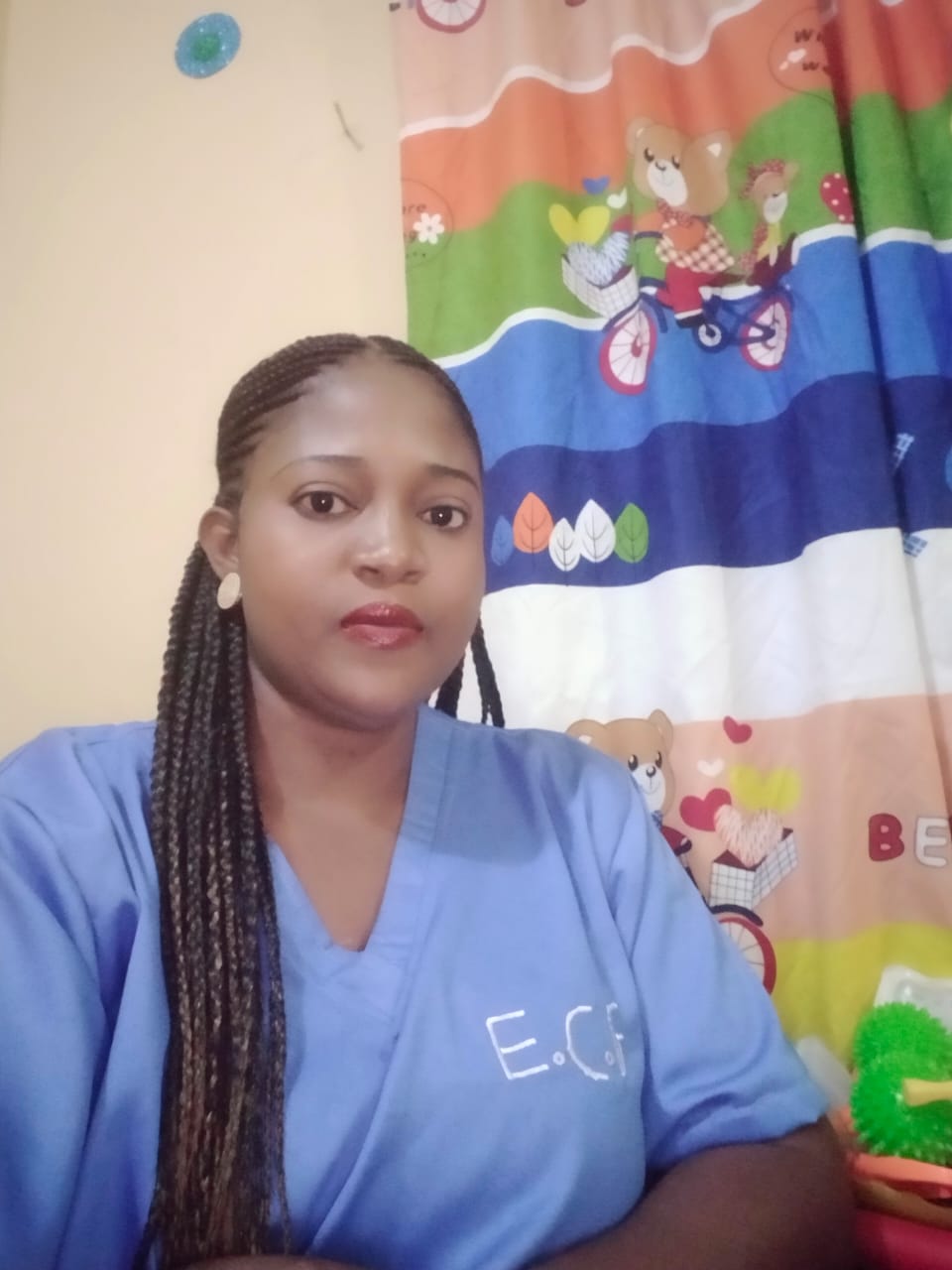
Raising a child with special needs in Nigeria can be extremely tiring for most parents. They also have to deal with strange ideas and theories about what caused their child’s condition, which leads to being excluded from society.
In a recent interview with DAILY ASSET News Editor, Prosper Okoye, the Executive Director of Elsali Care Foundation, Goodnews Emeka-Agadah, discussed the severe consequences faced by these children and shared her secret for managing the stress of caring for them, among other topics.
What is your foundation about?
Elsali Care Foundation was born out of a passionate drive that began during my national youth service days.
At that time, I encountered parents with children who had special needs, and many of them were unaware of their child’s condition or the care they required. Consequently, they would confine their children at home, awaiting their eventual death.I was able to offer assistance in some cases due to my familiarity with the conditions affecting such children, as I had a cousin who had a child with cerebral palsy, a kind of special need. Regrettably, society has yet to comprehend the distinctiveness of these children. My cousin lost her marriage due to her child’s condition, as people attributed the child’s condition to her own wrongdoing, claiming it was retribution catching up with her.
After completing my service, I joined a non-governmental organization that catered to orphans and vulnerable children, but they provided no support for children with special needs.
Upon observation, I discovered that there are numerous such children in society, and their parents are struggling. Many of these parents are unaware of their child’s condition or where to seek help. It was at this point that I told myself, “I possess significant knowledge about this condition, so let me step in and assist them.” That is how the foundation was established.
We advocate for these children since they are vulnerable and unable to advocate for themselves. We are consistently present for them, providing them with protection. Our primary focus is helping these children realize their potential.
Because we’ve known that when they receive proper care from an early age, there can be a significant improvement that enables them to maximize their potential and lead fulfilling lives.
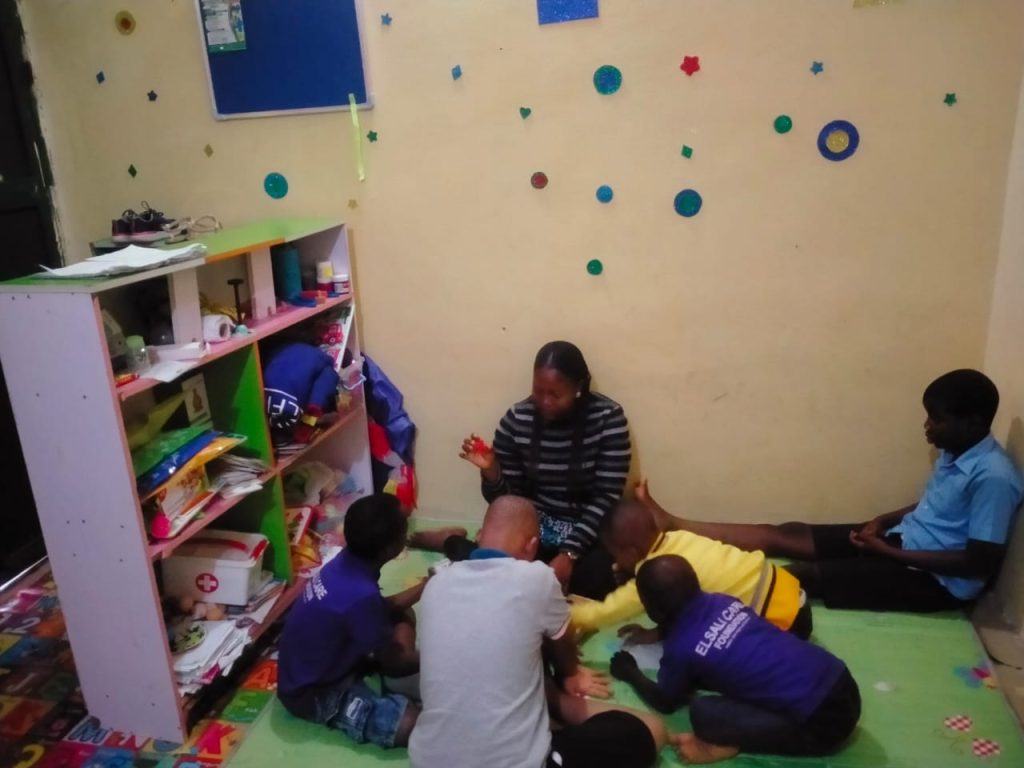
We offer them clinical therapy, educational support, occupational therapy, physical therapy, and behavioral therapy.
We also aim to incorporate vocational support, as it is through this avenue that they can acquire skills to become more valuable members of society. However, currently, we do not possess the capacity to do so.
How can we identify a child with special needs?
Special needs is a term that encompasses both physical and neurodevelopmental disabilities. In our foundation, we primarily focus on children with neurodevelopmental disabilities, such as autism, Attention-deficit/hyperactivity disorder (ADHD), learning disorders and others.
In more concrete terms, although very unfortunate, society often perceives children with special needs as unintelligent because some may have difficulty speaking, while others may exhibit hyperactive and destructive behaviors.
Regarding physical disabilities, we refer to children who are physically impaired, deaf, or nonverbal.
How do you support orphans since you don’t have a home in your facility?
Apart from the special school center, the foundation takes part in community programs. During these programs, we come across some children who, just by looking at them physically, we know need help. And when we dig deeper, we find out that their parents have passed away, and they live with their relatives.
These are another group of children we work with. We assist them through the relatives they live with. For those who are not attending school, we help them get back into school.
Honestly, when it comes to providing for their nutritional needs, I must say we do very little due to lack of funds.
They appear undernourished, but in our small way, we provide them with some provisions through their caregivers because you can’t talk about children without considering their caregivers.
What has the journey been like so far?
We’ve been working behind the scenes since 2013, and we have many memorable success stories. Actually, every child we help is memorable because when we first meet them, their situation is very sad.
Sometimes it’s so bad that we can’t help but cry, especially when we see their parents’ tears and frustration.
Most parents tell us that their child was born healthy, just like any other child. But around the age of one or two, the child starts losing all their thinking and learning abilities.
The parents feel very frustrated and wonder if it’s some kind of magic or curse from their village. But after talking to them, they start to understand over time.
Despite the financial burden and surprisingly, the negative attitude from the public, we keep going because of the many successes we’ve achieved over the years.
For instance, when we go to some places to raise awareness about this condition, we often face rejection because people think these special children don’t belong there.
But they don’t understand that other children, in fact everyone else should learn how to relate to and treat children with special needs.
These children face discrimination from their own relatives and other children who should be their friends.
Some schools don’t want to accept them, and even when they do, they keep them separate from the other children.
We object to this unfair treatment and try to make people understand that they need to think like the special child does to understand why they act the way they do.
We have an amazing story of a 15-year-old child with Down syndrome. When he first came to us, he couldn’t do anything. We started helping him by teaching him to use the toilet because it was so bad that he would eat his own waste if left alone.
We also did many other therapies with him, and within just a few months, he started improving some of his behaviors. We even managed to help him stop using diapers.
There are other numerous success stories like this one. Indeed, just knowing that we could help a child and ease the burden for their parents brings us a lot of happiness and fulfillment.
What exactly could cause a child who is born without any issues to experience regression?
It is a neuro-developmental issue. It’s similar to when we have malaria and experience certain symptoms. For some children with autism, we notice these symptoms, which we refer to as red flags, as they grow up.
It is a condition that exists within them and influences their behavior, not something caused by external factors like their village people.
Some regressions can be attributed to a lack of essential vitamins or the presence of excessive mercury in their bodies. Others may be linked to low levels of certain microorganisms.
While ongoing research is being conducted, some regressions can be traced back to genetic conditions.
Additionally, problems during delivery, such as improper handling or prolonged labor, can also contribute to regression. The age of the parents can also play a role. Older parents have a higher likelihood of having a child with Down syndrome.
How do you cope with exhaustion while taking care of these children?
The issue of children born with special needs is of utmost importance to address as a matter of public concern. Approximately 10 out of every 50 children born each year are likely to have some form of special needs.
Furthermore, it is expensive and challenging to solely provide care for these children, even for parents with substantial resources.
We face numerous challenges as an organization, but the primary one is the lack of public awareness, which leads to stigmatization.
We require assistance in raising awareness to inform the public that these children with special needs are just as human as anyone else. They have emotions and experience pain.
Additionally, there is a need for improved implementation of policies by the government. While laws and policies exist to prevent discrimination, there is a lack of mechanisms for effective implementation.
Furthermore, we lack sufficient personnel in this field. Several individuals have come to work and volunteer to help the children, but they often cannot stay due to the demanding and strenuous nature of the work. In some cases, it is because the remuneration is not adequate for them, but we can’t help it because of the unavailability of funds.
For me, what prevents exhaustion is the love I have for what I do. If I were not motivated by financial gain, working with children with special needs would still be a job I would choose and strive to excel at. I see them as my own children.
However, I cannot do this job alone; we need stakeholders to assist us in extending these services to rural areas and other hard-to-reach places.
We require funds to train and motivate individuals to join us in the mission of reaching out to these special children, as it is not their fault that they were born this way.
It is also crucial to train parents on how to raise these children.
We must raise awareness in society to create more inclusive opportunities in schools, workplaces, and all other spheres of society.
We need more partnerships.
Children with special needs can grow up to become professionals, although they may lean more towards artistic pursuits and display greater inventiveness. Many celebrated musicians and footballers, such as Ronaldo, were actually children with special needs. Therefore, early interventions are crucial as the brains are still developing.








By Hajia Hadiza Mohammed
When political philosophers say that every society deserves the kind of leadership they have, I think they have a country like Nigeria in mind. Nigeria is a country under the throes of bad leadership. Everybody bemoans the terrible state of the country and yet nobody wants to do anything about it.
Nigerians seem to accept hardship as a way of life and aberration as the norm.The next election cycle is around the corner and while the politicians scheme about how to subvert our electoral will, the electorate remain nonchalant.
First, Nigerians have watched helplessly as the ruling APC try deviously to infiltrate, disorganize and dismantle the opposition to turn the country into a one-party state.
Secondly, the ruling APC has given us a clear signal of how it plots to rig the forthcoming general election by excluding electronic transmission of election figures from the polling units directly to the INEC server in the so-called electoral bill and we responded feebly.The outcome of the FCT local council election on February 21 was a precursor of what to expect from the lethargic voters and the desperate APC regime in the 2027 general election. Nigerians and the opposition kept mute at the flagrant abuse of electoral process during the said election.
Nigeria is a country where the citizens tolerate everything from public office holders. The electorates will fold their arms and allow their will be subverted flagrantly at the polls by unscrupulous politicians who will usher in a reign of terror.
After which they will groan and wail but at the next election, they will allow the same rigging to be perpetuated and the vicious circle continues. The Nigeria citizens live in pain and penury and yet celebrate those who put them in such pitiable condition. The government policies and actions have created chronic youth unemployment and yet the so-called unemployed youths gather to cheer those responsible for their joblessness and are willing to work for their continued stay in power as if they cherish their vulnerable condition.
The youths make themselves willing tools for electoral malfeasance, thuggery, counter protests and other forms of violent behaviors for those in power. The impoverished rural dwellers bow and cheer whenever the wily politicians visit, especially during electioneering periods with cups of rice and other hand-outs.
Our respected traditional rulers decorate our corrupt politicians with titles supposedly meant for performers and people of honor and integrity. And almost every elected or appointed public officer, except those that decline the offer, has one form of title or the other from our traditional rulers and custodians of our cultural values. And even our revered religious institutions and private establishments like media houses are also guilty of honoring our corrupt politicians with undeserved recognitions and awards.
The implication of lavishing underserved societal recognition and awards to our political office holders is grave. It gives the wrong signal; it tells the recipient who has not done anything spectacular to deserve the awards that he or she is doing well. And when one who is not doing well is praised, he is directly being told to continue in wrong doing.
Ignorance is one of the reasons why Nigerians seem to praise and celebrate those who foist hardship on them. The majority of the members of the public are not properly enlightened about the purpose of leadership and governance.
Nigerians are divided along ethnic and religious lines. Those who claim to know politics are fixated about having their tribesmen or members of their faith in power. In Nigeria it is almost an abomination to criticize or attack your tribesman in office no matter what he has done and to some it is a haram to attack members of your faith occupying public office because it is God that put him there.
The Nigerian public is clearly ignorant about civil responsibility and public accountability. When a public officer serves and comes out without enriching himself materially, he is seen as a fool. And when you criticize those who embezzled public funds some will say that you are jealous of them.
Another problem of the Nigerian public is poverty. Poverty and lack has made the Nigerians vulnerable and subject to manipulations. It is poverty that makes it possible for vote buying and inducement. It is poverty that makes it possible for those in power to mobilize jobless youths to do counter protests and to use them to rig elections.
Thus, the twin problems of ignorance and poverty are the bane of the Nigerian nation. Ignorance makes Nigerians unaware of their inherent rights and responsibilities and inhibits their ability to hold their leaders accountable. Poverty makes Nigerians vulnerable and malleable.
Those in power know these factors and have continued to use to wangle their ways. Thus, they will design policies that will pauperize the people to make it possible to use them. The government has bluntly refused to invest in human capital development and wealth creation in order to keep the people perpetually ignorant and poor.
The day the people get enlightened and shake off the yoke of ignorance, they can forge a formidable force that will make them demand their rights. This is the truth that those in power dread.
Hajia Hadiza Mohammed, An actress, social activist, politician/ London, UK. hajiahadizamohammed@gmail.com
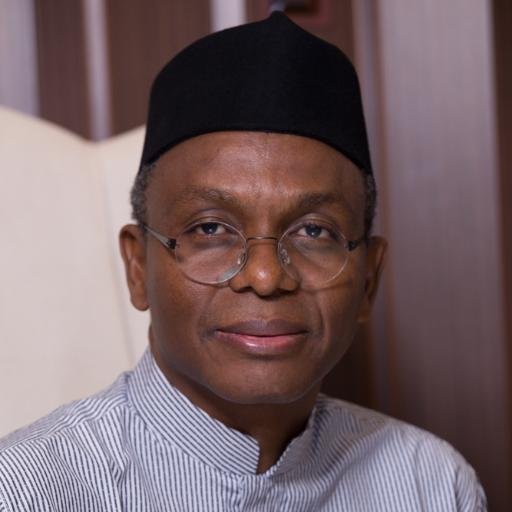
By Jacob Edi
Mallam Nasir El-Rufai has re-emerged on the national stage with his familiar intensity, and in a recent interview on Arise Television, the former Governor of Kaduna State made assertions of such gravity that they transcend partisan banter.
He alleged that the telephone of the National Security Adviser, Nuhu Ribadu, was intercepted and that he listened to conversations purportedly discussing plans to arrest or abduct him upon his return to Nigeria.
When pressed by the interviewer, Charles Aniagolu, on the illegality of such interception, he reportedly acknowledged the infraction but rationalised it on the premise that government actors “also listen to our calls.” This is not trivial.The principle of onus probandi, the burden of proof, is neither decorative nor discretionary. It is foundational to jurisprudence and civic order.
A former governor alleging criminal surveillance at the apex of Nigeria’s security architecture is not engaging in political theatre; he is levelling claims with constitutional, criminal and diplomatic ramifications.
If, as suggested, a private individual unlawfully tapped the line of a sitting NSA, the issue extends beyond personal grievance. It signals a potential breach of national security protocols.
More troubling still is the admission of benefiting from such interception. One cannot simultaneously assume the posture of an aggrieved victim and detached beneficiary of an acknowledged illegality. The law does not indulge moral equivalence.
In the same interview, El-Rufai alleged complicity by former Kano State governor, Abdullahi Umar Ganduje, in the 2019 disappearance of Abubakar Idris, known widely as Dadiyata. Ganduje has denied the allegation and countered that questions regarding the incident should be directed at El-Rufai, under whose governorship the disappearance occurred.
Here, too, conjecture cannot substitute for proof. Political rivalry may generate motive on multiple sides, but courts adjudicate on evidence, not inference. Allegation without substantiation is not accountability; it is destabilising rhetoric.
There is, moreover, an unavoidable moral paradox. During his tenure in Kaduna, El-Rufai was repeatedly accused by critics of executive high-handedness. His administration was characterised by an assertive, sometimes abrasive, conception of state authority.
He defended that approach as necessary decisiveness in a volatile environment.
It is therefore difficult to reconcile that record with his current presentation as a sentinel against state overreach. The rule of law cannot be invoked selectively; moral consistency cannot be seasonal. This tension is not novel in his political evolution.
Former President Olusegun Obasanjo, under whom he served as FCT Minister, described him in his memoir as intellectually formidable yet temperamentally deficient, questioning his steadiness for higher office while acknowledging his technocratic competence.
Subsequent political fallouts with the late Umaru Musa Yar’Adua, with Goodluck Jonathan, and later shifts in allegiance involving Muhammadu Buhari and Bola Ahmed Tinubu, reinforce the perception of a political career punctuated by rupture, often at moments of thwarted ambition.
Politics is inherently dynamic; alliances recalibrate. Yet when each rupture appears to coincide with personal disenchantment, public scepticism is inevitable. It becomes incumbent upon the principal actor to demonstrate that principle, not grievance, animates his dissent.
None of this forecloses the possibility of governmental excess. Democracies demand vigilance.
But vigilance is anchored in evidence. If El-Rufai maintains that institutions are weaponized against him, he must submit his own claims and admissions to the same institutional scrutiny he demands of others.
For a statesman of his experience to make such disclosures on national television, while conveying an air of defiance, is disquieting.
He is sufficiently versed in the fragility of Nigeria’s security ecosystem to appreciate that public assertions of this magnitude reverberate beyond partisan contestation.
Undermining confidence in national security structures, whether advertently or inadvertently, carries implications far graver than personal rivalry.
Government’s response, therefore, must not be animated by vindictiveness but by duty; by the imperatives of precedent, deterrence and institutional integrity. If a telephone was indeed hacked, those responsible must be identified and subjected to due process. If the allegation is unfounded, that too must be established transparently.
El-Rufai should be required to disclose the identity of any individual who unlawfully accessed the NSA’s communications.
Likewise, both he and Ganduje must account fully for whatever knowledge they possess regarding the disappearance of Dadiyata since 2019. The unresolved absence of a citizen cannot be reduced to a rhetorical device in elite political quarrels.
History has a way of retrieving buried testimonies.
Individuals such as Luka Binniyat, who endured harsh and inhuman treatment under El-Rufai’s Kaduna, may yet add their voices to the broader narrative of power and accountability.
Nigeria deserves sobriety, not spectacle. Public confidence in state institutions is too delicate to be imperilled by unguarded declarations. The integrity of the Republic must not be rendered vulnerable to rhetorical recklessness.
In the final analysis, the burden of proof rests where it has always rested; on the one who asserts.
JacobEDI is a public affairs commentator and strategist and writes from Abuja.
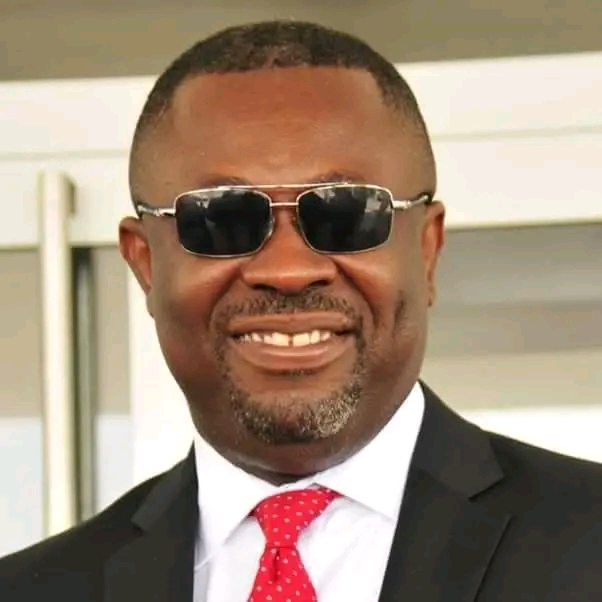
Onoriode Kelvin Akpe, is the Director General of the Bayelsa Governor’s Cup otherwise known as Prosperity Cup, his involvement in grassroots football talents hunting and development over the last 9 years, has yielded tremendous results. Akpe hasbeen the brain behind Bayelsa State Governor’s cup Tournament where several young talents discovered are already playing professional football in different leagues across Nigeria, Africa, Europe and other parts of the world.
In this interview with Daily Asset South South Bureau Chief, Mike Tayese beared his mind on the achievements so far, the talents discovered, other plans and issues that is of public interest.You conceived the idea of Bayelsa governor’s Cup in 2015, nine years after how has it been?
First, I want to thank the Lord Almighty for this vision to organize the Bayelsa Governor’s Cup, we actually tried to put it together in 2014 but we couldn’t, we finally hosted it in 2015, it was burnt out from the resolved of government appointees to involved in physical
activities, at a stage we realize that the passion which we exhibited and was supported by the youths of Bayelsa State was the enormous passion and skills that abound in the state, we believed that this talents were going to waste if not properly harnessed, so I and other came together and put this tournament together to see how it will help engage our youths in football talents development, so we put our own resources together to kick-start it and after we started the activities, we got the buying in of the government, Governor of
Bayelsa State then, Senator Seriake Dickson supported us and we start the first edition in Nembe, because Sampson Siasia stadium was under renovation at that time, since then the competition has been very interesting, very exciting but equally very challenging because the more the tournament grows, the more the issues.
Nine years after, what have been the results achieved with the governor’s Cup, in terms of talents discovery?
I will use this opportunity to go through a small trajectory of the tournament, first after the 2015 edition, we had the 2016 edition and the 2018 edition and then 2019 edition which was the most successful, because then Minister of Sports, Sunday Dare came in and was invited as a special guest in the final, when he saw the participation of the youth teams, he described it as a ‘largest grassroots football tournament’ which has been a name that has stacked to the tournament.It is a largest football tournament in Nigeria and in Africa with the number of teams that have registered for it, in that edition, we sent a select team of players to Cape Verde, African Youths Cup and that team came third in the whole of Africa, that was an enviable feat, that team came back and we kept them in camp and they eventually played Bayelsa League Cup and against all odd they beat all fancied teams to
emerged winners, so that really encourage us to know that youths of Bayelsa have lots of talents to be develop and propel to the greater heights and so we continued with it in the new administration of
Senator Douye Diri, and I must really commended the governor who was a commissioner of sports in the previous administration for his unravel commitment to the development of sports, especially football and the prosperity cup. When he came in, he first sent for me and asked how the arrangement for the tournament and I briefed him, and he said he was interested to ensure that more youths of Bayelsa are developed and propel to greater heights in their chosen career, then we started to build the tournament around the talents discovery and pushing the discovery talents to greater heights, that is why coaching talents scouting programmes were further expanded and developed to ensure we get the best for our youths, you could recalled that even from the 2015 edition, you have exciting players like Okardi, who was our most valuable player, his team won the pioneer cup and he went up to play for other teams before going abroad, he is in France now playing professional football, we have Nestor who is in Bosnia, we have quite a lot of others abroad, so that trajectory coming to this administration, so we have some scouting programmes, we have scouts from all over Europe and even Africa including South Africa coming to scout our players and we have seen quite a bit of success in that, so our players are there in Europe, we have some in Egypt, we have some in West Coast, in fact there is a core team of Bayelsa United that is make up of talents from this tournament, and one of the most prolific scorers in Bayelsa United, Basil was one of the players we discovered from Brass team, the Bayelsa United team is primarily made up from identified talents from this competition.
So, we must say that our talent discovery process has yielded great number of dividends and fruits, so, the last edition, we were equally blest to have the NFF president and his board in attendance, they saw exciting football which is favorable compare to the NPFL in the final match, and I must say that the final match was so interesting that the most valuable player of the tournament, Akpos Godbless and the highest goal scorer, Junior Christopher were immediately scouted, spotted and signed by the Bendel Insurance, so that was one exciting thing for the
last edition.
What about the scouting programmes?
In the past few years, we have also organized various scouting programmes alongside the tournament. In 2022, we hosted Gregory Paul of ASPIRE Football Academy from France, Passi Gerald of Olympique Marseille, Thembele of South Africa and a team from FDC VISTA Academy Russia including; Nikita, Poliakov, Dimitri Churkin, National team coach, Kennedy Boboye and Imama Amapakabo amongst others. In 2023 the LOC sponsored two teams of 40 players and officials to participate in international scouting tournaments organized by SPOCS a German Sports firm, at Remo Academy in Ikenne and Abuja. We also organized two scouting programs in Yenagoa with teams from the South-South and South-East participating. A total of 10 players have been selected for professional football abroad. Two players are presently engaged in the SPOCS Academy in Gambia and two others are billed to sign juicy contracts in the premier league in England.
A number of players have been scouted from this competition and now play in different clubs all over the country. In Bayelsa United, about seven players are currently there with the team. The likes of Gabriel Biriduba, Bob Philip, Monday Bassey and Biweribo Tarabina – Vice Captain of the team and Christian Mizo who only recently moved to Al Hilal in Libya, all featured in the competition. Junior Christopher and Akpos Godbless the highest goal scorer and MVP of the 2023 edition respectively now play for Bendel Insurance, while Endurance Ebedebiri plays for Rivers United. The likes of Egah Saviour, Prince Ebiobowei, Onyesom Precious, Bright Peremene and others who have gone abroad, equally played in the previous editions.
How have you been able to manage this tournament?
The tournament started in 2015 with 110 teams, now we have over 200 teams that are playing, last year we introduced the female and para-soccer editions, so we now have three tournaments in one, the female edition started with just four teams last year, now we have over 20 registered teams in the tournament which is equally another impressive development which I’m proud of, in both female and male edition we have depth of talents in the state that are clearly well harnessed and will be able to do great things for the state in terms of professional career in football, of course from the last edition, we begin to see some other female discovered talents being invited to Bayelsa Queens and other clubs that they are plying their trades, and we hope that this year, more will be discovered and developed to ply their trades in football. This year, we also introduced another novelty, that is the local government finals and in all the local government we went to, we saw great talents.
Do you consider introducing age grade competition into the tournament, for U13 or U14?
First and foremost, the basic idea of this tournament is for community development and interaction, to make sure there is inter-community
engagement, there is peace and tranquility, there is relationship between various communities in the state, and because of that focus, we have teams from various states of the country who are resident here partaking in the tournament, so with that, we did not instill an age grade process, because we want everybody who is interested in playing football at the community level to play, however, our talents hunt process is to discover the youths of Bayelsa from the ages of 14, 15, 16 to the ages of 21, but while the tournament is going on, our focused is discovering young talents, and we try to ensure that the teams have such age-grade players, Russian group came into Bayelsa two years ago for talents scouting, but now, we are having the ones between 18 and 21, by 1st of July 2024, ten international scouts, eight from Europe, two from Nigeria are coming for scouting programmes, to identify talents and see as many they can take. So if ten scouts come here from Turkey, Finland, Sweden, Norway and Holland, etc, if they come here and see our talents, with what we have, there is no how we cannot have 5 or 6 players taking away from the state to play professional football abroad.
What are the exciting things that you observed in the ongoing edition compare to the previous editions?
We have talked about the three editions in one that we have here presently, based on the pressure to enhance the capacity and skills of our players and officials, we introduced the referee course, that was done in May, we brought in international referee facilitators and accessors from the referees’ council to Yenagoa to organized a refresher course for the referees preparing them for the tournament, they sharpened their brains in the recent updates in refereeing and football, it was very exciting, it has greatly improve the quality of officiating in this tournaments, secondly, apart from a scouting
programme, we have introduced a coaching clinic, we did it last year, it was very small but this year, we make it big, we have international scouts and licensed coaches coming from Europe and they are going to put our coaches through two days of the classroom workshop and equally on the field here, they will do something like that, so the one on grassroots coaches is one of the most exciting because we have a lot of coaches who on their own are forging on, they are developing their
skills, they are making sure things are going on well for them, but one of the things these international coaches are coming to do is to help them developed themselves on football management, team management, team relationship, etc, we are having a basic coaching clinic for them, and that will start from 1st July, 2024, we will start with 50 coaches.
The ongoing edition is about entering round 32, how is the tournament going?
In the round of 32 which is going to come up in another few days, we have very exciting teams that have qualified, we have two teams from each local government that qualified but Yenagoa having eight centres, they have about 16 teams that will go into round of 32, so they will slug it out until they get to the round of 16, then the final which has been proposed for the 19th of July, depending on the availability of our special guests.
Looking at the future, how do you intend to see this tournament?
Prosperity Cup has turned into a brand, it is a brand that is known globally now, we got calls from Europe, from UK, from Germany, in fact we have a preposition to take our players to Ghana in a tournament organized by German organization this year, we also have preposition to select some players and take them to Portugal, so all these things are in the cards and the table, but we are looking out for a time when we will have a brand sponsor that will take over the sponsorship of this tournament, without government putting any reasonable resources,
maybe just the trophy and prize money, we are looking for the brand sponsor that will take up the bills and make sure that youths of Bayelsa pull of the streets and begin to be gainfully engaged, because this tournament has a lifespan of almost 6 months, so we will like to call on the corporate world, the oil multinational companies to key into this tournament to engage our youths, but with the promise of Governor Douye Diri, who has given us all the supports, we think that we should have at least ten community fields develop, which he has promised, at least one in every local government area, because if the players play in a very standard field, their level will increase, which is a very good sign, so once you have these ten community fields, you can imagine what happened in these fields every evening or early in the morning, you have people running, going athletics, playing football, basketball, doing aerobics and weightlifting, you
will discover that in every community field you will have over 200 people engaged daily, that means you are taking 200 youths off the streets, we also want to see our players in national teams, Super Eagles, Flying Eagles and the Golden Eaglets, so these is what we are trying to do, to develop our players to feature in local and international clubs, these are the vision of this project, last year, two of our player went abroad, one was signed in by Nottingham Forest for a trial, we believe by this summer we should have a feedback for his acceptance, we are really excited and believe the best is yet to come for Prosperity Cup and Bayelsa Governor’s Cup.


INC Elections: CITRE defends suspension of polls, insists on constitutional order
Share From Mike Tayese, Yenagoa The Council of Ijaw Traditional Rulers and Elders (CITRE) has defended its action suspending the election...

UN Secretary General Visits Benue Condemns Incessant Attacks On Communities, Killings.
ShareFrom Attah Ede Makurdi United Nations Deputy Secretary-General Dr. Amina Mohammed, on Friday condemned the incessant conflicts killings in Nigeria,...

President Tinubu commissions 60 megawatts gas turbine, other projects in bayelsa
ShareFrom Mike Tayese, Yenagoa The much awaited 60 megawatts Gas Turbine embarked upon by the administration of Governor Douye Diri...
Ijaw Traditional Rulers, elders suspend INC elections
Share The National Conference of Ijaw Traditional Rulers and Elders (N-CITRE-INC) has suspended the Ijaw National Congress (INC) elections till...

Experts Advocate Digital Economy, Governance Reforms as Pathway to Inclusive Growth
ShareBy David Torough, Abuja Stakeholders at the 2026 Academic Staff Union of Polytechnics (ASUP) International Conference in Bida have called...

Digital Economy, Good Governance Key to Unlocking Inclusive Growth in Developing Nations — Expert
ShareBy David Torough, Abuja At the 2026 Academic Staff Union of Polytechnics (ASUP) National Conference held at the Federal Polytechnic...

UNILAG Alumni awards scholarship to 28 indigent students
ShareBy Laide Akinboade, Abuja The University of Lagos Alumni Association, Federal Capital Territory (FCT), chapter on Thursday, awarded scholarship to...


JAMB Releases 2026 UTME Examination Slips for Candidates
ShareThe Joint Admissions and Matriculation Board (JAMB) has announced that candidates who registered for the 2026 Unified Tertiary Matriculation Examination (UTME) can now print...
Lobi Stars Target Promotion to NPFL in 2026/2027 Season
ShareThe Chairman of Lobi Stars Football Club of Makurdi, Simon Ikya, said the club’s sole target is to gain promotion...


Gambia Appoints British Barrister to Prosecute Gruesome Jammeh-era Crimes
ShareBritish barrister Martin Hackett has been appointed as The Gambia’s first special prosecutor to try those responsible for human rights abuses carried out...