
NEWS
Tinubu to Address the Nation on Sunday

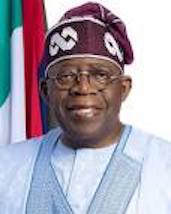
President Bola Tinubu will address the nation in a broadcast on Sunday, Aug. 4, at 7.00 a.m., a statement by his spokesman, Ajuri Ngelale, has said.It urged Television, Radio and other electronic media outlets to relay the broadcast by joining the network services of the Nigerian Television Authority (NTA) and the Federal Radio Corporation of Nigeria (FRCN).
The broadcast will be repeated on the network services of the NTA and the FRCN at 3. 00 p.m. and 7.00 p.m. on the same day, the statement added. (NAN)
By Mike Odiakose, Abuja
Julius Berger Nigeria PLC, the nation’s premier engineering construction powerhouse, is not only building bridges and highways but also weaving bonds of goodwill across communities.
In Rivers State, the company has recently intensified its Corporate Social Responsibility (CSR) efforts, leaving indelible marks of joy, inspiration, and empowerment on the faces of grateful beneficiaries.
Just last week, Julius Berger brought excitement to Community Primary School, Ogbunabali, Port Harcourt, by sponsoring the school’s annual Interhouse Sports competition.
Beyond presenting gleaming trophies to the top three winners, the company ensured the event’s success by providing canopies and other essential support.
In his address, Community Liaison Officer Hon. Chike urged the young athletes to cultivate focus and discipline from their formative years, reminding them that Julius Berger is deeply invested in their academic growth, physical well‑being, and the nurturing of their talents.
A few weeks earlier, the company opened its doors to Senior Secondary students from Bloombreed Schools, Port Harcourt, hosting them at its Regional Office on the Eastern Bypass.
The excursion began with a safety induction led by Regional HSE/CSR Manager, Tim Oseghe, before students were immersed in technical sessions designed to broaden their horizons and guide future career choices.
The highlight was a hands‑on facility tour, where experts including Laboratory Supervisor Kelly Ngbor, Civil Engineer Elorah Adebola, Maintenance Supervisor Abdul Samuel, HSE Supervisor Mike Fanisi, and HSE Officer Chima Nwaudah showcased the company’s cutting‑edge operations.
Earlier in February, Julius Berger had also sponsored joint interhouse sports competitions for several schools in the region.
At one of these events, Gabriel Ubani, Secretary of the State Universal Basic Education Board, encouraged students to balance academic excellence with sporting talent, underscoring the opportunities that await well‑rounded individuals. Similarly, at Model Primary School, Nkpogwu, Port Harcourt, company representatives emphasized the importance of holistic child developmental, academic, and physical, while urging students to embrace healthy, positive life choices.
According to Oseghe, these initiatives are not mere gestures but deliberate investments in shaping the next generation. Our objective is to promote the total well‑being of students, helping them grow into complete individuals equipped for life’s challenges, he reiterated.
Julius Berger’s CSR footprint extends far beyond sports and excursions. Across Rivers State and Nigeria at large, the company has donated food and relief items to orphanages and foundations, provided free vocational training for female children to empower them for greater exploits, and supported community development programs that foster resilience and opportunity.
With each initiative, Julius Berger demonstrates that its mission transcends engineering excellence; it is about building lives, nurturing dreams, and cementing a legacy of care and community empowerment.
By Mike Odiakose, Abuja
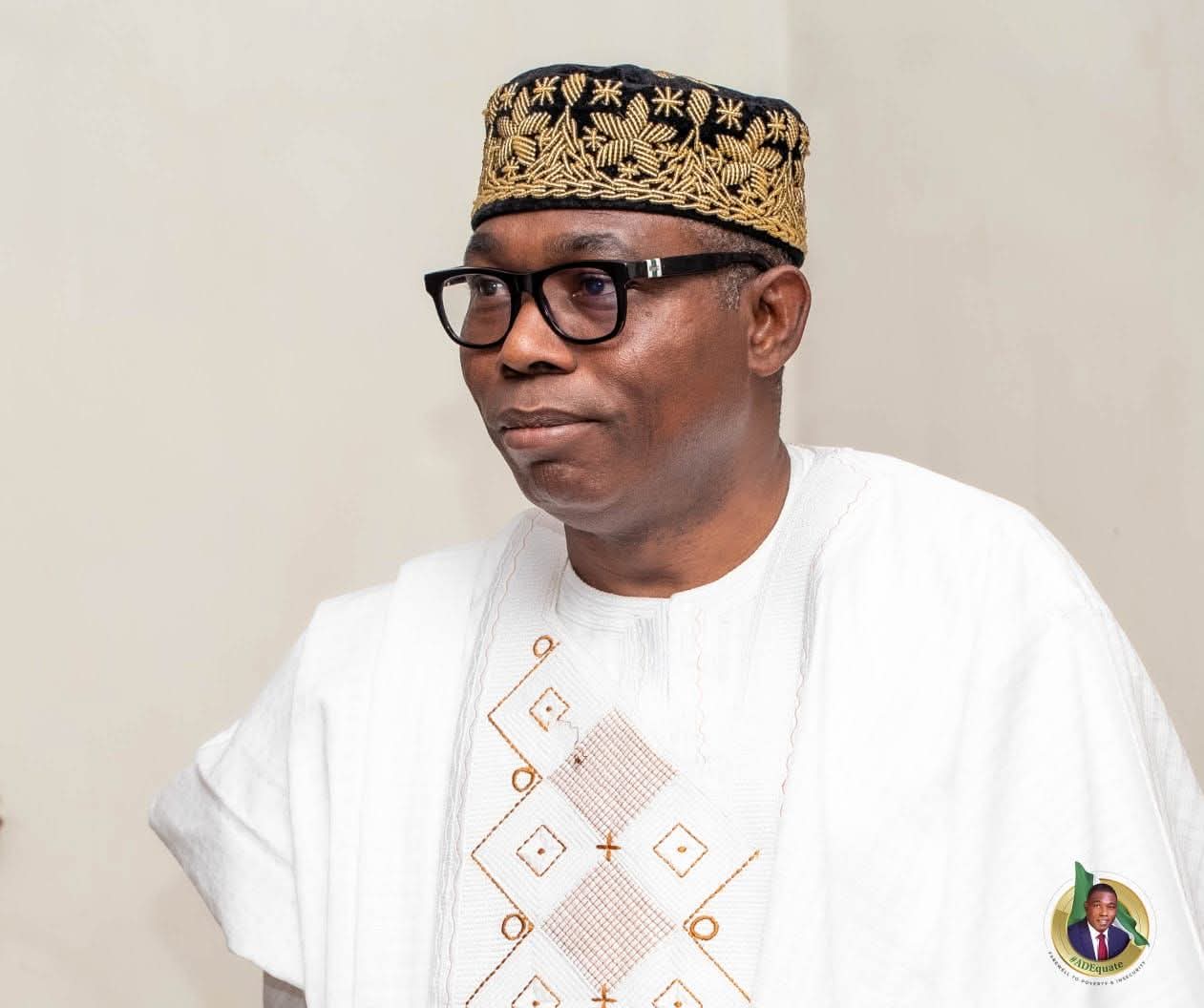
Former Prelate Emeritus of the Methodist Church of Nigeria, Archbishop Uche Kanu, has said that Nigeria’s leadership debate ahead of 2027 should not be defined by age, but by the quality of governance and patriotism—remarks that resonate with the rising profile of politician Adewole Adebayo.
Responding to questions about the growing call for younger leaders, the cleric declined to endorse any individual but emphasized that competence and love for Nigeria must take precedence over generational considerations.
“I don’t want to mention names. Whether the candidate is young or old, all we need is good governance—someone who loves this country,” he said.
His comments come at a time when Adebayo and other emerging political figures are gaining attention in national discourse, particularly among voters seeking alternatives to traditional political elites.
While not directly referencing any candidate, Kanu’s position underscores a broader expectation that leadership should be anchored on integrity, vision, and a genuine commitment to national development.
The archbishop maintained that both older and younger aspirants bring unique strengths—experience on one hand and dynamism on the other—but warned that neither attribute alone guarantees effective governance.
Instead, he stressed the need for leaders who are driven by selfless service and a desire to make Nigeria more prosperous and peaceful.
Kanu’s remarks add a moral dimension to the ongoing political conversations, suggesting that the electorate should look beyond age or regional sentiments and focus on candidates capable of delivering meaningful change.
As political momentum builds toward the 2027 elections, his message reinforces a growing sentiment among Nigerians that leadership credibility—rather than age brackets—should be the defining factor in choosing the nation’s next leaders.
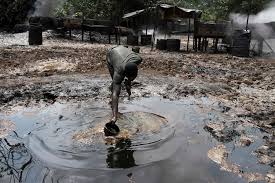
Oil prices rose above $110 (£82.78) a barrel after Iranian media reported an airstrike hitting a facility on the world’s largest natural gas field.
The Brent crude oil benchmark hit $112 a barrel in early Thursday trade in Asia, more than 5 per cent higher than Tuesday’s prices.
The price has since fallen slightly.The benchmark UK gas price also jumped by 6 per cent to 143.
53p a therm before falling back to around the 140p mark.The surge followed reports Iran’s petrochemical complex on the South Pars gas field had been hit. Several hours later, Qatar reported that there was “extensive damage” at the Ras Laffan industrial site following threats from Iran.
While the price of both oil and gas spiked, they remained below highs seen earlier in the conflict.
Oil reached $116.78 a barrel on 9 March, while UK gas reached 162.55p a therm on 3 March.
Iran’s oil ministry said a fire at the petrochemical complex was under control, according to Tasnim, a news agency affiliated with the Islamic Revolutionary Guard Corps.
Iran’s military warned it would take “decisive action” in response to the strike on its energy infrastructure.
“As previously warned, if the fuel, energy, gas, and economic infrastructures of our country are attacked by the American-Zionist enemy, in addition to a powerful counterattack against the enemy, we will severely strike the origin of that aggression as well,” the military said in a statement published by Tasnim.
“We consider targeting the fuel, energy, and gas infrastructures of the countries of origin legitimate and will retaliate strongly at the earliest opportunity.”
Qatar also operates facilities on the gas field, which it calls North Dome.
But the country, which produces a fifth of the world’s liquefied natural gas, had halted production earlier in March in response to the conflict.
Qatar’s foreign ministry spokesman Majed Al Ansari said strikes against energy infrastructure “constitutes a threat to global energy security”.
Just after 1815 GMT, the Qatari interior minister said it was responding to “a fire in the Ras Laffan area following an Iranian targeting”. Qatar’s petrol firm Qatar Energy later said there was “extensive damage” at the site.
The interior minister said just after 1900 GMT that it had “initially brought the fire in Ras Laffan under control, with no injuries reported”.
Ras Laffan was among the sites listed by Iran in a warning that it would take “decisive action” after its South Pars gas field facilities were reportedly hit by Israeli strikes.
‘Energy markets will likely remain volatile’
AJ Bell’s head of financial analysis Danni Hewson said the attack and retaliation by Iran had “helped dial up the temperature once again and put renewed upward pressure on oil prices”.
“Any solution to the blockage of the Strait of Hormuz looks pretty distant at this point and until there is progress on that front, energy markets will likely remain volatile,” she added.
The White House on Wednesday responded to the rising oil price by saying it was suspending the Jones Act, a 1920 law that says only American-made ships can be used to transport goods between US ports.
US Press Secretary Karoline Leavitt said the 60-day waiver of the rules, which are intended to boost shipbuilding, will allow “vital resources like oil, natural gas, fertilizer, and coal to flow freely” as non-American-made ships can now be used.
However, maritime groups in the US said the effect would be minimal, noting that oil prices, not shipping costs, are behind rising prices at the pump.
Experts say earlier efforts by world leaders to ease price pressures, including an unprecedented release of oil reserves, have done little to reduce oil prices.
Meanwhile, Iran has also suspended the flow of gas to Iraq to shore up domestic supplies, a senior Iraqi official told Reuters.
The vast majority of Iran’s gas supply 94 per cent is used domestically, according to data from the Gas Exporting Countries Forum.



Julius Berger Delivers Landmark CSR Activities in Rivers State
ShareBy Mike Odiakose, Abuja Julius Berger Nigeria PLC, the nation’s premier engineering construction powerhouse, is not only building bridges and...
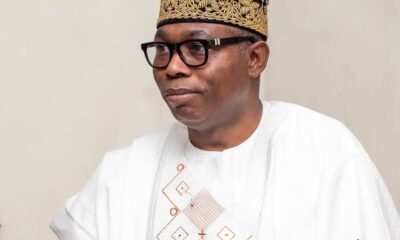

Adebayo: Age Not the Issue, Nigeria Needs Leaders Who Truly Love the Country — Archbishop Kanu
ShareBy Mike Odiakose, Abuja Former Prelate Emeritus of the Methodist Church of Nigeria, Archbishop Uche Kanu, has said that Nigeria’s...


Cleric, Followers Observe Eid despite Sultan’s Directive
ShareA Sokoto-based Islamic scholar, Sheikh Musa Lukuwa, yesterday led his followers in observing Eid al-Fitr prayers in defiance of a directive issued...

CAF Executive Member Calls for Rejection of Abject Afcon Decision
ShareThe decision to strip Senegal of the 2025 Africa Cup of Nations title is “abject” and “we have to denounce...

Oil Crosses $110 a Barrel after Gas Field Strike
ShareOil prices rose above $110 (£82.78) a barrel after Iranian media reported an airstrike hitting a facility on the world’s largest natural gas field. The...


Army Conducts Shooting Exercise, Kaduna Residents Told Not to Panic
ShareThe Headquarters, 1 Division Nigerian Army, says it will conduct its First Bi-Annual Range Classification Exercise for 2026 from March 23 to 27, at the Nigerian Air...


How God Changed My Story after 16 Years in Music, Says Spyro
ShareAfrobeats singer Spyro has revealed that 16 years of perseverance and struggle in the music industry finally paid off three...


Asake Reaffirms Loyalty to Olamide, Downplays Split Rumours
ShareAfrobeats star Asake has reiterated his unwavering loyalty to his former label boss and mentor, Olamide, amid speculation of a...
Chef Drives Push to Rebrand Nigerian Cuisine Globally
ShareNigerian chef Gbolabo Adebakin, known as Chef Gibbs, has urged deliberate global rebranding of Nigerian cuisine to challenge misconceptions and...


ShareNigeria’s Balance of Payment Falls 38% to $4.23bn in 2025 Nigeria’s external sector faced significant headwinds in 2025, as the...