
Economy
Trade Ministry Committed to Promoting Free Trade Zones- Official


The Federal Ministry of Industry, Trade and Investment (FMITI) has restated its commitment to support activities that would harness the immense benefits of Free Trade Zones (FTZs) to Nigeria’s economy.
Dr Nasir Sani-Gwarzo, Permanent Secretary, FMITI, said on Wednesday in Abuja.
He spoke at a one-day sensitisation awareness workshop on the promotion and development of free trade zones across the country.
The theme of the workshop is entitled: “Creating Awareness on the Activities of the Free Trade Zones in Order to Stimulate Investment in The Sub-Sector’’.
Represented by Dr Suleman Audu, Director, Commodities and Export Department, FMITI, Sani-Gwarzo stressed the need to explore investment potential in free trade zones to create profitable and sustainable businesses.
According to him, it is important to bring to the fore the vast opportunities in the free trade zones and the strategies for harnessing them for wealth creation and employment generation.
“It is equally important to develop innovative ways to harness the investment potential that abound in the free trade zones in order to create profitable and sustainable businesses.
“As a ministry, we are committed to supporting activities that will help harness the immense benefit of free trade zones to the economy, which is at the core of why the ministry set up a review committee not too long.
“The committee will come up with far reaching recommendation that will upscale activities in the zones, especially now that the export market is growing by the day.
“It is equally important to state that the Federal Government, through the FMITI is committed to the pursuit of implementing the Nigeria Economic Sustainability Plan MSME Fund (NESP-F), designed to revitalise and strengthen MSME in Nigeria,’’ Sani-Gwarzo.
He urged the private sector to key into the enormous opportunities that are accruable with investment at the free trade zones.
“The challenges are very daunting but equally surmountable,’’ he added.
Corroborating the Permanent Secretary, Mrs Vivian Ibeku, Deputy Director, Export Promotion and Free Zones, FMITI, described FTZs in Nigeria as evolving with enormous opportunities to create employment and promote non-oil commodities.
Ibeku, who expressed concern that potential in FTZs had yet to be harnessed, blamed it on poor implementation.
“In spite of the evolving positive trends, Nigeria has not maximally harnessed the inherent potential in the sub sector.
“This is because the country is yet to properly take advantage of the true potential of FTZs as an instrument of economic growth and diversification,’’ She added. (NAN)

By Tony Obiechina, Abuja
The Securities and Exchange Commission (SEC) has stressed the need for Nigeria to harness its demographic dividend to advance financial inclusion through investments by 2030 for national survival or face deepening inequality.
The Director-General of the SEC, Dr Emomotimi Agama said this at the United Capital Asset Management Investment forum on Wednesday in Lagos.
Agama, in his keynote address titled: “Advancing Financial Inclusion through Investments: Bridging
Nigeria’s Knowledge and Wealth Gap,” said Nigeria must harness its demographic dividend to boost investment.
“Our theme, Advancing Financial Inclusion through Investments, is not aspirational; it is foundational to national survival.
“We stand at a pivotal moment. By 2030, Nigeria can either harness its demographic dividend or face deepening inequality. The knowledge-wealth gap is not merely an economic challenge; it is a moral imperative,” Agama said.
He said the term inclusion should be reframed as active financial involvement, where access meets empowerment, and capital becomes a tool for transformation.
Agama said that closing the financial inclusion gender gap could lift 700,000 Nigerians from poverty.
He said, “Nigeria has a great population yet we have a tiny drop of this number of persons involved in the capital market.
“That one reason for poverty, because we are running from money. We have to do something. Our market capitalisation is an opportunity to do something,
We all have
“We need to change the narrative and move the market forward. We must reach out to make the difference. We are committed to protecting investors and developing the market. Our goal is to do the right thing no matter whose ox is gored. We will work by the principles of fairness and equity to change the market. We will provide a fair ground for everyone to aspire.
He noted that MTN Nigeria’s share offering drew 150,000 new investors – 75 per cent women, 85 per cent under 40.
Agama recommended a four-pillar strategy for bridging the gaps.
He listed the four-pillar strategy as democratisation of financial knowledge, catalyse MSME Investment Channels, blended Finance Vehicles: Partner with Bank of Industry (BOI) to de-risk loans for women-led SMEs.
“We need to educate people about finances. As we drive this market, we do so for a purpose, I enjoin everyone to be the disciple and the apostles. Getting this market to move is a deliberate action,” he added.
 | ReplyReply allForwardAdd reaction |
By Ubong Ukpong, Abuja
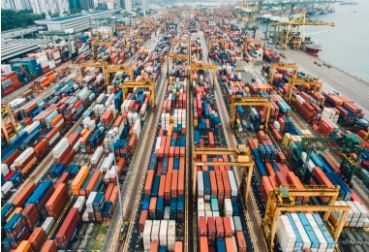
The Nigerian Ports Authority (NPA) on Monday assured that it would take into the coffers massive revenue of over N1.27 trillion in 2025, representing a 40 percent increase from the N894.86 billion it realized in 2024.
This ambitious target, the Authority said, was anchored on sweeping modernization efforts, the full activation of the Dangote Refinery’s marine operations, and the deployment of cutting-edge technology to enhance port efficiency.
Managing Director of the NPA, Abubakar Dantsoho, disclosed this in a presentation during his agency’s budget defence session wih the House of Representatives Committee on Ports and Harbours, where he defended the agency’s 2025 budget estimates and provided insights into its 2024 performance.
“Our 2025 budget proposal is more than figures, it reflects our aspirations for a more efficient, globally competitive port system,” Dantsoho told lawmakers, adding that over 70% of the proposed expenditure will go into capital projects.
For 2024, the Authority surpassed its revenue target of N865.39 billion, posting an actual realization of N894.86 billion.
However, Dantsoho revealed that only N417.86 billion, less than half of the approved N850.92 billion expenditure, had been spent as of the time of reporting.
Despite this, NPA made a record contribution of N400.8 billion to the Consolidated Revenue Fund (CRF) in 2024, nearly double the N213.23 billion remitted in 2023. Of this amount, a staggering N344.7 billion was deducted at source.
“This shows our unwavering commitment to national revenue generation, even when our own operational liquidity is affected,” the NPA boss stressed.
Dantsoho said the projected revenue increase is premised on several key assumptions and developments, including: The full operation of the Dangote Refinery, which alone is expected to draw in over 600 vessels annually through its Single Point Mooring (SPM) system; the commissioning of upgraded terminals at WACT and OMT, which will enhance container traffic; the implementation of automation tools such as the National Single Window, Port Community System (PCS), and Vessel Traffic Management System (VTMS); and increased cargo volumes stemming from global disruptions, including the Russia-Ukraine conflict, which has affected global trade routes.
He said the 2025 revenue is expected to come from the following key sources: Ship Dues, N544.06 billion; Cargo Dues, N413.06 billion; Concession Fees, N249.69 billion; and Administrative Revenue, N73.07 billion
Of the proposed N1.14 trillion total expenditure for 2025, N778.46 billion is earmarked for capital projects.
This investment, he said, will target the revitalization of critical infrastructure, including the Calabar, Warri, and Burutu ports and channels, and enhance towage services, channel depth, and compliance with international security conventions.
“Investments in infrastructure and technology are non-negotiable if we are to stay competitive regionally and globally,” Dantsoho emphasized.
He cited increasing competition from neighboring ports and aging assets across Nigeria’s coastal corridors.
The NPA also intends to address technology gaps by upgrading legacy systems and bolstering cybersecurity, ensuring Nigerian ports meet global standards for digital operations.
“We can say that with timely access to internally generated revenue and capital funds NPA would deliver the kind of impact Nigeria expects,” he said.
Chairman of the Committee, Hon. Nnolim Nnaji, urged the NPA to ramp up performance, improve port infrastructure, and play a greater role in addressing Nigeria’s revenue and unemployment challenges.
Nnaji said the ports remain a critical pillar of Nigeria’s economy, and urged the agency to meet rising expectations despite operational challenges.
“No country can thrive economically without high-performing ports. They are the economic heartbeat of every nation, determining how buoyant a country is through the flow of imports and exports,” Hon Nnaji said.
The committee praised NPA for its performance.
Nnaji stressed that the NPA’s performance has implications beyond maritime activity, noting that increased port output can significantly boost job creation across several sectors.
“The Nigerian Ports Authority is not just a revenue-generating agency, it is a national asset in terms of employment and economic impact.
“We expect to see detailed strategies on how to improve revenue generation and expand employment opportunities through your 2025 budget,” he said.
The lawmaker also pointed to growing interest in the development of new ports across the country but cautioned against neglecting existing port infrastructure.
“As we welcome investment in new ports, we must not abandon the old ones. Maintaining and upgrading our existing ports, both in the Eastern Corridor and the Western axis, is essential to long-term sustainability,” he added.
The Committee called for a clear outline from the NPA on how its 2025 financial plan will address pressing national concerns and reaffirm Nigeria’s competitiveness in regional and global maritime trade.

By Eze Okechukwu, Abuja
The Senate, through its Committee on Customs has set a revenue target of N10 trillion for the Nigeria Customs Service for the 2025 fiscal year, instead of the initial N6.584 trillion given to her earlier on while urging the agency to clamp down on smuggling and Illicit drugs.
The Chairman of the Committee, Senator Isah Jibrin (Kogi East), who gave the agency the marching order yesterday in Abuja during the budget defence of the revenue driving agency however commended her for exceeding its 2024 revenue target of N5.
079 trillion.The NCS team led by Deputy Comptroller General, Jibo Bello who represented the Comptroller General presented the 2024 budget performance with a revenue target of N5.
079 trillion, stressing that the proposal was exceeded by over a trillion naira.The Committee, obviously impressed by the performance commended NCS before asking them to go ahead and present the 2025 budget proposal, which the agency tied at N6.584 trillion revenue target with an expenditure of N1.132 trillion.
Following their presentation, members of the Senate Committee on Customs unanimously approved the recommendation of the revenue target of N6.584 trillion and the expenditure of N1.132 trillion for the 2025 financial year.
The Committee will subsequently present the budget proposal to the Senate at plenary most likely this week as the red chamber resumes today after a long recess tied to Eid celebration.
In his final remarks, Senator Jibrin emphasised the need for the NCS to rise up in terms of its surveillance with respect to illicit drugs and smuggling “to ensure that, as much as possible, you should be on top of your game”.
He said there are so many illicit drugs flowing all over the place, which according to him “is contributing to the issue of banditry in Nigeria because most of these guys are on drugs. What I’m saying is that, in addition to your revenue drives, you should also be mindful of some of these other functions.

Hamann: Wirtz Made Wrong Choice Joining Liverpool
ShareLiverpool hero Didi Hamann believes Florian Wirtz made the wrong decision joining the Reds this summer. Wirtz, a £100m summer...


Alcohol, Animals, Others prohibited inside AFCON 2025 Stadiums
ShareAs anticipation builds for the Africa Cup of Nations 2025, set to kick off on December 21 in Morocco, the...


Man City Still Work in Progress –Guardiola
ShareManchester City manager Pep Guardiola has disclosed that the team are still a work in progress following his expensive overhaul...


Benue Orders Refund of N106,000 WAEC/NECO Fees charged by School
ShareThe Benue State Government, through the Education Quality Assurance and Examinations Board, BEQAE, has directed Jewel Model School, Makurdi, to...


UNIZIK: Students Urge FG to Implement Industrial Court Judgment, Reinstate Odoh as VC
ShareSome students of Nnamdi Azikiwe University (UNIZIK), Awka, have called on the Federal Government to fully implement the judgment of...

NUC Opens Nigeria’s University Space to Foreign Institutions
ShareThe National Universities Commission (NUC) has lifted the embargo on the establishment and operation of foreign universities in Nigeria, a...


RMAFC Convenes Stakeholders Confab to Boost Effective Tax Act Implementation
ShareBy Tony Obiechina, Abuja The Revenue Mobilisation Allocation and Fiscal Commission (RMAFC) on Monday organised a 2-Day National Stakeholders’ Discourse...


Bandits Attack Kogi Communities, Kill Three Persons
ShareFrom Joseph Amedu, Lokoja Oke-Agi and Ilai communities in Mopa-Amuro local government area of Kogi State were attacked by some...


Palmer out for Chelsea’s Carabao Cup Quarter-final, Says Maresca
ShareChelsea attacker Cole Palmer will not feature in the Blues’ Carabao Cup quarter-final against Cardiff City, head coach Enzo Maresca...


Road Accident Claims Four Persons in Kogi
ShareFrom Joseph Amedu, Lokoja The Federal Road Safety Corps (FRSC), has confirmed the death of four persons in a motor...