
Foreign News
Trump Meets With De-Facto Syrian President Al-Sharaa in Saudi Arabia


U.S. President Donald Trump on Wednesday met with Syrian President Ahmed al-Sharaa in Riyadh, a U.S. government representative confirmed.
The meeting took place in the Saudi capital before a scheduled meeting between Trump and leaders of several Gulf countries.
It is the first between a U.
S. and Syrian Presidents in around 25 years.The meeting also came a day after Trump said that he would be lifting sanctions imposed on Damascus.
Trump, who was in Saudi Arabia for the first leg of his three-nation Gulf tour, said lifting the sanctions were a chance for the war-torn country to shine.
The White House said on Tuesday that Trump had agreed to say hello to the Syrian President.
Sanctions were imposed by the U.S. and other countries in response to former president Bashar al-Assad’s brutal crackdown on protesters in 2011.
The violence in his regime carried out against civilians during the ensuing civil war.
Al-Assad was overthrown in early December by an Islamist rebel alliance led by al-Sharaa, who was later appointed interim president.
Once an insurgent leader, al-Sharaa has since renounced both al-Qaeda and Islamic State.
However, doubts remain as to whether he has fully abandoned extremist ideology and he is still listed on U.S. and EU terrorist lists.
The last meeting between U.S. and Syrian leaders was in 2000 between then presidents Bill Clinton and Bashar’s father, Hafez al-Assad. (dpa/NAN)
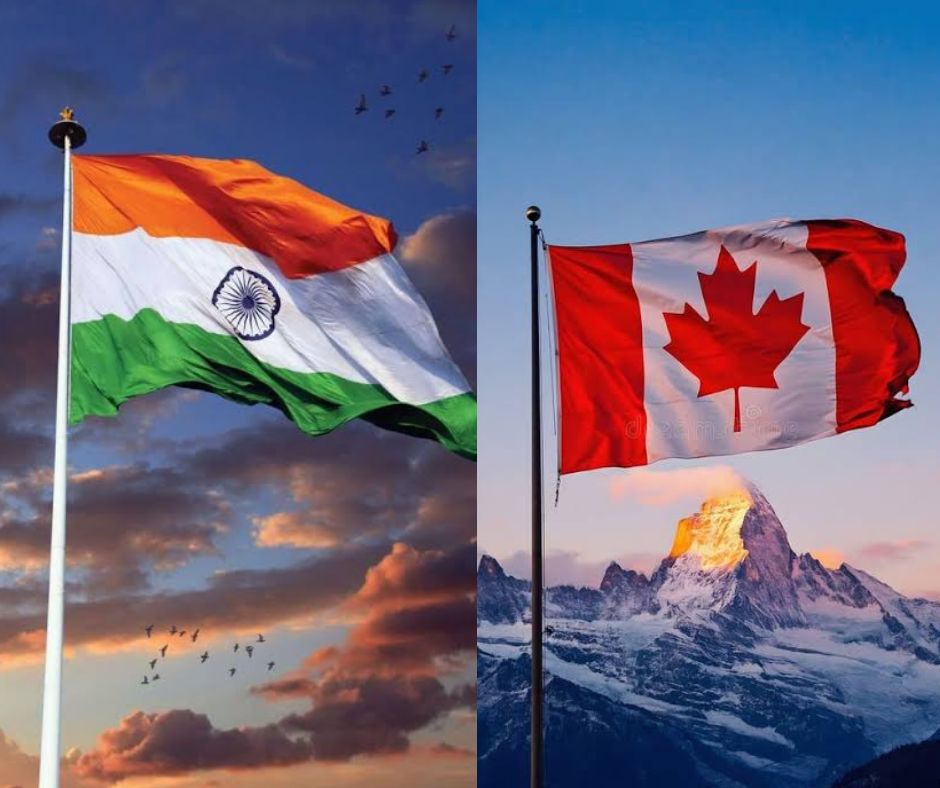
India and Canada have announced a host of agreements, including a 10-year nuclear energy deal, after their prime ministers met in Delhi to reset ties that plummeted due to diplomatic tensions.
Narendra Modi and Mark Carney also struck agreement in areas such as technology, critical minerals, space, defence and education.
Carney said they agreed to conclude a free trade deal, years in the making, by the end of 2026.
Both countries want to reduce exposure to punitive US trade tariffs.Under Carney, the two governments are trying to repair ties that were strained when his predecessor accused Delhi of a link to the 2023 assassination of Sikh separatist Hardeep Singh Nijjar on Canadian soil.
India vociferously rejected the allegation by Justin Trudeau. Trade and diplomatic relations almost came to a standstill as both sides expelled each other’s diplomats and cancelled visa services. Canada hosts a huge expatriate Indian community.
But since Carney took office last year, the relationship has been cautiously rebuilt, helped by the fact that his government has said it believes India is not currently linked to violent crimes or threats on Canadian soil.
The case of four men charged over Nijjar’s killing is still before the courts. At talks in Delhi, both Carney and Modi underscored India and Canada’s long-standing relationship, mutual goals and close people-to-people ties.
“In civil nuclear energy, we have reached a landmark deal for long-term uranium supply. We will also work together on small modular reactors and advanced reactors,” Modi told reporters after their meeting at Hyderabad House in Delhi.
He described the two countries as “natural partners in technology and innovation” and said they would enhance co-operation in AI, supercomputing and semiconductors, as well as jointly host a renewable energy summit.
Carney said Canada was well positioned to contribute to energy-hungry India’s nuclear fuel needs and added that the two countries were launching a strategic energy partnership.
He hailed the progress made in rebuilding relations. “There has been more engagement between the Canadian and Indian governments in the last year than there has been in more than two decades combined,” he said.
On trade, Modi said: “Our target is to reach $50bn in bilateral trade. This is why we have decided to finalise a comprehensive economic partnership soon.”
Carney said he wanted to reach a deal on the “ambitious agreement” by the end of the year. It’s been discussed on-and-off for the past 15 years so concluding it would be a significant achievement.
Analysts say that Carney’s decision to put diplomatic tensions behind him and extend an olive branch to India is a pragmatic one, based on present day geopolitical shifts.
The same holds true for India, which is looking to forge new trade partnerships to diversify its imports and also reduce its reliance on Russia for its energy needs.
Carney met India’s Foreign Minister S Jaishankar where the two discussed charting a “forward-looking partnership”.
Carney’s four-day trip began with a visit to the financial capital, Mumbai, where he met business leaders and ministers on 28 February with a view to boost trade and investment in India.
After concluding his trip in Delhi, Carney is set to travel to Australia and then Japan as part of his strategy to diversify Canada’s trade and invite new investments.
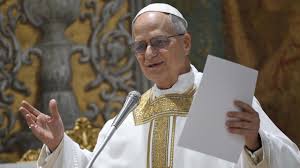
Pope Leo XIV on Sunday appealed to nations involved in the escalating Middle East conflict to recognise their moral responsibility to pursue peace, following airstrikes reportedly carried out by the United States and Israel on Iran.
According to Vatican News, the Pope made the call during his Angelus address on Sunday, where he expressed “deep concern” over recent developments in the region, particularly in Iran.
“Stability and peace are not built with mutual threats, nor with weapons, which sow destruction, pain, and death, but only through a reasonable, authentic, and responsible dialogue,” he said.
The Pontiff warned that an uncontrolled escalation of violence could result in catastrophic consequences.
“Faced with the possibility of a tragedy of enormous proportions. “I address to the parties involved a heartfelt appeal to assume the moral responsibility to stop the spiral of violence before it becomes an irreparable abyss!,” he said.
Pope Leo XIV also prayed that diplomacy would regain prominence in resolving the crisis.
“May diplomacy recover its role and may the good of peoples be promoted, peoples who long for peaceful coexistence founded on justice. And let us continue to pray for peace,” he said.
On Saturday, Israel and the United States reportedly began joint airstrikes on Tehran and other Iranian cities, prompting retaliatory attacks by Iran targeting Israel and several Gulf countries hosting American military bases.
In a dramatic development, Iranian state-run news agencies later announced the death of Supreme Leader Ayatollah Ali Khamenei, who had ruled the country for nearly 37 years.

BearingPoint commissioned a new survey showing Germany and Austria still lead Europe in cash usage, defying the broader continental shift toward digital payments and card-based transactions across retail and services sectors.
The poll, conducted in December by YouGov, found that 73 per cent of respondents in Germany cited cash as their most frequently used payment method, rising from 69 per cent a year earlier.
In Austria, 71 per cent of participants said they regularly paid with banknotes and coins, confirming the country’s continued preference for physical currency in spite of growing availability of digital and contactless alternatives.
By contrast, cash usage declined across the seven other European countries surveyed, highlighting a widening divide between German-speaking nations and much of the rest of Europe in payment preferences.
In Switzerland, 61 per cent of respondents reported often using cash, followed by 58 per cent in Ireland, 51 per cent in France and 46 per cent in the Netherlands.
Northern European countries demonstrated the lowest reliance on physical currency, reflecting more advanced digital infrastructure and stronger consumer adoption of mobile wallets, cards and instant electronic payment systems.
Only 25 per cent of respondents in Sweden said they frequently used cash, compared with 32 per cent in Denmark and 42 per cent in Finland.
More than a quarter of Swedes said they never used cash, while 18 per cent of Danes reported the same, underscoring the rapid shift toward fully digital payment ecosystems.
In Germany and Austria, by comparison, only 2 per cent and 1 per cent of respondents respectively said they did not use cash at all.
Across all nine countries surveyed, 37 per cent of respondents said it was certain or very likely they would stop using cash entirely within the next decade.
The survey also revealed limited public awareness of the proposed digital euro project currently under discussion among eurozone policymakers and financial institutions across the region.
Around one-third of respondents in eurozone countries said they had not heard of the initiative being developed by the European Central Bank, which could launch as early as 2029.
Eurozone monetary authorities had repeatedly stressed that the digital euro would complement, rather than replace, physical cash, aiming to preserve consumer choice while modernising Europe’s payments infrastructure.

Tinubu’s Renewed Hope Agenda gaining traction, Amgbare Lauds RTIFN
ShareFrom Mike Tayese, Yenagoa Managing Director/CEO of the Niger Delta Basin Development Authority (NDBDA), Prince Ebitimi Amgbare, has expressed confidence...

NGF Backs Tinubu on Direct Federation Account Remittance
ShareBy Tony Obiechina, Abuja The Nigeria Governors’ Forum (NGF), under the chairmanship of AbdulRahman AbdulRazaq, has expressed strong support for...

Rescued Kidnap Victim Gives Birth to Twin at IDP Camp
ShareFrom Joseph Amedu, Lokoja The Kogi State Government has confirmed that a rescued kidnap victim has safely delivered twin girls...


Enugu Gov’t Grants 90-Day Amnesty for Buildings Without Approval
ShareFrom Sylvia Udegbunam Enugu The Enugu State Government has announced a 90-day amnesty window for property owners without approved building...

FG, States Collaboration Panacea to Tackling Almajiri Crisis, Says Alausa
ShareThe minister of education, Tunji Alausa, has said that the key to reducing Almajiri and out-of-school children in Nigeria was...

Bank, Heckerbella unveil Smart Identity, Digital Payment Card in Unilag
ShareLotus Bank, in strategic partnership with Heckerbella, has unveiled the Smart ID Project at the University of Lagos (UNILAG). The...
NIMASA Renews Partnership with World Maritime University
ShareThe Nigerian Maritime Administration and Safety Agency (NIMASA), has renewed its strategic capacity development partnership with the World Maritime University...


Expert Calls for Continuation of Niger Delta Pipeline Surveillance Contract
ShareBy Eze Okechukwu, Abuja A legal practitioner and security expert, Blessing Agbomhere, has urged the Federal Government to sustain the...


Nasarawa Secures $1.008bn in Domestic, Foreign Investments
ShareFrom Abel Zwanke, Lafia Nasarawa State secured domestic and foreign direct investments totaling $1,008,529,220 between January and December 2025. The figure is separate from other investments attracted within the...
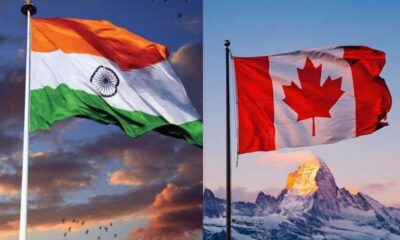

India, Canada Reset Ties with Landmark Nuclear Energy Deal
ShareIndia and Canada have announced a host of agreements, including a 10-year nuclear energy deal, after their prime ministers met in Delhi to reset ties that...