
Foreign News
Ukraine/Russian War Poses New Hurdle for Presidential Power Initiative 

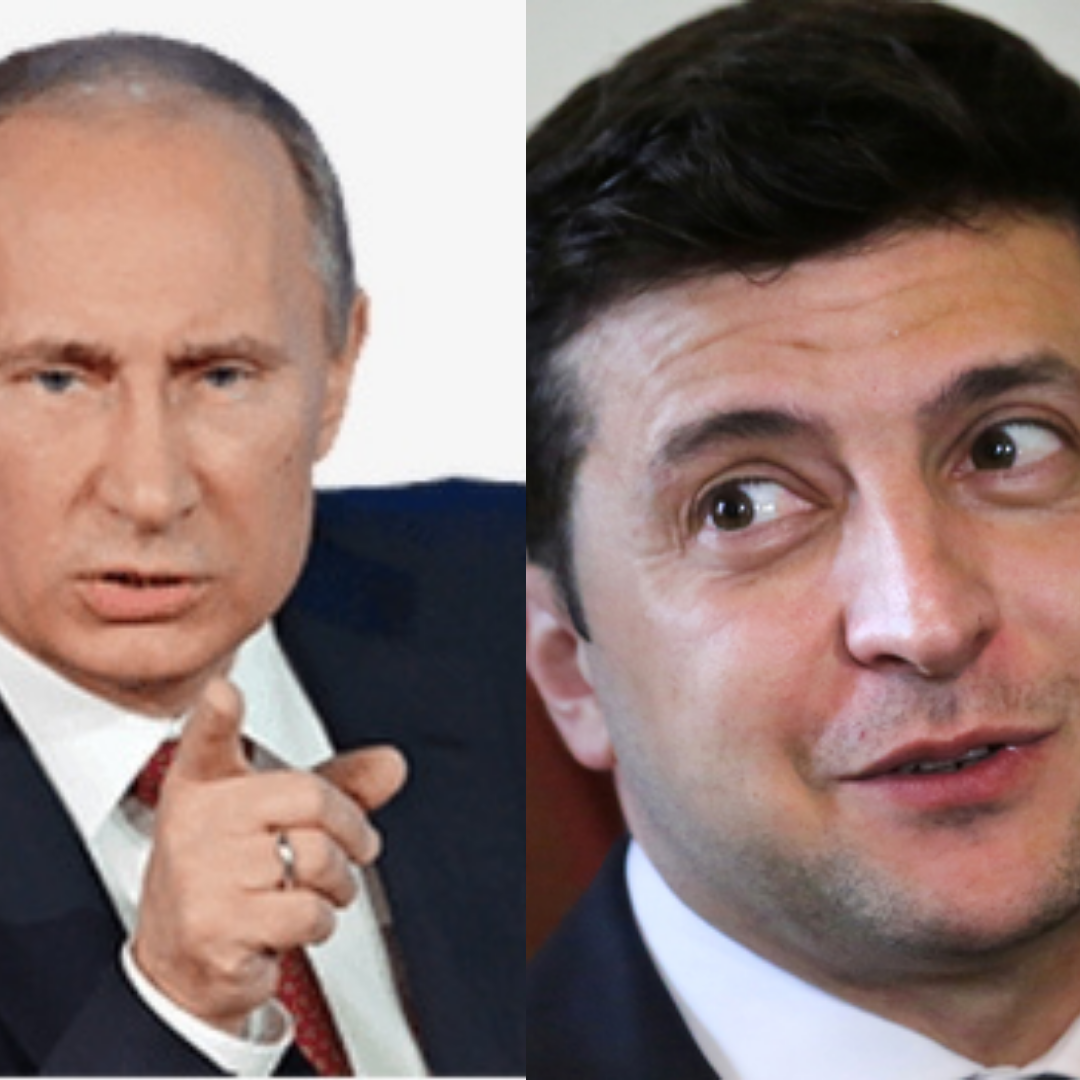
There are strong indications that the Federal Government might fail to meet set targets on the Presidential Power Initiative (PPI), due to the negative impact of the ongoing Ukraine-Russian war.
Under the PPI, the target of the government is to increase power supply to 7,000 Megawatt, MW by December 2022, from the current average of 5,000MW, with an additional increase to 11,000MW and 25,000MW thereafter, with FGN Power Company and Siemens as the driver and contractor, respectively.
This informed the recent repositioning of the project and the Federal Executive Council (FEC) approval of the procurement of Mobile Units (Transmission Substations and Power Transformers) for early works of Phase 1 of PPI and the Contract award for the Procurement of Ten (10) mobile transformers and award of Ten (10) mobile substations to Siemens last December.
But investigations confirmed that the ongoing war in Ukraine has culminated in the shutdown of Siemens manufacturing plants, thus affecting the production and shipment of the PPI components, including transformers, reactors, switch gears, protection, control and metering equipment to Nigeria.
The components were supposed to be produced in Ukraine because of lower costs and shipped to Nigeria in the first quarter (January-March), 2022 for utilization in the execution of over 200 power transmission and distribution projects.
The managing director, Siemens Energy Nigeria, Seun Suleiman, could not be reached for comments, but in a report, ‘on the war in Ukraine and on the situation in Russia’ obtained by Vanguard, the company, stated: “We join the international community in condemning the war in Ukraine and are focused on supporting our people and providing humanitarian aid.
“Siemens will exit the Russian market as a result of the Ukraine war. The company has started proceedings to wind down its industrial operations and all industrial business activities.
“Siemens was one of the first companies to put all new business in and international deliveries to Russia on hold while it evaluated the situation to ensure the safety of its 3,000 employees in the country.
“After the start of the war, Siemens put all new business in and international deliveries to Russia and Belarus on hold. The comprehensive international sanctions, as well as current and potential countermeasures, impact the company’s business activities in Russia, particularly rail service and maintenance.”
Roland Busch, President and CEO of Siemens AG, also said: “We condemn the war in Ukraine and have decided to carry out an orderly process to wind down our industrial business activities in Russia. This was not an easy decision, given our duty of care for our employees and long-standing customer relationships, in a market where we have been active for almost 170 years.”
Meanwhile, electricity generation has dropped by 12.4 percent to 3,344 megawatts, MW, from 3,819MW, recorded a week ago, according to Nigeria Electricity System Operator’s report. This is very insignificant for transmission and distribution to meet the needs of consumers, especially because of the huge estimated over 200 million population.
However, commenting on the nation’s poor power situation, Chief Executive officer, Centre for the Promotion of Private Enterprise (CPPE), Dr. Muda Yusuf, said inadequate power supply has culminated in consumers, including investors, investing funds to generate their independent electricity at higher costs.
Specifically, he said: “Escalating energy cost has both global and a domestic dimension. Diesel cost has spiked by about 200 percent in the last six months. The prices of aviation fuel [Jet A1] and natural gas have similarly skyrocketed. The crisis became exacerbated by the collapse of the national grid leading to a sharp drop in electricity supply from the grid and consequent load shedding.
The situation became unbearable for both households and investors. There were series of blame games among players in the electricity supply chain – the DISCOs, the GENCOs, the Transmission Company of Nigeria, the gas suppliers and the power ministry. “The consequences of these were the escalation of production and operating cost across all sectors. Cost of transportation, especially haulage cost similarly spiked because most haulage trucks are powered by diesel. Many businesses were not able to pass on the increase in energy costs to their consumers. Many investors have scaled down their operations, while several others have suspended operations.”
Similarly, the Managing Director, Ibom Power, Engr. Meyen Etukudo, attributed the problems in the power sector to the inability to put the right pegs in the right holes. He said: “There is no meaningful development in the sector due to obsolete and obnoxious policies. The moment the real professionals begin to take charge in the power sector, the difference will be clear.”
The FGN Power Company did not respond to Vanguard, weekend, but recently, the Managing Director/CEO, FGN Power company, Kenny Anuwe had boasted that, “A unique end-to-end power project like the PPI will have notable impacts across the country for consumers. The PPI will deliver incremental power to Nigerians, improve investors’ confidence, create jobs, reduce the cost of doing business and enhance economic activities in Nigeria.”

US Secretary of State Marco Rubio has said Rwanda’s actions in eastern Democratic Republic of Congo are “a clear violation of” the peace deal brokered by Donald Trump last week.
In a post on X, he said the US would “take action to ensure promises made to the President are kept”, without going into details.
Trump hailed the deal signed with great fanfare in Washington between DR Congo’s President Félix Tshisekedi and Rwanda’s President Paul Kagame as “historic” and “a great day for Africa, great day for the world”.
But the M23 rebel group said it has “fully liberated” the key city of Uvira in an offensive the US and European powers say is backed by Rwanda.
UN experts have previously accused it of having “de facto control” of the rebel force’s operations.Rwanda denies the allegations, however, its presence in Washington was a tacit acknowledgment of its influence over the M23.
The rebels were not signatories to Trump’s deal – and have been taking part in a parallel peace process led by Qatar, a US ally.
The latest fighting risks further escalating an already deeply complex conflict.
Prof Jason Stearns, a Canada-based political scientist who specialises in the region, said that the view in M23 circles was that “they need more leverage in the negotiations”, while the feeling in the Rwandan government is that Tshisekedi cannot be trusted.
He added that the assault on Uvira, in South Kivu province, “flies in the face of all the negotiations that are under way”.
The M23’s new offensive in South Kivu started a few days before Kagame and Tshisekedi flew to Washington last week to ratify the agreement first hammered out in June.
Bram Verelst, a Burundi-based researcher with the Institute for Security Studies (ISS) think-tank, said the assault appeared to be an attempt to force Burundi to withdraw the troops it had in eastern DR Congo backing the army against the rebel forces and Rwanda.
He pointed out that Uvira – which lies just 27km (17 miles) from Burundi’s capital, Bujumbura, on the northern tip of Lake Tanganyika – was of strategic importance because of the presence of at least 10,000 Burundian troops in South Kivu.
Yale Ford, an Africa Analyst for the Critical Threats Project at the American Enterprise Institute, pointed out that Uvira, which had a population of about 700,000, was the DR Congo government’s last major foothold and military hub in South Kivu.
He added that the M23 was now likely to establish a parallel administration in the city, and use its military gains “as a bargaining chip in peace talks”.
As for the DR Congo government, it has not acknowledged its latest military setback, but says that the “gravity of the situation is compounded by the now proven risk of regional conflagration”.
Burundi has been a natural ally of DR Congo for years because of its enmity with Rwanda.
Both accuse the other of backing rebel groups seeking to overthrow their respective governments.
The neighbours share a similar language and ethnic make-up – with Tutsi and Hutu communities often vying for power – and both have suffered terrible ethnic-based massacres.
But unlike Rwanda, which is headed by a Tutsi president, the majority Hutus are in power in Burundi.
Burundi’s government fears that if the M23 cements its presence in South Kivu, it would strengthen a Burundian rebel group called Red Tabara.
Based in South Kivu, it is mainly made up of Tutsis – and has attacked Burundi in the past.
In an apparent attempt to placate Burundi’s fears, the M23 said it had “no sights beyond our national borders”.
Burundi has shut its border with DR Congo, but, according to Mr Verelst, it is still allowing people to cross into its territory after carrying out security checks.
Aid agencies say that about 50,000 people have fled into Burundi in the past week.
Burundian troops – along with the Congolese army and allied militias – fought to block the rebel advance towards Uvira, but the city itself fell “without much fighting”, Verelst said.
The fall of Uvira would hit Burundi’s already struggling economy as the country has been suffering from a severe shortage of foreign currency and fuel, and had been heavily dependent on eastern DR Congo for both, he said.
The M23 began a major advance earlier this year when it captured Goma, the capital of North Kivu province, on the border with Rwanda.
At the time, South African troops were deployed to help DR Congo’s army, but they were forced to withdraw after the M23 seized the city in January.
Shortly afterwards the rebels captured the next big city in eastern DR Congo, Bukavu, capital of South Kivu.
The move on Uvira came after the rebels broke the defence lines of the DR Congo army, militias allied with it and Burundian troops.
Prof Stearns said the M23 was estimated to have more than 10,000 fighters, but there was likely to have been an “Influx” of Rwandan troops for the recent offensive to capture Uvira.
The US lays the blame for the recent fighting squarely on Rwanda.

Five men have been arrested in Germany suspected of being involved in a plot to drive a vehicle into people at a Christmas market.
Three Moroccans, an Egyptian and a Syrian were detained on Friday over the plan to target a market in the southern Bavarian state. Authorities said they suspected an “Islamist motive”.
Prosecutors said the Egyptian – a 56-year-old – was alleged to have “called for a vehicle attack… with the aim of killing or injuring as many people as possible”.
The Moroccans allegedly agreed to carry out the attack.Officials in Germany have been on high alert after previous attacks at Christmas markets, including in Magdeburg last December that killed six people.
Authorities did not say when the planned attack was supposed to take place or which market was the target, though said they believed it to be one in the Dingolfing-Landau area, north east of Munich.
German newspaper Bild reported the Egyptian man was an imam at a mosque in the area.
Police said the Moroccan men – aged 30, 28 and 22 – were arrested accused of having agreed to commit murder, while the Syrian man, a 37-year-old, was accused of encouraging the suspects “in their decision to commit the crime”.
The five suspects appeared before a magistrate on Saturday and remain in custody.
Joachim Herrmann, Bavaria’s state interior minister, told Bild the “excellent cooperation between our security services” had helped to prevent “a potentially Islamist-motivated attack”.
Christmas markets are popular festive attractions throughout Germany, frequently attracting large crowds and significant tourism.
Security at events has been increased in recent years, since an attack in Berlin in 2016 when a man drove a lorry into a market crowd, killing 12 people.

A fire at a popular nightclub in India’s coastal region of Goa has killed 25 people, local officials say.
Police believe a gas cylinder exploded in the kitchen of the Birch nightclub, located near a popular beach. The venue was packed with revellers who had come to hear a Bollywood DJ.
Four people from the same Delhi family and 21 staff were among the victims, Goa police said, adding that most had died of suffocation.
The nightclub’s manager has been arrested and an arrest warrant for the owner has been issued.
Goa is a former Portuguese colony on the Arabian Sea. Its nightlife, sandy beaches, and resorts attract millions of tourists annually.
Eyewitnesses said of scenes of panic in the bustling nightlife area.
One eyewitness said that it was a usual Saturday night and holidaymakers were enjoying themselves.
He said: “I was outside the club when I heard screams, I didn’t initially understand what was going on.
“In a bit, it became clear that a massive fire had broken out. The scenes were just horrific.”
Though the main entrance is wide, the crossing on the small lake leading to the main structure is narrow and that made it difficult for firefighters to reach the spot.
Local police chief Alok Kumar said the fire had been concentrated in the kitchen area on the ground floor.
Goa’s Chief Minister Pramod Sawant told journalists three people had died from burn injuries, while others died of suffocation.
Six people are in a stable condition in hospital.
A chef who works at a nearby venue said he knew some of the workers at the Birch club.
“People from all over the country and also from Nepal work in different clubs in Goa,” he said.
“I am really worried for some people who I knew at the club. Their phones are off.”
On Sunday emergency teams were combing through the charred wreckage.
An inquiry into the cause of the fire has been launched, the chief minister said.
“Those found responsible will face most stringent action under the law – any negligence will be dealt with firmly,” Dr Sawant said.
Prime Minister Narendra Modi called the Goa fire “deeply saddening” in a post on social media.
About 5.5 million tourists visited Goa in the first half of the year, government data showed, with 270,000 coming from abroad.
Some opposition politicians said that stricter regulations were needed to avoid such tragedies.
They alleged that newer clubs are opening too frequently and the government needs to ensure they are safe for people to visit.
India has seen a number of deadly fires at entertainment venues in recent years.
A fire at a three-storey building killed 17 in the southern city of Hyderabad in May, while a hotel blaze in north-east Kolkata left 15 dead a month earlier.
Last year, 24 died at an amusement park arcade in the western state of Gujarat after visitors were trapped inside. An official review later found poor safety standards contributed to the death toll.
 | ReplyReply allForwardAdd reaction |


Tinubu Congratulates UNIJOS Graduands, Pledges Support for Education
ShareFrom Jude Dangwam, Jos President Bola Tinubu has congratulated graduands of the University of Jos (UNIJOS) at the institution’s 35th...


2027 Election: Igbo’s Community Promises Votes for Eno
ShareFrom Christopher Tom, Uyo Non-indigence in Akwa Ibom State especially the Igbo’s community has promised to give the highest number...


Zamfara Reaffirms Commitment to Address Gender-based Violence
ShareBy Ifeanyichukwu Nwannah, Gusau The Zamfara State Government has reaffirmed its commitment to addressing gender-based violence (GBV) and other forms...

Nentawe, Alia, Suswam, Others Bag Chieftaincy Titles from Tiv Kingdom
ShareFrom Attah Ede, Makurdi The Tiv Kingdom has conferred honorific chieftaincy titles on prominent sons, daughters and friends of the...


World Human Rights Day: NGO Takes Medical Outreach to Okaka Correctional Center
ShareFrom Mike Tayese, Yenagoa The 8th edition of Prof. Seiyefa Brisibe Outreach has celebrated the 2025 World Human Rights Day...


Coup in Guinea-Bissau and the Dilemma of ECOWAS
ShareBy Hakeem Jamiu In his seminal work, Political Order in Changing Societies (1968), Professor Samuel P Huntington argues that political...


Chelsea End Winless Run with Comfortable Brighton Victory
ShareChelsea ended their four-game winless streak in the Women’s Super League with a comfortable 3-0 away victory against Brighton. A...


Liverpool ‘United as One’ after Salah Return – Van Dijk
ShareCaptain Virgil van Dijk said Liverpool “are absolutely united and go forward as one” after Mohamed Salah returned to the...
Mikaelian Beats Jack to Regain WBC Title
ShareNoel Mikaelian beat Badou Jack by a unanimous points decision in Los Angeles to regain the WBC cruiserweight title. Mikaelian...

Mobile Phone Association Pillar of Modern Commerce, Driving communication, Says Mamas
ShareFrom Ayinde Akintade, Osogbo The National President of Association of Mobile Phone and Allied Products Traders of Nigeria (AMPAT), Hon....