
POLITICS
Vote Buying, Low Compliance with COVID-19 Protocol Characterised Ondo Election – Yiaga Africa

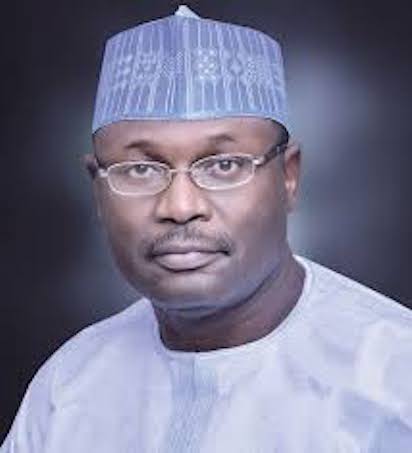
A Civil Society Organisation, Yiaga Africa, says the Ondo State governorship election was marred with vote buying and inadequate compliance with Covid-19 protocol.
Dr Aisha Abdullahi, Co-chair, Yiaga Africa 2020 Ondo Election Observation Mission, stated this on Saturday at a press conference on situational report on the election.
Abdulahi commended INEC for early arrival of materials to polling units which saw large turnout of voters.
Abdulahi said it received reports of vote buying from Akure South, Ose, Ondo West, Ilaje and Akure North with the secrecy of the ballot being compromised.
“Despite attempts by polling officials to prevent voters and party agents from showing how ballot papers were marked, these electoral offenses occurred in the presence of security personnel who made no attempt in some cases to reprimand the culprits,” she said.
She also decried that there was minimum observation of social distancing across all the polling units observed.
Abdulahi, however, noted that the commencement of polls, compliance with INEC COVID-19 protocol on the two-tier queuing system in 88% of polling units, the presence of infrared thermometer and disinfectant/sanitizers in 74% of polling units were observed.
She said, in assessing the electoral process’ responsiveness to the needs of persons with disabilities, it tracked the presence of disability-sensitive election materials with the presence of the Braille ballot guide in 59% of polling units.
Abdulahi also noted that magnifying glasses in 27% of polling units, forms EC 40H (PWD Voter information and statistics) in 93% of polling units and the PWD posters Form EC 30E in 90% of polling units.
Yiaga Africa commended the good people of Ondo State for their peaceful conduct during the voting process and pleaded they remain patient and peaceful through the voting and counting process. (NAN)
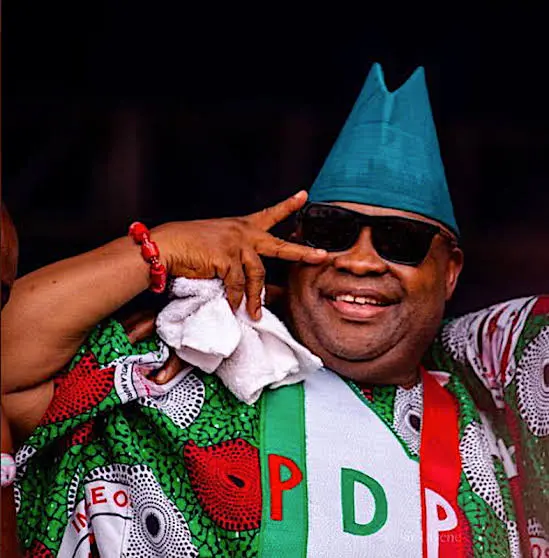
The Osun State chapter of the All Progressives Congress (APC) has reminded Governor Ademola Adeleke and the Peoples Democratic Party (PDP) that a tenure determination suit involving reinstated local government chairmen and councilors remained pending before the Federal High Court.
The Osun APC made this known in a statement by Tajudeen Lawal, its state chairman on Monday.
In the statement, the APC alleged that the state government and the PDP had attempted to misinform the members of the public following recent legal developments regarding local government administration in the state.
The party said the state government began releasing all manners of lies after the loss suffered by the PDP-led administration over the reinstatement of APC council officials.
According to the APC, “the state government had failed to inform the public about Suit No. FHC/OS/CS/147/2025, which concerns the determination of the tenure of the reinstated chairmen and councillors.”
The party said the matter last came up in court in November and was adjourned until February 2026.
The party said, “The suit also seeks judicial clarification on whether the Osun State Independent Electoral Commission has the authority to conduct another local government election during the subsisting tenure of the reinstated officials.”
It added that, “the PDP-led government had been misleading the public by describing an exercise held on 22 February 2025 as local government elections, claiming that residents had begun to recognise the difference between an election and illegal declaration.”
The APC alleged that comments attributed to state officials, including Commissioner for Information Kolapo Alimi, were “a deliberate attempt to incite the innocent members of the public and these claims did not reflect existing legal positions.”
The statement said Governor Adeleke and his aides were distorting facts surrounding the ongoing crisis affecting local government administration and warned that such actions could undermine peace in the state.
It noted that the pending suit also seeks confirmation that the reinstated chairmen and councillors are entitled to a three year tenure, having held their first sitting in February 2025.
The party urged security agencies and the public to remain vigilant, warning of potential breaches of peace linked to alleged threats by the state government and some PDP members to resort to force.
It cited an incident at Otan-Aiyegbaju in Boluwaduro local government area following the recent Supreme Court judgment, calling for protection of citizens and political supporters.
The APC, while appealing to parents and guardians to caution their children against involvement in political violence, urged its members and supporters to remain peaceful as the legal issues surrounding the local government councils continue to unfold.
 | ReplyReply allForwardAdd reaction |
By Simon Tuleh
In the annals of Nigerian history, few milestones carry the weight of democratic endurance.
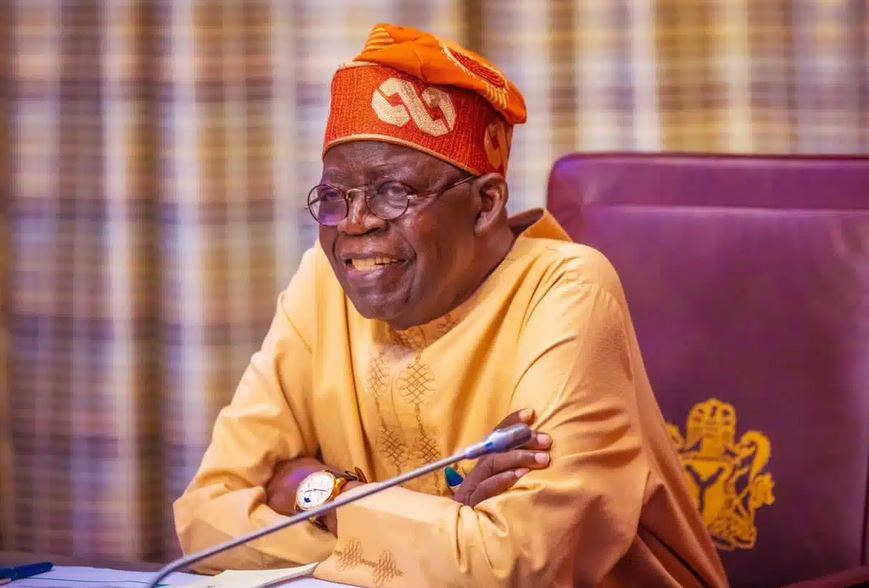
As President Bola Ahmed Tinubu approaches the midpoint of his first term, culminating in the 2027 elections, speculation and optimism swirls around his potential bid for a second term.
Should he secure victory in 2027 and serve until 2031, Tinubu would etch his name into the nation’s foundational narrative: becoming the first civilian president without any prior military service since Nigeria’s independence in 1960 to complete two full terms in a democratic government.
This achievement would not only symbolize the maturation of Nigeria’s Fourth Republic but also underscore a pivotal shift away from the shadows of military influence that have long loomed over the presidency.
As a citizen of Nigeria concerned about the sustainability of our democratic journey, one must be able to grasp the profundity of this potential landmark, rewind to October 1, 1960, when Nigeria emerged from colonial rule as a sovereign federation.
The early years were marked by civilian governance under the First Republic (1960–1966), led by Dr. Nnamdi Azikiwe, the nation’s ceremonial president. Azikiwe, a journalist and nationalist, embodied the civilian ideal but served only three years before a military coup shattered the Republic in 1966. Subsequent decades were dominated by a carousel of military regimes, from Yakubu Gowon to Muhammadu Buhari’s iron-fisted 1983–1985 interregnum, interrupted briefly by civilian interludes.
The Second Republic (1979–1983) offered a glimmer of democratic hope. Shehu Shagari, a teacher and politician from the north, was elected president in 1979 and reelected in 1983. Yet, his tenure ended prematurely in a coup, denying him a full second term. Shagari, like Tinubu, had no military background—a rarity in a country where barracks and ballots have intertwined fates.
The return to democracy in 1999 ushered in the Fourth Republic, Nigeria’s longest stretch of uninterrupted civilian rule. Olusegun Obasanjo, the republic’s inaugural president, former military general (1999–2007), served two terms, steering the nation through economic reforms and debt relief. But Obasanjo’s path was forged in khaki; he had led as military head of state from 1976 to 1979. His successors followed suit in blending civilian suits with military stripes: Umaru Musa Yar’Adua (2007–2010) died in office after less than three years, handing over to Goodluck Jonathan (2010–2015), who completed one term without military ties but faced electoral defeat in the 2015 wave of “Change” led by the All Progressives Congress (APC) with a former military general again taking the reins of power from a civilian president, this time not with the barrel of a gun but a democratic process general elections 2015. And Buhari became the first opposition candidate to beat an incumbent in a presidential election in Nigeria.
While the administration recorded some successes (especially in infrastructure and rice production), it is widely regarded as having failed to deliver on its core promises: security, economy, and anti-corruption. Most independent analysts and a majority of Nigerians rate the Buhari administration as one of the worst if not the worst in Nigeria’s democratic history, primarily because it took office with enormous goodwill and explicit promises on security and the economy, yet left the country dramatically more insecure, poorer, and more divided than it found it in 2015.
Yet, 2023 saw the dogged emergence of Bola Ahmed Tinubu, an accountant, senator, governor of Lagos State (1999–2007), and presidential candidate of the APC. Unlike Obasanjo and Buhari former military generals, Tinubu’s ascent as a non-military stern democrat is unmarred by fatigue.
A product of Chicago State University and the bustling streets of Lagos commerce, his political DNA is woven from grassroots mobilization, economic acumen, and unyielding opposition to military rule during the Abacha era. Exiled in the 1990s for his pro-democracy activism, Tinubu returned to help architect the Alliance for Democracy and later the All Progressives Congress (APC), the party that propelled him to Aso Rock.
Tinubu’s first term has been a crucible of bold strokes and bruising critiques. His “Renewed Hope” agenda—launched amid fuel subsidy removal, naira floatation, and cybersecurity overhauls has ignited economic tremors but also sown seeds of long-term stability. Inflation has spiked to double digits, and youth unrest simmers, yet GDP growth projections for 2025 hover around 3.5%, buoyed by oil sector tweaks and foreign investment inflows. Tinubu’s deft navigation of ECOWAS crises, including the Niger intervention, has burnished his statesman image on the continental stage.
Politically, the stars align for a 2027 reelection, The APC’s supermajority in the National Assembly, coupled with Tinubu’s patronage networks in the Southwest and beyond, positions him favorably. Constitutional eligibility is unambiguous: Article 135 of the 1999 Constitution permits two four-year terms for the president. At 73 in 2023, Tinubu would be 79 by term’s end in 2031—energetic enough, his allies argue, to outpace predecessors like the octogenarian Joe Biden across the Atlantic.
Critics, however, decry the risks: a personality cult, corruption scandals echoing his gubernatorial days, and the perennial “zoning” debate that could fracture the north-south equilibrium.
Yet history favors incumbents in Nigeria’s democracy; only Jonathan has lost reelection since 1999. Tinubu’s machine, honed in Lagos’ “megacity” governance, could deliver the votes if he sustains infrastructure wins like the Lagos-Calabar highway and student loan expansions.
Why This Matters: Shattering the Military-Civilian Nexus
Tinubu’s hypothetical second term would transcend personal triumph, symbolizing Nigeria’s democratic adolescence. Since independence, every two-term executive Obasanjo and Buhari bore military scars, a vestige of the coups that scarred the 1960s, 1970s, and 1980s.
This pattern has perpetuated a subtle militarism in governance: top-down decrees, security-centric policies, and a presidency that views the state as a command post.
A Tinubu double tenure would affirm civilian supremacy in its purest form. It would honor the sacrifices of pro-democracy icons like Ken Saro-Wiwa and Gani Fawehinmi, who dreamed of leaders accountable to ballots, not barracks. For a nation where 70% of citizens are under 30, per World Bank data, this milestone could inspire a generation to see politics as enterprise, not enforcement fostering innovation in tech hubs like Yaba and agricultural revolutions in the north.
Globally, it bolsters Nigeria’s soft power. As Africa’s largest economy and democracy, a stable two-term civilian leader would counter narratives of fragility, attracting investors wary of the 2023 election violence that claimed over 100 lives.
A Legacy in the Making
President Tinubu often invokes the metaphor of a “moving train” for Nigeria’s progressunstoppable, if guided wisely. Should he steer it through 2027’s polls to 2031, he will not merely extend his mandate but redefine it. For the first time since 1960, a president untainted by military service will have helmed two terms in democratic splendor, proving that in Nigeria’s grand experiment, the ballot box can outlast the bayonet.
As the 2027 campaigns dawn, the nation watches. Will Tinubu join the pantheon of two-term titans, but as the unapologetic civilian among soldiers? If history is any guide, the answer may well lie in the resilience of a man who turned Lagos from a swampy backwater into Africa’s Silicon Valley. Nigeria—and its democratic soul—stands to gain immensely.
Simon Tuleh is a consultant and public analyst based in Abuja 08029640726, simonbigfidel@gmail.com
From Abel Zwanke, Lafia
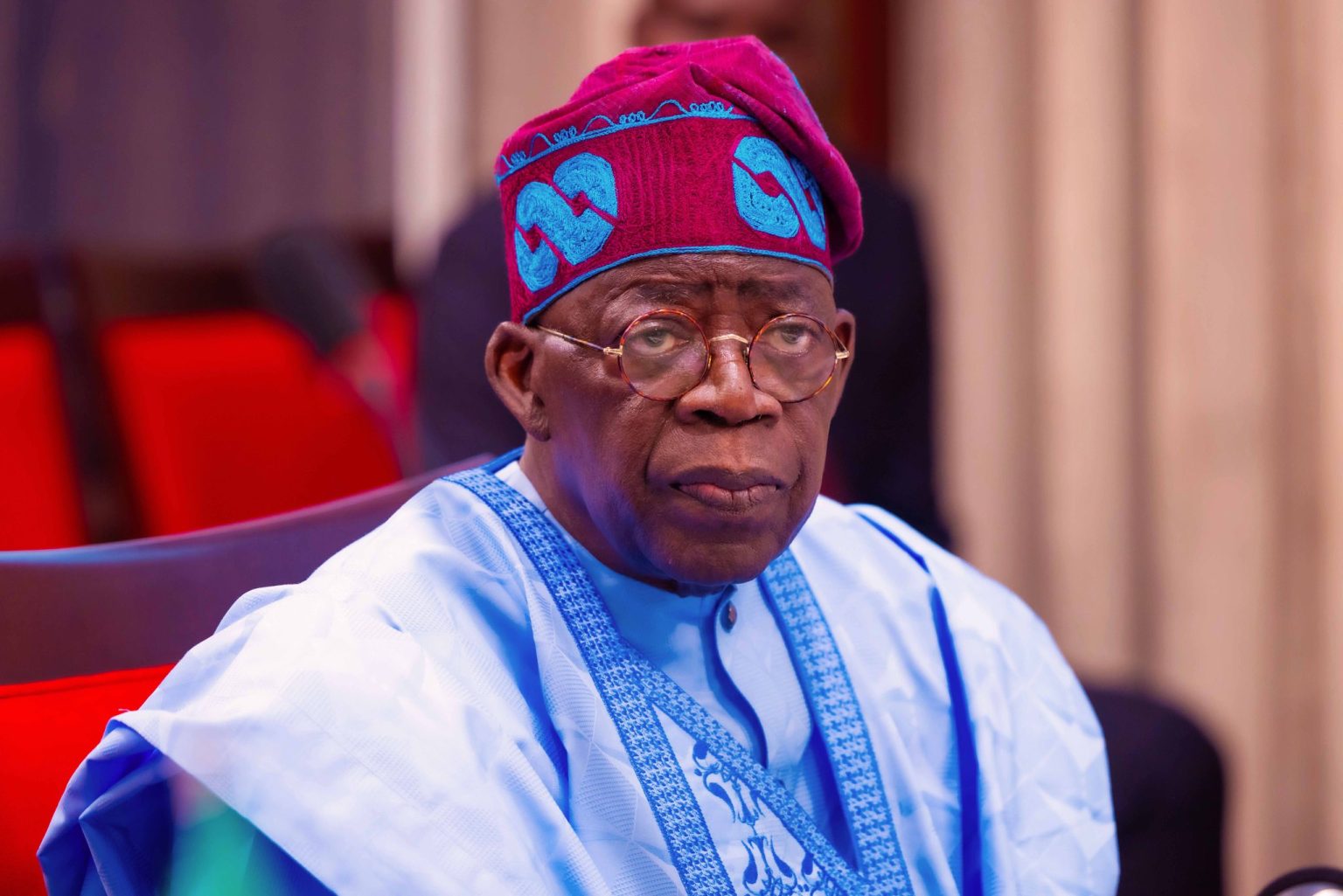
The Chief Executive Officer of the Community Initiative for Character Moulding and Entrepreneurship Development (CiCMED) and Chairman of Keftigga Group, Kefas Elisha Tigga, has reaffirmed support for President Bola Ahmed Tinubu and called on Governor Abdullahi Sule to contest the Nasarawa North Senate seat at the end of his tenure.
Tigga made the call on Sunday during a press conference at the closing ceremony of the Future Planters LEAD Africa Festival 2025 held at Gaji Luxury Hotel, Akwanga.
He described the festival, with the theme “Sowing the Seeds of Change, Harvesting the Future of Africa,” as a major success, noting that it has strengthened the Future Planters Network across Northern Nigeria and the continent.
“This year, we trained hundreds of young people in leadership, agriculture, financial literacy, climate action and entrepreneurship,” he said. “Our network has now grown to over 14,000 members. We are not just planning the future; we are planting and building it.”
Tigga said the country is passing through a challenging period, insisting that Nigerians must support President Tinubu to succeed.
“Anyone who understands leadership knows this is not the easiest season for President Bola Ahmed Tinubu,” he said. “But we choose unity and encouragement. We choose to stand with the President.”
According to him, the administration’s reforms have begun to reflect in economic stability, resource allocation and support for innovation, agriculture and MSMEs.
“This is not the time to tear down the nation with sentiments,” he stated. “This is the time to build together.”
Tigga commended Governor Abdullahi Sule for what he described as “quiet but impactful leadership,” particularly in mining, agriculture, infrastructure and human capital development.
“The story of Nasarawa State cannot be told without your name written in gold,” he said. “As your constitutionally allowed tenure draws near, we in the Future Planters Network urge you to contest for the Senate. This is not retirement; this is deployment.”
He added that Sule’s experience would be valuable in shaping legislation on mining, agriculture, security and youth development.
Tigga expressed gratitude to volunteers, partners, government agencies and supporters of CiCMED’s programmes, while urging youths and development partners to commit to national growth.
“We believe in continuity, sustainability and leadership succession rooted in integrity,” he said. “Together, we will build a stronger Nasarawa, a stronger Nigeria and a rising Africa.”


Wike Vows to Build More Houses for Judges
ShareBy Laide Akinboade, Abuja The Federal Capital Territory (FCT) Minister, Nyesom Wike on Monday reiterated that President Bola Tinubu, will...

FG Hands over 100 Rescued Catholic School Pupils to Bago
ShareFrom Dan Amasingha, Minna The Federal government has handed over 100 rescued Pupils of Catholic school children from Papiri and...

FG Unveils N50bn Equity-free Capital for Tertiary Students
ShareBy Tony Obiechina, Abuja The Federal Government yesterday launched the Student Venture Capital Grant (SVCG), a new N50 million equity-free...

TAJBank, NAHCON Sign MoU on Hajj Savings Scheme
ShareBy Tony Obiechina, Abuja TAJBank Limited, Nigeria’s biggest non-interest bank by assets base and innovative products and services delivery has...

SEC Moves to Deepen Nigeria’s Capital Market Digital Transformation
ShareBy Tony Obiechina, Abuja The Securities and Exchange Commission (SEC) has announced a series of wide-ranging reforms aimed at strengthening...

Senate Challenges NDLEA, NHRC to Synergize for Review of Anti-drug War Regime
ShareBy Eze Okechukwu, Abuja The Senate has challenged the National Drug Law Enforcement Agency (NDLEA) and National Human Rights Commission...


APC Reminds Adeleke, PDP of Ongoing LG Tenure Court Case
ShareThe Osun State chapter of the All Progressives Congress (APC) has reminded Governor Ademola Adeleke and the Peoples Democratic Party...


Tinubu’s Second Term: The Hope of Democracy in Nigeria
ShareBy Simon Tuleh In the annals of Nigerian history, few milestones carry the weight of democratic endurance. As President Bola...

Sule to Launch Nasarawa Branded Rice Dec 17
ShareNasarawa State Governor, Abdullahi Sule said the state, in collaboration with Silvex International, a leading rice processing company, will launch...

Plateau Ranks 7th in Ease of Doing Business – Official
ShareThe Presidential Enabling Business Environment Council (PEBEC) has ranked Plateau 7th in the country in Ease of Doing Business. The...