
NEWS
We’re Still Negotiating with Labour on Fuel Subsidy Removal – FG

By Joseph Amah, Abuja
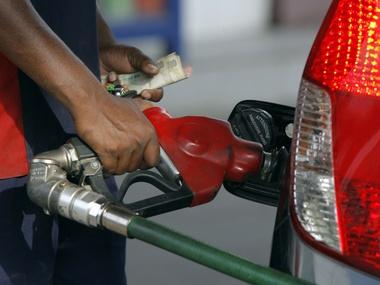
The Federal Government says it is still in negotiations with the organised labour as regards the removal of subsidy on Premium Motor Spirit (PMS) popularly called petrol. Officials of the Nigerian National Petroleum Company Limited (NNPCL) and the Nigerian Midstream and Downstream Petroleum Regulatory Authority (NMDPRA) stated that the removal of subsidy on petrol had been an explosive issue.
This, they said had made the government engage in negotiations with the organised labour on the matter despite the persistent rise in the amount being spent on subsidy amidst the recent increase in global crude oil prices.
The World Bank had already projected that Nigeria would spend about N4tn on petrol subsidy in 2022, as oil marketers also stated that the amount could rise to N6tn going by the rise in the price of crude oil.The NNPC being the sole importer of petrol into Nigeria for about four years has been shouldering the subsidy burden over the years, although it often describes this as under-recovery. When asked on Sunday if the company would be able to sustain the mounting petrol subsidy cost, the Spokesperson of NNPC, Garba-Deen Muhammad, when asked if the company would be able to sustain the mounting petrol subsidy cost, he simply said that subsidy was now a policy issue.
According to him, “NNPC is an operator in the market. The subsidy is a Federal Government decision and that of the regulator. You should ask the downstream regulator because it is a policy matter.” Probed further to speak on the issue since the NNPC has been the sole importer of petrol into Nigeria for years, Muhammad replied, “The best person to provide an answer to your question is the regulator. “The NNPC is a player and operator in the system. Whatever is the policy today, we will comply, that’s all!”
Our correspondent then called the spokesperson of the NMDPRA, Kimchi Apollo, who stated that the government was still in negotiations with the organised labour on the matter. He said, “Everyone who has followed the subsidy question knows that negotiations are ongoing with the organised labour and other stakeholders with regards to subsidy removal. “I don’t think anyone should expect the authority to give you a definite answer to this. It’s not a topic for discussion by any government agency knowing how explosive it could be.”
The government has been in negotiations with the organised labour on the removal of petrol subsidy for over a year, as labour had demanded that Nigeria’s refineries should be fixed before subsidy would be removed, among other demands. However, operators in the oil sector as well as international financial agencies, such as the World Bank and the International Monetary Fund, had continued to call for a halt in petrol subsidy considering the humongous amount spent annually subsidising petrol.
The President, Petroleum Products Retail Outlets owners Association of Nigeria, Billy Gillis-Harry, for instance, stated that subsidy could rise to N6tn this year, and stressed the full deregulation of the downstream oil sector was the solution to the subsidy. He said, “We’ve been saying this forever that we should deregulate and allow market forces to determine the price of PMS at the pumps. This subsidy we are paying, at the end of the day may not be the best for this country. “Today the government is proposing N3tn for subsidy this year, but at the end of the day it might rise up to N5tn or N6tn going by the rise in crude oil price.”
Also, the Executive Secretary, Major Oil Marketers Association of Nigeria, Clement Isong, had stated that subsidy might hit N6tn in 2022 if the current factors causing the rise in global crude oil prices to persist. He said, “It (the projected N4tn) might be even higher. It is a function of how our exchange rate goes. It is a function of how the price of oil goes. We don’t anticipate that what is happening between Russia and Ukraine will last for too long.“Hopefully if does not, the international prices of crude oil will come down and the availability of the product will go up, that is supply will improve. So hopefully the price of the finished product will come down.”
Isong added, “If we are lucky and if things are on our side, then it (subsidy) might be less. But if things are not on our side, if you do the current calculation as of today, based on all the numbers today, if things do not improve, it can easily reach N6tn.”







From Joseph Amedu, Lokoja
The Correspondents’ Chapel of the Nigeria Union of Journalists (NUJ), Kogi State Council, will hold its 2026 Press Week on March 26 at Edge Drive Hotel, Lokoja.
A statement by the Organizing Committee indicates that the event will be heralded with a fundraising drive aimed at raising 250 million Naira for the construction of a befitting secretariat for the Correspondents’ Chapel.
The ceremony will also feature a public lecture to be delivered by Dr. Femi Ajisafe and the conferment of awards on distinguished individuals who have excelled in public service.
The recipients include Prof.
Nentawe Goshwe Yilwatda, National Chairman of the All Progressives Congress (APC); Alhaji Yahaya Bello, immediate past Kogi Governor; and Prof. Olayemi Akinwumi, former Vice Chancellor, Federal University Lokoja.Others are Alhaji Sule Salihu Enehe, Executive Chairman, Kogi State Internal Revenue Service; Daramola Omoyele, a notable economist and data analyst, and Hon. Leke Abejide, Member, House of Representatives, representing Yagba Federal Constituency.
The event will be graced by His Excellency, Alhaji Ahmed Usman Ododo, Executive Governor of Kogi State, as the Special Guest of Honor, and HRM Seidu Akawu, the Ohimegye Igu Kotonkarfe, as the Royal Father of the Day.
Other dignitaries expected at the event include Alhaji Dahiru Mangal, Chairman, Mangal Industries, and Prince Olatunji Olusoji, the Asiwaju of Ayere Kingdom, who are the Principal Launchers.
Alhaji Momohjimoh Adeiza, Vice President, NUJ, Zone D, who is the Chief Host; and Hon. Kingsley Femi Fanwo, Kogi State Commissioner for Information and Communications, who is the Host.
CBN Wins Global Central Banking Award for Policy Reforms
The Central Bank of Nigeria has been named the global “Central Bank of the Year” at the 2026 Central Banking Awards, following sweeping monetary and structural reforms that have helped stabilise the country’s economy after years of policy distortions.
This was disclosed in a statement by the Central Banking Awards Committee on Sunday, which credited the apex bank’s policy reset and institutional reforms for restoring confidence in Nigeria’s financial system.
According to the statement, the award reflects a decisive return to orthodox monetary policy, improved governance, and reforms that strengthened investor confidence and market stability.
Nigeria’s economy had been under severe strain prior to the reforms, with rising inflation, weakening foreign exchange reserves, and widening gaps between official and parallel market exchange rates.
The committee noted that by 2023, inflation had climbed to 22.4 per cent, while foreign exchange liquidity deteriorated significantly, with a backlog of about $7bn in unmet obligations and a spread of over 60 per cent between official and parallel market rates.
It added that economic stagnation and policy inconsistencies had pushed Nigeria from being Africa’s largest economy in 2014 to fourth position behind South Africa, Egypt, and Algeria, while monetary financing and subsidy-related interventions left policy in an “unsustainable position.”
A former senior central bank official, whose name was not mentioned, was quoted in the statement as saying the country had appeared to be “heading the way of Venezuela and Zimbabwe,” amid concerns over fiscal instability, currency depreciation, and loss of central bank independence.
However, following the appointment of Olayemi Cardoso as Governor in October 2023, the apex bank embarked on wide-ranging reforms aimed at restoring macroeconomic stability and rebuilding credibility.
The committee stated that the new leadership prioritised ending quasi-fiscal interventions, tightening monetary policy, clearing foreign exchange backlogs, and re-establishing institutional independence, forming the foundation of a broader reform agenda anchored on transparency and discipline.
A major component of the reforms was the overhaul of the foreign exchange market. The CBN replaced multiple exchange rate windows with a unified, market-driven system based on a willing-buyer, willing-seller model, while introducing an electronic FX matching platform to improve price discovery and transparency.
Cardoso was quoted as saying, “The naira now trades within a narrow, stable range. The once-substantial gap between the official and parallel markets has shrunk to under 2 per cent, down from over 60 per cent.”
The statement noted that the central bank also cleared outstanding FX obligations owed to sectors such as aviation and manufacturing, helping to restore business confidence.
As a result of improved FX liquidity, stronger capital inflows, and increased non-oil exports, Nigeria’s gross external reserves rose to $46.7bn by November 2025, representing the highest level in nearly seven years and providing more than 10 months of import cover.
The International Monetary Fund, in its July 2025 Article IV assessment, was quoted as commending the reforms, noting that the measures taken had improved market confidence and supported liquidity in the foreign exchange market.
On inflation, the committee stated that the CBN adopted aggressive monetary tightening, raising interest rates from 18.75 per cent in 2023 to 27.5 per cent by November 2024. Although inflation initially surged to 34.80 per cent in December 2024 following subsidy removal and currency liberalisation, it later declined to 15.10 per cent by January 2026.
Food inflation also moderated to 8.9 per cent, reflecting improved price stability and tighter monetary conditions.
The easing inflation trend enabled the apex bank to begin a cautious policy easing cycle, reducing the benchmark rate to 26.5 per cent by February 2026.
Cardoso said the bank remained committed to further reducing inflation, adding that “the current double-digit rate cannot be acceptable,” while emphasising a transition towards an inflation-targeting framework supported by improved data and communication tools.
Beyond monetary policy, the committee highlighted structural reforms in the banking sector, including a recapitalisation programme introduced in 2024 requiring banks to meet higher capital thresholds.
It stated that more than 33 banks had raised fresh capital, with at least 20 already meeting the new requirements ahead of the March 31, 2026 deadline, while non-compliant banks risk licence downgrade, acquisition, or liquidation.
The apex bank also strengthened supervision by transitioning towards Basel III standards to improve risk management and liquidity monitoring.
In addition, microfinance lending expanded by over 14 per cent, while digital credit products reached more than 1.2 million small businesses in 2025, supporting financial inclusion.
On payments and digitalisation, the CBN reviewed the cash management system, introduced measures to improve ATM efficiency, and strengthened oversight of payment agents nationwide.
The committee noted that over 12 million contactless cards are now in circulation and that about 40 fintech firms are supported through the CBN’s regulatory sandbox.
The statement further highlighted improvements in governance and compliance, including the establishment of a dedicated compliance department and enhanced anti-money laundering controls, which contributed to Nigeria’s removal from the Financial Action Task Force grey list in 2025.
International rating agencies also acknowledged the impact of the reforms. Fitch upgraded Nigeria’s rating from B- to B with a stable outlook in April 2025, while Moody’s raised its rating from Caa1 to B3 in May, citing improved fundamentals and policy credibility.
Nigeria’s return to the international capital market was also marked by a $2.35bn Eurobond issuance in 2025, which was oversubscribed more than five times.
Despite the progress, the committee noted that challenges remain, including sustaining disinflation, completing banking sector recapitalisation, and strengthening institutional frameworks.
It, however, concluded that the scale of reforms undertaken by the apex bank had been significant, with a former official stating, “What the CBN has achieved is nothing short of remarkable.”
By David Torough, Abuja
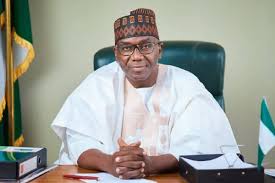
The Nigeria Governors Forum on Sunday in Lagos said it has submitted its contribution on the proposed state police framework to the National Security Adviser, with the document expected to be transmitted to the National Assembly.
The NGF Chairman and Kwara State Governor, Abdulrahman AbdulRazaq, disclosed this during a meeting with President Bola Tinubu at his Ikoyi residence in Lagos.
AbdulRazaq stated that discussions on state police are ongoing among various security organisations, led by the National Security Adviser, and that the NGF has made its contribution to the process.
“On the issue of state police, discussions are ongoing amongst various security organisations, led by the National Security Advisor, and the NGF has made its contribution.
“That document will be taken to the National Assembly to see how we can have a legislative framework for state police,” the governor stated.
He reaffirmed the governors’ commitment to renewing their collaboration with security forces to defeat terrorism, expand infrastructure, and improve the lives of citizens.
“As governors, we commit to renew our collaboration with security forces to defeat terrorism steadily, expand infrastructure opportunities and improve outcomes of lives of our people,” AbdulRazaq said.
The NGF chairman congratulated President Tinubu on his successful state visit to the United Kingdom, describing it as bold and significant.
“We congratulate you on the successful state visit to the United Kingdom and the many successes, investment proposals achieved during the trip.
“While our nation has always enjoyed a good relationship with the United Kingdom, the state visit, the first in 37 years, is bold and significant. It speaks to new leadership in Nigeria,” he stated.
AbdulRazaq expressed confidence that the bilateral agreements signed and the new approach on issues of shared interest with the UK would strengthen the existing relationship and bring prosperity to Nigerians.
“We are confident that the bilateral agreements presently signed and the new approach on issues of shared interest will strengthen the existing relationship between Nigeria and the United Kingdom and will bring more prosperity to our people,” he said.
The governor thanked the President for prosecuting the Renewed Hope agenda in a way that has made Nigerians proud.
“Your Excellency, we thank you for prosecuting the Renewed Hope agenda in a way that has made Nigerians proud more than ever before.
“Every Nigerian now has a stake in nation-building. We believe that this will translate to improved security in every part of our country,” he stated.
He emphasised the need for collective effort to end security breaches across the country.
AbdulRazaq declared, “Together, we must see that breaches of security all over the country come to an end.”
The NGF chairman also called on Nigerians, especially leaders, to commit to the virtues of piety, selflessness, compassion, unity, and mutual understanding for collective security, happiness, and prosperity.
He noted that about 25 governors attended the meeting at short notice.
“As you can see here today, we have about 25 governors who, at short notice, it’s a respect we have for you and the leadership you’re providing for the nation,” AbdulRazaq said.
Vice President Kashim Shettima, the Chief of Staff to the President, Femi Gbajabiamila, and other top government functionaries were present at the meeting.
The state police proposal has been a subject of intense debate, with proponents arguing that it would enhance security by bringing policing closer to communities, while critics express concerns about potential abuse by governors.
The new Inspector General of Police, Tunji Disu, had in February set up a committee to work out modalities for the establishment of state police.



Oborevwori Celebrates Tony Elumelu at 63
ShareFrom Francis Sadhere, Delta The Governor of Delta State, Sheriff Oborevwori, has extended warm felicitations to the Chairman of United...
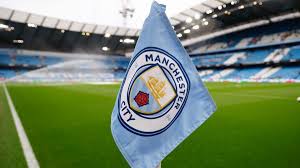

Man City Win League Cup Final against Arsenal
ShareTwo second-half headers by Manchester City’s Nico O’Reilly settled the English season’s first silverware on Sunday as Pep Guardiola’s...
Kogi NUJ Correspondents’ Chapel Holds Press Week March 26
ShareFrom Joseph Amedu, Lokoja The Correspondents’ Chapel of the Nigeria Union of Journalists (NUJ), Kogi State Council, will hold its...


ShareCBN Wins Global Central Banking Award for Policy Reforms The Central Bank of Nigeria has been named the global “Central...

State Police: Governors Submit Proposal for NASS Review
ShareBy David Torough, Abuja The Nigeria Governors Forum on Sunday in Lagos said it has submitted its contribution on the...
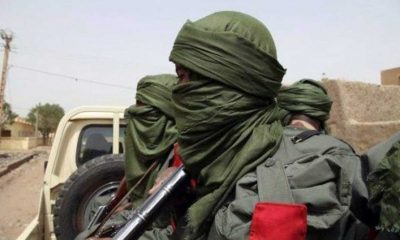

Bandits, Boko Haram, Others Kill over 190,000 Nigerians in 17 Years – Report
ShareBy David Torough, Abuja Nigeria’s deepening security crisis has come under renewed scrutiny following a damning report by International Society...


Let Eid Mark a National Reset — CAN
ShareCongratulates Muslims on Eid-el-Fitri, urges unity amid economic, security challenges By Laide Akinboade, Abuja The Christian Association of Nigeria (CAN),...
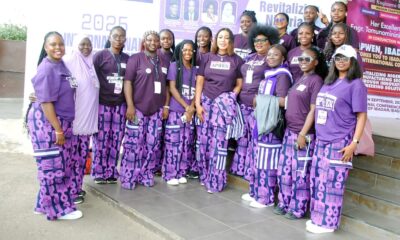

IWD:APWEN Bayelsa Celebrates Female Engineers, Launches Mentor-Mentee Pairing Program
ShareFrom Mike Tayese, Yenagoa The Association of Professional Women Engineers of Nigeria (APWEN), Bayelsà chapter has celebrated the International Women’s...

Julius Berger Delivers Landmark CSR Activities in Rivers State
ShareBy Mike Odiakose, Abuja Julius Berger Nigeria PLC, the nation’s premier engineering construction powerhouse, is not only building bridges and...

Adebayo: Age Not the Issue, Nigeria Needs Leaders Who Truly Love the Country — Archbishop Kanu
ShareBy Mike Odiakose, Abuja Former Prelate Emeritus of the Methodist Church of Nigeria, Archbishop Uche Kanu, has said that Nigeria’s...