
NEWS
Whistleblowers Petition Tinubu over MSC’s Unfair Shipping Practices


From Mike Tayese, Yenagoa
Whistleblowers under the auspices of the Citizens Whistleblowers Coalition (CWC) have sent a petition to President Bola Tinubu, urging him to order an investigation into the alleged unfair business practices of Mediterranean Shipping Company (MSC).
The coalition, in the petition signed by its Programme Officer, Nafiu Ibrahim; Officer Communication and Liaison, Ella Susan and Officer, Socio-Economic Rights, Dodeye Okoi Arikpo, appealed to the President to probe MSC for alleged economic sabotage and judicial subversion.
Speaking in Port Harcourt recently, the whistleblowers said the probe should particularly be centered on MSC practices against Nigerian shippers, including unfair container deposit charges, illegal detention of shipments, and unfair demurrage charges.
The stakeholders said they resorted to writing the petition after MSC refused to honour the National Assembly’s invitations, disregarded the Minister of Blue Economy’s memo on container deposit charges, and insisted on an exclusive jurisdiction clause that required all disputes in Nigeria to be litigated in London.
The petitioners insisted that MSC’s unfair business practices directly impacted the Nigerian economy and had led to high costs of goods and services being passed on to the poor masses by importers.
They explained that the petition became important because they believed that the company’s practices were contrary to several provisions of the Federal Competition & Consumer Protection Commission Act, the constitution of the federal Republic of Nigeria and other acts of the National Assembly.
They said: “We are committed to combating corruption and unfair business practices in all its forms while advocating for good governance so as to create a more just, egalitarian and equitable society.
“We write to bring to your kind attention the ill treatment and oppression of Nigerians in the hands of Mediterranean Shipping Company (MSC), a shipping company operating in Nigeria. Without doubt, Nigeria is generally an import dependent country as it relies largely on the importation of goods to fuel her economy.
“According to World Bank data, Nigeria’s import to GDP ratio is around 12%, and MSC, being the biggest shipping line in the world, accounts for the majority of the imports into Nigeria.
“We note however, that over the years MSC has perpetrated unfair business practices against Nigeria and Nigerian shippers. Some of the practices include unfair container deposit charges, illegal and unlawful detention of shipments contrary to Nigeria laws, unfair demurrage charges, obnoxious detention charges, and unfair, unjust and unreasonable clauses.
“Most of the business practices of MSC are contrary to several provisions of the Federal Competition & Consumer Protection Commission Act. MSC’s ill treatment of Nigerians directly impacts on the economy as it leads to high cost of goods and services in Nigeria.
“It is on record that several complaints have been raised by many companies and groups in Nigeria. However, MSC continues to perpetrate its unfair practices.
“Surprisingly, the Federal Competition & Consumer Protection Commission (FCCPC), primarily charged under the FCCPA with policing these unfair practices, has remained silent and failed to investigate and bring MSC to book.
“Notably, the unfair container deposit charges running into billions of naira brought about the intervention by the Minister of Blue Economy who directed a replacement of the container deposit fee with an indemnity scheme, but MSC has refused to implement this indemnity scheme but has instead continued to enforce its unscrupulous container charges.”
The petitioners bemoaned an exclusive jurisdiction clause in MSC’s Bill of Lading, which required all disputes against the company to be litigated in the High Court in London, United Kingdom.
The coalition argued that such a clause was oppressive and unreasonable and had imposed hardship on Nigerian shippers, who were expected to incur significant expenses to litigate disputes in London.
They said: “One of the most oppressive and unfair business practices of MSC which recently came to light is an obscure exclusive jurisdiction clause in MSC Bill of Lading which practically places MSC beyond the reach of Nigerian laws and the Nigerian court system for any goods shipped to Nigeria.
“MSC’s Bill of Lading which contains the exclusive jurisdiction clause means that Nigerian shippers cannot sue MSC in Nigeria and every dispute against MSC must be litigated in the High Court in London, United Kingdom. In other words, the obscure exclusive jurisdiction clause is to the effect that MSC cannot be sued in Nigeria”.
The petitioners made a reference to the recent decision of the London High Court in Case No: CL-2024-000700, saying it further confirmed MSC’s oppression of Nigerians.
“In that case, MSC obtained an anti-suit injunction against a Nigerian company, Interglobal Ltd, relying on the exclusive jurisdiction clause in its Bill of Lading”, they said.
The whistleblowers appealed to Tinubu to intervene and act decisively to address MSC’s unfair business practices, urging the government to conduct a full investigation of MSC and call the company to order.
They insisted that investigation should focus on alleged economic sabotage, tax evasion, and regulatory violations, demanding that MSC should be compelled to respect Nigerian laws and the court system, particularly S20 of the Admiralty Jurisdiction Act, which vests jurisdiction in the Federal High Court for admiralty matters connected with Nigeria.
They also appealed to Tinubu to mandate the Federal Inland Revenue Service (FIRS) to audit MSC’s declared revenues and assess the accuracy of its tax remittances, given the company’s significant revenue generation in Nigeria.

By David Torough, Abuja
Troops of Joint Task Force South East Operation UDO KA launched a decisive assault on 26 February 2026, storming the notorious Mother Valley in Nkwere, Anambra State, long described by authorities as a stronghold of the Indigenous People of Biafra (IPOB) and its armed wing, the Eastern Security Network (ESN).
The Joint Task Force (JTF) South East—Operation UDO KA, comprising the Nigerian Army, Nigeria Police Force, and Nigeria Security and Civil Defence Corps—advanced for over three hours through difficult terrain before penetrating and dominating the valley.
Troops reportedly faced heavy gunfire and locally made improvised explosive devices during the operation.According to the statement, one IPOB member was neutralized during the exchange, while several others fled with gunshot wounds. Security forces said they recovered two pump-action guns, a locally fabricated firearm, a tear gas gun, seven gas cylinders, an electric kettle, and flags described as linked to extremist propaganda.
Troops also destroyed structures identified as the group’s “Supreme Headquarters,” including solar panels and a Mikano generator, which officials said were sustaining operations in the valley.
In a related action, two suspected IPOB members were arrested—one allegedly attempting to plant an improvised explosive device and another accused of spying on troop movements.
Security forces also recovered a KIA saloon car and a black Toyota Sequoia jeep from what they described as a terrorist car park within the valley.
The suspects are currently in custody for further investigation, while clearance operations continue in the area. Authorities said the operation underscores their resolve to dismantle armed groups and maintain security across the South East.

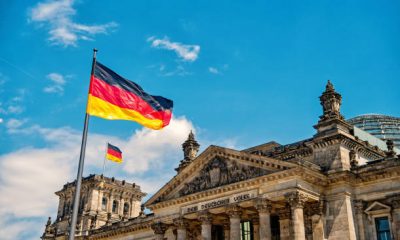
BearingPoint commissioned a new survey showing Germany and Austria still lead Europe in cash usage, defying the broader continental shift toward digital payments and card-based transactions across retail and services sectors.
The poll, conducted in December by YouGov, found that 73 per cent of respondents in Germany cited cash as their most frequently used payment method, rising from 69 per cent a year earlier.
In Austria, 71 per cent of participants said they regularly paid with banknotes and coins, confirming the country’s continued preference for physical currency in spite of growing availability of digital and contactless alternatives.
By contrast, cash usage declined across the seven other European countries surveyed, highlighting a widening divide between German-speaking nations and much of the rest of Europe in payment preferences.
In Switzerland, 61 per cent of respondents reported often using cash, followed by 58 per cent in Ireland, 51 per cent in France and 46 per cent in the Netherlands.
Northern European countries demonstrated the lowest reliance on physical currency, reflecting more advanced digital infrastructure and stronger consumer adoption of mobile wallets, cards and instant electronic payment systems.
Only 25 per cent of respondents in Sweden said they frequently used cash, compared with 32 per cent in Denmark and 42 per cent in Finland.
More than a quarter of Swedes said they never used cash, while 18 per cent of Danes reported the same, underscoring the rapid shift toward fully digital payment ecosystems.
In Germany and Austria, by comparison, only 2 per cent and 1 per cent of respondents respectively said they did not use cash at all.
Across all nine countries surveyed, 37 per cent of respondents said it was certain or very likely they would stop using cash entirely within the next decade.
The survey also revealed limited public awareness of the proposed digital euro project currently under discussion among eurozone policymakers and financial institutions across the region.
Around one-third of respondents in eurozone countries said they had not heard of the initiative being developed by the European Central Bank, which could launch as early as 2029.
Eurozone monetary authorities had repeatedly stressed that the digital euro would complement, rather than replace, physical cash, aiming to preserve consumer choice while modernising Europe’s payments infrastructure.
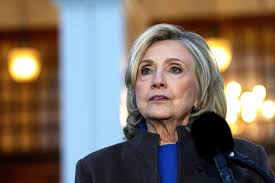
Former U.S. Secretary of State Hillary Clinton is due to testify before the U.S. Congress on Thursday relating to the scandal surrounding sex offender Jeffrey Epstein.
Initially, Hillary Clinton, 78, is expected to testify under oath on Thursday, before her husband and former president Bill Clinton, 79, is questioned on Friday.
According to US media, they will be questioned not in Congress in Washington, but via video link.
These are expected to be closed sessions, so it is unclear how much information will be made public.
Hillary and Bill Clinton refused for months to testify before the U.S. Congress in the investigation of the Epstein case.
The Democrats accused the Republican chairman of the relevant House oversight committee, James Comer, of conducting a politically motivated process.
According to U.S. media reports, their agreement to testify in early February led to the Republicans cancelling a vote on a contempt of Congress procedure against the Clintons.
Bill Clinton’s name and pictures of him appear in documents related to the Epstein investigations.
However, a mention in itself means nothing.
The former president has repeatedly denied any wrongdoing in connection with his acquaintance with Epstein.
Epstein operated an abuse ring for years, victimising dozens of young women and minors.
The New York financier had excellent connections in U.S. high society.
He died in his prison cell in 2019, before a conviction could have been reached.
ReplyReply allForward
Add reaction



Tiwa Savage Unveils Music Foundation to Empower Young African Creatives
ShareInternational Afrobeats star, Tiwa Savage, has unveiled the Tiwa Savage Music Foundation to support young African creatives across multiple areas...


I’ve been Paid N40m for Boxing Match with Carter Efe – Portable
ShareControversial Nigerian street pop artiste, Portable, has been paid the sum of N40 million for agreeing to engage in a...


Army Kills Scores of Terrorists, Rescue Hundreds in February Offensive
ShareBy David Torough, Abuja The Armed Forces of Nigeria (AFN) said it intensified nationwide military operations in February 2026, killing...


Troops Crush IPOB/ESN Stronghold in Mother Valley Assault
ShareBy David Torough, Abuja Troops of Joint Task Force South East Operation UDO KA launched a decisive assault on 26...


Burna Boy’s Associate, Rahman Jago Confirms Singer Convert to Islam
ShareRahman Jago, a socialite and associate of Grammy-winning singer Burna Boy, has confirmed that the singer has converted to Islam....


UCL: Osimhen Slams Galatasaray Display Despite Win over Juventus
ShareSuper Eagles striker Victor Osimhen has expressed disappointment with Galatasaray’s performance despite their UEFA Champions League playoff victory over Juventus,...
NPFL: Enyimba Must Adapt Quickly To Deutsch’s Style of Play – Odeh
ShareEnyimba star Paul Odeh has disclosed that the players must adapt quickly to new head coach Emmanuel Deutsch’s style of...

Ronaldo Becomes Co-owner of Spanish Side Almeria
ShareCristiano Ronaldo has become co-owner of Spanish second division side Almeria after acquiring a 25% share in the club. The...

Germany, Austria Remain Europe’s Cash Strongholds, Survey Finds
ShareBearingPoint commissioned a new survey showing Germany and Austria still lead Europe in cash usage, defying the broader continental shift...

Hillary Clinton Testifies before U.S. Congress in Epstein Affair
ShareFormer U.S. Secretary of State Hillary Clinton is due to testify before the U.S. Congress on Thursday relating to the...