
view point
Why Nigeria’s Battle over Electronic Transmission is Really about Trust


By Isaac Asabor
The fierce national reaction to the Senate’s handling of electronic transmission in the Electoral Act amendment is not a dispute about technical procedure. It is a confrontation over credibility. The controversy now unfolding around Clause 60(3), discretionary language, and the rejection of mandatory real-time uploads is not simply legislative disagreement; it is a public referendum on whether Nigeria’s electoral system can be trusted to carry the will of voters intact from polling units to final declaration.
Recent developments have sharpened that question dramatically. Labour unions threaten mass action and election boycotts. Civil society organizations demand investigations into alleged procedural irregularities.
Political coalitions warn of risks to electoral integrity. Youth groups speak of deepening disillusionment. Even within the Senate itself, reports of confusion and internal dissent reveal an institution struggling to align its actions with public expectations. The intensity of these reactions confirms a central truth: electronic transmission has become the most visible measure of whether Nigerian democracy is moving toward transparency or retreating into ambiguity.At the heart of the dispute is not whether electronic transmission exists in law. It does. The conflict lies in whether it should be mandatory and immediate or discretionary and conditional. That distinction is not semantic. It defines the difference between a system designed to guarantee transparency and one that merely permits it.
Supporters of mandatory real-time transmission argue that leaving the process to administrative discretion creates vulnerability at the precise point where electoral credibility has historically been weakest, the collation stage. This concern is neither abstract nor speculative. Nigeria’s electoral controversies have rarely emerged from the act of voting itself. They arise in the transition from polling unit results to aggregated outcomes. It is this transitional space that citizens seek to close through compulsory digital transmission.
Opponents of mandatory provisions frame their stance as continuity rather than regression. By retaining the wording that results are transmitted “in a manner as prescribed by the Commission,” they argue that flexibility is preserved. Yet critics interpret that same flexibility as institutionalized uncertainty. Where lawmakers see administrative latitude, citizens see a loophole. Where officials speak of procedural options, the public hears permission for selective compliance.
The Nigeria Labour Congress’s threat of mass action captures the emotional charge surrounding the issue. Its warning that elections without real-time electronic transmission could face boycott is not merely a political tactic; it reflects a growing belief that participation without verifiable transparency risks legitimizing outcomes that cannot be independently trusted. The Congress’s insistence that votes must not only be counted but seen to be counted encapsulates the broader public sentiment.
Civil society reactions further illustrate how the debate has shifted from policy to principle. Organizations have not limited their concerns to legislative wording; they question process integrity itself. Petitions demanding investigation into alleged removal of provisions signal anxiety that procedural opacity is not accidental but systemic. When lawmaking itself becomes contested terrain, the credibility of the laws it produces inevitably suffers.
Political organizations across ideological and regional lines have converged on a similar warning: discretionary transmission preserves the very vulnerabilities reform was meant to eliminate. Whether expressed by opposition coalitions, regional socio-political groups, or electoral reform advocates, the argument is consistent; ambiguity in result transmission invites contestation of outcomes. And when outcomes are contested, governance itself becomes unstable.
Perhaps the most revealing dimension of the controversy is generational. Youth organizations have framed the debate not as a technical dispute but as a test of democratic sincerity. Nigeria’s young population constitutes the largest voting demographic. Their engagement is driven not by nostalgia for past processes but by expectation of institutional evolution. When reforms perceived as minimum standards of transparency appear diluted, disengagement becomes rational rather than apathetic. A democracy that cannot convince its youngest participants of procedural integrity risks eroding its own future legitimacy.
The Senate’s emergency session, convened to approve votes and proceedings necessary for legislative harmonization, therefore carries symbolic significance beyond procedural necessity. It represents an institutional moment of choice: whether to reaffirm public confidence or deepen suspicion. Reports of internal divisions and confusion about what was actually passed only intensify public unease. A legislative body uncertain about its own decisions cannot easily reassure a skeptical electorate.
Underlying the entire controversy is a profound struggle over narrative authority. Electoral bodies traditionally define legitimacy through compliance with legal frameworks. Citizens, however, increasingly define legitimacy through transparency of process. These perspectives are not inherently incompatible, but they diverge when legal compliance does not produce visible accountability. Electronic transmission bridges that gap by transforming procedural compliance into observable action.
The warnings that the controversy could affect the credibility of the 2027 general elections are not rhetorical exaggerations. Electoral legitimacy is cumulative. Each unresolved controversy compounds skepticism. Each perceived retreat from transparency amplifies doubt. By the time ballots are cast, public confidence may already be predetermined by how reforms were handled years earlier. Trust is not built on Election Day; it is constructed in the legislative and administrative decisions that precede it.
Critically, the national response demonstrates that Nigerians no longer interpret electoral reform as a matter reserved for political elites. The breadth of stakeholders now engaged, labour unions, civil society, regional organizations, youth coalitions, opposition figures, and policy advocates, signals that electoral transparency has become a shared civic priority. This convergence is itself a democratic development. It reflects a society increasingly unwilling to delegate the credibility of its political system to institutional assurances alone.
Electronic transmission has thus evolved into a metaphor for a deeper democratic aspiration. It represents the desire for a system where results are not only accurate but verifiable, not only lawful but observable, not only declared but demonstrable. In this sense, the controversy is not about technology but about the architecture of trust.
It would be misleading to suggest that mandatory electronic transmission alone can resolve Nigeria’s electoral challenges. Technology does not eliminate political contestation, nor does it guarantee institutional integrity. However, institutional design shapes opportunity. Systems that reduce discretion at critical points reduce the scope for dispute. Systems that prioritize transparency encourage acceptance even among those who lose.
The resistance to mandatory provisions, therefore, is interpreted by many Nigerians not as caution but as reluctance to fully close avenues for post-voting intervention. Whether that interpretation is fair or not is secondary to its political consequence: perception becomes reality in matters of legitimacy.
The language used by critics, phrases such as “weaponization of ambiguity” or warnings of democratic erosion, may appear dramatic, but they reflect a broader public frustration with processes perceived as perpetually inconclusive. Nigerians are not demanding perfection. They are demanding clarity.
The unfolding debate ultimately reveals a country negotiating the terms of its democratic future. The question is no longer whether elections will occur, but whether outcomes will command belief. Electronic transmission has become the visible battleground where that question is being fought.
Trust cannot be legislated into existence, but it can be undermined by ambiguity and strengthened by transparency. The Senate’s decision on whether to retain discretionary language or mandate real-time transmission is therefore not merely a technical choice. It is a declaration of how Nigeria intends to reconcile institutional authority with public expectation.
In the end, the uproar is not noise. It is evidence of democratic consciousness asserting itself. Citizens are demanding that power reflect participation without distortion. They are insisting that the journey from ballot to result be as transparent as the act of voting itself.
Nigeria’s battle over electronic transmission is, fundamentally, a struggle over whether democracy will be something citizens are asked to trust, or something they are enabled to verify.
By Chijioke Okoronkwo
The recurring headline, “Another Nigerian Killed in South Africa”, has become a staple of both local and international news bulletins.
Most of these deaths result from xenophobic attacks, allegations of crime/drug dealing, and excessive use of force by the law enforcement agencies.
There are also reports of Nigerians killing Nigerians owing to criminal, cult and gang rivalries as well as business and personal disputes.
Available data from the Nigerian Union South Africa (NUSA) and the Nigerian Citizens Association South Africa (NICASA) indicates that between 2000 and 2020, more than 127 Nigerians were killed in South Africa.
Latest reports indicate that these killings continued in the subsequent years.
On Nov. 9, 2025, Mr Chikamnene Eddie Mmuonagorom, an indigene of Anambra, was stabbed to death in his home in Floville, Kimberley; On Feb. 8, Emeka Uzor, an indigene of Enugu State, was shot dead while in his vehicle at a Caltex filling station in Windsor East, Randburg, Johannesburg.
Most recently, on Feb. 11, Isaac Satlat, an indigene of Plateau, who was an e-hailing driver, was strangled to death in Pretoria by passengers (a man and a woman) who requested a ride via the Bolt app.
In the aftermath of each incident, statements and condemnations are issued and diplomatic engagements are initiated—oftentimes inconclusively. Then, another incident occurs.
The Nigerians in Diaspora Commission (NIDCOM) has consistently flayed the reoccurring menace.
NIDCOM Chief Executive Officer, Abike Dabiri-Erewa, in a statement by the commission’s Director of Media, Public Relations and Protocols, Abdur-Rahman Balogun, described the incidents as disturbing and urged South African authorities to ensure justice was served.
She also called for improved protection of Nigerians and other non-indigenes residing in the country.
Dabiri-Erewa said that that Nigeria and South Africa shared longstanding ties and expressed concern over recurring violent crimes against Nigerians.
In a similar vein, NUSA described the killings as “senseless acts of violence” and urged the South African Police Service to ensure that those responsible were promptly and fully prosecuted.
On his part, NICASA President, Mr Frank Onyekwelu, said the association condemned the killings in the strongest terms, adding that no individual or group had the right to take the law into their hands or deprive another person of life.
He urged members of the Nigerian community in South Africa to remain calm, peaceful and law-abiding as engagements continued with the Nigerian Consulate, South African authorities and human rights institutions.
While South African authorities often make arrests, the issues of diligent prosecution and conviction are not always clearly addressed.
It is worth noting that three of the accused—Dikeledi Mphela (25), Gotseone Machidi (26), and McClaren Mushwana (30)—are appearing before the Pretoria Magistrate’s Court in connection with the murder of Isaac Satlat.
In retrospect, Nigeria-South Africa relations date back to 1960, with Nigeria positioned in the vanguard of the anti-apartheid and liberation struggles.
In 1960 to 1990s, after the 1960 Sharpeville Massacre, Nigeria championed the anti-apartheid cause, funding liberation movements like the ANC and providing passports to South African activists, according to The Africa Report and Wikipedia.
In 1976, Nigeria established the Southern Africa Relief Fund (SARF) to support the anti-apartheid struggle.
More importantly, the “Mandela Tax”, a compulsory deduction from Nigerian civil servants’ salaries and voluntary donations by citizens in the 1970s, was introduced to support the anti-apartheid struggle in South Africa.
In 1994, formal, diplomatic, and economic ties were established after the end of apartheid and the start of democracy in South Africa in 1994, culminating in a Bi-national Commission (BNC) inaugurated in 1999 to manage relations.
Recall that xenophobic attacks on Nigerians and other African migrants occurred in 2008, 2015, and 2019, leading to injuries and fatalities among Nigerians in South Africa.
While xenophobic attacks seem to be abating, the killings of Nigerians under various guises are cyclical.
The disturbing trend has drawn the attention of perceptive pan-Africanists.
The President, Africa Development Study Centre (ADSC), Victor Oluwafemi, said it had become expedient for the Federal Government to summon South Africa’s High Commissioner to Nigeria over recurrent attacks on Nigerians in the country.
Oluwafemi recommended a formal engagement for clear assurances regarding the safety of Nigerian nationals in South Africa.
According to him, the safety of Nigerian citizens abroad was not a diplomatic courtesy but a sovereign obligation.
Oluwafemi said that incidents involving the killing or violent targeting of Nigerians abroad must trigger visible diplomatic action within 24 hours.
According to him, delayed responses weaken deterrence and embolden repetition.
Julius Malema, South African opposition leader and founder and leader of the Economic Freedom Fighters (EFF), denounced the killings and xenophobic attacks, applauding Nigeria’s contributions to South Africa’s freedom.
He described xenophobia as “a betrayal of African unity”.
Malema spoke recently at the opening of the 2025 Annual General Conference of the Nigerian Bar Association (NBA) held at the International Conference Centre, Enugu.
He said Nigeria was one of the countries that stood firmly by South Africa, during that country’s darkest hour.
He recalled that when South Africa was fettered by apartheid and its people were murdered, imprisoned, and denied basic humanity, Nigeria rose as a giant for justice, placing the country squarely at the centre of its corridors.
He said that Nigeria set up the Southern African Relief Fund and mobilised its citizens to contribute to the liberation struggle.
He added that Nigerian students did not only contribute through Mandela Tax, but also, through protests in opposition to apartheid.
Ultimately, while Nigerians living in South Africa are obligated to engage in legitimate business and shun criminality, pan Africanists say the authorities must fulfill their responsibility to protect foreign nationals. (NAN)
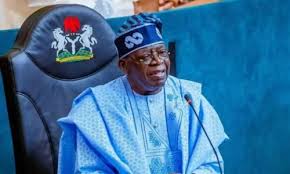
By Bola Ahmed Tinubu
Africa is paying too much to borrow.
How and on what basis the continent’s governments can secure financing should not be based on external discretion.
Calls to end the “Africa premium” — the gap between how Africa is assessed and the reality of its economies — can no longer be ignored.
Fitch, Moody’s and S&P Global Ratings, the three dominant global credit rating agencies, wield outsized influence over Africa’s access to international capital.
Their judgments shape investor behaviour, yet they consistently misjudge African risk. Just three African countries are rated investment grade, even as the IMF projects the continent to be the world’s fastest-growing region this year.
Africa is now establishing its own credit rating agency; it is a necessary corrective.
Detractors claim Africa wants to mark its own homework. The evidence suggests otherwise: a 2023 UN Development Programme report notes that “idiosyncrasies” in credit ratings cost Africa $75bn annually in excess interest and foregone lending.
An African credit rating agency would address the greatest weakness of the “Big Three”: limited on-the-ground presence.
In their models, quantitative data is weighed against subjective judgments on political risk, institutional strength and policy durability. How those judgments are reached — and how much they count — is left to opaque “analyst discretion”.
Conclusions drawn from afar fail to capture local realities. Relying on such judgments means global market cycles trump individual states’ economic fundamentals.
Many countries across the continent have export-led economies based on commodities. When prices fall or markets tighten, African nations are downgraded swiftly and broadly — even when their reserves are strong, fiscal buffers are intact and debt profiles remain manageable.
Downgrades then become self-fulfilling, raising borrowing costs and straining public finances.
But an African credit rating agency will not suffice on its own. The agency must earn the confidence of global capital with assessments anchored in the sort of timely, comprehensive data to which international markets respond.
Better data has been partly responsible for Nigeria’s recent upgrades: improving the timeliness and breadth of economic statistics; bringing previously off-balance-sheet central bank lending on to the official public debt register; rebasing GDP to reflect economic reality more accurately; publishing more budget documents to strengthen fiscal transparency.
The rest reflects hard policy choices, such as the removal of a wasteful fuel subsidy and the liberalisation of the exchange rate.
Non-oil growth has helped diversify the economy as the Naira, for the first time, decouples from global crude prices.
Even so, Nigeria’s ratings still lag behind reforms and market sentiment. Our November dollar-denominated bonds were oversubscribed 5.5 times.
Slow upward adjustments are commonplace across Africa, especially when set against the speed of downgrades. Smaller countries, lacking Nigeria’s scale and analyst coverage, bear the cost of this delay most.
A continent-wide credit rating agency will capture reform momentum in real time.
Delayed upgrades cost money: African countries cannot afford to wait years to access markets after implementing hard reforms.
Nations must stand on their own feet — especially in the wake of aid cuts. But they should be able to do so on a level playing field.
We understand that global capital will still look to the established agencies for validation. However, if an African agency can identify progress earlier, later corroborated by the Big Three, it will gain credibility while serving as an early signal to both markets and those agencies.
It is not a replacement, but a complement.
Affordable access to credit will determine whether Africa becomes the growth engine that its demographic boom promises.
By mid-century, the continent will account for a quarter of the world’s working-age population. Africa’s success is not a regional concern, but a global opportunity.
Tinubu is the President of the Federal Republic of Nigeria.(NAN)
By Ejinkeonye-Christian Phebe
Nigeria produces millions of graduates every year, among whom are hundreds with a First Class Degree. Yet, despite this steady academic output, graduate unemployment remains consistently high. According to the International Labour Organization (ILO), youth unemployment in Nigeria stood at 6.
5% in 2025 while civil society reports suggest that as many as 80 million Nigerian youths are without decent jobs.This paradox raises a critical question: “why does formal education no longer guarantee employability?” Each year, new companies emerge and both public and private advertise vacancies.
Millions of graduates apply, hopeful that their years of academic training will finally yield results. Yet only a handful are selected, while the majority are left disappointed, frustrated, and uncertain about their future.While students invest years in formal education with the expectation of being prepared for professional roles, many struggle to transition smoothly into the workplace. Employers, on the other hand, frequently complain that graduates are Ill-prepared for the demands of modern work and are compelled to spend additional time and resources retraining new hires. At the centre of this persistent challenge lies a dangerous disconnect between higher institutions and the realities of today’s labour market.
Historically, higher institutions were designed to serve as pipelines into the workforce. Degrees were meant to be evidence of workplace readiness, competence, and value. However, with the global advancement and need to remain competitive in the fast-changing marketplace, the nature of work has changed rapidly. Globalization, technological advancement, automation, and digitalization have fundamentally reshaped how organizations operate. As a result, businesses now require a workforce that is agile, innovative, and technologically competent. Unfortunately, many educational systems have not repositioned themselves appropriately to reflect these changes.
Employers no longer merely look for academic knowledge. They are looking for individuals who can think critically, solve problems, communicate effectively, readily adapt to change, and work with digital tools. Sadly, many academic programmes still prioritize theoretical mastery, cognitive learning, and examination performance over practical application. This leaves graduates fluent in theory but unfamiliar with workplace expectations. While they may understand concepts, they end up struggling to apply them in real-world scenarios. Employers then encounter these graduates who are intelligent and eager to work, yet insufficiently equipped for immediate contribution to the execution of company objectives.
This disconnect is not a neutral gap, but one that carries significant consequences. For graduates, the outcome are often discouraging. Many experience prolonged job searches, underemployment, or complete withdrawal from the labour market. Some are forced into job roles that have little or no relevance to their academic training, while others cycle endlessly through internships, volunteer positions, and short-term engagements without clear career progression. Increasingly, many graduates turn to entrepreneurship – not necessarily by choice, but by necessity. However, without the same labour-market-relevant skills that made them unemployable, they often struggle to build sustainable businesses. The same deficiencies that hinder their employability also limit their entrepreneurial success.
For employers, the costs are both financial and operational. Organizations are compelled to invest heavily in retraining staff, a process that consumes time, resources, and managerial attention, as well as reduces productivity in the short term. Some employers therefore resort to hiring based on referrals or prior experience alone, sidelining fresh graduates entirely.
At the national level, the implications are even more severe. When education fails to translate into employability, economic growth slows, youth unemployment rises, social discontent deepens, and the demographic advantage of a young population becomes a liability rather than a strength.
The problem facing Nigerians is not a lack of intelligence or potential. Rather, it is a lack of structure, exposure, and alignment. Curriculum review and implementation processes are often slow and bureaucratic, making it difficult to respond swiftly to changing industry needs. There is also limited collaboration between institutions and employers. Many universities and polytechnics design curricula in isolation, with little input from the industries that will eventually absorb their graduates. When there is no consistent connection or relationship between institutions and employers, academic programmes become increasingly misaligned with market realities. Students graduate without exposure to real tools, real problems, and real expectations of the workplace.
Compounding this challenge is the persistent poor perception of vocational and technical education. Despite its relevance to employability, skills-based education is often regarded as inferior to traditional academic pathways. This bias, hence, limits investment, innovation, and enrollment in technical fields, further widening the gap.
Contrary to popular belief, employers are not looking for graduates with “head knowledge” alone or impressive CGPAs without substance. What they rather seek are individuals with strong foundations and capacity to build upon them. Today’s employers value problem solvers, tech-savvy professionals, creatives, innovators, and individuals who can enhance the competitiveness of their organizations. They want graduates equipped not only with cognitive skills, but also with technical and soft skills that align with market demands. These competencies cannot be developed through lectures alone. They require experiential learning, mentorship, collaboration, and consistent exposure to real work environments and tools, which remain underemphasized or entirely missing in many higher education programmes.
Fixing this disconnect requires intentional collaboration and systemic reform between organizations and institutions. Curriculum development must become more dynamic and inclusive. Higher institutions should work closely with industry experts to ensure that academic programmes reflect current and emerging skill needs. Industry relevance must be deliberately integrated into learning. Practical skill development should be embedded into teaching methodologies. Project-based learning must be prioritized, and education should not complete where affective and psychomotor learning are absent.
Experiential learning must also take center stage. Internships, apprenticeships, industry projects, and practical laboratories should be structured, supervised, and treated as essential components of academic programmes, not optional add-ons.
Furthermore, vocational and technical education must be repositioned and rebranded. Skills-based learning should be recognized as a powerful and necessary pathway to economic participation. When aligned with modern technology and market demand, technical and vocational education can provide faster, more sustainable routes to employment.
Employers, too, must play a more active role. Rather than lament skills shortages, organizations should engage institutions through mentorship programmes, guest lectures, curriculum advisory boards, and workplace training opportunities.
The future of work will continue to evolve, driven by technology, globalization, and innovation. Education systems that fail to adapt risk becoming increasingly disconnected from workplace realities. Bridging the gap between higher institutions and employers requires recognizing that both theoretical and practical learning are essential components of graduate employability and economic development. The way forward lies in collaboration, flexibility, and a shared commitment to relevance. When institutions and employers begin to speak the same language, graduates will no longer be caught in the middle. Instead, they will become critical drivers of economic growth, innovation, and Nigeria’s relevance in the global economy.
Ejinkeonye-Christian, a certified life coach, and business educator, is the CEO of Phebeon Consulting and Media Solutions Ltd, Nsukka, Enugu State, Nigeria (+234(0)708-048-0510; ceo@phebeon.com.ng).




Youth Leader Felicitates Gov. Mbah at 54
ShareA youth leader from Enugu North, Comrade Ezekiel Eze has felicitated the Governor of Enugu State, Peter Mbah who turned 54 years yesterday, describing him as the best...


Motorists, Commuters Groan as Petrol Hits N1, 350 per Litre
ShareMotorists and commuters across Lagos are facing rising transportation costs following another increase in the pump price of petrol, which now sells...


No Decision on Who Leads Sallah Durbar — Says Kano Govt
ShareBy Aliyu Askira, Kano Kano State Government has dismissed reports claiming that the 16th Emir of Kano, Muhammadu Sanusi II, will lead the forthcoming Sallah Durbar,...

Fifa Appears to Rule out Moving Iran’s Matches to Mexico
ShareFifa appears to have ruled out moving Iran’s matches at this summer’s World Cup to Mexico from the United States. The president of Iran’s football federation had said negotiations were...
Pakistan Air Strike Kills Over 100 at Kabul Drug Rehab Centre
ShareOver 100 people have been killed in a Pakistani air strike on a drug treatment centre in Afghanistan’s capital, forensic laboratory sources said. Some of the bodies were...


Nigeria Records $96bn Crypto Transactions, Says SEC
ShareThe Director-General of the Securities and Exchange Commission, Emomotimi Agama, has said that the Nigeria digital finance ecosystem has recorded...


Relocate to Maiduguri Now, Tinubu Orders Service Chiefs
ShareFollowing the bomb blasts which killed 23 and injured 108 persons in Maiduguri on Monday, President Bola Tinubu has ordered Nigeria’s Service Chiefs to relocate to Maiduguri, Borno State,...


Tinubu Signs £746m MoU on Trade, Investment, Defence during UK Visit
SharePresident Bola Ahmed Tinubu will sign a strategic partnership alliance on Trade, Investment and Defence with the government of the...


Experts call for increase in Tuberculosis services in Nigeria
ShareBy Laide Akinboade, Abuja In January 2025, Mallam Mohammed, a hardworking farmer from Wassa Local Government Area in Plateau state...


Stop Dragging CAN Into Politics, Cleric Warns Politicians
ShareBy David Torough, Abuja The Deputy Chairman of the Christian Association of Nigeria (CAN) in Benue State, Rev. Jonathan Ugbede,...