
NEWS
Workers Frustration Over Subsidy Removal Forced Us to Go On Warning Strike – NLC President

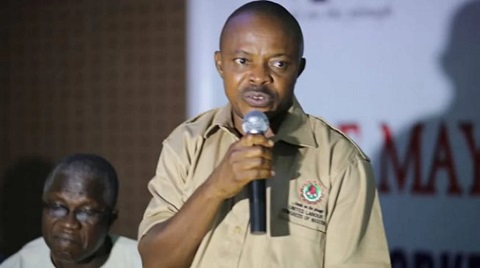
President of the Nigeria Labour Congress, Joe Ajaero has revealed why workers embarked on two-day warning strike.
He said the reason was because of the frustration workers are facing due to removal of fuel subsidy.
Ajaero stated this on Monday, at the commencement of a meeting called at the instance of the Minister of Labour and Employment, Simon Lalong.
Expressing his displeasure on the way the government was handling the palliative scheme amid the subsidy removal policy, Ajaero said none of the demands raised by workers, which the government pledged to meet have been fulfilled, despite the two-day warning strike.
The apex Labour union said not that workers were keen on embarking on strikes but recent developments in the labour sector, particularly the crisis in the National Union of Road Transport Workers (NURTW) where the police have taken over the secretariat leaves much to be desired.
Before the meeting broke into a closed-door session, Lalong said the country was witnessing teething challenges, marked by industrial actions and unrest that have adversely affected the economy.
He said he was optimistic that a constructive dialogue which has just begun will lead to the resolution of the issues on the ground.
“I fully acknowledge and appreciate the invaluable role the NLC plays in championing the rights and welfare of our workers. Your dedication and tireless advocacy have been critical in shaping a fair and inclusive work environment and ensuring the wellbeing of our workforce. We acknowledge the valid grievances that have fueled the recent labour crisis, and we are committed to addressing them in a just and equitable manner.
“We must also recognize the economic realities that confront us. As we address the concerns of our workforce, we must be mindful of striking a balance that promotes economic growth and secures sustainable progress for our nation. Today, I call upon each one of you to join hands in an open-minded and constructive dialogue, enabling us to bridge any gaps that may exist between the interests of workers and the ultimate goal of driving economic advancement.
“In the spirit of unity and with utmost commitment to the betterment of our nation, let us seize this opportunity to listen and understand one another. Together, let us explore innovative approaches, reimagining strategies that enhance working conditions and worker benefits while nurturing a robust economy,” Lalong noted.


The Benue State Government, through the Education Quality Assurance and Examinations Board, BEQAE, has directed Jewel Model School, Makurdi, to immediately reverse the N106,000 being charged to parents for the registration of West African Examination Council, WAEC, and National Examinations Council, NECO, describing the levy as excessive and unjustifiable.
The directive followed a series of petitions from aggrieved parents who accused the school of imposing arbitrary examination fees.
Acting on the complaints, the Board summoned the school’s proprietor, principal and members of the Parents-Teachers Association, PTA executive to a meeting in Makurdi where they reportedly failed to justify the amount being demanded.
Speaking during the engagement, the Executive Secretary of BEQAEB, Dr. Terna Francis, clarified that the officially approved fee for WAEC registration was N28,000, while NECO was yet to announce its charges for the 2026 examinations.
“Schools are only permitted to collect officially approved examination fees, with a handling charge not exceeding N5,000 per examination,” Francis stated.
He further stressed that candidates were not mandated to register for both WAEC and NECO, noting that such decisions should be left to parents and students.
“Registration for WAEC and NECO is optional, not compulsory. Any additional costs must be transparently discussed and mutually agreed upon by parents, not imposed without consultation,” he added.
Francis also expressed concern over reports that parents at the school had been denied platforms to air their views, alleging that PTA meetings had not been held for nearly two years and that parents were restricted from commenting on the school’s WhatsApp communication platform.
He equally condemned the practice of routing school and examination payments through the proprietor’s personal bank account, describing it as a breach of accountability and transparency.
“Such practices undermine proper auditing and are unacceptable in a regulated educational system,” he said.
Francis consequently, directed the Director of Enforcement and Compliance Operations, Rev. Fr. Dr. Terungwa Tor, to place the school under close monitoring to ensure full compliance with the Board’s directives.
Warning against the exploitation of parents, Francis noted that schools found imposing undue financial burdens on learners risk severe sanctions, including the withdrawal of their operating licenses.
“These exploitative practices only worsen the problem of out-of-school children, which the government is determined to address,” he said.

Some students of Nnamdi Azikiwe University (UNIZIK), Awka, have called on the Federal Government to fully implement the judgment of the National Industrial Court by reinstating Professor Bernard Odoh as Vice-Chancellor of the institution.
The students, operating under the aegis of the Nigerian Students and Youth Association, UNIZIK chapter, urged the Minister of Education to act without further delay in reinstating Professor Odoh, in strict compliance with the court’s ruling.
President of the group, Chisom Nwangwu, recalled that Professor Odoh was removed from office by the Federal Ministry of Education following allegations that he was not a professor and therefore unqualified to occupy the position.
However, he said the National Industrial Court had since affirmed that Professor Odoh was duly promoted to the rank of professor in 2015 and consequently ordered that all his rights, entitlements and privileges be fully restored.
Nwangwu stressed that respect for court judgments is fundamental to nation-building and should not be treated as optional, urging Nigerians and government institutions to obey court orders if the country is to be firmly rooted in the rule of law.
He expressed concern that the continued failure to implement the court’s ruling, especially in a situation where the office of the Vice-Chancellor was neither legally nor practically vacant, sets a dangerous precedent.
“This persistent disregard for a valid court order undermines democratic values and sends the wrong signal to citizens. Such actions should not be allowed to define us as a people or as a democratic society,” Nwangwu said.
He noted that Professor Odoh is the first alumnus of Nnamdi Azikiwe University to be appointed Vice-Chancellor, describing his removal as regrettable and driven by what he termed malicious claims aimed at frustrating a young academic with a progressive vision for the development of the university.
The student leader also appealed to President Bola Tinubu to intervene in the matter, noting that his administration is anchored on the principles of justice, fairness and respect for the rule of law.
According to him, such an intervention would help reaffirm public confidence in democratic institutions and reassure young Nigerians that justice, fairness and equality before the law remain attainable in the country.
 | ReplyReply allForwardAdd reaction |
The National Universities Commission (NUC) has lifted the embargo on the establishment and operation of foreign universities in Nigeria, a move aimed at attracting foreign direct investment and boosting the global competitiveness of the country’s higher education system.
The Executive Secretary of the NUC, Professor Abdullahi Yusufu Ribadu, announced the decision at the weekend during the 10th convocation ceremony of Gregory University, Uturu, Abia State.
He said the policy shift was designed to deepen international collaboration and strengthen the quality of university education in Nigeria.Represented at the event by Offor Chukwuemeka, Ribadu explained that foreign universities would be allowed to operate in Nigeria through six approved partnership models: franchise arrangements, branch campuses, twinning or articulation programmes, open and distance learning, acquisition, and teaching institutions.
He said the Commission had also introduced a Code of Governance for private universities to ensure uniform standards, transparency, and accountability in their operations. In addition, Ribadu noted that the NUC had carried out major curriculum reforms, replacing the Benchmark Minimum Academic Standards (BMAS) with the Core Curriculum and Minimum Academic Standards (CCMAS).
Under the new framework, he said, the NUC provides 70 per cent of compulsory core courses required for graduation, while universities are allowed 30 per cent flexibility to customise their curricula in line with their areas of expertise and emerging global trends.
The NUC boss emphasised that the reforms were geared towards equipping Nigerian graduates with 21st-century skills and enhancing their employability. He commended Gregory University for its contributions to educational innovation and development.
Abia State Governor, Dr. Alex Otti, in his remarks, praised the founder of the institution, Professor Gregory Ibe, for his vision and commitment to quality education. Represented by the Commissioner for Tertiary Education, Professor Uche Eme Uche, the governor reaffirmed his administration’s support for educational transformation in the state.
The Vice-Chancellor of Gregory University, Professor Cele Njoku, disclosed that the university had grown from three colleges to 12 in 13 years, now boasting over 53 academic departments. She added that all eight academic programmes submitted to the NUC in 2024 received full accreditation, while new courses, including Artificial Intelligence and major foreign languages, had been introduced.
Founder of the university, Prof. Gregory Ibe, represented by the Pro-Chancellor, Prof. Augustine Uwakwe, said the institution was established to make quality education accessible to Nigerians and pledged continued investment in education.
The overall best graduating student, Master Onyechere Chinedum Yadirichukwu, who graduated with a CGPA of 4.91, urged young Nigerians to take responsibility for shaping the nation’s future.
The convocation ceremony also featured the award of honorary doctorate degrees to former Enugu State Governor Ifeanyi Ugwuanyi; Chairman of the Abia State Council of Traditional Rulers, HRM Eze Linus Nto Mba; and Chairman of the Manufacturers Association of Nigeria, Imo State chapter, Dr Okenze Sylvester Obinna.


Hamann: Wirtz Made Wrong Choice Joining Liverpool
ShareLiverpool hero Didi Hamann believes Florian Wirtz made the wrong decision joining the Reds this summer. Wirtz, a £100m summer...


Alcohol, Animals, Others prohibited inside AFCON 2025 Stadiums
ShareAs anticipation builds for the Africa Cup of Nations 2025, set to kick off on December 21 in Morocco, the...


Man City Still Work in Progress –Guardiola
ShareManchester City manager Pep Guardiola has disclosed that the team are still a work in progress following his expensive overhaul...

Benue Orders Refund of N106,000 WAEC/NECO Fees charged by School
ShareThe Benue State Government, through the Education Quality Assurance and Examinations Board, BEQAE, has directed Jewel Model School, Makurdi, to...

UNIZIK: Students Urge FG to Implement Industrial Court Judgment, Reinstate Odoh as VC
ShareSome students of Nnamdi Azikiwe University (UNIZIK), Awka, have called on the Federal Government to fully implement the judgment of...
NUC Opens Nigeria’s University Space to Foreign Institutions
ShareThe National Universities Commission (NUC) has lifted the embargo on the establishment and operation of foreign universities in Nigeria, a...


RMAFC Convenes Stakeholders Confab to Boost Effective Tax Act Implementation
ShareBy Tony Obiechina, Abuja The Revenue Mobilisation Allocation and Fiscal Commission (RMAFC) on Monday organised a 2-Day National Stakeholders’ Discourse...
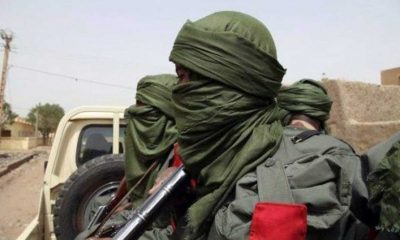

Bandits Attack Kogi Communities, Kill Three Persons
ShareFrom Joseph Amedu, Lokoja Oke-Agi and Ilai communities in Mopa-Amuro local government area of Kogi State were attacked by some...


Palmer out for Chelsea’s Carabao Cup Quarter-final, Says Maresca
ShareChelsea attacker Cole Palmer will not feature in the Blues’ Carabao Cup quarter-final against Cardiff City, head coach Enzo Maresca...


Road Accident Claims Four Persons in Kogi
ShareFrom Joseph Amedu, Lokoja The Federal Road Safety Corps (FRSC), has confirmed the death of four persons in a motor...