
NEWS


Simon Kolawole’s Misrepresentation of the Patriots’ Position on the 1999 Constitution
By Prof. Mike Ozekhome, SAN
On Sunday, July 27, 2025, respected columnist,Simon Kolawole, published an opinion piece in ThisDay titled,“Back to the 1999 Constitution – Again?”
In the said piece, Kolawole sought to downplay or outrightly discredit the persistent and growing calls for the restructuring of Nigeria’s constitutional framework.
He targeted, in particular, the longstanding position advanced by patriotic intellectuals and elder statesmen under the collective known as The Patriots, portraying them as revisionists of Nigeria’s constitutional history.But Kolawole’s interpretation not only misrepresents the actual arguments being advanced by The Patriots, it also rests on selective history, unverified assumptions, and a concerning disregard for legal scholarship and political truth. He claimed, among other things, that The Patriots had falsely asserted that the 1999 Constitution was authored by the military and that their stance was either uninformed or deliberately misleading. (See Simon Kolawole, “Let’s Tell Ourselves the Truth about the Constitution,” ThisDay, July 28, 2024.)
This rejoinder seeks to correct these misrepresentations and restate – clearly and accurately-the long-held position of The Patriots on the 1999 Constitution. It will also address broader issues surrounding the unsuitability of Nigeria’s over centralized federal structure in a pluralistic society, and highlight areas of the Constitution, particularly the Exclusive Legislative List, that require urgent reform if Nigeria is to remain a just, united, and functional federation.
CLARIFYING THE PATRIOTS’ POSITION ON THE 1999 CONSTITUTION
Simon Kolawole alleges that The Patriots have repeatedly claimed that the 1999 Constitution was “written by the military” and that such a claim is false because “it was drafted by a committee of legal experts and approved by the Provisional Ruling Council.” He suggests that this position lacks intellectual rigor and should be dismissed by well-meaning Nigerians.
However, this is a complete mischaracterization of the Patriots’ position. The Patriots have never claimed that soldiers sat down with pens and drafted the Constitution in a vacuum. No.
.What they have consistently stated is that the 1999 Constitution is a product of military imposition, lacking the democratic legitimacy that should accompany any foundational legal document in a pluralistic society such as Nigeria.
In a public statement by Professor Ben Nwabueze, SAN – renowned constitutional law scholar and founding member (later Chairman) of The Patriots-it was clearly argued that:
“The 1999 Constitution was imposed by a military regime without a referendum, without public debate, and without the participation of the Nigerian people. It cannot therefore be considered a people’s Constitution.”
Similarly, in a 2001 press briefing, Chief FRA Williams, SAN, another founding member and pioneer chairman of The Patriots, described the 1999 Constitution as:
“A document that merely adapted the 1979 Constitution and was handed down to us by a departing military junta.”
The use of the term “military Constitution” by The Patriots refers therefore not to its literal authorship by soldiers, but to the flawed process of imposition and the absence of participatory legitimacy through a people’s referendum.
It is this absence of democratic authorship and validation that underpins The Patriots’ sustained call for a truly autochthonous Constitution-one emerging from the will and deliberation of the Nigerian people.
To suggest otherwise, as Kolawole did, is to either misunderstand the semantics of constitutional discourse or to deliberately distort the message.I prefer to believe that the former is the case. The consequence of such distortion is dangerous: it undermines the gravity and urgency of constitutional reforms by reducing it to a mere semantic disagreement rather than the existential democratic concern that it actually is.
CRITIQUE OF NIGERIA’S OVER CENTRALIZATION
The evolution of Nigeria’s federal structure is marked by a troubling contradiction: although it is constitutionally designated a federation, the actual distribution of power closely resembles that of a unitary state.
This paradox can be traced back to the 1966 military coup and the subsequent unification of the country under a single military command structure. The military, inherently centralist in its command hierarchy, dismantled the regional autonomy that had defined Nigeria’s First Republic (1960–1966). (See Olumide Akanbi, “The Evolution of Nigeria’s Federalism and the Military Factor,” Journal of African Federalism, Vol. 3, No. 2, 2018, p. 45.).
What some Northern soldiers considered to be the original sin of General J.T.U. Aguiyi-Ironsi, (the then Head of State who seized power during the chaos and crises that ensued during the 15th January, 1966 military coup),was his promulgation of Decree No. 34 pf 1967 which abrogated the federal stricture in favour of a unitary one.
Before the 1966 military intervention, Nigeria’s federalism allowed each of the three (later four) regions (with the creation of the Midwest Region on 10th August, 1963, from Western Region by popular referendum of the people) to exercise substantial control over local affairs. These regions had their own Constitutions, public services, and developmental priorities.
However, from General Yakubu Gowon’s Decree No. 8 of 1967, which effectively abolished regional governments in favor of 12 militarily-administered states, to the eventual promulgation of the 1999 Constitution by General Abdulsalami Abubakar’s regime, Nigeria has grown increasingly centralized.
Thus, there has never been any conscious effort by successive governments – colonial, civil or military, since Nigeria’s Lugardian almagamation on January 1, 1914 – to have a buy-in of the people through a referendum. None from the 1922 Clifford Constitution;1946 Richards Constitution; 1951 Macpherson Constitution; 1954 Lyttleton Constitution; 1960 Independent Constitution; 1963 Republican Constitution; 1979 Constitution; 1989 Constitution; and up to the 1999 Constitution.
This over centralization of powers at the centre poses severe governance challenges in a country as ethnically,culturally, religiously and linguistically diverse as Nigeria. With about 374 ethnic groups (Prof Onigu Otite), at least 500 spoken languages and strong regional identities, a one-size-fits-all approach to governance is both ineffective and inflammatory.
As Rotimi Suberu notes, “centralized federalism in Nigeria breeds disaffection, weakens accountability, and fuels centrifugal tensions.” (Rotimi Suberu, Federalism and Ethnic Conflict in Nigeria, United States Institute of Peace Press, 2001, p. 112.)
For example, the same educational policy enforced in Zamfara State may be culturally, religiously or economically inappropriate in Bayelsa State. Federal government’s directives on land use, resource control or school curriculum rarely accommodates local realities.
Similarly, national security priorities are often applied uniformly without sensitivity to regional insecurity dynamics such as the age-long farmer-herder clashes in the Middle Belt, or self-determination agitations in the South East.
Another critical example is the administration of religion.
While the federal Constitution of 1999 claims secularism (section 10), certain states enforce Sharia law, while others either remain secular, practise traditional religion,or remain Christian-dominated.
Yet, national laws, judicial and other public structures fail to reflect these peculiar realities, often resulting in policy flip-flops and conflict or discrimination claims.
This dissonance between forced constitutional uniformity and lived practical plurality experiences is an enduring source of national instability.
Nigeria’s flawed federalism also impedes development. Federating states are heavily dependent on federally-allocated funds (under section 162 of the 1999 Constitution).
This disincentivizes local innovation or internally generated revenue (IGR) strategies. Because federal allocation is distributed by formula rather than performance or resource ownership, states have limited autonomy to plan large-scale infrastructure, education, or healthcare interventions independent of Abuja.
This also breeds discrimination and resentment. Oil-rich Bayelsa State, for example, shares from the Federation Account less than may non-oil producing communities notwithstanding the attendant oil and gas–related environmental degradation and prevalent poverty.
OVERHAULING THE EXCLUSIVE LEGISLATIVE LIST
The Exclusive Legislative List in the 1999 Constitution (as amended) contains 68 whole items which only the federal government has power to legislate upon. (See Part I, Second Schedule, Constitution of the 1999 Constitution.
This list is excessive and counter-productive in a federal system we pretend to operate in our pluralistic society. It takes away vital areas of governance from the reach of states and local governements, despite their proximity to the people.
Among the most problematic items are police and security, prisons, railways, mineral resources, electricity generation and transmission, labour and trade unions, education (particularly tertiary), taxation of certain commodities, matrimonial matters, licensing, etc.
This dominant central control over crucial sectors greatly undermines Nigeria’s federal claim and limits each state’s ability to respond to its unique developmental needs.
Take policing, for example. In the United States and India ( both federal democracies with complex diversities), subnational units maintain their own police forces with full jurisdictional authority.
Yet in Nigeria, only the federal government is constitutionally empowered to create or control the police force under sections 214 and 215 of the 1999 Constitution. The implication is that state governors, though constitutionally described as “chief security officers” of their states, can not control security within their borders. (See Yusuf Olaolu Ali, SAN, Federalism and the Nigerian Constitution: A Legal Perspective, Spectrum Law Review, 2016, p. 78.)
This unitariansm has proven disastrous. States facing terrorist insurgency, mass kidnapping and ethnic violence are unable to develop local policing models or equip forces that understand the terrain and speak local languages or respond to such vices as they occur.
The result is a reactive and overstretched federal police, further alienating citizens from security providers.
Similarly, prison administration is fully centralized; yet most of the crimes prosecuted in Nigeria occur under state criminal laws,not federal laws.
This mismatch causes logistical and financial burdens on the federal system while delaying justice. A state-based correctional system, aligned with state judicial authority, would be more efficient and localized to deal with local offences.
In the education sector, control over accreditation, curriculum and policy located at the federal level stifles local creativity and ignores peculiar local needs. States such as Lagos and Rivers which have made giant strides in digital learning and school reforms are constantly required to comply with federal laws that may not reflect their educational needs,local priorities or resources.
Another major area of great concern is resource control and mining. Under the 1999 Constitution, all mineral resources are owned by the federal government, with states entitled only to derivation funds. This has perpetuated sustained injustice leading to the conflict in the Niger Delta.
It has created a retrogressive culture of dependence where resource-rich states remain poor due to limited control over their God-given assets while non-oil producing states live fat on such poor states.
An unjust and obnoxious system of sharing the cake without contributing to its baking has thus emerged.
Globally, federations assign such matters to local authorities. In Canada, provinces control natural resources and generate revenue from them.
In India, states co-legislate on police, education and public health under a Concurrent List. In the U.S., the Tenth Amendment reserves unenumerated powers to the states. Nigeria’s failure to adopt similar devolution of powers has painfully hindered innovation, democratic accountability and balanced development.
What is therefore needed is a restructuring of the Exclusive Legislative List, pruning it to only essential national matters such as defence, foreign affairs, banking and currency, while moving most socio-economic functions to the Concurrent or Residual Lists.
This would not only align with global federalist principles but also reflect Nigeria’s diverse socio-political realities. Only a brand new Constitution emanating from the people’s will after a Constituent Assembly and referendum can bring about such a revolutionary outcome,not piecemeal amendment of the present 1999 Constitution.
ROLE OF THE NATIONAL ASSEMBLY IN CONSTITUTION-MAKING:
THE LEGISLATURE AS ENABLER, NOT ORIGINATOR
It is axiomatic that under constitutional democracy, sovereignty resides in the people. The legislature, while clothed with enormous powers of lawmaking, is not the primary source or originator of the people’s will. Rather, it is a conduit-a servant and enabler-of that will.
Nigeria’s National Assembly, as presently constituted, draws its powers from the 1999 Constitution which is itself a product of military fiat, not of popular affirmation of the people. This reality raises a fundamental legal-philosophical contradiction: can a creature of a flawed document presume to re-birth it? Can a child reconfigure its own paternity?
The National Assembly, being a product of a schedule attached to Decree No. 24 of 1999, cannot, ab initio, claim any right to author a new grundnorm that overrides its own existential basis.
All it can do is to amend, amend and amend the flawed Constitution under section 9 thereof. The reason is that being the tail (representative agent), it cannot wag the dog (the people that own the will).
The National Assembly’s attempts at constitutional amendment-however noble-have therefore largely been elitist and parliamentary, not popular or plebiscitary. Several constitutional alteration bills have been passed (up to 5 already); yet none has bridged the democratic gap of a sovereign national consensus.
None has dared to make Chapter 2 justiciable (the Fundamental Objectives and Directive Principle of State Policy). They would never! The people thus watch from the sidelines as professional politicians hold sway over what should be their social contract. That is akin to medical doctors prescribing medication to patients they have not examined.
5The people’s voice is conspicuously absent in the very document that governs their lives. The legislative arm must therefore reposition itself-not as the progenitor of a new Constitution, but as the facilitator of a new constitutional order birthed by the people themselves through a referendum.
[See Mike Ozekhome, “The Illegality and Illegitimacy of the 1999 Constitution,” ThisDay, April 22, 2024].
CONSTITUTIONAL REFORM VS. CONSTITUTIONAL REWRITING
There exists a grave conceptual and legal dissonance in conflating constitutional reform with constitutional rewriting. Reform is cosmetic; rewriting is foundational. The former merely plasters the gaping cracks of a collapsing edifice. The latter reconstructs its very foundation. Nigeria’s current approach has been that of tentative and timid reforms. Reforms through amendments involve mere tinkering with clauses, altering sections, inserting or deleting subsections-all within the same defective legal framework. This is akin to merely repainting a termite-ridden house while ignoring the need to first fumigate and wholly rebuild; or merely cutting off the branches of a tree threatening the foundations of a house, rather than uprooting it completely.
Rewriting on the other hand is a revolutionary act-peaceful, yet radical. It is negotiated. It requires a complete break from the past;a tabula rasa; a fresh convening of the people; and a new social contract that reflects the genuine aspirations of today’s Nigerians;not those of 1998 military oligarch. Countries like South Africa, Kenya and some others have walked this noble path through convocation of Constituent Assemblies participation in national referenda. Why not Nigeria?
To continue operating the 1999 Constitution is to perpetuate a fraud-a self-deceit that we live under democracy when in fact we are governed by relics of khaki rule. The National Assembly must embrace its transitional role and work with civil society, the judiciary, the executive and all Nigerian stakeholders to midwife-not manufacture-a new constitutional dawn.
[See Jibrin Ibrahim, “Why Nigeria Needs a New Constitution, Not Another Amendment,” Premium Times, March 4, 2021].
NEW REFERENDUM-BASED CONSTITUTIONS: GLOBAL TESTAMENT TO POPULAR SOVEREIGNTY OF THE PEOPLE
The world is replete with nations that emerged from constitutional darkness into the light of participatory democracy and popular governance. Some examples will suffice here to advance this point. Kenya, in 2010, rose from the ashes of electoral violence to birth a new people-oriented Constitution through a referendum. The Kenyan model was not merely legal-it was moral. It sought to heal, not just to rule. South Africa’s 1996 Constitution is another golden standard: a document forged through exhaustive public consultations, grassroots submissions, and national soul-searching, culminating in a powerful symbol of unity post-apartheid.
Ghana’s 1992 Constitution also passed through a national referendum, marking the country’s rebirth after years of military interregnum. In 2022, Chile attempted a similar feat by proposing a new Constitution through a popularly elected Constituent Assembly.
Although that version was rejected in a referendum, the process itself showcased the democratic principle: the people must be heard, not herded; their will must prevail, not discarded.
In Iran, a new Islamic Republic Constitution was birthed in 1979 after a 99.5% referendum of the Iranian people.
A people’s referendum in Bangladesh in 1991reintroduced a parliamentary system of government, abolished the office of the Vice President and provided that the President must be elected by the Parliament. Morocco held a referendum on 1st July, 2011, for constitutional reforms in response to wide-spread protests.
Egypt subjected its new Constitution to a referendum in 2012. The Eritrean people in 1994 carried out a referendum which gave the people a “sense of ownership of the Constitution”.
Tunisia, following a revolution and months of protests, set up a Constituent Assembly that drafted a new Constitution on 26th January, 2014, after a people’s referendum.
Iraq, on October 15, 2005, carried out a referendum to adopt her new Constitution.
The United States of America (after whom Nigeria’s Constitution is modelled) held a constitutional convention in Philadelphia, Pennsylvania, between May 25 and September 17, 1787, to birth a new Constitution and have a “more perfect union”. Of the 55 Delegates that attended the Convention presided over by George Washington (who later became the first American President), 39 delegates signed a new Constitution after a people’s referendum. Broad outlines of a new Constitution were proposed, debated and agreed upon by these delegates that represented the autonomous confederates. It was this initiative that brought about America’s federal system of government; Executive Presidency; Republicanism; Separation of Powers (a doctrine earlier popularized in 1748 by Baron de Montesquieu, a great French philosopher); and judicial review. It witnesses inclusive inputs by great Federalists such as George Washington, Alexander Hamilton, James Madison, John Jay, John Adams and John Marshal. Since 1789 when the Constitution birthed ( 236 whole years ago),has just 7,591 words with only 27 amendments. The reason it has withstood its stability and acceptability is because it emanated directly from the will of the people and so enjoys their legitimacy and respectability.Why not Nigeria,I ask? (See Mike Ozekhome: Constitutional Autochthony and a Referendum for a New People’s Constitution: A Comparison with the 1999 Constitution; February, 2025, Mikeozekhomeschambers.com).
DsWhat unites the above examples is one common thread-referendum. This is the power of the people expressed directly; not elected, selected or appointed through legislative surrogates. The people must see their fingerprint on the agreed charter that governs them. That is the essence of legitimacy through a yes-or-no referendum on the people’s grundnorm. Referendum makes a Constitution autochthonous, homegrown,people-owned.
[See Yash Ghai, “Kenya’s Constitution: An Instrument for Change,” Open Society Foundations, August 2011]
[See Christina Murray and Heinz Klug, “Constitution-Making in South Africa: A Model for the World?” Review of Constitutional Studies, 1997].
LESSONS FOR NIGERIA FROM THESE COUNTRIES
Nigeria must jettison the illusion that piecemeal amendments can yield a legitimate, people’s Constitution. We must learn from America, our African and Latin American siblings that the legitimacy of a Constitution lies not in its legal grammar but in its popular genesis.
A new Nigerian Constitution must be drafted by a Constituent Assembly comprising of Representatives of the people elected on a non political or partisan basis-civil society, labour, youth, men and women’s groups, professionals, students, traditional institutions, faith-based organizations, persons living with disabilities and other stakeholders. It must then be subjected to a national referendum where every citizen, from the creeks of Yenagoa to the plains of Sokoto, from the savannah to the mangrove swamps, etc, casts a vote.
This process is not just a legal imperative-it is a national therapy. A referendum-based Constitution would erase the ghost of military rule and birth a fresh beginning and identity for Nigeria. It would convert cynical citizens into patriotic stakeholders. It would replace imposed obedience with inspired allegiance.
The time has come. Let the eagle soar again-not on colonial graves; not on military Decrees and diktats; but on the wings of popular consent of the people.
[See Clement Nwankwo, “Towards a People’s Constitution for Nigeria,” Cleen Foundation Policy Paper, 2021].
THE PATRIOTS’ PATRIOTIC BLUEPRINT FOR A PEOPLE’S CONSTITUTION
A Constitution must not only be written-it must be born. And like all legitimate births, it must pass through the womb of collective consent.
The Patriots, a formidable assembly of distinguished elder statesmen and women, jurists, constitutional scholars, professionals, traditional and religious leaders and public intellectuals, have for years championed the cause of a People’s Constitution, not by revolution but by resolution; not with bayonets but with ballots; not by Decrees but through dialogue and democratic deliberation.
Their thesis is clear: no nation can build peace on the foundation of falsehood or silence, and no union can last where one part feels conscripted rather than convened. In the interest of national salvation-not sentiments-they propose a blueprint for constitutional rebirth anchored on Nigeria’s plurality.
PRACTICAL STEPS FOR NIGERIA’S CONSTITUTION-MAKING PROCESS
Step 1: Enactment of Enabling Legislation:
• Executive Bill Pathway: The President submits an Executive Bill to the National Assembly, requesting promulgation of a law to enable INEC conduct elections into a Constituent Assembly on a non-partisan basis.This will comprise of 110 members made up of three representatives from each Senatorial zone of the 36 states of Nigeria and the FCT,Abuja (one per senatorial district). Such candidates are to campaign and run on their personal merit based on their own manifestos, not on political party platforms. This approach follows global best practice, as seen in Uganda (1989) and South Africa (1996).
• Constitution Drafting Committee (CDC):
Step 2: The elected Constituent Assembly sits publicly for the sole
purpose of drafting a new people’s Constitution. In this historic task, the Constituent Assembly shall consult widely across all segments of the society. They shall also draw inputs from:
• The 1960 Independence and 1963 Republican Constitution;
• The 2014 National Conference Report (over 600 consensus-based recommendations);
•Relevant provisions of the 1999 Constitution;
• Relevant reports from Senate and House Committees on their Constitutional Review exercise;
• Nationwide submissions from ethnic nationalities, civil society, the military, Police, media, business,private sector,persons living with disabilities, academia,students leadership, labour, diaspora, traditional and religious leaders, elder statesmen and women, market men and women, and more.
Deliberations at the Constituent Assembly must be open to the public, transparent, and all-inclusive; modeled after the 1996 South African process which received over two million citizen submissions.
Step 3: Public Engagement and Harmonization
Once the initial draft is produced:
• The document must be translated into major local languages and subjected to town hall meetings, digital consultations, and public critique across the six geopolitical zones and the diaspora.
• The drafters shall revise and harmonize the draft based on inputs received.
This step ensures that the Constitution reflects lived realities, promotes civic ownership, and withstands democratic scrutiny.
Step 4: National Referendum
The harmonized final draft is subjected to a national referendum—a democratic mechanism for the people to either accept or reject the new Constitution.
The Constituent Assembly may in its wisdom adopt one of two suggested formats:
• Single Yes/No Vote on the entire draft Constitution (as done in Kenya in 2010 and Bangladesh in 1991).
• Clause-by-Clause Referendum, where citizens vote section-by-section, enabling granular endorsement or rejection. This format mirrors the 1963 Midwestern Referendum of 10th August, 1963.
A minimum voter turnout threshold shall be set to ensure democratic validity.
Step 5: Presidential Proclamation and Entry into Force
Once the referendum is concluded and the draft is approved,it is submitted to the President for assent.
“The President of the Federal Republic of Nigeria, acting under section 5 of the Constitution and in line with the powers vested in nim as head of the Executive, shall sign and proclaim the new Constitution into law, thus bringing about its enforcement.
It is only then that Nigeria can truly affirm the genuine foundational democratic statement:
“We the people of Nigeria… do hereby give to ourselves this Constitution.”
This process is not about undermining state institutions—it is about restoring them to legitimacy. It blends legality (via executive and legislative action) with legitimacy (via citizen participation and referendum). It affirms that sovereignty indeed resides with the people, not a political class; not a elitist group.
This roadmap ensures that Nigeria’s next Constitution is not a product of Decree, convenience, or elite consensus, but of collective national will, built through openness, participation, and inclusion.
CONCLUSION
A CALL TO NATIONAL ACTION
Nigeria stands today, not merely at a constitutional crossroads, but at a moral precipice. The air is thick with constitutional fatigue, the soil weary of authoritarian roots masked by democratic branches, and the soul of the nation suffocate under the weight of imposed structures (foreign and military) that neither resemble nor respect its people’s will.
It is no longer a question of whether the 1999 Constitution is flawed. That is settled. It is a graveyard of imposed ideas, a mausoleum of military fiat dressed in borrowed democratic robes. What is now urgent, pressing and constitutionally obligatory is what we, the Nigerian people must do to salvage her soul. We must not tinker any longer with palliative amendments.
The process of constitutional reform cannot merely be an elite sport, played behind closed doors in committee rooms in Abuja, choreographed by a political class more interested in electoral advantage than nation-building. No. It must begin and end with the people.
The people, in their villages and towns, their religious centres and schools, their market places and offices-they are the sovereigns. Not military Decrees of yesteryears. Not the colonially inherited scaffolds of exclusion. Not the self-serving silence of our complicit elites.
As argued above, the role of the National Assembly under sections 4 and 9 of the 1999 Constitution is not to wear the toga of originators.
It is not their prerogative to determine in isolation the next chapter of our nationhood. Rather, they must become enablers, facilitators of a people-driven process rooted in popular sovereignty.
The Patriots, in their timeless wisdom, hug this national moment.
Their peaceful blueprint for constitutional renewal, laid out with clarity and democratic precision, calls for a step-by-step people’s conference, one divorced from state capture, one driven by inclusivity, and culminating in a national referendum.
This process is not a romantic idealism. It is national necessity. It is legal realism. It is historical debt owed to a citizenry long ignored and despised.
Furthermore, at a time where the sword increasingly overshadows the scale, when guns echo louder than reason, the law must reassert itself-not in violence, not in Decrees, but in institutional dialogue.
We are not a banana republic. We are a sovereign Republic founded on law and justice.And it is time we returned to that foundation with humility and courage.
Now therefore, dear Nigerians-activists and artisans, farmers,professors and pensioners, youth and students, academia,diaspora, market men and women,military and police, and elder statesmen and women,religious and traditional leaders- we call upon you.
Let this be the hour of national reawakening and rebirth. Let this be the season when democracy is not just recited but rewritten. Let it not be said that in our moment of reckoning, we chose silence over courage, cynicism over hope, and apathy over action.
Let the President, National Assembly initiate enabling Executive Bill; Let the NASS pass it into law. Let the process commence towards a truly people-led constitutional process. Let the Constituent Assembly deliberate and agree on a draft new Constitution.Let the NASS in its new law mandate INEC to organise a people’s referendum . Let civil society and other stake holders mobilize town halls, public debates grassroots dialogues to aid the Constituent Assembly.
Let the courts be courageous in defending the people’s right to re-found their nation. Let the press amplify, not suppress. Let the young rise and the old lead by example and with conscience.
Let it be said of this generation: They inherited a broken Constitution. They rebuilt it and gave us a new one.
Let Nigeria rise anew, not on the crumbling scaffolds of imposed legality, but on the sacred shoulders of popular legitimacy. This is the lens I recommend to Kolawole and others to appreciate the Patriots’ patriotic position. God bless Nigeria.
By Tony Obiechina, Abuja
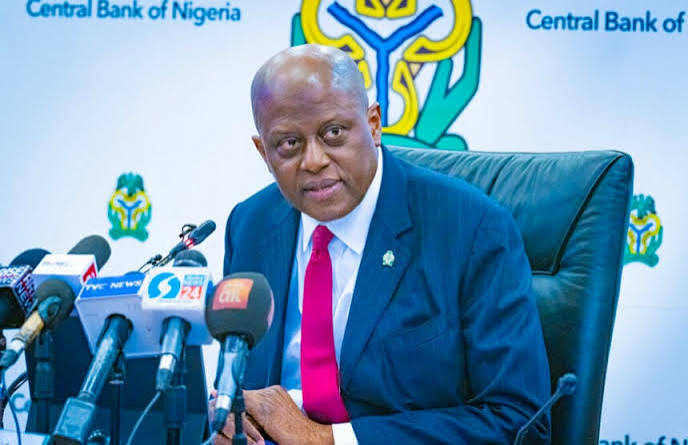
The Central Bank of Nigeria (CBN) has introduced a comprehensive regulatory framework for non-security virtual assets service providers (VASPs), including stablecoins and deposit money tokens dealers, as part of its sustained regulatory measures to strengthen its oversight of emerging digital financial services in the country.
This was contained in the Bank’s circular with Ref.
No PSP/DIR/PUB/CIR/001/004 dated November 5, 2026 and signed by its Director.Payments System Policy Department, Musa Jimoh, indicated that the new regulations established licensing, authorisation and supervisory requirements for virtual asset issuers and service providers operating in or targeting the Nigerian market and were designed to promote responsible innovation, strengthen the integrity of the financial system and provide an appropriate regulatory framework for emerging digital payment instruments.
Under the new framework titled ‘Regulations for the Operations of Non-Security Virtual Assets in Nigeria’, stablecoin issuers, virtual asset service providers and other regulated operators will be subject to requirements covering licensing, capital adequacy, reserve backing, liquidity and redemption arrangements.
While also prescribing standards for corporate governance, risk management, internal controls, cybersecurity and operational resilience, the framework also directed the operators to comply with requirements for safeguarding customer assets, making appropriate disclosures and establishing effective complaints management systems.
In addition, the framework also introduced measures to address financial crime risks associated with digital asset transactions, including anti-money laundering and counter-terrorist financing obligations, sanctions screening, transaction monitoring and blockchain analytics.
The framework also mandates virtual asset service providers to comply with the Travel Rule and conduct due diligence on counterparties, particularly other virtual asset service providers involved in transactions.
The latest regulations apply to individuals and organisations conducting regulated activities in or from Nigeria, directing such activities at Nigerian customers or undertaking operations that could materially affect the country’s payment system, financial system, foreign exchange market or financial stability.
According to the apex bank the requirements could apply irrespective of whether an operator maintains a physical presence in the country, which implies that foreign virtual asset operators targeting Nigerian customers or undertaking activities with material implications for the country’s financial system may also fall within the regulatory framework.
The CBN clarified, however, that the new regulations did overrule the statutory responsibilities of the Securities and Exchange Commission (SEC) or other competent authorities, stressing that activities involving security virtual assets, securities, investment contracts and other capital-market products would remain subject to the applicable capital-market regulatory framework.
The framework further provides that where an activity involves both non-security virtual assets and matters under another regulator’s jurisdiction, operators are required to obtain the relevant approvals from each competent authority.
The apex bank mandated all the affected financial institutions, issuers, service providers, operators and other stakeholders to familiarize themselves with the regulations and ensure strict compliance with the applicable licensing, prudential, operational, reporting and technology requirements.
As a deterrent to abuses, the framework also provides for regulatory enforcement, administrative sanctions and orderly wind-down arrangements for operators unable to continue their regulated activities.
From Sylvia Udegbunam, Enugu
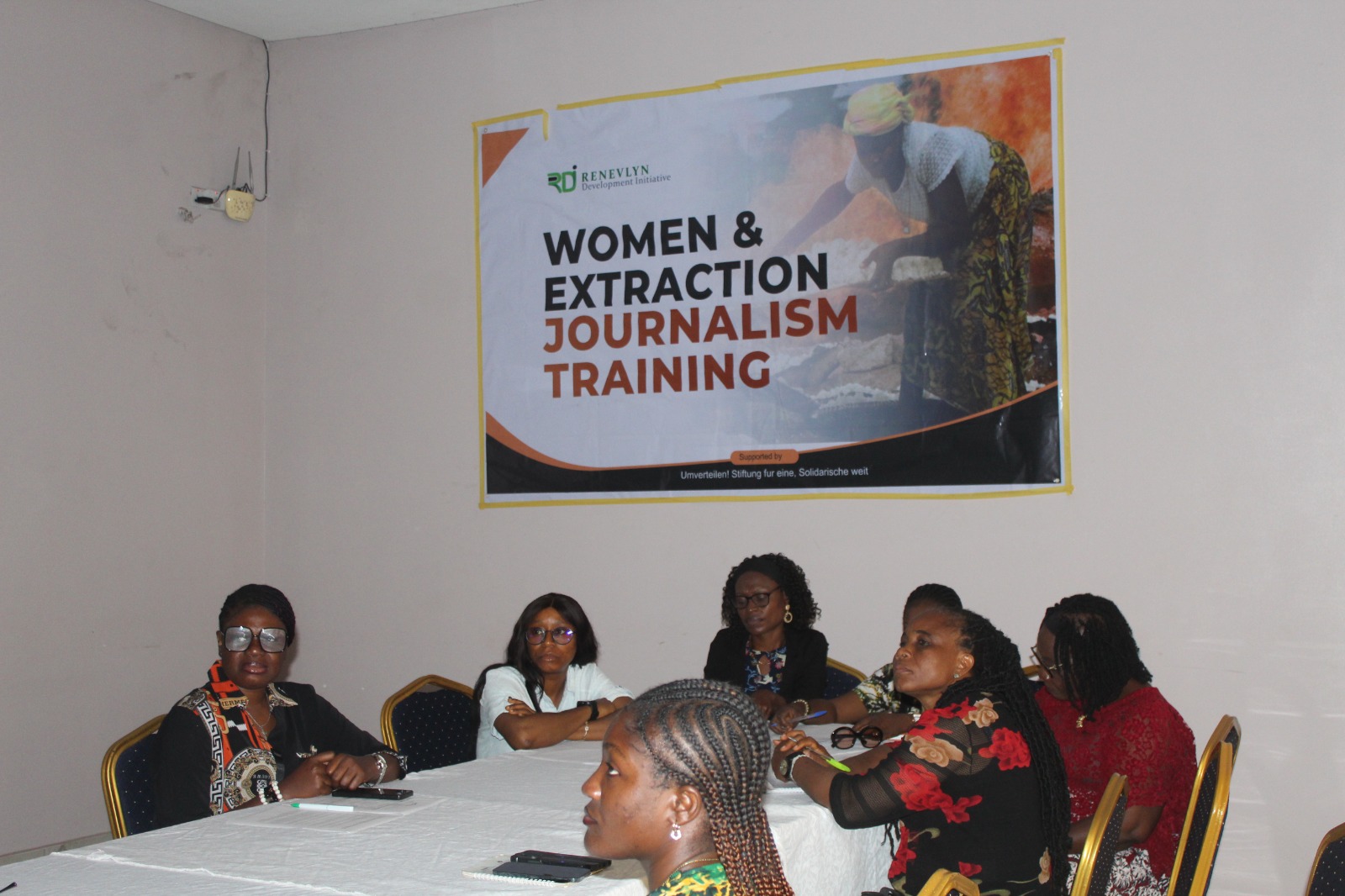
A non-governmental organisation, Renevlyn Development Initiatives, has called on women journalists in Enugu State to intensify investigative and gender-sensitive reporting on the environmental and socio-economic impacts of extractive activities on women in host communities.
The Executive Director of the organisation, Philip Jakpor, made the call during a one-day training on Agenda for Women and Extractive Journalism held at Hotel Sylvia, Independence Layout, Enugu, with the theme, “Empowering Women Journalists for Effective Reporting of Extractive Impacts in Nigeria.
”Jakpor stressed that discussions on extractive activities in Nigeria, particularly in Enugu State, would remain incomplete without addressing the devastating environmental consequences of coal mining.
He noted that women in host communities bear a disproportionate burden of mining activities because of their roles as caregivers, providers and major users of natural resources, including land and water.
He regretted that despite bearing much of the consequences of environmental degradation, women are often excluded from decision-making processes and policies concerning extractive activities in their communities.
He therefore urged female journalists to adopt gender-sensitive reporting approaches that amplify, document and adequately present the experiences of affected women.
Earlier, the Project Officer of Renevlyn Development Initiatives, Tracy Ohovwore, acknowledged the contributions of journalists in drawing attention to environmental challenges but observed that the specific experiences of women affected by extractive activities remained largely underreported.
She raised concerns over pollution in Iva Valley, Akwuke, Onyeama, Okpara and Awhum, alleging that the Ekulu and Nyaba rivers, which residents depend on for domestic water, had been contaminated by wastewater containing heavy metals, including arsenic, cadmium, lead and mercury.
Also speaking, the Executive Director of New Life Community Care Initiative (NELCCI), Mrs Florence Ifeanyi Aneke, said environmental degradation undermines community development by threatening livelihoods, food security, healthcare, education and access to clean water.
She added that pollution and land destruction could expose women to serious health risks, including reproductive health challenges, while increasing the economic hardship faced by families.
Aneke called on the Enugu State Government to harness the state’s natural resources in ways that create economic opportunities without destroying the environment or imposing further hardship on host communities.
She also advocated compensation for affected communities, particularly women and persons with disabilities, while urging the government to ensure their active participation in decisions concerning extractive activities.
In her contribution, a journalist, Ebere Ekeopara, shared her experiences growing up in a coal-mining community, highlighting poor remuneration for miners, health hazards and the impact of mining activities on women and family livelihoods.
She urged journalists to go beyond routine reporting through sustained investigative journalism that identifies environmental hazards, establishes institutional responsibilities and examines available interventions for affected communities.

By Tony Obiechina, Abuja
The Chairman of the Revenue Mobilisation, Allocation and Fiscal Commission (RMAFC), Dr. Mohammed Bello Shehu has charged Directors and Heads of Departments (HODs) to demonstrate commitment, accountability and professionalism in the discharge of their duties to ensure the successful implementation of the Performance Management System (PMS) in the Commission.
The Chairman gave the charge at the signing of Performance Contracts by Directors and Heads of Departments at the Commission’s headquarters in Abuja.
He described the exercise as more than the signing of official documents, noting that it represented a covenant of accountability and a commitment to delivering on the Commission’s strategic objectives through improved productivity and measurable results. He also noted that the initiative aligned with the Federal Government’s Renewed Hope Agenda under President Bola Tinubu, which prioritises institutional efficiency, good governance and improved service delivery.He explained that the PMS represents a deliberate shift from routine administrative activities to a result-oriented system that measures institutional and individual performance against clearly defined objectives. He noted that the Commission had recorded significant progress towards its implementation through the development of a dedicated IT platform, organisation-wide staff training, capacity building for PMS champions, management sensitisation sessions and change management initiatives.
He emphasised that the system was not designed to be punitive but to empower officers, clarify responsibilities, identify capacity gaps and promote fairness in performance assessment. He therefore urged Directors and HODs to ensure that departmental targets and key performance indicators were realistic, measurable, time-bound and aligned with the Commission’s strategic objectives.
Shehu assured staff of management’s commitment to providing the necessary support and enabling environment, while urging all officers to embrace the initiative and make accountability, professionalism and improved service delivery their guiding principles.
The Chairman of the Personnel Matters Committee (PMC) and Federal Commissioner representing Cross River State, Ntufam Eyo-Nsa Whitley, described staff as the driving force behind the success of the Commission, urging them to demonstrate discipline, diligence, emotional intelligence and dedication to their responsibilities. He encouraged officers to take the performance management exercise seriously and give their best towards achieving the Commission’s objectives.
He further urged staff to support one another, embrace the reform process and avoid attitudes that could undermine teamwork and institutional progress. Hon Ntufam called on the PMS champions to demonstrate commitment and provide guidance to their colleagues, stressing that collective responsibility, discipline and effective implementation would ensure the success of the initiative.
In his address, the Secretary to the Commission, Comrade Tosin Adeyanju, described the signing ceremony as a significant milestone in the Commission’s history, marking the transition from intention to action, planning to execution, and traditional performance evaluation to a modern, data-driven performance management system. He appreciated the Chairman’s leadership and the Commissioners’ support, while acknowledging the critical roles of Directors and HODs in driving the transformation.
He urged management staff to take ownership of their performance agreements and ensure regular engagement, feedback and monitoring to achieve the desired results. He stressed that the success of the PMS would depend not merely on signing the contracts but on the Commission’s ability to translate agreed targets into improved productivity, efficiency and measurable institutional achievements.
The Director overseeing the Administration and Human Resource Department, Alhaji Ahmed Rufai Gidado, explained that the Commission had undertaken a series of activities towards the implementation of the Performance Management System and that the signing of the performance contracts represented a major milestone in the process, marking the transition from preparatory activities to the implementation phase.
In his lecture on The Role of Performance Management in Public Sector Transformation, Mr. Nwachukwu John, Head of Economy Team Performance Management at the Office of the Head of the Civil Service of the Federation (OHCSF), commended RMAFC for the progress recorded in adopting the PMS framework. He noted that the Commission’s commitment demonstrated its readiness to embrace public service reforms and align individual responsibilities with institutional and national development objectives.
He explained that the PMS was designed to connect the responsibilities of individual officers with departmental targets, the Commission’s strategic plan and the Federal Government’s priorities. He urged Directors and HODs to ensure that performance contracts were cascaded to other levels of staff through regular engagement and feedback, emphasising that the system was a productivity tool rather than a promotion exercise.



CBN Introduces New Regulatory Framework for Non-Security VASPs, others
ShareBy Tony Obiechina, Abuja The Central Bank of Nigeria (CBN) has introduced a comprehensive regulatory framework for non-security virtual assets...

Group tasks Women Journalists on Reporting Impact of Coal Mining in Enugu
ShareFrom Sylvia Udegbunam, Enugu A non-governmental organisation, Renevlyn Development Initiatives, has called on women journalists in Enugu State to intensify...

RMAFC Chairman Tasks Directors, Others on Accountability, Productivity
ShareBy Tony Obiechina, Abuja The Chairman of the Revenue Mobilisation, Allocation and Fiscal Commission (RMAFC), Dr. Mohammed Bello Shehu has...


NDLEA Secures 18 Convictions, Arrests 130 Suspects in Kaduna
ShareThe National Drug Law Enforcement Agency (NDLEA), Kaduna State Command, said it secured 18 convictions and arrested 130 suspects for...
Gen Z No Longer Think for Themselves, Ayra Starr’s Mother Blames Social Media
ShareNene Aderibigbe, mother of Nigerian singer Ayra Starr, has criticised the influence of social media on Gen Z, claiming that...


Davido, Chioma Arrive in Style for Zlatan, Davita’s Wedding in Morocco
ShareNigerian music star, Davido, and his wife, Chioma Adeleke, have arrived in style in Marrakesh, Morocco, for the wedding celebration...


Lessons from the 2023 Presidential Elections: Obi Vs Wike
ShareBy Sunday Adelaja My goal in this article is to go beyond promoting a particular candidate like I did in...
Certificates Without Jobs: The Uncomfortable Reality of Nigeria’s Education System
ShareBy Idris Rufai Welcome to Nigeria, where young people are highly educated, professionally qualified and, unfortunately, increasingly experienced in the...


FG Generates N33tn Revenue in 10 Months – Oyedele
ShareBy Tony Obiechina, Abuja The Federal Government generated N33tn in revenue between January and October 2026, while about 90 per...


Terrorists Flee Strongholds, Military Block New Bases – DHQ
ShareBy David Torough, Abuja The Defence Headquarters (DHQ) has dismissed reports and suggestions of a ceasefire with Boko Haram terrorists,...