
NEWS


World Consumer Rights Day: CSOs Demand Mandatory Salt Targets, Warning Labels to Protect Nigerians from NCDs
From Sylvia Udegbunam Enugu
As Nigeria joins the global community to mark World Consumer Rights Day themed “Safe Products, Confident Consumers”, the Network for Health Equity and Development (NHED), the Centre for Communication and Social Impact (CCSI), and Corporate Accountability and Public Participation Africa (CAPPA) are calling on the Federal and state governments to prioritize public health by enacting mandatory salt targets and front-of-pack labelling (FOPL) for all processed and pre-packaged foods to protect consumers from preventable diet-related diseases.
In a joint statement to mark the day, the coalition noted that Nigeria struggles with a rising tide of Non-Communicable Diseases (NCDs), with 29% of all deaths in the country now linked to conditions such as hypertension, heart disease, and kidney failure. A major driver of this crisis, the groups argued, is the excessive consumption of salt, with the average Nigerian consuming up to 10 grams of salt daily, nearly double the World Health Organisation (WHO)’s limit of 5 grams per day.
Under the 2026 global theme of “Safe Products”, the public health advocates reiterated that consumer rights are human rights, and the government must acknowledge that a product high in hidden salts, which fuels disease, is not safe.
Nigerians, they stressed, deserve to know exactly what is in their food through clear, easy-to-understand warning labels on the front of packages, not buried in complex technical jargon written at the back of the pack, leaving consumers vulnerable to false claims and deceptive marketing tactics by the food industry.
While commending the Federal Ministry of Health and Social Welfare (FMOHSW) for launching the National Guidelines for Sodium Reduction in 2025, they stressed that the government must move from guidelines to enforcement to achieve the national goal of a 30% reduction in Nigeria’s salt intake by 2030.
“Consumers cannot be confident about the products they buy if critical nutrition information is hidden or difficult to understand,” the partners said. “Clear front-of-pack labelling and meaningful salt reduction policies are essential tools to help Nigerians identify unhealthy products and make better dietary choices.”
Citing excess salt consumption as a major driver of hypertension, stroke, heart disease and other non-communicable diseases (NCDs), NHED, CSSI and CAPPA noted that many processed and packaged foods – including noodles, salad dressings, frozen foods, snacks, bouillon cubes, bread among others, contain high levels of salt, but that consumers struggle to identify these products due to complex or poorly visible nutrient fact labels.
They emphasised that mandatory front-of-pack labelling – which uses simple and visible warnings or interpretive symbols on food packages – has proven effective in helping consumers quickly determine whether a product is high in salt, sugar, or unhealthy fats.
“Food safety must go beyond contamination and extend to nutritional safety,” the statement added. “When foods contain dangerously high levels of salt without clear warnings, consumers are denied their right to make informed choices about their health.”
They therefore urged Nigerian authorities, including the Federal Ministry of Health and Social Welfare, the National Agency for Food and Drug Administration and Control (NAFDAC), Federal Competition and Consumer Protection Council (FCCPC) and the Standards Organisation of Nigeria to enforce mandatory salt targets, implement front-of-pack warning labels, restrict the marketing of ultraprocessed foods to children, strengthen product monitoring and enforcement mechanisms, and scale public education campaigns to encourage healthy dietary behaviours.
The coalition emphasised that such measures are consistent with global best practices and are crucial for addressing Nigeria’s rising burden of non-communicable diseases. They called on consumers to exercise their power by reading food labels and demanding healthier options from manufacturers.
The organisations reaffirmed their commitment to working with government agencies, public health experts, and civil society partners to ensure that the country’s food environment supports safe products and confident consumers.
“Protecting consumers means ensuring that the food sold in our markets supports health rather than undermines it,” the groups added. “Policies that promote salt reduction and transparent food labelling are cost-effective tools for safeguarding the health of millions of Nigerians.” It is time to put the health of the Nigerian consumer above the profits of the ultraprocessed food industry.

By David Torough, Abuja
Award-winning Nigerian journalist and security analyst, Joseph Saater Undu, has been shortlisted for the prestigious Safety Personality Award at the 13th Nigeria Safety and Security (NSAS) Awards and Lecture, scheduled to hold on April 29, 2026, in Lagos.
The honour, organised by Safety & Security Watch Magazine under the auspices of the Media Centre for Promotion of Safety Awareness, is part of activities marking the International Labour Organization’s World Day for Safety and Health at Work.
According to the award selection panel, Undu was chosen in recognition of his “Outstanding contributions to health, safety, security and environment,” particularly through his investigative journalism and detailed reporting on criminality and national security issues.
The organisers also commended his deep understanding of Nigeria’s security architecture and his role in promoting public safety awareness.
With over 14 years of experience in mainstream journalism, Undu has built a reputation as a leading voice in crime, defence, and anti-corruption reporting.
He has worked with major national dailies, including Champion Newspapers, Vanguard Newspapers, and Daily Independent Newspapers, before transitioning to Abuja as a senior correspondent.
Undu is a Biographer and current president of Tiv Youth Organization (TYO) Abuja Chapter. He founder of the Benue Journalists’ Forum of Nigeria.
He is also an accomplished author, with works such as Positude: The Change We Need and Giant Footprints, a biography of former Inspector General of Police Usman Alkali Baba.
A recipient of the Golden Pen Award and an international poetry laureate, Undu has earned multiple recognitions for his contributions to media and literature.
In 2018, he was conferred with the traditional title “Ivaan I Tiv” (The Arrow of Tiv) by the Tiv Traditional Council in Lagos.
The 2026 NSAS Awards will feature lectures and discussions centered on the theme, “Promoting a Healthy Psychosocial Workplace,” with notable experts and policymakers expected to participate.
From Jude Dangwam, Jos
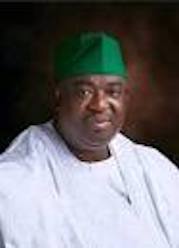
Plateau State Governor, Caleb Mutfwang has convened a strategic meeting with former governors of the state towards addressing the security challenges bedevilling the state.
The meeting held on Thursday at the News Government House Little Rayfield had the presence of former Governor Samuel Bitrus Atukum, former Governor Fidelis Tapgun, former Governor Joshua Dariye, former Governor Jonah David Jang and Former Governor Simon Lalong respectively.
Mutfwang maintained that the high-level engagement critically reviewed the prevailing security situation, particularly the recent violent attacks in rural communities across the state.
He noted that discussions were focused on fostering sustainable peace, strengthening unity, and promoting harmonious coexistence among all residents.
According to Governor Mutfwang, “I convened a strategic meeting with distinguished leaders and former Governors of Plateau State on Tuesday at the Government House, Little Rayfield, Jos. The meeting deliberated extensively on matters concerning the well-being, welfare, progress, and overall prosperity of the people of Plateau State.
“The high-level engagement critically reviewed the prevailing security situation, particularly the recent violent attacks in rural communities across the state. Discussions were focused on fostering sustainable peace, strengthening unity, and promoting harmonious coexistence among all residents.
“The leaders collectively resolved to pursue justice for all and to establish robust frameworks that reflect the enduring courage, discipline, hospitality and patriotism of the Plateau people within the Nigerian project,” he stated
The Governor reiterated that, “Emphasis was also placed on rebuilding fractured relationships and restoring trust, with the aim of reinforcing Plateau State’s longstanding identity as the Home of Peace and Prosperity,” says Mutfwang.

Pope Leo has criticised leaders who spend billions on wars and said the world was “being ravaged by a handful of tyrants” in unusually forceful comments during a visit to Cameroon.
The pontiff blasted those he said had manipulated “the very name of God” for their own gain, while touring a region ravaged by a deadly insurgency.
The remarks come just days after a high-profile spat with US President Donald Trump, who posted a lengthy attack on the Pope, a vocal critic of the US-Israeli military operation in Iran.
The Pope had voiced his concern about Trump’s threat that “a whole civilisation will die” if Iran did not agree to US demands to end the war and open the Strait of Hormuz.
Leo, who last year became the first US-born Pope, has previously also questioned the Trump administration’s approach to immigration.
“Leo should get his act together as Pope,” Trump wrote in a Truth Social post at the time.
The Pope told reporters at the start of his Africa tour that he did not want to get into a debate with Trump but would continue to promote peace.
Speaking in Cameroon, the Pope criticised leaders who “turn a blind eye to the fact that billions of dollars are spent on killing and devastation, yet the resources needed for healing, education and restoration are nowhere to be found”.
“The masters of war pretend not to know that it takes only a moment to destroy, yet often a lifetime is not enough to rebuild,” he said on Thursday.
The Pope also condemned “an endless cycle of destabilisation and death” in a “bloodstained” region of Cameroon that has been gripped by insurgency for nearly a decade.
“Those who rob your land of its resources generally invest much of the profit in weapons, thus perpetuating an endless cycle of destabilisation and death,” he told those gathered at a cathedral in the north-western city of Bamenda – the centre of the violence that has left at least 6,000 people dead and displaced many more.
“Peace is not something we must invent: it is something we must embrace by accepting our neighbour as a brother and as our sister,” the Pope said.
Separatist insurgents in Cameroon’s two Anglophone regions have been fighting the predominantly Francophone government since 2017.
Following Leo’s address, the Archbishop of Canterbury, Sarah Mullally, said that she stood with the Pope in his “courageous call for a kingdom of peace”.
The war in Iran has increasingly placed the Pope and the Trump administration at odds.
Soon after the first US and Israeli attacks on Iran, US Defence Secretary Pete Hegseth recited a highly controversial prayer at a Pentagon worship service that talked of “overwhelming violence” and “justice executed swiftly and without remorse”.
Then, during a Palm Sunday Mass in St Peter’s Square, the Pope said the conflict between Iran, Israel and the US was “atrocious” and that Jesus could not be used to justify war.
“This is our God: Jesus, king of peace, who rejects war, whom no one can use to justify war,” he told tens of thousands of worshippers gathered in Vatican City.
“He does not listen to the prayers of those who wage war, but rejects them.”
The pontiff also quoted the Bible passage Isaiah 1:15: “Even though you make many prayers, I will not listen: your hands are full of blood.”
Earlier this week, Trump launched a scathing attack on the Pope on social media, in which he described the leader of the Catholic Church as “WEAK on Crime and terrible for Foreign Policy” while portraying himself as a Jesus-like figure.
He later doubled-down on his criticism and refused to apologise – but deleted the AI-generated image of himself.
Asked about the US president’s remarks as he arrived in Algiers, the Pope said he had “no fear” of the Trump administration and that he would continue to speak out against war.
The Catholic leader’s wide-ranging Africa tour will include stops in 11 cities across four countries. It is his second major foreign visit since being elected to the papacy last year, and reflects the importance of Catholicism in Africa.
More than a fifth of the world’s Catholics – some 288 million people – live in Africa, according to figures from 2024.



Joseph Undu Bags National Safety Personality Award in Lagos
ShareBy David Torough, Abuja Award-winning Nigerian journalist and security analyst, Joseph Saater Undu, has been shortlisted for the prestigious Safety...
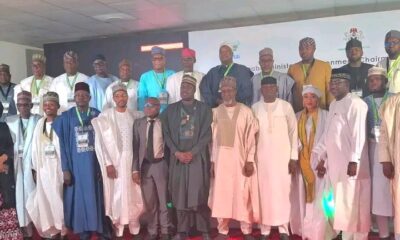

FG Reaffirms Commitment to ACReSAL Project at Mid-Term Review in Kaduna
ShareBy David Torough, Abuja The Federal Ministry of Water Resources and Sanitation has reaffirmed its commitment to the successful implementation...

Mutfwang Holds Close Door with Former State Governors
ShareFrom Jude Dangwam, Jos Plateau State Governor, Caleb Mutfwang has convened a strategic meeting with former governors of the state towards addressing the security challenges bedevilling the state. The meeting held...

Lobi Stars Trim Squad to Push for Promotion
ShareThe Nigerian National League (NNL) side, Lobi Stars Football Club of Makurdi, has trimmed its squad and retained a few quality players to push for promotion to the...

Pope Criticises ‘Tyrants’ Who Spend Billions on Wars after Trump Spat
SharePope Leo has criticised leaders who spend billions on wars and said the world was “being ravaged by a handful of tyrants” in unusually forceful comments during a...


Nigerian Men Scared of Bold, Confident Women, Phyna Claims
ShareFormer Big Brother Naija winner, Josephine Otabor, popularly known as Phyna, has claimed that she is still single because Nigerian...

Residents Decry Persistent Power Outage in Abuja Community
ShareBy Raphael Atuu, Abuja Residents of Waru District in Apo, within Nigeria’s Federal Capital Territory, are raising the alarm over what they...

2027: Tinubu Meets Coordinators, Renews Plea for Unity, Rule of Law
ShareBy David Torough, Abuja President Bola Tinubu has called for unity, resilience and renewed commitment to nation-building, urging Nigerians to...


Gunmen Abduct 14 UTME Candidates in Benue Enroute Exams Centre
ShareFrom Attah Ede, Makurdi A wave of concern has trailed the ongoing Unified Tertiary Matriculation Examination (UTME) nationwide following the...

Army Honours Fallen Heroes as Brig. Gen. Braimah, Others Laid to Rest in Maiduguri
ShareFrom Muhammad Muhammad Al-amin, Maiduguri The Nigerian Army has conducted a solemn burial ceremony for Brigadier General Oseni Braimah, Captain...