
NEWS

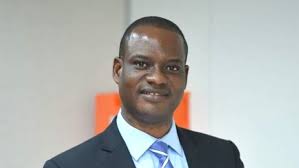
Poverty: Households Spend 120 Per Cent Income on Food, Says Oyedele
By Tambaya Julius
Some Nigerian households spend up to 120 per cent of their income on food, forcing them to borrow or rely on relatives to survive, the Minister of Finance and Coordinating Minister of the Economy, Taiwo Oyedele, has revealed.
Speaking at Chatham House in London, Oyedele cited a government survey showing that food expenses in some households exceed their total earnings, underscoring the severity of Nigeria’s cost-of-living crisis.
“Up to 120 per cent of household income is spent on food. Like, how do you spend 120 per cent of your income? You borrow food before the end of the month,” he said.
He noted that Nigeria’s poverty rate remained above 50 per cent despite an unemployment rate of about five per cent, warning that having a job does not necessarily mean a person can afford basic necessities.
The situation, he said, reflects the growing number of working Nigerians trapped in poverty.
“That tells you something. As a policymaker, you don’t sit back and say we don’t have unemployment. You have working poor,” he stated.
Oyedele attributed rising food prices to structural challenges in agriculture, including low yields, seasonal farming, post-harvest losses, inadequate storage facilities, high transportation costs and insecurity in farming communities.
He noted that post-harvest losses could reach 60 per cent for tomatoes in some cases, worsening food supply shortages and putting further pressure on prices.
Food inflation stood at 19.6 per cent in September, with food prices declining more slowly than headline inflation.
“Macroeconomic stability means little to a mother who still cannot afford food,” he added.
To address the problem, the Federal Government is investing in agricultural technology, irrigation, storage infrastructure and financing for smallholder farmers to boost production and reduce food losses.
The government’s cash transfer programme has also reached more than 10 million households, with digital payments and National Identification Number (NIN) verification introduced to minimise leakages.
Oyedele said agriculture and non-tradable services, which employ 81.4 per cent of working Nigerians, were being prioritised to increase incomes, improve living standards and reduce dependence on government cash assistance.

By Tambaya Julius, Abuja
A Federal Government investigative panel has described the deaths of 37 suspected illegal miners in the custody of the Nigeria Security and Civil Defence Corps (NSCDC) in Niger State as preventable, recommending ₦1.
4 billion in compensation for affected families and survivors.The panel’s chairman, Jonathan Kure, a former Deputy Director-General of the Department of State Services (DSS), made this known on Tuesday while presenting the committee’s report to the Minister of Interior, Olubunmi Tunji-Ojo, in Abuja.
Kure said the committee recommended compensation for the families of 33 victims and 44 survivors affected by the incident.
He disclosed that the deceased, including 14 minors, had been held under inhumane conditions that contributed to the avoidable loss of lives.
The panel also recommended the dismissal of the Niger State NSCDC commandant and other officers found to have been directly involved in the detention of the suspected miners and the circumstances leading to their deaths.
Beyond sanctions against the affected officers, the committee called for institutional reforms within the corps to strengthen leadership, improve accountability and prevent a recurrence of similar incidents.
Receiving the report, Tunji-Ojo assured that the Federal Government would act on the recommendations to ensure justice for the victims and their families.
The minister also ordered the immediate suspension of officers accused of cleaning up the detention facility in an alleged attempt to destroy evidence connected to the incident.
The deaths occurred on September 17, 2026, while the suspected miners were being held at the NSCDC Niger State Command in Minna.
The victims were among several individuals arrested during operations against suspected illegal mining activities in the M.I. Wushishi and Lukoto areas of Niger State.
The panel’s findings have raised fresh concerns about the treatment of detainees, the conduct of security personnel and the need for stronger safeguards to ensure accountability within the corps.
By Tambaya Julius, Abuja
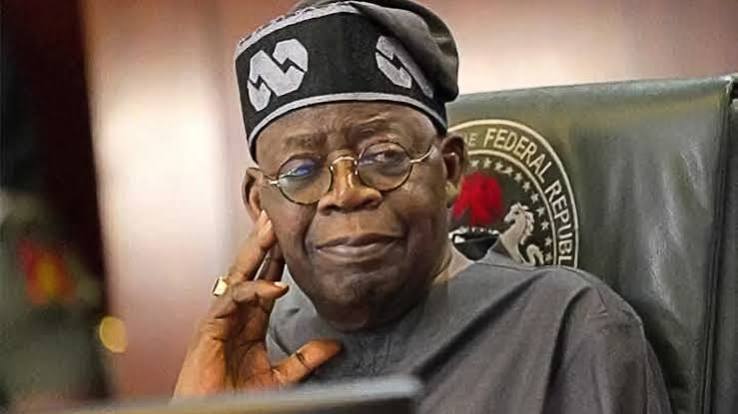
President Bola Tinubu has asked the National Assembly to approve a supplementary external borrowing plan of $20.52 billion and €1.045 billion to finance projects and programmes across critical sectors of the Nigerian economy.
The request was conveyed in a letter read by Senate President Godswill Akpabio during plenary on Tuesday.
Tinubu said the proposed loans would help address the country’s infrastructure deficit, accelerate economic growth, create employment opportunities and improve the living conditions of Nigerians.
He urged the National Assembly to approve the 2026–2027 Supplementary External Borrowing Plan to enable the Federal Government to implement its development projects and programmes without delay.
Hhowever, the opposition- African Democratic Congress( ADC) has querried the timing of the loan just as it said economic conditions in tje country did not justify any fresh borrowing.
The president said the proposed borrowing would cover infrastructure, agriculture, healthcare, education, water supply, security, employment generation and financial management reforms.
According to him, the need to sustain economic growth and accelerate national development following the implementation of his administration’s reforms had made additional external financing necessary.
Tinubu put the proposed facilities at $20,517,755,901 and €1,045,083,643, adding that the projects and programmes had undergone technical and economic assessments to determine their potential contributions to national development.
He said the proposed investments were expected to stimulate economic activities, create jobs, promote skills acquisition, encourage entrepreneurship, reduce poverty and strengthen food security.
The president added that most of the projects would be implemented across the 36 states of the federation and the Federal Capital Territory (FCT).
He explained that the scale of Nigeria’s infrastructure needs and the financial resources required to address them had made broader external borrowing necessary to bridge the funding gap.
Tinubu said the funds would be channelled primarily into critical infrastructure, particularly power, transportation and healthcare, while other sectors would also benefit from the proposed financing.
He called on the Senate and the House of Representatives to give the request urgent consideration, arguing that prompt approval would facilitate timely disbursement and effective implementation of the projects.
Following the presentation of the letter, Akpabio referred the request to the Senate Committee on Local and Foreign Debts for consideration and directed it to report back to the chamber within one week.
The committee is expected to conduct the initial legislative review, with possible collaboration with the Senate Committee on Appropriations and other relevant committees.
The proposed borrowing plan must undergo legislative scrutiny before the external financing can proceed.
However, the letter, as presented to the Senate, did not provide a project-by-project breakdown of the proposed facilities, their individual financing terms or the allocation of funds among the beneficiary sectors.
The request comes as the Federal Government seeks additional resources to finance infrastructure and development programmes amid competing demands on public finances.
The implementation of the borrowing plan will depend on the outcome of the National Assembly’s consideration and the details of the projects to be financed.
In a statement, the Director of Media and Publicity of the ADC-PCC, Kola Ologbondiyan, said the fresh borrowing request came amid rising living costs, increased taxation and growing economic hardship among Nigerians.
Ologbondiyan questioned the rationale for seeking additional foreign loans when, according to the council, millions of citizens were struggling to meet their basic needs.
“What exactly is President Tinubu borrowing all this money for? Where are the roads, the electricity, the hospitals, the jobs and the critical infrastructure that should justify this relentless accumulation of debt? Nigerians deserve answers,” he said.
He also demanded explanations on the utilisation of funds saved from fuel subsidy removal and the proceeds of previous borrowings.
The ADC-PCC expressed concern that continued dependence on foreign loans, without clear evidence of corresponding improvements in infrastructure, productivity, employment and citizens’ welfare, could push Nigeria deeper into a debt trap.
According to the council, mounting debt-servicing obligations could limit the ability of future administrations to make independent economic decisions and undermine the country’s fiscal flexibility.
“This is not a sustainable path to national development. It is a dangerous attempt to mortgage the future of Nigeria and generations yet unborn,” Ologbondiyan said.
He argued that the government should not continue to demand economic sacrifices from citizens while seeking additional loans without adequately explaining how existing resources had been spent.
The council further warned that excessive borrowing could expose the country to greater financial pressure and constrain its ability to fund critical public services.
It insisted that any new borrowing arrangement must be tied to clearly defined national priorities, productive investments and measurable benefits for Nigerians.
The ADC-PCC therefore called on the National Assembly to subject the proposed loans to rigorous scrutiny and reject the request unless the Federal Government demonstrates their necessity, sustainability and expected benefits.
It also demanded that Tinubu publish a comprehensive account of all domestic and foreign loans obtained since May 29, 2023, alongside a detailed breakdown of revenue generated from fuel subsidy removal and how the funds had been applied.
The council called for full disclosure of the proposed facilities’ purposes, interest rates, repayment schedules, associated fees, conditions and any collateral or guarantees attached to them.
It maintained that Nigerians had a right to know the financial obligations being incurred on their behalf and the implications for the country’s economic future.
“Nigeria cannot borrow its way out of poor economic management. Borrowing must be tied to clearly defined national priorities, transparent expenditure and measurable outcomes.
Anything less is an injustice to the Nigerian people,” the statement added.
The ADC-PCC also urged the National Assembly not to abdicate its oversight responsibilities, insisting that lawmakers must ensure that any borrowing arrangement does not expose the country to unacceptable financial risks.
It said the Federal Government must demonstrate how the proposed loans would stimulate economic growth, create jobs, improve infrastructure and raise living standards rather than impose additional liabilities on future generations.

By Francis Sadhere, Warri
Chief (Mrs) Esther Orighomisan Okotie-Eboh, Coordinator of Felix Omagbemi Ogbe Group (FOOG) Women Support Group for President Tinubu, has called on Nigerians to support President Bola Tinubu’s re-election bid in 2027, urging critics of the administration to present credible alternatives to its policies.
Okotie-Eboh said those opposing the Tinubu administration should go beyond criticism and explain how their proposed policies would improve the lives of Nigerians.
She argued that political opponents had a responsibility to provide concrete reasons for rejecting the government’s programmes and demonstrate what they would do differently if elected.
According to her, critics should be able to present at least five to 10 clear reasons for their positions, rather than engage in endless consultations and political discussions without offering practical solutions.
She maintained that Nigerians deserved constructive political engagement backed by workable policies and measurable commitments.
The FOOG Women Support for Tinubu director-general also cautioned against comparing the Tinubu administration directly with previous governments, arguing that each administration faced peculiar challenges that required different approaches.
According to her, differences in prevailing circumstances, economic realities and governance challenges should be taken into consideration when assessing the performance of successive administrations.
She maintained that the Tinubu administration should be assessed within the context of the challenges confronting it and the policies being implemented to address them.
Okotie-Eboh likened governance to building a house, stressing that a solid foundation and a clear plan were necessary to achieve lasting results.
“Governance is like building a house. You must first lay a solid foundation and have a clear plan before you can complete the building,” she said.
She added that abandoning a project halfway through could undermine the desired outcome, arguing that the Tinubu administration should be given the opportunity to implement its policies and deliver on its promises.
Okotie-Eboh further maintained that governments needed sufficient time and space to execute their programmes and address the challenges confronting their countries.
Citing developments in other parts of the world, including the United States and efforts to resolve the Russia-Ukraine war, she argued that governance required continuity and sustained efforts to achieve meaningful progress.
She warned against what she described as a tendency to move backwards by constantly disrupting the process of governance, insisting that elected administrations should be assessed based on their performance and tangible results.
According to her, Nigerians should critically examine the alternatives being proposed by opposition politicians before deciding whether to support a change of government.
“The question Nigerians should ask is simple: what are the alternatives being offered by those criticising the government? Let them tell us what they intend to do, how they plan to do it and how their proposals will improve the lives of ordinary citizens,” she said.
She stressed that anyone seeking the mandate of Nigerians must be prepared to articulate clear policies and demonstrate how such policies would translate into better governance.
Okotie-Eboh maintained that the country needed issue-based political engagement rather than rhetoric, adding that Nigerians deserved concrete policies, clear explanations and measurable results from those seeking public office.
She therefore called on Nigerians to support Tinubu’s re-election bid in 2027, saying continuity would give the administration the opportunity to pursue its programmes and work towards achieving its objectives.
End
PHOTO: Chief (Mrs) Esther Orighomisan Okotie-Eboh, Coordinator of Felix Omagbemi Ogbe Group (FOOG) Women Support Group for President Tinubu.



SharePoverty: Households Spend 120 Per Cent Income on Food, Says Oyedele By Tambaya Julius Some Nigerian households spend up to...


FG Panel Proposes N1.4bn Compensation for Families of 37 Niger Minners
ShareBy Tambaya Julius, Abuja A Federal Government investigative panel has described the deaths of 37 suspected illegal miners in the...


Again, Tinubu Seeks Senate Approval for $20.52bn, €1.045bn External Loans
ShareBy Tambaya Julius, Abuja President Bola Tinubu has asked the National Assembly to approve a supplementary external borrowing plan of...


2027: FOOG Women Coordinator Urges Nigerians to Support Tinubu’s Re-election Bid
ShareBy Francis Sadhere, Warri Chief (Mrs) Esther Orighomisan Okotie-Eboh, Coordinator of Felix Omagbemi Ogbe Group (FOOG) Women Support Group for...

UN, EU Seek Trust, Technology to Strengthen Africa’s Counter-Terrorism Fight
ShareUN Deputy Secretary-General Amina Mohammed, has called for stronger intelligence sharing, public trust and responsible use of emerging technologies to...


University of Agriculture, Orerokpe Bill, Passes Third Reading in Senate
ShareThe University of Agriculture, Orerokpe Bill, sponsored by Senator Ede Dafinone, representing Delta Central Senatorial District, has passed through its...


Ishowo Urges Kwara to Convert KWASUED to Medical Varsity
ShareA Kwara based Public Affairs Analyst, Comrade Ishowo Olanrewaju, weekend called on the Kwara State government to urgently convert the...

NESG Chairman Urges Shift from Economic Reforms
ShareChairman, Nigerian Economic Summit Group (NESG), Olaniyi Yusuf has urged the Federal Government to translate economic reforms into tangible results,...

Yakubu Receives Fellowship Of Nigerian Institute Of Town Planners
ShareBy Raphael Atuu, Abuja TPL Chief Amb Hon. Stephen Shekwonce Yakubu, the District Head (Hakimi of Garki Shekwope), had his...


Much Ado About the PBAT Door-to-Door Movement
ShareBy Catherine Agbo In the unfolding drama of Nigerian political discourse, few things excite the commentary circuit quite like a...