
COVER
2022 Budget: FG Earmarks N3.61trn for Debt Services,


By Tony Obiechina and Ubong Ukpong, Abuja
The Federal Government has earmarked N3.61trillion of the estimated N16.39trn to debts services with revenue target of N17.70trn in the 2022 budget.
The budget, presented yesterday by President Muhammadu Buhari, also has Sinking Fund of N292.
71 billion to retire certain maturing bonds with am overheads of N792. 39 billion; Capital Expenditure of N5. 35 trillion, including the capital component of Statutory Transfers.Giving these spending, President Buhari disclosed that the Federal Government expects “the total fiscal operations to result in a deficit of N6.26 trillion
The 2022 budget has been designed to be gender responsive as Ministries Departments and Agencies (MDAs) have been mandated to factor in gender issues in their budget preparation.
What this means is that the recently approved parternity leave for civil servants will be captured in the 2022 budget among other gender responsive issues the MDAs will consider to include in the budget.
In past budgets, travel and training provisions capture more men than women also most MDAs do have crèche for nursing mothers who are expected to resume work while tending to their infants.
Addressing the National Assembly before presenting the 2022 budget, President Buhari said: “This is also the first in our history, where MDAs were clearly advised on gender responsive budgeting”.
This decision President Buhari noted will form “part of critical steps in our efforts to distribute resources fairly and reach vulnerable groups of our society”.
The 2022 Appropriation has been tagged a Budget of Economic Growth and Sustainability has made fiscal assumptions and parameters with total federally-collectible revenue estimated at N17.70 trillion.
According to President Muhammadu Buhari “total federally distributable revenue is estimated at N12.72 trillion in 2022 while total revenue available to fund the 2022 Federal Budget is estimated at N10.13 trillion. This includes Grants and Aid of N63.38 billion, as well as the revenues of 63 Government-Owned Enterprises”.
A total expenditure of N16.39 trillion is proposed for the Federal Government in 2022 comprising: Statutory Transfers of N768.28 billion; Non-debt Recurrent Costs of N6.83 trillion; Personnel Costs of N4.11 trillion; Pensions, Gratuities and Retirees’ Benefits N577.0 billion.
Others include: Overheads of N792.39 billion; Capital Expenditure of N5.35 trillion, including the capital component of Statutory Transfers; Debt Service of N3.61 trillion; and Sinking Fund of N292.71 billion to retire certain maturing bonds.
Giving these spending, President Buhari disclosed that the federal government expects “the total fiscal operations of the Federal Government to result in a deficit of N6.26 trillion”.
This according to the President “represents 3.39 percent of estimated GDP, slightly above the 3 percent threshold set by the Fiscal Responsibility Act 2007”.
He defended the deficit crossing Fiscal Responsibility Act threshold by arguing that “Countries around the world have to of necessity over-shoot their fiscal thresholds for the economies to survive and thrive.
He added that “we need to exceed this threshold considering our collective desire to continue tackling the existential security challenges facing our country”.
The federal government plan to finance this deficit through new borrowings totalling N5.01 trillion, N90.73 billion from Privatization Proceeds and N1.16 trillion drawdowns on loans secured for specific development projects.
Speaking on the troubling level of borrowing the country has engaged in, President Buhari admitted that the borrowings have grown to a level of concern but assured that “the debt level of the Federal Government is still within sustainable limits. Borrowings are to specific strategic projects and can be verified publicly”.
Government, President Buhari said “used the loans to finance critical development projects and programmes aimed at improving our economic environment and ensuring effective delivery of public services to our people.
To this end, government focused on: the completion of major road and rail projects; the effective implementation of Power sector projects; the provision of potable water; construction of irrigation infrastructure and dams across the country; and critical health projects such as the strengthening of national emergency medical services and ambulance system, procurement of vaccines, polio eradication and upgrading Primary Health Care Centres across the six geopolitical zones.
Government’s target over the medium term the President disclosed “is to grow our Revenue-to-GDP ratio from about eight percent currently to 15 percent by 2025”.
“At that level of revenues, the Debt-Service-to-Revenue ratio will cease to be worrying. Put simply, we do not have a debt sustainability problem, but a revenue challenge which we are determined to tackle to ensure our debts remain sustainable” President Buhari assured.
To enhance revenue mobilisation, the federal government Buhari said will continue with its strategies of achieving the following objectives: enhance tax and excise revenues through policy reforms and tax administration measures; review the policy effectiveness of tax waivers and concessions; boost customs revenue through the e-Customs and Single Window initiatives; and safeguard revenues from the oil and gas sector.
The 2022 budget parameters are predicated on the 2022 to 2024 Medium Term Expenditure Framework and Fiscal Strategy Paper which set out the parameters as follows: oil price benchmark of US$57 per barrel; daily oil production estimate of 1.88 million barrels (inclusive of Condensates of 300,000 to 400,000 barrels per day); exchange rate of four N410.15 per US Dollar; and Projected GDP growth rate of 4.2 percent and 13 percent inflation rate.
In 2022, Government has pledged to strengthen the frameworks for concessions and public private partnerships (PPPs). “Capital projects that are good candidates for PPP by their nature will be developed for private sector participation” the President said.
Also in the coming year, government will “explore available opportunities in the existing ecosystem of green finance including the implementation of our Sovereign Green Bond Programme and leveraging debt-for-climate swap mechanisms”.
Buhari also disclosed that the Federal Government was expecting N17.70 trillion as revenue to fund the year 2022 budget.
President Muhammadu Buhari, disclosed this while presenting his N16.39 trillion 2022 budget proposals to the joint session of the National Assembly in Abuja.
He cited COVID-19 protocol, but said that the Minister of Finance, Budget and National planning would do the needful on a later time, adding that security and intelligence were his priorities in the budget.
He reminded that the parameters and Fiscal assumptions of the budget were based in the Medium Term Expensive Framework and Fiscal Strategy Paper (MTEF/FSP), 2022-2024, which had shown conservative oil price benchmark of 57 US Dollars per barrel, daily oil production estimate of 1.88 million barrels (inclusive of Condensates of 300,000 to 400,000 barrels per day), exchange rate of four 410.15 per US Dollar; and projected GDP growth rate of 4.2 percent and 13 percent inflation rate.
“Based on these fiscal assumptions and parameters, total federally-collectible revenue is estimated at 17.70 trillion Naira in 2022.
“Total federally distributable revenue is estimated at 12.72 trillion Naira in 2022 while total revenue available to fund the 2022 Federal Budget is estimated at 10.13 trillion Naira. This includes Grants and Aid of 63.38 billion Naira, as well as the revenues of 63 Government-Owned Enterprises.
“Oil revenue is projected at 3.16 trillion, Non-oil taxes are estimated at 2.13 trillion Naira and FGN Independent revenues are projected to be 1.82 trillion Naira.
“A total expenditure of sixteen point three-nine (16.39) trillion Naira is proposed for the Federal Government in 2022. The proposed expenditure comprises: Statutory Transfers of 768.28 billion Naira; Non-debt Recurrent Costs of 6.83 trillion; Personnel Costs of 4.11 trillion Naira; Pensions, Gratuities and Retirees’ Benefits 577.0 billion Naira;
Overheads of 792.39 billion Naira; Capital Expenditure of 5.35 trillion Naira, including the capital component of Statutory Transfers; Debt Service of 3.61 trillion Naira; and Sinking Fund of 292.71 billion Naira to retire certain maturing bonds.
“We expect the total fiscal operations of the Federal Government to result in a deficit of 6.26 trillion Naira. This represents 3.39 percent of estimated GDP, slightly above the 3 percent threshold set by the Fiscal Responsibility Act 2007”, the President declared.
Justifying the exceeding of threshold, he said countries around the world had to of necessity over-shoot their fiscal thresholds for the economies to survive and thrive.
“We need to exceed this threshold considering our collective desire to continue tackling the existential security challenges facing our country.
“We plan to finance the deficit mainly by new borrowings totalling 5.01 trillion Naira, 90.73 billion Naira from Privatization Proceeds and 1.16 trillion Naira drawdowns on loans secured for specific development projects.
“Some have expressed concern over our resort to borrowing to finance our fiscal gaps. They are right to be concerned. However, we believe that the debt level of the Federal Government is still within sustainable limits. Borrowings are to specific strategic projects and can be verified publicly.
“As you are aware, we have witnessed two economic recessions within the period of this Administration. In both cases, we had to spend our way out of recession, which necessitated a resort to growing the public debt. It is unlikely that our recovery from each of the two recessions would have grown as fast without the sustained government expenditure funded by debt.
“Our target over the medium term is to grow our Revenue-to-GDP ratio from about 8 percent currently to 15 percent by 2025. At that level of revenues, the Debt-Service-to-Revenue ratio will cease to be worrying. Put simply, we do not have a debt sustainability problem, but a revenue challenge which we are determined to tackle to ensure our debts remain sustainable.
“Very importantly, we have endeavoured to use the loans to finance critical development projects and programmes aimed at improving our economic environment and ensuring effective delivery of public services to our people. We focused on; the completion of major road and rail projects; the effective implementation of Power sector projects; the provision of potable water;
construction of irrigation infrastructure and dams across the country; and
critical health projects such as the strengthening of national emergency medical services and ambulance system, procurement of vaccines, polio eradication and upgrading Primary Health Care Centres across the six geopolitical zones.”
He said in 2022, Government would further strengthen the frameworks for concessions and public private partnerships (PPPs), adding that capital projects that are good candidates for PPP by their nature would be developed for private sector participation.
“We will also explore available opportunities in the existing ecosystem of green finance including the implementation of our Sovereign Green Bond Programme and leveraging debt-for-climate swap mechanisms.”
He said government would sustain it’s strategies to improve revenue mobilisation in 2022 with the goal of achieving the following objectives:
“Enhance tax and excise revenues through policy reforms and tax administration measures; Review the policy effectiveness of tax waivers and concessions;Boost customs revenue through the e-Customs and Single Window initiatives; and Safeguard revenues from the oil and gas sector.
“Distinguished Senators and Honourable Members, I commend you for the passage of the Petroleum Industry Act 2021. It is my hope that the implementation of the law will boost confidence in our economy and attract substantial investments in the sector.
Finance Bill 2022
“In line with our plan to accompany annual budgets with Finance Bills, partly to support the realization of fiscal projections, current tax and fiscal laws are being reviewed to produce a draft Finance Bill 2022.
“It is our intention that once ongoing consultations are completed, the Finance Bill would be submitted to the National Assembly to be considered alongside the 2022 Appropriation Bill.”
The President said the fiscal year 2022 was very crucial in efforts to ensure that critical projects were completed, put to use and improve the general living conditions of the people.
“It is with great pleasure therefore, that I lay before this distinguished Joint Session of the National Assembly, the 2022 Budget Proposals of the Federal Government of Nigeria.”






By Laide Akinboade, Abuja
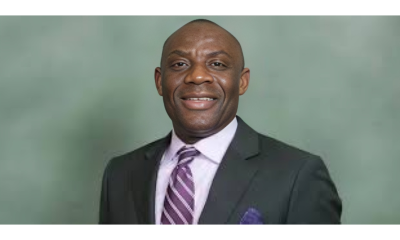
As part of efforts to reposition the newspaper for optimum corporate performance, the management of Asset Newspapers Limited, Publishers of DAILY ASSET, has announced the appointment of David Torough as the Editor of the Abuja-based national daily.
A statement by the management said the appointments were part of the company’s new strategy to further penetrate the various states in the country and raise its readership and patronage.
“DAILY ASSET is widely acceptable across the country and to maintain our leadership position, we need to increase management presence, hence the need to create new Bureau offices in some locations outside Abuja and Lagos,” the statement quoted the Publisher/ Editor-in-Chief, Dr Cletus Akwaya to have said.
In a statement yesterday, Publisher and Editor-in-Chief of the fast-growing daily, Dr. Cletus Akwaya said the appointment was part of the new strategy to properly situate the paper for better productivity.
“DAILY ASSET has a commitment with the Nigerian people. We are determined to weather the storm and give Nigerian readers a Newspaper that satisfies their yearnings and reading pleasure and we can only do that with the right set of professionals,” the statement said.
Akwaya, a former Commissioner of Information from Benue State said the difficult times being faced by Nigerians posed a great challenge to the media as the people deserved credible information with which to make choices.
“We have a bond with the people, to offer credible information at all times in the best tradition of the Nigerian Press and on this scale of objectivity, truth and fairness, we pledge to remain steadfast no matter the challenges,” Akwaya was quoted to have said.
He said the newspaper will maiantin its daily print run and circulation to all states of the federation and urged advertisers to take advantage of the deep penetration of the Daily Asset brand to send their messages.
Torough, the new Editor has had a steady rise in the Newspaper in the last five years.
A graduate of Mass communication of the Benue State University, Makurdi, Torough joined the company in 2022 as Benue State Correspondent. He was spotted for his brilliance and redeployed to Abuja the following year and promoted to Deputy News Editor. He was subswuently named Deputy Editor of the paper, a position he held until the recent appointment.
Torough has attended several journalistic workshops and trainings to properly equip himself for the task ahead.
The statement also said the Management named Eze Okechukwu as Deputy Editor.
Before his elevation as Deputy Editor, Eze has been Deputy Politics Editor and DAILY ASSET Newspaper correspondent covering the Senate, having joined the organization in 2021.
Born on March 10, 1975, Eze holds a Masters Degree in Mass Communication from the Enugu State University of Science and Technology.
Eze began his journalism career with Daily Star, Enugu and later worked with Daily Trust Newspaper, Abuja as sports reporter.
Aside from his journalistic excellence, he has a great deal of passion for sports.

From Ngutor Dekera, Kaduna and Aliyu Askira, Kano
Northern governors and traditional rulers yesterday called for the suspension of mining activities across the region for six months, blaming illegal mining for worsening insecurity in many states.The resolution was contained in a communiqué issued after a joint meeting of the Northern States Governors’ Forum and the Northern Traditional Rulers’ Council held at the Sir Kashim Ibrahim House, Kaduna.
The meeting, chaired by the Gombe State Governor and NSGF Chairman, Muhammadu Yahaya, had in attendance the 19 northern governors and chairmen of the 19 states’ traditional councils. The Forum expressed concern over the escalating violence in parts of the North, including the killings and abductions recently recorded in Kebbi, Kwara, Kogi, Niger, Sokoto, Jigawa and Kano states, as well as renewed Boko Haram attacks in Borno and Yobe.“The Forum extends its deepest condolences and solidarity to the governments and good people of the affected states,” the communiqué said, noting that the attacks on schoolchildren and other citizens had become “unacceptable tragedies” that required urgent collective action.It commended President Bola Tinubu for what it described as the Federal Government’s “firm response” to recent abductions and insurgency threats, especially the rescue of some abducted pupils.The governors also saluted security agencies for their sacrifices on the frontlines.“We resolved to renew our support for every step taken by the President and Commander-in-Chief to take the fight to insurgents’ enclaves in order to end the criminality,” the Forum stated.A major highlight of the meeting was the North’s renewed push for the establishment of state police, with governors and traditional rulers insisting that decentralised policing had become inevitable.“The Forum reaffirms its wholehearted support and commitment to the establishment of state police,” the communiqué added, urging federal and state lawmakers from the region to “expedite action for its actualisation.”On illegal mining, the governors said criminal mining networks were fuelling violence and providing resources for armed groups.As a corrective measure, they asked Tinubu to direct the Minister of Solid Minerals to impose a six-month suspension of mining activities in order to allow for a full audit and revalidation of licences.“The Forum observed that illegal mining has become a major contributory factor to the security crises in Northern Nigeria. “We strongly recommend a suspension of mining exploration for six months to allow proper audit and to arrest the menace of artisanal illegal mining,” it said.To strengthen the fight against insecurity, the governors also announced the creation of a regional Security Trust Fund.Under the proposed arrangement, each state and its local governments will contribute ₦1bn monthly, to be deducted at source under an agreed framework.They said the fund would help provide sustainable financing for joint operations, intelligence-driven interventions and coordinated security responses across the region.At the end of the meeting, the Forum reaffirmed its commitment to unity and collective responsibility.“Only through unity, peer review and cooperation can we overcome the pressing challenges before us,” it declared.The Forum agreed to reconvene on a date to be announced.Meanwhile, Nigeria’s worsening security crisis took a grim turn on Monday as bandits launched fresh attacks in Kano State, abducting 25 villagers, even as the Federal Government raced to secure the release of more than 300 Catholic school children kidnapped in Niger State.In the early hours of Monday, armed bandits invaded Unguwar Tsamiya—popularly called Dabawa—in Shanono Local Government Area of Kano State, whisking away nine men and two women after shooting into the air and assaulting residents. The attackers also rustled two cows.A resident lamented the community’s helplessness: “We cannot do otherwise; most of us cannot leave because we have nowhere to go. This is our place, our land and everything is here.”The assault came less than 24 hours after a similar attack on Yan Kamaye in Tsanyawa LGA, a community along the volatile Katsina border.In Niger State, National Security Adviser Nuhu Ribadu has assured distraught families of St. Mary’s Co-Education School, Kontagora that the more than 300 students and staff abducted on November 21 will return home “soon.” Ribadu, who led a high-level federal delegation to the school on Monday, said the abductees are safe, though he offered no specifics on their location or the status of rescue operations.According to Daniel Atori, spokesman for the Catholic bishop overseeing the school, the NSA reassured officials: “The children are where they are and will come back safely.”The St. Mary’s attack is part of a worrying resurgence of mass kidnappings reminiscent of the 2014 Chibok schoolgirls’ abduction. Security analysts warn that banditry has evolved into a “structured, profit-seeking industry,” with hundreds of Nigerians abducted in November alone.The Kontagora school abduction occurred the same week 25 girls were kidnapped in Kebbi State—victims who authorities say have since been rescued through “non-kinetic” means. About 50 of the St. Mary’s hostages have also managed to escape.Ribadu’s delegation, which included the Minister of Humanitarian Affairs and the Director-General of the Department of State Services (DSS), reaffirmed the government’s commitment to securing the freedom of all abducted citizens.As communities from Kano to Niger continue to bear the brunt of these violent incursions, the escalating spate of kidnappings underscores the urgent national demand for a more decisive and coordinated security response.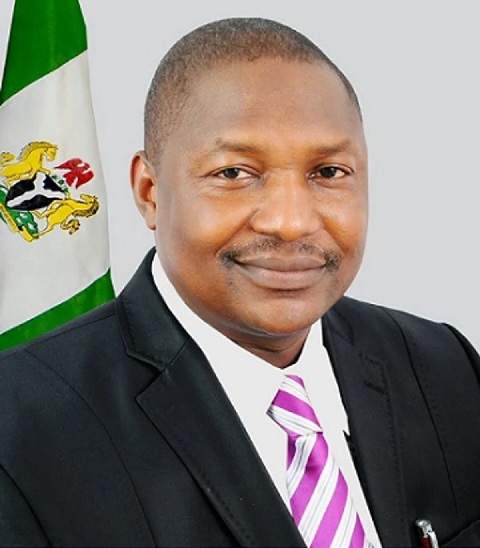
By David Torough, Abuja
The Economic and Financial Crimes Commission (EFCC) said former Attorney‑General of the Federation and Minister of Justice, Abubakar Malami, will face a team of interrogators at its office daily throughout December.A credible source in the EFCC said on Monday that the daily appearance was part of an ongoing investigation into the whereabouts of an alleged 490 million dollars Abacha loot secured through a Mutual Legal Assistance (MLAT) request.
The source said that Malami, who was summoned for interrogation by the EFCC on Saturday, was barred from leaving Nigeria for the next one month.According to the source, one of the conditions for his release on Saturday was that he should report daily to the EFCC Headquarters in Abuja for further interrogation.The source said Malami would have to appear daily at the anti-graft office due to the volume of the investigation and the seriousness of the charges against him.”We seized his passport, it is the normal routine during investigation, but he has to report at the EFCC headquarters in Abuja every day for the next month.”He will be reporting for further investigation throughout December.”He will be reporting every day, starting from Dec. 1st to Dec. 31st.He will appear before the team of investigators for the entire month of December.”He will be reporting to EFCC for investigation for the period because of the volume of the investigation and the seriousness of the charges against him,” the source added.According to the source, a fact sheet on the former minister revealed that Malami had several issues to clarify with the EFCC within the coming weeks.“We have asked him to explain the whereabouts of the $490 million Abacha loot secured through MLAT.“We didn’t say he stole money, but he should account for the loot. This is one of the issues he will clarify to our investigators.”The commission cited the large volume of documents he must review and the need for extensive interviews as reasons for seizing his passport.The source said EFCC would not engage in a war of words but would release its findings after a thorough investigation.Malami, in a statement by his media aide, Mohammed Doka, on Monday in Abuja, however, described the EFCC investigation as a political witch‑hunt.He confirmed he honored an EFCC invitation on Nov. 28, describing the engagement as fruitful and expressing confidence that the probe would vindicate him.Malami described the EFCC’s allegations as baseless, illogical and devoid of substance, insisting they collapse under factual scrutiny.


Wike Waives C-of-O Fees for Nigerian Law School
ShareBy Laide Akinboade, Abuja The Minister of the Federal Capital Territory (FCT), Nyesom Wike on Thursday gave an immediate waiver of fees for the Certificate of...
Study Links Alcohol to Higher Cancer Burden in Australia
ShareAustralian researchers on Thursday revealed that alcohol consumption causes a higher proportion of cancers in Australia than previous estimates. According to a statement of...


C’River Debunks False COVID-19 Report, Confirms Only One Case
ShareFrom Ene Asuquo, Calabar The Cross River State Government has refuted a publication by online platforms alleging the discovery of 10 new...


NCC Orders Airtime Credits for Poor Network Service
ShareThe Nigerian Communications Commission (NCC) said telecom operators will compensate subscribers for poor network quality through airtime credits under a strengthened regulatory enforcement framework...


CBN Orders Banks on Monthly Report of Mobile, ATM Transactions
Share The Central Bank of Nigeria has directed banks and other financial institutions to submit monthly reports on failed electronic...


Tinubu Seeks Senate Nod for $516m Sokoto–Badagry Superhighway Loan
ShareBy Eze Okechukwu, Abuja President Bola Tinubu has formally requested the National Assembly’s approval for a $516.3 million external loan...

2027: APC Begins Sale of Forms, Adopts Consensus, Direct Primaries
ShareBy David Torough, Abuja The All Progressives Congress (APC) has rolled out a comprehensive and revised timetable for its 2027...


Grant Pardon to Henry Okah, Niger Delta Activists Tells Tinubu
ShareBy Raphael Atuu, Abuja Popular Niger Delta activist Nengi James OON, alongside other youths under the aegis of Advocates for...

NCoS Places Facility on Red Alert over Alleged Attack Threats in Niger
ShareFrom Dan Amasingha, Minna The Nigerian Correctional Service (NCoS) in Niger State has placed all custodial centres across the state on red...


FIBA WWC: D’Tigress Land in Tough Group B with France, Hungary, Korea
ShareNigeria’s D’Tigress will face France, Hungary, and Korea in Group B at the 2026 FIBA Women’s World Cup. The draw set up the D’Tigress for...