
NEWS
2027: CAN Seeks Return of Sacked Traditional Rulers in Kaduna

From Shabanyan Kantiok, Kaduna
The Christian Association of Nigeria in Chikun Local Government Area of Kaduna State has urged Christian leaders and residents to support the 2027 Kaduna Central Senatorial candidate of the All Progressives Congress, Senator Shehu Sani, while appealing for the reinstatement of traditional rulers removed during the administration of former Governor Nasir El-Rufai.
The CAN chairman in Chikun made the appeal recently when Sani met with 48 zonal leaders of the association in Sabo Tasha, headquarters of the local government area, to seek their prayers and support ahead of the 2027 general elections.
The chairman urged the former senator to leverage his relationship with Governor Uba Sani to facilitate the return of the affected traditional rulers, saying such a move would promote reconciliation and strengthen relations between the government and the affected communities.
He expressed optimism that reinstating the monarchs would generate massive electoral support for the APC-led administration in Kaduna State during the 2027 elections.
The CAN chairman also appealed to Governor Uba Sani to upgrade the Sa Gbagyi traditional stool to first-class status, arguing that Chikun, which hosts the Kaduna State capital, deserved such recognition.
He said the elevation would reflect the importance of the Gbagyi traditional institution and the strategic position of Chikun in the state, urging the governor to consider the request in the interest of the people.
The CAN leadership also appealed for more political appointments for Chikun indigenes, lamenting that the local government currently had no commissioner in the Kaduna State cabinet.
Welcoming Sani, the chairman described the visit as significant, noting that the former senator was the first politician to approach the Christian community for such an engagement.
He said the meeting provided an opportunity for the community to communicate its concerns and expectations to political leaders.
The CAN chairman also cautioned against portraying the APC as a party belonging to a particular religious group, insisting that it should accommodate Nigerians irrespective of their religious affiliations.
“The APC is for everybody. It should not be seen as a party belonging to one religion,” he said.
He further lamented what he described as the inadequate representation of Chikun in the distribution of political appointments, arguing that the local government had qualified professionals capable of contributing meaningfully to governance.
“We are appealing that in the next dispensation, Chikun should be considered for key political appointments. We have qualified people who can serve,” he said.
Speaking during the engagement, Sani urged pastors to rise above religious and ethnic sentiments when making political choices, arguing that Nigeria needed leaders capable of uniting people across different divides.
He cautioned against what he described as selective empathy in responding to killings and insecurity, insisting that the lives of victims should matter irrespective of their religious or ethnic identities.
The former senator maintained that the condemnation of violence should not depend on whether victims belonged to a particular religious or ethnic group, stressing that every Nigerian deserved protection.
He also questioned the silence of some political and religious actors over security challenges during previous administrations, urging Nigerians to apply the same standards of accountability to leaders across political divides.
Sani further argued that opposition to President Bola Tinubu’s administration should not be driven solely by ethnic or religious considerations but should be based on an objective assessment of government policies and performance.
He challenged opposition politicians to account for their records in public office and explain their contributions to improving the lives of Nigerians rather than concentrating solely on criticising the current administration.
The APC senatorial candidate also encouraged pastors and Christian leaders to participate actively in politics, saying religious leaders should not completely abandon the political space to politicians.
He said his visit was aimed at building bridges across religious communities, seeking the prayers of the pastors and securing their support ahead of the 2027 Kaduna Central senatorial election.

OPay, Nigeria’s leading digital bank, has opened a new office in Kano State, strengthening its presence in Nigeria and bringing its financial services and customer support closer to individuals, businesses and communities across the state.
The new office, located on Hadeja Road by Yankaba Market, is part of OPay’s continued investment in Nigeria and its commitment to making financial services more accessible, affordable, convenient, safe, and reliable for Nigerians.
It will serve as a support hub for customers, merchants and business partners, providing a closer point of contact for assistance, business engagement and service-related needs.
With Kano serving as an important centre for trade, commerce and businesses in Northern Nigeria, the new office will help OPay better understand and respond to the needs of people and businesses in the region.
It will also strengthen engagement with local merchants and business owners, helping them access the digital payment solutions they need to serve their customers and manage their daily transactions more easily.
Speaking at the opening, Ifeoma Mba, Chief People Officer, OPay, said:
“Our commitment is to be closer to the people and communities we serve.
Opening this office in Kano means more customers and businesses can access the support they need, while giving us a better opportunity to understand their needs. We are proud to continue investing in Nigeria and supporting more people and businesses through accessible digital financial services.”
Since commencing operations in Nigeria in 2018, OPay has continued to provide digital financial services that help individuals and businesses make payments, transfer money, pay bills, save and manage their everyday financial needs.
The opening of the Kano office further reaffirms OPay’s long-term commitment to Nigeria and its role in supporting the country’s financial inclusion goals.
By bringing its people, services and support closer to local communities, OPay is helping more Nigerians participate in the digital economy and giving businesses more opportunities to serve their customers.
OPay’s business operations across Nigeria continue as usual, with its services available to customers and merchants.
As OPay continues to deepen its physical presence across the country, its focus remains on making financial services more inclusive through technology.
About OPay
OPay was established in 2018 as a leading digital bank in Nigeria with the mission to make financial services more inclusive through technology.
The company offers a wide range of payment services, including money transfers, bill payments, card services, airtime and data purchases, and merchant payments, among others.
Renowned for its fast and reliable network and strong security features that protect customers’ funds, OPay is licensed by the CBN and insured by the NDIC with the same insurance coverage as commercial banks.
Silhouette of Donald Andoor
e‐mail; doandoor@gmail.com
There is a growing need for Nigerians to look beyond the ballot box and examine the politics behind the organisation, timing, and sequencing of elections in the country.
Electoral manipulation does not always begin when voters arrive at polling stations. The rigging groundwork is laid months or even years before an election through political calculations, legislative arrangements, intimidation, inducements, strategic defections and manipulation of political alliances.This is why the question of whether Nigeria should conduct all its general elections on the same day deserves serious national debate. Why should presidential and governorship elections be separated when a country such as Ghana conducts its presidential and parliamentary elections simultaneously? Why should Nigerians be subjected to separate election days when a single election day could reduce the cost of conducting elections, minimise political tension and prevent the outcome of one election from influencing the conduct of another?
More importantly, who benefits politically from this separation?
These are questions that President Bola Ahmed Tinubu, members of the National Assembly and the political establishment must be prepared to answer.
Under INEC’s revised timetable, Nigeria’s 2027 presidential and National Assembly elections are scheduled for January 16, while governorship and State Assembly elections are scheduled for February 6. That is a 21-day interval between the two electoral exercises.
At first glance, this arrangement may appear to be an ordinary administrative decision intended to make election management easier. But in a political environment where the presidency exercises enormous influence over party structures, federal appointments, political alliances and the distribution of political patronage, the consequences of this separation deserve closer examination.
Consider what happens when the presidential election is conducted first. The outcome immediately establishes a new political atmosphere. A victorious presidential candidate acquires additional political leverage, while governors, particularly those seeking re-election or hoping to install successors, must reconsider their political calculations.
A governor who openly disagreed with the President or supported an opposition presidential candidate may suddenly find himself in a difficult political position. Would such a governor risk confronting a newly strengthened President when his own election is still weeks away?
Would he continue to provide political support to the opposition when his political survival may depend on maintaining a working relationship with the federal government?
This is where the separation of elections becomes politically significant. It creates a window in which the outcome of the presidential election can be converted into pressure on governors before they face their own electorate.
Nigerian governors occupy an exceptionally powerful position in the country’s political system. They influence party structures, local government political networks, state assemblies and the selection of candidates for various political offices. The governors wield unlimited power and influence. They determine the direction of the party, influence those to get political nominations, and play a decisive role in determining who succeeds him.
Inspite of the enormous powers, governors are not politically independent of the federal government. They operate within a political environment in which federal influence, party leadership, security relationships, political appointments and access to national political networks can affect their political fortunes. This relationship creates a potential instrument of pressure.
When presidential and governorship elections are conducted on different days, the President and his political allies have an opportunity to use the intervening period to consolidate political support, negotiate with governors, encourage defections and weaken those who refuse to cooperate. A governor who fears losing his seat may find it politically convenient to abandon an opposition alliance and move closer to the President. Therefore, question is, whether the separation of elections unintentionally or deliberately creates a political environment in which governors are encouraged to become loyalists rather than independent political actors.
This is where the conjecture of political defections and the movement of governors towards the ruling political establishment must be critically examined.
Political defections are not necessarily illegal. Every politician has the constitutional right to belong to a political party of his choice, subject to applicable constitutional provisions. And when defections become a means of securing political protection, preserving personal influence or avoiding confrontation with the federal government, they raise questions about the quality of our democracy.
A governor should be able to disagree with the President without fearing political retaliation or repercussions. He should be able to support an opposition presidential candidate and still enjoy the same constitutional rights, federal entitlements and institutional respect as a governor belonging to the President’s party. Unfortunately, Nigeria’s political culture has increasingly encouraged the perception that political loyalty to the centre is more important than independent democratic conviction.
The separation of elections has deepened this problem. Once the presidential election is concluded, the victorious President may enjoy an opportunity to negotiate, persuade or pressure governors whose elections are still pending. Those who align with the ruling establishment may receive political accommodation, while those who resist may have to confront a hostile political environment. This is the danger of turning the electoral calendar into a political bargaining instrument.
Ghana provides an interesting democratic comparison. The Ghanaian Electoral Commission conducts presidential and parliamentary elections on the same day. Voters elect their President and parliamentary representatives in the same electoral exercise. The arrangement gives voters an opportunity to express their preferences across different levels of national political representation without first having to respond to the outcome of a presidential election.
Nigeria should study this model.
Admitted, Ghana does not have elected state governors like Nigeria’s 36-state federal system, so the comparison is not identical. Nevertheless, the principle of conducting major elections simultaneously deserves serious consideration.
Nigeria can organise presidential, National Assembly, governorship and State Assembly elections on the same day, provided INEC establishes an effective operational arrangement for managing the different ballots. There may be logistical arguments against such an arrangement, but those arguments should be transparently examined. They should not automatically become excuses for preserving an electoral structure that creates opportunities for political manipulation. Arguments revolving around wherher or not if all elections are held in one day will create logistical problems can easily be solved with electronic voting. Again, those arguing that Nigeria is not ripe for electronic voting are simply being mischievous or intellectually lazy.
The National Assembly must be scrutinised. Members of the Senate and House of Representatives are not detached observers of the electoral system. They are beneficiaries and participants in the same political environment that produces the President and state governors. Consequently, Nigerians must question whether legislative decisions concerning election administration are being driven primarily by democratic efficiency or by the political interests of those who currently occupy public office.
The legislature has a responsibility to establish electoral laws that protect the voter, strengthen INEC’s independence, promote fairness and guarantee equal opportunities for political parties. It must not become an instrument for designing electoral arrangements that favour the political survival of the incumbent establishment.
Democracy should not operate on the principle that political leaders know what is best for themselves and that citizens must simply accept it.
Rigging does not always require ballot-box stuffing
One of the greatest mistakes in Nigeria’s electoral discourse is the tendency to define rigging only in terms of ballot-box snatching, result alteration, vote buying and manipulation of election figures.
These are important forms of electoral malpractice, but they do not exhaust the possibilities. There is also the broader question of whether the political environment leading to an election is sufficiently free and fair.
When opposition governors are subjected to political pressure, when political parties are weakened through inducements and intimidation, when political defections are encouraged by the unequal distribution of political advantages, and when the electoral calendar creates opportunities for the incumbent to influence the next round of elections, the democratic process is already under pressure.
A political establishment that can influence the choices available to governors, weaken opposition structures and shape the political atmosphere before voters arrive at polling stations enjoys an advantage that goes beyond conventional campaigning. This is why the phrase rigging years before elections deserves critical evaluation. It is about the danger of manipulating the political conditions under which elections are eventually conducted, rather than waiting until Election Day to manipulate the results.
President Tinubu is an experienced political strategist. His political career demonstrates the importance he attaches to party organisation, political alliances, coalition-building and the control of political structures.
His administration’s relationship with governors, political parties and the National Assembly should therefore be examined through the lens of democratic accountability.
A President should not be interested merely in having governors who support his political ambitions. He should be interested in having governors who can exercise their constitutional responsibilities independently, even when their political opinions differ from his.
The danger of an increasingly centralised political establishment is that opposition becomes weaker, not necessarily because Nigerians have rejected it, but because political actors begin to consider opposition an increasingly expensive undertaking. When governors calculate their political survival around the wishes of the President, the electorate loses an important layer of democratic independence.
The governor ceases to be an independent political leader accountable primarily to his people and becomes increasingly concerned with maintaining the approval of the political centre.
That is not the kind of federalism Nigerians should defend.
The issue is not whether separate election dates are proof of electoral fraud. The issue is whether the current arrangement creates an avoidable political advantage for the incumbent President and ruling party.
If the presidential election takes place first, the results can influence the political behaviour of governors whose elections are still pending. If the President wins convincingly, governors may feel compelled to align with him. If the ruling party dominates the presidential and National Assembly elections, opposition governors may face additional pressure to reconsider their political positions.
The presidential victory can therefore become a bargaining instrument in the governorship elections that follow.
A democratic electoral calendar should protect the independence of voters and candidates, not create an opportunity for political intimidation or strategic coercion.
Nigeria must not normalise electoral manipulation before Election Day. The greatest threat to Nigerian democracy may not always be what happens on Election Day. It may be what happens before Election Day, when political calculations, legislative decisions, defections, inducements and the manipulation of political alliances gradually narrow the choices available to the electorate.
If Ghana can conduct its presidential and parliamentary elections simultaneously, Nigeria should at least have an honest national conversation about conducting all its major general elections on one day.
There are legitimate logistical questions to resolve, but the democratic argument deserves attention.
President Tinubu, the National Assembly and the political establishment must demonstrate that the electoral arrangements of this country are designed for the convenience of voters and the integrity of democracy, not the convenience of those seeking to retain political power.
When political leaders begin arranging the political battlefield years before voters are called upon to vote, the question is no longer simply who will win the election. The question becomes whether the election has been made genuinely competitive in the first place.
That is why Nigerians must begin to interrogate the politics of election dates, the power of incumbency and the growing culture of political submission.
Rigging does not always begin at the polling station. Sometimes, it begins in the corridors of power, long before the election year arrives.
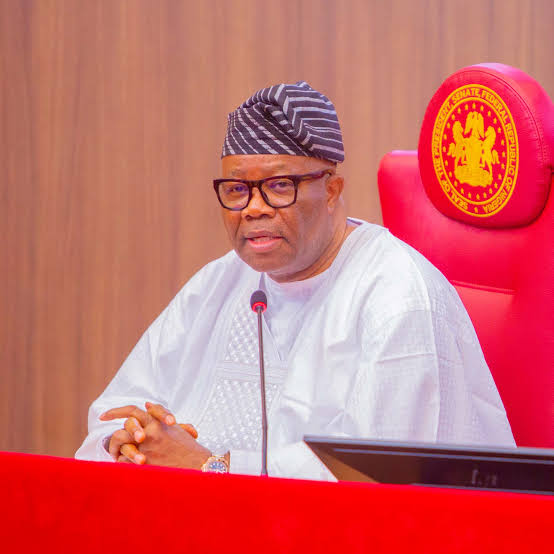
The President of the Senate, Godswill Akpabio has sent a hearty congratulations to the Nigerian Under-17 Women’s National Team on their historic triumph at the FIFA U-17 Women’s World Cup!
A statement from Akpabio Media Office signed by Anietie Ekong quoted the Senate President as describing the World Cup winning team as “Nigeria’s Golden Girls” who have made the nation proud.
“By achieving this remarkable feat, you have made Nigeria the first African nation to win the FIFA U-17 Women’s World Cup.
This is not just a victory for Nigerian football; it is a proud moment for the entire African continent.“You have demonstrated extraordinary talent, determination, resilience and the true Nigerian spirit. Your victory is a testament to the hard work of the players, coaches and everyone who contributed to this remarkable achievement.
“Your courage, determination, discipline, teamwork and fighting spirit have brought immense joy and honour to our nation. You have demonstrated that with talent, hard work and belief, no dream is beyond reach.
“You have not only won a trophy; you have won the hearts of millions of Nigerians and inspired a generation of young girls to dream big, believe in themselves and reach for greatness. You are our pride, our champions and our Golden Girls!
“You have raised the Nigerian flag high and inspired millions of young girls across Africa to dream bigger. You are more than champions; you are history makers!
“To the players, coaches, technical crew and everyone behind this historic success, congratulations!
“The world has heard our victory song!” Akpabio said.




2027: CAN Seeks Return of Sacked Traditional Rulers in Kaduna
ShareFrom Shabanyan Kantiok, Kaduna The Christian Association of Nigeria in Chikun Local Government Area of Kaduna State has urged Christian...

OPay Opens New Kano Office, Strengthens Commitment to Nigeria’s Financial Inclusion
ShareOPay, Nigeria’s leading digital bank, has opened a new office in Kano State, strengthening its presence in Nigeria and bringing...

Rigging Years Before Elections: Why Tinubu, Parliament Favours Staggered Balloting
Share Silhouette of Donald Andoor e‐mail; doandoor@gmail.com There is a growing need for Nigerians to look beyond the ballot box and...
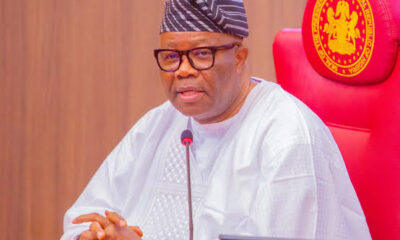

Akpabio Congratulates Nigeria’s Golden Girls, Flamingos
ShareThe President of the Senate, Godswill Akpabio has sent a hearty congratulations to the Nigerian Under-17 Women’s National Team on...
Customs Generates N1.4tn Revenue in Two Months
ShareBy Julius Tambaya, Abuja The Nigeria Customs Service (NCS) generated a total of N1.419 trillion in revenue between September and...

ADC Crisis: Court Battle Threatens Opposition’s 2027 Game Plan
ShareBy David Torough, Abuja The crisis rocking the African Democratic Congress (ADC) has intensified following the Federal High Court judgment...


FG Secures $200m World Bank Support to Boost Aquaculture
ShareBy David Torough, Abuja Nigeria’s annual fish supply deficit has exceeded 2.2 million tonnes, forcing the country to spend close...
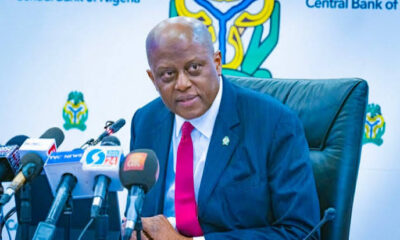

CBN Introduces New Regulatory Framework for Non-Security VASPs, others
ShareBy Tony Obiechina, Abuja The Central Bank of Nigeria (CBN) has introduced a comprehensive regulatory framework for non-security virtual assets...
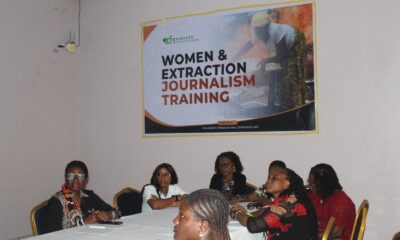

Group tasks Women Journalists on Reporting Impact of Coal Mining in Enugu
ShareFrom Sylvia Udegbunam, Enugu A non-governmental organisation, Renevlyn Development Initiatives, has called on women journalists in Enugu State to intensify...


RMAFC Chairman Tasks Directors, Others on Accountability, Productivity
ShareBy Tony Obiechina, Abuja The Chairman of the Revenue Mobilisation, Allocation and Fiscal Commission (RMAFC), Dr. Mohammed Bello Shehu has...