
POLITICS
2027: Presidency, Atiku Trade Barbs over Petrol Subsidy

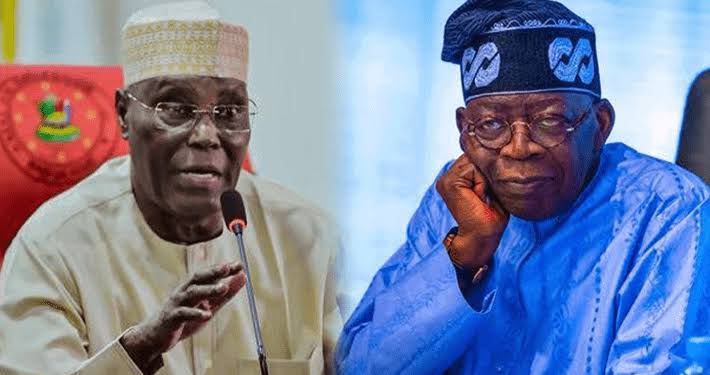
Nigerians Deserve Cheaper Energy, Says ADC Candidate
President Bola Tinubu and former Vice President Atiku Abubakar have clashed sharply over the future of petrol pricing, with the subsidy debate emerging as a major fault line ahead of the 2027 presidential election.
Tinubu, speaking on Thursday at the Presidential Villa, Abuja, dismissed Atiku’s proposal to restore petrol subsidy as evidence of what he described as “serious ignorance” of governance and the economy.
The President argued that the subsidy regime had imposed unsustainable financial burdens on the country while leaving many states struggling to meet basic obligations.The President spoke while receiving Osun State Governor Ademola Adeleke, who visited him following his re-election victory in the state.
“I saw one of my opponents now say he will go back to subsidy. I read it. That is a demonstration of a serious ignorance on governance and economy,” Tinubu said.
He recalled that before the removal of the subsidy, 27 states were unable to pay workers’ salaries and pensions, arguing that the reform had increased revenues available to the three tiers of government.
According to him, the additional resources were now supporting salaries, roads, schools, healthcare, housing and other public services.
The Presidency, through the Special Adviser to the President on Information and Strategy, Bayo Onanuga, reinforced the attack, describing Atiku’s proposal as “retrogressive” and fiscally unsustainable.
Onanuga argued that the former vice president had changed his position on subsidy for political reasons, noting that Atiku had previously advocated its removal.
He maintained that the subsidy regime had been wasteful and corruption-prone and that its removal was consistent with reforms introduced under the Petroleum Industry Act.
The Presidency also questioned how a restored subsidy would be financed, noting that if petrol were sold below its economic cost, the government would have to absorb the difference through reduced allocations, increased borrowing, higher public debt or cuts in infrastructure and social spending.
Onanuga further argued that the growth of domestic refining had changed Nigeria’s petroleum landscape, particularly with the emergence of the Dangote Refinery and other local producers.
But Atiku has rejected the characterisation of his proposal as a return to the old subsidy regime.
Unveiling details of his proposed Atiku Economic Recovery Plan 2027, the ADC presidential candidate said he would replace the former import-subsidy system with a targeted, capped, transparently budgeted and independently audited production subsidy.
Under the proposal, qualifying Nigerian refineries would receive crude at a preferential price in exchange for verifiable domestic production and supply. Atiku said the intervention would be tied directly to measurable output, ensuring that public support produces a corresponding benefit for consumers.
“My proposal is not to resurrect the old subsidy regime. We will move subsidy from importation to production, from middlemen to Nigerian refineries, and from unverifiable claims to verifiable barrels,” he said.
Atiku said the programme would operate within an annual fiscal ceiling approved through the national budget. Refiners would have to account for crude allocations, production volumes, inventories and domestic deliveries, while independent auditors would monitor the process.
He also proposed sanctions for operators that divert subsidised crude or products, manipulate production records or fail to pass the benefits to consumers.
“No refinery gets unlimited support. No marketer brings the government a surprise bill,” Atiku said, insisting that the National Assembly and the public would know the maximum fiscal exposure.
The former vice president said his objective was not permanent subsidy but temporary support for the development of domestic refining capacity, with assistance gradually reduced as efficiency, competition and production increase.
Atiku also challenged the Tinubu administration over the financial consequences of subsidy removal, arguing that Nigerians had suffered sharp increases in petrol, transportation and food costs since the policy was announced in May 2023.
He cited figures from NNPCL’s audited accounts showing large “Energy Security Expenses” in 2023 and 2024 and demanded greater clarity on whether such expenditures contained costs economically similar to subsidy.
“Nigerians cannot pay for subsidy removal twice — through punishing pump prices and through unexplained subsidy-like costs against their commonwealth,” he said.
The competing positions have therefore produced two sharply different visions of Nigeria’s petroleum economy.
Tinubu’s administration maintains that subsidy removal is essential to fiscal stability, increased government revenue and the development of a market-driven domestic refining industry. Atiku, meanwhile, says the government can intervene temporarily and transparently to lower energy costs while using domestic crude to strengthen Nigerian refineries.
The dispute is likely to intensify as the 2027 election approaches, with both camps seeking to convince Nigerians that their approach offers the more sustainable path to cheaper energy, economic growth and improved living standards.
For now, the central question remains unresolved: should Nigeria leave petrol prices to market forces, or should the government deploy a tightly controlled subsidy to protect consumers and promote domestic refining?
The Minority Caucus in the House of Representatives has announced a partnership with G-100, to galvanise opposition political parties for a common front ahead of the 2027 elections.
The Minority Leader, Rep. Fred Agbedi (ADC-Bayelsa) made this known while addressing newsmen after a closed-door consultation meeting with a delegation of the G-100 in Abuja on Tuesday.
Agbedi said that the engagement was successful, saying that it marked the “consummation” of the partnership between the G100 and the caucus.
He said that both groups had agreed to combine their efforts towards strengthening democracy and providing Nigerians with a credible alternative ahead of the 2027 elections.
The lawmaker said that the aim was to bring opposition parties, political leaders and presidential aspirants to look beyond individual ambitions for a united arrangement capable of challenging the APC.
“We had just had a successful meeting and in the meeting we concluded that this is the consummation of the alliance of the caucus and the G-100, fusing into one to ensure that we play an active role in enriching democracy in Nigeria.
“I want to call on all members of the opposition, no matter the party you belong to, no matter your ambition, that there is strength in unity and that the opposition should unite to ensure that we wrestle power from the APC in 2027,” he said.
Agbedi said that prevailing economic and social difficulties in the country had made opposition unity more urgent.
He said that political differences should not be allowed to undermine the broader objective of providing an alternative government.
Earlier, the leader of the delegation, Salihu Lukman said that the G100 initiative was driven by concern over the political direction of the country and the inability of opposition forces to coordinate their activities.
He explained that the movement was established to persuade opposition leaders and political actors to negotiate a common political arrangement ahead of the 2027 elections as against individual, party or organisational interests.
“As opposition parties, we seem to be fragmented, and if we continue the way we are going, we are almost going to replay the 2023 scenario.
“It is almost like a case of handing over victory to the ruling party, and then we go back to square one,” he said.
He said the G100 is prepared to facilitate whatever discussions and negotiations would be required to bring the opposition forces together ahead of the 2027 polls.
Lukman announced that a summit for opposition parties and leaders initially scheduled for Tuesday, has been moved to Aug. 31.
He said the postponement had also created additional time for the G100 to expand its consultations and bring more political actors and Nigerians into the process.
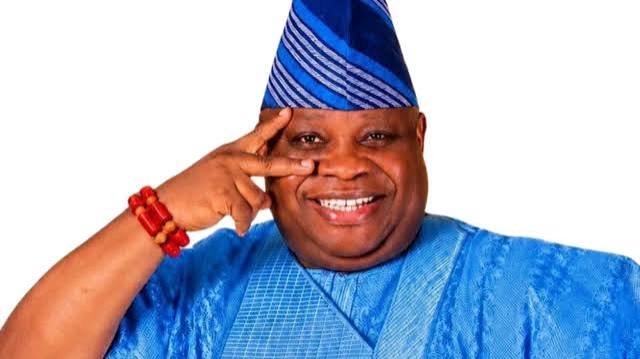
From Ayinde Akintade, Osogbo
Osun State Governor, Ademola Adeleke on Wednesday received his certificate of return at the Independent National Electoral Commission (INEC) office in Osogbo, amid cheers, jubilation, and a mammoth crowd celebrating the renewed mandate.
In his address, Adeleke promised to work harder and do more towards the welfare and betterment of the entire people of the state.
According to him, “You have given me another opportunity to serve, and I accept this responsibility with humility.
“Today is not merely about the presentation of a Certificate of Return.
It is a moment of gratitude, reflection and appreciation to the people of Osun State who stood firm for democracy.“This certificate does not belong to Ademola Adeleke alone. It belongs to the people of Osun State: our workers, market men and women, youths, traditional and religious leaders, and every citizen who participated in this democratic process. I am deeply humbled by the confidence you have renewed in me.
“It is deeply painful that any family should have to bury a loved one because of politics. No election, political office or ambition is worth the life of a single citizen.
“We remember Ezekiel Olapade, Aderogba Ajayi, Remi Abass, Kolade Eluyera, and every other victim of electoral violence. Regardless of political affiliation, they were first our brothers, sisters and fellow citizens. To their families, your pain is our pain, and your loved ones will never be reduced to mere statistics.
“The Adeleke family, through the Springtime Development Foundation, will provide full scholarships up to university level for the children and dependents of those who lost their lives.
“The Osun State Government will also establish a ₦500 million Election Violence Victims Endowment Fund to support verified victims and affected families. A Verification and Relief Committee, chaired by the Speaker of the Osun State House of Assembly, Rt. Hon. Adewale Olumide Egbedun, will oversee the transparent identification of victims and equitable distribution of support. This is not a political intervention. It is a humanitarian responsibility”, Governor Ademola Adeleke was quoted as saying.
National Commissioner at the Independent National Electoral Commission (INEC) representing the South-West, and currently supervises electoral activities in Ogun, Ondo, and Osun States, Professor Kunle Ajayi who congratulated Governor Adeleke at the presentation ceremony later presented the Certificate of Return to the Governor.
From Ene Asuquo, Calabar
The Commissioner for Information in Cross River State, Pastor Ekpenyong Ene Cobham, has challenged opposition politicians to stop what he calls “rudimentary political rhetoric” and put their energies and intellectuals to engage the administration of Governor Bassey Otu on its policies and programmes instead.
The Commissioner threw the challenge during an interactive session with journalists at the Ernest Etim Bassey Press Centre in Calabar, calling on them to raise the quality of its political discourse if they want to be seen as serious people by Cross Riverians.
He particularly challenged the PDP governorship candidate, Arthur Jarvis Archibong, to a public debate on the policies, programmes and performance of the present administration, rather than wasting his energy on shallow political arguments and personal attacks on the Governor
Cobham said recent criticisms directed at Governor Otu, including claims that the Governor had not spent up to 10 days in Cross River in any month since assuming office, exposed what he described as the opposition’s poor understanding of contemporary governance and the workings of Nigeria’s pseudo-federal system.
According to him, “Is it in this 21st century of the modern world that somebody would talk about where the government is operating from? Talk about the record, the performance index at this point in time,” he maintained.
He said further, “Reel out what you think the government has not been able to achieve. Come up with strong reasons, and let us engage,” he said, adding that critics should “educate themselves to the strata we are operating under.”
Cobham said the administration’s strategic engagements outside Cross River had yielded significant results, pointing to efforts to secure funding from the African Export-Import Bank (Afreximbank) for the Bakassi Deep Seaport and the sustained push to have Cross River formally recognised as an oil-producing state
Maintaining that these engagements were necessary because Cross River could not achieve its development objectives by operating in isolation from the Federal Government and other strategic institutions, Cobham maintained.



2027: Presidency, Atiku Trade Barbs over Petrol Subsidy
ShareNigerians Deserve Cheaper Energy, Says ADC Candidate President Bola Tinubu and former Vice President Atiku Abubakar have clashed sharply over the future...
2027: Reps Minority Caucus, G-100 Push for United Opposition
ShareThe Minority Caucus in the House of Representatives has announced a partnership with G-100, to galvanise opposition political parties for...

Adeleke Receives Certificate of Return, Promises More Dividends of Democracy
ShareFrom Ayinde Akintade, Osogbo Osun State Governor, Ademola Adeleke on Wednesday received his certificate of return at the Independent National...
C’River Info Commissioner Challenges Oppositions on State Policies
ShareFrom Ene Asuquo, Calabar The Commissioner for Information in Cross River State, Pastor Ekpenyong Ene Cobham, has challenged opposition politicians...


Let Campaigns Be Issue-based, Respectful, Says Diri
ShareFrom Mike Tayese, Yenagoa Governor of Bayelsa State, Senator Douye Diri, has advised politicians to respect their opponents and ensure...
Tinubu’s 2027 Bid: APC Kicks off Adamawa Campaign, Vows Grassroots Victory
ShareFrom Yagana Ali, Yola The All Progressives Congress (APC) in Adamawa State has formally kicked off its campaign for the...
Edo Assembly Dissolves Standing C’ttees, Constitutes Panel to Probe Ex-Speaker
ShareThe Edo House of Assembly on Tuesday dissolved all its standing committees and constituted an investigative panel to probe allegations...
2027: Ebonyi PDP Governorship Candidate Urges Peaceful, Lawful Conduct
ShareThe Peoples’ Democratic Party (PDP) governorship candidate, Chief Ifeanyi -Chukwuma Odii, has urged Ebonyi people to remain law-abiding and committed...


Fintiri Inaugurates Presidential, National Assembly Campaigns in Adamawa
ShareAdamawa State Governor, Ahmadu Fintiri has inaugurated the presidential and National Assembly campaigns of the All Progressives Congress (APC) ahead...
Niger CP, NCCSALW DG Pledge Stronger Collaboration against Illicit Arms
ShareFrom Dan Amasingha, Minna The Commissioner of Police, Niger State Command, Adamu Abdullahi Elleman, mnips, has assured the National Centre...