
NEWS
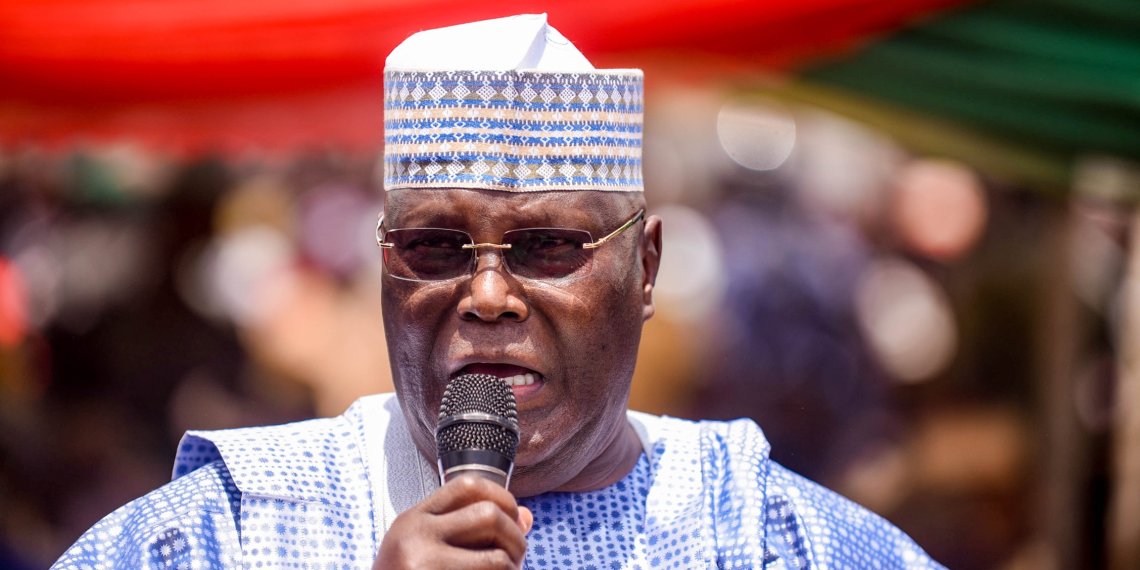
2027: Youruba Activist, Ojo Canvasses Support Atiku

By Mike Odiakose, Abuja
Ahead of 2027 general election a good governance crusader from the South West, Dr Jackson Lekan Ojo has urged Nigerians to cast aside primodal ethnic and religious sentiments and support the candidature of Atiku Abubakar of the African Democratic Congress (ADC).
Dr Ojo, who resigned his membership of the ruling All Progressives Congress (APC) about two years ago over the failure of the government to meet the minimum expectations of Nigerians, declared that Atiku’s record as the Chairman of the National Economic Council speaks volume about his capacity to positively turn around the fortunes of Nigeria.
According to him, Atiku’s economic team achieved an unbeaten record till date without borrowing anything.
“We need an Atiku. We have seen what Atiku achieved when he was just ordinary Vice President and Head of the Economic Team. I would not be holding a mobile phone today if not for his economic team. Prior to that the telecommunication system in the country was battered but look at what the economic team did.
“They did not borrow? Even the money the military administrations borrowed they (Atiku’s team) worked towards it and the people wrote off our debts.
“Why won’t I follow Atiku, why won’t I mobilize for Atiku? I don’t need to know him one on one but I felt Nigeria deserves the best.
“It was during his period I got Mobile phone, built a house, bought a car and achieved a lot of things without knowing anybody or lobbying anyone. But if you do a government contract now you need to lobby to get your payment. Enough is enough.”
He expressed concern that some Nigerians are putting tribal, religious and regional issues as priority in choosing who to support in 2027.
“I wonder what is wrong with our brain, with our mentality and with our orientation in this part of the world. I was discussing the other day with a friend and he challenged me ‘why did you leave Bola Tinubu, Obi and you are supporting Atiku’s? I responded ‘why did you leave Atiku and support either Tinubu or Obi?
“He said because Tinubu and Obi are from the South. I laughed and asked him, as a Southerner, where is that fueling station where you are buying gas, petrol, diesel or kerosene less than a Northerner? Where is that supermarket where you buy groceries, foodstuff cheaper than a Northerner. He was dumbfounded and couldn’t say anything again.
“It is arrant nonsense when you criticize based on religion, tribe, ethnic groups, zone or region. It is madness, absolute stupidity. None of these matters.
“Why are Northerners serving under the administration of a Southerner? All the Northerners are supposed to have withdrawn their services under a southern president if we are going towards ethnicity.
“If you want to board an aircraft, have you ever asked who the pilot, the air hostesses and others are? If you go to a restaurant, have you ever asked if the cow is from where, the gari is from where, the rice is from where, is it Moslem people that sold the gari, is it Christians that sold the rice?
“If you want to gain admission into a school why didn’t you ask who is the principal of that school, is he a Moslem, a Southerner or a Northerner. If you want to enter university you have to ask about the Vice Chancellor, the Registrar, the Lecturers and others. If you are a Christian and a Moslem is the Lecturer then withdraw from the school. That is stupidity.
“In the present day the poverty that is raiding and bedeviling Nigeria; the people from Osun State, people from Oyo State, people from Ondo State, people from Lagos State, the Yoruba speaking Kwara, the Yoruba speaking Kogi, the Yoruba speaking Edo, I think they are not feeling it.
“You’ve not seen people in Lagos condemning this government?
“It is not that anybody hates President Bola Tinubu, no. But his government is bad, his government is wicked, his government is lawless, his government is against humanity.
“We are talking about his government; his government is corrupt. We are not saying Tinubu is corrupt, the President is not wicked, the President is very good but the system he is running is weak, it is reckless.”
By David Torough, Abuja
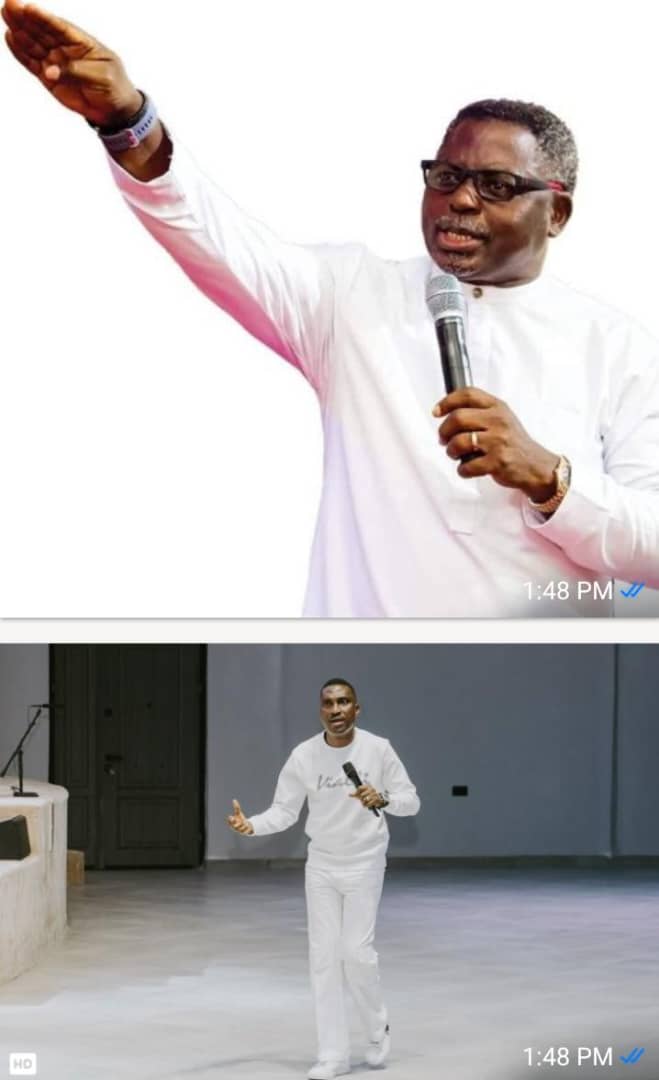
The Senior Pastor of, Kingsway International Christian Centre (KiCC), Pastor Mathew Ashimolow has called on leaders to emulate the leadership model, style and kingdom-minded approach of Pastor Korede Komaiya.
Ashimolowo made the remark during his visit to the newly dedicated Dreamland complex at Master’s City, Warri, where he ministered on the theme, “Timely Technology for Timeless Truth.
”Speaking at the event, he emphasized the need for a generation of leaders who are spiritually grounded and equipped for contemporary challenges.
According to him, “This time requires leaders who are spiritually deep, mentally sharp, emotionally stable, and financially wise. What we see here today is the result of Pastor Komaiya’s kingdom-mindedness, heart and unwavering commitment to God’s work.”
Commending the vision behind the project, Ashimolowo noted that many leaders would have prioritized personal luxury over such a monumental kingdom investment.
“One thing I can tell you about this big work is that, many people would not build something this massive when they could build mansions for themselves. Yet, he still lives more or less in a rented place and modestly because his heart is kingdom-first,” he said.
He further stressed the importance of sacrificial leadership and investment in God’s work, adding that leaders must set the example for those they lead.
“Kingdom-mindedness is not common in this generation, especially among founders. If you cannot invest in your own ministry, how do you expect your members to invest? People are watching your priorities and your commitment,” Ashimolowo stated.
Expressing his admiration for the project, he recalled his reaction when he first saw images of the completed facility.
“I had never been here before, but when they sent me pictures after the finishing touches were completed, I was overwhelmed. I found myself speaking in tongues because I did not know what else to do,” he added.
The newly dedicated Dreamland complex, located at Master’s City, KM 3 Refinery Road, Warri, Delta State, features two four-storey wings equipped with elevators, a central heating, ventilation and air conditioning (HVAC) system, as well as a state-of-the-art main auditorium built to international standards.

By Laide Akinboade, Abuja
The Minister of Federal Capital Territory (FCT), Nyesom Wike on Thursday explained that the cost of completing the abandoned Millennium Tower project in Abuja has increased to between N300 billion and N400 billion.
The FCT Minister added that the increment in the cost of completing it based on the present budget of the administration, has made it financially unviable because it would affect other ongoing projects.
Wike stated this during an inspection tour of inspecting the ongoing construction of the extension of Collector Road CO1 linking Nile University area in the Institution and Research District with Lugbe, Abuja and the Arterial Road N1, from Wuye District to Ring Road II, Abuja.
The minister revealed that he has appealed to President Bola Tinubu to step in, reconsider the complex as a strategic national project, and assume its funding.
According to the minister, tying down such an enormous capital outlay to a single project would effectively cripple the territory’s finances and force the administration to abandon several other critical infrastructure projects needed across Abuja.
Responding to inquiries about the long-delayed landmark, Wike emphasised the need for a realistic approach to the city’s development priorities.
He said, “Well, you know that’s a national project. And I believe that it’s one project that the government should reconsider. It should be a tourist centre project. The capital involved is too huge for the FCT to handle as a single project”.
Tracing the genesis of the signature edifice, Wike noted that the contract was originally awarded decades ago under the administration of former President Olusegun Obasanjo.
However, the minister said years of neglect, economic shifts, and delayed execution have pushed the financial requirements to an unprecedented high.
Wike further explained, “We have discussed with the contractor. Remember that the project was awarded under Obasanjo’s regime
“As I speak to you, it’s not less than 300 to 400 billion Naira that the contractor is talking about. And if you look at it, how do we carry out such a project? It means that every other project in Abuja we will have to abandon. But we are still talking to the President that he should reconsider it as a national project. So, that’s where we are”.
Despite the setback posed by the massive cost of the Millennium Tower, Wike expressed strong satisfaction with the pace and quality of ongoing infrastructure development across the territory, particularly praising major construction firms handling critical corridors.
On ongoing projects, Wike assured residents that all ongoing infrastructure projects awarded by the Federal Capital Territory Administration (FCTA) will be completed before the end of the year, expressing confidence in the contractors handling the various road projects across the capital city.
Wike said the Tinubu administration remained committed to delivering every project it had initiated, insisting that no road project would be abandoned.
“What should concern you is whether there is any project we have started and abandoned. Look at even the projects that were awarded since 2010. We have tried to see that all are completed, and the ones that this administration has awarded will also be completed,” the minister said.
He added: “I don’t want to be pessimistic. I’m very optimistic that all the roads that we have gone for inspection, after the commissioning and flag-off, will also be done. As far as I’m concerned, the latest by the end of this year.”
By Mike Odiakose, Abuja
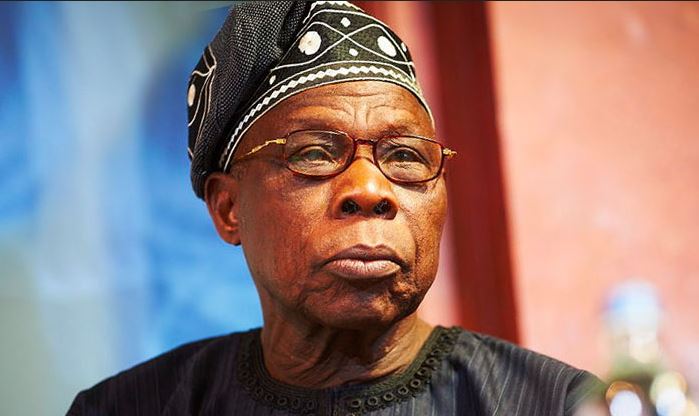
A former chieftain of the All Progressives Congress (APC), Dr. Jackson Lekan Ojo, has declared that no administration from 1999 to date has surpassed the achievements of the Obasanjo/Atiku administration.
Reacting to the recent attack on the former vice president by Presidency officials, Ojo lampooned them and stressed that there is nothing to show on the scorecard of the Tinubu administration apart from mounting debts.
According to him, “Most of the guys in the Presidency are unnecessarily loquacious. They speak, they are not thinking, they speak but they are not communicating.
How can somebody on this planet earth in this administration refer to the Obasanjo administration as wasted years. Honestly, most of the things we are enjoying today are from the Obasanjo/Atiku regime.“The debt forgiveness is from the regime; the first time that we have EFCC that they are using today as a tool is from the Obasanjo/Atiku regime; the GSM revolution is from the regime; Due Process that a lot of government officials are no longer following today in the award of contracts is from the regime; ICPC is from the regime.
“Do you know that it was Atiku Abubakar that checked Sharia law, appealing to everybody and they respect him and the country was peaceful until Obasanjo second tenure when he started nursing tenure elongation and Atiku disagreed with him.
“That was why Obasanjo was not able to penetrate Northern Nigeria. That time he has already written off the office of the vice president.
“Obasanjo achieved all these things during his first tenure when Atiku was the chairman of the National Economic team. There wouldn’t have been political stability at that time because Obasanjo was not a democrat; he was a military man. It was Atiku as vice president that stabilized democracy. It was during this period that people like Ngozi Okonjo-Iweala were brought home to this country when Atiku was chairman of the Economic team. People like Nuhu Ribadu, Oby Ezekwesili, Adeshina, and a host of others were brought in.
“Who is the Okonjo-Iweala in this administration, who is the Ezekwesili in this administration? Who again can serve as chairman of EFCC like Ribadu or El-rufai?
“Do you know during that time you can remember names of all Ministers because they were performing but how many Ministers today do Nigerians know their names?
“If Obasanjo was not nursing tenure elongation during his second term he would have been able to work well with Atiku. All the telecommunication and other achievements we are talking about today were all achieved during the first tenure when Atiku was chairman of the Economic team.”
Dr Ojo also faulted claims by the presidency that the Obasanjo/Atiku administration is responsible for huge pension debts.
Speaking at the 2027 general election, Dr Ojo expressed optimism that the ADC presidential candidate has the capacity to upstage President Tinubu.
“It is not Atiku’s battle. Today in Nigeria Atiku is the most popular, most relevant, he has the geopolitical spread. He has relationships with the South East and South West by marriage; he has business across the country, he has the capacity.
“He has the political clout and sagacity to defeat President Bola Ahmed Tinubu. The battle ahead is the battle of the populace. 90 percent of Nigerians are living below the poverty line.
“There is no time in Nigeria’s history that we don’t have a middle class but today we have only the rich and the poor. Small scale industries are no longer working. How much do you barb your hair now? What you used to pay for a return ticket for a flight between Lagos – Port Harcourt cannot even party for transport by land today. The air is not affordable, the roads are not safe. What is this government doing?
“How much was University school fees before. Is it this deception called a student loan? You are giving students loans when they are going to pay when there are no jobs after graduation. In the future if they want to contest for any position they will tell them they owe the Federal government. You are impoverishing people and you are plugging them into tactical indebtedness.
“How much is fuel today. When Buhari was paying subsidy how much did he borrow? Now that we are not paying for subsidy we have out borrowed Buhari’s eight years within three years. How much did Obasanjo and Atiku borrow during their time?
“The battle in 2027 is between the people, the APC and Renewed Hopelessness. People are crying. Kidnapping was limited during the Goodluck Jonathan administration to North East but today North East, North West, South East, South West, North Central are all affected.
“What is the achievement of this administration? This administration has failed woefully. This is the most corrupt administration in the history of military and democratic government in this country. This is the first time that we are hearing anything about a fake parastatal.”




Emulate Komaiyas Kingdom First Leadership Style, Ashimolowo Urges Leaders
ShareBy David Torough, Abuja The Senior Pastor of, Kingsway International Christian Centre (KiCC), Pastor Mathew Ashimolow has called on leaders...

Troops Neutralise Over 102 Terrorists, Rescue 393 Kidnap Victims, Arrest 345 Suspects in July
ShareBy David Torough, Abuja The Armed Forces of Nigeria (AFN) neutralised more than 102 terrorists and other criminal elements, arrested...

Kanye West, Former Assistant Settle Sexual Harassment Case
Share‘Supergirl’ hits N164m, ‘Moana’ earns N86m in West Africa ‘Supergirl’ and ‘Moana’ have recorded impressive box office performances, highlighting the...

Phyno Releases ‘Na Afa Nna’ Freestyle, Hints at Forthcoming Album
ShareNigerian rapper and songwriter, Chibuzor Nelson Azubuike, popularly known as Phyno, has released a new freestyle titled “Na Afa Nna.”...


Peter Okoye Calls Out Rudeboy for Shading Him amid Public Criticism
SharePeter Okoye, one-half of the defunct Nigerian Afrobeats duo, P-Square, has accused his twin brother, Rudeboy of always joining popular...


Singers BNXN, Asake Release First Collaborative Single ‘Eja Meja’
ShareNigerian music stars Daniel Benson, popularly known as BNXN and Ahmed Ololade, aka Asake, have released their first collaborative single...


Abuja Millennium Tower Costs N400b, Says Wike
ShareBy Laide Akinboade, Abuja The Minister of Federal Capital Territory (FCT), Nyesom Wike on Thursday explained that the cost of...

Court Sentences Two to Death for Kidnap, Murder of DELSU Student after Nine-Year Trial
ShareFrom Francis Sadhere, Delta A Delta State High Court sitting in Ogwashi-Uku, Aniocha South Local Government Area, has sentenced two...


Obasanjo, Atiku’s Achievement Still Unbeaten, Says Lekan Ojo
ShareBy Mike Odiakose, Abuja A former chieftain of the All Progressives Congress (APC), Dr. Jackson Lekan Ojo, has declared that...

Otedola Raises Stake, Acquires Additional N222bn First HoldCo Shares
Share Billionaire businessman Femi Otedola has increased his stake in First HoldCo Plc after acquiring an additional 1.77 billion shares...