
COVER
60 Years of Sports Success, Failure, Disappointment for Nigeria

By Orkula Shaagee, Abuja
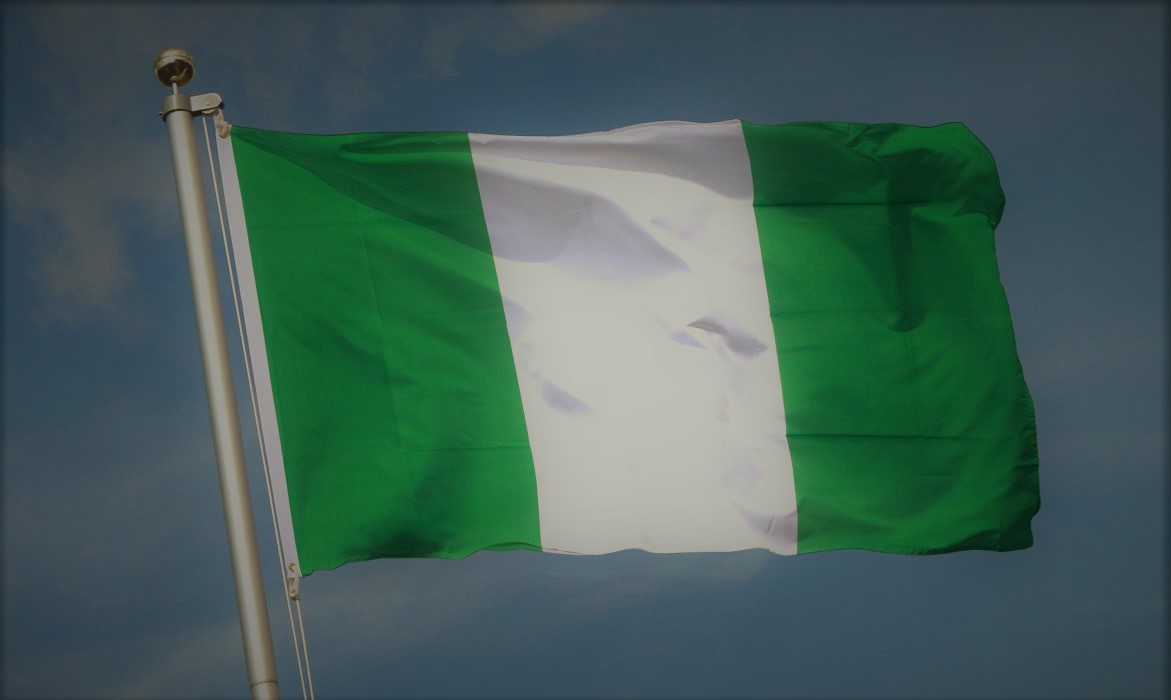
Today, Nigeria will clock 60 years as an Independent state, having attained Independence in 1960 from the colonial masters.
As expected, Nigerians would roll out the drums in celebration of the country’s independence, and the sporting community will not be left out.
The story of Nigerian sports is no doubt a mix bag of success, failure and disappointment in the last 60 years as the country’s athletes and teams have won laurels and either crashed out of failed to qualify for international sporting competitions.
At different occasions, Nigerian athletes and teams have also been banned from taking part i continental and international competitions as a result of doping violations and age cheat.It is common knowledge that even as Nigeria has not lived up to her potentials in sports, the sector has remained one of the country’s most potent agent of unity just as it is a serious diplomatic tool. However, the general consensus has remained that Nigerian sports has failed to achieve its full potentials as the country’s sportsmen and women have been blowing hot and cold at international competitions since Independence.
Within this period, Nigeria has produced sportsmen and women that have made the nation proud at regional, continental and international sports competitions.
Though they are many, the ones that easily come to mind are the late Dick Tiger and Hogan Bassey, both world boxing champions; ex-Olympians as Isaac Ikhuoria, Peter Konyegwachi, Chioma Ajunwa, Faliat Osheku Ogunkoya, Segun Toriola, Jay Jay Okocha, Emmanuel Amunike, Kanu Nwankwo, Funke Oshonaike and Olusoji Fasugba.
Others are Late Rashidi Yekini, Innocent Egbunike, Mercy Mku, Fatima Yusuf, Chidi Imoh, Bose Kaffo, Hakeem Olajuwon, Nduka Odizor, Atanda Musa, Late Stephen Keshi, Nduka Odizor, Late Mike Opara, David Imonite, John Mikel Obi, Blessing Okagbare, among several others.
These sportsmen and women have etched Nigeria’s name in gold among sporting nations of the world, but most Nigerians believes that the country has failed to achieve her full potentials in sports when compared with less populated and endowed African countries like Kenya, South Africa, Ethiopia in world athletics and the Olympics.
It is pertinent to recall that even before Independence; some Nigerians had made appreciable impact in global sports. Such Nigerians who come to mind are Emmanuel Ifejina who won a gold medal in high jump at the 1954 Commonwealth Games; Hogan Kid Bassey emerged World Featherweight Boxing champion in 1957, as well as Dick Tiger who won the Middleweight title and later the World Light Heavyweight crown. These were indeed remarkable feats that prepared the ground for Nigeria’s exploits after independence.
The country took part in three Commonwealth Games prior to independence. The first was at the Auckland edition in 1950, second was in Vancouver in 1954 and third being in Cardiff in 1958. In all these three Games. The country won a gold medal, five silver medals and four bronze medals. Nigeria did not win any medal at the Helsinki and Melbourne Olympics in 1852 and 1956 respectively.
After independence Nigeria gradually shook off the shackles of colonialism and began the process of development in all spheres. The country’s first Olympic medalist was the Light Middleweight Boxer, Nojim Maiyegun who won bronze at the Tokyo 1964 Games.
It was the first ever medal won in an Olympic event as the boxer became the first medalist since Team Nigeria’s first participation at the 1952 summer Olympics in Helsinki, Finland. It did not win any medal at the Rome Olympics in 1960.
However, the first step towards sports development was the setting up of the National Sports Commission (NSC) in 1963 with Late Pa Abraham Ordia as the Secretary. Unfortunately, the immediate past minister of sports, Barrister Solomon Dalung scrapped the commission and sports are now in the care of persons other than trained sports administrators. The clarion call for the return of the NSC has fallen on deaf ears. Thus, early 1960, Nigeria’s emphasis was on putting up structures for sports development and the first fruits no doubt was the qualification of the then Green Eagles for the Olympic Games held in Mexico in 1968.
Nigeria boycotted the 1962 Commonwealth games in Perth but returned in the 1966 edition held in Kingston, Jamaica and in Edinburgh in 1970 winning five gold, four silver and three bronzes.
As part of efforts to boost its performance at international competitions, the country set up the National Sports Festival (NSF) in 1976 help in the discovery of talents, with the first edition in Lagos attended by over 6000 athletes.
In 1973, Nigeria hosted the second edition of the All Africa Games where it placed second.
In 1976 IICC Shooting Stars became the first club to win the country’s first continental football club trophy by winning Africa Cup of Winners, with Rangers International FC of Enugu retaining the trophy the following year.
The achievements recorded by Shooting Stars and Rangers in continental club football became the tonic for Nigeria’s football achievements, as the senior national team – Green Eagles won gold in 1980 edition of Africa Cup of Nations on home soil when the Christian Chukwu captained Green Eagles defeated the Desert Warriors of Algeria 3-0 at the National Stadium, Surulere, Lagos to lift the continental trophy for the first time.
The feat was followed by another Nations Cup title win in 1984 after the 14-year wait in Tunisia and in the 2013 edition held in South Africa.
Nigeria’s biggest achievement in global football since Independence was in 1985 when the Golden Eaglets beat Germany 2-0 to win the maiden FIFA/KODAK Under-16 championship in China. The Flying Eagles also reached the final of the 1989 FIFA U-20 World Cup in Saudi Arabia before losing to Luis Figo inspired Portugal 2-0.
In athletics, Nigeria won her first track and field medal at the Los Angeles Olympics winning bronze in the 4x400m, though failed to win a single medal at the Seoul Games in 1988. Also during this decade, the country won 38 medals – 10 gold, 13 silver and 15 bronze-for taking part in two Commonwealth games in 1982 in Brisbane and Auckland.
Nigeria also won 3 silver and a bronze at the Barcelona Olympics in 1992 to announce her potentials in world athletics. At the Atlanta Olympics, the country won its first gold with Chioma Ajunwa’s feat in Long Jump, leaping 7.12m. The Dream Team added gold a day later. In all the country won 2 gold, silver and 3 bronze medals at these Games. Four years later, the country won the 4x400m men’s gold by default after USA team that won the gold was involved in drug. It also won 2 silver in Sydney.
Team Nigeria won the fifth edition of the FIFA U-17 World Cup in 1993 in Japan. Nigeria defeated fellow African contenders Ghana by 2-1 in the final.
The Super Eagles also made their first World Cup appearance in the same year in the United States of America (USA), crashing out in the second round. The team also qualified for the 1998 edition in France also crashing out in the second round losing 4-1 to Denmark.
Nigeria has never failed to excel at the Commonwealth Games winning 37 medals-11 gold, 13 silver and 13 bronze at the Victoria Games in 1994. Super Falcons qualified for their maiden World Cup crashing out at the group stage after losing all their group games. At the 1995 edition, Falcons also crashed out at the group stage, though they drew a game losing the other two. The team’s World Cup best outing was at the 1999 edition where they reached the quarter-final losing to Brazil by the odd goal in extra time.
But won the women’s AFCON in 1991 retained it in 1995, 1998 and 2000. The team’s maiden Olympics games appearance in 2000 was a huge failure crashing out at the group stage
Although Nigeria has failed to build on the success of Atlanta ’96, the country has recorded other victories in world and continental events like the 2003 All Africa Games she hosted in Abuja and tagged ‘COJA’; the 2007 FIFA Under-17 World Cup in South Korea.
After winning the 2007 U-17 competition play hosted by South Korea, Nigeria became the most successful team at teenage level.
After impressive performance at cadet level, FIFA awarded the hosting rights of the 2009 U-17 World Cup to the nation’s highest football governing body and tournament was successfully staged.
The country won 19 medals-5 gold, 3 silver, 11 bronze- at the Commonwealth Games in Manchester in 2002. Also 2006 in Melbourne, 17 medals-4 gold, 6 silver and 7 bronze-were won. In Delhi in 2010 Nigeria won 11 gold, 8 silver and 14 bronze medals.
At Athens Olympics, only 2 bronze medals were won while Beijing Olympics produced 3 silver and 2 bronze.
Nigeria crashed out at the group stage of the 2002 World Cup co-hosted by South Korea/Japan. The team failed to qualify for the 2006 edition in Germany. It made up by qualifying for the first World Cup on Africa soil-South Africa- crashing out at the group stage.
In 2003 Super Falcons crashed out at the group stage of the FIFA World Cup with the same fate also befalling them in 2007. It was the same sad story failing to go past the group stage at the Athens Olympics and the Beijing Olympics. But they made up by retaining the CAF Women’s championship in 2002, 2004, 2006. They lost for the first time in 2008 placing third while they won the trophy in 2010.
Nigeria won the FIFA U-17 World Cup for the fourth time in 2013 edition in The United Arab Emirates (UAE).
In 2015, Nigeria’s senior men’s basketball team, D’Tigers won the AfroBasket Championships for the first time, thus becoming Africa Champions for the first time after failing on several, as the Olumide Oyedeji captained side defeated Angola in the final to win the competition and got automatic qualification spot at the Rio Olympic Games in 2016.
At the 2017 FIBA Women’s Afrobasket championships in Bamako, D’Tigress were third time winners of the championships played in Bamako, Mali. The Nigerian team won all six fixtures in the competition including the 65-48 victory against Senegal in the final.
Aruna Quadri competed for Nigeria in the table tennis event at the 2012 Summer Olympics and 2016 Summer Olympics, reaching the quarterfinals in the latter competition. At the World Cup 2014, he reached the quarterfinals in the Men’s Singles competition.
Aruna competed in the 2017 ITTF African-Cup, qualifying for the quarterfinals where he defeated Algerias Naim Karali (4-1). In the semifinals, Aruna defeated Egyptian player Mohamed El-beiali (4-3), qualifying for the finals. In the Finals, Aruna played and defeated long-time rival Omar Assar in a close match (4-3). Aruna won the event, and become the 2017 African-Cup Champion.
Quadri competed in the World Championships seeded as number 30. He defeated Chilean player Gustavo Gómez (4-0). He was defeated in the second round by Danish player and number 34 seed, Jonathan Groth.
He competed in the 2018 ITTF African-Cup, placing first in group 2, allowing him to qualify for the Quarter Finals. In the Quarter Finals, Aruna defeated Derek Abrefa (4-0). In the semifinals, he defeated Ahmed Saleh (4-1), allowing him to advance to the finals of the African-Cup.
In 2014, FIFA suspended Nigeria from international football, citing government interference in the running of its national federation.
The emergency committee of the world governing body said the blanket ban would no Nigerian team, including club sides, can play in regional, continental or international competitions.
In the wake of Nigeria’s exit to France at the last 16 of the World Cup, the high court of the West African country ruled that its federation would cease to run the national team, handing over the role to a government civil servant.
This is in breach of FIFA rules that obliges member associations to manage their own affairs “independently and with no influence from third parties,” it said in a statement.
Stephen Keshi, the coach of the African champions, resigned the day after the 2-0 defeat, after leading the Super Eagles out of the group stages of the World Cup for the first time since 1998.
In 2016, the country’s sports authorities banned eight athletes for doping, four of them gold-medal winners and one a silver medalist at the All Africa Games 2015.
Long jumpers Chinazom Amadi and Samson Idiata, weightlifter Elisabeth Onua and wrestler Patience Opuene were all banned following failed drug tests at the games in Brazzaville, Republic of Congo, in September, where they won gold.
Wrestling silver medalist Ebi James Igbadiwei was also suspended.
The three other athletes – sprinter Deborah Odeyemi and para-athletes Sunday Ezeh and Thomas Kure, failed tests in Nigeria. Odeyemi was part of Team Nigeria’s women’s 4 x 100-meter relay team at the 2015 world championships.
Last year, a Nigerian Para powerlifter Esther Oyema was banned for four years after she committed an anti-doping rule violation. Oyema, who won gold at London 2012 in the women’s up to 48kg, returned an adverse analytical finding for a prohibited substance in a urine sample provided on 28 January 2019 after competing at the Lagos 2019 International Para Powerlifting Competition in Nigeria.





By Laide Akinboade, Abuja
As part of efforts to reposition the newspaper for optimum corporate performance, the management of Asset Newspapers Limited, Publishers of DAILY ASSET, has announced the appointment of David Torough as the Editor of the Abuja-based national daily.
A statement by the management said the appointments were part of the company’s new strategy to further penetrate the various states in the country and raise its readership and patronage.
“DAILY ASSET is widely acceptable across the country and to maintain our leadership position, we need to increase management presence, hence the need to create new Bureau offices in some locations outside Abuja and Lagos,” the statement quoted the Publisher/ Editor-in-Chief, Dr Cletus Akwaya to have said.
In a statement yesterday, Publisher and Editor-in-Chief of the fast-growing daily, Dr. Cletus Akwaya said the appointment was part of the new strategy to properly situate the paper for better productivity.
“DAILY ASSET has a commitment with the Nigerian people. We are determined to weather the storm and give Nigerian readers a Newspaper that satisfies their yearnings and reading pleasure and we can only do that with the right set of professionals,” the statement said.
Akwaya, a former Commissioner of Information from Benue State said the difficult times being faced by Nigerians posed a great challenge to the media as the people deserved credible information with which to make choices.
“We have a bond with the people, to offer credible information at all times in the best tradition of the Nigerian Press and on this scale of objectivity, truth and fairness, we pledge to remain steadfast no matter the challenges,” Akwaya was quoted to have said.
He said the newspaper will maiantin its daily print run and circulation to all states of the federation and urged advertisers to take advantage of the deep penetration of the Daily Asset brand to send their messages.
Torough, the new Editor has had a steady rise in the Newspaper in the last five years.
A graduate of Mass communication of the Benue State University, Makurdi, Torough joined the company in 2022 as Benue State Correspondent. He was spotted for his brilliance and redeployed to Abuja the following year and promoted to Deputy News Editor. He was subswuently named Deputy Editor of the paper, a position he held until the recent appointment.
Torough has attended several journalistic workshops and trainings to properly equip himself for the task ahead.
The statement also said the Management named Eze Okechukwu as Deputy Editor.
Before his elevation as Deputy Editor, Eze has been Deputy Politics Editor and DAILY ASSET Newspaper correspondent covering the Senate, having joined the organization in 2021.
Born on March 10, 1975, Eze holds a Masters Degree in Mass Communication from the Enugu State University of Science and Technology.
Eze began his journalism career with Daily Star, Enugu and later worked with Daily Trust Newspaper, Abuja as sports reporter.
Aside from his journalistic excellence, he has a great deal of passion for sports.

From Ngutor Dekera, Kaduna and Aliyu Askira, Kano
Northern governors and traditional rulers yesterday called for the suspension of mining activities across the region for six months, blaming illegal mining for worsening insecurity in many states.
The resolution was contained in a communiqué issued after a joint meeting of the Northern States Governors’ Forum and the Northern Traditional Rulers’ Council held at the Sir Kashim Ibrahim House, Kaduna. The meeting, chaired by the Gombe State Governor and NSGF Chairman, Muhammadu Yahaya, had in attendance the 19 northern governors and chairmen of the 19 states’ traditional councils.The Forum expressed concern over the escalating violence in parts of the North, including the killings and abductions recently recorded in Kebbi, Kwara, Kogi, Niger, Sokoto, Jigawa and Kano states, as well as renewed Boko Haram attacks in Borno and Yobe.“The Forum extends its deepest condolences and solidarity to the governments and good people of the affected states,” the communiqué said, noting that the attacks on schoolchildren and other citizens had become “unacceptable tragedies” that required urgent collective action.It commended President Bola Tinubu for what it described as the Federal Government’s “firm response” to recent abductions and insurgency threats, especially the rescue of some abducted pupils.The governors also saluted security agencies for their sacrifices on the frontlines.“We resolved to renew our support for every step taken by the President and Commander-in-Chief to take the fight to insurgents’ enclaves in order to end the criminality,” the Forum stated.A major highlight of the meeting was the North’s renewed push for the establishment of state police, with governors and traditional rulers insisting that decentralised policing had become inevitable.“The Forum reaffirms its wholehearted support and commitment to the establishment of state police,” the communiqué added, urging federal and state lawmakers from the region to “expedite action for its actualisation.”On illegal mining, the governors said criminal mining networks were fuelling violence and providing resources for armed groups.As a corrective measure, they asked Tinubu to direct the Minister of Solid Minerals to impose a six-month suspension of mining activities in order to allow for a full audit and revalidation of licences.“The Forum observed that illegal mining has become a major contributory factor to the security crises in Northern Nigeria. “We strongly recommend a suspension of mining exploration for six months to allow proper audit and to arrest the menace of artisanal illegal mining,” it said.To strengthen the fight against insecurity, the governors also announced the creation of a regional Security Trust Fund.Under the proposed arrangement, each state and its local governments will contribute ₦1bn monthly, to be deducted at source under an agreed framework.They said the fund would help provide sustainable financing for joint operations, intelligence-driven interventions and coordinated security responses across the region.At the end of the meeting, the Forum reaffirmed its commitment to unity and collective responsibility.“Only through unity, peer review and cooperation can we overcome the pressing challenges before us,” it declared.The Forum agreed to reconvene on a date to be announced.Meanwhile, Nigeria’s worsening security crisis took a grim turn on Monday as bandits launched fresh attacks in Kano State, abducting 25 villagers, even as the Federal Government raced to secure the release of more than 300 Catholic school children kidnapped in Niger State.In the early hours of Monday, armed bandits invaded Unguwar Tsamiya—popularly called Dabawa—in Shanono Local Government Area of Kano State, whisking away nine men and two women after shooting into the air and assaulting residents. The attackers also rustled two cows.A resident lamented the community’s helplessness: “We cannot do otherwise; most of us cannot leave because we have nowhere to go. This is our place, our land and everything is here.”The assault came less than 24 hours after a similar attack on Yan Kamaye in Tsanyawa LGA, a community along the volatile Katsina border.In Niger State, National Security Adviser Nuhu Ribadu has assured distraught families of St. Mary’s Co-Education School, Kontagora that the more than 300 students and staff abducted on November 21 will return home “soon.” Ribadu, who led a high-level federal delegation to the school on Monday, said the abductees are safe, though he offered no specifics on their location or the status of rescue operations.According to Daniel Atori, spokesman for the Catholic bishop overseeing the school, the NSA reassured officials: “The children are where they are and will come back safely.”The St. Mary’s attack is part of a worrying resurgence of mass kidnappings reminiscent of the 2014 Chibok schoolgirls’ abduction. Security analysts warn that banditry has evolved into a “structured, profit-seeking industry,” with hundreds of Nigerians abducted in November alone.The Kontagora school abduction occurred the same week 25 girls were kidnapped in Kebbi State—victims who authorities say have since been rescued through “non-kinetic” means. About 50 of the St. Mary’s hostages have also managed to escape.Ribadu’s delegation, which included the Minister of Humanitarian Affairs and the Director-General of the Department of State Services (DSS), reaffirmed the government’s commitment to securing the freedom of all abducted citizens.As communities from Kano to Niger continue to bear the brunt of these violent incursions, the escalating spate of kidnappings underscores the urgent national demand for a more decisive and coordinated security response.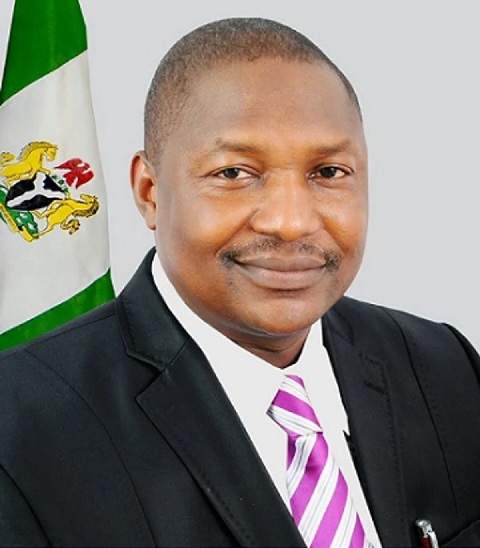
By David Torough, Abuja
The Economic and Financial Crimes Commission (EFCC) said former Attorney‑General of the Federation and Minister of Justice, Abubakar Malami, will face a team of interrogators at its office daily throughout December.
A credible source in the EFCC said on Monday that the daily appearance was part of an ongoing investigation into the whereabouts of an alleged 490 million dollars Abacha loot secured through a Mutual Legal Assistance (MLAT) request. The source said that Malami, who was summoned for interrogation by the EFCC on Saturday, was barred from leaving Nigeria for the next one month.According to the source, one of the conditions for his release on Saturday was that he should report daily to the EFCC Headquarters in Abuja for further interrogation.The source said Malami would have to appear daily at the anti-graft office due to the volume of the investigation and the seriousness of the charges against him.”We seized his passport, it is the normal routine during investigation, but he has to report at the EFCC headquarters in Abuja every day for the next month.”He will be reporting for further investigation throughout December.”He will be reporting every day, starting from Dec. 1st to Dec. 31st.He will appear before the team of investigators for the entire month of December.”He will be reporting to EFCC for investigation for the period because of the volume of the investigation and the seriousness of the charges against him,” the source added.According to the source, a fact sheet on the former minister revealed that Malami had several issues to clarify with the EFCC within the coming weeks.“We have asked him to explain the whereabouts of the $490 million Abacha loot secured through MLAT.“We didn’t say he stole money, but he should account for the loot. This is one of the issues he will clarify to our investigators.”The commission cited the large volume of documents he must review and the need for extensive interviews as reasons for seizing his passport.The source said EFCC would not engage in a war of words but would release its findings after a thorough investigation.Malami, in a statement by his media aide, Mohammed Doka, on Monday in Abuja, however, described the EFCC investigation as a political witch‑hunt.He confirmed he honored an EFCC invitation on Nov. 28, describing the engagement as fruitful and expressing confidence that the probe would vindicate him.Malami described the EFCC’s allegations as baseless, illogical and devoid of substance, insisting they collapse under factual scrutiny.


Portuguese Football Federation Backs Ronaldo to Continue with Portugal
ShareThe Portuguese Football Federation has reaffirmed its support for Cristiano Ronaldo’s continued involvement with the national team, with president Pedro...
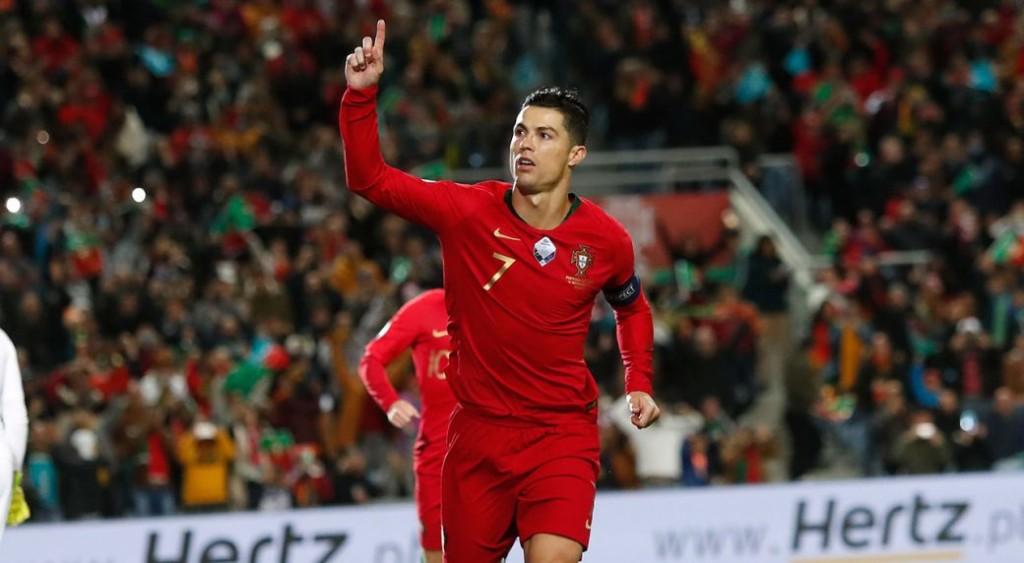
A Nation Divided as Ronaldo Left with Big Decision on Portugal Future
ShareAs Lionel Messi prepares to get a hero’s farewell for his successful international career, Cristiano Ronaldo’s could have ended with...

FG Establishes 10 Radio Diagnostic Centres to Boost Healthcare Service Delivery
ShareThe Federal Government said it has established 10 radio diagnostic centres to enhance diagnosis and treatment of diseases in the...
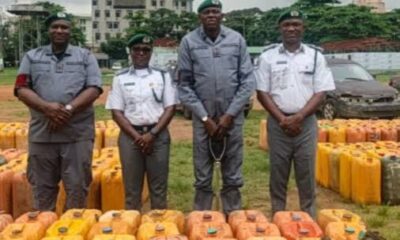

Customs Auctions 22,175 Litres of Seized Petrol for N32.1m
ShareBy Tambaya Julius, Abuja The Nigeria Customs Service (NCS) has auctioned 22,175 litres of Premium Motor Spirit (PMS) seized by...

NNPCL: Accounting for Fuel Subsidy
ShareBy Uddin Ifeanyi I am not an accountant, so my opinion on the NNPCL’s recently released 2025 annual financial report...

Can ECOWAS Parliament Turn Climate Commitments into Regional Action?
ShareBy Mark Longyen West Africa’s climate crisis is becoming harder to separate from the region’s familiar struggles with poverty, displacement,...

2027 Elections: INEC Voter Register Hits 103m
ShareBy Tambaya Julius, Abuja The Independent National Electoral Commission (INEC) said Nigeria’s voter register has risen to more than 103...

Niger 37: FG Pledges Accountability Over Deaths of Miners in NSCDC Custody
ShareBy Tambaya Julius, Abuja The Federal Government has assured families of the 37 suspected miners who died in the custody...


11-year-old Girl Found Dead in Suleja Well, Church Guard Arrested
ShareFrom Dan Amasingha, Minna The disappearance of 11-year-old Christabel Albert after she left home for a birthday celebration has ended...

Jonathan Receives Bayelsa East APC Candidates
ShareFrom Mike Tayese, Yenagoa Former President of Nigeria, His Excellency, Dr. Goodluck Ebele Jonathan, has commended the quality, experience and...