
Business News

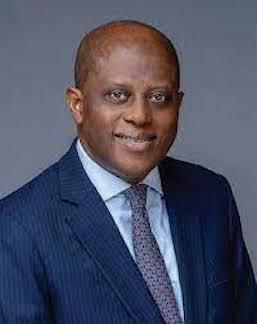
Recapitalization ‘ll Create Stronger, more Resilient Banks – Cardoso
By Tony Obiechina, Abuja
The Governor of the Central Bank of Nigeria (CBN), Mr.
Olayemi Cardoso, has said that the Bank will continue to collaborate with relevant financial institutions, the fiscal authorities and the National Assembly to ensure a successful recapitalisation exercise, including providing adequate protection of property rights and interests of minority shareholders.Mr. Cardoso made the pledge in London on while speaking to stakeholders on “The Impact of the Recapitalization of Nigerian Banks” at the UK-Nigerian Chamber of Commerce.
The Governor, represented by the Bank’s Deputy Governor, Financial Systems Stability, Mr. Phillip Ikeazor, emphasised the event’s significance and restated the CBN’s commitment to fostering stronger, healthier, and more resilient banks capable of withstanding economic shocks and supporting the Government’s goal of achieving a GDP of US$1 trillion by 2030.
According to him, the anticipated impact of the recapitalisation programme will include an increase in banks’ lending capacity, a boost in the volume of foreign direct investment (FDI), and an increase in foreign exchange liquidity.
He said the exercise would also contribute to GDP growth, better risk management, improved credit ratings, a diversified ownership base, better governance and strategic decisions, and increased market volume and value, leading to a more vibrant equity market.
“With the recapitalisation programme, our goal is to trigger the emergence of stronger, healthier and more resilient banks,” he added.
He noted that several factors influenced the new minimum capital requirements, including macroeconomic conditions, stress test outcomes, and the need for improved risk management.
“We will rigorously enforce our “fit and proper criteria” for prospective new shareholders, senior management, and board members of banks, and proactively monitor the integrity of financial statements, adequacy of financial resources, and fair valuation of banks’ post-merger balance sheets,” Cardoso assured.
He noted the significant opportunity it presents to engage investors, policymakers, and technocrats on the critical issue of bank recapitalisation in Nigeria.
Mr Cardoso explained that since assuming of office in October 2023, his priorities at the CBN have included achieving monetary and price stability, maintaining a stable exchange rate, controlling inflation, and creating an enabling environment for businesses.
He explained that the recapitalisation directive excluded retained earnings from the minimum capital requirement to simplify capital calculations and enhance transparency. He explained that the decision, rooted in the BOFIA Act 2020, aligns with international standards like Basel III and emphasises core capital elements to improve financial stability.
Reflecting on the successful 2004/5 Banking Sector Reforms, which consolidated the industry, increased capital bases, and boosted resilience against the global financial crisis, the Governor assured that the current recapitalisation initiative aims to build on these achievements.
A graduate of the University of Maiduguri, Shianya Ebwaseh, said the Nigerian Education Loan Fund (NELFUND) helped improve her Grade Point Average (GPA) to 3.50 through financial support that enabled her to concentrate on her studies.
Ebwaseh, who graduated from the Department of Zoology, Faculty of Life Sciences, said this in an interview on Monday in Maiduguri.
She said financial difficulties had previously affected her academic performance, as she struggled to meet her daily needs while pursuing her degree.
The graduate said she resorted to selling fried chips and groundnuts on campus to support herself, sometimes missing lectures because of the time and energy required to run the business.
According to her, the introduction of NELFUND’s student loan scheme relieved her financial burden through tuition support and a monthly N20,000 upkeep allowance.
“Before NELFUND, I struggled with my GPA because of financial challenges. I sometimes missed lectures after spending hours frying and packaging chips for sale.
“But when NELFUND came, I stopped the business and concentrated on my studies. My GPA improved to 3.50, which is Second Class Upper,” she said.
Ebwaseh said the financial support also enabled her to attend lectures regularly, purchase learning materials and prepare adequately for tests and examinations without constant worries about money.
She added that her examination scores improved significantly after she began receiving the support, attributing the change to increased concentration and financial stability.
The graduate, who said she accessed the scheme in her third year, described the application process as simple and encouraged other eligible students to apply.
She also said the programme had helped financially disadvantaged students remain in school, particularly those whose parents could not afford tuition fees and upkeep.
Ebwaseh appealed to the Federal Government to sustain the initiative, emphasising that withdrawing the support could expose many students to financial difficulties and possible dropout.
She said the scheme had given beneficiaries an opportunity to pursue their academic ambitions with fewer financial distractions.(NAN)
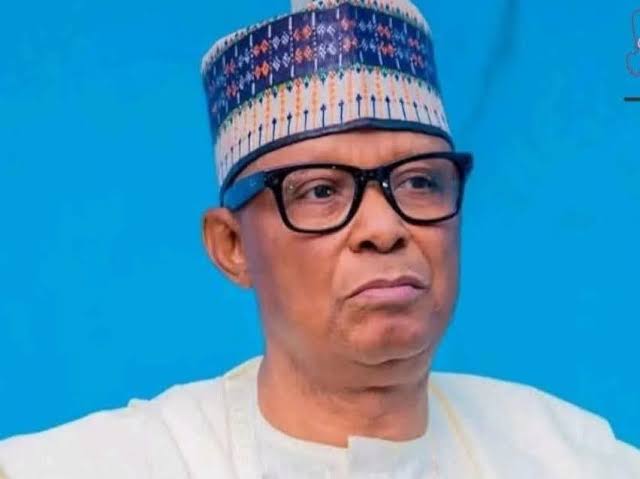
The Minister of Housing and Urban Development, Dr Muttaqha Darma, has called for synergy among government agencies in the housing sector to improve coordination and accelerate housing delivery.
Darma made the call in Abuja on Monday at the stakeholders’ conference on the proposed National Real Estate Regulatory Authority (NRERA).
The conference, themed “One vision, One Ecosystem, One National Housing and Real Estate Plan”, was organised by the Office of the Speaker, House of Representatives, and the House Committee on Housing and Habitat.
The minister said the lack of coordination among government agencies had affected the effective delivery of houses to Nigerians, noting that institutions in the sector operated independently.
“The players within the industry, all of us, operate in silos.
“Federal Housing Authority (FHA) does not even know what the Federal Mortgage Bank of Nigeria (FMBN) is doing. FMBN does not know what the Ministry of Finance Incorporated (MOFI) is doing,” he said.
According to him, the various institutions must work together towards a common goal rather than operate independently.
“Our target is to build houses for Nigerians. We are wasting our time because if we fail, it is us who fail, not the President,” he said.
The minister expressed support for the establishment of NRERA, saying the proposed authority would address the regulatory gaps in the real estate sector.
He said the ministry had reviewed the proposed legislation and recognised its potential to improve the sector.
Darma also disclosed that abandoned housing projects funded by the Federal Mortgage Bank of Nigeria (FMBN) across the country were worth about N38 billion.
He said a survey conducted by the ministry revealed abandoned FMBN-funded housing developments in every state of the federation, including the Federal Capital Territory.
“We realised about N38 billion of contributors’ money, your own money, all the Nigerian workers’ money. N38 billion is wasted,” he said.
He said that the poor management of workers’ contributions could discourage Nigerians from contributing to the National Housing Fund.
The minister urged the committee handling the proposed legislation to ensure that state governments were included in the regulatory framework.
He also called for safeguards to protect homebuyers, tenants, developers and mortgage lenders, including mandatory escrow accounts for buyers and standardised tenancy agreements.
The Managing Director and Chief Executive Officer of the Ministry of Finance Incorporated (MOFI), Dr Armstrong Takang, said effective regulation was necessary to restore investor confidence in Nigeria’s real estate sector.
Takang said the sector contributed 12.71 per cent to Nigeria’s Gross Domestic Product (GDP) as of June 2026, but remained largely unregulated.
He said the absence of a national licensing system had allowed unqualified individuals to operate as estate agents and developers without adequate accountability.
“Anyone can sell land, anyone can collect off-plan payments, run into tens of billions and get away with it. There are very few countries in the world where these are allowed,” he said.
He called for mandatory licensing of real estate operators and the protection of buyers’ funds through designated project accounts.
“An operator must be licensed with the authorities. No one should be operating in the real estate sector without a licence, no matter which part of the value chain they are involved in,” he said.
He added that buyers’ funds should be kept in protected project accounts and released to developers based on evidence of progress on construction.
Takang said effective regulation would attract domestic and foreign investment, protect citizens and support the Federal Government’s one-trillion-dollar economy target.
He urged the National Assembly to ensure the passage of the proposed legislation, describing it as critical to bringing order and transparency to the real estate sector.

From Tony Nwachukwu, Lagos
Fintech company OPay has announced the postponement of its planned public offering on the New York Stock Exchange (NYSE), following careful consideration of an ongoing inquiry by a regulatory authority.
The company said the decision to postpone the offering was taken in the best interests of the business and its customers.
In a statement shared with DAILY ASSET, OPay explained that the ongoing inquiry does not affect the services it provides to customers or how it operates in Nigeria and its other business markets.
The company also reassured customers, merchants, agents and other business partners that its operations would continue as usual, with all services remaining fully available.
“Customers can continue sending and receiving money, making payments and saving without interruption,” the statement noted.
OPay expressed appreciation to its customers, merchants, agents, business partners, employees and other stakeholders for their continued trust and support.
The company also reiterated its commitment to making financial services more inclusive through technology




2027: Tompolo Deploys 50 Vehicles in Enugu, Cross River for Tinubu’s Re-election
ShareGrand Patron of the PBAT Door-to-Door Movement, High Chief Oweizidei Government Ekpemupolo, has donated 50 vehicles for President Bola Tinubu’s...


Customs Generates N1.4tn Revenue in Two Months
ShareBy Julius Tambaya, Abuja The Nigeria Customs Service (NCS) generated a total of N1.419 trillion in revenue between September and...

Tegbe Assures Nigerians of Swift Restoration of Power Supply
ShareThe Minister of Power, Joseph Tegbe, has assured Nigerians experiencing reduced electricity supply in parts of the country of a...


WAHO Leads Drive to Harmonise Subspecialty Training Across ECOWAS
ShareBy David Torough, Abuja Accredited health professional colleges, training institutions and regulatory bodies across the Economic Community of West African...


Bishop Oyedepo Re-affirms strong support for Pastor Ibiyeomie, Pastor Komaiya’s Ministry
ShareBy David Torough, Abuja The Founder and Presiding Bishop of Living Faith Church Worldwide, Bishop David Oyedepo, has reaffirm strong...


West Africa: How WAHO Successfully Harmonized Procedure Manuals for Health Disciplines and Professions
ShareBy David Torough After three days of serious brain-storming sessions in Abuja, the West African Health Organization (WAHO), has successfully...


2027: CAN Seeks Return of Sacked Traditional Rulers in Kaduna
ShareFrom Shabanyan Kantiok, Kaduna The Christian Association of Nigeria in Chikun Local Government Area of Kaduna State has urged Christian...


OPay Opens New Kano Office, Strengthens Commitment to Nigeria’s Financial Inclusion
ShareOPay, Nigeria’s leading digital bank, has opened a new office in Kano State, strengthening its presence in Nigeria and bringing...


Rigging Years Before Elections: Why Tinubu, Parliament Favours Staggered Balloting
Share Silhouette of Donald Andoor e‐mail; doandoor@gmail.com There is a growing need for Nigerians to look beyond the ballot box and...

Akpabio Congratulates Nigeria’s Golden Girls, Flamingos
ShareThe President of the Senate, Godswill Akpabio has sent a hearty congratulations to the Nigerian Under-17 Women’s National Team on...