
NEWS
Climate Change Worsening Farmers-Herders Clashes – Abbas


By Ubong Ukpong, Abuja
House of Representatives Speaker, Tajudeen Abbas, on Wednesday, said that climate change contributed to worsening the farmer-herder clashes in the country.
He said this at a stakeholders’ forum on addressing the impact of climate change on farmer-herder clashes in Nigeria organised by the office of the Deputy Chairman, House Committee on Environment.
The event premiered the documentary, “Behind the Valley”, which is a story of climate change and farmer-herder conflicts in Benue State.
The Speaker said as part of efforts to address the challenge, there is a need to get rid of outdated herding and farming methods and adopt global trends in farming amidst climate change.
He also said the Land Use Act puts limitations on how much the Federal Government and the National Assembly can go to make the changes required to address the situation.
The Speaker was represented by the Member representing Makurdi/Guma Federal Constituency of Benue State, Hon Dickson Takighir.
He said the timing could not have been at a better period in efforts at halting the farmer-herder clashes.
“Climate change is a topic that has commanded huge global attention for its many effects on life here on earth. Farmer-Herder clashes have had a similar troubling prominence in our country. The one has exacerbated the challenges of the other.
“As someone from one of the hotspots (Kaduna) of the Farmer-Herder clashes, I am not new to the subject. Indeed, It is true that, in many parts of the country, farming communities have been deserted with terrible repercussions on food security.
“Climate change has worsened the Farmer-Herder challenges. Farmers and herders alike, now compete for fewer resources from which to draw crops and fodder. Distortions in rainfall patterns being the result of climate change, have led to desertification. In search of greener pasture, herders have continued to migrate and into farming communities.
“Given the trend, without regulation, there’s bound to be clashes and crises…..indeed, we are already there.”
He regretted that a plethora of efforts by the Federal and State governments aimed at addressing the problem had achieved little success.
Abbas said recently, the administration of President Bola Ahmed Tinubu, created the livestock Ministry in an effort to have a federally coordinated approach towards animal husbandry.
This, he said, is a first of many vital steps towards uniformly addressing animal husbandry standards nationwide.
“What do we do and where do we go from here? Firstly, we must be ready to rid ourselves of outdated herding and farming methods!
“Of the countries in the world that are top of the charts in the cattle business, many of them equally hold similar top positions on a variety of farm crops as well. Obviously, these nations hold ready templates for us on how best to engage and excel in these businesses without the sort of crisis we routinely have on our hands here.
“Statistics suggest, ranching has become the way to go. The numbers in cattle and in the profits from countries that ranch cattle, make our continued romance with nomadic husbandry of cattle.
“However, the transition from nomadic herding to ranching, poses challenges in cultural attachment, ignorance, a lack of capital, lack of political will, lack of national legislation etc. There is, therefore, a need to chart a nationally acceptable direction towards international best practices in the cattle industry.
“Similarly, global trends in farming amidst climate change will have to be adopted. This requires a transition that has similar challenges as above. But we must all commit to legislation and purpose; resources and political will, to see to this transition.
“The Land Use Act puts limitations on how much the Federal Government and for that matter, the National Assembly, can go to make these changes. With State Governors holding the aces on land use, the need for collaboration between States and the Federal Government in the face of a crisis worsened by climate change, is strongly advised.
“We must engage in smart Agriculture, across the board. The numbers from other countries compel us to rid ourselves of cultural practices that must now evolve.
“Without doubt, the status quo is outdated and a way forward is urgently needed. We must commit to stakeholder interaction including sharing (on this subject) of educational material such as those by today’s event, in order to further make the case for the transition that must happen in our Agricultural practices,” he said.
The Deputy Chairman, House Committee on Environment, Hon Terseer Ugbor, called for collaborative efforts to address the challenge.
Secretary to the Government of the Federation, Senator George Akume, in his keynote address said the world has awakened to the rude reality of the grave impact of climate change on humanity.
He said the physical changes that have occurred in the composition of the global atmosphere is now obvious and accepted by all to be due to climate change orchestrated by human activities in the last 100 years.
Represented by his Senior Special Assistant, Technical, Prof Bolaji Babatunde, he said the recent acceptance of this threat to human existence by world leaders is a signal that global development and protection policies should be framed around climate change.
This, he said, is because climate change is the major factor undermining the achievement of the SDGs sustainable development goals and a direct threat to the world’s efforts at reducing extreme poverty.
He pointed out that research had shown that desert encroachment is no longer a myth.
These among others, he said, are directly linked to climate change which is shrinking Nigeria’s landmass and dwindling natural resources.
He said this may directly be the underlying factor causing conflicts in the country among communities competing for greener and safer locations all over.
He expressed confidence that collective efforts will result in finding a permanent solution to resolving the farmer-herder conflict.
The Minister of State for Environment, Dr Ishaq Salako, said cooperation between the legislature and the executive arm of government is fundamental to addressing the challenge.
He said the solution to the problem should be multifaceted and collaborative.
The Minister of Water Resources and Sanitation, Joseph Utsev, said the effects of climate change are far reaching.
The Minister, who was represented by a Director, Ngozi Agbowo, called for more proactive measures to be put in place to address the situation.
NEWS
Ihuezeofia Leadership Tussle: No Bias, Govt Took Action in Overriding Public Interest – Commissioner Egumgbe
From Sylvia Udegbunam, Enugu
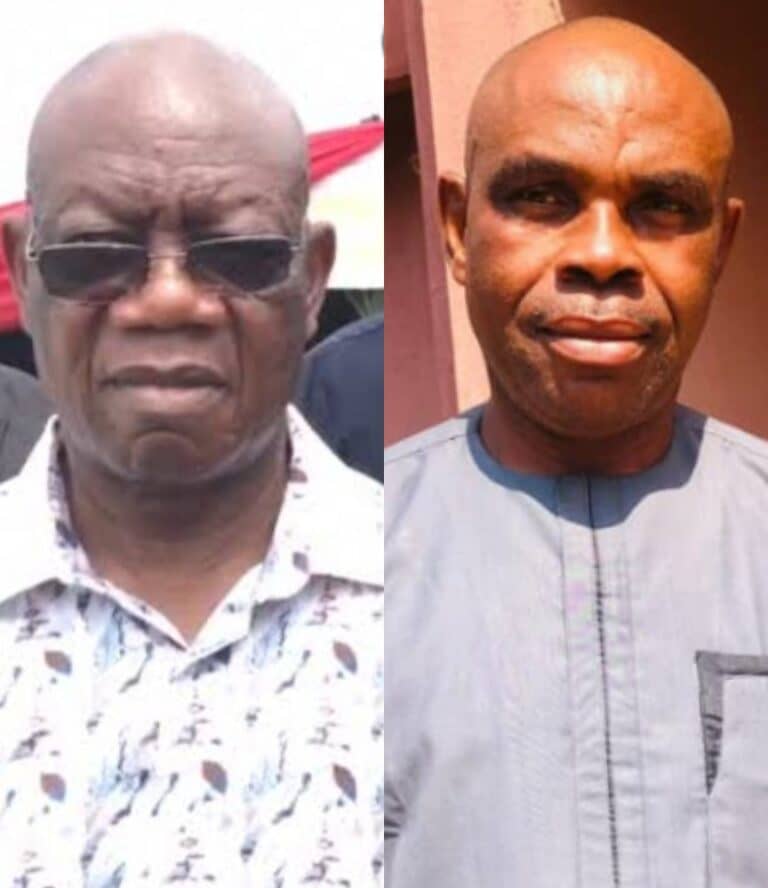
The Commissioner for chieftaincy affairs Enugu State, Chief Charles Egumgbe have said that Enugu State government have no malice or bias mind in Ihuezeofia community leadership tussle rather took action in overriding public interest.
Egumgbe disclosed this during an interview with Journalists in his office at the ministry of Chieftaincy affairs Enugu State Secretariat complex GRA Enugu.
It will be recalled that a factional leaders in Ihuezeofia village in Enuogu autonomous community, Nkerefi in Nkanu east local government area of Enugu State recently issued a press statement protesting over alleged marginalisation and misused of office by the Commissioner for chieftaincy affairs Enugu State, Charles Egumgbe.
The factional leaders claimed that during a meeting with the commissioner in March 2026, they informed him of what they described as a plan by the immediate past President-General of the community and other stakeholders to prevent the conduct of elections for the office of President-General.
According to them, the commissioner informed them that some prominent members of the community had written to Governor Peter Mbah and that, based on the governor’s directive, no election would be conducted in the community until further notice.
Rather than convening a reconciliation meeting involving all parties, the community leaders alleged that the commissioner constituted a caretaker committee and appointed as its chairman one of the contestants for the office of President-General
The Commissioner in his reaction noted that whatever decision the government took was for the interest of the public. Egumgbe noted that Nkerefi matter is an inherited issue from his predecessor
According to him, “The truth is that there was already this issue of town union problem in Nkerefi before I resumed office. Nkerefi matter is an inherited issue, and from the brief, I discovered that they were having problems. I felt that if they were not disposed to having an election, there could be a caretaker committee so that the town administratively can be having some functions while we make peace.
He pointed that this group that were complaining was the first to came to his office during the few months of his second missionary journey in office. “In my own opinion I invited the other group so that I can have broader view of what was happening. They were not happy when I extended the meeting so that I can have many views.
“The other group were majority In number. They lamented that this group that has been complaining are trying to bring havoc to their community. They accused them of masterminding some security threat in the community.
“So the law allows us to appoint a caretaker committee and I decided to do that to avoid vacuum. Ordinarily, we would have appointed them based on majority. The other group would have taken everything because they are majority, while the other group is minority but outspoken.
“So I told them what I intended to do, just to make sure they are part and parcel of what is happening. I am not from their community to know the degree of enemity that have risen among them in that Nkerefi. I told both groups to give me important names of their members with a view to analyze their CV’s and decide on what to do. They gave me their names and CVS.
“In this state no law excludes civil servants or member of any force from been a member of a town union. They are not excluded by any law. Eventually, when somebody’s name by virtue of my own analysis, their function and who to carry, emerge as Chairman. They said that the person is already contesting for the PG
“The law said somebody must Chair the committee. The law also said that you should try and do representation of some of this villages. I do not have any hidden agenda. I told them what I want to do. Infact this group was the first that I started operating with until I saw the other group.
“I appointed a member of the the other group as Chairman and their own member as Secretary and with other positions. I did not know they were not happy. At the end of the day, I heard that two of their group members said that they are not going to participate and left. I have to fill the gap so that the community will continue to operate. No individual will hold a community to ransom.
“I am a human being, I am not perfect. What I am trying to do is to see that there is integration, which is Cardinal. To make sure that the majority does not squeeze them away. So I do not have any malice. I can identify their group members but cannot identify the other group because they were coming all the time.
“If they said that the Chairman has a substantive job that he is doing, what I know is that there is no law that bared them. If the person have time to do it, so be it. I have friends who are permanent Secretary and they are PG’s in their town. It is not unlawful, not illegal. They do not know that I have a good training on this Job.
“We have issued a regulation that any caretaker Chairman will no longer contest election for substantive President General. They find it difficult to conduct election which is Cardinal for a PG to be put in place because they have limited time to do it and handover.
“This was not made before this constituted committee. The regulation was made due to some caretaker committee Chairmen failing to conduct election in accordance with terms of reference and communities were having problems.
“If I am dealing with four hundred and something communities, and two or three have a placard of unhappiness. It is not bad. They should know that I am a human being. They are small, but tougher and disturbing more than the other group. They have their freedom to complain.
Egumgbe furthermore speaking on the issue of which community constitution is authentic and the one that is not authentic said that it is not government business. According to him “As government, we do not decide on community constitution except the one we gazetted ourself.
“If both group were having challenges on the community constitution, and they went to court to ascertain the authenticity of a document which I did not know and did not impose on them.
“If at the end, the court determined the one they will use as a community constitution in a way of law, I cannot interfere. Even though I am a lawyer. I use to step aside and allow a competent court to decide on the authenticity or legality of particular documents that can be used.
From Attah Ede, Makurdi
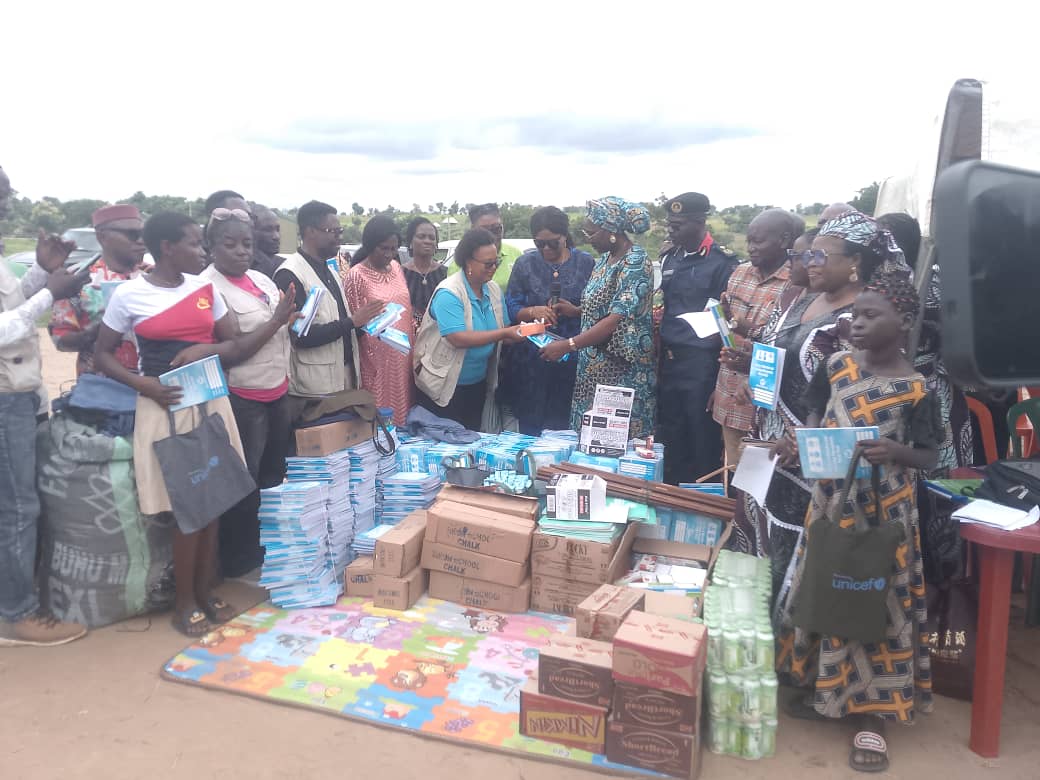
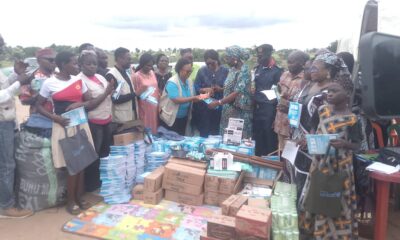
The United Nations Children Fund, UNICEF with funding from Swedish International Development Cooperation Agency(SIDA), has supported Benue State Government with 400 School-in-a-Box kits, containing notebooks, writing materials and teaching aids to enhance the full implementation of Building Rights to Access and Compulsory Education for Un-enrolled Pupils (BRACE-UP) Project in the state.
Speaking at the official flag-off of the teaching and learning materials and dissemination of the BRACE-UP implementation plan at SUBEB headquarters in Makurdi, Mrs.
Juliet Chiluwe, Chief of UNICEF Enugu Field Office, said they are making presentation of 330 tablets for digital learning, and the dissemination of the two-year Project BRACE-UP Implementation Plan.She maintained that the kits would benefit about 16,000 school children and strengthen classroom teaching and learning, stressing that the provision of 330 tablets to teachers earlier trained by UNICEF on digital literacy, will support the Nigerian Learning Passport and help expand access to digital learning in schools.
According to her The BRACE-UP Implementation Plan provides a clear roadmap to enrol more than 50,000 un-enrolled children over the next two years, while strengthening community mobilisation, teacher support, alternative learning pathways, data systems and accountability for results.
“With the leadership of the Benue State Government, SUBEB and the commitment of partners and communities, this plan can help reduce exclusion and improve education outcomes across the state.
“I commend the Government of Benue State and SUBEB for prioritising children’s learning, and I appreciate the dedication of teachers, parents, communities, traditional and religious leaders, civil society organisations and development partners”, Chiluwe stated.
Flagging off the distribution, deputy governor of Benue State State, Barr. Sam Odeh, maintained that state government has taken a decisive step toward fulfilling that promise by unveiling the detailed Implementation Plan developed by SUBEB in collaboration with UNICEF, and equally, graciously sponsored by UNICEF to guide the project over the next two years.
He noted that the plan would strengthening the capacity of teachers and stakeholders, deepening community and parental support, conducting data-driven mapping and enrolment of out-of-school children, running strategic outreach campaigns, empowering student marshals and LGA task teams.
He said it would reinforcing monitoring and quality assurance, expanding non-formal learning pathways for vulnerable children, and improving school infrastructure across the state.
Put together, these eight pillars address both the reasons children are kept away from school and the conditions that make school unwelcoming when they do arrive.
This initiative is not a cheap undertaking. The resources being committed to Project BRACE-UP run into hundreds of millions of naira. Yet, the Benue State Government under His Excellency, Rev. Fr. Dr. Hyacinth Iormem Alia, has chosen, without hesitation, to make this investment. We do so because we believe that no amount spent on the future of a Benue child is ever too much.
Today also marks the flag-off of the distribution of 400 School-in-a-Box kits donated by UNICEF, containing teaching and learning materials that will reach over 8,000 learners in public schools across the state.
“Alongside this, we flag off the distribution of sporting equipment to hundreds of schools spread across all three zones through the collaboration of SUBEB and UBEC. These items may appear modest to some, but to a school or to a pupil who has never owned a football or a sporting apparatus, they represent dignity, opportunity, and hope.
“To the stakeholders gathered here today, I say this: government cannot do this work alone. Every child deserves to reach their full potential, and you and I can help them achieve this. This is why the synergy between SUBEB, UBEC and UNICEF has come to fruition today. They have already, written their names in gold by investing in the future of Benue state through our children.
“To the teachers and headteachers who will receive these kits and equipment, I charge you to guard them jealously and put them to the use for which they are intended, which is the holistic education and development of our children”, Odeh maintained.
By Tony Obiechina, Abuja
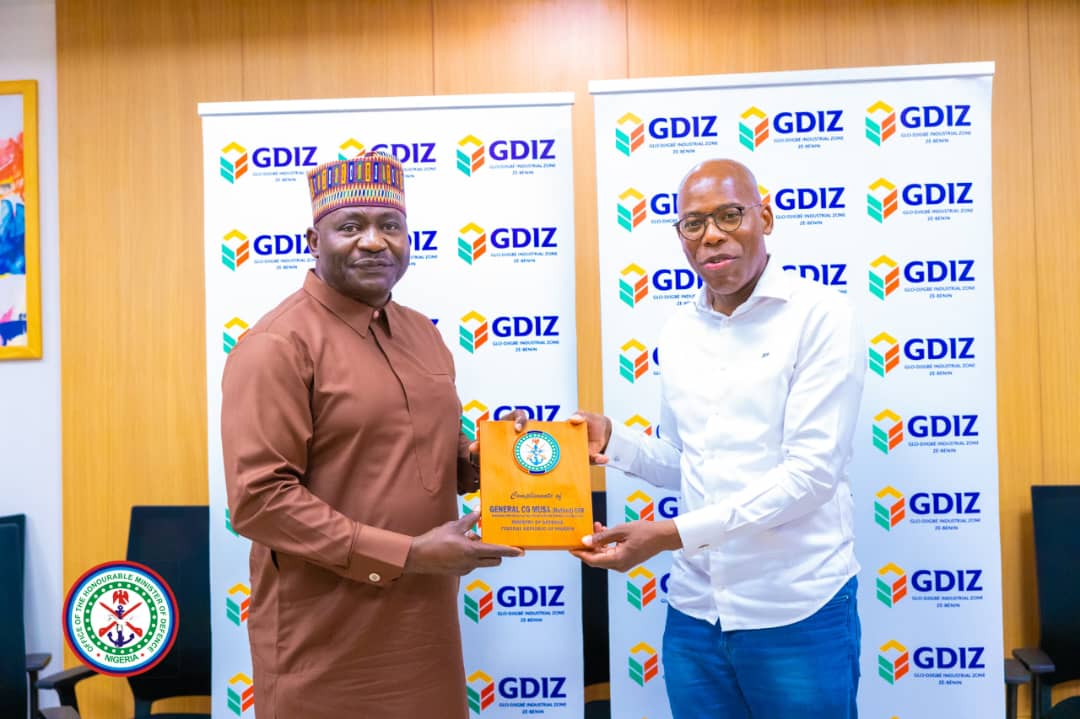
The Minister of Defence, General Christopher Gwabin Musa has successfully concluded a strategic three-day working visit to Cotonou, Republic of Benin.
The high-level delegation focused on deepening bilateral defence cooperation, harmonising regional security frameworks, and reinforcing joint strategies to eliminate cross-border security threats across West Africa.
Hosted by his Beninese counterpart, Minister of National Defence Mr. Gildas Agonkan, the visit delivered actionable commitments across sectors.
According to a statement by the minister’s media adviser, Leah Katung Babatunde on Friday, General Musa in separate meetings with Mr Agonkan, the Beninese Minister of National Defence and the high military command urged greater alignment between regional security blocs to confront West Africa’s evolving security landscape.
They all reaffirmed their commitment to safeguarding democratic governance, stabilising land borders, and securing the Gulf of Guinea against piracy and maritime crime.On enhanced intelligence sharing, the consensus was to establish seamless, real-time intelligence fusion mechanisms. This actionable intelligence pipeline will allow both militaries to track, trace, and neutralise transnational criminal networks and insurgent cells before they execute operations.
Reaffirming the Federal Government’s zero-tolerance stance against terrorism, the Minister charged his host to work with Nigeria to aggressively deny safe havens to violent extremist organisations attempting to exploit shared borderlands and declared that in Nigeria, security forces are showing no mercy to terrorists, bandits, and armed extremists.
To reinforce border security, Nigeria offered Benin an olive branch to allow security personnel wider pursuit range at the borders to prevent insurgent spillover and illegal trafficking.
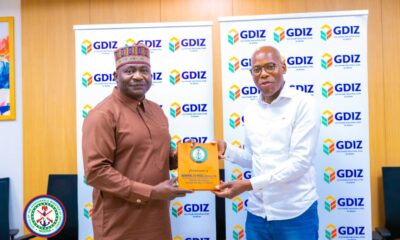
The Honourable Minister and his delegation were also at the Centre for Post Conflict Demining and Explosive Ordnance Disposal (EOD) Operations (CPADD) and the Glo-Djigbe Industrial Zone (GDIZ). The aim of the visits to these locations was for local capacity building in line with the operation pillar 3 of the Minister; Intelligence-Driven and Technology-Enabled Defence. The sessions availed both countries the opportunity to exchange ideas aimed at boosting development and industry of both nations in line with ECOWAS protocols on trade and the Africa Continental Free Trade Area.
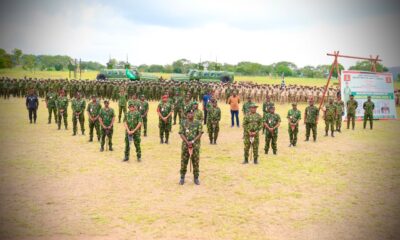
During the visit, General Musa inspected Nigerian Army troops deployed in Togbin, Cotonou, deployed on the Peace Support Mission in the Republic of Benin under Operation ATILEYIN ALAFIA II.
While boosting the morale of the troops, the Honourable Minister re-echoed his insistence on no mercy for terrorist, “We are going to partner with the troops of the Republic of Benin to ensure that we stop all those bandits, all those criminals that are killing people in our own countries, so that we can deal with them. One of the reasons for my visit is to come here and meet their own Minister of Defence so that we can sit down and see how we can work out our operations together, so that we can stop these people from infiltrating through our borders.”
General Musa assured of the Federal Government’s commitment to improving their welfare and providing necessary support.
“A lot of good things that Mr President is preparing for you, we are following up to ensure that you live very well. We are providing the necessary aspects so that you can do your job. We know our job is very, very difficult, and most times people don’t appreciate what we are doing. But God knows we are doing our best, and we are securing Nigeria,” he said.
The Minister during the visit held diplomatic talks with Nigeria’s Ambassador to Benin, Mrs. Mopelola Ibrahim, reiterating President Bola Ahmed Tinubu’s commitment to military welfare and regional peace.




Ihuezeofia Leadership Tussle: No Bias, Govt Took Action in Overriding Public Interest – Commissioner Egumgbe
ShareFrom Sylvia Udegbunam, Enugu The Commissioner for chieftaincy affairs Enugu State, Chief Charles Egumgbe have said that Enugu State government...

Troops Rescue 359 Victims, Arrest Terror Suspects, Destroy Oil Theft Networks Nationwide – DHQ
ShareBy David Torough, Abuja The Defence Headquarters (DHQ) has announced significant operational gains by the Armed Forces of Nigeria (AFN)...

UNICEF Support Benue Govt With 400 School-in-a-Box Kits For BRACE-UP Project.
ShareFrom Attah Ede, Makurdi The United Nations Children Fund, UNICEF with funding from Swedish International Development Cooperation Agency(SIDA), has supported...

Nigeria, Benin Republic Collaborate on Regional Security
ShareBy Tony Obiechina, Abuja The Minister of Defence, General Christopher Gwabin Musa has successfully concluded a strategic three-day working visit...

Nigerian Army Expands Combat Capability, Tasks Newly Trained Troops on Professionalism
ShareBy David Torough, Abuja The Nigerian Army has intensified efforts to strengthen its operational capability with the graduation of soldiers...

RMAFC Set to Enforce Oil Host Community Accountability
ShareBy Tony Obiechina, Abuja The Revenue Mobilisation Allocation and Fiscal Commission (RMAFC) has given the Nigerian Upstream Petroleum Regulatory Commission...

UNICEF Renovates Classrooms, Donates Educational Materials to IDPs Children in Benue
ShareFrom Attah Ede, Makurdi The United Nations Children’s Fund (UNICEF) with support from Swedish International Development Agency (Sida) has renovated...


NAMA Demands 56 Per Cent Share, Aviation Varsity 10 Per Cent of Aviation Statutory Charges
ShareBy Ubong Ukpong, Abuja The Nigerian Airspace Management Agency (NAMA) on Thursday, asked the National Assembly to increase its share...
FCT Closes Unregulated Motor Parks as New Bus Terminals Become Operational
ShareBy Laide Akinboade, Abuja The Federal Capital Territory (FCT) Administration (FCTA), on Thursday, said it has concluded arrangements to clamp...
Mahmoud Urges MAN to Embrace Smart Technology, Capital Restructuring For Growth
ShareBy Laide Akinboade, Abuja The Minister of State, Federal Capital Territory (FCT), Dr. Mariya Mahmoud, has called on manufacturers to...