
NEWS
Reps Launch Nationwide Probe into Drug Abuse, Trafficking Crisis

By Ubong Ukpong, Abuja
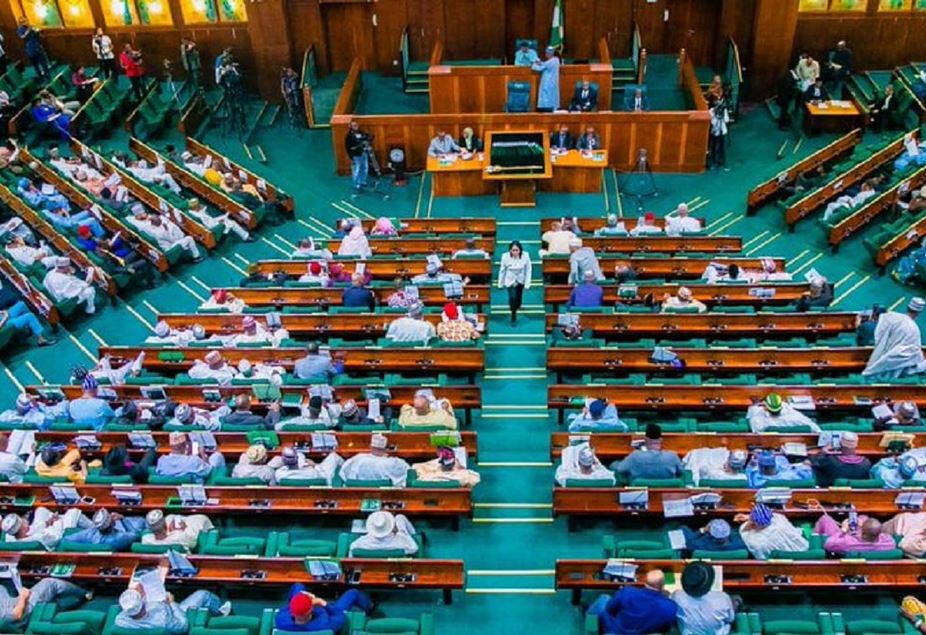
The House of Representatives has commenced a nationwide investigation into Nigeria’s worsening drug abuse and trafficking crisis, pledging to expose systemic failures, hold erring institutions and corporate actors accountable, and recommend sweeping reforms to protect public health and national security.
The probe formally began yesterday in Abuja with the inauguration of an investigative hearing by the House Ad hoc Committee on Drugs, Trafficking, Alcohol and Tobacco Abuse.
Chairman of the committee, Rep. Oluwatimehin Adelegbe, described the scale of substance abuse in the country as a “National emergency,” warning that it now threatens the very fabric of Nigerian society.
“Today, we gather under the mandate of the Nigerian people and under the solemn weight of a crisis that threatens the soul of our nation,” Adelegbe said. “Drug abuse and illicit trafficking are no longer isolated problems; they have become a clear and present danger to our health, security and collective future.”
He said the committee was constituted to uncover the truth behind the growing crisis, identify institutional lapses, and propose far-reaching corrective measures capable of reversing what he called a deeply disturbing trend.
According to the lawmaker, cannabis is now smoked openly on the streets, methamphetamine use is spreading rapidly, and codeine-based cough syrups are sold almost as casually as soft drinks. He added that tramadol 200mg is trafficked with the same sophistication as hard narcotics, while cheap and hazardous alcoholic mixtures are destroying young lives in motor parks, campuses and marketplaces nationwide.
Adelegbe also accused some tobacco companies of exploiting regulatory loopholes to target minors through flavoured products, informal retail channels and misleading marketing practices. He further decried the influx of substandard pharmaceuticals, fake spirits and unregistered products into the country, blaming weak enforcement at ports, airports and land borders, which he said trafficking syndicates routinely exploit.
“Entire communities have been crippled by addiction, crime and preventable deaths. Nigeria is losing too many lives, too many futures, too many families,” he said, stressing that the investigation was not a witch-hunt or an anti-business move.
“We support industries and value investment, but no business model can be allowed to thrive at the expense of Nigerian lives. No profit margin can justify the destruction of our youth,” Adelegbe declared, adding that all stakeholders must cooperate fully with the committee.
Meanwhile, the United Nations Office on Drugs and Crime (UNODC) raised fresh alarm over the scale of drug use in Nigeria, describing the situation as significantly above the global average.
In a memorandum submitted to the committee, the UN agency cited the 2018 Nigeria Drug Use Survey conducted with the National Bureau of Statistics (NBS) and the European Union, which found that 14.4 per cent of Nigerians aged 15 to 64 use drugs. Cannabis was identified as the most commonly used drug, with an estimated 10.6 million users, followed by about seven million users of pharmaceutical opioids such as tramadol and codeine-based cough syrups.
The survey also revealed that nearly three million Nigerians suffer from drug use disorders requiring counselling or medical treatment, with women and girls disproportionately affected by stigma and limited access to care.
UNODC warned that drug use in Africa could rise by 40 per cent by 2030, a trend that could push Nigeria’s drug-using population beyond 20 million, posing what it described as an extreme threat to public health and public security.
Citing findings from the 2025 World Drug Report, the agency noted that cannabis remains the most widely used drug globally, accounting for about 42 per cent of drug use disorder cases, while opioids remain the deadliest, responsible for nearly two-thirds of drug-related deaths worldwide.
To stem the tide, UNODC recommended a balanced, evidence-based approach combining intelligence-led law enforcement with expanded prevention, treatment and harm-reduction services. Its proposals include legislative reforms, defined decriminalisation of possession for personal use, strengthened asset forfeiture and financial investigations, modernised precursor controls, and alternatives to incarceration for low-level, non-violent drug offences.
Also presenting a memorandum, the National Drug Law Enforcement Agency (NDLEA) reaffirmed its commitment to safeguarding Nigeria from illicit drugs and substance abuse. The agency commended the House for its proactive intervention and pledged technical support toward strengthening the National Drug Control Master Plan, while calling for improved legislation, tighter regulation, expanded treatment systems and increased operational resources.

From Francis Sadhere, Delta
Former Governor of Delta State, Dr. Emmanuel Eweta Uduaghan, has died.
Uduaghan, who governed the state from 2007 to 2015, reportedly passed away in the morning of Monday, October 19, 2026.
His death was announced in a statement signed by Toju Anire Uduaghan on behalf of the family, which described his passing as a devastating loss to the family, Delta State and Nigeria.
The family said the former governor was a beloved father, brother, uncle and patriarch whose life and service touched many people across the state and the country.
“His passing has left us devastated. Words can hardly express the depth of our sorrow at the loss of a man who meant so much to our family and whose life and service touched countless others across Delta State and Nigeria,” the statement said.
Uduaghan held several key positions in the Delta State Government before becoming governor. He served as Commissioner for Health from 1999 to 2003 and Secretary to the State Government from 2003 to 2007.
He subsequently emerged as governor in 2007 and remained in office until 2015, during which the family said he demonstrated commitment to the human and infrastructural development of the state.
The family described his death as a profound loss, noting that he was a source of strength, a father figure and a respected elder whose memories and legacy would remain cherished.
“We are grateful to Almighty God for his life, his service, and the legacy he leaves behind,” the statement added.
The family prayed for the repose of his soul and divine comfort for relatives, friends, associates, former colleagues and others mourning his death.
“Your memory will forever remain in our hearts, and your legacy will endure in the lives of those you touched,” the family said in its farewell message.
Uduaghan’s death marks the loss of a former leader who occupied prominent positions in Delta State’s political and administrative history.
The family concluded its announcement with a prayer for his peaceful repose, saying, “May your gentle soul rest in perfect peace. Amen.”
The statement was signed by Toju Anire Uduaghan on behalf of the family.

By Tambaya Julius, Abuja
The Nigeria Customs Service (NCS) has opened a review process for applicants disqualified during its recent recruitment screening, following complaints from candidates who made the shortlist but were denied entry into the training college.
The Comptroller-General of Customs, Bashir Adewale Adeniyi, ordered a case-by-case review after meeting with some of the affected applicants, according to a statement by the Service.
The NCS disclosed that 397 applicants were flagged during the screening over issues relating to substance abuse, physical fitness, medical records, age and submitted documents.
It clarified that the substance-abuse category excluded cigarette and alcohol use. Some other applicants were disqualified over irregularities discovered in their selection process.
The Service explained that making the final shortlist did not guarantee enlistment, as candidates were required to pass several stages of screening, including document verification, physical fitness and endurance tests, medical examinations, age checks and drug screening.
Affected applicants have been asked to submit their details and complaints to helpdesk@customs.gov.ng for assessment. Those seeking a review will undergo fresh screening, the Service said.
It added that the review would not automatically qualify any applicant for admission into the training college, stressing that all candidates must meet the prescribed recruitment requirements.
The NCS also warned that applicants found to have engaged in criminal conduct, including certificate fraud, could be referred to the appropriate authorities for investigation and prosecution.
The Service urged aggrieved candidates to use the designated email address to submit their complaints, saying the review was intended to address genuine concerns while preserving the credibility of the recruitment exercise.
It maintained that recruitment standards would not be compromised, given the Customs Service’s responsibilities for border protection, revenue collection, national security and public safety.
By Tambaya Julius, Abuja
The World Bank has urged the Federal Government and state governments to establish a sustainable social protection system, warning that Nigeria’s N658.9bn cash transfer programme needs wider coverage, adequate payments and regular disbursements to provide meaningful relief to vulnerable households.
As of September 2026, the Federal Government had disbursed N658.
9bn to 10.46 million poor and vulnerable households through direct cash transfers, using biometric and digital verification to identify beneficiaries and deliver payments.The bank, however, said the programme must move beyond emergency interventions to a reliable system backed by regular government funding.
The recommendation was contained in its latest Nigeria Development Update, titled ‘Beyond the Federal Purse: How Higher Revenues Shaped State Priorities’.
According to the report, the effectiveness of cash transfers depends on the number of households reached, the value of payments and how consistently beneficiaries receive them.
The bank called for dedicated budget allocations at both federal and state levels, with increased funding from domestic resources to ensure continuity and reduce dependence on temporary interventions.
It also stressed the need for stronger coordination between the two tiers of government to improve the delivery and monitoring of social assistance programmes.
The report said a predictable, adequately funded social protection system would help vulnerable Nigerians cope with economic pressures and improve household welfare.
Mean while, President Bola Tinubu has received the United Nations’ proposed 2027 budget, valued at about $14 billion, from Nigeria’s Permanent Representative to the global body, Jimoh Ibrahim, who described the presentation as a historic milestone for the country, which is chairing the UN General Assembly’s Fifth Committee on Administrative and Budgetary Matters for the first time in 66 years.




Former Delta Governor Uduaghan Dies at 70
ShareFrom Francis Sadhere, Delta Former Governor of Delta State, Dr. Emmanuel Eweta Uduaghan, has died. Uduaghan, who governed the state...


Customs Opens Review for Disqualified Recruits, Flags 397 Applicants
ShareBy Tambaya Julius, Abuja The Nigeria Customs Service (NCS) has opened a review process for applicants disqualified during its recent...

World Bank Tasks FG, States on Sustainable Cash Transfers
ShareBy Tambaya Julius, Abuja The World Bank has urged the Federal Government and state governments to establish a sustainable social...

NDLEA Nabs 85-year-old Woman, Seizes 407kg Cannabis
ShareThe National Drug Law Enforcement Agency (NDLEA) has arrested an 85-year-old grandmother and five other suspected drug traffickers during coordinated...
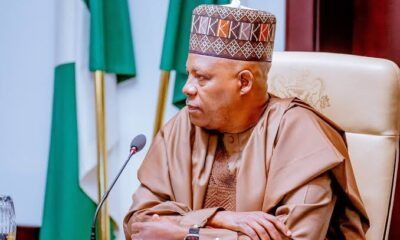

Economy would’ve Collapsed without Tinubu’s Reforms, Says Shettima
ShareVice President Kashim Shettima has said Nigeria’s economy would have collapsed had President Bola Tinubu not taken what he called...


House of Reps Seeks 90-Day Fuel Reserve for Nigeria by 2027
ShareFrom Rabiu Sanusi, Kano The House of Representatives has backed plans to increase Nigeria’s strategic petroleum reserve from 20 days...

56,000 Candidates Register for 2026 Private WASSCE
ShareThe West African Examinations Council (WAEC) said no fewer than 56,000 candidates registered for the 2026 West African Senior School...


JAMB Warns Varsities Against Issuing Admission Letters
ShareThe Joint Admissions and Matriculation Board (JAMB) has warned universities against issuing admission letters to candidates, insisting that only admissions...
Beyond Survival: Building A Healthier Nigeria For A Longer Life
ShareBy Yussuf Mubaraq Damilare What does it mean to live a long life if access to basic medical care remains...


Jigawa to Increase Corps Members Allowance – Namadi
ShareThe Jigawa government has announced plans to increase monthly allowance for the National Youth Service Scheme (NYSC) members posted to...