
COVER
Petrol Price Rises Again as Dangote Blames Regulators

By David Torough, Abuja
Chairman of Dangote Refinery, Aliko Dangote yesterday blamed the lingering fuel queues in Nigeria on preference of marketers to import commodity rather than patronise his company.
Dangote who addressed State House correspondents after meeting with President Bola Tinubu on the persistent fuel queues said the Nigerian National Petroleum Company Limited (NNPCL) and other importers rather go to import petrol rather than buy from him.
He reiterated that his company has more than enough stock to satisfy the country’s demand if marketers are allowed by the regulators to come to his refinery and buy.
He stated, “So 500 million liters in our tanks; even if there’s no production or no imports, this will take the country more than 12 days. So we are very ready. We are more than ready.
“With enough supply of crude, we can actually produce much more than 30 million liters every day.
“At full capacity, we can even supply whatever is being consumed. But what I estimated as consumption, which, I believe, may be about 30, 32 million; that one we can even start producing by next week. So it is not really an issue, because, as we speak today, we have 500 million liters in our tanks.
“And you know, I’m also putting my own name on the line by giving Mr President my word that, yes, we will be able to supply the market a minimum 30 million per day, and we’ll be ramping up. So we’re ready. We’re more than ready.”
Reminded that the reality on the ground does not show that Dangote Refinery has enough fuel that would last for 12 days, because there is scarcity of the product, he said: “Well, one thing that you have to understand is that we are producers.
“I have a refinery. I’m not in the business of retail. If I’m in the business of retail then you hold me responsible. But what I’m saying is that the retailers should please come forward and pick.
“If they don’t, come forward and pick, what do you want me to do? So, I am expecting either NNPC or the marketers to stop importing, they should come and pick because we have what they need.
“And you know, as they removed, I will be pumping. I don’t know whether you understand what it takes to keep half a billion liters inside our tank. It’s costing me money every day.
“If I will be able to collect the naira, I can actually charge somebody 32% in interest. So right now, that’s what I’m losing. And you are talking about 500 million, I mean, we don’t print money. But the issue is that if they come and collect, then you will not see any queues in the filling stations.
“We have what it takes for them to come and collect. We are not retailers. We also don’t have trucks to send. We have a factory, we have where they can load.
“If they come and pick they will go and sell and they have been doing that with importation. So if they’ve been doing that with importation, if it’s true, they are doing 55 million, I see no reason why they won’t come and collect our own and distribute.”
Dangote’s meeting with President Bola Tinubu was on matters that arose following work of the Implementation Committee on Crude Oil and Refined Products Sales in Local Currency.
The committee chaired by Finance Minister Wale Edun has Dangote and the Group CEO of NNPCL, Mele Kyari.
The committee members arrived at the Council Chamber of the Villa shortly after 2:00pm.
In early October, the Federal Government initiated a policy to allow the sale of crude oil to the Dangote Refinery in naira, moving away from traditional transactions in U.S. dollars.
This policy was approved by the Federal Executive Council and aims to stabilize domestic fuel prices while strengthening Nigeria’s currency by reducing dependence on dollars for crude oil transactions.
As part of this initiative, the NNPCL will supply crude oil to the Dangote Refinery in local currency, making it a pilot project for the new strategy.
The government anticipates that this approach will enhance the availability of petroleum products and lower costs associated with imports.
The Dangote Refinery, which requires substantial crude oil supplies annually, is expected to respond by selling petrol and diesel in naira, thus simplifying currency transactions and alleviating the economic pressures of fuel imports.
The Federal Government claims this strategy could reduce foreign exchange demands by up to 40%, with support from major institutions such as the Central Bank of Nigeria and AfreximBank.
However, tensions arose in Sept. between the NNPCL and Dangote Refinery over pricing disputes.
NNPCL accused Dangote of charging as high as N898 for a litre of petrol.
Again Petrol Price Rises
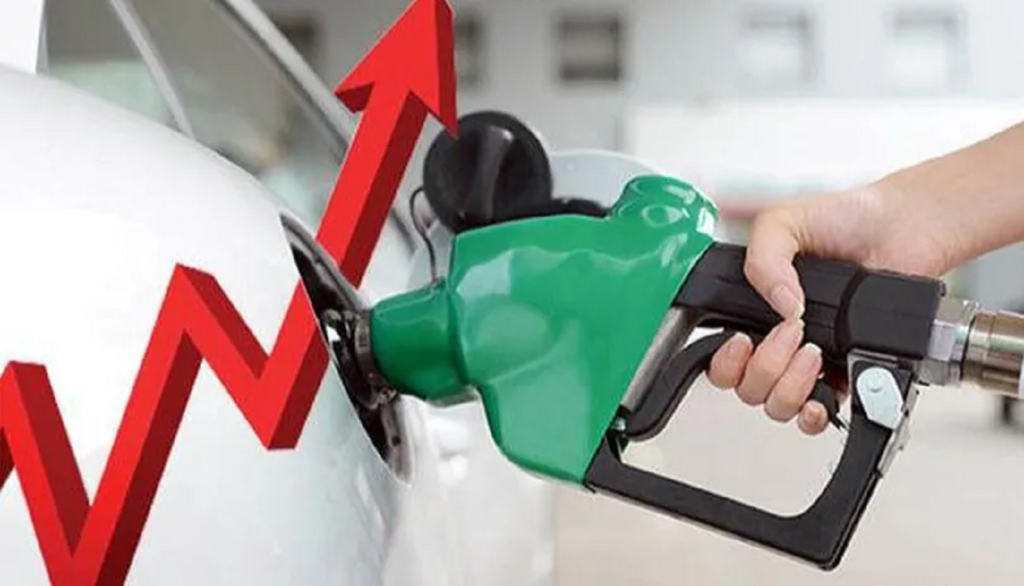
NNPCL yesterday raised the pump price of petrol to N1,025 per litre, up from N980 per litre in Lagos and surrounding areas.
This increase marks the third adjustment in two months under the government’s deregulation policy, which aims to align local fuel prices with global market conditions.
Analysts have raised questions about the timing of the hike, given that crude oil prices on the international market have recently declined by around 8 percent, from $78 per barrel to $72.
The decision has led to confusion among consumers and businesses, especially as reports from Abuja indicate that petrol prices there have surged even higher, reaching N1,060 per litre.
Many NNPCL filling stations in major cities immediately adjusted their prices to reflect the latest increase, while some independent operators were reportedly unaware of the change and continued selling fuel at the previous rate.
In addition to fluctuating crude prices, the continued depreciation of the Naira, now trading at N1,664 to the Dollar, has had a profound impact on fuel prices in Nigeria. With the current economic conditions and exchange rate pressures, the cost of imported fuel remains a challenging factor for the nation.The frequent adjustments in fuel pricing are expected to place additional strain on Nigerians, who are already facing high inflation and rising living costs.
By Tony Obiechina, Abuja
The Development Bank of Nigeria Plc (DBN) has launched DAWN: DBN Action for Women in Nigeria, unveiled its Impact Report and presented MSME Data Assets at the seventh edition of Annual Lecture held in Abuja.
DBN, in a statement on Thursday, said while delivering a welcome address, its Managing Director and Chief Executive Officer, Dr Tony Okpanachi, said the central challenge was no longer reforms themselves but ensuring benefits reach businesses at end of the chain.
He asked how to make sure benefits reach traders in Onitsha, fabricator in Aba, farmer in Kebbi and young founder in Yaba, noting that MSMEs accounted for about half of Nigeria’s GDP and more than eight in every ten jobs, adding that when reform works for MSMEs it works for most Nigerians.
He explained that reform becomes prosperity only when entrepreneurs can act on it whether through long tenor loans to buy equipment, banks willing to take risk or skills and records needed to grow.
He said working through Participating Financial Institutions DBN provides longer term funding, partial credit guarantees through subsidiary Impact Credit Guarantee Limited and capacity building including Entrepreneurship Training Programme.
He disclosed that as at December 2025 DBN had disbursed a cumulative N1.4 trillion to MSMEs through 84 Participating Financial Institutions creating about 1.6 million jobs nationwide.
Under the new five year strategy, the Bank aims to reach more than two million MSMEs with deliberate targets for women led businesses, youth led businesses and underserved states.
On DAWN, Okpanachi said finance alone had not enabled enough women-led businesses to scale.
He said initiative brings together financing, guarantees and credit support, technical assistance, outcome linked grants and market linkages delivered through banks, microfinance institutions, fintechs, aggregators, cooperatives and direct channels.
Its priority sectors are agriculture and exports, healthcare, arts and creatives, technology and green business.
He said DAWN is about moving gender focused lending beyond intention and turning access into opportunity.
On the sidelines of the lecture DBN and African Development Bank held a signing ceremony of AfDB DBN 61 million United States dollars Gender Line of Credit development that reinforces Bank commitment to women led enterprises.
Okpanachi urged Participating Financial Institutions to extend lending into sectors and states where access to finance has been limited, policymakers and regulators to measure reform by what changes for business at end of chain and MSMEs to formalise, keep good records and use support now available.
The Vice President as Special Guest of Honour was represented by Dr Fred Iklaga Senior Technical Adviser in the Office of Special Adviser to the President on Economy.
Keynote speakers were Chief Executive Officer of MTN Nigeria, Dr Karl Toriola, and Chairman of Nigeria Sovereign Investment Authority, Dr Segun Ogunsanya.
Fireside chat featured Chief Executive Officer of Sterling Bank Abubakar Suleiman, manufacturing and trade entrepreneur Mrs Omoyemi Chukwurah and by video Kola Masha of Babban Gona.
The Secretary to the Government of Federation, represented by Augusta Warren Bekaredebo, said 2026 tax reforms would bring relief to many small businesses expressing optimism that a lot of businesses will be smiling by next year because they will be exempted from tax.
By Tambaya Julius, Abuja
The Nigeria Labour Congress (NLC) has threatened possible nationwide industrial action following the failure of talks with the Federal Government over workers’ welfare, petrol prices and other outstanding labour demands.
The warning came after a meeting between the government and organised labour at the Ministry of Labour in Abuja on Thursday, October 22, ended without an agreement.
The congress has given the Federal Government until Tuesday, October 27, to make meaningful progress on the issues, warning that its relevant organs would decide the next line of action if the next meeting fails to produce concrete commitments.
The NLC has also directed its affiliates, state councils and civil society allies to begin mobilising members for possible nationwide action.
In a statement issued after the meeting, the NLC Acting General Secretary, Benson Upah, expressed disappointment over what he described as the government delegation’s lack of preparedness for the negotiations.
According to the congress, organised labour presented its demands in good faith but left the meeting without any concrete commitments from the government.
The demands include a reduction in petrol prices to 2024 levels, renegotiation of the national minimum wage, implementation of agreed tax relief measures and resolution of the terms of settlement involving the Joint Health Sector Unions (JOHESU).
The congress also called for the resolution of issues raised by the Joint Public Service Negotiating Council (JPSNC) over peculiar allowances, wage awards and hazard allowances.
The NLC said the government delegation lacked the necessary authority to engage meaningfully on the issues presented by labour representatives.
“The meeting between the Federal Government and organised labour, convened at the Ministry of Labour in Abuja on 22nd October 2026, has ended without resolution,” the statement said.
It added that the Minister of Labour requested that the meeting be adjourned until October 27 to allow the government to prepare adequately for further discussions.
The preparations, according to the statement, would include bringing relevant ministers and heads of departments and agencies to the negotiating table.
The congress said it remained open to dialogue but would not accept continued delays in addressing workers’ concerns.
“We will report back to our organs, and if no meaningful progress is made on Tuesday, the relevant organs of the NLC will decide the next line of action,” it said.
The labour body urged workers and members of the public to remain calm while the negotiations continue, even as it directed its affiliates and allies to prepare for possible industrial action.
“However, we urge all affiliates of NLC and TUC; all state councils and our civil society allies to be alert and start mobilising for a possible action across the nation while we hope that the tenets of our demands are met by the government,” the statement added.
The October 27 meeting is expected to provide another opportunity for both sides to address the outstanding issues and prevent a possible escalation of the dispute.
However, the NLC’s decision to begin mobilisation suggests that tensions could rise if the next round of talks fails to produce meaningful progress.
The Federal Road Safety Corps (FRSC) has barred its personnel from escorting politicians during campaigns for the 2027 general elections.
Zonal Commanding Officer, RS6, ACM Abimbola Owolabi, gave the directive during her maiden visit to the Cross River Command in Calabar on Wednesday.
Owolabi said patrol vehicles and sirens must not be used for political activities or private engagements, including weddings and funeral processions.
She directed officers deployed to campaign venues to focus exclusively on traffic management to prevent congestion and road crashes.
The zonal head warned personnel against leading political convoys or providing escorts for politicians, stressing that official vehicles must not be used for unauthorised purposes.




Troops Neutralise over 60 Terrorists, Rescue70 Kidnap Victims in One Week
Share By David Torough, Abuja The Armed Forces of Nigeria (AFN) have neutralised more than 60 terrorists and rescued at...


Accident Victims’ Remembrance Day: FRSC Records 7,156 Crashes, 3,445 Deaths
ShareThe Federal Road Safety Corps (FRSC) has recorded 7,156 road traffic crashes, resulting in 3,445 deaths and 22,292 injuries across...

Mutfwang Inaugurates State-owned Security Outfit, Operation Rainbow
ShareFrom Jude Dangwam, Jos Plateau State Governor, Caleb Manasseh Mutfwang, has inaugurated 353 operatives of the state-owned security outfit, Operation...

Otu Woos Investors, Promises Incentives, Support for Businesses in C’River
ShareCross River State Governor, Bassey Otu has called on private-sector investors to invest in the state, with assurances of incentives,...
2027: Tompolo Deploys 50 Vehicles in Enugu, C’River for Tinubu’s Re-election
ShareGrand Patron of the PBAT Door-to-Door Movement, High Chief Oweizidei Government Ekpemupolo, has donated 50 vehicles for President Bola Tinubu’s...

2027 Election: Wike Rallies Supports for Tinubu, Aduda
ShareBy Laide Akinboade, Abuja The Minister of the Federal Capital Territory (FCT), Nyesom Wike, on Monday, rallies supports for President...

NDIC Insists on Timely, Transparent Valuation of Failed Banks’ Assets
ShareBy Tony Obiechina, Abuja The Nigeria Deposit Insurance Corporation (NDIC) has raised concerns over the failure of some borrowers of...


Xenophobia: Nigeria’s Patience Running Out, Fani-Kayode Warns South Africa
ShareBy David Torough, Abuja Nigeria’s High Commissioner to South Africa, Femi Fani-Kayode, has warned that Nigeria’s patience is wearing thin...
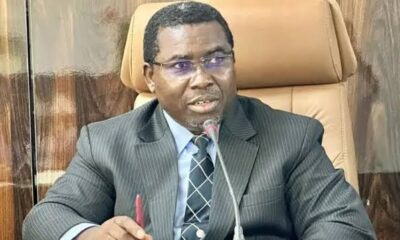

2027 Polls: INEC Purges 1.6m Invalid Names from Voter Register
ShareBy David Torough, Abuja The Independent National Electoral Commission (INEC) has removed 1,608,660 confirmed invalid registrations from Nigeria’s voter register...
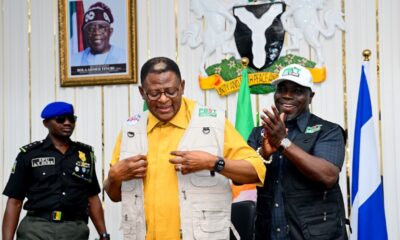

2027: Tompolo Deploys 50 Vehicles in Enugu, Cross River for Tinubu’s Re-election
ShareGrand Patron of the PBAT Door-to-Door Movement, High Chief Oweizidei Government Ekpemupolo, has donated 50 vehicles for President Bola Tinubu’s...