
OPINION
Kemi Badenoch: Shettima as Flutist with ‘Gègè’ on His Neck


By Festus Adedayo
This past Monday, Nigeria’s Vice President, Kashim Shettima, held the fèèrè (flute) and blew it admirably. However, bystanders listening to the rhythm of his flute didn’t know whether to cry or laugh. Moyo Okediji, Assistant Professor of Art at Wellesley College, Massachusetts, in his “Art of the Yoruba” Art Institute of Chicago Museum Studies, (Vol.
23, No. 2) described the flute held by Shettima as a symbol of the trickster god Esu, also known as the divinity of the crossroads. According to Okediji, Esu was so powerful that he could help or hinder the craft and life of man. The fere was so influential in traditional Africa that it was equally a symbol of royal might.If you went to the palace of the Alaafin of Oyo during the reign of late Oba Lamidi Olayiwola Adeyemi 111, as you approached the palace court, traditional flutists demonstrated their craft in magnificent candour. As they blew the flute, their eyes popped out like an ostrich’s, cheeks inflated like the rotund belly of a toad.
It is the same with drums. Apart from the rhythm they provide, drums are communicative instruments. So, while blowing the flute and beating drums, the crafters are engaged in the powerful medium of communication. Oba Adeyemi once told me that, shortly after the Ooni of Ife, Oba Enitan Ogunwusi, was enthroned, he, Alaafin was with the Ooni at an event in Ile-Ife. Palace drummers, continuing the decades-long tiff between Oba Adeyemi and Ogunwusi’s predecessor, Oba Okunade Sijuwade, suddenly changed the tone of their drumming.
They then began to drum out abusive messages to Alaafin with each descent of their sticks on the drum. Being ardent in the mastery of language of drums, Alaafin told me he immediately called the attention of Oba Ogunwusi to it. Ooni was apparently unschooled in drum language, and couldn’t penetrate the rain of expletives. “Kìlò fún awon onílù re” – warn your drummers – he told me he said to the Ooni to cease the tirades or he would storm out of the occasion.
The art and craft of flutists however arrest the attention of the audience who marvel at the beauty oozing out of their mouth. So, if a flutist is unfortunate to suffer from goiter, what the Yoruba call gègè, at the time he is blowing it, it will be double jeopardy for him. Goiter is an irregular growth at the thyroid gland which, as a result of its enlargement, makes its sufferer present with a big swelling on the neck. So, Yoruba say, the King who employed Onígègé– goiter patient – as a flutist will have a large audience of scorners watching his craft. In which case, the object to watch by the audience will be two – the flutist’s enlarged neck and the rhythm that comes out of the flute.
British-born Nigerian UK Conservative Party Leader, Kemi Adegoke, otherwise known as Kemi Badenoch, has been in the eye of the storm for her unflattering comments about Nigeria. Kemi became British as a result of her birth in 1980 at St. Teresa’s Private Hospital in London. Her professor of physiology mother, who taught at the University of Lagos and in America, had brought her pregnancy for birth in the UK on January 2 of that year before the British Nationality Act 1981 abolished the automatic birthright citizenship in England. She got married to Hamish, British banker. Since her climb up the ladder of British politics, Kemi has regaled Britons with the “very tough upbringing” she had in Nigeria, especially how it was enveloped by fear and insecurity.
She had said, “This is my country. I don’t want it to become like the place I ran away from. I grew up in Nigeria, and I saw firsthand what happens when politicians are in it for themselves, when they use public money as their private piggy banks, when they pollute the whole political atmosphere with their failure to serve others… I saw poverty and broken dreams. I came to Britain to make my way in a country where hard work and honest endeavour can take you anywhere. I grew up in a place where fear was everywhere. You cannot understand it unless you’ve lived it. Triple-checking that all the doors and windows are locked, waking up in the night at every sound, listening as you hear your neighbours scream as they are being burgled and beaten, wondering if your home would be the next.”
Apart from insecurity, Badenoch has consistently described Nigeria as a country plagued by corruption. Her family was said to have resided in the harsh middle-class neighbourhood of Surulere in Lagos, while she schooled at the Lagos International School.
But, like an obstinate or deaf King’s flutist afflicted with onígègé, Shettima didn’t care about the embarrassing swelling on his neck. In the process, both his message and the affliction on his neck became a laughing stock for the global audience. During a speech on migration in Abuja last week, Shettima was quoted to have said that the Bola Tinubu government was “proud” of Badenoch, “in spite of her efforts at denigrating her nation of origin.” However, Shettima said, “She is entitled to her own opinions; she has even every right to remove the ‘Kemi’ from her name but that does not underscore the fact that the greatest black nation on earth is the nation called Nigeria.” Continuing, the VP compared Badenoch’s unpatriotic treatment of her country of birth to that of Rishi Sunak, her predecessor, who became UK’s first Prime Minister of Indian heritage and noted that, Sunak was that “brilliant young man” who “never denigrated his nation of ancestry”.
Badenoch’s office did not allow the melody from the “Onígègé onifere” – the flutist with goiter – to subside. It responded accordingly.” She (Badenoch) is the leader of the opposition and she is very proud of her leadership of the opposition in this country,” her spokesman told reporters. “She tells the truth. She tells it like it is. She is not going to couch her words.”
What we should ask Shettima and people of his persuasion is, was Badenoch wrong because she is Nigerian-born or she was wrong by the certitude or otherwise of her claim? We must get his beef right. In other words, is Badenoch’s reminiscing a painful recount and frustration with the stagnation of her country of birth, or a mere demonization? Why didn’t she say this about Ghana? It is simply because she has no affinity with the Kwame Nkrumah country. Why would Badenoch take pleasure in the destruction of her fatherland? Let us even agree that those snide comments were meant to demonize; are the comments true about Nigeria? If they are true, should they be glossed over or spoken of, peradventure, the runners of Nigeria, who can be typecast as in the same trove with the Ifeoma Okoye novel’s title, Men Without Ears, (1984) can turn a new leaf?
The only issue I have with Kemi is her excessive patronizing of the British. While she may be British, she is not English. People have cited John Fashanu, the British footballer’s travails in the hands of the British press when he landed in trouble. It reminds me of Ilorin Dadakuada music exponent, Odolaye Aremu, who sang about the “Adìye òpìpí”, a rare species of featherless hen which looks like the hawk. It came into the world with scant feathers. In a moment when the Opipi hen forgot herself and identity, she thought herself to be hawk, until she was torn into pieces by this carnivorous bird.
Today, there are two schools of thought on the travails Nigeria is grappling with. None of them can be considered less patriotic than the other. While one believes in the methodology of alarm for redemption and shaming the devil, the other subscribes to the tactic of domesticating the rot (k’á se egbò l’égbò ilé). In other words, whilst both agree that there is a cancerous sore on the leg of Nigeria, one believes finding remedy should be domesticated, while the other says remedy should be escalated to the whole world. At the intersection where they both meet, however, there is an agreement that their country is the proverbial sickly child. Should its condition be broadcast so that intervention could come, perhaps off-coast or, the condition be lidded, in which case, it could worsen and the child dies?
Whether you are a Nigerian living in Nigeria, outside its shores, a friend of Nigeria or observant of Nigeria from afar, the truth is that Nigeria isn’t really a good story. Tomes of publications have been reeled out about our country’s journey into its present stasis. Political scientists, historians and anthropologists have struggled to locate the gene of destruction inside the pod of Nigeria that is responsible for its poor harvest. One of the most apt capturing of the Nigerian situation was given by foremost political scientist, Eghosa Osaghae who, as title of his book, called it a Crippled Giant. Whenever I remember Professor Osaghae’s descriptive book title, I remember a line in the song of Ayinla Omowura, Yoruba Apala music songster. He sang, “ijó ńbe nínú aro, esè ni ò jé,” meaning that dance is innate within the bones of the crippled but they are disenabled by wobbly feet. Very many attempts to explain Nigeria have failed. Nigeria takes one step forward, ten steps backwards.
Let us even confine ourselves to the period between 1999 and now. For decades before military handover of power, Nigerians wasted blood, flesh, resources and hope believing that once the “enemy” – the military – retired into the barracks, an end had come to the underdevelopment of their country. However, 25 years down the ladder, we have lived ruinous years. The period is comparable to an attack by termites. Their comparison with termites here is instructive. Termites, over the centuries, are one of the greatest enemies of man. Wherever they strike, their presence is concealed and undetected, until they have visited the most rapacious and severest damage on timbers and woods necessary for man’s use. As the devastation goes on, while man sees a normal thin exterior layer of wood, at discovery, it is almost always too late to reverse the colossal ruins.
So, let us do a breakdown of Badenoch’s allegations. Is Nigeria broken? I recently saw a book entitled Leaders Eat Last written by Simon Sinek. It contains nuggets on how leaders, who are the highest ranking officers, should “be the last to fix their plate at mealtime in order to ensure the people in their command were fed and catered for.” Is that what Nigerian leaders/politicians do as compared to other saner climes? Do our presidents, ministers, governors, legislators and their allies, since 1999, as alleged by Kemi, turn public money into private piggy bank? Is an Accountant General of the Federation on trial for stealing N109 billion? Did a public servant build 753 duplexes in Abuja? Do we know what job Bola Tinubu has done between 1999 and now that makes him one of the richest Nigerians alive? Is our judiciary corrupt, fantastically corrupt, a la David Cameron? Have Nigerian leaders failed in the last 25 years? Is our country plagued by corruption? Isn’t the Nigerian school so badly run that students carry chairs to school? Should Britain be a dormitory for residue of the failure of Nigerian leaders? Is everything broken in Nigeria?
It will be difficult not to answer the above posers made by Kemi in the affirmative. Only recently, David Adeleke, a.k.a. Davido, the singing sensation, courted the ire of those who are too blind to see the Nigerian situation. He, too, had thrown mud (ògúlùtu) at runners of Nigeria from far away in the United States. The Tinubu government is all movement and no motion, what in street parlance is called “efisi”. While Sinek tells us that leaders eat last, Tinubu and his minions are growing rotund cheeks while this Christmas, Nigerians face the most barren festivity ever. The ruining gang has almost finished the food on the dining table while even crumbs are not left for the ordinary people.
Whilst this column was going to bed, Badenoch’s reply to Shettima’s tirade and her late father, Femi Adegoke’s interview with the BBC Yoruba, surfaced on social media. Kemi had been quoted to have said, “I am Yoruba: I have nothing in common with the people from the north of the country, the Boko Haram where Islamism is.” If you listened to the elderly Adegoke’s interview, you will understand why Kemi’s bluntness and boldness are an inherited gene. In the interview, apparently conducted before 2022, the year of Adegoke’s passage, he said anyone who saw Tinubu becoming Nigeria’s president with the hope that he would right wrongs against the Yoruba, needed their head examined. In very sharp, deep Yoruba, Adegoke said the idea behind Tinubu’s “Yoruba” presidency was “òrò òpònú gbáà, tí kò m’ógbón wá” – it is a brainless argument. He based this on Tinubu’s silence as his kin were kidnapped and murdered by Fulani herdsmen whilst he mouthed the shibboleth of “gedegbe l’Èkó wà” – Lagos is non-aligned – all because of Lagos’ wealth. Adegoke believed that the 1999 constitution must be abolished if Nigeria wants to make any progress.
Again, Kemi, Adegoke’s daughter, has come under visceral attacks for her latest remarks. As usual, that comment is perceived on social media from an ethnic filter. Igbo compare her with the novelist, Chimamanda Adichie and Hausa/Fulani see her comment as the usual superiority complex of the Yoruba. An examination of it will show that every word Kemi uttered was in line with her avant-garde opposition role in the British parliament and reflects her usual down-to-earthness. Is Kemi Yoruba as she claimed? Very correct! Does she have anything in common with any other part of Nigeria? Certainly, not! Should she have? Yes. Today, many Yoruba, rightly or wrongly, believe that “the Gambari” is the axis of evil in Nigeria.
Kemi belongs to that persuasion. Is the north the epicentre of many of Nigeria’s current challenges, including Boko Haram and out-of-school children, the latter which gave birth to the former and the former which manifested from the Vice President’s home state, Borno State in 1999, especially under Shettima’s leader, Ali Modu Sheriff? Yes. Nigeria spends a considerable part of her budget fighting insecurity, almost 80 per cent of which is located in the north. So, should Kemi have couched her words so as to patronize the rulers of Nigeria? Certainly, not! If she did, she would not be an Adegoke’s daughter, the man whose friends nicknamed “Fariga” – disputation.
It is obvious that Shettima is the orange which attracted bystanders to pummel its mother, the orange tree, with stones and woods (omo osàn tíí kó póńpó bá ìyá è). He is also the King who employed the services of a flutist afflicted with goitre to sing his praise. The lesson therein is that challenged flutists should not blow the flute. Shettima’s Nigeria is the flutist’s goitre that attracts mockery of the world. Let Shettima and his boss remove the goitre from Nigeria’s neck by doing right with the power given them.
To Kemi and her deification of the British system: Since she affirmed she is Yoruba, I enjoin her to listen to the counsel of her people to the “Adìye òpìpí”. Because she has no feathers which help hens to fertilize their eggs, keeping such eggs warm and thereby producing offspring, Yoruba warn the Adìye òpìpí to lay controllable eggs which her scant feathers can fertilize. This is to enable her be a mother like other hens. I hope Kemi understands this wisdom of her forefathers.

By Folasade Akpan
For Mrs Schola Effiong, a 58-year-old confidential secretary in Calabar, managing diabetes in today’s economy feels like “climbing a hill that only gets steeper”.
Diagnosed in 2009, she said her monthly expenditure on insulin, tablets, laboratory tests and monitoring supplies now exceeds ₦150,000.
“You cannot stop taking the drugs, yet the cost keeps going up.
“Sometimes I do not have the money to buy some of them at the same time,” she said.
Her struggle mirrors the experiences of thousands of Nigerians at a time when experts warn that diabetes is becoming a major public health concern.
According to a 2018 national meta-analysis by Uloko et al.
, titled “Prevalence and Risk Factors for Diabetes Mellitus in Nigeria: A Systematic Review and Meta-Analysis”, Nigeria’s diabetes prevalence stands at 5.7 per cent, representing 11.2 million adults.The authors defined diabetes mellitus as a metabolic disorder of chronic hyperglycaemia caused by absolute or relative insulin deficiency and associated with disturbances in carbohydrate, protein and fat metabolism.
The study, which pooled data from numerous research works across the country, revealed wide regional disparities.
The prevalence rate was 3.0 per cent in the North-West, 5.9 per cent in the North-East, and 3.8 per cent in the North-Central, respectively.
The rates were higher in the southern part of the country: 5.5 per cent in the South-West, 4.6 per cent in the South-East, and 9.8 per cent in the South-South.
Experts say these patterns reflect changing lifestyles, rapid urbanisation and limited access to routine screening.
However, for many patients, statistics tell only a fraction of the real story.
Mr Offum Akung, a 57-year-old teacher in Cross River, said he had to ration his drugs because prices kept rising faster than his salary.
“I spend over ₦40,000 a month and still cannot buy everything on my prescription.
“I rely mostly on Glucophage now; when money allows, I add Neurovite Forte; diabetes management has become more difficult than the disease itself,” he said.
He appealed for government intervention, saying many patients were already “giving up”.
The Second Vice-President of the Diabetes Association of Nigeria, Mr Bernard Enyia, said the economic situation had pushed many Nigerians with diabetes into dangerous coping methods.
He said that he once managed his condition with about ₦70,000 monthly, but currently spends more than ₦180,000.
“Insulin has become something you pray for, while some people are sharing doses or skipping injections.
“Once you break treatment, the complications come quickly.”
Enyia, who lost his job as a health worker in 2017 due to frequent hospital visits, described the emotional toll as immense.
“It affects your finances, your social life, your marriage — everything. Many Nigerians with diabetes are quietly drowning,” he said.
Globally, concerns are also rising.
The World Health Organisation (WHO) estimates that more than 24 million adults in Africa are living with diabetes, a figure projected to rise to 60 million by 2050.
Marking World Diabetes Day 2025, WHO Regional Director for Africa, Prof. Mohamed Janabi, warned that rising obesity, lifestyle changes and weak health systems were fueling an “unprecedented wave of diabetes” across the continent.
He urged governments to prioritise access to affordable insulin, diagnostics and long-term care.
More so, pharmacists say they are witnessing the crisis firsthand.
The Senior Vice-President, Advantage Health Africa, Mr Adewale Oladigbolu, said many patients were no longer able to maintain regular medication schedules.
“People buy drugs today and skip them tomorrow because they do not have money.
“With non-adherence, they never reach therapeutic goals.”
Oladigbolu, a Fellow of the Pharmaceutical Society of Nigeria, said that locally manufactured metformin remained in high demand due to affordability, but insulin-dependent patients faced the harshest burden.
He stressed that diabetes care extended far beyond drugs.
“You need glucometers, strips, blood pressure monitors and regular tests.
“In countries where insurance work, patients do not think about the cost; in Nigeria, they pay for everything out of pocket,” he said.
He called for diabetes care to be covered under health insurance to reduce the financial burden on patients.
President of the Diabetes Association of Nigeria, Prof. Ejiofor Ugwu, described the rising cost of treatment as “a national crisis hiding in plain sight.
He said insulin, which sold for about ₦3,500 four years ago, presently costs ₦18,000 to ₦22,000 per vial.
“Test strips that were ₦2,000 now sell for ₦14,000, while glucometers have risen from ₦5,000 to over ₦25,000.
“On average, a patient now needs between ₦100,000 and ₦120,000 every month. Imagine earning ₦50,000 and being asked to spend twice that on one illness.”
He warned that between half and two-thirds of Nigerians with diabetes remain undiagnosed.
“We are seeing more kidney failure, more limb amputations, more blindness.
“These are late presentations caused by delayed or inconsistent treatment.”
Ugwu urged the Federal Government to urgently subsidise essential anti-diabetic medications and remove taxes on their importation.
“Most of these drugs are produced outside the country.
“Once you add import duties and other charges, prices become unbearable; subsidies and tax waivers could drop costs by at least 30 per cent,” he said.
He also called for expansion of the National Health Insurance Authority (NHIA) to cover a wider range of anti-diabetic medicines, glucose meters and strips — none of which are currently covered.
For many Nigerians, however, the struggle continues daily.
Across households, clinics and pharmacies, the message is the same: as Nigeria’s diabetes prevalence rises and treatment costs soar, more patients are slipping through the cracks — some silently, others painfully — while waiting for meaningful intervention.
In all, stakeholders say diabetes is a national emergency; people are dying quietly because they cannot afford medicine; hence the urgent need for relevant authorities to make anti-diabetic medications accessible and affordable.(NAN)
 | ReplyReply allForwardAdd reaction |

By Dorcas Jonah
In the Nigerian culture, extended families and communities play a crucial role in care-giving, instilling values, and supporting the development of children.
This cultural heritage of community parenting emphasises shared responsibility in raising children.
But in contemporary Nigeria, this age-long practice is facing enormous challenges due to modernisation.
In scrutinising this trend, some parents are of the view that community parenting helps in instilling morals and curbing social vices among children and youths, while others believe it is outdated.
Some parents are of the belief that their children are their responsibility; so they do not tolerate others correcting their children.
By contrast, others say that community parenting, when done with good intentions, can help raise a better society.
Mr Peterson Bangyi, a community leader in Dutse Makaranta, said that community parenting was the bedrock of raising a child.
He said the adage: “it takes a village to raise a child”, remained a powerful principle in contemporary society.
According to him, by Nigeria’s cultural norms and values, a child is owned by everyone; therefore, the grandparents, aunts, uncles, and neighbours actively contribute to raising children.
“This approach fosters a sense of belonging and ensures children grow up with diverse role models.”
Bangyi said that the extended families practiced by more communities were the backbone of parenting.
“But modernisation has taken away this practice as most families do not want people to come close to their children,’’ he said.
Mrs Monica Umeh, a mother of two, emphasising on the importance of community parenting, said that it played significant role in shaping her upbringing as a child and young adult.
Umeh advised that when correcting other people’s children, it is essential to do so with love and good intentions, without any form of bitterness.
“I am a strong advocate of community parenting as long as it is done with love and good intentions.
“I believe no parent can single-handedly raise a child without the support of others,’’ he said.
Mr Temitope Awoyemi, a lecturer, said that community parenting was crucial and could not be over-emphasised.
He said that community parenting helped society in inculcating strong moral values in children and youths, adding that modern life could be isolating for parents.
Awoyemi said that strong community support networks had been shown to lower parental stress levels and promote a more optimistic approach to raising children.
“It also ensures that a child receives guidance and correction from various adults, providing a broader, more consistent moral and social baseline that might be missed by parents who are busy with work.
“Community parenting encourages collaborative, interdisciplinary support from various community members and agencies in addressing a child’s developmental needs comprehensively.
“It focuses on prevention of long-term problems and celebrating individual strengths,’’ he said.
Awoyemi said that as the society continued to evolve, community parenting could adapt to ensure children benefitted from both cultural roots and contemporary innovations.
Mr Fortune Ubong, a cultural enthusiast, attributed the increasing crime rate in Nigeria to lack of community parenting that had extended to schools, and government institutions.
According to him, community parenting remains the foundation of every child’s moral upbringing.
“Most parents are now focused on earning a living and improving their lifestyle, in the process abandoning their primary duty of molding and guiding their children; this is where community parenting plays a greater role,” he said.
However, Mrs Joy Okezia, a businesswoman, said that given the recent developments in the country, correcting a child should be the sole responsibility of their parents.
Okezia said that she preferred to correct her children herself as she knew them better than anyone else.
She also noted that with the rising insecurity in the country, intervening to correct a child could pose a significant risk to the person.
Mrs Ijeoma Osita, a civil servant, also shared Okezia’s view, saying that a child’s behaviour was shaped by their family upbringing.
She said that if a child was not taught to love and respect others at home, an outsider would have little impact in correcting such a child.
Osita emphasised that parents should in still in their children the values of love and respect regardless of their status or background.
According to her, a child brought up with good values is less likely to misbehave well.
She cited the Holy Bible, saying, that says: “Train up a child in the way they should go, and when they are old, they will not depart from it’’.
Osita said that community parenting remained a vital aspect of Nigerian culture, promoting shared responsibility and resilience among families.
He opined that while modernisation posed challenges, blending traditional practices with modern strategies offered a promising path forward.
Observers say robust community connections are linked to better social-emotional development, academic achievement, and overall well-being for children.
They say that in modern society, amidst the digital world, economic instability, and busy work schedules, parents face pressures, making community support systems fundamental.
All in all, stakeholders are of the view that combining traditional community parenting with modern childcare – integrating technology, play-based learning, and skill acquisition – will produce well-rounded children.(NAN)

FEATURES
Victor Okoli: The Young Nigerian Tech Founder Building Digital Bridge Between Africa and America

Victor Chukwunonso Okoli, founder of Vnox Technology Inc. (USA) and Vnox Limited (Nigeria), is steadily emerging as one of the most promising new voices in global travel-tech. His mission is clear: bridge the technological gap between Africa and the United States, redefine global travel systems, and empower a new generation of skilled youths through innovation-driven opportunities.
In a statement issued in Onitsha, Anambra State, by Vnox Limited (Nigeria), the company emphasized Okoli’s growing influence as a Nigerian international graduate student contributing meaningfully to U.
S. innovation. His rising travel-technology platform, FlyVnox, currently valued at an estimated $1.7 million, is positioning itself as a competitive player in the global travel ecosystem.Okoli explained that Vnox Technology was founded to “train, empower more youths, create global employment opportunities, and drive business growth through our coming B2B portal inside the FlyVnox app.” The platform’s new B2B system aims to support travel agencies, entrepreneurs, and businesses across Africa and the diaspora—giving them access to modern tools, previously inaccessible technologies, and global opportunities.
Several young men and women are already employed under the expanding Vnox group, with more expected to join as the brand grows internationally.
Born and raised in Eastern Nigeria, Okoli’s early life exposed him to the realities and frustrations faced by international travelers and diaspora communities. After moving to the United States for graduate studies, he transformed those experiences into a bold technological vision—building systems that connect continents and create seamless mobility for users worldwide.
At the center of that vision is the FlyVnox app, a modern airline-ticketing platform built with global users in mind. Combining American engineering precision with African mobility realities, FlyVnox offers international flight search, multi-currency support, secure payments, transparent pricing, and a clean, intuitive interface.
Beyond FlyVnox, Okoli has built a growing tech ecosystem under Vnox Technology Inc., which oversees several innovative ventures, including: Vnox TravelTech Solutions LLC (FlyVnox App), VnoxPay (fintech), VnoxShop / Zyrlia (e-commerce)
VnoxID / Nexora (digital identity and smart business card solutions)
Vnox Limited (Nigeria) anchors African operations, media services, and talent development—ensuring the brand remains rooted in its home continent even as it grows globally.
Okoli’s work has broad significance for both Africa and the United States. He represents the powerful impact of immigrant entrepreneurship on global competitiveness—creating new jobs, driving innovation, strengthening U.S.–Africa commercial ties, and contributing to the development of practical, scalable technologies.
The statement concludes that Vnox Technology is a brand to watch. As FlyVnox gains international traction and the Vnox group expands its footprint, Victor Okoli stands as a symbol of a rising generation: African-born, globally minded, and building technologies that connect and serve the world.

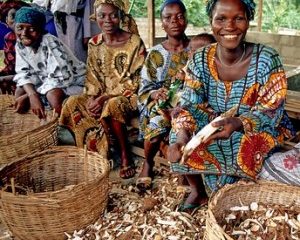

Women, Girls Still Struggle to Access Healthcare in Nigeria – Findings
ShareBy David Torough, Abuja As Nigeria marks Universal Health Coverage (UHC) Day 2025, new findings suggest that adolescent girls and...

Five Arrested over Plot to Attack German Christmas Market
ShareFive men have been arrested in Germany suspected of being involved in a plot to drive a vehicle into people...


INEC Begins Display of Preliminary Voter Register in Delta
ShareFrom Francis Sadhere, Delta The Independent National Electoral Commission (INEC), Delta State Office, has announced the commencement of the display...


NAF Begins Nationwide Aptitude Test for 2025 Recruitment of 20,000 Candidates
ShareNo fewer than 20,000 applicants nationwide are participating in the Nigerian Air Force (NAF) Zonal General Aptitude Test for the...

NDLEA Arrests Fleeing Bandits’ Drug Supplier in Niger
ShareThe National Drug Law Enforcement Agency (NDLEA) has arrested a notorious supplier of illicit drugs to bandits operating in the...


Transportation Expert Lauds Mbah over Security, Infrastructure in Enugu
ShareA transportation expert and elder statesman, Chief Chris Chigboh, has commended Gov. Peter Mbah of Enugu State for the remarkable...

Baby, Female Passenger Die in Ikorodu Road Crash
ShareThe Lagos State Traffic Management Authority (LASTMA) said a fatal road traffic collision on Ikorodu Road has claimed the lives...


Mortuary Attendant in Police Net over Alleged Organ Harvesting in Edo
ShareA mortuary attendant in the Upper Sakponba area of Ikpoba-Okha Local Government Area of Edo has landed in police net...
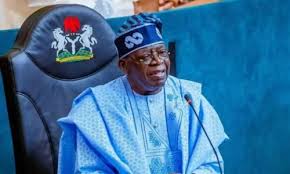

Tinubu Urges ECOWAS’ Unity to Resist Coups, Ensure Regional Stability
SharePresident Bola Tinubu on Sunday urged West African leaders to close ranks against fresh shocks to democracy, citing the recent...


COAS Urges NMS Students to Uphold Discipline, Excellence, Promises Better Learning Environment
ShareBy David Torough, Abuja The Chief of Army Staff (COAS), Lieutenant General Waidi Shaibu, has charged students of the Nigerian...