
OPINION
A Reflection on Daily Trust’s Tension with Tinubu

By Farooq Kperogi
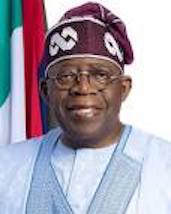
As a media scholar who engages with Nigeria’s media landscape from the safe yet impassioned perch of the diaspora, I have found 2024 to be particularly illuminating in the annals of government-media relations. It presented a study in tension, turmoil, and eventual catharsis.
If the media is society’s mirror, then its cracks often reveal not just distortions but deeper fissures in the polity it reflects.
And nowhere was this more evident than in the July 4 report by Daily Trust, which set the Nigerian public sphere ablaze with moral indignation and, in a twist befitting a Greek tragedy, threatened lives.The Daily Trust report in question bore the sensational headline: “LGBT: Nigeria Signs $150 Billion Samoa Deal.” In one fell swoop, it conjured a narrative wherein the Bola Ahmed Tinubu administration had purportedly traded Nigeria’s moral sanctity for European coffers flush with foreign currency. It was a claim unburdened by evidence but rich with emotional currency.
In its aftermath, it left ripples of moral panic, social turbulence, and political fallout, especially in the Muslim North where issues bordering on religious morality inflame our passions and mentally transport us to celestial realms.
Clerics swiftly mobilized their pulpits and invoked ominous maledictions. Their invocations of divine ire resonated not only within mosques but deep into the social sinews of a people already hampered by mistrust.
Prominent Northerners in the Tinubu administration became objects of incendiary wrath, targets of whispered curses and objects of overt death threats. Family members became collateral damage in this frenzy.
As I pointed out in my July 6, 2024, column titled “LGBTQ Storm in $150 Billion Samoa Deal Teacup,” what Daily Trust did exemplified the literary and journalistic sin of circular reporting, a rhetorical sleight-of-hand where unsuspecting people are fed with false information, made to spout it back, which then gets established as the source of the information.
Alex Haley’s Roots is one of the most prominent examples of circular reporting. Haley’s wildly celebrated epic, initially marketed as historical truth about the life of Kunta Kinte, an 18th-century Mandinka who was captured and sold into slavery in America, was later unmasked as a potpourri of embellished fiction and poorly-sourced “facts.”
In his eagerness to find validation, Haley planted narratives into the mouths of griots in the Gambia, only to repackage their guided, predetermined responses as original confirmation of his fabricated story.
In a parallel act, Daily Trust ignited outrage by feeding its sources erroneous claims about the Samoa Agreement, then turned their emotionally charged responses into a “story”—a journalistic ouroboros swallowing its own tail.
Yet unlike Haley’s indulgence in narrative fiction, Daily Trust’s misstep wasn’t victimless. It carried real and immediate consequences: Vice President Kashim Shettima, the son of a revered Maiduguri Islamic scholar, and Nuhu Ribadu, scion of a distinguished Adamawa family with deep Islamic roots, became unwilling lightning rods for holy vitriol.
Minister of Information Mohammed Idris, himself a bridge between Nupe and Fulani Muslim cultures, found himself straddling a tempest from all corners. All northern Muslims in the Tinubu administration became objects of unappeasable fury.
The Minister’s Delicate Maneuver
Confronted with this escalating storm, Information Minister Mohammed Idris exhibited both restraint and strategic acumen. It would have been easy, even tempting, to unleash the full punitive might of the state upon Daily Trust.
After all, if recent history is any guide, Nigerian courts beckon eagerly to governments eager for retribution. Yet Idris wisely chose not to enter the arena of litigation, where victors are often the defeated in the court of public opinion. To sue would have been to martyr the newspaper, inflame its supporters, and escalate the matter beyond the bounds of reason.
Instead, Idris turned to a tool of elegant resolve: the National Media Complaints Commission (NMCC), Nigeria’s fledgling experiment in self-regulation. Incidentally, it is a forum that was conceived, in a delicious twist of fate, by none other than Idris himself (as publisher of Blueprint, an Abuja-based daily) alongside Media Trust’s Chairman, Malam Kabiru Yusuf.
Together, in the more harmonious days of 2021, after Yusuf’s and Idris’ December 2020 election as chairman and general secretary respectively of the Newspapers Publishers Association of Nigeria (NPAN), they planted the seeds of this Ombudsman, a voluntary watchdog designed to enforce media ethics with an invisible hand.
By July 8, Idris’ ministry formally petitioned the NMCC, requesting an inquiry into Daily Trust’s reckless reportorial infraction that endangered the lives of people in government. It demanded a retraction, an apology, and stricter editorial safeguards against future transgressions.
The NMCC, under the leadership of Emeka Izeze, former MD of the Guardian and widely admired figure in Nigerian journalism, undertook its task with measured diligence. On September 23, the commission issued a 19-page report that cut through the fog of misinformation.
The commission found that although earlier versions of the Samoa Agreement did include provisions for the protection of sexual minorities and marginal gender identities (which many countries, including Nigeria, had rejected), the final 403-page agreement that Nigeria signed did not require any commitments on the part of countries that signed the agreement to codify LGBTQ rights in their law books.
The NMCC’s findings were refreshingly even-handed: while Daily Trust was found guilty of violating Article 2.1 of the Revised Code of Journalism Ethics—a clause that enshrines accuracy as the bedrock of reporting—the commission gently admonished the government for its opacity surrounding the Samoa Agreement. Transparency, it suggested, would have preempted much of the hysteria.
Thus, the judgment did more than hold a newspaper accountable; it underlined an eternal truth about public trust: opacity begets speculation and speculation births chaos.
A Redemption through Humility
On October 2, 2024, Daily Trust rose to the moment with an unreserved apology: “We accept the verdict of the NMCC without equivocation… We apologize to the Federal Government for any inconvenience the story might have caused.”
In the apology, Daily Trust commended the “thorough and professional approach” of the National Media Complaints Commission (NMCC) and expressed gratitude to Information Minister Mohammed Idris “for his professional and democratic approach to this incident.”
In its humility, Daily Trust not only mended fences with its readership but also fortified its credibility. Self-correction is not a weakness but the wellspring of enduring strength.
After all, as the New York Times demonstrated when it corrected a 161-year-old error in 2014, the integrity of any news organization lies not in its infallibility but in its courage to admit when it stumbles. To err may be human, but to apologize—and to do so with grace—is the hallmark of institutional maturity.
Lessons Learned: Self-Regulation as Democratic Vigilance
This episode is a timely moral tale for Nigeria’s democracy and media ecosystem. For too long, the relationship between Nigerian governments and the media has oscillated between adversarial hostility and co-opted complicity.
This case reveals the potential for a middle path, that is, a relationship characterized by accountability without authoritarianism, and freedom tempered by responsibility.
The NMCC’s successful arbitration places Nigeria alongside countries like the United Kingdom, where the Independent Press Standards Organisation (IPSO) maintains order in the wake of scandal; Germany, where the Deutscher Presserat enforces rigor; South Africa, whose Press Council safeguards post-apartheid press freedoms; and several other examples.
As Thomas Jefferson once wrote, “The only security of all is in a free press.” But press freedom, like all freedoms, carries obligations—chief among them the pursuit of truth. To borrow Edmund Burke’s metaphor of the Fourth Estate, if journalists sit atop their watchtower as society’s sentinels, they must keep their eyes unclouded by haste, bias, or error.
In the final analysis, both Minister Idris and Daily Trust deserve commendation for their conduct. The minister’s refusal to wield the bludgeon of state power speaks to his understanding of democracy’s delicate balance.
Daily Trust’s forthright apology reaffirms its place as an honorable newspaper committed to ethical journalism, even when it falters like we all do.
Errors, after all, are the cracked kegs of palm wine through which wisdom occasionally trickles. It is what we do with the lessons—how we patch the cracks and safeguard against future spills—that determines whether we remain custodians of public trust or mere peddlers of ink-stained chaos.
This case tells us that the relationship between the government and the media need not always be a drumbeat of conflict; it can, when guided by mechanisms like the NMCC, achieve the harmony of a well-tuned orchestra where every note serves the greater good of truth, transparency, and trust.
In 2024, Nigeria glimpsed that harmony.

By Mukhtar Dambatta
In Nigeria, an accusation of theft can turn a calm crowd into a dangerous mob within minutes.
Someone shouts, “Ole!” “Barawo!” “Onyeoshi!” or “Thief!” and people begin to gather.
Before anyone asks what happened or whether the allegation is true, sticks, stones, and other objects may become weapons.By the time the police arrive, the accused person may already be badly injured or dead.
Jungle justice, or mob violence, is an illegal act where a crowd bypasses the legal system to punish a suspect without a fair trial or formal proof of guilt
The practice has continued in spite of the existence of courts, police and other institutions established to investigate crimes and administer justice.
One of the cases that brought the issue sharply into national focus was the killing of the “Aluu Four”.
In October 2012, four students of the University of Port Harcourt, Chiadika Biringa, Ugonna Obuzor, Lloyd Toku and Tekena Elkanah were attacked and killed in Aluu community, Rivers, after they were accused of stealing.
They were beaten and set ablaze by a mob. Images of the incident circulated widely, prompting public outrage and renewed calls for an end to mob justice.
But similar incidents have continued.
In March 2025, 16 travellers were killed by a mob in Uromi, Edo, after being accused of being kidnappers.
Reports identified the victims as hunters travelling from the South to the North.
President Bola Tinubu condemned the killings and directed security agencies to investigate the incident and prosecute those responsible.
The Uromi killings again raised concerns about what can happen when suspicion and fear replace investigation.
On July 26, 25-year-old Ibrahim Mbaya, popularly known as “Ibee”, was allegedly attacked by a mob in Jos, Plateau, after being accused of stealing an iPhone 12.
He was later taken to the Jos University Teaching Hospital, where he was confirmed dead.
The Police Command in Plateau announced the arrest of suspects in connection with the incident.
Recently, the Inspector-General of Police (I-G), Mr Olatunji Disu, gave a directive that jungle justice would be treated as homicide.
A security advocacy group, the Security Situation Room (SSR) backed the group described mob action as an invitation to anarchy.
The President of SSR, Mr Douglas Ogbankwa, said perpetrators of extra-judicial killings must be held accountable for their actions.
He said that the directive was timely, considering the spate of mob attacks and extra-judicial killings in the country.
“Of course, this directive is timely. Allowing people to resort to strong-arm tactics in solving criminal activities is an invitation to anarchy.
“It is like taking the country to the Hobbesian state of nature, where life was nasty, brutish and short.”
Ogbankwa said the existence of government could be traced to the social contract theory, under which citizens surrendered certain liberties to enable constituted authorities to govern and protect them.
He said allowing individuals to take the law into their hands would undermine the purpose of government and the rule of law.
“The reason we have a government is traceable to the social contract theory, where the people agree to have people who will govern, protect them and take care of their welfare.
“So, if individuals are allowed to have the liberty of taking the law into their hands, then that is simply taking us to the Stone Age without laws,” he said.
The convener noted that every society was governed by laws, adding that the 1999 Constitution of the Federal Republic of Nigeria (as amended) provided lawful avenues for resolving grievances.
He said the Police Act 2020 empowered the police to detect and investigate crimes and arrest those suspected of committing offences within their jurisdiction.
Ogbankwa consequently called for strict adherence to the I-G’s directive, adding that individuals must learn to be personally accountable for their actions or inactions.
On a similar note, a security analyst, Ahmed Umar, said the response to suspected crime should begin with reporting and investigation rather than punishment by a crowd.
“Allowing people to take the law into their own hands could result in the killing of innocent people who might later be found not to have committed any offence,’’ he said.
More so, a legal practitioner, Yusuf Aliyu Yusuf, said an accusation was not the same as proof of guilt.He said the responsibility of determining whether a person had committed a crime belonged to the appropriate institutions established by law.
In his submission, Barau Kawu, a community leader, said communities also had a role to play in preventing mob attacks by discouraging rumours and immediately reporting suspected criminal activities to security agencies.
“Community members should avoid taking action based solely on allegations or information received from others,’’ he said.
Getting an accurate national figure for deaths resulting from jungle justice is difficult.
Human rights organisations and other researchers have documented hundreds of cases over the years, but the actual number is difficult to establish.
Many incidents, particularly in communities far from major towns, may never reach the police, courts or mainstream media.
Analysts say a major factor behind the practice is public distrust of law enforcement institutions.
Where citizens believe that suspects may escape justice or that criminal cases will not be handled effectively, some may become tempted to punish accused persons themselves.
The country’s worsening insecurity has also made people more suspicious of strangers and unfamiliar situations.
Kidnapping, banditry and other violent crimes have affected communities across the country. In such an environment, suspicion can spread quickly.
Section 33 of the 1999 Constitution protects the right to life, subject to the exceptions stated in the Constitution.
The law provides for allegations to be investigated and suspects to be tried in court.
That process cannot be replaced by a crowd.
The danger is that the person being attacked may not even be responsible for the alleged offence.
“A stolen phone may have been misplaced; a misunderstanding may have been mistaken for criminal behaviour; a person may have been wrongly identified.
“Once a mob attack begins, however, there is often little opportunity for the truth to emerge; ending jungle justice will require more than condemning each incident after it happens.
“It will require proper investigations, prosecution of those responsible and greater confidences in the justice system.
“Citizens also need to understand that reporting a suspected crime is different from punishing a suspect.
“The police and courts have the responsibility to investigate allegations and determine guilt according to the law,’’ a social commentator said.
For communities, the challenge is to resist acting on rumours and accusations before the facts are known.
Experts agree that criminal accusations must be legally investigated and tried in court. When justice is taken into the streets, a mere accusation can instantly become an irreversible death sentence.(NAN)
By Dovish Okojie
Whether you are buying food in the market, renting a house, importing goods, securing a contract, or even seeking employment, there is often someone standing between the producer and the consumer, the seller and the buyer, the opportunity and the beneficiary.
In many ways, Nigeria has become a nation of intermediaries and nowhere is this more evident than in the food supply chain.
Across markets, consumers are confronted daily by rising food prices, which has forced many households to adjust their spending habits and dietary choices.When Nigerians ask why food is so expensive, the answers usually point to inflation, fuel costs, insecurity, exchange rate, climate change, poor infrastructure, and government policies.
Yet another recurring explanation often emerges from market conversations and public debates: the activities of middlemen.For many Nigerians, middlemen have become the visible face of an invisible economic problem. Farmers accuse them of exploitation, consumers blame them for price increases, policymakers frequently identify them as contributors to food inflation.
But are middlemen truly the villains of Nigeria’s economic story, or are they merely products of deeper structural failures? The answer is far more complex than many assume. Nigeria’s agricultural sector provides perhaps the clearest illustration of the role intermediaries play in the economy.
Millions of farmers across the country cultivate crops and raise livestock. Yet despite their hard work, many struggle to earn sustainable incomes. At the same time, consumers often complain about the high cost of food. Somewhere between the farmer and the family dinner table lies a long chain of traders, transporters, brokers, wholesalers, aggregators and retailers. Each participant performs a function.
Each adds a cost and seeks a profit. Consequently, by the time a basket of tomatoes harvested in Kaduna reaches a kitchen in Abuja, or a bag of rice produced in Kebbi arrives at a market in Lagos, its price may have increased substantially.
This creates a paradox that defines much of Nigeria’s economic reality: the farmer earns too little, the consumer pays too much, and yet everyone in the value chain insists they are barely surviving. To understand why this occurs, one must first understand the circumstances under which many Nigerian farmers operate.
Imagine a tomato farmer in northern Nigeria. After months of preparing the land, planting, irrigating, applying fertilizer and protecting crops from pests, harvest season arrives. The farmer’s greatest challenge is no longer production but preservation because tomatoes are highly perishable. Without access to cold storage facilities, modern processing centers or efficient transportation networks, harvested produce can begin deteriorating within days. Faced with the prospect of losing an entire harvest, many farmers have little choice but to sell immediately.
That is where the middleman enters the picture. Armed with cash and transportation arrangements, the trader purchases produce directly from farmers, often at prices significantly lower than those eventually paid by urban consumers. Critics argue that this disparity demonstrates exploitation. Supporters counter that the trader assumes risks associated with transportation, spoilage, market fluctuations and storage. In reality, both arguments contain elements of truth.
The middleman is not merely purchasing produce; he is purchasing urgency. He understands that farmers often lack alternatives. The bargaining power therefore rests largely with the buyer rather than the producer.
This imbalance fuels resentment throughout the agricultural sector. Many farmers believe they bear the greatest production risks while receiving the smallest share of profits. Consumers, on the other hand, see food prices rising beyond their purchasing power and conclude that someone in the middle must be benefiting excessively and the middleman becomes the convenient target.
Yet focusing exclusively on middlemen risks overlooking the deeper issues that create opportunities for their dominance. The truth is that middlemen thrive where systems fail.
In countries with efficient agricultural ecosystems, farmers have access to storage facilities, processing plants, organized cooperatives, real-time market information, affordable transportation, and direct access to buyers. These systems reduce dependence on intermediaries because producers possess alternatives.
Nigeria’s situation is markedly different because poor road networks increase transportation costs, inadequate storage facilities contribute to substantial post-harvest losses, insecurity disrupts farming activities and supply routes, rising fuel prices make logistics more expensive, limited access to financing constrains investment across the value chain. These deficiencies create economic gaps that intermediaries step in to fill.
Where storage facilities are absent, traders provide temporary storage. Where transportation networks are unreliable, they organize logistics. Where information is scarce, they become information brokers. Where farmer cooperatives are weak, they aggregate produce from multiple sources.
Economics rarely tolerates a vacuum. Whenever institutions fail to perform essential functions, private actors emerge to fill the void. This reality explains why attempts to eliminate middlemen altogether are unlikely to succeed.
The issue is not their existence but the extent of dependence on them. Indeed, Nigeria’s culture of intermediation extends far beyond agriculture. Real estate agents connect landlords and tenants, procurement contractors connect suppliers and government agencies, clearing agents connect importers and ports, political brokers connect citizens to power structures, recruitment consultants connect employers to job seekers.
In many sectors, Nigerians have become accustomed to operating through intermediaries. This phenomenon reflects both entrepreneurial ingenuity and institutional weakness.
The more difficult a system becomes to navigate, the more valuable those who understand it become. In this sense, the Nigerian middleman is not simply an economic actor. He is a symptom. He represents the inefficiencies embedded within the broader system.
Fortunately, change may already be underway because the rapid growth of digital technology is beginning to challenge traditional patterns of intermediation. Mobile payment platforms, digital marketplaces, agricultural technology solutions and online trading networks are increasingly connecting producers directly with consumers and businesses.
Farmers can now access market information that was once available only to traders, consumers can compare prices across locations, businesses can source products directly from producers, digital platforms are gradually reducing information asymmetry and increasing transparency.
However, technology alone cannot solve Nigeria’s structural problems. A mobile application cannot repair a damaged highway, an online marketplace cannot preserve perishable crops without cold storage, a smartphone cannot eliminate transportation bottlenecks. Technology works best when supported by functional infrastructure.
Ultimately, the debate about middlemen is not merely an economic discussion. It is a conversation about fairness, opportunity and national development. Behind every statistic lies a human story; the farmer struggling to recover production costs, the transporter battling rising fuel prices, the trader managing market uncertainty, the salary earner whose income can no longer sustain a family’s food needs, the mother forced to reduce the quantity or quality of meals she serves her children. Food inflation is not simply a number reported by economists.
It is a lived reality affecting millions of Nigerians every day. Addressing this challenge requires more than blaming intermediaries. It requires rebuilding the systems that make excessive intermediation necessary in the first place.
Nigeria must invest aggressively in rural infrastructure, modern storage facilities, agricultural processing centers, transportation networks and market information systems. Farmer cooperatives should be strengthened, supply chains should become more transparent, and competition should be encouraged across the value chain.
The objective should not be to eliminate middlemen but to ensure that every participant in the chain earns income through genuine value creation rather than through control of access. The Nigerian middleman is often portrayed as a villain.
In reality, he is neither hero nor villain. He is a mirror reflecting the strengths and weaknesses of the economy. Where institutions function effectively, his influence diminishes. Where systems fail, his importance grows.
For too long, public discourse has focused on the symptoms rather than the causes. The high cost of food in Nigeria is not the result of a single actor or group. It is the cumulative consequence of inadequate infrastructure, fragmented markets, information gaps, transportation challenges, post-harvest losses and broader economic pressures.
The path forward therefore lies not in declaring war on middlemen but in building an economy where producers have greater bargaining power, consumers enjoy fairer prices, and intermediaries compete on efficiency rather than scarcity. When that day comes, Nigeria’s farmers will earn more, families will spend less on food, and the nation’s vast agricultural potential will finally translate into shared prosperity. Until then, the middleman will remain exactly what he has always been: a reflection of the Nigeria we have built, and perhaps a reminder of the Nigeria we still need to create.
Dovish Okojie is a Management Consultant, Data Scientist, and Public Affairs Analyst. He writes from Abuja and can be reached through dovishokojie@gmail.com
By Raphael Atuu, Abuja
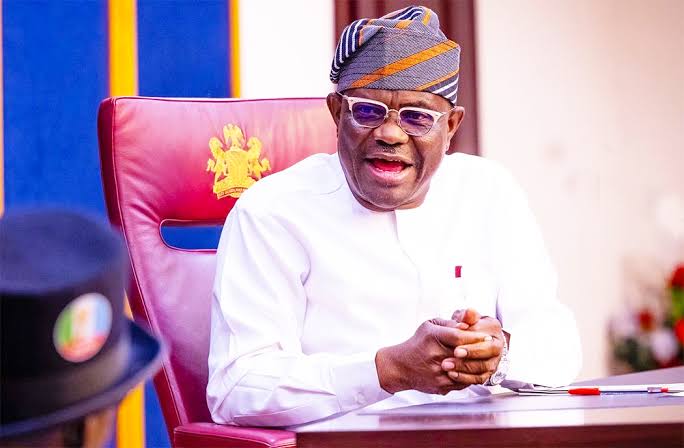
Since assuming office as Minister of the Federal Capital Territory in August 2023, former Rivers State Governor Nyesom Wike has remained one of the most visible and politically consequential figures in Nigeria’s current administration.
His tenure in the FCT has been marked by an aggressive emphasis on infrastructure, the revival of abandoned projects, road construction and administrative reforms.
The Federal Capital Territory Administration itself lists Wike as the incumbent minister, having assumed office in 2023.From the early months of his administration, Wike adopted a project-driven approach, meeting contractors and setting completion deadlines for ongoing road projects.
Contemporary reporting also documented his efforts to strengthen the FCT civil service and secure greater financial flexibility for the administration.Infrastructure as the Measure
One of the defining features of Wike’s tenure has been the scale of attention given to infrastructure.
The minister inherited projects from previous administrations and continued several of them, while also initiating and accelerating others. Roads linking different districts and satellite communities have received particular attention, alongside projects involving healthcare, security, public institutions and urban development.
President Bola Ahmed Tinubu has publicly acknowledged the infrastructure drive in Abuja. In March 2025, the President explained that the decision to remove the FCT Administration from the Treasury Single Account was intended to give the administration greater flexibility and speed in financing development projects. Tinubu specifically credited Wike with presenting the proposal and subsequently driving its implementation.
In July 2026, the Federal Government again defended the TSA exemption, saying it had increased the FCT Administration’s financial flexibility and accelerated infrastructure delivery. At the same event, Tinubu described the scale of infrastructure and urban renewal under Wike as substantial.
These developments have made project delivery one of the central arguments in assessments of Wike’s tenure.
More Than Roads
Wike’s administration has also involved institutional changes.
The FCT Administration has established a Civil Service Commission and created additional administrative structures, while the minister has pushed for reforms intended to make the administration more responsive.
The TSA issue is particularly significant. Rather than simply being a financial technicality, it became part of the broader debate about how the FCT should fund major capital projects. Wike has argued that the change provided the resources and flexibility required to accelerate development, while the Presidency has similarly defended the decision as necessary for faster delivery.
The FCT’s unique constitutional and administrative position also means that the minister operates in a role different from that of an ordinary state governor. According to the FCTA, the President serves as the equivalent of governor of the FCT, delegating administrative powers to the minister, while the National Assembly performs legislative functions for the territory.
The Political Dimension
Beyond infrastructure, Wike’s political activities have attracted perhaps even greater national attention.
The former Rivers governor remains associated with the Peoples Democratic Party while serving in an administration led by the All Progressives Congress. His political position became particularly prominent after members of the former G5 governors supported Bola Tinubu in the 2023 presidential election despite remaining within the PDP political space.
That cross-party positioning has continued into the preparations for 2027.
In 2025 and 2026, Wike promoted what he calls the Rainbow Coalition, a cross-party political arrangement intended to mobilise support for President Tinubu’s re-election. In September 2026, Wike again stated that the coalition was supporting Tinubu but was not an APC organisation and that politicians could retain their individual party identities.
This is where the question of Wike’s political influence becomes particularly relevant.
Where Were the APC Governors?
The emergence of the Rainbow Coalition has also exposed a disagreement between Wike and some APC governors.
In September 2026, the APC Governors Forum stated that the governors remained committed to the APC’s own political structure and would not endorse arrangements that could create divided loyalty or competing structures ahead of the 2027 elections.
Wike, however, has maintained that his coalition has a different objective: mobilising support for Tinubu across party lines while allowing politicians to contest other elections under their respective parties.
That distinction is important. The political argument is no longer simply about whether politicians belong to the APC or PDP. It is increasingly about whether influence can be organised across party boundaries.
A Different Kind of Political Capital
Wike’s political capital comes from several stages of his career: local government administration, service in Rivers State, federal ministerial experience, eight years as Rivers governor and his subsequent role as FCT minister.
His political network has also extended beyond a single political party.
The Rainbow Coalition represents an attempt to translate that network into a broader political structure. Wike has described the coalition as involving politicians from different parties who share a common objective regarding the 2027 presidential election.
There is, however, disagreement over how broad that coalition actually is. In January 2026, the Inter-Party Advisory Council rejected claims that all political parties were part of Wike’s proposed coalition, stressing that individual parties must make their own decisions through their constitutional structures.
That disagreement illustrates the limits as well as the reach of Wike’s political influence.
Performance and Political Alignment
The Wike phenomenon therefore rests on two separate but connected developments.
The first is his record of project execution in Abuja, which has received public commendation from President Tinubu and has been accompanied by significant administrative and financial reforms.
The second is his unusual political position: a PDP figure operating within an APC-led federal government while openly supporting the incumbent president’s re-election.
That combination has made Wike an unusual figure in contemporary Nigerian politics.
Whether his political network will translate into electoral influence in 2027 remains a matter for voters and the political process to determine. What is already clear is that his activities have become significant enough to generate public disagreements with both opposition actors and some members of the ruling party.
For a politician who has spent much of his career operating within the traditional party system, the Rainbow Coalition represents another chapter in Wike’s long-running experiment with political organisation across party boundaries.
And as the 2027 elections approach, the central question may not simply be which party Wike belongs to, but how much influence a politician can exercise while standing between the formal structures of one party and the governing machinery of another.



FG Moves to Automate Teachers’ Awards, Ends Manual Selection Process
ShareBy Tony Obiechina, Abuja The federal government has digitalised the selection process for the 2026 President’s Teachers’ and Schools’ Excellence Awards (PTSEA),...

Utsev Leads Nigerian Delegation to World Water Congress in Glasgow
ShareBy David Torough, Abuja Minister of Water Resources and Sanitation, Engr. Prof. Joseph Terlumun Utsev, will on Saturday, October 3,...


BBNaija Season 11: Keivo Becomes Second Housemate to be Disqualified
ShareKeivo has become the second Big Brother Naija housemate to be disqualified from Season 11. This follows his physical altercation...


Mofe-Damijo Envisions Bright Future for Nigeria at 66
ShareVeteran actor and public speaker, Richard Mofe-Damijo, has expressed optimism about Nigeria’s future, describing the country as a work in...


My Wife Paid $20k for Her Surgery Herself, Peller Fires Back at Carter Efe
ShareNigerian content creator and streamer, Peller, has fired back at Carter Efe after the streamer compared their relationships while praising...


I Didn’t Want to be in the Spotlight – Tems
ShareGrammy-winning Nigerian singer Temilade Openiyi, popularly known as Tems, has revealed that despite wanting musical success, she was uncomfortable with...
Nigeria at 66: Which Way Nigeria?
ShareBy Tochukwu Jimo Obi Sixty six years after independence, Nigeria should be asking itself a question that can no longer...

Nigeria at 66: Booming Banks, Struggling Nation, Where Is the Promised Prosperity?
ShareBy Blaise Udunze As Nigeria celebrates 66 years of independence, it must ask whether the country has delivered the prosperity...

Nigeria at 66: Leaders are Human, But Accountability is Non-negotiable
ShareBy Aderonke Ojediran As Nigeria marks its 66th Independence anniversary, the debate over leadership, public trust and accountability remains central...


Oborevwori Orders Julius Berger to Fix Washed-Out East-West Road at Agbarho
ShareFrom Francis Sadhere, Delta Delta State Governor, Rt. Hon. Sheriff Oborevwori, has directed Julius Berger Nigeria Plc to immediately commence...