
EDITORIAL
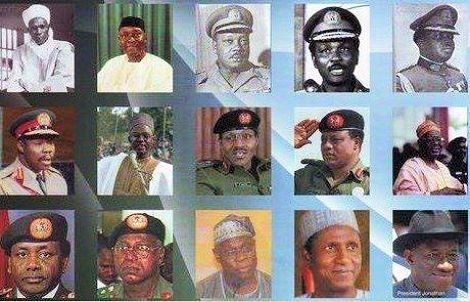
Evolution of Nigeria’s Presidency from 1960

By Mathew Dadiya
Today, October 1, Nigeria marks her 60th independence anniversary as a nation freed from the shackles of the colonial masters. Since the amalgamation of the Northern and Southern protectorate in 1914, the world’s most populous Black nation had suffered a various form of injustice, dehumanization, degradation as well as the changed identity that ended up in distorting the culture, religion, history and peaceful existence of the people.
Independence by its definition is a condition of a person, nation, country, or state in which its residents and population, or some portion thereof, exercise self-government, and usually sovereignty, over the territory.Being independent offers us the freedom and flexibility to live life the way we choose, whether from a financial, political, relationship, or career standpoint. Not relying on anyone else to do everything for us, opens countless possibilities.
Daily Asset in its Special Independence Edition, looks at the journey so far, the various leaders that had led the country in the past six decades and what impacts their leadership have had on the people and country.
True independence and freedom, according to Brigham Young, can only exist in doing what’s right.
The President of the Federal Republic of Nigeria is the head of state and head of government of the country. The president of Nigeria is also the commander-In-Chief of the Armed Forces and is elected in national elections which take place every four years. The offices, powers, and titles of the head of state and the head of government were officially merged into the office of the presidency under the 1979 Constitution of Nigeria. The current president, Muhammadu Buhari, took office on May 29, 2015, as the 16th president of the Federal Republic of Nigeria.
The Nigerian president has the powers entrusted by the Constitution and legislation, including those necessary to perform the functions of head of state and head of the national executive.
The key functions of the president of Nigeria are: Assenting to and signing bills; Referring a bill back to the National Assembly for reconsideration of the bill’s constitutionality; Referring a bill to the Supreme Court for a decision on the bill’s constitutionality; Summoning the National Assembly to an extraordinary sitting to conduct special business; Making any appointments that the Constitution or legislation requires the president to make, other than as head of the national executive; Appointing commissions of inquiry; Appointing the Supreme Court justices of Nigeria on the recommendation of the National Judicial Council of Nigeria and subject to confirmation by the Senate; Calling a national referendum in terms of an act of Parliament; Receiving and recognising foreign diplomatic and consular representatives; Appointing ambassadors, plenipotentiaries, and diplomatic and consular representatives and other federal officers with the advice and consent of a majority of the Senate; Pardoning or reprieving offenders and remitting any fines, penalties or forfeitures; and Conferring honours.
Nigeria’s Presidents since Independence 1960 to date:
ALHAJI ABUBAKAR TAFAWA BALEWA, 1960 – 1966; CHIEF BENJAMIN NNAMDI AZIKIWE, OCTOBER 1, 1963 – JANUARY 16, 1966; MAJOR GENERAL JOHNSON THOMAS UMUNNAKWE AGUIYI IRONSI, JANUARY 16, 1966 – JULY 29, 1966; GENERAL YAKUBU GOWON, AUGUST 1, 1966 – JULY 29, 1975; GENERAL MURTALA RAMAT MOHAMMED, JULY 29, 1975 – FEBRUARY 13, 1976; GENERAL OLUSEGUN AREMU OKIKIOLA MATTHEW OBASANJO, FEBRUARY 13, 1976 – OCTOBER 1, 1979, SHEHU USMAN ALIYU SHAGARI, OCTOBER 1, 1979 – DECEMBER 31, 1983; MAJOR-GENERAL MUHAMMADU BUHARI, DECEMBER 31, 1983 – AUGUST 27, 1985, GENERAL IBRAHIM BADAMASI BABANGIDA, AUGUST 27, 1985 – AUGUST 27, 1993; CHIEF ERNEST ADEKUNLE OLADEINDE SHONEKAN, AUGUST 26, 1993 – NOVEMBER 17, 1993; GENERAL SANI ABACHA, NOVEMBER 17, 1993 – JUNE 8, 1998; GENERAL ABDULSALAMI ALHAJI ABUBAKAR, JUNE 9, 1998 – MAY 29, 1999; GENERAL OLUSEGUN AREMU OKIKIOLA MATTHEW OBASANJO (RTD), MAY 29, 1999 – 29 MAY, 2007; UMARU MUSA YAR’ADUA, 29 MAY, 2007 – 5 MAY, 2010; DR. GOODLUCK EBELE JONATHAN, 6 MAY, 2010 – 29 MAY, 2015; and MUHAMMADU BUHARI, 29 MAY, 2015 – DATE.
Nigeria’s first Prime Minister, Balewa, entered the government in 1952 as Minister of Works. He later served as Minister of Transport. He never aspired to be the leader of Nigeria. In 1957, he was elected Chief Minister, forming a coalition government between the NPC and the National Council of Nigeria and the Cameroons, led by the late Owelle of Onitsha, Dr Nnamdi Azikiwe.
Along with many other leaders who included Ahmadu Bello, Balewa was overthrown and murdered in a military coup on January 15, 1966. The mystery surrounding his death still remains unsolved till date as his body was discovered by a roadside near Lagos six days after he was ousted from office. Balewa was buried in Bauchi. News of his assassination spurred violent riots throughout Northern Nigeria and ultimately led to the bloody counter-coup of July 1966.
The second Head of State of Nigeria, Major General Johnson Thomas Umunnakwe Aguiyi-Ironsi was born on March 3, 1924. General Ironsi seized power in the chaos that ensued from the first military coup in Nigeria and served as the Head of State of Nigeria from 16 January 1966 until he was killed on 29 July 1966 by a group of Northern army officers who revolted against his perceived tribalistic government. Ironsi, like Nzeogwu, never had a blueprint with which he wanted to rule the country.
General Yakubu “Jack” Gowon, who succeeded Aguiyi-Ironsi, was born on October 19, 1934. After the coup of January 1966, he was appointed Chief of Staff by Aguiyi-Ironsi. Northern officers staged a countercoup in July 1966, and Gowon emerged as the compromise head of the new government. During his rule, the Nigerian government successfully prevented Biafran secession during the 1967-70 Nigerian Civil War. Gowon, like other leaders before him, had power thrust on him by fate.
The fourth Head of State of Nigeria, General Murtala Ramat Muhammed, born on November 8, 1938. General Muhammed came into power on July 30, 1975, when General Gowon was overthrown while at an Organisation of African Unity summit in Kampala, Uganda. Brigadiers Obasanjo (later Lt. General) and Theophilus Danjuma (later Lt. General) were appointed as Chief of Staff, Supreme Headquarters and Chief of Army Staff, respectively. In the coup d’état that brought him to power, Muhammed introduced the phrases “Fellow Nigerians” and “with immediate effect” into the national lexicon. In a short time, Muhammed’s policies won him broad popular support and his decisiveness elevated him to the status of a folk hero. Seen as a radical military officer, some of Muhammed’s policies were viewed as a rash.
Brigadier Olusegun Matthew Aremu Okikiolu Obasanjo was born on March 5, 1938. Although Obasanjo did not participate in the military coup of 29 July 1975, led by Murtala Muhammed, he supported it and was named Murtala’s deputy in the new government. On 13 February, 1976, coup plotters, led by Colonel Buka Suka Dimka, marked him, Murtala and other senior military officers for assassination. Muhammed Murtala was killed during the attempted coup, but Obasanjo escaped death. The low profile security policy adopted by Muhammed had allowed the plotters easy access to their targets. The coup was foiled because the plotters missed Obasanjo, who was the Chief of Staff, and Danjuma, Chief of Army Staff and de facto number three man in the country. The plotters failed to monopolise communications, although they were able to take over the radio station to announce the coup attempt. Obasanjo and Danjuma established a chain of command and re-established security in Lagos, thereby regaining control. Obasanjo was appointed as Head of State by the Supreme Military Council. Keeping the chain of command established by Muhammed, Obasanjo pledged to continue the programme for the restoration of civilian government in 1979 and to carry forward the reform programme to improve the quality of public service.
Shehu Usman Aliyu Shagari was born on February 25, 1925. Shagari emerged as the President of Nigeria’s Second Republic (1979-1983) after the handover of power by Obasanjo’s military government.
He worked as a teacher for a brief period before entering politics in 1954 upon his election to the federal House of Representatives. Shagari, like some of his predecessors in power, did not set out to govern the country. His ascendency came as a result of the northern oligarchy’s determination to maintain power.
Major General Muhammadu Buhari was one of the leaders of the military coup of December 1983 that overthrew the democratically elected government of President Shagari. At the time of the coup plot, Buhari was the General Officer Commanding Third Armoured Division of Jos. With the successful execution of the coup, Brigadier General Tunde Idiagbon was appointed Chief of General Staff (the de facto No. 2 man in the administration). Buhari justified the military’s seizure of power by castigating the civilian government as hopelessly corrupt and promptly suspended Nigeria’s 1979 Constitution.
General Ibrahim Badamasi Babangida overthrew the Buhari administration in a coup on August 27, 1985. His administration threw the nation into turmoil as he annulled the victory of Chief MKO Abiola, who won the June 12, 1993, presidential election. His era was seen as the high point of corruption in the country’s history.
Business mogul, Chief MKO, could be said to be prepared for the presidency, which he had eyed since the Second Republic when he joined the ruling National Party of Nigeria. A philanthropist par excellence, Abiola went round the country campaigning and soliciting for support from the major power blocs. This resulted in his resounding victory which cut across tribe and religion. He was denied his victory by his friend, Babangida, who annulled his election. But in 2018 President Buhari recognised late MKO as President-elect, a posthumous award that was applauded by many.
Ernest Adegunle Oladeinde Shonekan was born on May 9, 1936, in Lagos. He is a British-trained lawyer, industrialist and politician. He was appointed as the Head of the Interim National Government by General Ibrahim Babangida on 26 August 1993. Babangida resigned under pressure to cede control to a democratic government. Shonekan’s transitional administration only lasted three months as a palace coup led by General Sani Abacha forcefully dismantled the remaining democratic institutions and brought the government back under military control on 17 November 1993.
Nigeria’s 10th Head of State, Sani Abacha, was born on September 20, 1943. He served as the country’s military ruler from 1993 to 1998. Abacha’s administration, like that of Babangida, witnessed state-sponsored killings and human right abuses. He clamped the winner of the June 12 presidential election, Abiola, into jail. Abiola later died in jail.
General Abdulsalami Abubakar was born on June 13, 1942. He led Nigeria from June 9 till May 29, 1999. Abubakar’s regime gave Nigeria her current constitution on May 5, 1999. The constitution provided the country for multiparty elections and Abubakar transferred power to Obasanjo on May 29, 1999, after the latter won the country’s presidential election.
Obasanjo, who was incarcerated by Abacha, was on death list before Abacha died in mysterious circumstances. Obasanjo was freed after the death of Abacha and he was propped up by the powers that be to run for the presidency. A reluctant Obasanjo had wanted to back to his farm in Ota, Ogun State.
The country’s power oligarch sought for a replacement for Obasanjo, whose tenure came to an end in 2007, and they found one in Yar’Adua. Yar’Adua was born on August 16, 1951, and he emerged as the country’s 13th leader on May 29, 2007. The head of the oligarch, Obasanjo, literally produced Yar’Adua, whose elder brother, Shehu Yar’Adua, was his military colleague. After serving as Katsina State governor between 1999 and 2007, Yar’Adua had desired to retire until the lot fell on him to lead the country.
He had no blueprint for the country’s challenges.
Goodluck Ebele Azikiwe Jonathan was born on November 20, 1957. Power was thrust upon him when Yar’Adua died in 2010. He never aspired to be governor when as deputy governor, his principal, Diepreye Alamieyeseigha, was impeached and he took over.
The incoming president, Buhari, has contested for the presidency three times consecutively. He is seen as an honest and disciplined leader, who is passionate about the country’s development. Members of the opposition have, however, said that Buhari would not achieve much in his quest to transform Nigeria because of the calibre of people surrounding him.
The next four years shall show whether or not Buhari will succeed.
Each of these leaders has contributed their quotas in the development of the country and Nigeria is becoming one of the fastest-growing economies in the world holding a key position in the global arena – like the United Nations, UN General Assembly, World Bank, IMF, African Development Bank, African Export-Import Bank (Afteximbank) and many other top positions.
Despite these successes, there have been perceived injustice in most parts of the country, many still cry of being marginalized of economic and social amenities.
But like the former President of the United States of America, John F. Kennedy said, ”The great revolution in the history of man, past, present and future, is the revolution of those determined to be free.” Nigeria as a sovereign country is free, but the citizenry is yearning for a nation that will give everyone equal right and opportunity irrespective of tribe, religion or ethnicity.
President Muhammadu Buhari has the enormous responsibility of correcting the ills of the past and ensure justice for every Nigerians.
The people of Kano State have for ages defined themselves with public morality and decency. To uphold and project these moral fabrics, the State Government established the Hisbah Board; enshrined Sharia-compliant codes, and positioned itself as a guardian of cultural and religious values in Northern Nigeria.
That reputation is now being dragged through the mud by a political campaign so debased that it insults the very women it claims to empower.A viral social media post has shown what purports to be branded underwear distributed to women by state actors under the guise of an “empowerment programme.” But truly, this is not about women empowerment. It is a moral and political abomination.
And if false, the fact that it is believable enough to trend reveals how far the state’s political culture has sunk.True empowerment should lift women out of poverty through skills, capital, education, and access to markets. It should build businesses, pay school fees, and provide healthcare. Reducing “women empowerment” to the distribution of underwear emblazoned with political slogans is not only demeaning, it is a betrayal of every mother, wife, sister daughter, market woman, farmer and student the government claims to serve. It treats adult citizens as objects of ridicule rather than partners in development. The dignity of not just Kano women but all women in Nigeria is not a campaign poster. Their needs are not lingerie.
Kano cannot claim to police public morality through Hisbah raids on dress codes, alcohol and public conduct, while its political class engages in stunts that violate the very standards it imposes on the citizens of the state. Hisbah was created to uphold Islamic values of modesty, privacy, and decency. A government that purportedly brands and shares underwear for political gain makes a mockery of those values. It tells the world that morality in Kano is a tool to control the weak, not a principle that binds the powerful. That double standard corrodes the moral authority of the state and breeds cynicism among the youth.
This episode exposes the rot in campaign culture: the shift from policy to spectacle, from substance to stunts. When politicians cannot articulate a plan for jobs, security, or education, they resort to cheap tokenism. When they cannot defend their record, they distract with scandal. Distributing intimate items with party insignia is not grassroots outreach. It is political grooming disguised as charity. It sexualizes poverty and monetizes shame. No society that respects itself should tolerate this sordid campaign.
Kano is the commercial nerve centre of the North, home to scholars, traders, and industrialists. Its women run major markets, lead cooperatives, and educate the next generation. They deserve policies that expand credit for small businesses, protect girls’ education, and improve maternal health. They do not deserve to be campaign props. The state’s moral identity is not preserved by Hisbah patrols alone. It is preserved when leaders act with the same modesty and restraint they demand from citizens.
DAILY ASSET’s position on this setback is that if the state government sanctioned this distribution, it must apologize, bring those responsible to book and redirect funds to genuine empowerment schemes. The entire saga must be investigated to expose the culprits, and prosecute those using the state’s name to score cheap political points. Silence in this disturbing development amounts to complicity.
Kano cannot preach morality in the morning and practice indecency by noon. The Hisbah Board, religious leaders, women’s groups, and every citizen who believes in the state’s values must denounce this act unequivocally. Politics without ethics is just manipulation. And a state that loses its moral compass will soon lose everything else.
We equally urged organisations like the International Federation of Women Lawyers (FIDA), Federation of Muslim Women’s Association of Nigeria (FOMWAN), Kano League of Senior Lawyers, et al, to rise up and challenge this retrogressive and negative campaign targeted at women. They should swiftly investigate and unearth those behind such an act and initiate a court action to bring them to book.
Public interest litigation must be initiated by the Kano League of Senior Lawyers to enforce Section 34 of the Constitution of Nigeria (as amended) and seek declaratory judgment that such “empowerment” violates constitutional dignity.
The moral grounds on which Kano stands should not be eroded by a few miscreants by negative political campaigns.
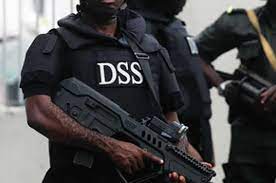
On Wednesday, February 28, 2026, the Department of Security Service (DSS) released Walida Abdulhadi, an indigene of Hadija in Jigawa state reportedly involved in a controversial relationship with an operative of the agency with whom she has a baby, to the Jigawa State Government. She was handed over to Governor Umar Namadi and several top officials of the state government in Abuja, along with her baby.
The release followed intense public debate over the relationship between the young woman and the DSS operative, Ifeanyi Onyewuenyi. All along, the debate had centred on the circumstances surrounding her alleged disappearance in 2023.The governor was accompanied to the SSS headquarters in Abuja by the Speaker of the State House of Assembly, Haruna Aliyu; the Attorney General and Commissioner of Justice, Bello Fanini; the Commissioner of Women Affairs, Hadiza Abdulwahab; and her counterpart in the Ministry of Environment, Nura Ibrahim, among others.
The Director General of the DSS, Adeola Ajayi, alongside principal officers of the Service, handed over Walida to Governor Namadi. The Nigerian Supreme Council of Islamic Affairs (NSCIA) was represented by the Deputy National Legal Adviser, Haroun Muhammad, and a member of the Expanded General Purpose Committee, Najib Jimoh.
The birth of a baby to the DSS operative and Walida’s alleged conversion to Christianity has dominated public discourse reminiscent of Ese Oruru saga who was kidnapped at the age 13 from her mother’s food shop in Yenagoa, Bayelsa, to Kano, where she was forcefully converted to Islam and married off to a commercial tricycle driver in 2015. After a prolonged legal tussle Oruru regained freedom and went to school. Interestingly, she has since graduated from the University of Ilorin with a Second Class Upper Division in Education Technology.
And today we are witnessing something similar to the case of Oruru, leading to the intervention of Jigawa state governor and other stakeholders all of whom are insisting on an independent investigation of the matter for a quick judicial process to determine who and what went wrong. That is the way to go because doing otherwise could be detrimental to religious harmony between Muslims and Christians in the country.
Furthermore, releasing Walida to her home state of Jigawa was a right step in the right direction, more so as the state government has assured of her safety and full recovery from whatever trauma she might have passed through.
Again, the move to keep her under the custody of the state government, pending the resolution of all the contentious issues surrounding the controversial relationship is commendable because it would give enough room for the controversy to be tabled before a law court for a snappy adjudication; so that peace can prevail in due course.
Aside individuals, other bodies that have publicly expressed divergent views on the Walida case include; National Supreme Council for Islamic Affairs (NCIA), Federation of Women Lawyers (FiDA), Muslim Rights Concern (MURIC), Federation of Muslim Women’s Associations in Nigeria (FOMWAN), Muslim Students’ Organisation of Nigeria (MSO), Women in Da’awa, International Human Rights Commission Relief Fund Trust (IHRC-RFT), Arewa Youth Assembly (AYA), Women Voices and Accountability, and Gamji Lawchain. This is a clear demonstration of the intensity the Walida case has generated with palpable tension built up through the prism of divergent views.
DAILY ASSET believes that the controversy over Walida’s age, the circumstances surrounding her alleged abduction, and other contending issues would best be resolved by a competent court of law.
Considering the painfully slow process of Nigeria’s justice system and situating the plural society already struggling with mistrust and sectarian tension, there is a need for absolute urgency in resolving the matter. To this end, the judiciary should quickly swing into action. Mindful of time, it must set aside all forms of technicalities and delve headlong into the substance of the matter. This is the sure way to diffuse tension and permanently resolve the impasse, rather than subjecting the sensitive issue to linger on.
By and large, it is important for all aggrieved individuals, stakeholders, family members and other interested parties in the case to exercise restraint and wait for the final verdict of the court, as was the case during the Ese Oruru saga over a decade ago.
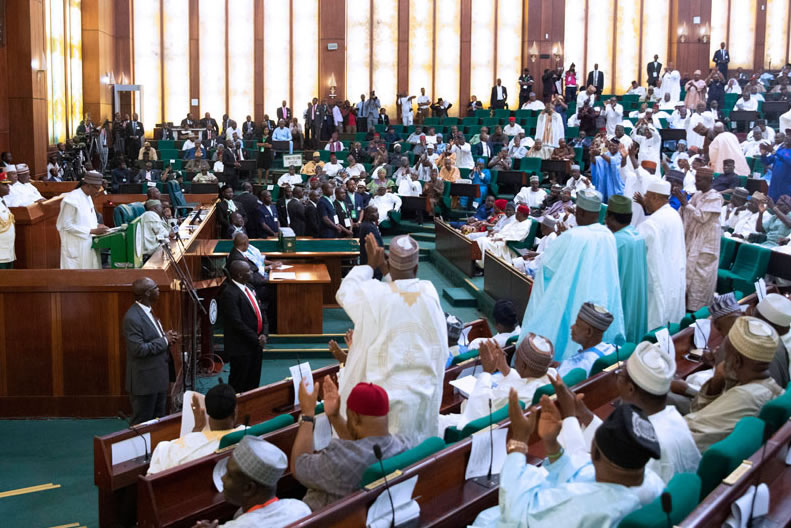
The recent controversy surrounding the voice vote in the House of Representatives highlights the need for the National Assembly to adopt an electronic voting system. The incident, which generated unnecessary tension and mistrust, could have been avoided if a more transparent and reliable method was deployed.
The two chambers of the National Assembly – the Senate and House of Representatives, are governed by specific rules.
In the Senate, Order 72 of the Senate Standing Rules outline three modes of voting; Voice Vote, Signing of Register in a division, or using an Electronic Voting device. The lower chamber too has provisions for voting after exhaustive debate on a motion. The chambers are both fitted with electronic voting devices with myriad benefits, which includes; transparency as votes are recorded, and verifiable, leaving no room for disputes.Also, the use of the electronic voting system erases human error and ensures accuracy. Again, it fosters faster voting processes and instant results. Above all, there will be accountability as lawmakers’ votes shall be on record for their constituents and the entire world to know their stance, thus promoting accountability.
In spite of enumerated advantages of using the electronic scoreboard, installed with millions of Naira of taxpayers money for resolution of heated debates, principal officers of the bi-camera Assembly, have totally abandoned the digital platform alternative for resolving thorny and critical issues confronting the country. Instead, they have continued to deploy crooked uncivilized voice votes that often create confusion. This is exactly what the Speaker of the House of Representatives, Tajudeen Abbas, did on February 17, 2026, during the heated debate raging across the country on real-time transmission of election results. The action of the Speaker led to a very rowdy session in the green chamber, prompting some members to stage a walk-out in protest over the controversial bill for the Electoral Amendment Act.
It started after a motion for the House to reverse its decision on the Electoral Act bill, passed on December 23, 2025. After a rigorous debate, the Speaker then put the motion to a voice vote. While the “nays” were louder than the “ayes”, he controversially ruled that the ayes had it, a development which triggered protests. The action of the Speaker amounts to total disrespect and disregard for millions of Nigerians, within and outside who were watching the event live on television.
There have been past instances where the none use of electronic scoreboard generated tension. For instance, during the debate for the declaration of State of Emergency proclaimed by President Bola Ahmed Tinubu, in Rivers State, controversy erupted when the Speaker’s decision on the voice vote was hotly disputed, highlighting concerns about manipulation and lack of transparency. These incidents underscore the need for transparent voting methods, like electronic voting, to ensure accountability and credibility in Nigeria’s legislative process.
Given that the National Assembly has acquired and installed an electronic voting and results transmission device, it raises concern why it is not being utilized to boost public trust, transparency, and accountability.
The action of the Speaker, who glaringly turned down popular voices in favour of real time transmission of electronic votes in the Green Chamber, signals the unwillingness of the few who cling tightly unto power and would not allow popular voices in line with democratic tenants.
Such a unilateral decision from the Speaker might further embolden those peaceful protesters (some of whom have been camping at the entrance gate of the National Assembly) and indeed across the country to continue to escalate their agitation. Already, a coalition of Civil Society Organisations (CSOs) are insisting on Real-Time Transmission 0f Election Results or nothing. The CSOs have teamed up with other pro-democracy activists in Abuja, to keep their agitation live. They are demanding mandatory electronic transmission, which they believe is essential to strengthening electoral integrity and reducing malpractices.
DAILY ASSET is hereby urging the National Assembly to embrace technology and adopt total electronic voting for transparency and accountability.
The parliament is the bastion of democracy. It is the only arm that stands out to defend the masses. Therefore, members of the National Assembly who constantly gauge the mood of their constituents and vote in line with aspirations of their constituencies should not be blacked out through a nebulous voice vote. Their stance on topical issues confronting the country should not be buried. It is the fundamental right of every Nigerian to track the views of elected representatives in order to hold them to account.


Plateau PDP Cautions Members Against Obtaining Nomination Forms From Pro-Wike Faction
ShareBy Mike Odiakose, Abuja As Nigerians await the verdict of the Supreme Court on the leadership crisis rocking the Peoples...

Soludo’s 16.4km Road Project Ends Years of Suffering, Opens Up Anambra Communities
ShareBy Laide Akinboade Abuja Vice President of Boardwalk Group and Abuja-based real estate developer Chief Obiageli Okwubanego, on Wednesday, commended...


Ekiti Church Attack: CAN Demands Action Over Killing, Abduction of Worshippers
ShareBy Laide Akinboade, Abuja The Christian Association of Nigeria (CAN) on Wednesday, condemnedthe attack on a church gathering in Eda...

Journalist Petitions DSS Over Alleged Criminal Activities Of Company, River-Bend Agent
ShareBy Julius Tambaya, Abuja Following alleged criminal conducts of River-Bend Nigerian Limited and one Mr. Thomas Terzulum Nongo, a renowned...

Stakeholders Urge FG, Benue Govt to Partner NGOs to End Violence, Discrimination Against Girls
ShareBy Julius, Tambaya Abuja Stakeholders have called on the Federal and the Benue State Governments to strengthen collaboration with non-governmental...

Bago Orders Immediate Repairs of Wind-Damaged Buildings at NYSC Camp
Share From Dan Amasingha, Minna Niger State Governor, Mohammed Umaru Bago, has directed the immediate rehabilitation of buildings damaged by a windstorm at the National Youth Service Corps...
2028 Olympic Games Qualifier: Super Falcons to Discover Opponents Today
ShareNigeria’s Super Falcons will find out their opponents for the 2028 Los Angeles Olympic Games women’s football qualifiers this week. The Confederation of African Football (CAF) announced on Tuesday that the draw for the African qualifying...

Ghana Military Convoy Attack Kills Three Civilians, Seven Assailants
ShareFor Somalia’s malnourished children, already suffering the twin catastrophes of looming famine and radical cuts in foreign aid, the U.S.-Israeli...
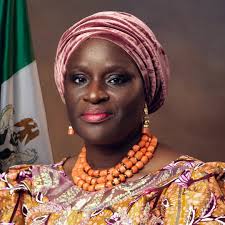

Imo Deputy Governor Resigns
ShareFrom Marcel Duru Owerri The Commissioner for Information and Strategy Chief Declan Emelumba has said that Imo State Deputy Governor, Ekemaru has resigned. Speaking...


NAF Airstrikes Destroy Terrorists’ Structures in Mandara Mountains
ShareThe Nigerian Air Force (NAF) has sustained its counter-terrorism offensive with precision airstrikes that destroyed terrorists’ structures and logistic hubs in the Mandara Mountains area of Borno....