
EDITORIAL
Lokoja, Lagos Tanker Accidents

Last week was a nightmare for the nation as a result of accidents involving a fuel tanker in Lokoja, the Kogi state capital and another in Lagos, carrying gas, resulting in loss of human lives and properties.
The unfortunate incidents took place on Wednesday September 23, and the following day, Thursday 24 with the first one occurring in Lokoja, claiming no fewer than 23 lives and destroying a number of vehicles.
The second one took place at Ifako-ljaye, at the outskirt of Lagos, destroying houses and vehicles without casualties at the time of the incident.
The Lokoja accident took place about 8.
00AM on the fateful day around Nataco-Felele end of the state capital on the ever- busy Abuja-Okene road, when a driver of a tanker belonging to Nigeria National Petroleum Corporation (NNPC), lost control of the vehicle and ran uncontrollably into a number of vehicles, whose drivers were trying to run away from the troubled vehicle. No fewer than 23 persons including five students of Kogi State Polytechnic and three children on their way to school were killed in the tragedy. Also killed was a businessman identified simply as Samson, his wife, and three children. Samson reportedly sold sewing machines in Lokoja and went to drop his children in the school, which he did as a routine.The tanker, loaded with Premium Motor Spirit reportedly fell on five cars, two motorcycles, and three tricycles popularly known as Keke, killing all the occupants.
An eyewitness reported that the brakes of the tanker failed during an attempt to manoeuvre and in the process, fell on its side, trapping five vehicles that were trying to overtake it. According to the witness: “I was about to cross the road when I noticed the tanker driver signaling to motorists to steer clear, but before you could say, Jack Robinson, the tanker was on its side, falling on all vehicles beside it.”
The sector commander of the Federal Road Safety Corp, Idris Fika Ali, said no fewer than 23 persons were killed in the explosion, while one child escaped with injuries.
We sympathise with the government and people of Kogi state over the unfortunate loss of lives, We bear with the governor, Alhaji Yahaya Bello for declaring two days of mourning in memory of the dead. The tragedy prompted the State Governor to declare declare two-days mourning as a mark of respect for the 23 victims of the tanker explosion.
Barely 24 hours after the Lokoja accident, a gas tanker explosion occurred at the Ifako-Ijaye area of Lagos on Thursday, September 24, 2020, with at least 50 people sustaining severe injuries. According to reports, the Director-General of the Lagos State Emergency Management Agency (LASEMA), Dr Olufemi Damilola Oke-Osanyintolu, while confirming the incident said the fire was put off after some concerted efforts. According to a statement from LASEMA, an unidentified truck conveying gasoline had a lone accident and exploded.
It said that the impact of the explosion led to a fire outbreak on adjoining buildings with several vehicles burnt. It also pointed out that several persons were injured and have been taken to the nearest hospital for treatment. While speaking to Newsmen at the site of the explosion, the LASEMA’s Director of Operations, Engr Olatunde Akinsanya disclosed that about 16 people were confirmed to be critically injured and taken to the Iju Water Works clinic.
Akinsanya confirmed that the gas tanker explosion took place at about 3:30 pm and had several buildings and cars destroyed by its impact.
It was reported that the tanker was supposed to offload its content at a gas station, but the station’s owner reportedly refused to allow him because a seal had been broken, indicating that the content had been tampered with. Enraged by the refusal of the station manager to offload the content in his tanker, the driver moved out of the premises. A few meters away from the gas station, the front tire of the tanker burst and the gearbox struck the ground causing a spark which led to an explosion when it came in contact with gas that was leaking from the tanker. The vehicle then ended in a ditch, where a second explosion erupted. It was also disclosed that the second explosion sent the tanker flying and destroying buildings on its path, including a church.
Neverthless, we wish to commend the officials of Lagos state government, especially LASEMA for their prompt response, which averted casualties.
That cannot however be said of the Lokoja accident where human factor, especially the brake failure of the the tanker belonging to NNPC resulted in the accident. It is shocking that a reputable organization like the NNPC would put a tanker that was not properly serviced on the road, thereby constituting great danger and death to other road users. An accident in which no fewer than 23 persons were burnt to death is a grave tragedy. We, therefore, call for an inquest made of officials of the Kogi state government to inquire into the Lokoja tragedy without delay. The nation had been witnessing this sort of tragedies, and they continue to happen because adequate punishment had not been meted to the culpable This one should not be allowed to be swept under the carpet like the previous ones.
We urge the Federal Road Safety Corps(FRSC) to remain steadfast in checking the condition of articulated trucks on the nation’s highways.
As we move towards the Christmas festivities, FRSC must intensify efforts to ensure Drivers of all vehicles comply with safety standards in order to reduce and possibly eliminate the carnage on the roads.






Akin to an eagle-eyed combat pilot on a reconnaissance mission – making his flight preparations, loading the right ammunition and aiming at his target without missing, so was Prof. Is’haq Olarewaju Oloyede, when he arrived the headquarters of the Joint Admissions and Matriculation Board (JAMB), upon his appointment in 2016.
In the first few months of his assumption of office, activities pervaded to the lowest ebb at the JAMB headquarters.
Like a fighter pilot on a rescue mission, Oloyede embarked on a discreet but holistic audit of the board. He was simply planning how to navigate his flight in order to hit his target, without missing.While in the closet planning, there was a shift in the timetable date of the Unified Tertiary Matriculation Examination (UMTE) for that year and tongues went wagging, mostly from staffers of the board that the newly appointed Professor of Islamic Studies and “controversial” former Vice Chancellor, University of Ilorin, was totally confused and clueless about the demands of the office and the direction to take the examination body.
After the audit, Oloyede gathered enough information and momentum. He then released his mission and vision for the examination body, chief of which was to reposition the board technologically to eliminate all forms of examination malpractices and timely release of results to candidates – three days of sitting for the examination.
Those pronouncements were followed with wide ranging reforms, including unraveling of mind blowing malfeasance of corruption involving several workers of the board. For instance, a staff of the board in Benue State was involved in massive fraud of stealing millions of naira from the sale of examination scratch cards which she claimed was swallowed by “a snake” from the office save.
In Nasarawa State, the staff of the board who was also caught in fraudulent financial malfeasance claimed his car was burnt along Abuja-Lafia road with all the examination scratch cards that were meant for sale to prospective candidates in the state.
In Kogi State, the staff of the board with itchy fingers claimed he had borrowed money to the state civil servants who were being owed several months of salaries. The ugly stories of massive stealing of the board’s funds reverberated in many states including the headquarters where the former helmsman, Prof. Dibu Ojorinde is currently standing trial for allegedly stealing hundreds of millions of naira.
With those monumental financial malfeasances, candidates were hitherto ripped off of their hard earned money as the examination body was shrouded in fraudulent and chaotic scheming. Consequently, floods of complaints poured in from several quarters on pre-registration and post examination irregularities.
But Oloyede’s surgical knife had cleaned the process and restored sanity after one year in office. By the second year, the examination body had saved over N8 billion and remitted same to the Federal Government, a remarkable departure from about N300 million the examination body was hitherto remitting per year to the government.
Thus, in 2018, the Muhammadu Buhari administration had to review downward the cost of registration of the UTME to N4,500 per candidate from the over N7,000 hitherto charged.
Elated by these remarkable achievements, President Bola Tinubu applauded Prof. Oloyede’s innovative ideas and financial prudence at a recent public engagement organised by the Economic and Financial Crimes Commission (EFCC). .
“One person I always respect is Prof Is’haq Oloyede. Over the years, JAMB never made up to $1m for the Federal Government.
“However, when Prof Oloyede assumed office, JAMB made over N50bn for the Federal Government in one year.”
Another landmark achievement is the initiative in providing Persons with Disabilities (PWDs) the opportunity to register for the 2024/2025 UTME at no cost. This will ensure equal educational opportunities for all, irrespective of physical abilities,
Additionally, the board has acquired some basic tools required by PWDs, like braille machines, personal computers with enlarged features, et al, for persons with special needs.
At a time of verbal rhetoric about fighting corruption by most public servants who are short on practical implementation, at a time revenue generating departments and agencies carry out opaque operations with no tangible results, JAMB, under the captainship of Oloyede, unarguably stands as a referral government agency for transparency.
DAILY ASSET, while commending the management and staff of JAMB, for their commitment to hard work, is pleased to extend warm accolades to a nonconformist and unconventional public servant with passion for accountability and service to humanity.
The alarm bells are ringing with irritating intensity. There is no place for safety as non state actors are wreaking havoc here and there through violent kidnappings, banditry, terrorism and other forms of criminality across the country.
The worsening spread of kidnappings and banditry is raging like a wild fire, which the media had termed, “an epidemic.
” Many precious human lives and property are being lost on a daily basis. So far, President Bola Tinubu has yet to get a cure.Although Tinubu inherited the insecurity from the Buhari administration, no new idea has been put on the table to reverse the ugly situation.
All we hear week in week out from the seat of power and the National Assembly is a pedestrian and lame talk of “we are on top of the situation” and routine invitation of the security chiefs to “come and brief us” of what they are doing to bring the situation to an end.
What is worrisome to some security analysts is the escalation of violent activities by non state actors after every circle of the general elections and the failure of the succeeding government to deal decisively with the situation.
Judging from the performance of Tinubu as governor in Lagos State, when he tamed the “area boys,” Nigerians had expected that he would replicate same as President to tackle non state actors who are daily unleashing violence and harm on helpless citizens by way of senseless killings, kidnappings, banditry, terrorism, et al, to usher in a peaceful Nigeria. .
Moreover, Tinubu assumed office at a time the security agencies had acquired (and have continued to take delivery of) military hard wares to combat worsening insecurity without significant success is rather unfortunate. I
It smacks of a joke when the security agencies flaunt those hard wares meant to fight insecurity in towns to harass innocent citizens in what they describe as the “show of force” when in reality non state actors continue to run riot to inflict pernicious injuries on unfortunate citizens in different parts of the country.
DAILY ASSET is of the view that a more coordinated and holistic approach be adopted to end the epidemic by strengthening these processes:
First, deployment of robust technology and increased funding. The president should order the National Communications Commission (NCC), and all telecommunications companies to partner security agencies in providing accurate information where calls originate.
This will enable security operatives to clearly identify the point of originating call for swift response. And where any network provider fails to provide a timely and accurate information to security agencies to track such calls, appropriate sanctions should be immediately applied against it even if it means the revocation of the operating license.
Additionally, drones should be acquired for early warning and monitoring of illegal movement of vehicles and persons, particularly in the forests.
Second, there should be strong and mutual inter agency cooperation on information sharing. The President should direct the Central Bank of Nigeria, all money deposit banks, Bureau de Change operators and National Financial Intelligence Unit (NFIU) to reintroduce the cash light policy.
These agencies should synergize to ensure no huge amount in cash is withdrawn over the counter from any money deposit bank. Similarly, the movement of large funds should be tracked and a red flag raised where such funds are suspected of being moved for the funding of illegal activities.
Third. The autonomy of the Local Government Administration should be restored. The chairmen of local councils – as a tier of government closer to the people – must be empowered to deal with security issues. In particular, Divisional Police Stations in rural areas should be beefed up with adequate personnel and equipment, especially patrol vehicles for rapid responses during emergencies.
We believe that if the above measures are holistically implemented and followed with a clinical reform of the administration of criminal justice for the speedy trial of suspected kidnappers, bandits and terrorists, those violent criminal actions from non state actors will soon be a thing of the past.
Now that the Supreme Court has duly affirmed the election of President Bola Ahmed Tinubu, Nigerians are eager to see the country move forward from its present state of uncertainty.
Democracy is about a social contract between the electorate and politicians, especially those entrusted to hold public offices.
And the failure of the latter to provide security and welfare for the people undermines the essence of the competitive spirit of democracy.It is becoming a fact in Nigeria, nay Africa that governance is rapidly taking a much wider meaning and no longer restricted to the rule of law where administrative codes are strictly adhered to. Instead, Nigerian politicians place little or no premium on what constitutes governance, let alone good governance.
Since political power is ultimately exercised by politicians, elected into public offices, it is expected they will comply with the laid down principles and governing templates, through which they will gauge the feelings, aspirations and desires of the electorate. Those feelings and desires will ultimately make them formulate policies and programmes viz: participation of citizens, upholding the rule of law, transparency and accountability, responsiveness of the authority, consensus oriented policy, equity and inclusiveness, and strategic vision of the authority, as the case may be.
But it remains to be seen whether the present government has demonstrated enough political will to follow these principles, given its eagerness to borrow and fund consumption and ostentatious lifestyle.
Politicians take advantage of the vulnerability and gullibility of Nigerians, in terms of poverty and ethno-religious sentiments, to buy and bully their way into office without anything to offer outside the propaganda that brought them in. They spend the next four to eight years politicking rather than concentrating on good governance. This is anathema to democratic norms and ethos.
With our debt currently standing at about N80 trillion; about 133 million Nigerians gripped by multidimensional poverty; unemployment rate almost 37% among other negative indices, it is time for the government -at all levels – to hit the ground running by reviewing the social contract between it (government) and the citizenry, majority of whom are trying to eke out a living.
This brings to the fore the need to make Public office less attractive for the corrupt and power mongers among us. The zerosome way we play the game of politics is as a result of the overnight accumulation of wealth and aggregation of power that comes with winning elections. This is why, the goal for most of those contesting for elective office is not service to the people but access to the national cake and personal ego. It is high time Nigeria made governance and government less attractive by strengthening our laws and statutes.
DAILY ASSET is of the view that restructuring our judicial system, empowering the Code of Conduct Bureau and reviewing our legal status in a way and manner that people who once occupy public office and are known to be living far above their cumulative income while in office must be made to account for such wealth. In this case, the onus of proof shall rest on the accused and not the accuser. If this is not done, fraudulent public servants and politicians who occupy public office will continue to exploit the system to their advantage.

Disability Act: Stakeholders Worry Over Delayed Domestication in Benue
ShareBy David Torough, Abuja Stakeholders have expressed concern over delay in the domestication of Disability Act in Benue state and...


Enugu Embarks on Inspection of Smart Schools, Healthcare Projects Across State
ShareFrom Sylvia Udegbunam, Enugu Governor of Enugu State, Peter Mbah has charged contractors and the site engineers handling construction of...

Benue Govt Abandoned Foreign Exchange Programme Due to N3mn Bursary – DG BEQA
ShareFrom Attah Ede, Makurdi The Director-General, Benue State Education Quality Assurance Agency, BEQA, Dr. Terna Francis, on Thursday, said the...
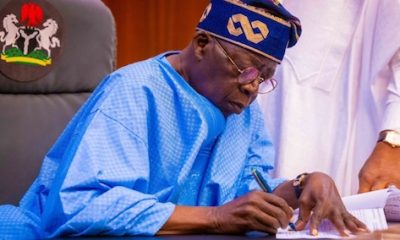

Tinubu Establishes National Education Data System
SharePresident Bola Tinubu has approved system-wide policies to comprehensively overhaul the education sector to improve learning and skill development, increase...
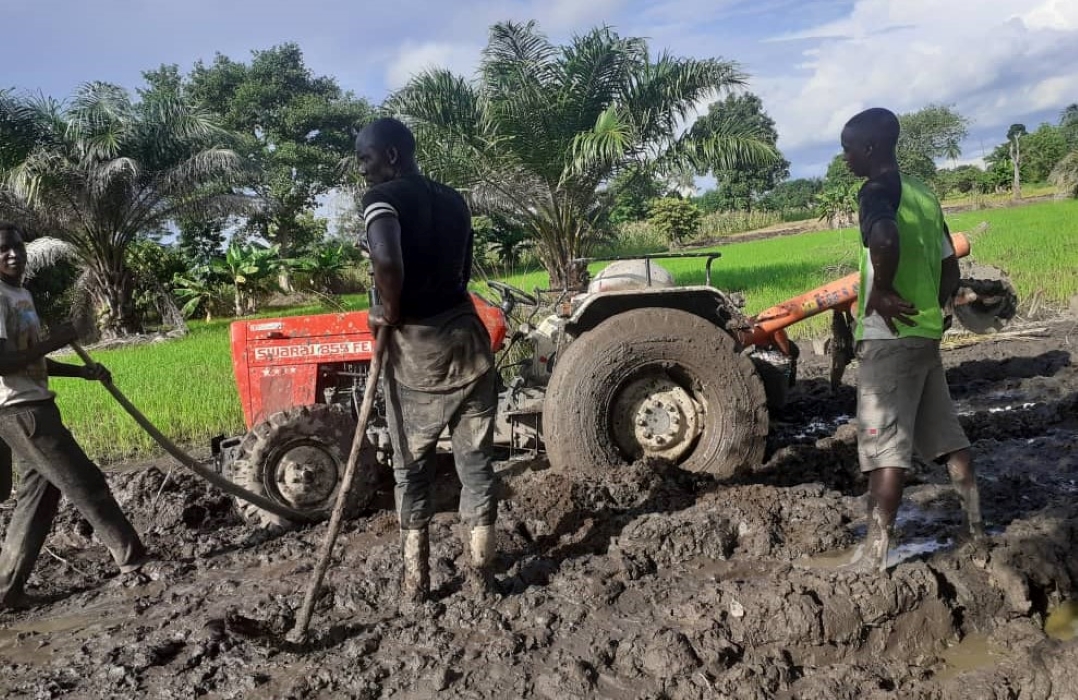
ADAS Programmes Set to Establish Digital Structure, Database for Farmers, Farmlands
ShareFrom Yagana Ali, Yola The Adamawa State Agribusiness Support Programme ADAS-P has concluded arrangements to establish standard & digital structure/database...

Absence of Diplomacy Responsible for Secessionist Agitations in Nigeria – INM
ShareFrom Marcel Duru, Owerri Igbo National Movement, a sociopolitical pressure group, has said that absence of diplomacy is responsible for...


N20m Bounty on Kidnappers: Wike Fulfills Promise to FCT Police Command
ShareBy Laide Akinboade, Abuja The Commissioner of Police, FCT, CP Benneth C. Igweh, expresses heartfelt gratitude on behalf of the...

Presidential Amnesty: Bank Accepts Responsibility for Stipends Delay
ShareFrom Mike Tayese, Yenagoa One of the Bank offering services to the Presidential Amnesty Programme (PAP) has explained the reason...


Enugu State Justice Reform Team Commends Mbah, Calls for Enhance Justice System
ShareFrom Sylvia Udegbunam, Enugu The Enugu State Justice Reform Team (ESJRT) has commended the administration of Dr. Peter Ndubuisi Mbah...

I Didn’t Abandon Mandate – LP Candidate
ShareFrom Marcel Duru, Owerri The Labour Party Candidate in the 2023 general elections for Mbaitoli-Ikeduru Federal Constituency, Rt Hon Uche...