
NEWS
Presidency Chides NASS for Delaying Passage of Key Labour Bills

By Ubong Ukpong, Abuja
The Presidency yesterday, chided the National Assembly for hindering the intended good reforms in the labour sector by delaying the passage of Key labour bills.It therefore asked the apex lawmaking body to accelerate the passage of key labour reform bills seeking to reposition Nigeria’s labour administration system.
Minister of Labour and Employment, Muhammad Dingyadi, conveyed the Presidency’s position on the matter, to the inaugural Policy Dialogue on the Legislative Agenda of the 10th House of Representatives, organized by Policy and Legal Advocacy Centre (PLAC), UK Aid and National Assembly Library Trust Fund (NALTF), in Abuja. He expressed optimism that the proposed bills when passed into law would create an enabling environment for robust investments, enhanced productivity and attainment of social justice.He said: “I make a passionate plea to the House of Representatives to facilitate the speedy passage of national labour laws. Listing among them are the Labour Standards Bill, Collective Labour Relations Bill, and the Occupational Safety and Health Bill.“When enacted, these bills will not only reposition Nigeria’s labour administration system, but will create an enabling environment for robust investments, enhanced productivity and attainment of social justice,” he added.In his remarks, Executive Director of Policy and Legal Advocacy Centre (PLAC), Barrister Clement Nwankwo, described the national dialogue as “a veritable platform for the robust articulation, analysis and appraisal of parliamentary activities towards a peaceful, prosperous, stable and sustainable nation.”The minister maintained that the House’s eight-point Legislative Agenda remains a contract with the Nigerian people and a roadmap in complementing the efforts of the Executive in navigating the nation out of turbulent waters to the safe shores of national economic prosperity. “The 10th House shone green flags as the beacon and the bastion of our democracy. It heralds a new era of purposeful alignment with global parliamentary best practices, benchmarked by the key indicators of strategic focus, measurable impact and parliamentary objectivity,” he stated.In his address, House of Representatives Speaker Abbas Tajudeen, who scored the 10th Assembly high in the area of enactment of critical legislations since inauguration from June 2023 till date, reiterated the House’s commitment towards promotion of parliamentary accountability, transparency, and a truly citizen-driven legislature.According to him, the 10th House was inaugurated in June 2023 when Nigeria was facing significant challenges, ranging from weak economy, pressing development and security crises, as well as frustrated populace who have lost hope in democracy’s ability to meet their aspirations.He, however, noted that the 10th Assembly, “from the outset, we pledged to regularly engage with Nigerians, report on our performance, and adjust our course based on the people’s feedback. Today’s dialogue is part of that promise, serving as a precursor to the upcoming Open NASS Week, where we open our doors to scrutiny and present our midterm progress. The goal of this event is not only to celebrate our achievements but also to candidly examine areas for improvement in the spirit of openness and democratic inclusion.Designed to deliver good governance, this agenda aims to restore hope in democracy for our people. The Legislative Agenda was not crafted in isolation. Following extensive consultations with key stakeholders, including Ministries and Agencies, civil society, and development partners, we produced a comprehensive roadmap to guide our lawmaking, oversight, and representation from 2023 to 2027.This approach allows us to fulfil our independent mandate while ensuring that our legislative actions support national objectives and address the pressing needs of our citizens.The Speaker argued that the House has “backed our plan with concrete implementation strategies. Each House Committee integrated the agenda into its work plans; we established clear milestones and key performance indicators to track progress, and we set up special committees to monitor and evaluate how well we are meeting our targets. We also insisted on better communication and regular reporting, which included requiring members to maintain functional constituency offices and report on their engagement with the public, ensuring accountability at every step.Some of the achievements recorded by the 10th Assembly include: legislation to modernise and strengthen the power sector, establish a long-awaited federal audit framework for greater financial accountability in government, and create agencies critical to effective governance.“We have also passed legislation to bolster security by improving the control of small arms and light weapons. Additionally, we have enacted laws to advance social welfare, including those promoting public health and addressing gender-based violence. Furthermore, we have enacted legislation establishing regional development commissions to further devolve more power to the geopolitical zones.
By David Torough, Abuja
The North Central Development Commission (NCDC) has unveiled a draft 20-year development plan aimed at transforming Benue, Kogi, Kwara, Nasarawa, Niger, Plateau and the Federal Capital Territory into a more productive, connected, inclusive, secure, resilient and digitally enabled region.
The plan, covering 2027 to 2046, was presented at the NCDC Road Map and Stakeholders’ Development Summit held in Abuja from September 14 to 15, 2026, under the theme, “The Great Leap Forward: A 20-Year Economic, Infrastructural and Social Development Plan for the North Central Region.
”The summit attracted 862 physical participants and 49 online participants, including representatives of the Federal Government, governors of the six mandate states and the FCT, members of the National Assembly, traditional and religious leaders, development partners, the private sector, academia, civil society, youth and women groups, professional bodies and the media.
In the communiqué adopted at the close of the summit, participants said the region had substantial agricultural land, water, mineral and energy resources, human capital, markets and a strategic location, but had not consistently converted these assets into higher productivity, incomes, industrial capacity and improved social outcomes.
They identified fragmented planning, weak inter-state connectivity, insecurity, infrastructure deficits, limited value addition, unreliable data and inconsistent implementation as major constraints to regional development.
The summit consequently called for the NCDC to serve principally as a regional coordinator, investment catalyst and development enabler, while governments, communities, investors and other partners take clearly defined roles in implementing the plan.
On the economy, participants recommended the creation of a GIS-enabled regional economic database to map productive assets, agricultural resources, minerals, infrastructure gaps and investment opportunities.
They also called for the development of state-specific agricultural and livestock value chains, greater mechanisation and irrigation, improved storage and processing, and stronger export capacity.
The communiqué further recommended the formalisation of artisanal mining and the development of mineral-processing and manufacturing clusters to retain more value, employment and public revenue within the region.
Support for micro, small and medium enterprises and industrial clusters through skills development, affordable finance, market access and investor incentives was also proposed.
On infrastructure, the summit recommended an integrated regional programme linking the states and FCT through roads, rail, inland waterways and logistics systems.
It specifically called for urgent consideration of high-impact corridors, including the Abuja-Lokoja Road, alongside phased feasibility studies for regional rail, Baro inland-port logistics, dry-port connections and modern freight systems.
Participants also proposed a regional energy programme, improved public water supply and irrigation, and greater attention to climate resilience, security, operations and maintenance in infrastructure planning.
The social-development component of the plan focuses on education, skills, healthcare and economic inclusion. The communiqué proposed a regional human-capital and social-inclusion database covering children, youth, women, persons with disabilities, indigent households and rural communities.
It also called for measures to reduce school dropout, address teacher shortages, improve learning quality and expand STEM, technical and vocational education linked to regional industries and value chains.
In healthcare, the summit recommended strengthening teaching hospitals and specialised institutions, expanding health-insurance coverage for vulnerable residents, improving access to essential medicines and addressing mental health and substance-abuse concerns.
Security was described as “productive infrastructure,” with participants stressing that agriculture, trade, investment, education and community life could not thrive where people, assets and transport corridors remained unsafe.
The proposed regional security framework would emphasise intelligence sharing, community engagement, early warning systems and inter-state coordination.
The communiqué also recommended assessing the responsible use of satellite imagery, drones and geospatial technology, with appropriate safeguards and operational protocols.
Climate and environmental resilience featured prominently in the recommendations. The summit called for mapping flood, erosion, drought and mining hazards, strengthening early-warning systems, undertaking flood and erosion-control projects and establishing recovery pathways for people displaced by climate-related events.
It also recommended a “safeguard-before-scale” approach to mining and major infrastructure projects, including a regional mining-hazard register, mine-site remediation and ecosystem restoration.
For the digital economy, the plan proposes expanding broadband connectivity and affordable digital access across the region, including local governments, wards and underserved rural communities.
AI, digital-skills and teacher-training centres are also proposed, alongside innovation hubs, makerspaces and dedicated financing for technology enterprises.
The summit further called for skills programmes to be linked directly to employment opportunities, including business-process outsourcing and credible remote-work platforms.
On financing, participants recommended matching funding models to the economic characteristics of individual projects.
Commercially viable projects would be expected to attract private investment, while projects with strong economic benefits but weaker initial returns could use blended finance, with essential non-commercial services receiving appropriate public funding.
The communiqué called for stronger project preparation, including feasibility studies, financial models, transparent contracts, credible sponsors, risk allocation and operations and maintenance plans before projects are presented to investors.
To sustain implementation, the summit recommended giving the 20-year plan legal and institutional backing and establishing a Programme Management Office within the NCDC. The office would coordinate flagship programmes, project preparation, financing, implementation support, risk management and performance reporting.
The proposed framework also calls for verified baselines, measurable targets and regular public reporting, with implementation reviews annually and at three-year and five-year intervals.
The communiqué said security, reliable data, inclusion, climate resilience, digital enablement, private-sector participation and institutional capacity should be treated as cross-cutting requirements throughout the plan.
It further emphasised meaningful participation by young people, women, persons with disabilities, displaced persons and rural communities in programme design and implementation.
The communiqué was presented by Professor Mohammed B. Nuhu and adopted by participants on Tuesday, at the close of the summit in Abuja.
By Laide Akinboade, Abuja
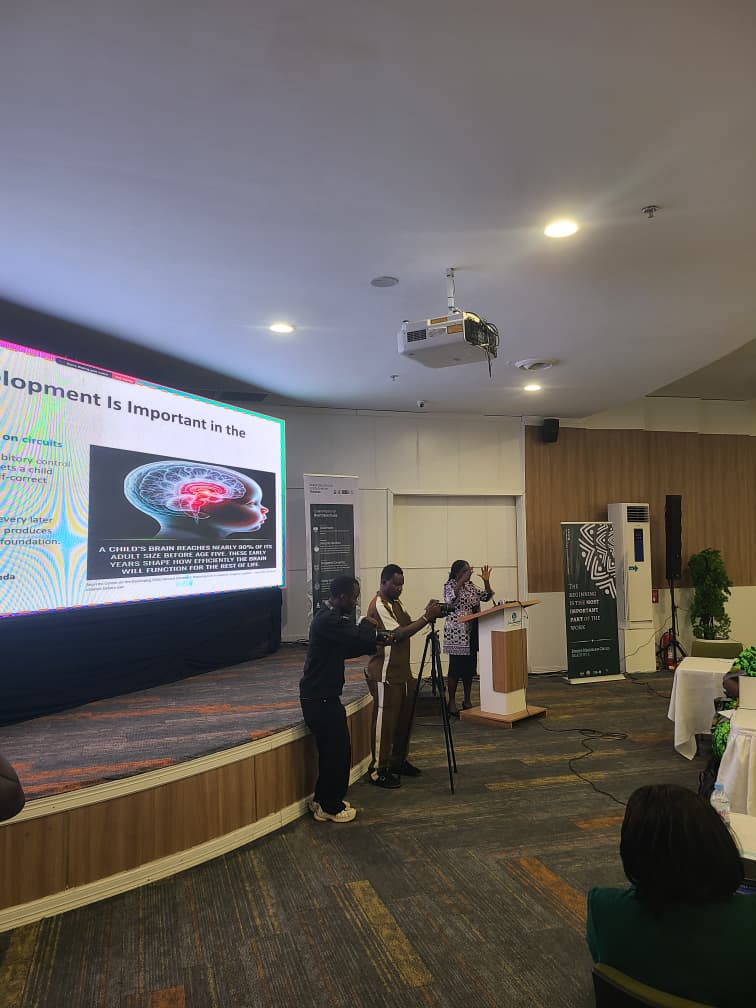
Experts in Early Childhood Development (ECD), has identified strong coordination, evidence-based planning, adequate financing, effective implementation, and transparent monitoring of results, in order to address the challenges of out of school children in Nigeria.
This was agreed on during a consultation workshop with Civil Society Organisations and the media as part of the World Bank’s Early Childhood Development Inception Mission, in Abuja.
Among those who spoke at the occasion included World Bank Task Team Leader, Early Childhood, Dr.
Ritgak Tilley-Gyado, Dr. Oluwatosin Olorunmiteni, Neurodevelopment radiation, National Coordinator, Open Government Partnership, Dr. Gloria Ahmed.The World Bank representative while doing her presentation urged the three tiers of government action to strengthen early childhood development in Nigeria, stressing that coordinated investment in the first five years of life is critical to improving the country’s human capital outcomes.
Tilley-Gyado said the scale of Nigeria’s child population made coordinated action urgent, noting that the country has about 38 million children under the age of five.
“What this agenda says is that the effort is to coalesce all of government horizontally across sectors, vertically across the four tiers of government,” she said.
According to her, investments in healthcare, nutrition, responsive caregiving, parenting, protection and early learning during the formative years could significantly influence children’s educational outcomes, lifetime earnings and eventual contribution to national productivity.
She said the greatest opportunity to improve Nigeria’s human capital lies with children in their early years because their physical growth, upbringing and development can still be significantly influenced through appropriate interventions.
“The flow is where the opportunity is, those that are born today, those that are still under age five, whose upbringing you can still influence, whose physical growth you can still influence,” Tilley-Gyado said.
She called for an all-of-society approach involving governments at all levels, development partners, civil society organisations, traditional and faith institutions, the private sector and communities.
The World Bank official also stressed the importance of social accountability, describing civil society organisations as a critical voice of citizens and an important mechanism for ensuring that government and development partners fulfil their commitments to child development.
She added that the initiative would prioritise disability inclusion, environmental safeguards and the protection of vulnerable populations as Nigeria strengthens its early childhood development interventions.
Speaking at the engagement, the National Coordinator, Open Government Partnership, Dr. Gloria Ahmed, described early childhood development as an investment in Nigeria’s human capital and future prosperity rather than merely a social intervention.
“Early childhood development is a critical foundation for the future of every nation. It is not merely a social intervention, it is an investment in human capital development and in the future prosperity of any nation,” she said.
Ahmed said effective early childhood development delivery required evidence-based planning, adequate financing, effective implementation and transparent monitoring.
She said open governance principles, including transparency, accountability, citizen participation and inclusive decision-making, were essential to ensuring effective implementation of programmes targeting children.
According to her, civil society organisations were strategically positioned to amplify the voices of parents, caregivers and children, monitor service delivery and expenditure, promote public awareness and hold institutions accountable for commitments made towards child development.
Dr. Oluwatosin, in her presentation, said, ECD is very critical foundation for the future of every nation.
She noted that ECD is not merely a social intervention; it is an investment in human capital development and in the future prosperity of any nation.
“ECD requires the collective commitment of government, development partners, civil society, communities, parents, caregivers, etc.
” It also requires strong coordination, evidence-based planning, adequate financing, effective implementation, and transparent monitoring of results”, she said.

From Francis Sadhere, Delta
Delta State Governor, Rt. Hon. Sheriff Oborevwori, has expressed condolences to the Catholic Diocese of Warri and the Christian community over the death of Very Rev. Fr.
Anthony Mario Ozele, Episcopal Vicar of Ughelli Pastoral Region and Parish Priest of Saints Peter and Paul Catholic Church, Ughelli.Fr.
Ozele, aged 60, reportedly died in the early hours of Tuesday, September 15, 2026, following an illness.In a condolence message contained in a statement issued in Asaba on Wednesday by his Chief Press Secretary, Sir Festus Ahon, Governor Oborevwori described the death of the priest as a painful loss to the Catholic Church, his parishioners and the people of Delta State.
The Governor said Fr. Ozele devoted his life to the service of God and humanity, noting that his contributions to the spiritual and social wellbeing of the people would be remembered.
Oborevwori commiserated with the Bishop of the Catholic Diocese of Warri, Most Rev. Anthony Ovayero Ewherido, priests, religious leaders and members of the Catholic community over the loss.
He urged the bereaved Catholic faithful to draw strength and comfort from the life of dedicated service lived by the deceased priest.
The Governor also extended his condolences to the immediate family of Fr. Ozele, praying to God to grant them the fortitude to bear the irreparable loss.
He prayed for the peaceful repose of the soul of the late priest and comfort for all those affected by his death.


Equities Market Sustains Gain with N315bn
Share The Nigerian stock market extended its positive momentum on Wednesday, marking the fifth consecutive bullish session. The market’s upward movement...
Nigeria’s Doctor Deficit and Surplus Unplaced Medical Graduates
Share By Abujah Racheal Every morning, Dr Adamu Inusa checks his phone, hoping to find the email that will define the...
Nigeria, Spain Move to Deepen Trade, Investment Ties
ShareNigeria’s Ambassador to Spain, Okezie Ikpeazu, has called for the revitalisation of existing bilateral agreements with Spain, including the Bilateral...


World Bank Group Appoints New Chief Economist
ShareWorld Bank Group President, Ajay Banga, has announced the appointment of Nobel laureate, Michael Kremer, as the institution’s Chief Economist...
Efficient Ports Key to Nigeria’s $1trn Economy Target, Says Akutah
ShareThe Director-General of the Nigerian Ports Economic Regulatory Agency (NPERA), Dr. Pius Akutah, said efficient and competitive seaports are critical...
Kano Police Arrest 10 Suspected Inter-state Car Thieves
ShareThe Kano State Police Command has arrested 10 suspected members of an inter-state motor vehicle theft syndicate and recovered 12...
GOC Tasks Troops on Vigilance, Commitment to Tackling Insecurity
ShareThe General Officer Commanding (GOC) 2 Division, Nigerian Army, Maj.-Gen. Auwalu Mahmuda, has advised troops to be vigilant and committed...
Troops Rescue Seven Kidnap Victims in Benue
ShareTroops of Operation Whirl Stroke (OPWS), in collaboration with the Nigerian Police Force and local vigilantes, have rescued seven kidnapped...
Bayelsa United Ex-players Donate Jerseys Ahead of NNL Season
ShareFormer players of Bayelsa United on Wednesday donated a set of jerseys to the club to support their preparations for...
Fernandez Signs New London City Contract
ShareLondon City Lionesses defender Jana Fernandez has signed a new contract, keeping her at the club until 2029. The 24-year-old...