
NEWS
Nigeria, China Sign $30m Deal on Grassroots Development


By Tony Obiechina, Abuja
Nigeria and China have signed a grant agreement worth RMB 200 million (approximately $30 million) to support community-focused development projects under the Nigeria–China Development Cooperation, reinforcing the two countries’ longstanding strategic partnership.
The agreement, signed recently at the Federal Ministry of Budget and Economic Planning in Abuja, marks another milestone in bilateral cooperation to advance Nigeria’s development priorities and deliver tangible benefits to citizens through targeted, locally driven initiatives.
The Minister of Budget and Economic Planning, Senator Abubakar Atiku Bagudu, commended the Chinese Government’s continued support, describing the partnership as an important platform for strengthening development cooperation, knowledge exchange and mutual understanding.
Bagudu thanked the Chinese Ambassador to Nigeria, His Excellency Yu Dunhai, and his delegation for their commitment to deepening bilateral relations, noting that progress over the years reflects both countries’ shared determination to advance their common development objectives.
The grant will support mutually agreed projects under China’s “small but beautiful” initiative, which focuses on investments that deliver practical results, improve livelihoods and create direct community-level impact.
The minister noted that the grant builds on prior Chinese assistance, including a $1 million contribution earlier in 2026 to strengthen Nigeria’s capacity for technological and knowledge development. He also highlighted opportunities to expand trade and economic cooperation, particularly through China’s zero-tariff policy on Nigerian exports.
He stressed that the priority is to ensure that bilateral commitments translate into measurable development outcomes for Nigerians. To this end, the ministry, in collaboration with the Nigeria–China Strategic Partnership Office, has been developing projects proposed by states to address specific grassroots development needs.
Bagudu also highlighted Nigeria’s Renewed Hope Ward Development Plan, which aims to identify economic opportunities and map economically active people across the country’s 8,809 wards to promote inclusive, targeted and locally driven development.
He expressed interest in sharing the initiative with China and drawing on China’s development experience, particularly in poverty reduction, to strengthen Nigeria’s efforts to expand economic opportunities, address poverty and improve livelihoods.
The minister further emphasised the importance of capacity-building initiatives, including the training of Nigerian officials in China, noting that knowledge exchange and institutional development are essential to strengthening the country’s capacity to implement its development priorities.
In his remarks, the Chinese Ambassador, Yu Dunhai, described the grant as a concrete demonstration of China’s commitment to Nigeria’s development priorities and to the enduring strategic partnership between the two countries, founded on mutual trust, solidarity and a shared commitment to economic and social development.
The ambassador explained that the agreement advances the consensus reached by Presidents Bola Tinubu and Xi Jinping during their meeting in China and the outcomes of the Fourth China–Nigeria Cooperation Forum in Beijing.
He noted that 2026 marks the 55th anniversary of diplomatic relations between Nigeria and China, describing the relationship as one that has continued to evolve through cooperation across various sectors and mutual support for more than five decades.
Dunhai also highlighted the economic opportunities arising from China’s zero-tariff policy on Nigerian exports, which took effect on 1 May 2026. According to him, bilateral trade reportedly reached $18 billion in the first half of the year, while Nigeria’s exports to China increased by 80 per cent.
He said the policy could expand market access for Nigerian businesses, attract investment, support industrial development, and encourage Nigerian products to move up the value chain.
The Ambassador however noted that the current zero-tariff arrangement is set to expire on May 1, 2028, and urged both countries to use the remaining period effectively to work towards an economic development partnership agreement that would consolidate gains and establish a more sustainable framework for trade and economic cooperation.
He called on the Ministry of Budget and Economic Planning, in coordination with the Federal Ministry of Industry, Trade and Investment, to advance discussions on the proposed agreement.
In separate remarks, the Permanent Secretary, Dr Deborah Odoh, expressed appreciation to the Chinese Government, the ambassador and his delegation for their continued support, describing the grant as a welcome demonstration of confidence in Nigeria’s development priorities.
The permanent secretary also commended the ministers, the Chinese Embassy, and the relevant ministries, departments and agencies, particularly the International Cooperation and Legal Departments, for their contributions to the successful conclusion of the agreement.
The ministry reaffirmed its commitment to working with Chinese partners and relevant institutions to ensure that the projects are implemented transparently and efficiently, in line with the agreed objectives, with a focus on delivering tangible benefits to Nigerians.
The signing ceremony underscores Nigeria and China’s commitment to sustaining their strategic partnership, expanding economic cooperation, and turning shared development aspirations into practical outcomes for their citizens.
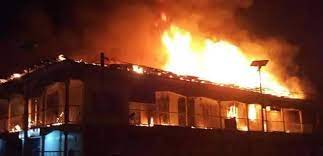
From Rabiu Sanusi, Kano
A fire outbreak has destroyed at least 110 structures at the Kofar Ruwa Timber Market in Kano metropolis, leaving traders counting their losses after the inferno engulfed several sections of the market on Saturday morning.
The Kano State Fire Service confirmed that the affected structures comprised 75 permanent buildings and 35 temporary structures.
The Service’s Public Relations Officer, Kabiru Isah-Jafaru, disclosed this in a statement yesterday in Kano, explaining that a distress call was received at about 7:39 a.
m. from a timber dealer, identified as Alhaji Abba.He said firefighters were immediately mobilised from various stations across the metropolis to tackle the inferno.
According to him, upon arrival, the firefighting personnel discovered that the flames had spread across several sections of the market, threatening nearby shops and other structures.
However, the firefighters successfully brought the situation under control and prevented the fire from spreading to other parts of the market.
The Director of the Kano State Fire Service, Alhaji Sani Anas, commended the personnel for their swift response and urged traders and business owners to adopt appropriate fire safety measures to prevent similar incidents.
He also cautioned members of the public to exercise care when handling fire and other combustible materials, particularly as the harmattan season approaches.
The cause of the outbreak had yet to be established as of the time of filing this report, while investigations into the incident were ongoing.
No casualty was reported.
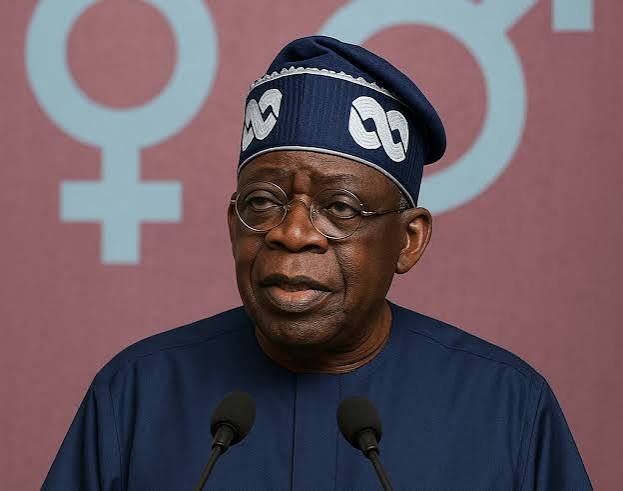
By David Torough, Abuja
A fresh political confrontation has erupted between the African Democratic Congress Presidential Campaign Council (ADC-PCC) and the All Progressives Congress Presidential Campaign Council (APC-PCC) over President Bola Tinubu’s 2023 campaign promise to ensure stable electricity supply, with the opposition insisting that the President must account for his performance before seeking a second term.
The dispute centres on Tinubu’s pledge during the build-up to the 2023 presidential election that Nigerians should not re-elect him if he failed to deliver electricity, unless he provided adequate reasons for his inability to fulfil the commitment.
While the ADC-PCC argues that persistent power outages, rising electricity tariffs and continued estimated billing amount to a failure to meet the promise, the APC-PCC maintains that the President remains committed to stabilising the sector and should be assessed in the context of ongoing reforms and inherited challenges.
In a statement issued on Sunday, ADC-PCC Director of Media and Publicity, Kola Ologbondiyan, dismissed the APC’s interpretation of the President’s campaign remarks, describing its attempt to emphasise the qualification attached to the pledge as an afterthought designed to avoid accountability.
Ologbondiyan recalled Tinubu’s declaration: “Don’t vote for me for a second term if I fail to deliver electricity.”
He argued that the statement represented a clear commitment to Nigerians and should be assessed against the administration’s performance since assuming office in May 2023.
According to the opposition council, more than three years into the administration, households and businesses continue to contend with unreliable electricity, repeated national grid disturbances, increased electricity bills and estimated billing.
The ADC-PCC also criticised the introduction of electricity tariff classifications, including Bands A, B and C, arguing that consumers are being charged higher rates without receiving reliable supply commensurate with their payments.
It further claimed that rising electricity costs had forced some businesses, particularly operators in the hospitality industry, to ration power supply to customers during daytime hours to reduce operating expenses.
The council questioned the effectiveness of the Presidential Metering Initiative, alleging that electricity distribution companies still subject many consumers to estimated billing despite government assurances about closing the country’s metering gap.
Dismissing the administration’s reliance on the Electricity Act 2023 and bond-financing arrangements as evidence of progress, the ADC-PCC insisted that legislative reforms and financial interventions should translate into tangible improvements in electricity supply.
“An Act is not electricity. A bond prospectus does not power homes and factories. Nigerians cannot eat statutes. What Nigerians need is electricity that works, not another round of explanations and publicity,” the council stated.
It maintained that households, manufacturers and small businesses should not continue to bear the financial consequences of an unreliable power supply while waiting for government reforms to yield results.
Responding to the criticism, the APC-PCC, through its spokesperson and Minister of Solid Minerals, Dele Alake, said the opposition had quoted the President’s campaign promise without including an important qualification.
Alake maintained that Tinubu had promised to provide adequate explanations to Nigerians if he failed to fulfil the electricity pledge before seeking another mandate.
Quoting the President, he said: “Whichever way, by all means necessary, you will have electricity, and you will not pay for estimated bills anymore. A promise made will be a promise kept. If I don’t keep the promise and I come for a second term, don’t vote for me, unless I give you adequate reasons why I couldn’t deliver.”
The APC spokesperson argued that a fair assessment of the commitment must consider the complete statement alongside the administration’s record on electricity generation, transmission, distribution, metering and market stability.
He acknowledged that resolving the power sector crisis remained unfinished but insisted that the President had taken deliberate steps to address structural problems inherited by his administration.
Among the measures highlighted by the APC-PCC was the signing of the Electricity Act 2023 on June 9, shortly after Tinubu assumed office.
The law provides a framework for states to establish and regulate electricity markets within their territories, subject to constitutional and regulatory provisions. Alake said states including Lagos, Enugu, Abia, Ekiti, Oyo, Kaduna and Niger had begun taking advantage of the legislation by establishing electricity regulatory agencies and attracting private investment.
The APC-PCC also said the Federal Government had assumed responsibility for more than N6tn in legacy debts accumulated between 2015 and 2025, while introducing the Presidential Metering Initiative to address a national metering deficit estimated at more than seven million customers.
According to Alake, more than 1.5 million electricity customers had been metered under the initiative in the last three years.
On the financial challenges confronting the sector, the APC-PCC disclosed that the administration established a N4tn bond programme to settle verified legacy debts owed to 21 electricity generation and gas companies.
It said the first and second tranches of the programme had raised more than N1.2tn to offset part of the outstanding liabilities, adding that the intervention was intended to improve liquidity and encourage fresh investments in power generation.
The council cited investments announced by Geregu Power Plc in new transformers for its Geregu 1 Power Plant as an indication that confidence in the sector was gradually improving.
Alake also highlighted the administration’s efforts to upgrade transmission infrastructure through the Presidential Power Initiative, which was inherited from the previous administration.
He said Tinubu reviewed the existing agreement and signed an acceleration agreement with German partners in December 2023 to speed up projects aimed at strengthening the national transmission grid.
The APC-PCC disclosed that the Federal Executive Council approved the first batch of five Transmission Company of Nigeria substations for upgrading in December 2024, with the projects expected to be commissioned before the end of the administration’s first term.
It further stated that the council approved another set of projects in June 2026, involving the construction of eight new substations and the upgrading of four existing facilities in strategic load centres.
Other interventions cited include plans to modernise the more than 60-year-old Osogbo Grid Control Centre, construct an East-West super grid and expand solar-powered electricity access to universities, hospitals and rural communities through the Rural Electrification Agency.
On electricity tariffs, the APC-PCC defended the government’s decision to move towards cost-reflective pricing, arguing that improved revenue collection was necessary to strengthen the financial position of distribution companies and attract investment.
It said the government had also introduced measures to protect low-income consumers while balancing the need for affordable electricity with the commercial sustainability of the sector.
The disagreement has increasingly become a political talking point ahead of the January 16, 2027 presidential and National Assembly elections, with opposition figures, including ADC presidential candidate Atiku Abubakar, Nigeria Democratic Congress presidential candidate Peter Obi and Allied Peoples Movement presidential candidate and Oyo State Governor Seyi Makinde, among others, criticising the administration over the state of electricity supply.
The ADC-PCC has maintained that Nigerians should judge the President by the practical outcome of his campaign promise rather than policy announcements, financing arrangements or legislative reforms.
The APC-PCC, however, insists that the administration’s interventions should be considered alongside the scale of the challenges confronting the sector, promising that Tinubu will present his achievements and outstanding commitments to Nigerians as he seeks re-election.
With electricity remaining a major concern for households, manufacturers and businesses, the unfolding political exchange has brought renewed attention to the gap between government reform initiatives and the everyday experience of electricity consumers.
Ultimately, the debate is no longer limited to the interpretation of a campaign statement. It also raises questions about the pace of power sector reforms, the affordability of electricity, the effectiveness of public investment and the extent to which Nigerians have benefited from government interventions.
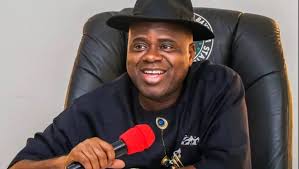
From Mike Tayese, Yenagoa
Bayelsa State Government over the weekend said the total salary-related items to civil servants in the state was N13.2 billion as at the month of September 2026.
The salary related-items, which cover 65,411 civil servants includes, N8 billion; salary arrears, 208 million; political appointees, N2 billion; gratuity, N200 million; pension arrears, N200 million; grants to tertiary institutions, N2 billion; support to primary school teachers, N251 million; corps members, N73 million and minimum wage arrears, N50 million.
“This brings total salary-related items to 13.2 billion” the state government said.Given the income and expenditures for the month of August and September 2026, the Technical Adviser to the governor on Treasury and Account Timinipre Seipulo said, it received a total of N183.28 billion in revenue from the Federation Account Allocation Committee (FAAC) and other sources in August and September 2026, while reaffirming its commitment to completing ongoing infrastructure projects and improving workers’ welfare.
Presenting the income and expenditure for the two months, Timipre Seipulo said, Bayelsa received a gross FAAC inflow of N79.20 billion in August, comprising N12.71 billion from statutory allocation, N50.14 billion from derivation revenue and N16.36 billion from Value Added Tax (VAT),after deductions at source of N993 million, the state’s net FAAC receipt stood at N78.21 billion.
The state also recorded additional receipts from internally generated revenue, infrastructure development funds, excess crude refunds and other sources, bringing its total receipts for August to approximately N99.21 billion.
For September, Seipolu said the state received a gross FAAC allocation of N56.60 billion, comprising N8.6 billion in statutory allocation, N39.32 billion from derivation and N8.7 billion from VAT.
“He explained that after deductions, the net FAAC inflow stood at approximately N55.05 billion, while additional revenue from internally generated revenue, infrastructure development funds, natural resources development, the State Employment and Expenditure for Results (SEEFOR) programme and other sources increased the state’s total receipts to about N84.07 billion.”
The presentation showed that the government spent N7.26 billion on recurrent expenditure and N28.36 billion on capital projects in September, bringing the combined expenditure to N35.62 billion.
“Seipolu further disclosed that the state had a closing balance of approximately N59.04 billion at the end of september,however, he explained that between the end of september and october 19, before the next FAAC allocation was received, the government had spent about N18.9 billion on capital projects and N4.9 billion on recurrent obligations.”
He said the balance consequently stood at approximately N35.5 billion as of October 19, with N24 billion retained in the capital projects account to support ongoing infrastructure development.
According to him, the funds were not idle resources but were being deployed to finance government obligations and ongoing projects pending subsequent FAAC allocations,on workers’ welfare, the government clarified that different categories of public servants operated under distinct salary structures and allowance arrangements.
It explained that doctors, nurses, investigators, civil servants, university employees and fire service personnel had different remuneration structures, making it inappropriate to calculate the state’s wage bill using a uniform salary estimate.
The government added that professionals such as doctors, nurses and investigators received special allowances in addition to their regular salaries to recognise the peculiar demands of their duties.
It also announced that approved special allowances for workers in tertiary institutions would commence in October, with the government committing to pay outstanding arrears dating back to January 2026.
“The allowances for tertiary institution workers are expected to increase the monthly wage bill by more than N900 million, while the additional peculiar allowances for other public servants are projected to raise monthly salary expenditure by approximately N2 billion.”
The government said the two adjustments would increase the state’s monthly wage bill by about N3 billion, excluding the outstanding arrears,it maintained that the financial disclosure was part of its commitment to transparency and accountability.
At end of September 2026, the state recorded surplus of N28.9b.
Speaking earlier,the commissioner for Information, Orientation and Strategy, Ebiuwou Koku-Obiyai, said
the present administration deliberately sustained the transparency as a covenant with the people to “govern openly, to account truthfully and to listen attentively. Transparency is not an event. It is our own culture”.
“Every project we commissioned, every kobo we spend, and every policy we implement, we bring to the members of the public through you, members of the Fort Estate of the Realm, to the people. After all, as a government, we are not
“Koku-Obiyai maintained that ongoing projects were progressing according to schedule, stressing that the government had continued to meet its financial obligations to contractors to ensure their timely completion.”
“She listed the nine-storey State Secretariat building, the rehabilitation of the Light Floor project and the Lagos road project among the major infrastructure projects making progress,
according to her, an inspection visit conducted by the commissioner for works and other government officials confirmed that the Lagos road project had reached an advanced stage of implementation.”
She described the reports alleging the collapse of major projects as misleading, insisting that the government remained committed to delivering its development agenda.



Nigeria, China Sign $30m Deal on Grassroots Development
ShareBy Tony Obiechina, Abuja Nigeria and China have signed a grant agreement worth RMB 200 million (approximately $30 million) to...

Fire Guts 110 Kano Timber Market Structures, 75 other Buildings
ShareFrom Rabiu Sanusi, Kano A fire outbreak has destroyed at least 110 structures at the Kofar Ruwa Timber Market in...

Power Promise: ADC, APC Clash over Tinubu’s 2027 Re-Election Bid
ShareBy David Torough, Abuja A fresh political confrontation has erupted between the African Democratic Congress Presidential Campaign Council (ADC-PCC) and...

Bayelsa Spends N13.2b on Salary-related Items in September
ShareFrom Mike Tayese, Yenagoa Bayelsa State Government over the weekend said the total salary-related items to civil servants in the...


OPay Provides Update on Planned NYSE IPO, Reaffirms Normal Business Operations
Share From Tony Nwachukwu, Lagos Fintech company OPay has announced the postponement of its planned public offering on the New...


Aba Commercial Smart City Celebrates COO, Mazen Kalassina at 39
ShareBy David Torough, Abuja Aba Commercial Smart City has celebrated its Chief Operating Officer (COO), Engr. Mazen Kalassina, on his...

Rebuilding Public Trust in Government Borrowing: The Case for Scaling Up Sukuk Financing in Nigeria
ShareBy Uche Joe Uwaleke The recent request by President Bola Tinubu to the National Assembly for approval to raise $20.52...

2027: Buba Yakub Mobilises Adamawa Support for Tinubu, APC
ShareFrom Yagana Ali, Yola The Director-General of the Nigerian Technical Aid Corps (NTAC), Rt. Hon. Yusuf Buba Yakub, has called...

2027: FOOG Women Coordinator Urges Nigerians to Support Tinubu’s Re-election Bid
ShareBy Francis Sadhere, Warri Chief (Mrs) Esther Orighomisan Okotie-Eboh, Coordinator of Felix Omagbemi Ogbe Group (FOOG) Women Support Group for...


Troops Neutralise 217 Terrorists, Rescue 349 Kidnap Victims, Arrest 333 Suspects in Oct
ShareBy David Torough, Abuja The Armed Forces of Nigeria (AFN) say troops neutralised 217 terrorists and other criminals, rescued 349...