
NEWS
Edo Deploys 1,472 Army-trained Security Corps to Tackle Insecurity


From Joseph Ebi Kanjo, Benin
No fewer than 1,472 members of the newly reorganised Edo State Security Corps have completed their two weeks training and deployed across the state to tackle the rising insecurity.Speaking at the passing out parade held at the Edo State National Orientation Camp (NYSC) in Okada, Ovia North East Local Government Area, Governor Monday Okpebholo urged them to embrace professionalism and collaborate with security agencies to fight criminality in the state.
Represented by his deputy, Hon. Dannis Idahosa, Okpebholo said the activities of the former Corps were politicized and lacked professionalism, hence the decision to reorganize and restructure the Corps.”Regrettably, activities of the former Corps were politicized, and it lacked professionalism. Hence, I decided to reorganize and restructure the Corps to meet set objectives,” he said.He commended the Nigerian Army for training the Corps, demonstrating the government’s seriousness in combating criminality and making the state safe for all.According to the governor, security is one of the key elements of his administration’s five-point agenda.He noted that the State Government established the Edo State Security Corps, backed by the Edo State Security Corps Governance Law 2024, to assist the police in intelligence gathering and low-level operations to combat crime.The governor expressed his administration’s concern over security challenges in the state, noting that existing security agencies were over-stretched. He said the Edo State Security Corps was established to provide support to the police and other sister security agencies.The governor said his administration has established a management board to oversee the affairs of the Corps to promote discipline and welfare.”We expect a high level of discipline and performance during and after the rigorous training,” he said.The governor also noted that the activities of the Corps would be highly monitored, and profiling is ongoing to identify those who are fit to serve in the Corps.The Chairman of the reorganizing committee of Edo State Security Corps, Gen. Cecil Esekhaigbe (rtd), represented by Major Gen. Victor Ebhaleme (rtd) said the organization and training of the Corps is to ensure they are more effective and efficient in the performance of their duties.”The training commenced on the 22nd of May 2025, and personnel recruited were drawn from 13 local government areas which cut across the three Senatorial Districts of Edo State,” he said.Gen. Esekhaigbe added that the Corps is not trained to operate alone but to support other sister security agencies, ensuring peace in the state.
Petroleum Technology Association of Nigeria (PETAN), has strongly encouraged indigenous oil and gas companies to strengthen technical capability in order to close existing gaps in the country’s oil and gas industry.
The group said that as an association of indigenous technical oilfield service companies, it will pursue partnerships across the sector to broaden technical gaps and entrench skills and knowledge acquisition among members.
Making his remarks on Monday during its round Media Roundtable, in Lagos, Publicity Secretary of the PETAN, Dr. Joan Faluyi, said the event’s technical capability would form an integral part of discussion.
He said the theme, The State of Nigeria’s Oil and Gas Industry: Opportunities and Challenges,” provides an opportunity to examine where we are, what needs attention, and what it will take to move forward.
The conversation brings the perspective of businesses and professionals directly involved in delivering the work of the industry.
That perspective connects investment plans and policy ambitions with the people, equipment, skills and services needed to put them into practice.
Faluyi, remarked, “When we speak about indigenous capacity, we are speaking about the engineer solving a difficult problem, the technician maintaining critical equipment, the fabricator producing to the required standard, and the young professional gaining the experience to take on greater responsibility.
“We are also speaking about entrepreneurs who invest in facilities, develop their teams and carry the responsibility of delivering work safely, reliably and competitively.”
He argued that the opportunities and challenges before these businesses deserve attention because their ability to grow has implications for employment, skills development and the value Nigeria retains fromits petroleum resources.
“As we consider the industry’s future, we should therefore ask practical questions. How can investment create more opportunities for capable Nigerian companies? What will enable these businesses to strengthen their expertise and compete on quality? How can young Nigerians gain the practical experience needed to build lasting careers in the sector?
He said these are questions worth examining carefully, with evidence and with an understanding of the realities of doing the work.
According to him, Technical experience is valuable, and so is the ability to explain that experience clearly, answer questions and listen to different perspectives.
By Fransiscus Nanga Roka
A patient was treated every ninth second, which alone would suggest that there were problems with emergency health care spending before the use of federal money from the U.S.
Treasury. Dr. Joseph A. Montes’ prosecution in Houston has raised concerns regarding how well emergency health care spending could distinguish between legitimate medical services and possibly a fraudulent billing scheme.Montes, 66, was indicted on twelve federal charges on September 30, 2026. The indictment was unsealed on October 6, 2026 by the Justice Department. Prosecutors allege that from 2020 to 2022, Montes’ clinics were reimbursed approximately $20 million out of the $30 million that the clinics claimed to receive from the Health Resources and Services Administration.
As of now, these allegations are merely charges, and therefore Montes remains presumed innocent.The prosecutors state that how he was able to commit these offenses was quite straightforward. He established pop-up COVID-19 clinic locations using his own name; collected nasal swabs from individuals attending those clinic locations; and submitted billing to insurance companies for “office visits” which the prosecutors allege did not occur. From January to November 2021, the prosecutors believe he submitted approximately 3,000 evaluation-and-management claims during at least 29 separate time
frames. Along with the claims, prosecutors are also alleging he paid for a purchase of a high-end vehicle from a car dealer and items from Tiffany & Co.
If this is indeed correct, it would represent a massive breach of confidence that has been placed upon physicians. This would indicate that all people that had gone to seek testing during the time period of the pandemic were being used as mere tools to extract money from the public.
The mathematics of this situation are extremely important to ensure the accuracy of the data. For example, simply because there were 9,000 claims submitted in a single day doesn’t necessarily mean that 9,000 consultations occurred that same day. In many cases, a legitimate provider can send in multiple claims at once as part of a batch. Therefore, investigators will need to determine when services were provided; who was responsible for providing those services; what percentage of the total number of employees working during the period of service provision; whether documentation exists regarding the services provided; and if patients were actually seen by clinicians.
This is intended to provide greater responsibility for your actions. When you discover something unusual or out of place (an anomaly), this should encourage you to delve deeper into the matter. To establish evidence of fraud, you need to provide supporting documentation.
This is a much broader policy question that cannot be avoided. Although emergency reimbursement needs to occur quickly, when quick reimbursements occur without a reasonable degree of verification, there are many opportunities for abuse. At the same time, if all reimbursements were frozen indiscriminately, then we may create a great deal of financial stress for legitimate health care professionals and limit patient access to necessary care. Therefore, an appropriate level of monitoring must distinguish between suspected fraudulent billing practices and the high-volume use of tests. Washington needs five concrete reforms.
The next generation of emergency program administrators, including HRSA, must develop and use billing validation systems to check whether the billed service is consistent with the documented clinical capability. When a large volume of services is billed, and it appears highly unlikely that such a service can be delivered given the clinical capability documented, then an immediate human review is required. For the purpose of protecting legitimate providers from unfairly having their payments reduced or withheld, the human reviews will have time limits for responses and a formalized appeal process.
The second condition is that there needs to be an identifiable relationship between each of the encounters being reimbursed, the date of service, the clinician performing the service, and any other pertinent documentation. In addition, the billing agent may not use their authority to convert a diagnostic test into a separate consultation and then bill separately for that diagnostic test.
The third way to help patients identify fraudulent claims is to send patients simple, clear notifications about which services they received that are being charged to them. Also, providing an easy-to-use way for patients to challenge those charges will help patients spot potential fraudulent claims without sharing too much of their personal health information.
The fourth step for both Congress and the Inspector General at HHS is to have an outside entity conduct an assessment of the program’s control mechanisms (e.g., how often people receive warning notices, if people acknowledge receiving warning notices, what the payment contractor did once they received warning notices) using an objective analysis. There is enough evidence in the indictment to indicate that the program’s control mechanisms were insufficient, however there is no evidence that indicates negligence on the part of regulatory agencies.
Fifth, prosecutors must pursue every participant as established through evidence, and once their guilt is determined, the prosecutor may use the law to recover the criminal proceeds. Each disciplinary action against a professional will be based on an independent review of the evidence and in order to safeguard the right to due process.
Successful performance of a program is measured by the reduction of incorrect payments, resolution time of alerts, money collected from fraud, and continuous availability of legitimate healthcare services for individuals who require them rather than solely through the number of arrests.
A global lesson about emergency medical services funding has been learned from outside of Houston. Each government which provides financial assistance to emergency medical service providers must create a governance framework as part of its funding application.
A criminal court will determine whether one physician is accountable for what occurred. At the same time, a public inquiry should establish whether the system created to protect emergency healthcare funding was adequate enough to accomplish this. The taxpayers would like to have answers from the government as well. The patients are looking for a system that can understand its mistakes before the next crisis occurs.
Fransiscus Nanga Roka
The Federal Government has reaffirmed its commitment to strengthening energy security through domestic refining, improved crude supply and increased investment in the petroleum sector.
President Bola Tinubu, represented by the Permanent Secretary, Federal Ministry of Petroleum Resources, Patience Oyekunle, said that expanding domestic refining capacity and rehabilitating government-owned refineries were key to cutting dependence on imported products and positioning Nigeria as a regional energy hub.
Tinubu spoke at the ongoing 20th edition of OTL Africa Downstream Energy Week 2026 on Monday in Lagos.
He said that the ongoing petroleum sector reforms were designed to attract investment, strengthen domestic value addition and improve Nigeria’s competitiveness in regional energy markets.
The Chief Executive of the Nigerian Upstream Petroleum Regulatory Commission (NUPRC), oritsemeyiwa Eyesan, represented by Prosper Omoneto, a director in the commission, said that reliable crude supply was essential to sustaining domestic refining and strengthening energy security.
Eyesan said that the Petroleum Industry Act provided for domestic crude supply obligations, but noted that supply to local refineries had faced challenges, including commercial disagreements between suppliers and refiners operating under a willing-buyer, willing-seller framework.
She said that the commission was consulting on a proposed crude-swap framework that could enable refiners to receive crude oil from production or export points closer to their facilities, to reduce transportation costs and address logistical challenges.
Gov. Babajide Sanwo-Olu of Lagos State, represented by the Commissioner for Energy and Mineral Resources, Biodun Ogunleye, said the success of energy reforms should be judged by their impact on transportation costs, food distribution and business expenses.
Sanwo-Olu said that energy costs directly affected household expenditure and business operations, stressing that reliable and affordable energy was necessary to lower operating costs and support economic activities.
Tajudeen Abbas,the Speaker of the House of Representatives, represented by Peter Aniekwe, said domestic refining could retain more economic value within Nigeria and create employment.
Abbas said that domestic production alone would not insulate Nigeria from disruptions in the global oil market.
He added that effective regulation, reliable distribution networks and sustained investment were equally necessary to strengthen energy security.
He reaffirmed the National Assembly’s commitment to supporting implementation of the Petroleum Industry Act and exercising oversight over policies and investments in the sector, stressing that reforms must translate into tangible benefits for Nigerians.
Farouk Ahmed, a former Authority Chief Executive of the NMDPRA, said that predictable regulation was essential to attracting investment into the downstream petroleum industry.
Ahmed said that consistent enforcement, transparent decision-making and effective stakeholder consultation would strengthen investor confidence and support sustainable growth.
He identified infrastructure gaps, financing constraints, product quality and supply-chain efficiency as challenges requiring sustained attention.
He called for stronger regional cooperation, technology adoption and workforce development to improve the resilience of petroleum markets.
The 4-day OTL Africa Downstream Energy Week, held from Oct. 26 to Oct. 29, with the theme,“Secure Energy, Shared Prosperity”.




Customs Coach Backs Team to Win CGC Volleyball League
ShareBy Tambaya Julius, Abuja The Nigeria Customs Service volleyball team is targeting victory in the final phase of the 2026...

PETAN Advocates Indigenous Capacity Development to Address Oil Industry Technical Gaps
SharePetroleum Technology Association of Nigeria (PETAN), has strongly encouraged indigenous oil and gas companies to strengthen technical capability in order...
Pandemic Profiteering Demands More Than a Doctor’s Prosecution
ShareBy Fransiscus Nanga Roka A patient was treated every ninth second, which alone would suggest that there were problems with...

FG Reaffirms Commitment to Energy Security through Domestic Refining
ShareThe Federal Government has reaffirmed its commitment to strengthening energy security through domestic refining, improved crude supply and increased investment...

NMDPRA Moves to Improve Market Efficiency, Unveils New Gas Code
ShareThe Nigerian Midstream and Downstream Petroleum Regulatory Authority (NMDPRA) on Monday in Lagos, unveiled its Revision 2 of the Nigerian...


Ex-AfDB President Adesina Meets Tinubu, Says He’s Ready to Serve Nigeria
ShareThe immediate past President of the African Development Bank, Dr. Akinwumi Adesina, on Tuesday in Abuja said he is ready...
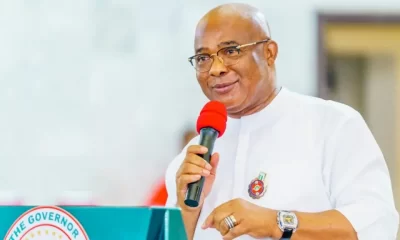

2027: Uzodimma Launches Door-to-door Campaign for Tinubu
ShareImo state Governor, Hope Uzodimma yesterday, launched the President Bola Ahmed Tinubu Door-to-Door Movement in the state, promising to ensure...


Ogbodo Seeks FG, Benue Intervention in Deplorable Otukpo–Obi–Oju Road
ShareBy David Torough, Abuja An illustrious son of the Igede nation, medical doctor, author and Medical Director of Lydia Memorial...


Kane Wins 2026 Ballon d’Or, Ends 25-year Wait for England
ShareHarry Kane has become the first English player in 25 years to win the prestigious Ballon d’Or after emerging victorious...


Five Die in Niger Governor’s Convoy Crash
ShareFrom Dan Amasingha, Minna A journey along the Minna–Bida Road ended in tragedy on Monday when five people reportedly lost...