
Agriculture
Tinubu Reiterates Commitment to Address Farmers/Herders Clashes


By Laide Akinboade, Anima
In order to address farmers and herders clashes, President Bola Tinubu yesterday assured Nigerians that he will convert what used to be a liability and a source of conflicts, into a means of prosperity.
The President stated this at the official commissioning of the newly constructed road from A2 junction to Pai town in Abuja.
Tinubu appealed to farmers and livestock owners to establish opportunities for grazing and do what is necessary.
He added that the 15 kilometers road is strategic because it opens a new corridor for agriculture, commerce, education, mobility and strengthening the economy from the grassroots up.
According to the President, “On our way here, we saw opportunities, prosperity, and the need for the establishment of ranches and rural development to uplift the lives of our rural people.
“On my way here, I observed the need for our great farmers and livestock owners to establish opportunities for grazing and do what is necessary. We will help you. We will work with you.
“We will convert what used to be a liability and a source of conflict, turning it into a means of prosperity.
“The time has come to call it a rural area project, and I am pleased to commission the 15-kilometer A2 to Pia Town Road”.
Tinubul noted that infrastructure development is meaningless if it is not developed for the benefit of people.
He therefore reiterated the commitment of his administration in ensuring that development is not lopsided but balanced, inclusive, and targets lifting lives.
He said the project is strategic, “It is strategic because it opens a new corridor for agriculture, commerce, education, mobility, and other areas, strengthening our national economy from the grassroots up.
“Rural communities such as Pia make an important contribution to Nigeria’s social and economic development, especially in food production and local enterprises.
“But their potential has been hindered by poor road access, isolation, and neglect for far too long”, he lamented.
Speaking to the people of Pia, the Mr. President, said, “This is your road. I urge the community to take ownership of this infrastructure, guide it, maintain it, and use it to the fullest.
“Let it be a pathway to growth and a bridge to a better life for the youth, farmers, traders, and students who will move with great ease”.
In his welcome address the Federal Capital Territory Minister Nyesom Wike, said his administration has been able to do over 150 kilometers of rural roads in Abuja.
He added that these roads are in the six area councils and some are still ongoing projects.
“Let me say, for this year’s commissioning, Your Excellency, we will be commissioning 10 kilometers of Aguma Palace-Radio-New Market Road in Gwagwalada. And then, Nyanya-Karshi dual Carriageway, 18 kilometers.
“We are doing the commission of 7.4 kilometers of Old Ushafa Road and rehabilitation of Lower Usuma Dam.
“Your Excellency, we are commissioning the dualisation of the Ushafa war college to Kaduna Checkpoint, 16.4 kilometers road among others.
“If you calculate all, and the ongoing roads, and the ones completed, within the satellite towns, you’ve done not less than 150 kilometers of roads”.
He therefore commended Mr. President for all his support.

Some residents in Lagos State have expressed concern over the recent surge in the price of tomatoes, forcing many households to adopt alternatives.
The residents made their views known in separate interviews on Wednesday in Lagos.
A market survey showed that a 50kg basket of tomatoes now sells between N115,000 and N125,000, compared to between N35,000 and N40,000 recorded last month.
Olachi Igwe, a resident of Ago Palace, said the scarcity and high cost of tomatoes had disrupted her household’s meal plans.
“I contacted my usual vendor, but she said tomatoes were scarce and difficult to source.
“A small bowl we used to buy for between N3,500 and N4,000 now sells for as high as N6,000 to N7,000, when available.
“For now, my family will resort to palm nut stew (ofe akwu) until prices stabilise,” she said.
Another resident, Mercy Okeleye of FESTAC, said although her family prefers fresh tomatoes, rising prices have forced her to consider cheaper options.
“I cannot do without fresh tomatoes because of the taste, but I may have to buy broken ones, popularly called ‘esha’, which are relatively cheaper.
“I do not consider tomato paste a suitable substitute because it is not purely made from tomatoes,” she said.
Also speaking, Tope Babalola from Dopemu, said she might adjust her cooking methods if prices remain high.
“I have not bought tomatoes in over a month, but if the price is still high, I will use more onions and peppers.
“I will not resort to artificial additives; I prefer natural ingredients for my meals,” she said.
Joan Ogugua, another resident, said she had already switched to tomato paste to cope with the situation.
“I asked my son to buy tomato paste for our meals. I cannot justify spending excessively on fresh tomatoes when other basic needs must be met,” she said.
Also, Oge Ugwu, a civil servant at Lekki, said she would resort to cucumber stew with the recent price hike.
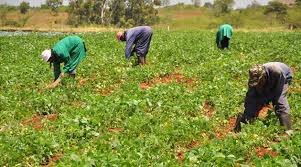
The Tomatoes Growers and Processors Association of Nigeria (TOPAN) has predicted a steady increase in the price of the produce between May and June 2026.
The Kaduna State Chairman TOPAN, Rabiu Zuntu, disclosed this in an interview recently in Lagos.
Zuntu noted that although there is no particular time for tomatoes planting season up north, seasonal weather variations can affect the production of the produce.
“Although we can plant tomatoes all-year-round, we cannot assure quality harvest all-year-round.
“Some farmers are harvesting now, while others are transplanting, and others are harvesting.
“Tomatoes are still available for sale but the price of the produce is gradually on the increase.
“Come May/June, the prices of tomatoes will be very expensive, so now is a good time to stock up the produce. There’s always a scarcity within that period.
“This is because of the nature of the weather in the north around that period, the weather is usually very hot and tomatoes cannot resist such hot temperature,” he said.
Zuntu said the price of tomatoes have started rising up in the north.
“A 50kg rafia basket of tomatoes sells from N20,000 as against N7,000 to N10,000 that was sold earlier in the year.
“While a crate of tomatoes up north is sold between N10,000 and N15,000 as against N5,000 to N6,500 sold earlier in the year.
“In most part of Kano State, where there is bumper harvest, they are rounding off their harvest. So, tomato is not that available there and most buyers have turned to where they can find it now, mostly within Kaduna State and some parts of Plateau State.
“So, that’s why the supply has decreased and the tomato supply and cost is determined by the law of demand and supply,” he said.
A 50kg basket of tomatoes in Lagos, at the moment, sells between N40,000 and N60,000 depending on the size and quality.

The Smallholder Women Farmers Organisation in Nigeria (SWOFON), Oyo State chapter, has said that the lack of irrigation facilities had become a major obstacle to dry season farming in the state.
The Chairperson of SWOFON in Oyo State, Atinuke Akinbade, said this in an interview in Ibadan on Monday.
Akinbade, who shared the experiences of women farmers in the state during the 2025 dry season, said that inadequate access to water for irrigation significantly affected the performance of many farmers during the period.
“It hindered many older farmers from participating in dry season farming and also prevented younger farmers from doing as much as they could in cultivating large acres of land,” she said.
Akinbade explained that farmers who managed to plant during the season struggled to access sufficient water to irrigate their farms, a situation worsened by the effects of climate change.
“Many farmers who depended on streams and wells to water their crops suffered major setbacks because those sources could not provide enough water for irrigation.
“Some farmers had to resort to buying water from commercial water tankers, which increased the cost of production, while at times it was even difficult to get water from the tankers,” she said.
The SWOFON chairperson warned that failure to address the problem could worsen food insecurity in the coming months.
“Even now, rainy season farming has not fully commenced because of the irregular rainfall pattern.
“This is a double burden, and if nothing is done, it may lead to serious hunger later,” she said.
Akinbade, however, acknowledged that the government had organised training for members of the association on home gardening.
She, however, said that little support was provided to address the challenges of dry season farming.
The chairman said that the home garden support package given to members consisted mainly of seedlings and one sprayer.
“They gave us two packs each of maize and pepper seeds, with six seeds in each pack, as well as one sprayer, so that we can grow food for household consumption,” she said.
Earlier, Oluwatoyin Oyedeji, SWOFON Coordinator in Oyo East, explained the severe hardship members of the organisation experienced in sourcing water for irrigation.
“Many farmers are already counting their losses because water was not available to irrigate their farms.
“Those who depended on streams and brooks were badly affected because many of them dried up, while the few that still had water had so little that farmers had to dig deeper into the ground in search of more,” Oyedeji said.
In the same vein, the Women Leader for farmers in Saki East, Musiliu Ashiru, said the absence of irrigation facilities also hampered dry season farming in her area.
According to her, many farmers still engaged in dry season farming have had to pay for water to keep their crops alive.
“Many of them buy water from the dam here to irrigate their crops. It has not been easy for them this year,” Ashiru said.




Troops Neutralise 114 Terrorists, Rescue 60 Abducted Persons in August — DHQ
ShareThe Defence Headquarters says the troops of Operation Hadin Kai (OPHK) neutralised 114 terrorists, arrested 146 suspects and rescued 60...


Troops Rescue 21 Kidnap Victims in Kogi
ShareTroops of the Nigerian Army, in collaboration with other security agencies and local security groups, have rescued 21 kidnap victims...


Premium Trust Bank Expansion Signals Confidence in Bayelsa Economy, Says Diri
ShareFrom Mike Tayese, Yenagoa Bayelsa State Governor, Senator Douye Diri, on Monday commissioned a second branch of Premium Trust Bank...


BBNaijaS11: Aikou, Flora Exit Gambit, Can Now Win N160m
ShareBBNaija Season 11 housemates Aikou and Flora, who were previously guaranteed places in the finale but barred from winning the...


PenCom Moves to Resolve Pension Dispute Among Lagos Retirees
ShareThe National Pension Commission (PenCom) said discussions are ongoing with the Lagos State Government over concerns surrounding pension increases for...


Provide Evidence of Alleged Replacement of Nominated Candidates, INEC Challenges NDC
ShareThe Independent National Electoral Commission (INEC) has challenged the Nigeria Democratic Congress (NDC) to provide evidence that the commission replaced...


Uba Sani Faces 17 Challengers in Kaduna Governorship Race
ShareKaduna State Governor, Uba Sani is to face 17 other candidates in the 2027 governorship election, following the publication of...


Fuel Subsidy Removal: Real Issue Is Better Management, Not Reversal
ShareProf Uche Uwaleke The renewed debate over fuel subsidy in Nigeria is hardly surprising. As the country approaches another election...


Military Neutralises 324 Terrorists, Rescues 610 Kidnap Victims in August — DHQ
ShareBy David Torough, Abuja The Defence Headquarters (DHQ) says troops of the Armed Forces neutralised 324 terrorists and other criminals,...


Nigeria’s GDP Grows 4.43 Per Cent in Q2 2026 — NBS
ShareNigeria’s economy expanded by 4.43 per cent year-on-year in real terms in the second quarter of 2026, Q2’26, up from...