
NEWS
Fuel Subsidy Removal: Real Issue Is Better Management, Not Reversal

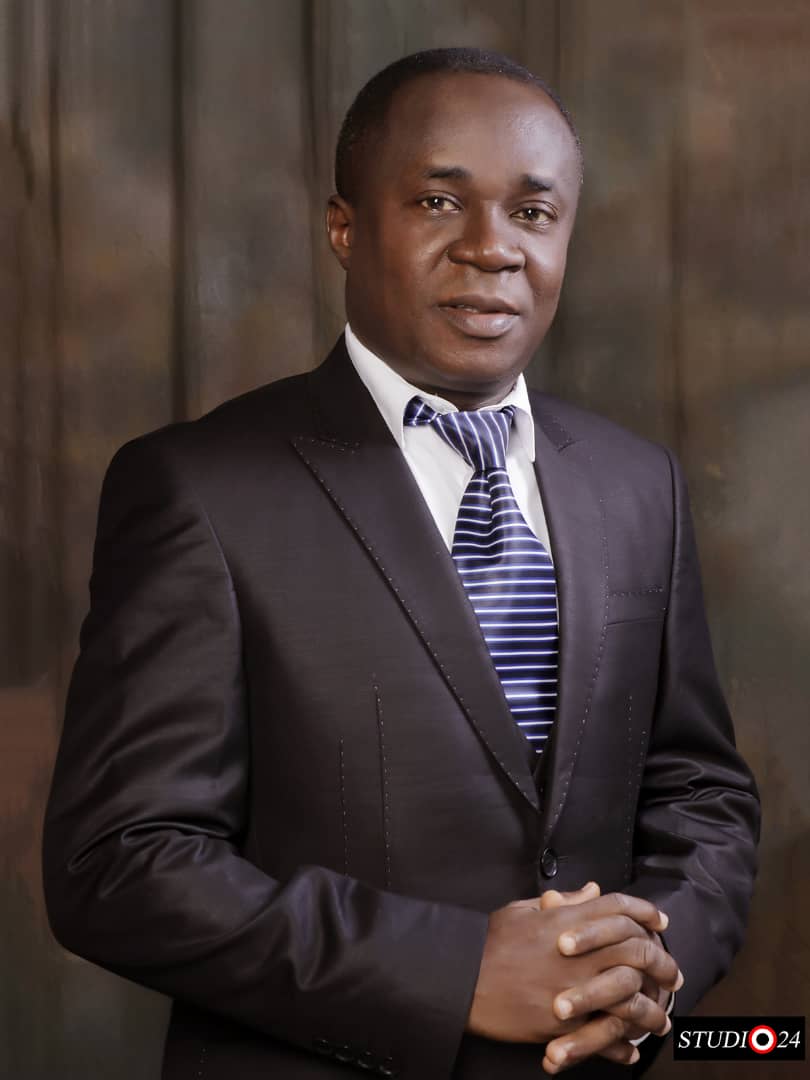
Prof Uche Uwaleke
The renewed debate over fuel subsidy in Nigeria is hardly surprising. As the country approaches another election cycle, the question of whether the subsidy should be restored has once again moved to the centre of political discourse.
For many Nigerians, the issue is deeply personal. The removal of the subsidy has significantly increased the cost of petrol, transportation, food and virtually every activity dependent on energy. It is therefore understandable that any political promise to make petrol cheaper would resonate with a population struggling with the rising cost of living.Yet, the debate should go beyond the immediate attraction of cheaper petrol.
Nigeria must ask a more fundamental question: what is the most economically sustainable way to use the country’s scarce public resources, and how can those resources be deployed to improve the welfare of citizens over the long term?It is in this context that the removal of the fuel subsidy should be understood. The reform was necessary because the old subsidy regime had become an enormous burden on public finances, while also creating significant opportunities for arbitrage, smuggling, rent-seeking and other sharp practices. According to figures cited in recent publications on the subject, Nigeria spent more than N15 trillion on fuel subsidy between 2006 and 2023, while more than N3 trillion was spent in the first five months of 2023 alone, before the subsidy was eventually removed.
The opportunity cost of such expenditure was enormous. Every naira devoted to keeping petrol artificially cheap was a naira that could not simultaneously be devoted to roads, schools, hospitals, security, agriculture, public transportation or other investments capable of expanding the productive capacity of the economy. The question, therefore, should not be whether Nigerians want cheaper petrol. Of course, they do. The more important question is whether Nigeria could continue to spend such enormous sums subsidizing petrol consumption when those resources could arguably generate greater social and economic returns elsewhere.
This is the central economic argument for the reform. A government cannot indefinitely borrow or divert scarce resources to subsidize consumption without compromising its capacity to invest in production. A cheaper pump price may provide immediate relief, but if it is achieved at the expense of investment in infrastructure, education, healthcare and productive enterprise, society eventually pays the price elsewhere.
Indeed, the old arrangement was particularly problematic because the benefits of the subsidy were not necessarily confined to those who needed government assistance most. A universal subsidy on petrol effectively subsidized consumption by everyone who purchased the product, including those with the financial capacity to pay the market price. It also created opportunities for fuel diversion and smuggling across Nigeria’s borders. In that sense, subsidizing petrol was not necessarily the same as subsidizing Nigerians.
This distinction remains important in the current debate. It goes without saying that subsidies in themselves are not inherently bad. Governments across the world use subsidies as policy instruments to support strategic sectors, protect vulnerable groups, stimulate production or respond to economic shocks. The critical issue is what is being subsidized, who benefits, how much it costs and whether the intervention achieves a clearly defined economic objective.
Nigeria should therefore be moving away from subsidies that primarily encourage consumption and towards interventions that stimulate production. If government must deploy scarce resources through subsidies, those resources should preferably be directed towards areas capable of expanding productive capacity, creating employment, reducing costs and strengthening the economy. Agriculture, manufacturing, transportation, and energy infrastructure are obvious areas where such an approach could yield wider economic benefits.
This does not mean that the hardship arising from subsidy removal should be ignored. On the contrary, the social consequences of the reform must be taken seriously. The sharp increase in the price of petrol has fed directly and indirectly into transportation costs, food prices, household expenditure and the operating costs of businesses. The combination of subsidy removal and other economic adjustments has placed considerable pressure on household incomes.
Government therefore has a responsibility to cushion the impact of reform, particularly for the poorest and most vulnerable citizens. But the solution should not necessarily be a return to an expensive and opaque universal petrol subsidy. Targeted social protection, improved public transportation, support for farmers and small businesses, and investments that reduce the cost of producing and moving food would provide a more sustainable response.
Be that as it may, the greater concern is what has happened to the resources and fiscal space created by the reforms. The Federal Government has reported that the fuel subsidy removal and foreign-exchange market reforms generated N15.8 trillion in additional resources for the Federation between June 2023 and December 2025. According to the figures attributed to the Finance Minister and Coordinating Minister of the Economy, N5.4 trillion accrued to the Federal Government, while N10.4 trillion went to states and local governments through the Federation allocation system.
The government has also explained that the N15.8 trillion should not be understood as a sum of money sitting in a separate account labelled subsidy savings. Rather, the gains were reflected largely in increased revenue collections arising from the reforms, including the higher naira value of dollar-denominated customs duties and other government revenues. The government further reported that it generated an additional N3.1 trillion in independent revenue during the period, while incremental borrowing amounted to N11.9 trillion, which it argued would have been significantly higher without the fiscal space created by the reforms.
These figures are significant and demonstrate that the reforms have produced fiscal gains. They also suggest that the removal of subsidy, together with foreign-exchange reform, has altered the government’s revenue position in a substantial way.
But fiscal gains alone cannot be the final measure of success. The Nigerian citizen who is paying considerably more to commute to work, feed a family or run a small business is unlikely to be persuaded by an improvement in government revenue figures unless that improvement eventually translates into visible improvements in living conditions. People experience economic reforms through the prices they pay and the opportunities available to them. They therefore have every right to ask what they are receiving in return for the sacrifice they have been asked to make.
This is where I believe there is a missing link in the implementation of the subsidy-removal reform: the absence of a sufficiently visible and measurable framework for linking the gains from the reform to specific development outcomes.
The expected savings and additional resources should have been more deliberately ring-fenced for clearly identified projects at both the federal and state levels. Nigerians should be able to see, for example, that a particular road, hospital, school, agricultural programme, public transportation project or other development intervention was financed from the fiscal space created by the reform. Such a system would not only improve transparency and accountability; it would help government build public confidence in a reform that has imposed considerable costs on citizens.
Nigeria has precedents for this approach. The Petroleum Trust Fund associated with the Abacha administration was established around a specific development mandate and became particularly associated with road projects. The Jonathan administration’s Subsidy Reinvestment and Empowerment Programme, popularly known as SURE-P, was similarly designed around the deployment of resources associated with subsidy reform to specific programmes.
There are legitimate questions about the implementation and effectiveness of these past initiatives, but the broader lesson remains relevant: when citizens are asked to endure a painful economic adjustment on the promise of a better future, government must make that future sufficiently visible.
The reform requires a social contract. Citizens are being asked to pay more today on the understanding that the country will become fiscally stronger, more productive and better able to provide public goods tomorrow. Tomorrow, however, cannot remain an indefinite promise.
This is also why the argument that subsidy removal has generated additional resources must be accompanied by stronger accountability from the states. If states and local governments have received substantially higher allocations, citizens should be able to demand evidence of how those resources are being used. Increased allocations should translate into better rural roads, water supply, primary healthcare, basic education, agricultural support, local infrastructure and other services that directly affect people’s lives.
The same principle applies at the federal level. If the Federal Government has gained additional fiscal space, Nigerians should be able to identify the development outcomes associated with it. Transparency should not stop at reporting how much money has been generated. It should extend to showing how the resources have been deployed and what they have achieved.
The other major requirement is continued liberalization and investment in the petroleum sector. The removal of the subsidy should not be viewed as the end of reform but as part of a broader process of restructuring the industry. The Petroleum Industry Act provides an important framework for creating a more commercially oriented, competitive and investment-friendly petroleum sector. The objective should be to encourage more players and more private investment across the value chain.
Particular attention should be paid to domestic refining. Nigeria cannot sustainably resolve the problem of high petrol prices simply by changing the mechanism through which the government supports consumption. The country must expand its capacity to refine crude oil domestically and create genuine competition among refiners and petroleum marketers.
This should include encouraging investment in modular refineries, which can complement larger refining facilities and increase the number of participants in the downstream petroleum market. More competition, more refining capacity and greater domestic supply should, over time, place downward pressure on prices and reduce the economy’s exposure to the cost and volatility associated with imported refined products.
There is also a case for government to make renewed efforts to revamp its existing refineries while considering appropriate forms of partial privatization or strategic private-sector participation. The objective should not be government ownership for its own sake, but efficiency, accountability and reliable production. If private capital and expertise can make public assets more productive, government should be willing to explore such arrangements.
It is a no-brainer that the most sustainable way to bring down the cost of petrol is not to keep subsidizing it indefinitely but to reduce the cost of producing and supplying it. That is why the current political debate over whether to restore subsidy should be approached with caution. In this regard, proponents of a return to subsidy must explain how much the policy would cost, how it would be financed, who would benefit and how the country would prevent a return to the corruption, smuggling, arbitrage and opacity associated with the old system.
A subsidy may offer immediate relief, but it is not free. Somebody must pay for it. If government pays, then the money comes from revenue, borrowing or expenditure that could otherwise have been directed elsewhere. The opportunity cost must therefore always be part of the conversation.
By the same token, those defending subsidy removal must also accept that the reform cannot be judged solely by the amount of money government saves or the increase in government revenue. The ultimate test must be whether the reform helps Nigeria build a more productive economy and whether ordinary Nigerians eventually experience tangible improvements in their standard of living.
Indeed, Nigeria needs to move beyond the false choice between cheap petrol and economic hardship. The real objective should be to build an economy in which Nigerians can afford the energy they consume because incomes are rising, production is expanding, transportation is becoming more efficient and domestic refining is reducing supply costs.
The country should therefore stay the course on petroleum-sector reform while correcting the weaknesses in the implementation of subsidy removal. The government should strengthen targeted social protection, improve public transportation, invest more heavily in agriculture and other productive sectors, promote domestic refining, encourage competition and make the use of the additional fiscal resources more transparent and measurable.
Most importantly, the savings and fiscal gains from difficult reforms should be converted into assets and productive capacity that will continue to benefit Nigerians long after the political debate over subsidy has ended. Nigerians do not necessarily need cheap petrol forever. What they need is an economy in which they can afford the petrol they buy.
All said, the success of subsidy removal should therefore not be measured simply by whether government stopped paying the subsidy but by whether it succeeded in converting that difficult sacrifice into a more productive economy, stronger public services, increased domestic production and a better quality of life for the ordinary Nigerian.
Prof Uche Uwaleke is Director of the Nasarawa State University Institute of Capital Market Studies and President of the Capital Market Academics of Nigeria.
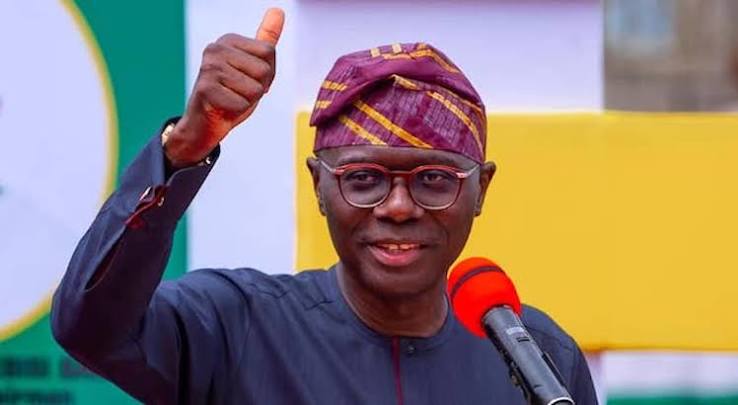
Lagos State Govornor Babajide Sanwo-Olu of has described Prince Tajudeen Olusi, Chairman of the Governance Advisory Council of the Lagos Chapter of All Progressives Congress (APC), as an epitome of loyalty, trust, integrity and wisdom.
Sanwo-Olu said this in a congratulatory message to Olusi, the Baba Adini of Yorubaland and Atobatele of Ekiti, on his 90th birthday anniversary.
The governor described the nonagenarian as a father, whose counsel helped his administration to navigate challenges.
“Baba has taken me as a son; in fact, I am his political son.
He has guided me and offered advice on several occasions on matters of politics and governance while maintaining respect for the office I occupy.“He is a rare human being, whose wisdom, patience and peacemaking abilities remain invaluable,” he said.
Sanwo-Olu said Olusi remained a repository of knowledge on the political and historical development of Lagos and the old Western Region of Nigeria.
According to him, the elder statesman has an exceptional understanding of Nigeria’s political evolution.
“He can effortlessly recount events that shaped political decisions, from the days of the late sage Chief Obafemi Awolowo’s Action Group to the current republic,” he said.
The governor also commended Olusi for his loyalty to the APC.
“Baba Olusi firmly believes that the party is supreme.
“He often emphasises that no political group or association can stand the test of time if members fail to respect and abide by the party’s decisions,” Sanwo-Olu said.
He prayed for a longer life and continued good health for the elder statesman.
“On behalf of my family and the good people of Lagos State, I pray that Baba enjoys good health for the rest of his life.
“I wish Prince Oluyole Olusi a happy 90th birthday anniversary,” the governor said. (NAN)

By Tony Obiechina, Abuja
The Director-General of the National Pension Commission (PenCom), Omolola Oloworaran, on Tuesday disclosed that more than 241,000 retirees under the Contributory Pension Scheme (CPS) have benefited from increases in their monthly pensions under the reforms introduced by President Bola Tinubu’s administration.
According to Oloworaran the adjustment, implemented under Pension Boost 1.
0, raised the combined monthly pension payments to the beneficiaries from N12.15bn to N14.83bn.She described the increase as a landmark reform, noting that it was the first time retirees under the contributory pension scheme had received a pension adjustment across the board.
She said the initiative was designed to improve retirement security and ensure that pensioners benefit from reforms in the country’s pension industry.
The PenCom boss also announced a major review of pensions under the Nigeria Social Insurance Trust Fund (NSITF), saying beneficiaries had waited 21 years for an adjustment.
She said the commission invoked the relevant legal provisions to facilitate the review, which resulted in a 1,173 per cent increase in pensions for eligible NSITF retirees.
The adjustment raised the combined monthly pension payments to 2,168 NSITF retirees from N12.56m to N159.95m.
Oloworaran added that the Federal Government had paid N8.7bn in outstanding pension arrears owed to the beneficiaries, bringing relief to retirees who had waited years for their entitlements.
She said beyond the NSITF pension review, the Tinubu administration had approved a N758bn intervention to settle inherited federal government pension liabilities, some of which had remained outstanding since 2007.
According to the PenCom director-general, payments under the intervention had reached hundreds of thousands of beneficiaries, helping to clear obligations accumulated over successive administrations.
She further disclosed that accrued pension rights were being credited to eligible federal employees ahead of retirement following a verification and enrolment exercise covering workers due to retire up to December 2029.
Oloworaran said the commission had also introduced a zero-waiting-time policy to ensure that federal employees begin receiving their pensions upon retirement, eliminating the prolonged delays that previously characterised the process.
She added that retirement benefit applications, which had taken up to 21 months to process, were now subject to a mandatory 48-hour service standard for pension fund administrators.
The reforms, she explained, were aimed at improving service delivery and ensuring that retirees could access their entitlements without unnecessary bureaucratic delays.
The PenCom DG also highlighted the introduction of an exit benefit scheme for eligible employees of treasury-funded ministries, departments and agencies with at least 10 years of qualifying service.
Under the scheme, eligible retirees receive an additional benefit equivalent to 100 per cent of their annual emoluments, alongside their normal pension benefits.
Oloworaran disclosed that the first batch of 175 retirees received approximately N1.1bn under the scheme in August
While improving benefits for existing retirees, she said PenCom was also working to expand pension coverage to Nigerians in the informal sector, including traders, artisans, farmers and transport workers.
She explained that the commission was deploying accredited pension agents to markets, workshops and other business locations to encourage self-employed Nigerians to participate in the Personal Pension Plan.
The initiative, she said, was intended to address low pension penetration in the informal sector and provide more Nigerians with opportunities to build retirement savings.
Providing an update on the growth of the pension industry, Oloworaran said 938,229 Nigerians joined the pension scheme between July 2024 and June 2026.
She added that pension assets increased from N20.7tn in July 2024 to N31.48tn in June 2026, representing growth of more than N10.7tn in less than two years.
The director-general also disclosed that PenCom had recovered N36.6bn from employers who failed to remit pension contributions deducted from workers’ salaries as of July 2026.
She said recoveries in 2025 set a record for annual collections since the introduction of the Contributory Pension Scheme, adding that the commission had already surpassed the previous year’s record in 2026.
Oloworaran warned employers against deducting pension contributions without remitting them into workers’ Retirement Savings Accounts, describing the practice as a breach of trust and the law.
Going forward, she said the commission was preparing to introduce additional measures to strengthen retirement security, including a minimum pension guarantee and a healthcare programme for low-income retirees.
The proposed healthcare initiative, known as PenCare, is expected to provide essential medical services at no cost to an initial 30,000 eligible retirees.
She explained that the minimum pension guarantee would establish a floor below which eligible retirees under the contributory pension scheme should not receive pension payments.
According to her, the two initiatives are part of broader efforts to strengthen social protection, improve retirement outcomes and expand access to pension benefits.
Oloworaran also disclosed that PenCom had begun work on a Pension Transformation Agenda 2030, which would establish clear priorities and measurable targets for the industry while strengthening accountability in pension administration.
She said the commission would continue to focus on protecting contributors’ savings, improving the payment of retirement benefits and ensuring that more Nigerians could look forward to financial security after leaving active employment.
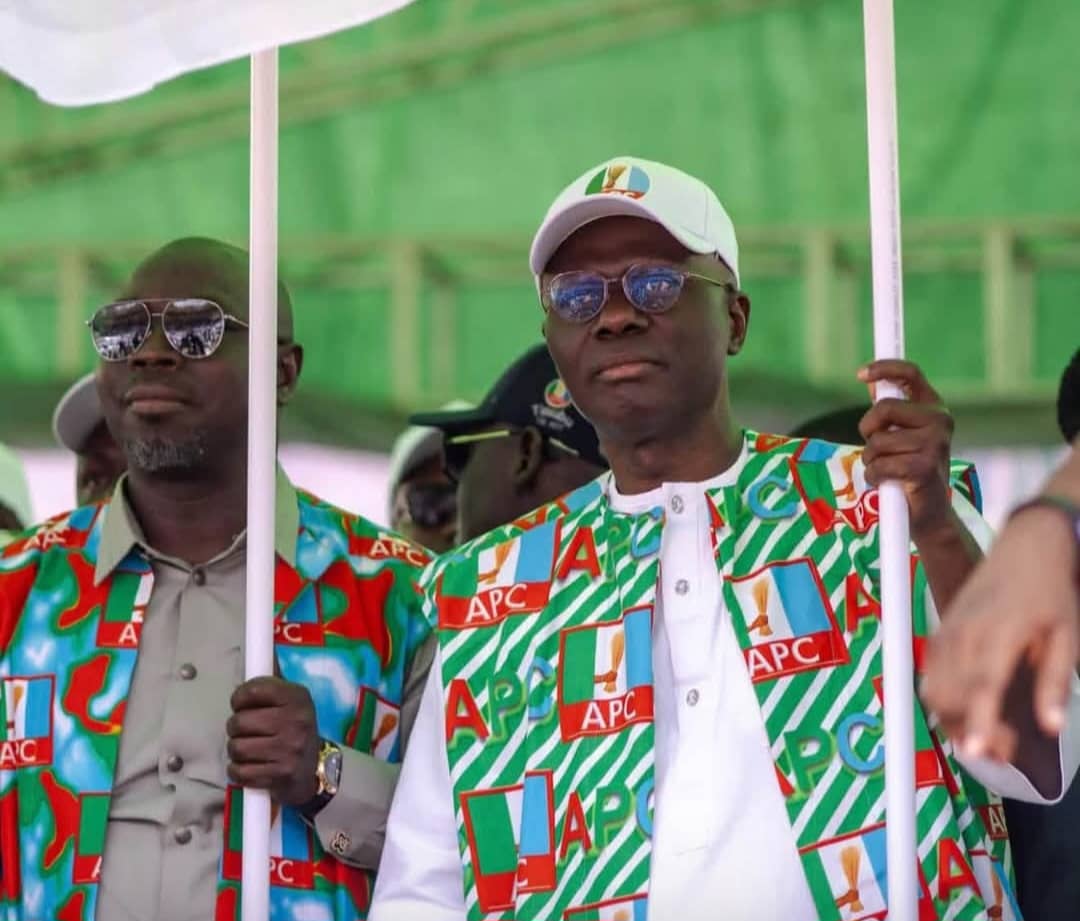
Leader of the PBAT Door-to-Door Movement, Government Ekpemupolo, has advised the people of Lagos State not to allow a repeat of what played out in the 2023 election in the state in the 2027 presidential election.
He called on the people to take advantage of the ongoing continuous voter registration exercise by the Independent National Electoral Commission (INEC) and get their Permanent Voters Cards (PVCs) to enable them vote massively for one of their own, President Bola Ahmed Tinubu.
Ekpemupolo, widely known as Tompolo, who was represented by Kestin Pondi, gave the charge in Lagos, on Tuesday, during a campaign rally for Tinubu’s reelection, during which he also presented 57 campaign vehicles to state coordinators.
“What happened in 2023 must not repeat. He must win convincingly in 2027,” he said.
He described Tinubu as a selfless and courageous leader who did not care about his reelection but went on carrying out bold reforms that are already yielding results and which many Nigerians are benefitting from.
Ekpemupolo pointed out that, the fact that Lagos is today referred to as a city for all Nigerians is all thanks to the foundation laid by President Tinubu, which successive governors have built on, and now that he has a higher responsibility, there was the need for his own people to stand solidly behind him.
“Lagos is the city for all Nigerians because someone stood firm to restructure and reform it. “From the time he came into office in 1999 up to 2007 that he left, Lagos was the envy of other states.
“Today, he has a higher responsibility, an opportunity to replicate the Lagos success story in Nigeria through reforms. There is massive development across the states today because reforms are working,” he stated.
Ekpemupolo said to ensure that the reforms continue, the people of Lagos and all Nigerians must take the message to every door and everyone that Tinubu is the man for Nigeria.
Also speaking, Governor Babajide Sanwo-Olu, pointed out that Nigeria was attaining economic stability under the Tinubu-led administration.
He advised the people to ignore the antics of opposition politicians who have no plan for Nigeria, but only desperate to win elections and have been moving from one party to another, demonstrating a lack of consistency, which he emphasised was bad quality for any leader.
Sanwo-Olu said Tinubu has constructed more roads than previous administrations in three years, given succour to students, increased minimum wage and made money available for payment of pensions.
“Why won’t we vote for him? The entire Lagos is for Tinubu. All our votes are for Tinubu. You’ve done it before, you’ll do it again. “We will touch every corner of Lagos with our message to reelect Tinubu. Go out and convince everyone that Tinubu is the candidate to vote,” the governor stated.
Earlier, National Coordinator of the movement, Sunday Asuku, urged the people of Lagos to go out and get their PVCs to enable them vote massively for Tinubu.
“We must stand our ground and deliver Tinubu with PVCs, not with guns or intimidation. Lagos must not put their son, Tinubu, to shame,” he stated.
He said in the 2027 presidential election, Nigerians must make a bold statement to retire “serial contesters” who he described as “enemies of Nigeria.”



Sanwo-Olu Celebrates Prince Olusi at 90
ShareLagos State Govornor Babajide Sanwo-Olu of has described Prince Tajudeen Olusi, Chairman of the Governance Advisory Council of the Lagos...


Akwanga Set to Host Dignitaries for Spotlight Magazine Launch
ShareBy Tambaya Julius, Abuja Akwanga, Nasarawa State, is set to host prominent personalities from within and outside the state as...
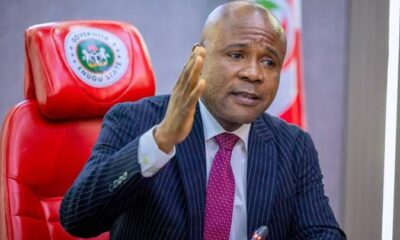

Mbah Tasks SEDC on Gas Pipeline, Support for Industrial Revolution
ShareFrom Sylvia Udegbunam, Enugu Enugu State Governor, Dr. Peter Mbah, has urged the South East Development Commission (SEDC) to prioritise...


PVCs of 2026 Registrants Not Available Yet — INEC
ShareThe Independent National Electoral Commission (INEC) said Permanent Voter Cards (PVCs) for persons who registered between Jan. 5 and July...
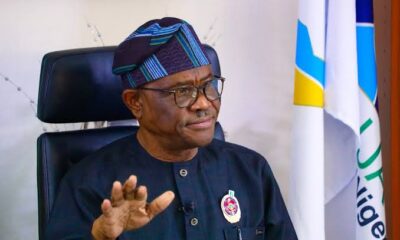

Rainbow Coalition: Wike Assures APC Governors Have Nothing to Fear
ShareBy Laide Akinboade Abuja Minister of the Federal Capital Territory (FCT), Nyesom Wike, has defended the emerging political coalition supporting...
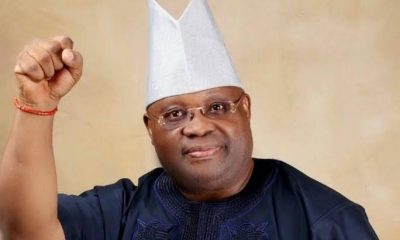

Group Welcomes Appointment of Adeleke as Tinubu’s Campaign Coordinator
ShareFrom Ayinde Akintade, Osogbo The Imole Campaign Council (TICC) has welcomed the appointment of Governor Ademola Adeleke as the Osun...


FG Raises Pensions from N12.15bn to N14.83bn for 241, 000 Retirees
ShareBy Tony Obiechina, Abuja The Director-General of the National Pension Commission (PenCom), Omolola Oloworaran, on Tuesday disclosed that more than...
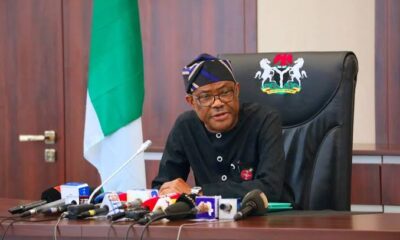

Wike Accuses NLC of Politicizing FCT Teachers’ Strike
Share By Tambaya Julius, Abuja The Minister of the Federal Capital Territory (FCT), Nyesom Wike, has accused the Nigeria Labour Congress...

APC Unveils Revised 2027 Presidential Campaign Council, Retains Yari, DG
ShareBy Tambaya Julius, Abuja The All Progressives Congress (APC) has unveiled its revised Presidential Campaign Council for the 2027 general...

Tinubu’s Re-election: Don’t Allow Repeat of 2023, Tompolo Tells Lagos
ShareLeader of the PBAT Door-to-Door Movement, Government Ekpemupolo, has advised the people of Lagos State not to allow a repeat...