
POLITICS
Mbah Tasks SEDC on Gas Pipeline, Support for Industrial Revolution

From Sylvia Udegbunam, Enugu
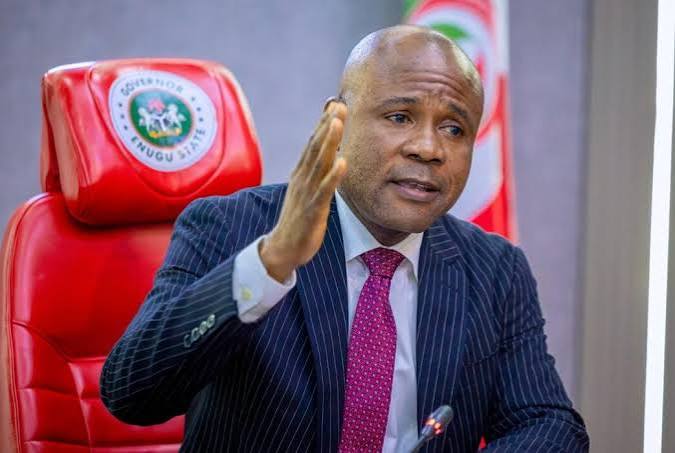
Enugu State Governor, Dr. Peter Mbah, has urged the South East Development Commission (SEDC) to prioritise the development of a regional gas pipeline, railway network and initiatives to accelerate industrialisation in the region.
Mbah said the proposed infrastructure would boost economic activities, improve connectivity among the five SouthEast states and strengthen regional integration.
He also urged the National Assembly to ensure adequate funding for the Commission, describing it as a strategic platform for addressing the region’s development needs.
The governor made the calls on Monday when he received the Senate Committee on the South East Development Commission led by its Chairman, Senator Orji Uzor Kalu.
The delegation, which paid a courtesy call to the governor on the sidelines of its oversight visit to have a firsthand assessment of the projects and programmes of the SEDC, was also accompanied by the management of the Commission, led by its Managing Director, Mark Okoye.
The governor identified a high-pressure gas pipeline connecting major cities across the South East as a critical intervention that could provide industries with reliable access to gas and stimulate large-scale industrial development.
He argued that the region should benefit from gas resources produced within the wider southern part of the country, noting that pipeline infrastructure already transports gas to other parts of Nigeria.
Mbah also proposed an inter-state railway network linking major cities across the five South East states to facilitate trade, improve transportation and reduce pressure on the region’s road network, urging the states to work together on a common design for the proposed railway system, with the SEDC providing a platform for coordination and regional collaboration.
“We are hoping that, given the coming into effect of the SEDC, we will be able to use it as a platform to bring all the other states together to have a common design on the South East railway line,” he said.
The governor further highlighted the commission’s role in supporting agriculture and technology-driven enterprises, citing the flag-off of a 200-hectare integrated Agro Development Programme at Nomeh Unateze, Enugu State, as one of its interventions in the agricultural sector.
He assured the commission of the state government’s support in providing an enabling environment for the project.
Mbah also stressed the need for the SEDC to provide funding opportunities for young entrepreneurs whose businesses had attained the minimum viable product stage, enabling them to expand their operations and contribute to economic growth.
He called on the senators to support the Commission in securing the funding required to undertake the project, describing it as a potential catalyst for an industrial revolution in the region.
Earlier, Kalu commended the Mbah administration for its interventions in infrastructure, education, healthcare, water supply and transportation.
He cited the development of Smart Green Schools, more than 7,000 classrooms, Type II primary healthcare centres across the state’s 260 electoral wards, and the state’s multimodal transportation system.
The senator also acknowledged Mbah’s efforts to strengthen engagement between the South East and the Federal Government, expressing appreciation to President Bola Tinubu for facilitating the establishment of the SEDC.
Kalu disclosed that the issue surrounding the location of the Commission’s headquarters had been resolved, following the Enugu State Government’s provision of temporary office accommodation and a site for its permanent headquarters.
“We wanted to make sure that the commission locates to Enugu State as soon as possible, and this has been a subject of disagreement. But today, I can assure you that the issue is settled,” he said.
He thanked the governor for the support provided to facilitate the commission’s take-off and assured him of the committee’s continued support for its activities.
By David Torough, Abuja
Suspected political thugs on Thursday disrupted a town hall meeting organised by the Nigeria Democratic Congress (NDC) in the Oregun area of Ikeja, Lagos State, attacking party supporters, vandalising vehicles and triggering violent confrontations shortly before the scheduled arrival of the party’s presidential candidate, Peter Obi, and his running mate, Rabiu Kwankwaso.
The incident, which occurred around 11 a.
m. at the Classique Event Centre along Kudirat Abiola Way, caused panic among attendees and residents of the area, forcing participants to flee for safety and motorists to make abrupt U-turns to avoid the violence.A supporter who sustained a head injury alleged that the attackers invaded the premises in an attempt to prevent the political gathering from holding. He said some NDC members mobilised to resist the assailants, resulting in a confrontation that forced the attackers to retreat.
The violence reportedly escalated as some supporters pursued the fleeing assailants, with one suspected attacker apprehended at a car park and subsequently beaten by a group of young men. A video of the incident showed several individuals surrounding the suspect and assaulting him with sticks.
The confrontation later spilled onto Kudirat Abiola Way, disrupting traffic along the busy commercial corridor, while police officers reportedly fired shots into the air to disperse the crowd.
Armed policemen and security patrol vehicles were subsequently deployed to the event centre to restore order and prevent further escalation.
Reacting to the attack, the NDC accused the ruling All Progressives Congress (APC) of promoting political violence and attempting to undermine democratic participation ahead of the 2027 general elections.
The party’s National Publicity Secretary, Osa Director, described the incident as unfortunate and unwarranted, accusing the APC of resorting to what he called barbaric political tactics.
Director said the attacks on NDC members reflected a dangerous pattern of political hostility that could undermine Nigeria’s democratic process.
Similarly, the NDC Campaign Council spokesperson, Dr Constance Ikokwu, condemned the incident, describing it as an assault on democracy, citizens’ fundamental rights and freedom of political association.
She demanded an immediate investigation, the arrest and prosecution of those responsible, insisting that no political party had the right to use violence or intimidation to silence opposition voices.
Ikokwu urged Nigerians not to be discouraged by the incident, calling on citizens to exercise their democratic rights during the 2027 elections.
She maintained that the NDC and its supporters would not be intimidated or prevented from participating in the political process.
According to him, the party’s leaders, elected officials, candidates and other stakeholders were engaged in the campaign activities, which he said were taking place far from Ikeja.
Oladejo categorically denied that the APC sponsored, encouraged or participated in any attempt to disrupt the NDC gathering.
He challenged the opposition party to submit any evidence linking the attackers to the APC to relevant security agencies rather than making allegations through public statements and social media.
The APC spokesman also called on the Lagos State Police Command, the Department of State Services (DSS) and other security agencies to investigate the incident and strengthen security ahead of the 2027 elections.
He further urged the NDC to address what he described as internal challenges rather than continually blaming the ruling party for developments within its political environment.
The presidential and National Assembly elections are scheduled for January 16, 2027, while governorship and state assembly elections are slated for February 6, 2027.
Lagos is expected to remain a major political battleground, given its strategic importance and electoral history. In the 2023 presidential election, the Independent National Electoral Commission (INEC) declared Obi the winner in the state, where he defeated President Bola Tinubu, a former Lagos governor.
As of the time of filing this report, the identities of the attackers, their alleged sponsors and the circumstances surrounding the violence had not been independently established.
The Lagos State Police Command was yet to issue an official statement detailing the incident or announcing arrests.
The attack has once again brought the issue of political security to the fore, with growing calls for security agencies to investigate the incident, identify those responsible and ensure that political parties and their supporters can freely exercise their democratic rights without fear of intimidation or violence.
By David Torough, Abuja
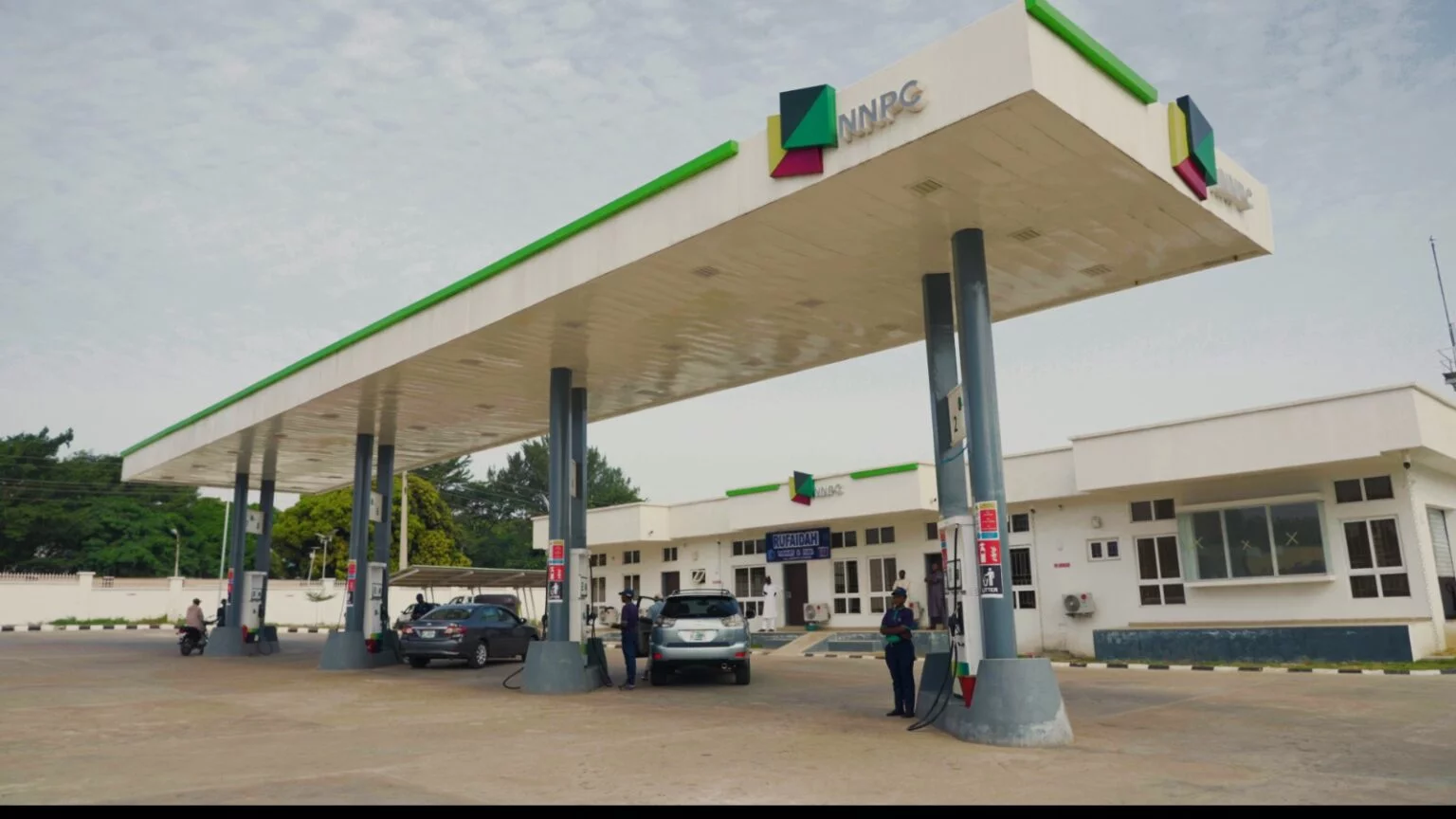
Former Group Chief Executive Officer of the Nigerian National Petroleum Company Limited (NNPCL), Mele Kyari, has denied allegations that ₦210 trillion was missing from the company’s financial records, insisting that the disputed figures represent accounting entries and not evidence of stolen or diverted funds.
Kyari made the clarification on Tuesday when he appeared before the Senate Committee on Public Accounts, chaired by Senator Ibrahim Dankwambo (PDP, Gombe North), to respond to audit queries raised over NNPC’s financial statements covering 2017 to 2023.
The former NNPC chief, who led the company from 2019 to 2025, maintained that no money was lost under his leadership, describing the controversy surrounding the ₦210 trillion as a misunderstanding of standard accounting procedures.
“I wish to confirm that nothing was lost. It is simply not possible that such an amount could have been lost under my care and leadership. The matter relates to accounting entries, which have nothing to do with any financial loss. They are bookkeeping issues, and I believe the appropriate explanations have been provided in my report,” he told the lawmakers.
The ₦210 trillion figure under investigation comprises approximately ₦103 trillion in accrued expenses and ₦107 trillion in sundry receivables, both flagged by the Office of the Auditor-General of the Federation.
Explaining the discrepancies, Kyari said accrued expenses represent obligations owed by NNPC to other parties, while receivables are funds owed to the company by third parties. He argued that the two categories are separate accounting items that must be treated independently and should not be added together and interpreted as missing public funds.
He insisted that the explanations contained in his written submission addressed the issues raised by the auditors, urging the committee to consider the entries within their proper accounting context.
Kyari also dismissed allegations that NNPC spent ₦5 billion on changing its name from the Nigerian National Petroleum Corporation to the Nigerian National Petroleum Company Limited following the enactment of the Petroleum Industry Act, 2021.
He explained that the incorporation process cost approximately ₦2.99 billion, representing statutory payments made to government institutions, including the Corporate Affairs Commission and the Federal Inland Revenue Service.
According to him, NNPC initially made the payment on behalf of the Federation and subsequently charged the amount to the government’s revenue account through what was formerly referred to as the NAPIMS account.
He maintained that the transaction was a legitimate accounting entry and not expenditure incurred for merely changing the company’s name.
The former GCEO also apologised for failing to honour previous invitations by the Senate committee, including an earlier sitting scheduled for June 10, attributing his absence to ill health and family-related circumstances.
He told the lawmakers that he had been in and out of hospital on medical grounds, explaining that his failure to appear was not intended to undermine the authority of the National Assembly.
Defending his stewardship of the national oil company, Kyari said his administration inherited an organisation that had struggled with financial losses but subsequently transformed it into a profitable enterprise.
He recalled that NNPC recorded a loss of about $803 billion in 2018, a year before he assumed office as Group Managing Director in 2019. He said his administration embarked on restructuring and operational reforms that resulted in sustained profitability for the first time in the company’s history.
Kyari also highlighted the publication of NNPC’s financial records as one of the major milestones of his administration, describing the move as a significant departure from the company’s previous practice.
However, the committee chairman, Dankwambo, said the lawmakers would subject Kyari’s explanations and supporting documents to further scrutiny before reaching any conclusion.
He explained that the former GCEO’s submission would be circulated among committee members for detailed examination, adding that Kyari and other relevant officials could be invited again if further clarification became necessary.
“We shall interrogate the figures submitted by the former GMD to know whether to invite him again. For now, he has responded to the two issues relating to his leadership of NNPC during the period under review,” Dankwambo said.
Kyari’s appearance followed months of controversy over the Senate’s investigation into unresolved audit queries involving NNPC’s financial records between 2017 and 2023.
The investigation had generated tensions between the former oil company chief and lawmakers after he allegedly failed to honour several invitations to appear before the committee.
The committee’s demand for his appearance followed a motion by Senator Victor Umeh, representing Anambra Central, amid growing frustration over his repeated absence.
Senator Adams Oshiomhole had also insisted that Kyari must personally account for his stewardship, urging the committee to consider issuing an arrest warrant to compel his appearance.
The Senate, however, subsequently clarified that no committee could issue, authorise or execute an arrest warrant outside the provisions of the Legislative Houses (Powers and Privileges) Act and without the express approval of the Senate President.
The Red Chamber also distanced itself from Oshiomhole’s description of NNPC as “a bunch of criminals and thieves”, stressing that the remarks did not represent the official position of the Senate.
With Kyari having presented his defence, attention has now shifted to the committee’s examination of the documents and explanations submitted by the former GCEO.
The outcome of that review is expected to determine whether the disputed ₦210 trillion entries have been adequately explained or whether further investigations and invitations will be necessary.
By Eddy Ochigbo, Abuja
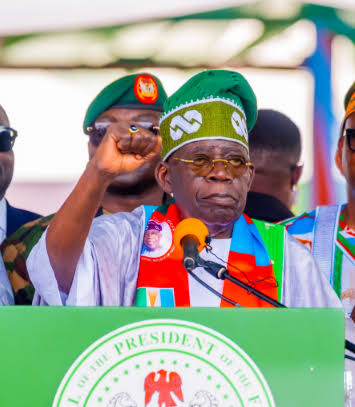
The All Progressives Congress (APC) has unveiled an ambitious four-pillar manifesto for President Bola Tinubu’s proposed second term, promising to consolidate ongoing economic reforms, tackle insecurity, expand infrastructure and translate policy gains into improved living conditions for Nigerians between 2027 and 2031.
The 109-page document, titled Renewed Hope Agenda 2.
0, was unveiled on Tuesday at the Shehu Musa Yar’Adua Centre, Abuja, under the theme, “Translating Reforms to Shared Prosperity.”The manifesto outlines a policy roadmap built around four strategic pillars: Secure and Resilient Nation; Better Quality and More Affordable Life for Every Nigerian; Energy, Infrastructure and Economic Growth; and Effective and Accountable Governance.
The party said the framework represents a consolidation of the administration’s original eight-point Renewed Hope Agenda, with emphasis on making the benefits of its economic reforms more tangible to households, businesses and communities.
Speaking at the unveiling, the APC Presidential Campaign Council spokesperson and Minister of Solid Minerals Development, Dr. Dele Alake, described the manifesto as a strategic blueprint for transforming Nigeria’s economy and improving citizens’ welfare.
Alake commended Tinubu for what he described as the courage to implement far-reaching economic reforms despite the difficulties associated with them, expressing confidence that the long-term benefits would outweigh the immediate challenges.
“Kudos to President Bola Ahmed Tinubu for courageously implementing the reforms against all odds. The resultant benefits would be gargantuan,” he said.
The Minister of Industry, Trade and Investment and Deputy Director of the Directorate of Manifesto Development, Dr. Jumoke Oduwole, said the central objective was to ensure that Nigerians began experiencing measurable benefits from the ongoing reforms between now and 2031.
She explained that the policy framework was designed to translate economic adjustments into improved livelihoods, increased productivity and inclusive opportunities.
In his message contained in the manifesto, Tinubu said his administration had taken difficult decisions since assuming office in 2023, including the removal of petrol subsidy, foreign exchange reforms and tax adjustments, describing them as necessary steps towards strengthening the country’s economic foundations.
He, however, acknowledged that the next phase must focus on delivering practical improvements in the daily lives of Nigerians.
“The coming years must focus on tangible improvements: the food on our tables, the power in our homes, the security of our families, and the dignity of meaningful work,” the President said.
Under the first pillar, Secure and Resilient Nation, the APC pledged to recruit an additional 78,000 security personnel, comprising 28,000 military personnel and 50,000 police officers, to strengthen the country’s security architecture.
The party also promised to establish and equip four additional Army divisions in Makurdi, Ilorin, Jalingo and Benin City, expand police recruitment towards a ratio of one officer to 400 citizens, introduce body cameras and digital policing systems, complete electronic surveillance of mapped borders and strengthen community policing.
The second pillar focuses on improving the quality of life through affordable housing, healthcare, education, employment and social protection.
The manifesto targets the construction of 200,000 affordable housing units through the Tinubu Mass Social Housing Scheme, mortgage financing and private-sector partnerships across the country’s 774 local government areas.
It also promises to recruit 20,000 additional trained teachers, halve the number of out-of-school children by 2031 and expand access to quality education, particularly in rural communities.
In healthcare, the APC pledged to increase health insurance coverage to 40 per cent of Nigerians, reduce out-of-pocket healthcare expenditure from 71 per cent to below 50 per cent and expand functional primary healthcare centres to cover 90 per cent of the target.
On employment, the party promised to halve youth unemployment by 2031, provide skills training for two million young people and expand digital literacy programmes to reach 30 million Nigerians.
The third pillar, Energy, Infrastructure and Economic Growth, places electricity supply, industrialisation, agriculture and transportation at the centre of the proposed second-term economic programme.
The APC projected an annual economic growth rate of six per cent and promised to scale available electricity generation towards 10,000 megawatts, accelerate electricity metering and strengthen transmission and distribution networks.
It also pledged to expand clean energy access to underserved communities, establish at least one flagship industrial hub in each of the six geopolitical zones, more than double non-oil export earnings and create one million export-linked jobs for young Nigerians through talent and services exports by 2030.
The party further promised to complete priority road, rail, port and airport projects to improve trade, reduce transportation costs and stimulate economic activities.
In agriculture, it proposed reducing post-harvest losses by 50 per cent through improved storage, processing and distribution infrastructure, while lowering the cost of transporting food across states.
The manifesto also prioritises investment in irrigation, agricultural research and mechanised farming as part of efforts to boost food production and reduce food prices.
Under the fourth pillar, Effective and Accountable Governance, the APC promised to strengthen the justice system, fight corruption, improve public service delivery and deepen local government autonomy.
The party pledged to extend digital case management to magistrate courts and complete the digitalisation of court processes nationwide by 2029.
It also promised to publish allocations to all 774 local government councils, establish clear performance standards and move federal ministries and agencies towards end-to-end digital public services.
To ensure accountability, the manifesto proposed that every commitment should have a baseline, target, cost, responsible official and reporting date, with progress made available through a public delivery tracker.
“A manifesto is only as strong as the promises a citizen can check,” the document stated, promising annual progress reports and independent verification of implementation.
The APC also identified four measures for delivering its commitments, including recovering public resources, completing existing projects before commencing new ones, attaching measurable targets to promises and enabling citizens to monitor performance.
Meanwhile, Tinubu has reinforced his campaign promises on electricity, employment and the cost of living, declaring that his administration would provide reliable power and strengthen the industrial base if returned to office in 2027.
The President made the pledge on Tuesday while addressing supporters at the APC presidential campaign rally in Dutse, the Jigawa State capital.
He promised to prioritise support for nano, micro, small and medium-sized enterprises, expand employment opportunities and introduce policies to reduce the financial burden on households.
“We will lower the cost of living. We will provide reliable power, not the whole privatisation that is not working. We will provide you with reliable power in Nigeria,” Tinubu said.
He also pledged to sustain the removal of petrol subsidy while continuing government intervention programmes, including the Nigerian Education Loan Fund.
The President further promised that funds recovered by the Economic and Financial Crimes Commission from financial irregularities would be channelled into NELFUND to support students seeking access to higher education.
In agriculture, he promised to establish six mechanised farming service centres across the country’s six geopolitical zones and increase investment in irrigation and agricultural research to boost productivity and food supply.
The promises broadly align with the manifesto’s emphasis on electricity, industrial growth, employment, food security and improved living standards.
At the Abuja unveiling, the Minister of Information and National Orientation, Mohammed Idris, urged Nigerians to acknowledge the administration’s efforts in addressing the country’s economic and security challenges.
Citing improvements along the Abuja-Kaduna Expressway, Idris said the security situation on the corridor had improved significantly compared with previous years when commuters faced persistent threats from kidnappers and terrorists.
He argued that such developments deserved recognition, despite criticisms of the administration’s handling of insecurity.
The manifesto also presented economic indicators as evidence of progress since 2023, including foreign reserves of $55.3bn as of September 2026, gross domestic product growth of 4.43 per cent in the second quarter of 2026 and inflation of 14.63 per cent in September 2026.
It further claimed that N18.72tn was shared among the three tiers of government through the Federation Account Allocation Committee in the first half of 2026, compared with N6.76tn in the corresponding period of 2023.
Tinubu acknowledged that the administration’s work remained unfinished and appealed to Nigerians to support the proposed next phase of its programme.
“The work is far from complete, and I ask once more for your partnership. Let us turn these hard-won reforms into lasting prosperity and build the Nigeria of our highest aspirations,” he said.
The APC maintained that its 2027–2031 agenda would focus on converting economic stabilisation into measurable improvements in household welfare, national security, infrastructure, employment and inclusive development.
The proposed second-term programme, however, will ultimately be judged by the extent to which its ambitious targets translate into tangible results for Nigerians.




Will new entrant, ESDIAC, ease Nigerians’ international call worries?
ShareBy David Torough After decades of frustration in accessing telephone services, Nigerians were relieved when in 2001, the then President...


AHF Launches Comic Book on Menstrual Health Education in Abuja
ShareFrom Attah Ede, Makurdi The Aids Healthcare Foundation (AHF) Nigeria, has revealed that nearly 2 billion people menstruate, with 500...


BBNaija’s Dorathy Begins Breast Reduction Journey
ShareFormer Big Brother Naija housemate, Dorathy Bachor, has taken the first step towards breast reduction surgery, three years after first...


They Planted Juju in my Jacket at Davido’s House – Peruzzi
ShareSinger Peruzzi has narrated how a charm was planted in his jacket during his stay at Davido’s house. Peruzzi was...


Withdraw all Charges within Two Weeks, Speed Darlington Appeals to Burna Boy, Apologises
ShareControversial Nigerian singer Speed Darlington has appealed to Grammy-winning artiste Burna Boy to withdraw all charges against him within two...
AFSNET Business Conference Kicks off in Calabar
ShareFrom Ene Asuquo, Calabar The 6th African sub – sovereign Governments Network Investment Conference has started in Calabar the cross...
NAFOWA Empowers 18 Widows, Donates Tricycles in Bayelsa
ShareFrom Mike Tayese, Yenagoa The Nigerian Air Force Officers’ Wives Association (NAFOWA), Mobility Command, Yenagoa, has empowered 18 widows of...


RMAFC Advocates Fair Share of 13 Per Cent Revenue Derivation Among Oil Producing States
ShareBy Tony Obiechina, Abuja The Revenue Mobilisation Allocation and Fiscal Commission (RMAFC) has advocated a fair distribution of the 13...


Customs CG Tasks Officers on Discipline, Integrity
ShareBy Tambaya Julius, Abuja The Comptroller-General of the Nigeria Customs Service (NCS), Bashir Adewale Adeniyi, has called on officers and...


2027: ADC Asks EFCC, INEC to Probe Alleged APC Cash Distribution
ShareBy Mvendaga Orjime, Abuja The African Democratic Congress (ADC) has called on the Economic and Financial Crimes Commission (EFCC) and...