
BUSINESS
FG’s Loan Facilities Viable to Boost Export Trade – NEPC


The Nigerian Export Promotion Council (NEPC) has described loan and grant facilities provided by the Federal Government as viable tools to boost export trade.
Coordinator of the NEPC in Imo, Anthony Ajuruchi, said this at an engagement forum of non-oil exporters with trade-related agencies, organised by the council, in Owerri, on Wednesday.
Ajuruchi said that with support from government agencies, the export market in Imo and Nigeria at large can afford to expand and compete with global markets.
He urged exporters in Imo to take advantage of the soft loans and grants being provided to grow their businesses.
The Imo/Abia Coordinator of the Nigeria Incentive-Based Risk Sharing System for Agricultural Lending (NIRSAL), Austin Ikeh, said that the forum provided a good avenue to reach actors across the value chain.
Ikeh said that with collaboration with the Nigeria Export Import (NEXIM) Bank, the government can provide support for farmers and exporters.
He advised exporters to get the required certifications by regulating agencies and knowledge of the export business to enable them access government facilities.
Also speaking, Freeman Godwin, the Chief Executive Officer of Belarhem Dynamic International Ventures, exporters of edible food items, identified poor management of goods by airline operators as a major challenge.
He called for improvements, adding that exporters cannot afford waste loan facilities.
“Sometimes, I’ve had to count my losses after experiencing damages to my goods at the warehouse as a result of poor preservation and management by the airlines”, he said.
 | ReplyReply allForwardAdd reaction |
Escalating conflict in the Middle East poses a direct threat to around 14 million barrels per day, or 32% of global seaborne crude oil, that flows through the Strait of Hormuz. For oil products, any Strait of Hormuz disruption would impact 16% of the global products trade, with severe consequences for LPG (liquefied petroleum gas) and naphtha.
Any disruption to tanker transits through the strait would cripple the global trade of oil and oil products.
Strait of Hormuz transit volumes are about 1.5 million barrels per day (b/d) for LPG and 1.2 million b/d for naphtha. Naphtha flows to East Asian crackers are particularly exposed, with more than 37% of those global seaborne volumes transiting the strait.
LPG markets are already tight following last week’s outage at Saudi Aramco’s Juaymah facility. This poses a specific threat to India, which relies heavily on Middle Eastern LPG for residential use. Replacing these short-haul cargoes with longer voyages of LPG from the US would present a severe logistical challenge for countries in Asia.
For middle distillates, diesel flows through the strait are roughly double those of jet fuel. But jet is more vulnerable in terms of overall market share. European jet kerosene buyers are particularly sensitive, as more than half of the continent’s jet fuel imports sail through this strait. In the event of sustained disruption, Europe would need to pivot to alternative suppliers such as India, South Korea, the US, and even Nigeria’s new Dangote refinery.
A similar dynamic also applies to diesel due to Europe’s sanctions on oil products from Russia. As Europe pulls more non-Russian barrels of diesel from the global pool, African buyers may increasingly turn to Russian diesel to fill their gap. Russian refinery throughput fell to 5.15 million barrels per day (b/d) during the first 18 days of February 2026 due to continued Ukrainian drone attacks. Russian refined product exports declined by 270,000b/d over the same period, led by lower fuel oil and diesel exports.
Oil & Gas
WIEN Advocates Structural Reform to Unlock Women’s Full Participation in Nigeria’s Oil & Gas Industry
The Women in Energy Network (WIEN) has called for urgent structural reforms in Nigeria’s oil and gas industry to remove systemic barriers limiting women’s participation across workforce, leadership, and enterprise ownership.
According to the Network, women account for 18.
2 per cent of Nigeria’s energy workforce and 25. 6 per cent of leadership roles and that despite over 35,000 companies active on the JQS platform, less than 2 per cent are women-owned.They also informed that women represent only 17 per cent of current STEM enrolments, signaling a constrained future technical pipeline.
The Network noted that a US$40 million Women in Energy Fund, supported through the Nigerian Content Development and Monitoring Board (NCDMB) and the Nigerian Export-Import Bank (NEXIM), remains underutilized not due to lack of capable women-owned businesses, but due to limited access to bankable contract opportunities.
The WIEN explained that the current procurement structure effectively requires companies to demonstrate asset ownership and technical capacity before accessing contracts — creating a circular constraint for emerging firms:
“This is not a social issue. It is a structural and strategic issue,” the Network emphasized. “Nigeria cannot achieve its energy security objectives while half of its population remains underutilized.”
WIEN also highlighted the need for stronger representation of women at board level, noting that governance diversity improves capital allocation, risk oversight, and long-term sector resilience.
In addition, the Network stressed the urgency of strengthening the STEM pipeline for young women through targeted internships, mentorship programs, and industry-backed exposure initiatives.
WIEN reaffirmed that Diversity, Equity, and Inclusion (DEI) in Nigeria’s energy sector is not tokenism or entitlement, but a strategic imperative tied to capital formation, competitiveness, and long-term energy security.
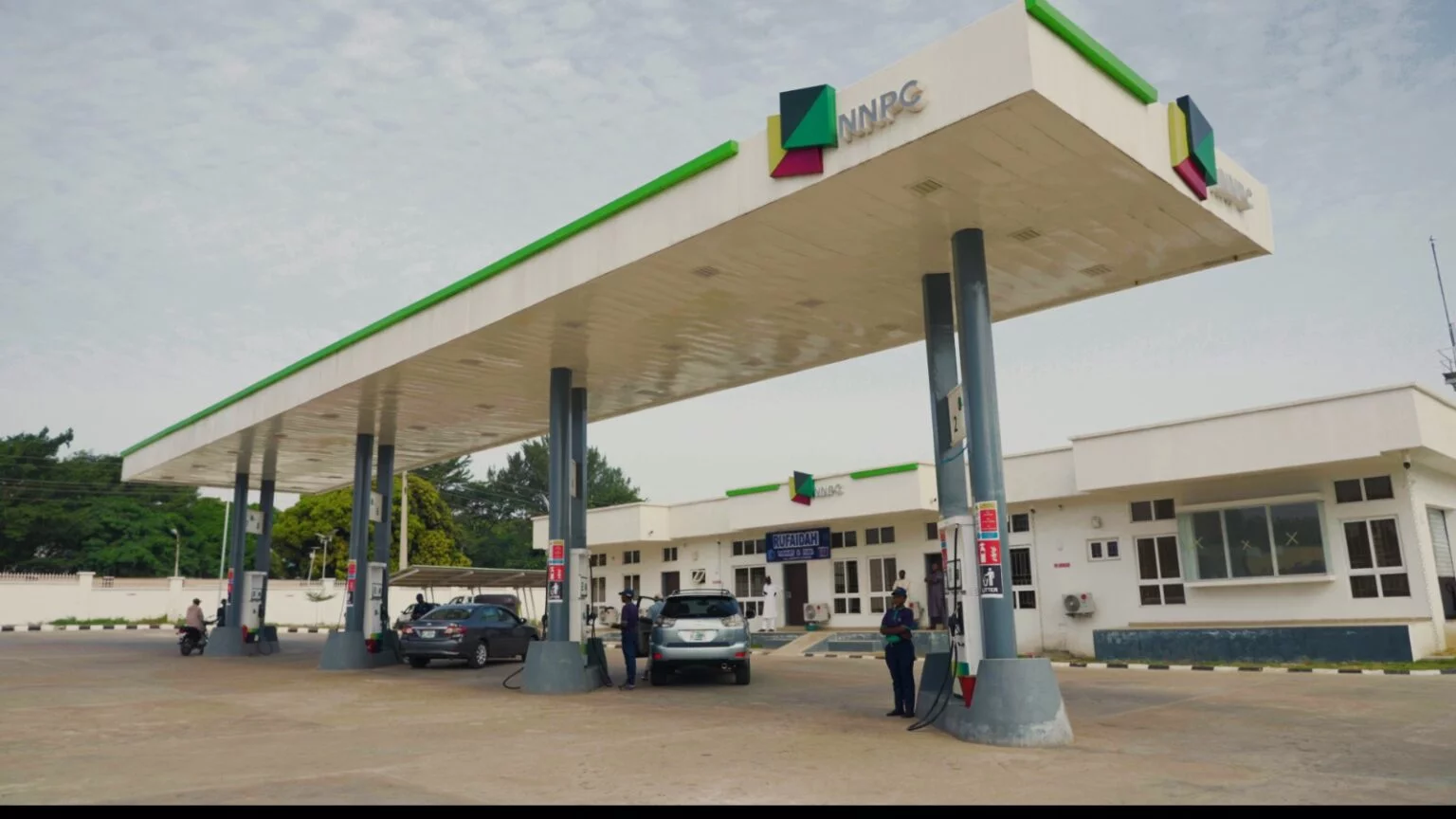
NIPCO Gas Limited and the NNPC Gas Marketing Limited are expanding gas infrastructure projects across the South Western part of Nigeria, aiming to boost industrial and commercial economic growth of the region.
Both parties have consolidated gas supply agreements that will further expand adoption of gas as alternative energy sources for commercial activities.
NIPCO Gas, the major driver of the energy supply chain has outlined an expansion strategy spanning pipeline infrastructure, city gas distribution networks and nationwide Compressed Natural Gas (CNG) rollout, positioning itself at the forefront of Nigeria’s domestic gas drive under the reform framework of the Petroleum Industry Act (PIA).
The Managing Director of the company, Nagendra Verma, while speaking in the ongoing projects across the South West and other parts of the country, described natural gas as central to energy security, industrial competitiveness and macroeconomic stability in the post-subsidy era.
He said Nigeria’s energy landscape is undergoing structural transformation driven by regulatory clarity introduced by the PIA and renewed government emphasis on domestic gas utilisation.
Verma, the improved governance framework and issuance of gas distribution licences have strengthened investor confidence across the oil and gas value chain, encouraging long-term infrastructure commitments.
With fuel subsidy removal and fiscal restructuring reshaping the downstream market, gas is increasingly being positioned as a stabilising alternative to imported fuels, reducing exposure to global price volatility while supporting manufacturing and commercial activity.
According to him, NIPCO Gas is constructing an 18-inch, 80-kilometre natural gas pipeline from Sagamu to Ibadan.
The project, scheduled for completion between June and July 2026, is expected to significantly boost gas availability to industries in Ogun and Oyo states as well as adjoining areas.
The MD noted that the infrastructure will reduce energy costs for manufacturers currently dependent on alternative fuels such as diesel and low-pour fuel oil, improve production efficiency and strengthen the competitiveness of Southwest industrial clusters.
Given the strategic importance of the pipeline to regional industrialisation and national energy security, NIPCO Gas called for sustained cooperation from federal and state authorities to ensure seamless delivery.
Beyond Ibadan, he said the company is extending gas distribution infrastructure from Sagamu to Abeokuta, also in Ogun State, as part of efforts to deepen gas penetration in the Southwest.
According to him, the Abeokuta expansion is expected to attract fresh manufacturing investments, enhance reliability of energy supply to existing businesses and strengthen internally generated revenue within the state. The project, he said, has received backing from the Ogun State Government, reflecting alignment between public policy and private sector infrastructure deploymentHe added NIPCO Gas has developed gas distribution infrastructure within the Lekki Free Trade Zone, reinforcing energy access for industries operating in the fast-growing economic corridor.
“The Lekki axis has emerged as a major hub for export-oriented and heavy industrial investments, and reliable gas supply is considered critical to sustaining operations, lowering production costs and maintaining competitiveness.
By strengthening energy reliability in the zone, the company said it is contributing to Lagos State’s position as a leading industrial and commercial centre”.
In alignment with the Federal Government’s clean energy and post-subsidy transport reform agenda, Verma said NIPCO Gas, in joint venture with NGML, is constructing 20 additional CNG stations across Nigeria.
“In addition, CNG mother stations located in Lekki and Ore are at advanced stages of completion. These facilities will function as primary compression and dispatch hubs, supplying daughter stations and industrial customers through a mother–daughter network model, particularly in areas not directly connected to pipeline infrastructure.
The nationwide rollout is strategically targeted at high-traffic urban centres and major transport corridors, improving accessibility and affordability of CNG for fleet operators, mass transit systems, commercial drivers and private vehicle owners,’’.
According to him, all facilities are being developed in compliance with Nigerian regulatory standards and international safety best practices.
Beyond fuel substitution, he stressed that the expansion is expected to stimulate job creation across construction, operations and ancillary mobility services, lower transportation costs, reduce carbon emissions and improve air quality in major cities.
The NIPCO Gas boss said its sustained investments in trunk pipelines, city gas networks and CNG infrastructure are designed to strengthen national energy security, promote domestic gas utilisation and support Nigeria’s broader economic diversification agenda.
The company emphasised that transparency and stakeholder engagement remain central to its operations, noting that collaboration with regulators, sub-national governments and the media will be critical in sustaining momentum within the gas sector.




Blood on Nigerian Roads: How Lucky Elohor’s Death Reveals Nigeria’s MRI Emergency
ShareBy Jane Eze Lucky Elohor was still conscious when they placed her in the ambulance. The 29 year old founder...

Plateau Procures 70 Transformers for Communities
ShareThe Plateau Government has procured 70 new transformers to boost power supply in rural communities in the state. Gov Caleb Mutfwang, who inaugurated the transformers on Wednesday in Jos, described the...


Commonwealth Games: 128 Boxers Jostle for 10 Slots at National Trials
ShareThe Brai Ayonote Boxing Complex has come alive with intense action as no fewer than 128 boxers battle for places at the National...


Tinubu Celebrates Obasanjo’s Towering Influence at 89
SharePresident Bola Tinubu has paid glowing tribute to former President Olusegun Obasanjo on his 89th birthday. Tinubu rejoiced with the elder statesman, describing his influence in Nigeria,...
Benue NBA Faults Code of Conduct Bureau over Invitation of Federal H’Court Chief Judge
ShareBy David Torough, Abuja The United Benue Bar, comprising the Makurdi, Gboko and Otukpo branches of the Nigerian Bar Association (NBA), has...


ShareCBN Diversifies Reserves with $3.5bn Locally Sourced LBMA Gold The Central Bank of Nigeria (CBN) has taken delivery of responsibly...

Reps Back Green Bank, Approve $100m Climate Finance Initiative
ShareBy Ubong Ukpong, Abuja The House of Representatives on Wednesday signalled a dual push for economic reform, backing the creation...

Tinubu Revises FAAN Cashless Toll Policy after Airport Chaos
ShareBy David Torough, Abuja President Bola Tinubu has suspended the controversial cashless toll payment system introduced at the nation’s airports...


NSCDC Warns Contractors against Damaging Fibre-optic Cables in Kano
ShareThe Nigeria Security and Civil Defence Corps (NSCDC) Kano State Command has warned contractors against tampering with fibre-optic cables during...
FRSC Corps Marshal Warns against Indiscipline, Extortion
ShareThe Corps Marshal of the Federal Road Safety Corps, Shehu Mohammed, has warned personnel against indiscipline, extortion and abuse of...