
NEWS
The US Military Threat and Nigeria’s Response: Time for Action

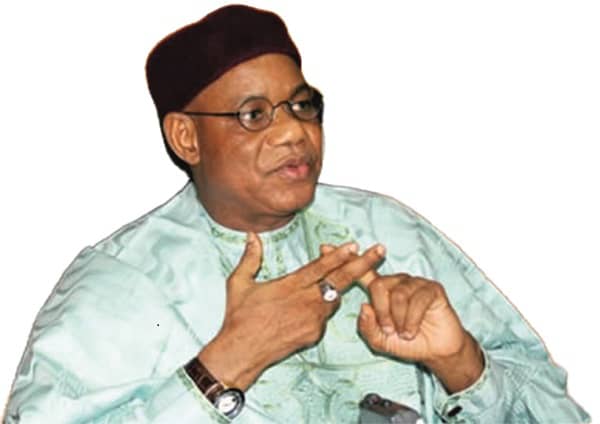
By Rufai Ahmed Alkali, Ph.D
Introduction
The recent statement by US President Donald J. Trump threatening possible military action against Nigeria — ostensibly to “protect Christians from persecution” — represents one of the most serious diplomatic challenges Nigeria has faced in recent times.
While ostensibly couched in humanitarian and religious-freedom terms, the underlying motivations are clearly broader and more complex, involving domestic US politics, strategic rivalries in the Sahel, global economic realignments, and competition over access to Nigeria’s vast natural and energy resources.This intervention situates the current US posture within a wider geopolitical context and offers clear steps the Federal Government of Nigeria (FGN) should take to manage, diffuse, and ultimately transform this crisis into an opportunity for strategic repositioning.
- Background
The US threat emerged following a series of statements in which President Trump accused Nigeria’s government of failing to protect Christians from what he described as “systematic religious genocide.” He suggested that the United States “could not remain idle” and even hinted at potential troop deployment or targeted air strikes under a humanitarian justification.
The Federal of Nigeria swiftly rejected the claim and reaffirmed its commitment to the protection of all citizens regardless of religion, describing the remarks as “unfortunate, unfounded, and unacceptable interference in Nigeria’s internal affairs.”
However, the threat has exposed deeper currents in international politics. It comes at a time of global transition — where new alliances, energy dynamics, and power blocs are reshaping the world order — and Nigeria, by virtue of its size and strategic importance, finds itself at the crossroads.
It is even more shocking to both the government and people of Nigeria because, since political independence in 1960 (precisely 65 years ago), the United States has always been seen and treated as one of the closest (if not not closest) ally to Nigeria.
- What are the Real Motives Behind President Trump Threats?
On the surface, while the religious argument has been presented upfront as the moral ‘justification’, it is widely believed that there are a number of other interlinked forces and motives that underpins this hostile posture from President Trump.
i. US Domestic Politics and Trump’s Conservative Evangelical Base
At home, President Trump faces pressure from a powerful evangelical constituency that has long framed global politics in religious terms. For many in that base, Africa — and particularly Nigeria — represents a frontline in a supposed struggle between Christianity and Islam. The rhetoric of “saving Nigerian Christians” therefore plays directly into the emotional and electoral logic of his domestic politics.
By adopting a tough stance, Trump projects strength, reassures his evangelical supporters, and reclaims the narrative of “defender of faith” at a crucial political moment in the US.
ii. Diversion of Global Attention from the Israel–Gaza Crisis
The timing of Trump’s remarks also coincided with intensifying criticism of Israel’s actions in Gaza. Analysts believe that shifting attention to a new theatre — Nigeria — allows Washington to redirect global conversation away from the Middle East, while reasserting its moral posture elsewhere.
In this sense, the Nigerian issue serves as both a distraction and a symbolic reaffirmation of American global activism.
iii. The BRICS Challenge and the New Emerging Financial Order
Nigeria’s growing engagement with the BRICS group and other non-Western partners has unsettled Washington. The ongoing global push for de-dollarization and alternative payment systems poses a challenge to US economic hegemony. Nigeria, as Africa’s largest economy and a potential BRICS partner, represents a critical node in this shift.
By invoking threats under humanitarian pretexts, the US may be seeking to remind Nigeria — and by extension, Africa — of its continuing strategic leverage and military reach.
iv. Declining US Influence in the Sahel and Growing Russian Presence
In the last few years, the Sahel has witnessed a dramatic erosion of Western European influence, as was the case in Mali, Niger, and Burkina Faso, where pro-Russian sentiment and cooperation have increased. The US military footprint has contracted, while Russia, through both state and private actors, has filled the vacuum.
It is obvious to the US, Nigeria’s central position in Sub-Sahara Africa makes it both the next potential target and the last stronghold in the contest for regional influence and control. The US threat therefore doubles as a warning to Moscow and a signal of renewed American assertiveness in West Africa.
v. Chinese Depeening Penetration of the Nigerian Economy
It is a fact that in the past few years, China’s presence in Nigeria has expanded far beyond infrastructure projects to mining, energy, telecommunications, and finance. The United States views this deepening relationship with serious concern, interpreting it as a loss of economic and political space.
As Chinese interests secure long-term access to Nigerian minerals and construction contracts, Washington fears that Nigeria may slip further from its orbit — a trend that military rhetoric may be designed to stop or reverse.
vi. Oil, Minerals, and the Dangote Refinery Effect
Perhaps the most concrete economic factor is the rapid transformation of Nigeria’s energy landscape. The coming onstream of the Dangote Refinery — the largest in Africa — is poised to end Nigeria’s dependence on imported refined petroleum, much of which has been coming from US-based petroleum suppliers.
For many decades, American and European corporations benefited from exporting refined fuel to Nigeria. The Dangote refinery now challenges those commercial interests while strengthening Nigeria’s energy sovereignty. This is one of the sore points for President Trump and his administration.
Similarly, the competition for control over Nigeria’s oil, gas, and rare minerals has intensified — and the language of “humanitarian intervention” can easily mask underlying economic and Imperial motives.
vii. Nigeria – US Bilateral Frictions and the France Factor
It is widely believed that President Bola Ahmed Tinubu’s early overtures to France and the European Union, along with his apparently lack of personal rapport with Donald Trump, have contributed to a cooling of relations between the US and Nigeria.
It is known that President Bola Ahmed Tinubu has been to France many times on official and private visits over the last few years. From available records, Tinubu has visited France once before the 2023 Presidential election; twice as President – elect; and over four times as President of Nigeria. During all this period, President Bola Ahmed Tinubu was in the United States only once in September 2023, to attend the United Nations General Assembly (UNGA). Surely, the Americans, have been following all these President Tinubu’s movements.
The US perceives President Bola Ahmed Tinubu as more inclined towards Paris and potentially aligned with Europe’s own African policy.
In the fluid world of power politics, such perception — however unfounded — can fuel miscalculation, leading to the kind of bluster seen in recent weeks.
- Implications for Nigeria
The US threat, if left unaddressed, carries serious consequences on multiple fronts:
i. Sovereignty and national pride: The open suggestion of foreign military action undercuts Nigeria’s independence and global image.
ii. Economic vulnerability:
Even rhetorical threats can rattle investors, slow capital flows, and destabilize markets.
iii. Diplomatic isolation: Nigeria risks being cast as a “problem country,” inviting more external interference.
iv. Internal cohesion: Framing Nigeria’s insecurity as religious persecution could deepen domestic mistrust and embolden extremists.
v. Regional stability: Any misstep could further destabilize ECOWAS and invite further external manipulation in the Sahel. Already the three countries of Mali, Niger and Burkina Faso have delinked from the ECOWAS and any further international crises affecting Nigeria would make it even more difficult for ECOWAS to recalibrate itself.
- Urgent Steps the Federal Government of Nigeria Should Take
In my view, in order to safeguard Nigeria’s short, medium and long term interests and defuse tensions, the Federal Government must act swiftly but strategically. I wish to suggest the following (not necessarily exhaustive) multi-track approaches:
A. Immediate Actions
i. Diplomatic Engagement:
The Federal Government should seek a direct conversation between Presidents Tinubu and President Trump to clarify Nigeria’s position and reaffirm the mutual respect between the two nations;
The Federal Government should mobilize the Nigerian Embassy in Washington to engage US lawmakers, Think- Tanks, and faith-based organizations to correct the current misconceptions and misrepresentation the Nigerian situation.
- Narrative Management:
i. The Federal Government should establish a ‘Crisis Management and Communication Unit’ under the Presidency (with representatives from relevant MDA) to coordinate messaging, emphasizing Nigeria’s secular constitution and government efforts to protect all Nigerian citizens.
ii. It is also critical at this stage to encourage inter-faith meetings and national solidarity messages from Muslim and Christian leaders within Nigeria to undercut the false external narrative of religious war.
- Time for Visible Humanitarian Actions:
The Federal Government should increase protection for the
high-risk communities, enhance policing in conflict-prone zones, and publicize results to demonstrate effective governance.
In recent times, a number of states have introduced community based security support units which are working side by side with the Nigerian Police. These should be properly regulated, trained and funded to avoid unprofessional conducts and behaviours.
B. Medium -Term Strategy
- Strategic Foreign Policy Recalibration:
i. Given Nigeria’s experience, this is the time to reinforce Nigeria’s commitment to multi-alignment — maintaining balanced relations with the US, China, Russia, and the European Union without dependency on any single power bloc.
It appears to most keen observers that, Nigeria, for too long has put all its eggs in one basket, unfortunately, it’s traditional allies have always failed the country at the time of need, just as in the case today.
ii. President Bola Ahmed Tinubu should urgently convoc the All Nigeria Ambassadors Conference to review the Nigeria’s Foreign Policy in order to chart a new course for the country. Participants should be drawn from the following: former and serving senior Nigerian Diplomats in the United Nations system; experienced former and serving Nigerian Ambassadors; experts from the Nigerian Institute of International Affairs (NIIA) Lagos, and the National Institute of Strategic Studies (NIPS), Kuru Jos; Scholars in International Relations and Nigerian Foreign Policy in Nigerian Universities; experts in Defence and Strategic Studies from the Nigerian Defence Academy, Kaduna, and the National Defence College, Abuja; and Leaders and select members of the Nigerian Political Science Association (NPSA).
iii. Despite all the challenges in ECOWAS and the African Union, still Nigeria can rally the Sub Regional and continental Organisations for solidarity against any foreign threat to Nigeria’s sovereignty.
- Economic and Energy Diplomacy:
i. The Federal Government should ensure that despite all the pressures, it continues to promote and protect Nigeria’s petroleum refining independence. The Dangote Refinery and subsequent ones should be supported and defended against both local and external sabotage.
ii. Since rare minerals have become the new battle grounds, and it is known that these are available in large quantities in the country, the Nigerian Government should do everything possible to reform the extractive sectors for the benefit of all Nigerians.
All these can be achieved through discussions, negotiations, and collaboration and not through confrontation. In other words, Government should encourage partnerships with friendly nations to develop local value chains in oil, gas, and mining.
- Security Reforms:
i. It is time for Government to urgently upgrade and improve intelligence, coordination, and deploy rapid-response capacities to prevent localized violence that foreign actors could exploit.
ii. Governments at all levels in the country should improve the process and transparency in reporting communal conflicts to counter exaggerated foreign narratives. It is very clear that in absence of well documented official reports about conflicts, fake news will take over and fill the vacuum with their narratives which often travel faster with unpleasant consequences.
C. Long-Term Strategic Goals
- Institutional Resilience:
i. The Federal Government should strengthen the Ministry of Foreign Affairs’ strategic analysis unit to anticipate and manage international crises.
It is time to move away from routine and bureaucratic red-tapism which often lack depths, coherence and currency.
ii. The Federal Government should develop a robust framework for conflict prevention and peacebuilding within Nigeria’s federal structure. The state Governments should also collaborate with the Federal Government on this critical area. Governments should avoid politicisation of inter-faith and communal disagreements which could degenerate to open violent conflicts.
- Global Positioning:
i. Given the strategic position of Nigeria in the West Africa Sub Region and the African Continent, it is time to promote Nigeria’s role as a responsible regional power — one that supports stability, religious tolerance, and inclusive development.
ii. To achieve this,we must put our house in order. This would also enable Nigeria to use soft diplomacy, including cultural and diaspora engagement, to shape international perception. At the moment, the Federal Government need to engage the Diaspora fully so that they can play their own roles as goodwill Ambassadors of the country. Alienating this critical segment of the Nigerian Society will end up breeding resentment, bitterness, anger escalating into anti Nigeria rhetorics actions.
No matter the pressure, the Federal Government should not open a corridor for for the Establishment of a US military base in Nigeria. The short and long term security, political and economic implications of a foreign military base on Nigerian soil is beyond contemplation.
Meanwhile, I call on all Nigerians, especially the political elites, the Ulama, the Clergy, Civil Society Organisations and the media (both traditional and social media) to exercise restraint in their comments and commentaries not to further exacerbate tention between Nigeria and the rest of the world. This is a test for Nigeria and for President Bola Ahmed Tinubu and surely, if we put our acts we shall overcome.
- My Final Word
The current tension with the United States is not an isolated episode but part of a broader geopolitical contest — one in which Nigeria’s resources, geography, and influence make it a crucial prize. The challenge for Nigeria is to respond wisely: neither with submission nor with defiance, but with strategic composure.
By combining assertive diplomacy, domestic unity, and economic and security reforms, Nigeria can transform this moment of threat into one of renewal. The world must be reminded that Nigeria is not a passive object of external pity or pressure, but a proud, sovereign nation capable of managing its own destiny — in peace, in dignity, and in partnership with all who respect its independence.
…Rufa’i Ahmed Alkali is a Professor of Political Science and Writes from Nigeria
From Yagana Ali, Yola
The All Progressives Congress (APC) in Adamawa State has formally kicked off its campaign for the 2027 general elections, throwing its political machinery behind President Bola Tinubu’s bid for a second term while mobilising support for the party’s National Assembly candidates.
The campaign flag-off, held on Tuesday, drew party leaders, aspirants, supporters and grassroots mobilisers, who gathered to rally support for the APC and begin what party officials described as an intensive statewide mobilisation ahead of the elections.
Representing Governor Ahmadu Umaru Fintiri at the event, Deputy Governor Professor Kaletapwa Farauta described the flag-off as more than a conventional political rally, saying it marked the beginning of a determined effort to mobilise the people and secure victory for the APC in Adamawa.
Farauta commended President Tinubu for what she described as his administration’s efforts to reposition the country through its policies and programmes.
She urged Nigerians to support the Federal Government by voting for the APC in 2027, arguing that continuity would allow the administration to consolidate its ongoing reforms and development initiatives.
According to her, the Adamawa APC would leave no stone unturned in its bid to secure victory for President Tinubu, the party’s senatorial candidates and House of Representatives aspirants across the state.
Farauta said the party would take its campaign directly to the people, with supporters expected to engage residents at the grassroots and mobilise voters across communities.
She urged party members to remain committed and united as the campaign progresses, stressing that victory would require sustained engagement with voters at the grassroots.
Also speaking on behalf of the senatorial and National Assembly aspirants, Mustapha Salihu described the rally as a historic moment and the beginning of a new political chapter for the APC.
Salihu said Nigeria had endured significant challenges in recent years but was gradually moving towards a period in which the impact of the Federal Government’s reforms would become more evident.
He therefore appealed to Nigerians to support President Tinubu’s re-election and vote for APC candidates in the National Assembly elections, saying continuity in leadership was important for consolidating ongoing development efforts.
Salihu disclosed that the campaign was initiated by the North-East Door-to-Door Movement before receiving the support of the Adamawa State Government.
Speaking on behalf of the movement’s leadership, including High Chief Government Ekpemupolo, popularly known as Tompolo, he expressed appreciation to Governor Fintiri and the people of Adamawa for their support and participation.
He described the turnout at the rally as an indication of the commitment of supporters to the APC’s political agenda ahead of the 2027 elections.
Adamawa State APC Chairman, Hamza Madagali, thanked party supporters for responding to the mobilisation call and urged them to maintain the momentum beyond the campaign launch.
Madagali charged party members to take the campaign to homes, markets, villages, settlements and places of worship, stressing the importance of direct engagement with voters.
He said the APC’s chances of success in 2027 would depend largely on the dedication of its members at the grassroots.
The chairman urged party faithful to remain united, organised and committed to the mobilisation drive, saying sustained interaction with voters would be critical to delivering victory for President Tinubu and the party’s National Assembly candidates across Adamawa.
With the campaign now formally underway, the APC is expected to intensify its grassroots activities across the state as political parties begin positioning themselves for the 2027 general elections.
The Peoples’ Democratic Party (PDP) governorship candidate, Chief Ifeanyi -Chukwuma Odii, has urged Ebonyi people to remain law-abiding and committed to peace ahead of the 2027 general elections.
Odii made the call in a statement titled, “Eyes on the Ball,” made available to news men on Wednesday in Abakaliki.
He urged politicians, stakeholders and residents to place the peace and development of Ebonyi above partisan interests.
The governorship candidate stressed that political differences should not be allowed to degenerate into violence, noting that Ebonyi indigenes remained brothers and sisters irrespective of their political affiliations and party loyalty.
The call followed a recent alleged attack on members of the PDP and journalists in Ezza South Local Government Area by suspected political thugs allegedly from opponents.
Odii, popularly known as Anyichuks, said political contests should be based on records, achievements, impact and deliverables rather than violence, propaganda or personal attacks.
According to him, candidates aspiring to public offices should allow their accomplishments and scorecards to speak for them.
“Going forward, let us allow our scorecards to speak for us, both as private individuals and, most importantly, as people who have occupied political or public offices,” Odii said.
The candidate explained that his campaign would be anchored on issues and constructive engagement, adding that the “ANYI GA EMEYA” (his political movement) would avoid politics capable of undermining the unity of the state.
“ANYI GA EMEYA will campaign on issues, facts and constructive criticism; we will not engage in smear propaganda or politics of personal attacks,” he added.
He maintained that Ebonyi politicians should focus on the kind of leadership and development capable of improving the lives of citizens and creating opportunities for future generations.
“Ebonyi needs development, opportunity, prosperity and good governance and we must pursue these with urgency.
“There is no time to waste when the future of our people and the generations yet unborn is at stake,” he said.
Odii also called on party supporters and political stakeholders to conduct themselves responsibly throughout the electoral process, stressing that the state’s peace should not be sacrificed for political ambitions.
“We are Ebonyi people first before we are members of any political party,” he said.
Odii further said that his campaign policies and programmes would be intentional, reality-based, solution-driven and focused on issues that mattered to the people.
He urged all political actors to embrace tolerance, civility and issue-based campaigns as the 2027 election approached, saying that the collective interest of Ebonyi should remain paramount and above any other personal interests.
From Dan Amasingha, Minna
The Commissioner of Police, Niger State Command, Adamu Abdullahi Elleman, mnips, has assured the National Centre for the Control of Small Arms and Light Weapons (NCCSALW) of the Command’s continued cooperation in the fight against the proliferation of illicit arms and ammunition in the state.
Elleman gave the assurance on Tuesday, when he received the Director-General of the NCCSALW, DIG Johnson Babatunde Kokumo (Rtd), on a courtesy visit to the Niger State Police Command Headquarters, Dutsen-Kura, Minna.
Kokumo, who was accompanied by the Centre’s North Central Zonal Director, Abdullahi Adamu Eneche, and other officials from the Centre’s headquarters and zonal office, was in Niger State as part of his official tour of the North Central Zone.
The NCCSALW Director-General described the visit as both official and symbolic, recalling his professional relationship with CP Elleman during their years in active service.
He commended the Commissioner for his professionalism, intellectual capacity and leadership qualities.
He also acknowledged the existing cooperation between the Niger State Police Command and the NCCSALW, stressing that sustained inter-agency collaboration was essential to tackling the proliferation of small arms and light weapons, which continue to contribute significantly to banditry and other violent crimes across the country.
According to him, the Federal Government established the Centre and strengthened its legal and institutional framework in recognition of the need for a coordinated national response to the illicit circulation of arms.
Kokumo explained that the Centre operates through zonal offices across the six geopolitical zones, with provisions for state offices in the 36 states and the Federal Capital Territory to enhance its operational effectiveness.
He commended the Inspector-General of Police, Olatunji Rilwan Disu, for his support and cooperation with the Centre, disclosing that the Nigeria Police Force had remitted more than 11,000 recovered arms to the NCCSALW for destruction.
He said the initiative would help prevent recovered weapons from finding their way back into the hands of criminal elements, adding that the IGP’s directive to State Police Commands to transfer recovered arms and ammunition to the Centre was a significant contribution to national security.
The Director-General called for enhanced information sharing and sustained operational collaboration between the Niger State Police Command and the Centre to strengthen efforts towards reducing the circulation of illicit arms.
Responding, Elleman expressed appreciation to the Director-General and his delegation for the visit, describing DIG Kokumo as a distinguished retired senior police officer, mentor and seasoned professional whose career was characterised by integrity, transparency and excellence.
The Commissioner reaffirmed the Command’s commitment to maintaining a strong working relationship with the NCCSALW, noting that the visit would further strengthen the existing partnership between the two institutions.
He assured the Director-General that the Command would continue to support initiatives aimed at curbing the proliferation of illicit arms and ammunition and enhancing public safety across Niger State.
Elleman further pledged that all arms and ammunition recovered by the Command, upon completion of investigations and other necessary procedures, would be duly remitted to the NCCSALW through the appropriate channels, in line with existing directives.
The Commissioner thanked the Director-General and his delegation for the visit and wished them a safe and successful tour of their operational engagements.



2027: Presidency, Atiku Trade Barbs over Petrol Subsidy
ShareNigerians Deserve Cheaper Energy, Says ADC Candidate President Bola Tinubu and former Vice President Atiku Abubakar have clashed sharply over the future...
2027: Reps Minority Caucus, G-100 Push for United Opposition
ShareThe Minority Caucus in the House of Representatives has announced a partnership with G-100, to galvanise opposition political parties for...

Adeleke Receives Certificate of Return, Promises More Dividends of Democracy
ShareFrom Ayinde Akintade, Osogbo Osun State Governor, Ademola Adeleke on Wednesday received his certificate of return at the Independent National...
C’River Info Commissioner Challenges Oppositions on State Policies
ShareFrom Ene Asuquo, Calabar The Commissioner for Information in Cross River State, Pastor Ekpenyong Ene Cobham, has challenged opposition politicians...


Let Campaigns Be Issue-based, Respectful, Says Diri
ShareFrom Mike Tayese, Yenagoa Governor of Bayelsa State, Senator Douye Diri, has advised politicians to respect their opponents and ensure...
Tinubu’s 2027 Bid: APC Kicks off Adamawa Campaign, Vows Grassroots Victory
ShareFrom Yagana Ali, Yola The All Progressives Congress (APC) in Adamawa State has formally kicked off its campaign for the...
Edo Assembly Dissolves Standing C’ttees, Constitutes Panel to Probe Ex-Speaker
ShareThe Edo House of Assembly on Tuesday dissolved all its standing committees and constituted an investigative panel to probe allegations...
2027: Ebonyi PDP Governorship Candidate Urges Peaceful, Lawful Conduct
ShareThe Peoples’ Democratic Party (PDP) governorship candidate, Chief Ifeanyi -Chukwuma Odii, has urged Ebonyi people to remain law-abiding and committed...


Fintiri Inaugurates Presidential, National Assembly Campaigns in Adamawa
ShareAdamawa State Governor, Ahmadu Fintiri has inaugurated the presidential and National Assembly campaigns of the All Progressives Congress (APC) ahead...
Niger CP, NCCSALW DG Pledge Stronger Collaboration against Illicit Arms
ShareFrom Dan Amasingha, Minna The Commissioner of Police, Niger State Command, Adamu Abdullahi Elleman, mnips, has assured the National Centre...