
NEWS
Otu Commends Navy’s Commitment to Maritime Security


From Ene Asuquo, Calabar
Cross River State Governor, Sen. Bassey Otu, has reaffirmed his administration’s commitment to strengthening collaboration with the Nigerian Navy to enhance maritime security and safeguard the state’s coastal assets.
Otu stated this while receiving the new Flag Officer Commanding (FOC), Eastern Naval Command, Rear Admiral Chidozie Okehie, who paid him a courtesy visit at the Government House, Calabar.
The governor described the visit as “a mark of seriousness and purpose,” noting that the promptness of the FOC’s engagement with the state government reflects his readiness for action.
“I want to thank you very much for your seriousness of purpose,” Otu said. “I thought it would take some time before we’d see your face, but the notice of your visit came immediately, and we suspended everything to receive you. That shows your commitment and the fact that you’re ready for action.”
Otu lauded the Navy for its long-standing cooperation with the state, particularly in ensuring safety across the creeks and waterways. He acknowledged that the Eastern Naval Command has been a dependable partner in maintaining peace and curbing maritime crimes within the state’s coastal corridor.
“Security has remained one of our top priorities,” he said. “We have been working very well with the Command to sustain peace and stability. The Nigerian Navy has a deep understanding of this terrain, its marine ecology, creeks, and waterways, and that makes your presence even more strategic.”
The governor also appreciated the naval officers in Cross River who continue to serve with distinction, adding that their dedication reflects the cordial relationship between the state and the Navy.
In his remarks, Rear Admiral Okehie expressed appreciation to the governor for the warm reception, describing his posting to Calabar as “a homecoming,” having previously served in the state at different times.
“My assumption of duty as the Flag Officer Commanding Eastern Naval Command is truly a homecoming,” Okehie said. “I had the privilege of serving here as Commander, NNS Centenary between 2014 and 2016, and later as Commander, NNS Victory from 2021 to 2022. These experiences deepened my appreciation of the cordial hospitality of the people of Cross River and the enduring cooperation between the state government and the Navy.”
He assured that the Command under his leadership would continue to work closely with the Cross River State government to ensure maritime security, promote the blue economy, and strengthen civil-military cooperation.
“In line with the mission of the Chief of Naval Staff, Vice Admiral Idi Abbas, the Eastern Naval Command will deploy a highly professional and motivated force capable of safeguarding Nigeria’s maritime interests,” Okehie stated. “We shall work with your government to enhance maritime security, support blue economy initiatives, and deepen cooperation for the peace and prosperity of our state and nation.”
He further pledged the Navy’s continued partnership in the state’s drive for peace, sustainable development, and the protection of national sovereignty, adding that “in safeguarding the maritime domain, we also preserve the nation’s peace and prosperity.”








The Ondo State Government has congratulated the 637 newly absorbed teachers and other personnel into the state public teaching service, urging them to uphold professionalism, discipline and dedication in the discharge of their duties.
The Chairman of the State Universal Basic Education Board (SUBEB), Princess Ademulegun Olufunmilayo Brown, gave the charge while addressing the beneficiaries following the successful completion of the absorption exercise.
She described the development as an important step towards strengthening manpower and improving the quality of basic education across the state.As part of the exercise, the distribution of employment letters commenced on Wednesday, 28th October with beneficiaries from the Central Senatorial District, while those from the Southern and Northern Senatorial Districts received their letters on Thursday, 29th, and Friday 39th, respectively.
Addressing the beneficiaries, the Chairman described their appointment as both a privilege and a call to service, urging them to demonstrate integrity, punctuality, discipline and commitment to their responsibilities.
She emphasised that teachers play a vital role not only in imparting knowledge but also in shaping the character and future of pupils.
The Chairman further charged them to familiarise themselves with the rules governing the Ondo State Public Service and the teaching profession, while embracing continuous professional development and effective teaching practices that would improve pupils’ learning outcomes.
She assured the beneficiaries of the Board’s commitment to strengthening basic education delivery and urged them to reciprocate the confidence reposed in them by the state government through exemplary service.
She therefore directed all newly absorbed personnel to report to their respective duty posts within one week of receiving their appointment letters, warning that failure to comply could result in forfeiture of the employment opportunity, subject to applicable regulations.
Princess Brown expressed appreciation to Governor Lucky Orimisan Aiyedatiwa for approving the absorption, noting that the initiative reflected his administration’s commitment to addressing staffing needs in public schools and advancing the education sector under the OUR EASE Agenda.
She also commended the committee constituted by the Governor to oversee the exercise, chaired by Engr. Bola Taiwo, with Dare-Atunse and Pastor Omotayo Akeju as members, and Princess Abike Bayo-Ilawole as Secretary, for ensuring transparency, fairness and adherence to due process.
The Permanent Secretary of ODSUBEB, Princess Abike Bayo-Ilawole, explained that the absorption exercise was undertaken to address outstanding issues arising from last year’s recruitment exercise and ensure that qualified personnel were properly captured.
She disclosed that the screening covered the three senatorial districts of the state, with more than 1,000 applications and related correspondence attended to. She maintained that the process was conducted without bias or prejudice, in accordance with the principles of fairness, transparency and equal opportunity.
She urged the beneficiaries to complete and submit all necessary documentation for proper integration into the Board’s administrative system. She also warned against surrogate service, stressing that no teacher would be permitted to delegate his or her official responsibilities to another person. Anyone found engaging in the practice, she cautioned, would face disciplinary action.
In their goodwill messages, the Board’s Full-Time Member I, Hon. Christopher Olorunfemi; State Chairman of the Nigeria Union of Teachers (NUT), Comrade Ayodele Samuel-Leke; and State Chairman of the Association of Primary School Headteachers of Nigeria (AOPSHON), Comrade Olakunle Akintoroye, congratulated the beneficiaries and urged them to uphold the ethics and dignity of the teaching profession.
They also advised the newly absorbed personnel to remain law-abiding, respect constituted authority and demonstrate diligence and commitment to improving the standard of basic education in the state.
Speaking on behalf of the beneficiaries, Fajana Recheal, Olugboji Funmilayo and Adenike Oluwaseun expressed gratitude to Governor Aiyedatiwa for the opportunity to serve in the state public teaching service.
They also appreciated the Board and the screening committee for the successful completion of the exercise, assuring that the beneficiaries would justify the confidence placed in them through dedication and exemplary service.
From Mike Tayese, Yenagoa
Officials of the Niger Delta Development Commission (NDDC), and journalists on Monday inspected the ongoing construction of the 600-metre Otuogori Bridge in Ogbia Local Government Area of Bayelsa State following an incident at the project site.
The inspection was as a result of an earlier post on social media that the bridge under construction collapsed due to structural failure.
The bridge, if completed will serve and benefit over 100 communities in Ogbia local government area of Bayelsa state. Thereby reducing the cost of transportation and the stress of crossing rivers.
During the inspection on Monday, the NDDC State Director in Bayelsa, Godknows Alamieyeseigha, while answering questions from journalists said the commission had commenced an on-the-spot assessment to establish the circumstances surrounding the incident.
The state Director dismissed concerns that the incident was caused by structural failure, describing it as an accident that occurred during construction.
Alamieyeseigha expressed confidence in the competence of the contractor, Jillian Group of Companies, to address the issues identified by the commission and deliver the project to the people of Otuogori.
He said preliminary investigations were ongoing and that the commission would make its findings public at the conclusion of the exercise.
Also speaking during the inspection, the Managing Director of Jillian Group of Companies, Engr. Christian Omiezor, explained that the bridge was still at the preparatory stage, with the contractor yet to complete the construction of the bridge structure.
According to him, the incident occurred during the launching of the bridge beams, which were being positioned on their bearings as part of the construction process.
Omiezor explained that the beams were not yet permanently secured and could slide while resting on the bearings, adding that this was what happened during the incident.
He said the occurrence was a minor accident and attributed the absence of casualties to the safety measures put in place at the construction site.
“We are constructing a 600-metre bridge, but as you can see, we have not constructed a bridge yet. What you are seeing is just preparations for the bridge,” he said.
“What was going on was the launching of the beams, and in the process, there was a slight accident. Because the beam was resting on a bearing and had not been secured, it could slide. That was what happened. The good thing is that, with the safety measures put in place, no life was lost.”

By David Torough, Abuja
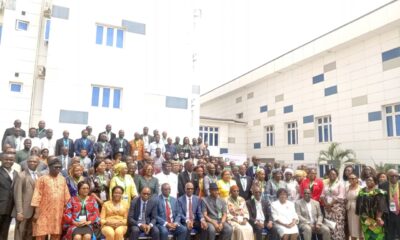
The West African Health Organisation (WAHO) has reaffirmed its commitment to harmonising the training, accreditation and recognition of health professionals’ qualifications across the Economic Community of West African States (ECOWAS), as part of efforts to address workforce shortages and improve access to quality healthcare in the sub-region.
The commitment was reiterated at the opening ceremony of the 11th Statutory Meeting of the Regional Council for Health Professionals Education in the ECOWAS Region, held on Monday at the WACOP Hotel, Abuja.
WAHO Director-General, Prof.
Palokinam Pitche, said qualified, motivated and equitably distributed health professionals remained fundamental to building resilient health systems and achieving Universal Health Coverage (UHC) in West Africa.He noted that the availability of health facilities alone could not guarantee quality healthcare without sufficient numbers of appropriately trained professionals to provide services, particularly in underserved and vulnerable communities.
According to him, the unequal distribution of health workers across countries, coupled with inadequate training, retention challenges and gaps in professional development, continues to constrain healthcare delivery in the region.
Pitche said that despite efforts by member states to strengthen their health workforce, implementation of relevant strategies had been slow and uneven, with issues relating to training curricula, continuing professional development, professional regulation, inter-professional conflicts and staff retention requiring more coordinated attention.
He stressed that achieving UHC would remain difficult without qualified health personnel who are adequately trained, motivated, retained and fairly distributed across the region.
The WAHO Director-General explained that the organisation’s efforts were backed by several regional and continental frameworks, including the WAHO Creation Protocol of 1997, the 2003 Dakar Convention on education and training, resolutions on harmonised training curricula adopted in Abuja in 2006, and the 2007 Dakar Convention on the recognition and equivalence of diplomas and certificates.
He also cited the organisation’s collaboration with the African and Malagasy Council for Higher Education (CAMES) on curriculum harmonisation and accreditation, as well as the 2014 Additional Act of ECOWAS Heads of State on improving higher education and research.
Pitche described WAHO’s human resources development programme as one of the organisation’s major achievements, noting that countries with different educational traditions, including Anglophone, Francophone and Lusophone systems, had worked together to harmonise curricula, accreditation processes and the recognition of professional qualifications.
He said the programme had attracted interest from other African regions seeking to learn from the West African experience.
However, he called for an evaluation of the programme to identify its achievements, shortcomings and areas requiring improvement.
He disclosed that WAHO would launch the evaluation process in 2027, adding that the findings would provide evidence to guide future interventions and support engagement with political authorities in member states.
The Director-General identified cross-border training, mobility of health professionals, exchange of knowledge and skills, training of trainers and joint research networks as important measures for strengthening regional cooperation and improving healthcare delivery.
He said WAHO would continue working with governments, professional bodies and development partners to implement decisions aimed at strengthening health workforce capacity across the region.
Earlier, Head of Training and Human Resources for Health at WAHO, Prof. Joseph Olorunda, outlined the objectives of the 11th statutory meeting, emphasising the need to establish and regularly review regional standards for the training of health professionals.
He said the council was also expected to ensure that harmonised training curricula complied with regional standards and to facilitate the accreditation of health training programmes and institutions across ECOWAS in partnership with relevant regulatory and professional bodies.
Olorunda added that the council would intensify advocacy with governments of member states to secure the political commitment required to strengthen health professionals’ education and training.
He listed the major deliverables of the meeting to include reviewing draft guidelines for harmonising university education systems across the ECOWAS region and submitting a revised regional framework for the recognition and equivalence of certificates awarded to health professionals.
Other deliverables include reviewing the roadmap for capacity development and health workforce training in the region, deliberating on criteria for the recognition and equivalence of professional certificates, and making recommendations to improve the functioning of the Regional Council.
He said WAHO would continue to pursue its mandate of scaling up coordinated efforts in health workforce training, development, motivation and retention, while promoting Universal Health Coverage and the recognition of professional qualifications across West Africa.
He also highlighted the importance of borderless training, professional mobility, skills exchange, joint research and greater integration among ECOWAS member states.
In his remarks, the representative of the West African Colleges, Prof. Yao Tettey, congratulated Pitche on his appointment as WAHO Director-General and pledged the cooperation of postgraduate professional colleges in advancing the organisation’s regional health agenda.
Tettey commended WAHO for involving professional colleges in the development of regional policy documents and frameworks designed to promote uniform training, professional practice and the free movement of health workers across the sub-region.
He disclosed that some postgraduate colleges had already incorporated WAHO’s harmonised curricula into their training programmes and accreditation criteria.
However, he expressed concern that some of the regional policy documents requiring adoption and implementation at national level were not receiving adequate attention from governments.
He therefore urged WAHO to use its engagement with the Assembly of Health Ministers to encourage member states to adopt and implement the harmonised frameworks.
According to him, effective implementation would help improve health workforce retention, facilitate the movement of professionals across borders and address the uneven distribution of health workers in the region.
He further expressed optimism that the documents being considered at the meeting would help address the growing migration of health professionals, commonly described as the ‘japa syndrome’, by strengthening training and retention frameworks.
Tettey reaffirmed the commitment of the postgraduate colleges to working with WAHO and other stakeholders to advance the harmonisation agenda.
The meeting is expected to produce recommendations and regional frameworks that will guide the recognition of professional qualifications, harmonisation of health education systems and development of the health workforce across ECOWAS member states.
The outcomes are also expected to strengthen cooperation among governments, universities, professional councils and postgraduate colleges in building a more integrated and responsive West African health system.




Ondo SUBEB Charges 637 Newly Absorbed Teachers on Professionalism
ShareThe Ondo State Government has congratulated the 637 newly absorbed teachers and other personnel into the state public teaching service,...

NDDC Officials, Journalists Inspect 600-Metre Otuogori Bridge Project in Bayelsa
ShareFrom Mike Tayese, Yenagoa Officials of the Niger Delta Development Commission (NDDC), and journalists on Monday inspected the ongoing construction...

WAHO Seeks Uniform Standards for Health Professionals’ Education in ECOWAS
ShareBy David Torough, Abuja The West African Health Organisation (WAHO) has reaffirmed its commitment to harmonising the training, accreditation and...

2027: INEC Engages Adamawa PWDs on Electoral Process
ShareThe Independent National Electoral Commission (INEC) in Adamawa has sensitised Persons Living with Disabilities (PWDs) on the electoral process ahead...
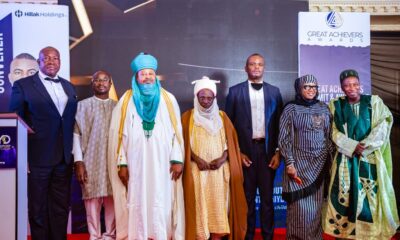

GAIYD Reaches 49,585 People, Targets 100 Per Cent Growth in Youth Devt Impact
ShareBy David Torough, Abuja The Great Achievers Initiative for Youth and Community Development (GAIYD) says it reached more than 49,585...


NUPRC Offers 40 Oil, Gas Blocks to Prospective Investors
Share By Tony Obiechina, Abuja The Nigerian Upstream Petroleum Regulatory Commission (NUPRC) has called on international oil and gas investors...
Ebola: NCDC Defends N10bn Health Security Fund
ShareBy Laide Akinboade, Abuja The Nigeria Centre for Disease Control and Prevention (NCDC) has clarified that the N10 billion emergency...

After Sacred Ka’abah Visit in Makkah, Tinubu Recommits to Peace, Prosperity.
ShareBy David Torough, Abuja President Bola Tinubu has reaffirmed his commitment to national development, peace and prosperity, declaring that he...

WAHO Seeks Uniform Standards for Health Professionals’ Education in ECOWAS
ShareBy David Torough, Abuja The West African Health Organisation (WAHO) has reaffirmed its commitment to harmonising the training, accreditation and...


Firm Promises No Storage Charges On Subscribers’ Wallets
ShareBy David Torough, Abuja A telecommunications firm, ESDIAC Global, has said it does not impose storage charges on subscribers’ wallets,...