
NEWS
GAIYD Reaches 49,585 People, Targets 100 Per Cent Growth in Youth Devt Impact

By David Torough, Abuja
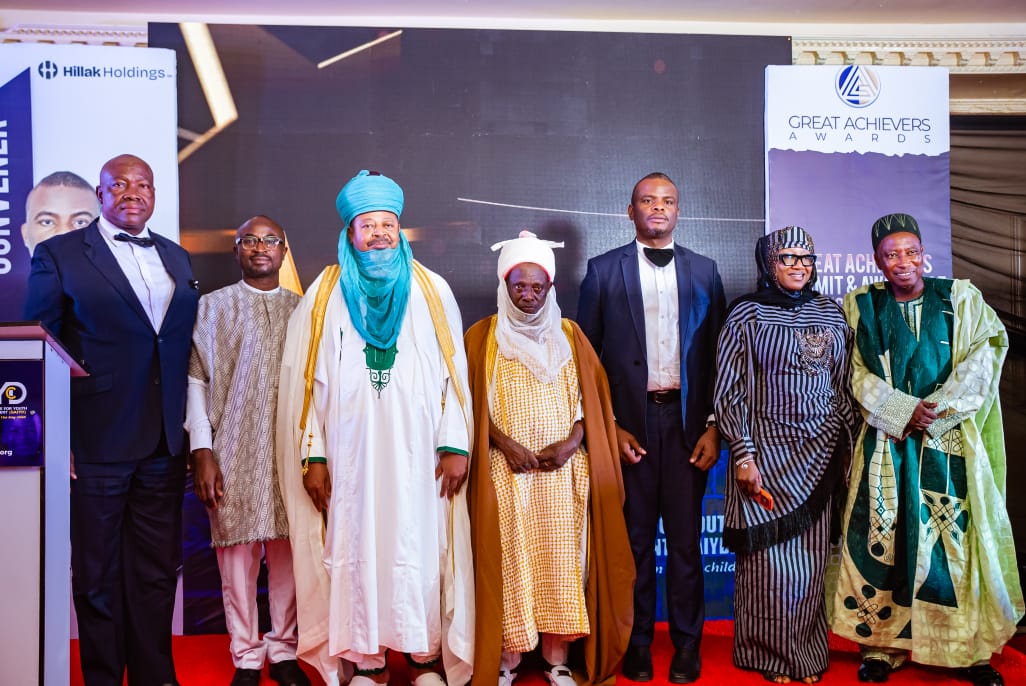
The Great Achievers Initiative for Youth and Community Development (GAIYD) says it reached more than 49,585 direct and indirect beneficiaries in 2026 through its youth development, boychild advocacy and community engagement programmes.
The initiative also extended its activities to 37 schools across three states, distributed more than 4,300 copies of its book, Unheard Voices of the Boychild, and provided learning facilities to five schools during the year.
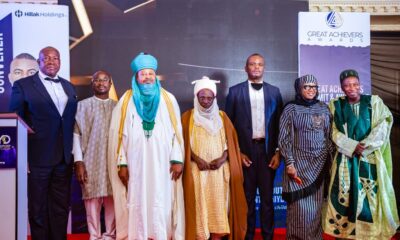
The President of GAIYD, Dr Hillary Akpua, disclosed this at the fourth edition of the Great Achievers Awards 2026, held in Abuja on Saturday, where he announced plans to achieve at least 100 per cent growth in the organisation’s impact in 2027.
Akpua explained that GAIYD, which commenced its boychild advocacy campaign in 2021 and was formally registered in 2023, was established to address challenges affecting boys and equip them with the values and skills needed to become responsible members of society.
According to him, the initiative believes that raising responsible boys contributes to stronger families and a better society.
“We found out that our society is going through a lot of challenges, and we believe that if there is a better boychild, there will be a better family. If there is a better family, there is going to be a better society,” he said.
He said the organisation had sustained its interventions through school sensitisation programmes, community engagements and parental initiatives designed to provide boys with the guidance and support necessary to fulfil their potential.
Providing details of the year’s activities, Akpua said GAIYD engaged 435 students and 33 teachers in secondary schools across Nasarawa and Niger states on drug abuse, mental health, personal hygiene, personal responsibility and positive decision-making.
The sensitisation programmes were conducted with the support of partners, including personnel of the National Drug Law Enforcement Agency (NDLEA).
The organisation also distributed copies of Unheard Voices of the Boychild, a book launched at its 2025 summit, to encourage students to understand and reflect on the experiences and challenges confronting boys.
It further donated boards and markers to beneficiary schools to improve teaching and learning.
As part of activities commemorating the International Day of the Boychild, GAIYD organised a football and athletics competition between April 23 and May 16, involving 641 boys from eight schools.
The competition featured football matches and 100-metre, 200-metre and 400-metre races, with the aim of promoting teamwork, discipline, confidence and sportsmanship among participants.
The campaign culminated at the Moshood Abiola National Stadium, Abuja, on May 16, attracting nine schools, 18 teachers and coaches, and three media organisations.
Akpua said the campaign reached 49,151 people through direct engagements, online platforms and other activities, while the organisation’s year-end assessment put its overall direct and indirect beneficiaries at more than 49,585.
He added that GAIYD would expand its interventions to additional states and schools in 2027, with a target of doubling its overall impact.
Speaking on the theme, “Raising Responsible Leaders, Building Sustainable Nations,” the keynote speaker, Professor Okey Ikechukwu, called for a change in Nigeria’s approach to leadership, emphasising the importance of tolerance, fairness and respect for others.
Ikechukwu argued that leadership should not be defined by official positions or titles but by an individual’s ability to influence decisions and make meaningful contributions to society.
“Leadership is not about whether you have a title or whether you are heading an office. Even self-leadership is a form of leadership,” he said.
He identified cultural, religious and personal prejudices as major obstacles to responsible leadership, urging Nigerians to acknowledge their biases and avoid imposing them on others.
The professor also called for boys and girls to be raised with values that encourage mutual respect and peaceful coexistence, warning against gender stereotypes capable of limiting their development.
He challenged young Nigerians to avoid repeating the mistakes of previous generations, particularly corruption and the abuse of public positions, stressing that nation-building was a collective responsibility rather than the exclusive preserve of political officeholders.
In a goodwill message, the Chairman of the Economic and Financial Crimes Commission (EFCC), Mr Ola Olukoyede, represented by the Head of the Commission’s Enlightenment and Re-orientation Unit, Aisha Muhammad, said responsible leadership and the fight against corruption were closely connected.
He warned that sustainable development would remain difficult to achieve in an environment where financial crimes and indiscipline were tolerated.
Olukoyede noted that the commission’s experience showed that many financial crimes were rooted in a failure of values, explaining that its mandate went beyond arresting and prosecuting offenders to include corruption prevention through public enlightenment and early value re-orientation.
He identified integrity education, financial discipline and deterrence as important measures for nurturing responsible leaders.
According to him, the EFCC had established Integrity Clubs in primary and secondary schools and Zero Tolerance Clubs in tertiary institutions to promote honesty, accountability and responsible conduct among young Nigerians.
He urged youths to shun internet fraud, Ponzi schemes and get-rich-quick practices, encouraging them instead to embrace legitimate earnings, savings and financial discipline.
“The youth are not just the leaders of tomorrow; they are the leaders of today. In your homes, in your classrooms, in your social media spaces, and in your communities, you are already leading,” he said.
Olukoyede commended GAIYD for its contributions to youth integrity, civic responsibility and community development, expressing the EFCC’s willingness to partner with initiatives promoting such values.
Also speaking, the Chairman of the Code of Conduct Tribunal, Justice Mainasara Kogo Umar, identified money politics, weak ideological foundations and divisive sentiments as challenges affecting Nigeria’s democratic development.
He expressed concern that political parties were increasingly becoming platforms for personal interests rather than organisations guided by clear ideologies and policy programmes.
Umar attributed the frequent movement of politicians between political parties to a lack of ideological commitment, while noting that the high cost of nomination forms continued to limit participation in the political process.
He also criticised the practice of inducing voters with money and material gifts, observing that economic hardship had made many Nigerians vulnerable to such practices.
The tribunal chairman urged Nigerians to place national unity, peace and development at the centre of their political choices, emphasising that sustainable democracy required accountability from both leaders and citizens.
Other speakers at the event included Imran Hassan and Mrs Hauwa Aminu Wambai, while Ms Oma Favour Igboanua served as discussion lead.
The awards ceremony also recognised individuals and organisations for their contributions to youth development, community service, leadership and boychild advocacy.
Among the recipients, HRH Queen Haukawulu Adamu Ibrahim received the Community Development Advocate and Champion for Gender Equality and Justice Award, while HRH Alhaji Dr Usman Nga-Kupi was honoured as Champion of Education and Cultural Preservation.
Frank Nwike received the Outstanding Organisation of the Year Award, while Chief Eleduma Gbenga Abiodun was named Humanitarian of the Year. Mr Samuel Biboye Luwei received the Entrepreneur of the Year Award.
Dr Hassan’s Hospital was presented with the GAIYD Legacy Award, while Mr Salihu Abdulahmed Dembos received the Outstanding Leadership in Broadcasting Award.
Other awardees included Mr Okeke Chidozie, recognised as Africa’s Trailblazer of the Year; Mr David Ogidinta, Youth Mentor of the Year; and Mrs Princess-Ekwi Ajide, Mental Health Advocate of the Year.
GAIYD acknowledged the support of the NDLEA, EFCC, National Emergency Management Agency (NEMA), Hillak Holdings, Rockbase Developers, Homadil Reality, Dr Hassan’s Hospital, Heladi Prime Limited, De Ace Cribs, Etazuma M&I, Boys2Men Coaching and Mentoring, Neovantage Foundation, Vinael Wines and other partners for their contributions to the organisation’s programmes and activities.
By Tony Obiechina, Abuja
The Nigerian Upstream Petroleum Regulatory Commission (NUPRC) has called on international oil and gas investors to channel fresh investments into Nigeria, highlighting improved security, attractive fiscal incentives and ongoing regulatory reforms as the country prepares to offer 40 oil and gas blocks in its 2026 licensing round.
The commission said Nigeria was positioning itself as a competitive investment destination amid growing global energy uncertainties and intensifying competition among oil-producing countries for international capital.
The Commission Chief Executive of the NUPRC, Oritsemeyiwa Eyesan, made the appeal during a roundtable discussion titled, ‘Energy Sovereignty in an Interconnected World: Aligning National Priorities, Markets and Global Security’, at the 2026 Abu Dhabi International Petroleum Exhibition and Conference in Abu Dhabi on Monday.
According to a statement issued by the commission’s Head of Media and Corporate Communications, Eniola Akinkuotu, Eyesan urged investors to take advantage of the opportunities presented by the forthcoming licensing round.
She disclosed that the bidding portal for the exercise would officially open on November 20, 2026.
Eyesan said Nigeria had strengthened its investment climate through improved security, a more attractive fiscal framework and measures aimed at reducing operating costs and regulatory bottlenecks.
“We are expecting investors to turn to Nigeria. We are going in for another licensing round, and we will be launching our bid portal on November 20. We expect to see interested investors because the environment is a lot more competitive,” she said.
She added that the government had introduced incentives and improved security conditions to make the country’s upstream petroleum sector more attractive to prospective investors.
The 2026 licensing round is part of the Federal Government’s broader efforts to attract new capital into the petroleum industry, expand exploration activities and increase crude oil and natural gas production.
Nigeria’s oil and gas sector has faced persistent investment challenges over the years, including regulatory uncertainty, insecurity, crude oil theft, pipeline vandalism, high operating expenses and delays in project execution.
However, Eyesan said reforms introduced under the Petroleum Industry Act (PIA), enacted in 2021, alongside executive orders issued by President Bola Tinubu, had helped address some of the challenges affecting the industry.
According to her, the reforms have strengthened the regulatory framework and improved Nigeria’s ability to compete with other petroleum-producing countries for investment.
She also disclosed that the NUPRC had conducted at least four successful licensing rounds between 2021 and 2026, describing the development as a departure from the less frequent licensing exercises recorded before the introduction of the PIA.
Beyond crude oil, the commission chief executive identified Nigeria’s substantial natural gas resources as another major investment opportunity.
She said the country had approximately 215 trillion cubic feet of proven gas reserves, while daily production remained below seven billion cubic feet, indicating significant room for increased output.
Eyesan noted that the completion of major gas infrastructure projects would help unlock additional supply, improve domestic availability and support the development of regional and international markets.
She specifically highlighted the proposed Nigeria-Morocco Atlantic Gas Pipeline and Trans-Saharan Gas Pipeline as strategic projects that could expand Nigeria’s gas export capacity.
“The stars are already aligned. For gas infrastructure, we just completed very major infrastructure projects that will unlock gas supply in the country and the sub-region,” she said.
She added that the proposed pipelines would create opportunities to transport Nigerian gas to European markets while meeting growing energy demand across Africa.
The projects are expected to strengthen Nigeria’s position in the regional and international gas market, although their proposed development and completion remain important factors in unlocking the anticipated benefits.
Eyesan acknowledged that competition for global energy investments had intensified, with several countries introducing measures to attract international oil companies and other industry players.
She said Nigeria was addressing key concerns influencing investment decisions, particularly project execution risks, operating costs, delays and regulatory uncertainty.
According to her, investors increasingly prioritise predictable business conditions and efficient project delivery when deciding where to commit capital.
“We understand that investors will prize execution risk, cost, delays and also uncertainty, and so what we have done in Nigeria is to ensure that we guard against these risks and then attract the investment required to enable us unlock the huge resources we sit on,” she said.
The 2026 licensing round will provide prospective investors with opportunities to acquire new oil and gas acreage and participate in the development of Nigeria’s hydrocarbon resources.
The exercise comes as the Federal Government seeks to increase crude oil production, strengthen national energy security, expand gas development and improve revenue generation from the petroleum
By Laide Akinboade, Abuja
The Nigeria Centre for Disease Control and Prevention (NCDC) has clarified that the N10 billion emergency health intervention fund approved by President Bola Tinubu was not meant exclusively for Ebola preparedness but to strengthen Nigeria’s overall capacity to prevent and respond to public health emergencies.
The clarification comes amid public concerns and debate over the Federal Government’s allocation following the confirmation of an imported Bundibugyo Ebola case in Nigeria.
NCDC Director-General, Dr Jide Idris, who made the clarification in a statement issued in Abuja on Monday, said the funding was designed to support prevention, preparedness, early detection and rapid response to several epidemic-prone diseases.
He listed the threats to include Ebola, Lassa fever, cholera, meningitis, diphtheria, measles, Mpox and antimicrobial resistance, noting that these diseases had continued to contribute significantly to illness and deaths across the country.
Idris stressed that the N10 billion was released directly to the NCDC and not to the Presidential Task Force on Ebola Virus Disease, chaired by the Chief of Staff to the President.
According to him, while the task force was established to coordinate the national Ebola response, the intervention fund was intended to address broader health security challenges confronting the country.
He, however, described the N10 billion allocation as inadequate, considering the enormous financial requirements for building a resilient national health security system.
The NCDC chief disclosed that Nigeria’s National Action Plan for Health Security (NAPHS) 2.0, covering 2025 to 2029, requires approximately N522 billion for implementation over five years.
This translates to an average annual funding requirement of N104.4 billion, meaning the N10 billion intervention represents only about two per cent of the plan’s average yearly cost.
Idris explained that NAPHS 2.0 adopted a multisectoral One Health approach, bringing together ministries, departments and agencies, development partners, civil society organisations and other stakeholders to strengthen the country’s capacity to tackle health emergencies.
He said inadequate funding had remained a major obstacle to implementing Nigeria’s previous health security plan, stressing that sustainable domestic and international financing was necessary to prevent disease outbreaks from escalating into national emergencies.
On the Ebola situation, Idris said Nigeria responded promptly to its first imported Bundibugyo Ebola case, assuring citizens that there was no need for panic.
He disclosed that the infection was confirmed at the NCDC laboratory on October 20, 2026, less than 24 hours after the agency received the alert in Abuja.
According to him, all identified contacts were under daily monitoring, while Nigeria currently had no active Ebola case following the management of the imported infection.
He added that surveillance would continue until the last identified contact completed the mandatory 21-day monitoring period without developing symptoms or any new case emerging.
Despite the encouraging development, the NCDC director-general cautioned that the country was not yet completely out of danger, promising regular updates through the agency’s official communication channels.
Idris also dismissed concerns that the Ebola situation could warrant the postponement of elections, suspension of political campaigns, prohibition of mass gatherings or imposition of travel restrictions.
He said the NCDC had not recommended such measures, adding that technical guidelines had instead been developed to guide organisers of public gatherings on infection prevention and control.
According to him, public events could proceed safely provided organisers and participants complied strictly with established health and safety protocols.
He warned Nigerians against spreading unverified information, noting that rumours and misinformation could undermine public confidence and frustrate efforts to contain disease outbreaks.
Providing details of government funding for health security, Idris said the NCDC received N4 billion in 2024 and N7 billion in 2025, alongside a N5 billion intervention fund.
He added that the 2026 Appropriation provided N22 billion, while President Tinubu approved an additional N10 billion emergency intervention fund in June 2026 to strengthen preparedness.
The NCDC boss further cited estimates by the Global Preparedness Monitoring Board, which indicated that countries required between one and two dollars per person annually to maintain acceptable epidemic preparedness and emergency response capacity.
Based on Nigeria’s estimated population of 240 million, he said the country would require between $240 million and $480 million annually to achieve adequate preparedness against public health threats.
Idris called on federal and state governments, development partners and other stakeholders to increase investment in health security, describing it as a critical pillar of the Nigeria Health Sector Renewal Investment Initiative.
He maintained that adequate funding, transparency and accountability were essential to preventing avoidable deaths, protecting livelihoods and reducing the economic consequences of disease outbreaks.
The NCDC director-general assured Nigerians that the agency remained committed to the prudent utilisation of public resources and the protection of public health nationwide.
By David Torough, Abuja
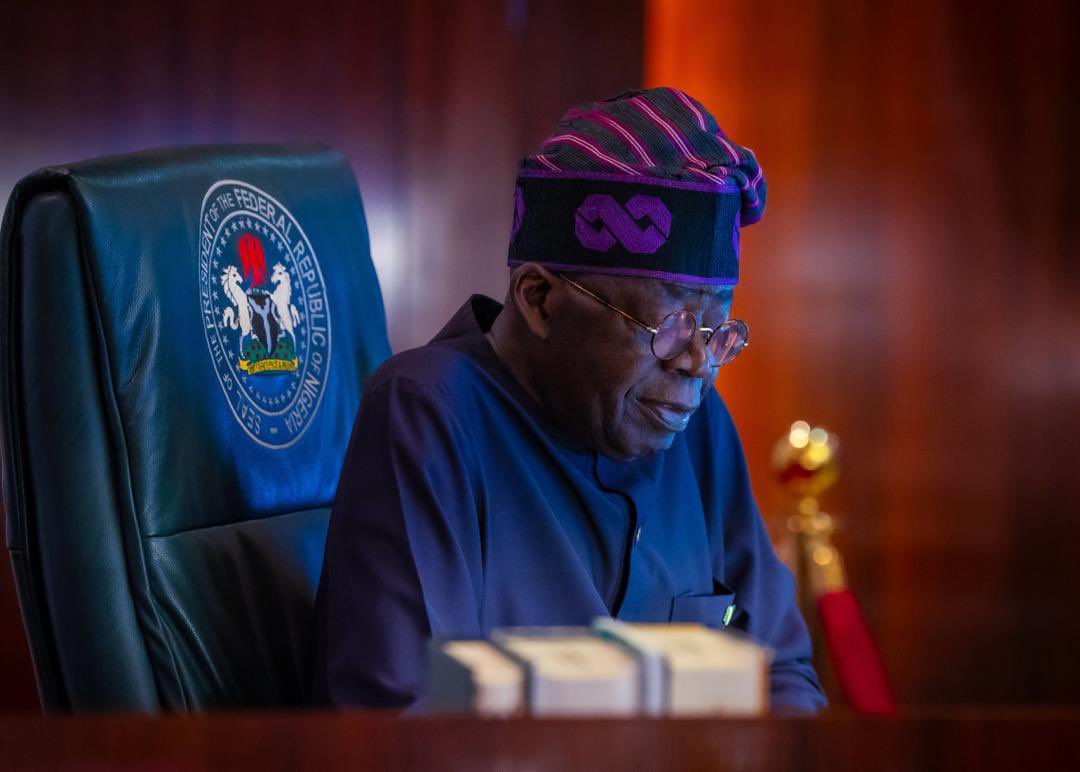
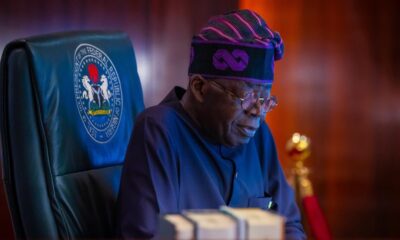
President Bola Tinubu has reaffirmed his commitment to national development, peace and prosperity, declaring that he prayed for all Nigerians during his recent spiritual visit to the Kingdom of Saudi Arabia, where he was granted the rare privilege of entering the Holy Ka’abah in Makkah to offer prayers.
The President, who concluded his visit on Monday, disclosed that he used the sacred opportunity to seek divine intervention for Nigeria, praying for peace, unity and prosperity for the country and its citizens.
In a statement shared on his verified X handle, Tinubu expressed profound appreciation to the Custodian of the Two Holy Mosques, King Salman bin Abdulaziz Al Saud, and the Crown Prince and Prime Minister of Saudi Arabia, Mohammed bin Salman, for granting him and members of his delegation access to the Holy Ka’abah and extending gracious hospitality to them.
He described the experience as a historic and deeply cherished spiritual privilege, reflecting the longstanding bonds of faith, friendship, mutual respect and cooperation between Nigeria and Saudi Arabia.
Speaking on the significance of the visit, the President said the opportunity to pray inside the Ka’abah was an honour he would forever cherish, adding that he remained grateful to the Saudi monarch, the Crown Prince and the administrators of the holy sites for the gesture.
During his reflections on the spiritual journey, Tinubu said he prayed for wisdom and resilience to continue serving Nigerians, expressing confidence that his prayers had been answered.
He recalled undertaking a similar spiritual journey before the 2023 presidential election, when he sought Allah’s blessings for his Umrah and promised to return in gratitude.
The President also drew inspiration from Surah Aal-Imran, Verse 26 of the Holy Qur’an, which affirms that Almighty Allah is the ultimate owner of sovereignty, granting power and authority to whom He wills and taking them away from whom He wills.
According to him, the passage reinforces the understanding that political authority is a divine trust that must be exercised with humility, responsibility and commitment to the welfare of the people.
Tinubu said his emergence as Nigeria’s President and Commander-in-Chief of the Armed Forces was an extraordinary blessing from Almighty Allah, which must be matched with dedicated service to the nation.
Reaffirming his commitment to Project Nigeria, he declared that his determination to build a prosperous country had become stronger, stressing the need to pursue development in accordance with the will of Allah and the aspirations of Nigerians.
“My commitment to Project Nigeria is higher. I am determined to usher in prosperity and fully develop the country, consistent with the wish of Allah and the support of the people,” he said.
On the economy, the President expressed optimism about the country’s outlook, describing its economic foundation as solid and Nigeria’s emergence from a difficult period as encouraging.
He, however, emphasised that sustainable national development must include deliberate investment in young people, warning that the decisions taken by present leaders would determine how future generations judge their stewardship.
The President maintained that his administration would remain focused on strengthening the economy, expanding opportunities for young Nigerians and creating an enabling environment for citizens to realise their potential.
Meanwhile, members of the presidential delegation, including Attorney-General of the Federation and Minister of Justice, Lateef Fagbemi (SAN); Coordinating Minister of Health and Social Welfare, Ali Pate; and the governors of Borno, Sokoto, Jigawa, Kaduna, Yobe and Kwara states, expressed gratitude to Allah for the opportunity to enter and pray inside the sacred shrine.
Business leaders, including Chairman of BUA Group, Abdulsamad Rabiu, and Oando Chief Executive Officer, Wale Tinubu, were also among those who shared the spiritual experience with the President.
Tinubu departed Abuja for Saudi Arabia on Thursday, October 29, 2026, to perform Umrah at the Grand Mosque, Masjid al-Haram, in Makkah.
He said the visit had further reinforced his appreciation of the enduring relationship between Nigeria and Saudi Arabia, while renewing his resolve to serve the Nigerian people with wisdom, resilience, humility and purposeful leadership.



GAIYD Reaches 49,585 People, Targets 100 Per Cent Growth in Youth Devt Impact
ShareBy David Torough, Abuja The Great Achievers Initiative for Youth and Community Development (GAIYD) says it reached more than 49,585...

NUPRC Offers 40 Oil, Gas Blocks to Prospective Investors
Share By Tony Obiechina, Abuja The Nigerian Upstream Petroleum Regulatory Commission (NUPRC) has called on international oil and gas investors...
Ebola: NCDC Defends N10bn Health Security Fund
ShareBy Laide Akinboade, Abuja The Nigeria Centre for Disease Control and Prevention (NCDC) has clarified that the N10 billion emergency...

After Sacred Ka’abah Visit in Makkah, Tinubu Recommits to Peace, Prosperity.
ShareBy David Torough, Abuja President Bola Tinubu has reaffirmed his commitment to national development, peace and prosperity, declaring that he...

WAHO Seeks Uniform Standards for Health Professionals’ Education in ECOWAS
ShareBy David Torough, Abuja The West African Health Organisation (WAHO) has reaffirmed its commitment to harmonising the training, accreditation and...


Firm Promises No Storage Charges On Subscribers’ Wallets
ShareBy David Torough, Abuja A telecommunications firm, ESDIAC Global, has said it does not impose storage charges on subscribers’ wallets,...


GIGM Brings hireX, PASS to Abuja Nov 4
ShareBy Tony Obiechina, Abuja Premium vehicle hire and all-in-one travel booking are coming to Nigeria’s capitalGIG Mobility (GIGM) has announced...

UNIBEN Recruits again after 10-year Employment Freeze
ShareThe Vice-Chancellor of the University of Benin, Prof. Edoba Omoregie, SAN, has said that another set of graduates will be...


Fire Service Responds to Building Collapse, Rescues Five Victims in Osun
ShareFrom Ayinde Akintade, Osogbo The Federal Fire Service, Osun State Command, responded to a distress call on a building collapse...


CAN Raises Concern Over Reported Conviction of Christian Woman in Borno
ShareBy Laide Akinboade, Abuja The Christian Association of Nigeria (CAN), at the weekend has expressed their concern over the reported...