
POLITICS
Insecurity: Reps Probe Non-Functional $460m CCTV Project in Abuja

By Ubong Ukpong, Abuja
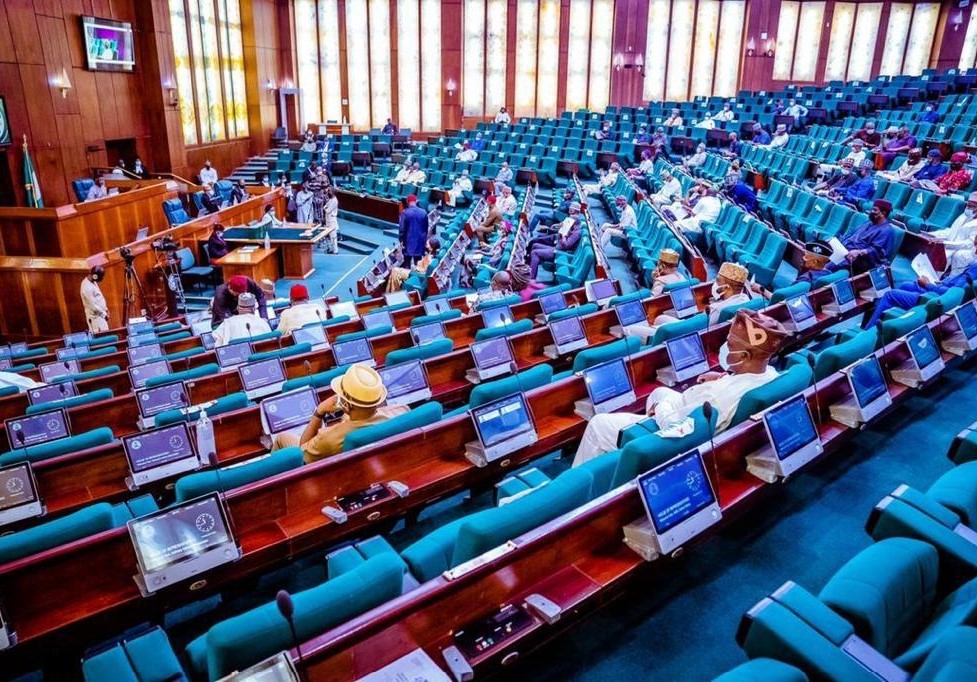
The House of Representatives on Thursday, raised an Adhoc panel, to investigate the rising insecurity in the Federal Capital Territory (FCT) despite the installation of a $460 million CCTV system funded through a Chinese loan.
Speaking at the inauguration of the committee in Abuja, Speaker of the House, Tajudeen Abbas described the growing wave of kidnappings, armed robberies and killings in the FCT as “unacceptable and intolerable,” noting that Abuja, once seen as one of West Africa’s most peaceful capitals is now grappling with frequent violent crimes.
Abbas questioned why the multi-million dollar CCTV project, designed to enhance surveillance and security operations has failed to curb the worsening security situation saying Nigerians deserve answers on whether the massive investment was properly deployed, abandoned or crippled by mismanagement.
He said the committee’s mandate includes a forensic investigation into the project’s status, operational capacity, level of integration with security agencies and reasons for its failure to deliver results.
Abbas, represented by a lawmaker, Julius Pondi said the committee is also expected to identify any acts of negligence or sabotage and recommend steps for activating or overhauling the system.
The Speaker urged the Ministers of FCT, Finance, and Interior, alongside the Inspector General of Police, council chairmen and heads of security agencies, to offer full cooperation, appealing to traditional rulers to strengthen intelligence sharing with security operatives.
Abbas said the House “will not stand idly by” while Abuja residents live in fear, stressing that every legislative tool will be deployed to ensure accountability and improved security.
Earlier, Chairman of the Committee, Hon. Ojogo Donald Kimikanboh said the worsening security challenges in Abuja had turned the city into a “theatre of fear,” adding the committee’s task was a national responsibility owed to grieving families and anxious residents.
Ojogo described the failed CCTV project as a “scandal of monumental proportions,” noting that despite the huge investment, the system has not provided the expected security shield for the FCT.
He outlined the committee’s work, including auditing the $460 million expenditure, evaluating the project’s technical integrity, establishing its functionality and uncovering the causes of the persistent security breaches.
“We are not on a witch hunt but a truth hunt,” he said, adding that the committee would pursue its assignment with diligence, integrity and a commitment to restoring public confidence.
“What elevates this crisis from tragedy to scandal of monumental proportions is the stark paradox at its core: this relentless wave of terror crashes upon us despite a massive investment—a Chinese loan of Four Hundred and Sixty Million United States Dollars ($460,000,000) secured for the singular purpose of creating an impregnable security shield for the FCT.
“This was no ordinary initiative. It was a flagship project, a critical layer in our national security architecture, promised to be the ever-watchful eye over our capital—a digital sentinel designed to deter crime, empower our security forces, and ensure that perpetrators face the justice they deserve.
“Conduct a forensic audit of the $460 million CCTV project, tracing every dollar, scrutinizing every contract, and evaluating its technical integrity from conception to current status.
“Determine the precise operational status of the project—its functionality, coverage, and efficacy—and expose the specific reasons for any failure.
“Investigate the direct correlation between this project’s failure and the escalating security breaches within the FCT.
“Identify all individuals, agencies, and contractors responsible for any failures and establish a clear chain of accountability.
“Provide actionable recommendations to salvage this vital project, secure value for the Nigerian people, and propose concrete measures to restore security and public confidence” he said
By David Torough, Abuja
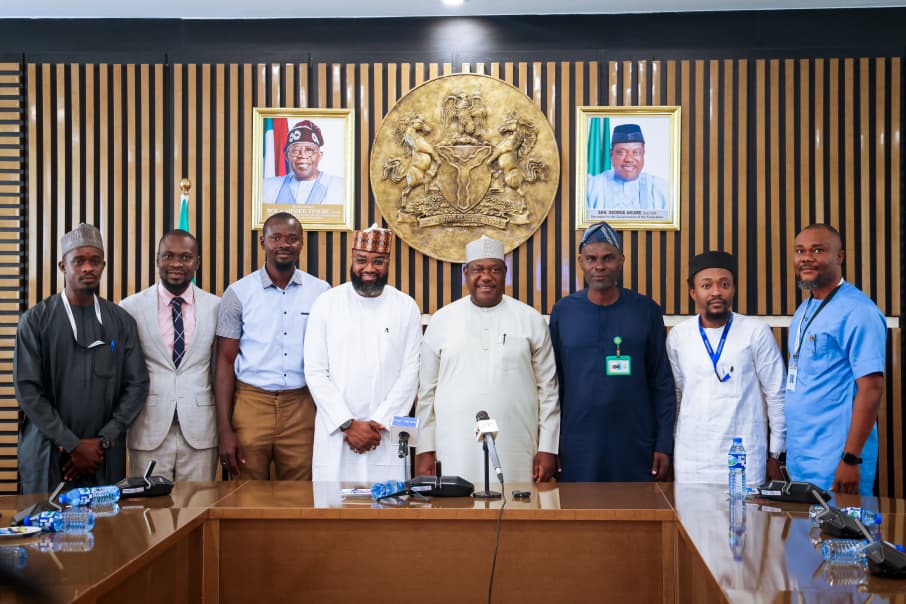
The Secretary to the Government of the Federation (SGF), Senator George Akume, has commended the National Agency for Science and Engineering Infrastructure (NASENI) for its strides in innovation and technological development, assuring the agency of the Federal Government’s continued support.
Akume gave the commendation on Tuesday, September 8, 2026, in Abuja when he received NASENI’s Executive Vice Chairman and Chief Executive Officer, Khalil Suleiman Halilu, members of his management team and winners of the agency’s Innovation Assessment and Award Competition.
The SGF described NASENI’s inter-agency and intra-agency innovation competition for federal civil and public servants and Ministries, Departments and Agencies (MDAs) as a significant milestone in efforts to develop home-grown solutions to Nigeria’s challenges.
He said the innovative products emerging from the competition could have significant implications for national security, food sovereignty and healthcare, adding that the achievements demonstrated the depth of talent and ingenuity among young Nigerians.
“Nigeria has talents. I don’t doubt about that. Wherever you go in the world, Nigerians are recognized as people with lot of talents and people with a great future,” Akume said.
He also praised NASENI for adopting what he described as a transparent and non-partisan process in selecting and assessing the innovations, saying the credibility of the competition would encourage more Nigerians to come forward with innovative ideas.
Akume expressed optimism that sustained government support could enable Nigeria to attain greater technological heights, including developing advanced aerospace capabilities.
“Tomorrow, who knows, Nigeria can manufacture rockets that can send people to the moon. And this can be the courtesy of NASENI,” he said.
Earlier, Halilu said the award programme was designed to identify and recognise outstanding contributions by civil and public servants through both inter-agency and intra-agency competitions.
He said NASENI’s innovation strategy goes beyond developing technological products to equipping innovators with skills needed to commercialise their ideas successfully.
According to him, technical and engineering expertise must be complemented by competencies in accounting, marketing and business development for innovations to achieve their full potential.
Halilu disclosed that NASENI had, in about two years, facilitated the establishment of 20 factories across the country and developed more than 40 products as part of efforts to transform research and innovation into commercially viable solutions.
He added that the agency had also introduced programmes aimed at identifying and nurturing innovators from an early age. One of the initiatives, the Future Makers Programme, targets children between five and 15 years to stimulate interest in science, technology, engineering and innovation.
The meeting also featured demonstrations by representatives of two of the six winners of the innovation competition.
A team from the National Space Research and Development Agency (NASRDA) showcased a security jacket equipped with technology designed to facilitate real-time communication with the command-and-control centres of security agencies, potentially improving coordination and response.
The winning team from NASENI, meanwhile, presented a commercial electronic platform designed to serve as a digital marketplace through which MDAs can promote and market their goods and services.
Akume congratulated NASENI and the winners of the competition, reaffirming the Federal Government’s commitment to creating an enabling environment for research, innovation and technological development in Nigeria.
From Ayinde Akintade, Osogbo
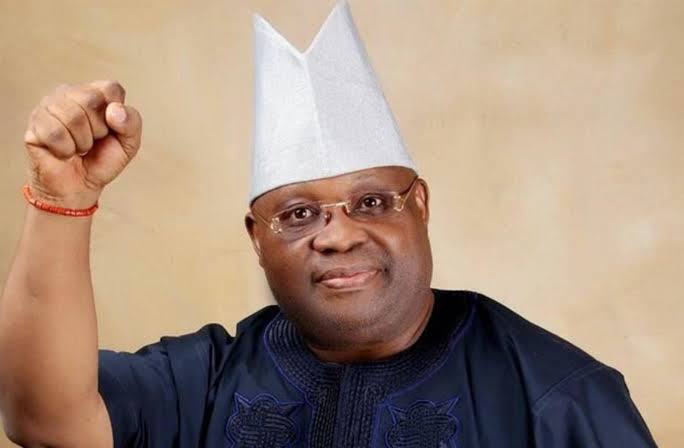
The All Progressives Congress has taken Osun state Governor Ademola Adeleke’s re-election to court as the petition is now on the notice board of the Osun State Governorship Election Petition Tribunal in Osogbo.
The papers went up on Monday, 7 September.
Tribunal secretary Pefe Belemore had said the notices would be displayed before noon. Secretariat staff were already in the courtroom as preparations for sitting continued.Two petitions challenge the 15 August result that returned Adeleke for another term.
The APC case, marked EPT/OS/GOV/01/2026, was filed by its candidate, Asiwaju Munirudeen Bola Oyebamiji, against Adeleke, the Accord Party and the Independent National Electoral Commission.
The Peoples Democratic Party case, marked EPT/OS/GOV/02/2026, was filed by Adebayo Olugbenga Adedamola against Adeleke, INEC and Accord.
Display of the petitions is a procedural step. The parties must still be served before full hearing begins. Adeleke remains the declared winner. The detailed grounds of each petition have not been published. The tribunal has not issued a ruling.
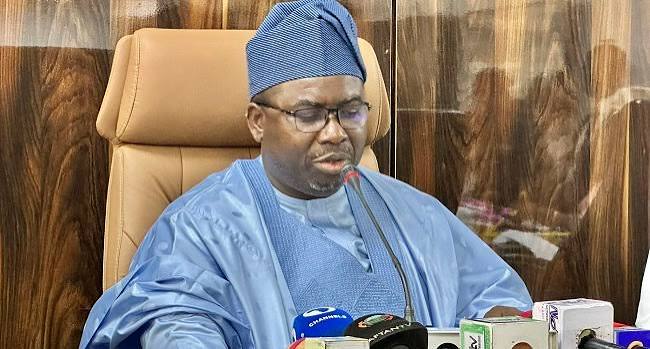
Chairman, Independent National Electoral Commission (INEC), Prof. Joash Amupitan, has urged Administrative Secretaries to reject shortcuts and political interference in the discharge of their duties ahead of the 2027 general elections.
Amupitan gave the charge on Monday in Lagos at a Strategic Operational Workshop for INEC Administrative Secretaries from the 36 states and the Federal Capital Territory.
He said the professionalism of state offices depended largely on the institutional culture created by Administrative Secretaries and their commitment to discipline, neutrality, punctuality and compliance.
The INEC chairman also urged the Administrative Secretaries to remain professionally competent and sufficiently knowledgeable to prevent anyone from taking advantage of them in the discharge of their responsibilities.
Amupitan said the Administrative Secretary remained a critical bridge between INEC policy and its implementation at the state level.
He said their responsibilities included ensuring institutional discipline, operational readiness, administrative continuity, proper documentation and early escalation of emerging challenges.
According to him, Administrative Secretaries must also support Electoral Officers, promote neutrality and protect the institutional independence of the Commission.
The chairman said lessons from recent off-cycle elections, particularly the Osun Governorship Election, had demonstrated that effective logistics, functional technology and administrative discipline were critical to credible elections.
Amupitan, however, said the success recorded in single-state elections must now be translated into a uniform national operational standard ahead of the general election.
He said the Commission was entering a critical six-month preparation window and could no longer afford fragmented interpretations of administrative responsibilities or divergent operational practices across states.
The chairman said the two-day workshop was designed to eliminate guesswork, harmonise operational strategies and ensure that Administrative Secretaries understood standardised national protocols.
He said the workshop would focus on Continuous Voter Registration and Permanent Voter Card distribution, logistics and election materials management, electoral technologies, human resources and ad-hoc staff optimisation and others.
Amupitan said particular attention would be given to institutional mastery of technologies including the Bimodal Voter Accreditation System (BVAS), IReV, eEC8A, Election Monitoring and Support Centre (EMSC), CROMS, IOMIS and PFRAS.
He said the Commission would also develop a standardised Excel-based Administrative Secretary Master Operational Tracker to provide a real-time picture of state-level election readiness.
According to him, the tracker will link with the EMSC dashboard and Election Project Plan, enabling relevant officers at the state and headquarters levels to monitor material distribution, ad-hoc staff training and other readiness indicators.
The chairman said the template would also provide a permanent onboarding framework for future Administrative Secretaries beyond the 2027 election.
He urged the participants to engage actively with facilitators and development partners, identify state-specific operational bottlenecks and leave the workshop with a clear understanding of their mandates.
Amupitan said the synergy between Administrative Secretaries and Resident Electoral Commissioners would be crucial to the smooth conduct of the 2027 General Election.
He commended the Office of the Secretary to the Commission and development partners for organising the workshop, describing it as timely and necessary for national electoral preparedness.
In his address, Prof. Ayobami Salami, Resident Electoral Commissioner (REC), Lagos State, urged INEC Administrative Secretaries to strengthen coordination, accountability and operational readiness ahead of the 2027 General Election.
Salami stressed the need for strategic, systematic and collective preparation for the election.
He said Administrative Secretaries occupied a critical position in election administration, with their effectiveness having direct implications for the success of electoral operations.
Salami urged participants to share field experiences, identify operational gaps and develop practical solutions that could be applied in their respective states.
He said the ultimate value of the workshop would be measured by how effectively participants translated lessons from the sessions into improved operations, stronger accountability and resilient systems for the 2027 election.
Speaking, Rose Oriaran-Anthony, INEC Secretary, urged Administrative Secretaries to ensure greater synergy with Resident Electoral Commissioners (RECs) to enhance preparations for the 2027 General Election.
Oriaran-Anthony said the Commission had convened the workshop to ensure that its headquarters and state offices operated within the same framework and implemented the Election Project Plan in line with its expectations.
She said the workshop would provide a safe space for Administrative Secretaries to openly identify operational bottlenecks, particularly those affecting their working relationships with RECs, and collectively develop solutions.
According to her, logistics, recruitment and training of ad-hoc personnel, financial and asset management, staff discipline and mastery of electoral technologies would be central to the workshop.
She said getting these areas right would make the 2027 election easier to administer. (NAN)


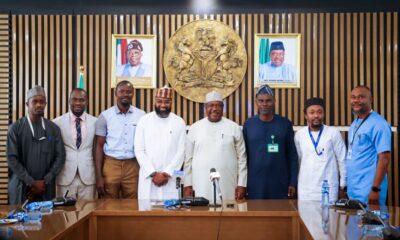

Akume Assures NASENI of FG Support as Agency Unveils Innovations for National Development
ShareBy David Torough, Abuja The Secretary to the Government of the Federation (SGF), Senator George Akume, has commended the National...
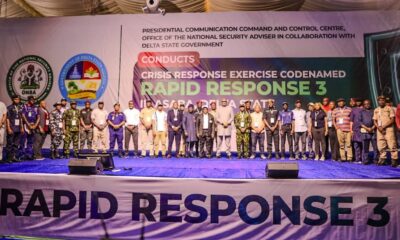

ONSA Begins First National Crisis Response Exercise Outside Abuja in Delta
ShareBy David Torough, Abuja The Office of the National Security Adviser (ONSA) has commenced the 2026 Rapid Response 3 (RR3)...
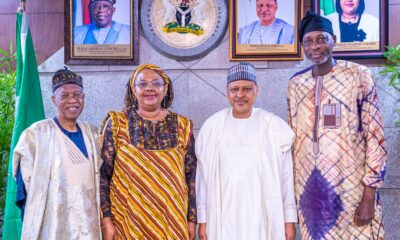

Information Minister Backs NIPSS Plan to Unlock Nigeria’s Orange Economy Potential
ShareBy David Torough, Abuja The Federal Government has pledged its support for the National Institute for Policy and Strategic Studies...


Akpodo Community Appreciates Lydia Memorial Hospital for Medical Outreach, Seeks Road Intervention
ShareBy David Torough, Abuja The Akpodo Community has paid a thank-you visit to the management and staff of Lydia Memorial...
NAFDAC Seeks Harsher Penalties for Counterfeiters
ShareThe National Agency for Food and Drug Administration and Control (NAFDAC) has renewed its call for harsher penalties for counterfeiters....
Nigeria’s Q2 2026 Data Narrative: A Triumph of Reforms or Just Recovery?
ShareBy Uddin Ifeanyi Against the backdrop provided by the incumbent government’s professed ambitions for the country, the 4.43 per cent...
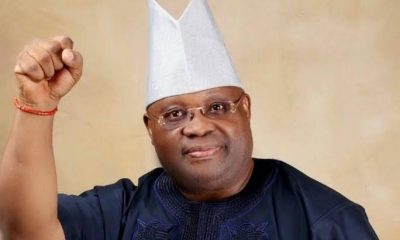

APC, PDP Challenge Adeleke’s August Win as Osun Tribunal Posts Petitions
ShareFrom Ayinde Akintade, Osogbo The All Progressives Congress has taken Osun state Governor Ademola Adeleke’s re-election to court as the...
GOC Fadairo Reaffirms Continuous Military Action against Separatist Threat
ShareFrom Sylvia Udegbunam, Enugu The General Officer Commanding (GOC) 82 Division, Nigerian Army, and Commander, Joint Task Force South East,...


Osun NSCDC Gets New Commandant
ShareFrom Ayinde Akintade, Osogbo The Commandant General of the Nigeria Security and Civil Defence Corps (NSCDC), Prof. Ahmed Abubakar Audi,...
How Nigeria is Closing the Net on Illicit Arms
ShareBy Sumaila Ogbaje Undoubtedly, the steady flow of illegal weapons is keeping Nigeria’s security crisis alive. From rural communities to...