
BUSINESS
ICAN Encourages Early Chartered Status Among Secondary School Students


The Institute of Chartered Accountants of Nigeria (ICAN) has inspired accountants to pursue chartered status to practise across the various branches of accounting and avoid being labelled mere bookkeepers.
A chartered accountant, Adeyemi Salau, advised on Wednesday when ICAN, Ilorin and District Society, visited the Queen Elizabeth Secondary School and the Government Secondary School, Ilorin.
The Catch-them-young visit was to encourage secondary students, not only to pursue the profession, but also to become chartered at a young age.
Salau encouraged early education, explaining that the district aimed to create ICAN consciousness in the students’ subconscious minds.
According to Salau, the Chief Executive Officer of Springboard Associates, being a chartered accountant is not restricted to commercial students alone, but also to science and arts students.
He said the only requirement was a minimum of five credits in O-level results, including Mathematics and English Language.
“For those who have the dream of being an accountant in future, it is not enough to be an accountant; you have to be a smart accountant and to achieve that, you must be chartered.
“This is because being a chartered accountant gives room to practise various branches of accounting like Management Accounting, Taxation, Auditing, Forensic Accounting, Cost Accounting and others.
“An accountant that isn’t chartered yet is just a bookkeeper,” Salau said.
According to him, three levels qualify one as a junior accountant.
Salau urged the students to utilise the opportunity to break the record of the present youngest chartered accountant in Nigeria, who became chartered at the age of 17.
Earlier, the District Chairman, Bose Fagbile, had said the essence of the campaign was to catch them young.
Fagbile urged the students not to wait till they secure admission into higher institutions before starting the process.
“You can start right after secondary school,” she said.
To encourage the students, the district’s General Secretary, Toyin Alabi, offered to sponsor the first five students to register for the Accounting Technician Scheme (ATS) examination.
The Principal of Queen Elizabeth Secondary School, Rashida Abdul, appreciated ICAN for finding the school worthy to gain from their knowledge.
She urged the students to utilise the opportunity to make a decision that will shape their future.
On his part, the Principal of Government Secondary School, Babatunde Kuranga, said the school was privileged to be a beneficiary.
He commended the district for encouraging the students to be professionals.
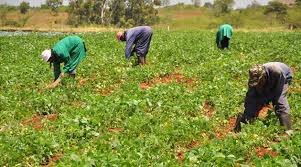
The Tomatoes Growers and Processors Association of Nigeria (TOPAN) has predicted a steady increase in the price of the produce between May and June 2026.
The Kaduna State Chairman TOPAN, Rabiu Zuntu, disclosed this in an interview recently in Lagos.
Zuntu noted that although there is no particular time for tomatoes planting season up north, seasonal weather variations can affect the production of the produce.
“Although we can plant tomatoes all-year-round, we cannot assure quality harvest all-year-round.
“Some farmers are harvesting now, while others are transplanting, and others are harvesting.
“Tomatoes are still available for sale but the price of the produce is gradually on the increase.
“Come May/June, the prices of tomatoes will be very expensive, so now is a good time to stock up the produce. There’s always a scarcity within that period.
“This is because of the nature of the weather in the north around that period, the weather is usually very hot and tomatoes cannot resist such hot temperature,” he said.
Zuntu said the price of tomatoes have started rising up in the north.
“A 50kg rafia basket of tomatoes sells from N20,000 as against N7,000 to N10,000 that was sold earlier in the year.
“While a crate of tomatoes up north is sold between N10,000 and N15,000 as against N5,000 to N6,500 sold earlier in the year.
“In most part of Kano State, where there is bumper harvest, they are rounding off their harvest. So, tomato is not that available there and most buyers have turned to where they can find it now, mostly within Kaduna State and some parts of Plateau State.
“So, that’s why the supply has decreased and the tomato supply and cost is determined by the law of demand and supply,” he said.
A 50kg basket of tomatoes in Lagos, at the moment, sells between N40,000 and N60,000 depending on the size and quality.
Three West African countries of Benin, Togo and Niger have collectively failed to pay Nigeria $9.55m for electricity supplied to them in the fourth quarter of 2025.
According to the Nigerian Electricity Regulatory Commission Quarterly Report for the Fourth Quarter of 2025, the market operator issued a total invoice of $20.
44m to international bilateral customers in Benin, Togo and Niger for power supplied during the period. However, the three of them were only able to pay $10.89m of the total invoice, representing a remittance performance of 53.28 per cent.The report stated, “The three international bilateral customers being supplied by GenCos in the Nigerian electricity supply industry made a payment of $10.
89m against the cumulative invoice of $20.44m issued by the MO for services rendered in 2025/Q4, translating to a remittance performance of 53.28 per cent.”This means that out of every $100 billed to these international customers, only $53.28 was paid, leaving a shortfall of $46.72, which amounts to the $9.55m unpaid debt.
The debtors include power utilities in the three countries — Société Béninoise d’Energie Electrique in the Benin Republic received supplies through Paras and Transcorp (Ughelli and Afam 3).
Compagnie Energie Electrique du Togo in Togo was supplied through Paras and Odukpani, while Société Nigerienne d’Electricite in Niger was supplied through Mainstream.
Out of the six international bilateral contracts, only a few made reasonable payments. For instance, Paras-SBEE in Benin was invoiced $2.45m and paid $1.67m, representing 68.16 per cent. Paras-CEET in Togo was billed $2.18m and paid $1.46m, which is 64.97 per cent. Transcorp-SBEE (Ughelli) in Benin received an invoice of $3.74m but paid only $0.46m, a very low 12.30 per cent.
Transcorp-SBEE (Afam 3) in Benin performed better, paying $3.21m out of $3.90m invoiced, equating to 82.31 per cent. Mainstream-NIGELEC in Niger was invoiced the highest amount of $5.96m and it remitted $4.09m, representing 68.63 per cent. However, Odukpani-CEET in Togo was invoiced $2.18 million but made no remittance at all, recording 0.00 per cent.
The NERC report added that one international customer and one domestic bilateral customer made payments for outstanding invoices from previous quarters. SBEE paid $3.54m to the market operator, while APLE paid N141m.
“It is noteworthy that one international and one domestic bilateral customer made payments in 2025/Q4 for outstanding MO invoices from previous quarters. The MO received $3.54m from Société Béninoise d’Energie Electrique (Ughelli, $1.86m, and Afam 3, $1.67m) and N141.14m from APLE towards outstanding invoices from previous quarters,” it was stated.
In contrast to the low performance from Nigeria’s neighbours, domestic bilateral customers inside Nigeria showed stronger payment discipline. “The domestic bilateral customers made a cumulative payment of N3.5bn against the invoice of N4.17bn issued to them by the MO for services rendered in 2025/Q4, translating to 84.23 per cent remittance performance,” the report said.
This indicates that local bilateral customers paid 84 kobo for every naira billed to them.
Ajaokuta Steel Company, tagged a special customer, was invoiced N1.26bn by the Market Operator but paid nothing during the period.
The entire remittance data in the report “are based on reconciled market settlement submitted to the commission as of 2 April 2026”.

The Petroleum Technology Development Fund (PTDF) has commenced the second phase of interviews for the 2026/2027 PhD award under its Overseas Scholarship Scheme (OSS), targeting 2,102 PhD applicants across Nigeria.
Speaking during the screening on Monday in Abuja, Dr.
Bello Mustapha, Deputy General Manager, Education and Training, PTDF said the ongoing exercise followed the completion of MSc interviews conducted in four centres nationwide.According to him, Abuja accounts for 912 candidates, scheduled for interviews over a five-day period, out of the 2,102 shortlisted nationwide.
Mustapha said the selection process followed the Federal Character principle, ensuring that candidates compete within their respective states, with top-performing applicants emerging based on merit.
He said the number of successful candidates to be awarded scholarships would depend strictly on budgetary provisions, with final decisions to be made by PTDF management after the interview process.
The PTDF official also disclosed that while the UK remains a destination for MSc scholars, the Fund has domesticated its PhD programme through a split-site arrangement involving partner universities, with candidates spending part of their study period abroad.
“Other countries participating in the scheme include Malaysia, Germany and France.
“The fund received over 30,000 applications for both MSc and PhD programmes, from which about 5,800 candidates were shortlisted for interviews,’’ he said.
The delegation from the Federal Character Commission (FCC) was on ground to monitor the ongoing PTDF 2026/2027 Scholarship selection for fairness
During the monitoring visit, the State Coordinator of the commission, John Uchara, accompanied by the Commissioner representing Benue State, Prof. Eugene Aleba, lauded PTDF for demonstrating compliance with federal character principles in the ongoing exercise.
Uchara said the commission’s presence was to ensure transparency, equity, and balance in the process, noting that the oversight was necessary to address concerns about marginalisation and imbalance in national opportunities.
“The exercise is open to candidates from all states of the federation, reinforcing inclusiveness in the selection process.
“Our duty is to ensure that what is being done here reflects the federal character principles, to avoid complaints from any part of Nigeria.
“From what we have seen, there is serious compliance with the principles. However, the final assessment will be based on the overall intake and how well it reflects national balance,” he said.
The FCC official, while reaffirming its commitment for continuous monitoring to ensure fairness and transparency, urged PTDF to consider expanding the scope of the programme to accommodate more qualified applicants.
A panelist at the ongoing interviews, Prof. Bashir Aliyu, from Modibbo Adama University, Yola, described the quality of candidates as highly impressive, noting that the process was progressing smoothly and transparently.
“We have started the interviews very well, and the exercise is progressing smoothly with candidates demonstrating strong academic and research potential.
“The panel focuses primarily on assessing the overall quality of candidates, including their academic background, research capacity, and the relevance of their proposed PhD work to national development.
“We look at their first degree, their master’s performance, their ability, and the quality of the work they present, especially in terms of innovation, potential for patenting, and usefulness to the country,” he explained.
He said while preliminary screening such as verification of academic records and credentials had already been conducted by PTDF, the panel’s role was to evaluate the strength and originality of candidates’ PhD proposals, as well as their professional conduct and research experience.
On the integrity of the process, Aliyu disclosed that PTDF has put in place robust verification mechanisms, including document authentication and checks on publications, to ensure only credible candidates are selected.
Tanko Fwadwabea, a Chemical Engineer, said his proposed PhD research focused on process simulation for blue hydrogen production, with the goal of adding value to Nigeria’s vast natural gas resources while reducing carbon emissions.
He expressed optimism that the scholarship opportunity would enable him to realise his research ambitions and contribute meaningfully to Nigeria’s energy future.
A returning candidate, Cornelia Collins-Onoha, a geosciences-based researcher while expressing optimism said her proposed PhD study focused on the spread and persistence of antimicrobial-resistant genes in aquatic environments, particularly in communities affected by oil pollution.
“I was here in 2025 but didn’t make the final list. However, I remain hopeful that this time around it will work out. This year, the process is prompter and more structured,” she said.
Collins-Onoha expressed confidence that her research and determination would contribute meaningfully to both environmental sustainability and public health in Nigeria.


Kogi Pledges Support for Basketball Development
ShareThe Kogi State Government has pledged to prioritise the development of basketball in the state to boost the sport’s profile and promote youth engagement. The Commissioner for Youth...

US Lawmaker Demands FIFA pay World Cup Transport Bill amid Ticket Hikes
ShareA top US lawmaker called on FIFA to pay for World Cup public transportation costs on Tuesday following a report that local authorities in New Jersey are planning...


Kenya Fuel Prices Rise Sharply Despite Reduction in Tax
ShareKenya has sharply raised the cost of petroleum, with diesel prices rising by a record margin despite a fuel tax cut, as the conflict in Iran pushes up global oil prices. In its latest...

Tomato Farmers Predict Steady Price Hike from May
ShareThe Tomatoes Growers and Processors Association of Nigeria (TOPAN) has predicted a steady increase in the price of the produce between May and June 2026. The Kaduna State Chairman TOPAN,...
Benin, Togo, Niger Owe Nigeria $9.55m Electricity Debt
ShareThree West African countries of Benin, Togo and Niger have collectively failed to pay Nigeria $9.55m for electricity supplied to them in the...


FG Predicts Floods in Benue, Plateau, Lagos, Adamawa, 28 Other States
ShareBy David Torough, Abuja As the rainy season sets in, the Federal Government on Wednesday unveiled the 2026 Annual Flood...


Nigeria Loses $226.7bn to Ogoni Oil Shutdown Since 1993 – Report
ShareBy David Torough, Abuja Nigeria has lost an estimated $226.734 billion following the suspension of crude oil production in Ogoni...


Nigeria’s Hidden Killings: One-Man Rule Looms – Adebayo
ShareIn a searing and emotionally charged interview, a presidential aspirant and leader of the Social Democratic Party recounts his harrowing...
Heading Towards Elections with Democracy on Crutches
ShareBy Chidi Amuta Nigerian politicians have once again carried out another successful coup against the people. They have fired up...

2027: Ahmadiyya Leader Sees Hope in Adewole Adebayo if Youths Organise
ShareBy Mike Odiakose, Abuja The Amir and National Head of the Ahmadiyya Muslim Jama’at of Nigeria, Alatoye Abdulazeez, has urged...