
NEWS
Nigeria’s Hidden Killings: One-Man Rule Looms – Adebayo

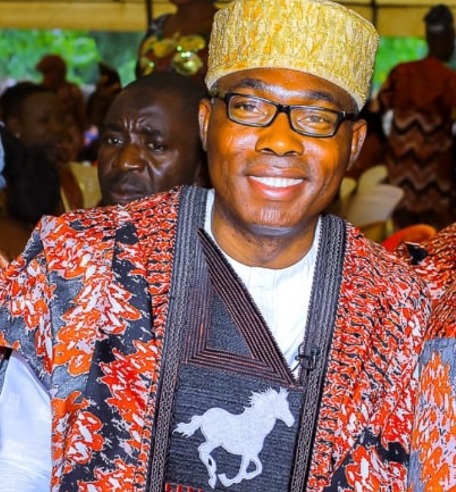
In a searing and emotionally charged interview, a presidential aspirant and leader of the Social Democratic Party recounts his harrowing visit to crisis-ravaged communities in Plateau State, where families were slaughtered and survivors left feeling abandoned by the nation meant to protect them.
He condemns what he calls a shocking failure of leadership at the highest level, reveals the disturbing spread of “silent killings” across Nigeria, and issues a stark warning: the country is not drifting toward a one-party state—but something far more dangerous. Mike Odiakose reports that as he confirms his 2027 presidential ambition, he positions himself not just as a politician, but as a witness to a nation on edge—and a voice demanding urgent change. Excerpts:You have been travelling round the country. You visited Jos. What were you hoping to find out when you visited Plateau State?
I visited Plateau to find out the plight, particularly of the people of Angua and Rubuka, who were meted out with the worst kind of humanitarian crisis you can think of. For invaders to visit a community like that and, in a flash, render many families bereaved, kill many people, disturb the peace of the community, injure many people, and traumatise the entire community — it was devastating.
So, I thought that we needed to go there and restore the hope of the people in the country, for them not to lose hope, as they were already feeling like stateless people — people unprotected by any government. People were beginning to question the humanity of fellow human beings. They were wondering if they were left alone, and I thought it was good to be with them, to restore their faith and confidence in Nigeria — to know that Nigeria is an ongoing project that has good prospects, as it is the greatest country anybody can be born in.
Despite all the problems we are facing, the failure of our government does not mean the bankruptcy of the country as a whole, and I think we did a bit of that.
I also wanted to know from the first responders, the security personnel, if they thought they could deal with these issues — if they were abreast of them. I wanted to know why they couldn’t respond to the killings and disaster, and what they were doing to engage with the community and the youths; what they thought could have been done differently, and their views about law enforcement.
I met with the community leaders and heard their views and perceptions about government, both at the state and federal levels. I then met with families of the victims. Since leaving the town, other people have been calling and mentioning their own issues.
I essentially learnt that, apart from the publicly known, notorious, and sensational killings, there are several low-key killings going on in every part of the country that people have taken for granted. They feel: “What’s the point of talking? Let’s find local solutions, as nobody will listen to us.” So they have been calling us and giving different instances that can make one ashamed.
Is this act of yours for optics, especially for the office you want to contest in 2027, or just as an ordinary Nigerian?
Politics is not on my mind at this stage; it’s just about the survival of the country. I was thoroughly embarrassed that the president failed in his leadership by going to the airport and complaining that there was no electricity, looking at his watch as if it was an ordeal, instead of taking the 18-minute drive to the epicentre and using that opportunity to talk to the families one-on-one and survey the area where the people are living.
I thought we needed to show the people that we are not all like that. Not only did I go there, I spoke with many of the faith leaders and realised that people are beginning to lose that sense of solidarity.
The opportunity afforded me a way to see how to be a better commander-in-chief — to know how to gather intelligence, how to work with communities, and to realise that Nigerians can actually live up to their responsibilities if they have just a little support.
Speaking with the law enforcement agents there, I gained more knowledge and more confidence in them, even as I sympathised with them that they are under poor leadership. You could see the governor, who appears not to be part of the community in a way.
If he were to be a good commander-in-chief whose priority is the safety and protection of communities, our law enforcement agents have the capacity to do it. Unfortunately, they are not being supported.
When I went there, even after the event had occurred, I first understood why the police station in Agbarukuba couldn’t respond — nobody could respond in the kind of situation they found themselves in. Since then, not much has been done to increase capacity. I see that the intelligence is there; however, I don’t know why it failed. I think we need to take advantage of these experiences to craft our community protection system, and I have learnt a lot from that.
Are you running for president in 2027?
Yes, of course. But you can be a politician and still be a decent human being who genuinely wants to mourn with those who are mourning. You can be a politician and be a decent Christian and family member.
I went there as a brother to the community. That, of course, is not the loudest podium for politicians at that time, but I needed to be with them. That job has been done, and I will continue to be with them even behind the cameras.
The point is, it is a political season, and I am running for president under the SDP. I ran last time with the slogan “Farewell to poverty and insecurity.” It is all linked together. Poverty has increased and insecurity has worsened.
One must speak about it from time to time, develop better solutions than those presently available, and get the community to buy into those solutions.
The opposition parties appear to be in shambles, especially with the crisis rocking the ADC, where different factions have emerged.
I am a politician, but primarily I am a lawyer. As a lawyer, I have professional ethics. When a matter is before the court, whether it affects my party, my interest, or other people, I usually pay attention to what goes on in court, because when you get newspaper reports or third-party renditions, they often do not align with what actually happens in court.
What I understand in the case of the ADC is that they changed leadership, and there is a tussle as to who is the leader or whether the leadership was properly transitioned, and the matter is in court. INEC is a party to the suit, and INEC has an interpretation of the court order that says they should observe the status quo.
It is legitimate for leaders of the ADC to disagree with INEC’s interpretation. It is their right to protest, but in reality, it is much easier if all the parties go back to court and clarify the actual meaning of ante bellum.
In politics, you don’t teach the other person how to play politics. If the matter is in court, and INEC is a party to the proceedings, and the ADC — including Nafiu Bala — is part of the same proceedings before a judge, then if the interpretation of the order is the only issue, that can be resolved in court.
However, it does not mean that leaders of the ADC do not have the right to express their frustration. If they think INEC is their problem, they can go there to protest, but in reality, until the matter is defined by the court, none of the parties can claim finality.
With what is happening, people think Nigeria may not have a formidable opposition in the country.
All of these concerns are valid. You can address the overbearing nature of the government and the fact that it is using its incumbency to gain advantage over other contestants in an electoral situation. You can see how they misuse their majority to pass unpopular, unfair, and restrictive electoral acts.
You can also be concerned about political parties taking care of their internal systems. People join political parties knowing they are in opposition, so they should try as much as possible to minimise errors, reduce internal wrangling, and remain united.
Every party has one or two elements that act like saboteurs, but with wisdom and proper management, these issues can be controlled. If you don’t have internal crises, it is easier to stand and challenge effectively.
There is also a misconception people often express — the fear that Nigeria is moving towards a one-party state under the APC. In my candid observation, based on evidence, Nigeria is not moving towards a one-party state.
What Nigeria is at risk of is one-man rule. If anyone in the APC thinks that Bola Ahmed Tinubu is trying to build a dominant one-party state, that is not the agenda. The real danger is a concentration of power in one individual.
The first victim of such a system would be the APC itself, because as they get used to not having internal democracy and being dictated to by their leader — who is the president — they will lose institutional strength. They will not be like parties such as the ANC, where internal processes are strong and members are stronger than those in government.
So, the APC itself becomes the first casualty. It is not going to be a one-party state, but rather a one-man rule, and the APC will struggle to function properly under such a system.
Looking at the 2023 elections, none of the presidential candidates secured a dominant share of the vote. Out of about 89 million registered voters, the largest bloc did not vote at all. This shows that our politics has become that of a self-interested elite, leaving the electorate behind.
No country can continue holding presidential elections with such low turnout and remain satisfied. It shows that the issues dominating media narratives and political agendas are not addressing the real concerns of the people. That is why people are effectively boycotting the process.
Nigerians should not abandon democracy to politicians or the ruling party. Democracy remains the best means to ensure that issues like security, social welfare, infrastructure, employment, rule of law, and accountability are addressed. Citizens must remain active — watching those in power, holding them accountable, rewarding good performance, and voting out failure. If the electorate withdraws and focuses only on personal survival, then the system deteriorates further. We need a reset. More people must join politics with better character, and those who cannot change will eventually be pushed out.
Talking about one-man rule, cross-carpeting in this republic is quite rampant. This is a big challenge. Why is the judiciary always the solution to party internal wrangling?
I think it is about leadership recruitment. The difference between now and the past is that we used to have politicians in politics. As Aminu Kano noted during the transition to the Second Republic, we began to see businessmen entering politics.
During military rule, contractors, apologists, and agents of the military realised that politics had become the most profitable business, so they entered it. That is how money politics took over.
Today, many politicians behave like merchants. There is no ideology or guiding principle. Like traders, they go where the price is lowest to buy and where it is highest to sell. There is no principle involved anymore.
The mistake people make is assuming that anyone who dresses like a politician is actually one. That is not the case. We need to reinvent the political class.
Today, many in the political class are not leaders. They do not represent anyone, they are not leading anyone, and they have no direction. They simply struggle for positions.
If the system does not change, whenever power shifts, the same people will migrate to the new ruling party. Those who followed previous leaders now follow Bola Ahmed Tinubu. Tomorrow, they will follow someone else.
Even if — hypothetically — a deeply unfit person comes to power but controls resources, contracts, and patronage, people will still align with that person. That is the reality. What we need to do is return to the people and build a new political class. The current one is unlikely to change.
In light of the recent killings in some states, do you think the state police initiative can address insecurity?
Anything that is sincerely implemented will work. Even the current system can work if there is sincere leadership — a good commander-in-chief and security officers who are not motivated by money or politics.
State police can also work, but only if the same principles are applied. If state police operates under the same style of leadership we currently see in some states, it will fail.
The problem is not the structure — it is leadership. There is a leadership deficit at the federal, state, and local government levels, and even at the community level, leaders lack support.
If you change the system, you must also change the leadership. Otherwise, nothing will improve.
End
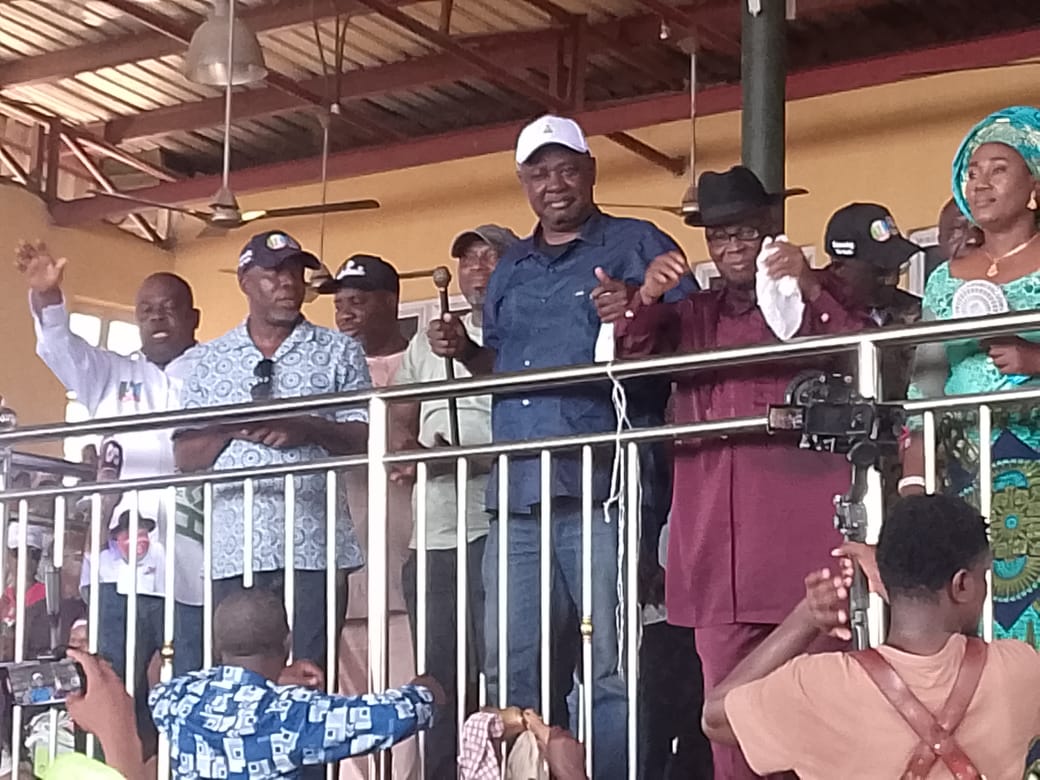
“As he delivered 13,591 votes to president Tinubu in his Ward 8”
From Mike Tayese, Yenagoa
As the 2027 political activities is gathering momentum and with Presidential Primary done and dusted by the Ruling All Progressives Congress (APC), the Minister of State for Petroleum (Oil), Senator Heneiken Lokpobiri has declared that Bayelsa state is for APC.
The Minister handed down this while answering questions from Newsmen after the declaration of results from the presidential primary election in Ward 8 in Ekeremor Local Government Area of Bayelsa state.
According to him, “today is the presidential primary to nominate who will be the candidate of APC in 2027 presidential election. We started with the state Assemblies, then House of Representatives and Senate.Today is the nomination for who will be our presidential candidate”.
“As you can see, this is Ekeremor Ward 8, this is my own ward, over thirteen thousand registered members of the APC are here to participate in the primary, am not a voter, as a political appointee, the law says I cannot vote or be voted for, but am entitled to be an observer
“Am very happy, voting has been done and our candidate president Bola Ahmed Tinubu has won, the other candidate they don’t know and he got zero vote. As we are speaking here, the excercise is going on in all the 12 wards in Ekeremor LGA . So am very happy that this excercise started peacefully and is ending peacefully.
‘We are fully prepared for whosoever want to challenge our candidate from other parties. We have credible candidates to present against their candidates
“With me here is Barr. Tari-ere Joyce Gita APC candidate for Ekeremor Constituency 1. Hon. Living Mitin APC candidate for Constituency 2, and Barr. Berry Negerese as APC candidate for Ekeremor Constituency 3. While Chief Fidelis Agbiki is the Bayelsa West Senatorial District candidate.
“There is no any other parties in bayelsa again outside APC, the state is APC, anyone you can’t find here is a retired politicians. Anyone you can find here is retired.
“We are sure of victory in Ekeremor LGA come 2027 general elections. We are United, strong to defeat any other candidates from other parties
Am not aware of any other candidates running against Mr President, take whatever you’re seeing here, zero result for whoever is contesting against Mr President .
“We can assure you that the same thing is happening in all the,105 Wards in the state. Bayelsa is for APC”, he said.
Declaring the results, the returning officer of the presidential primary in Ward 8 Ekeremor Local Government Area, Ashanti Bekomowei said, President Bola Ahmed Tinubu scored 13,591 votes, while his contender Stanley Osifo scored zero vote and therefore declared president Bola Ahmed Tinubu as the winner.
The Bayelsa West Senatorial District candidate Chief Fidelis Agbiki and the three Assembly candidates, said APC will come out victorious in all the elective offices come 2027 general elections.
.
NEWS
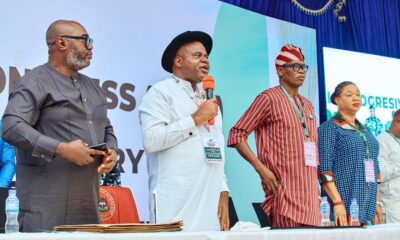
Tinubu Polls 277,192 Votes In APC Presidential Primaries in Bayelsa*A Restructured Nigeria Possible, Says Gov Diri
From Mike Tayese, Yenagoa
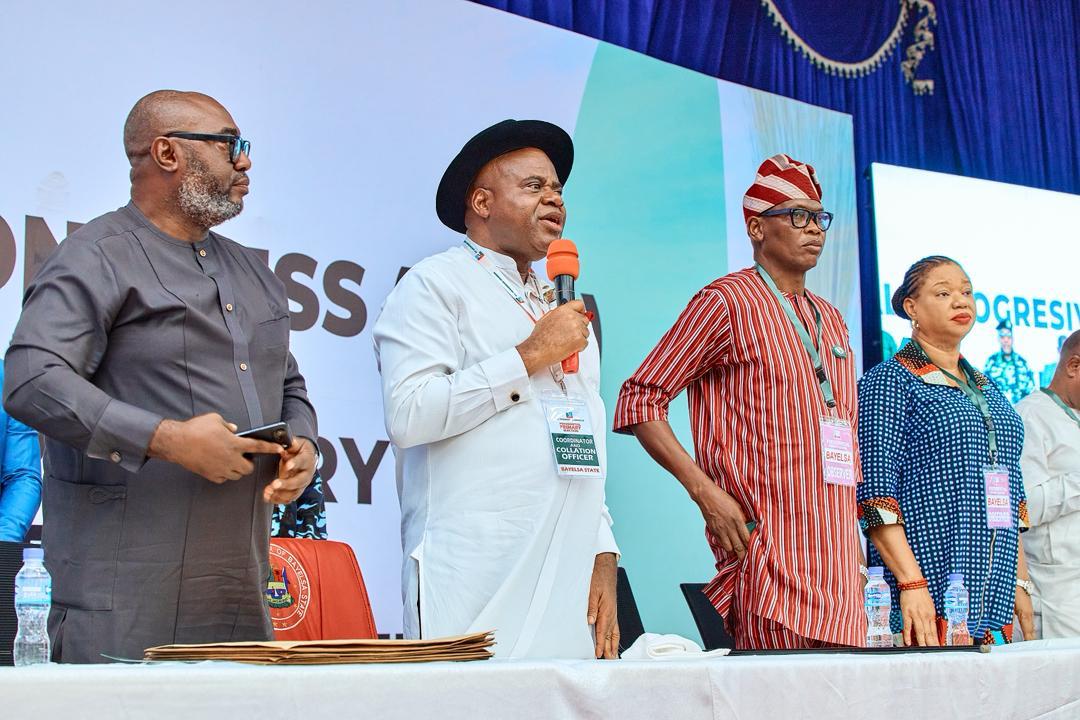
President Bola Tinubu, on Saturday, polled 277,192 votes in the direct primaries of the All Progressives Congress (APC) across the 105 wards in the eight local government areas of the state.
Governor Douye Diri, who served as the state’s Coordinator/Collation Officer for the presidential primary, declared the results at the collation centre at the Chief DSP Alamieyeseigha Memorial Banquet Hall, Yenagoa.
His Chief Press Secretary, Mr. Daniel Alabrah, quoted Governor Diri as saying that the peaceful conduct of the exercise across the state, from the presidential to the National Assembly and the House of Assembly primaries, showed a shift from the party’s “toxic” primaries previously in the state.
He stressed that no single individual could win an election without collective support, urging members to close ranks ahead of the 2027 general election.
His words: “As our party chairman already informed us, the party at the national level graciously asked me to be the returning officer and the chief collation officer.
“You have conducted yourselves so well. The exercise has been peaceful, calm, and in some areas more of a festive mood.
“To all those who contested and lost, you still have to be party men. I’m seeing a lot of them here, and that shows they are sportsmen. They belong to APC and they are going nowhere,” he said.
The Bayelsa helmsman stated that with the party’s unity and the strength of incumbency at both the state and federal levels, APC was well-positioned to dominate the elections.
“If all of these people here will go back to our wards, can’t we deliver? Can anybody beat us in Bayelsa State? It is a very big capital No.
“We have the human beings that know the strategies of elections. With our numerical strength and incumbency, it is game over in Bayelsa State,” he said.
Giving a breakdown of the results presented by the returning officers in each of the local government areas, he said Tinubu scored 39,454 in Brass, Ekeremor 45,949,
Kolokuma/Opokuma 22,593, and
Nembe 32,487.
The president also got 24,896 in Ogbia, Sagbama 46,283
Southern Ijaw 34,692 and
Yenagoa 30,834.
His only challenger, Mr. Stanley Osifo, got only five votes from Yenagoa local government area.
Earlier, speaking to party faithful and supporters after the exercise in his Sampou/Kalama Ward 6 in Kolokuma/Opokuma local government area, the governor said the APC remained the only party offering hope to Nigerians through the Renewed Hope Agenda of President Tinubu.
He said while there were two contestants in the presidential primary, the president was the overwhelmingly preferred choice among party members due to his leadership record and national visibility.
Diri acknowledged the reforms undertaken by the current administration were painful but maintained that they were necessary as the country would ultimately be repositioned for long-term prosperity.
He also expressed confidence that the restructuring of Nigeria was possible under Tinubu, describing him as one of the few leaders with the experience, democratic credentials, and political will to transform the country.
According to him, restructuring remains critical to addressing the nation’s recurring ethnic, religious, and political challenges.
Citing Tinubu’s role in Nigeria’s pro-democracy struggle and his involvement in the National Democratic Coalition (NADECO) during the military era, he said the president was one of the best-qualified leaders to champion the restructuring agenda.
Collation of the results was observed by the Independent National Electoral Commission (INEC) Resident Electoral Commissioner in Bayelsa, Isah Ehimeakhe, the commission’s Administrative Secretary, Mrs. Eme Akpa, as well as the state Commissioner of Police, Mr. Daniel Iyamah and service commanders
In attendance were the Deputy Governor, Dr Peter Akpe, Senator Konbowei Benson (Bayelsa Central), House of Representatives members, Oforji Oboku (Yenagoa/Kolokuma/Opokuma federal constituency) and Rodney Ambaiowei (Southern Ijaw federal constituency) as well as the State APC Chairman, Hon. Warman Ogoriba
Also present were the Minister of State for Petroleum Resources (Oil), Senator Heineken Lokpobiri, Speaker of the Bayelsa State House of Assembly, Rt. Hon. Abraham Ingobere, Managing Director of the Niger Delta Development Commission, Dr. Samuel Ogbuku, his counterpart in Niger Delta Basin Development Authority, Prince Ebitimi Amgbare, among other party stalwarts, stakeholders and members.
By David Torough, Abuja
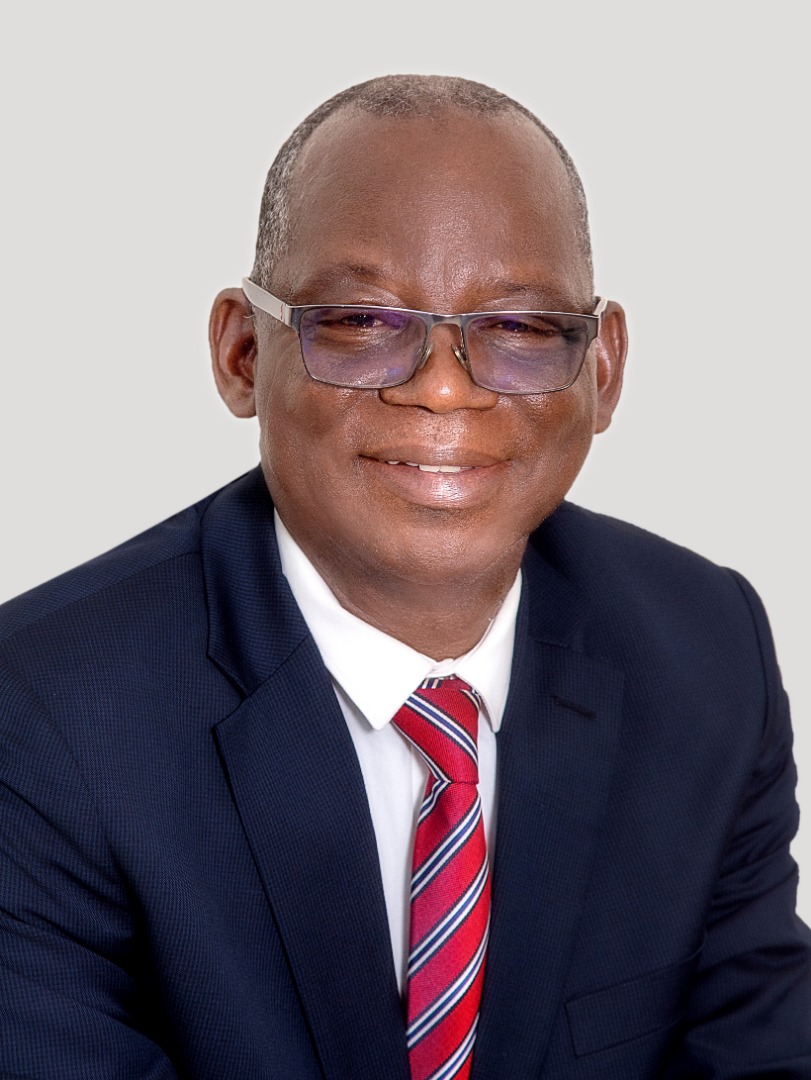
The Senator representing Benue North East Senatorial District, Senator Emmanuel Memga Udende, on Saturday led party members across the district to massively endorse President Bola Ahmed Tinubu during the APC presidential primary elections.
Addressing supporters at the Ukum Local Government headquarters in Sankera, the Chairman of the Senate Committee on Anti-Corruption and Financial Crimes said President Tinubu’s administration has delivered significant benefits to both Benue State and Nigeria at large.
Senator Udende highlighted ongoing infrastructural development, improvements in the national economy, and the appointment of Benue indigenes into key federal positions as major reasons behind the overwhelming support for the President.
“For the first time in the history of Benue State, we have our own Senator George Akume serving as Secretary to the Government of the Federation (SGF). We also have a Grade A Minister from Benue State, the Chairman of the North Central Development Commission (NCDC), among several other federal appointments. These achievements justify giving President Tinubu another opportunity to continue his people-oriented policies,” Udende stated.
The senator, however, expressed dissatisfaction with the conduct of the immediate past APC National Assembly primaries, alleging that some individuals attempted to manipulate the process by producing results from guest houses and private residences instead of the officially designated council ward headquarters.
According to him, such actions were unacceptable and the purported results would not stand.
The “Ikuen I Ukum” also commended the people of Ukum and the entire Benue North East Senatorial District for turning out in large numbers to vote, assuring them that their trust and support for President Tinubu and the APC would not be in vain.
In his remarks, the member representing Ukum State Constituency in the Benue State House of Assembly, Hon. Engr. Ezra Nyiyongo, urged party faithful to remain united and continue supporting President Bola Ahmed Tinubu ahead of the forthcoming presidential and National Assembly general elections for the progress of Nigeria.
While Senator Udende cast his vote at the Tsaav Council Ward headquarters in Afia, Ukum Local Government Area, Hon. Ezra Nyiyongo participated in the exercise at Melabu in Mbayenge Council Ward.




Bayelsa state is for APC, says Lokpobiri
Share“As he delivered 13,591 votes to president Tinubu in his Ward 8” From Mike Tayese, Yenagoa As the 2027 political...

Tinubu Polls 277,192 Votes In APC Presidential Primaries in Bayelsa*A Restructured Nigeria Possible, Says Gov Diri
ShareFrom Mike Tayese, Yenagoa President Bola Tinubu, on Saturday, polled 277,192 votes in the direct primaries of the All Progressives...

Udende Leads Massive Tinubu Endorsement in Benue APC Primaries
ShareBy David Torough, Abuja The Senator representing Benue North East Senatorial District, Senator Emmanuel Memga Udende, on Saturday led party...


Flood: NEMA Lists 11 Niger LGAs as High-risk Areas
ShareThe National Emergency Management Agency (NEMA) has identified 11 Local Government Areas (LGAs) in Niger as high flood-risk zones ahead of the 2026 rainy season. Director-General of NEMA,...


DR Congo Cancels World Cup Training Camp over Ebola Outbreak
ShareThe Democratic Republic of Congo has cancelled its pre-World Cup training camp in the capital, Kinshasa, because of an Ebola outbreak in the east...
Gonorrhoea, Syphilis Hit Record Levels in Europe
ShareSexually transmitted infections (STIs) including gonorrhoea and syphilis have hit record levels in Europe, according to new data. The European Centre for Disease Prevention and Control (ECDC)...

Tinubu Appoints Aina as JAMB Registrar
SharePresident Bola Tinubu has appointed Prof. Segun Aina as the new Registrar of the Joint Admissions and Matriculation Board (JAMB), succeeding Prof. Is-haq Oloyede. Oloyede’s tenure expires on...
Nursing Council Inducts First 57 Benue Varsity Graduates
ShareFrom Attah Ede, Makurdi Nursing and Midwifery Council of Nigeria (N&MCN), on Thursday, inducted 57 maiden graduates of the Department of Nursing Science of the Rev. Fr....

DisCos Meter 241,590 Customers in Two Months –NERC
ShareThe Nigerian Electricity Regulatory Commission (NERC) on Thursday said that Electricity Distribution Companies (DisCos) metered a total of 241,590 customers...

No Plan to Rename Nigeria, Abolish Shariah Law — Presidency
ShareBy David Torough, Abuja The Presidency has dismissed as false and misleading reports claiming that President Bola Tinubu plans to...