
POLITICS
Electoral Act: Atiku, Obi, Amaechi, Mark, Others Reject Amendment

By David Torough, Abuja
Leaders of the African Democratic Congress (ADC) and the New Nigeria Peoples Party (NNPP) have called on the National Assembly to begin a fresh process to amend the Electoral Act.
Speaking on behalf of the opposition at a press conference in Abuja on Thursday, the NNPP National Chairman, Ajuji Ahmed, urged lawmakers to expunge all objectionable provisions contained in the Act.
Under the Electoral Act 2022, political parties were permitted to nominate candidates through direct primaries involving all registered members, indirect primaries conducted by delegates, or consensus arrangements reached by party leaders.
However, the Electoral Act 2026, recently passed by the National Assembly and assented to by President Bola Tinubu on February 18, restricts parties to only direct primaries and consensus options.
In addition, the new law shortens campaign periods and timelines for primaries, while funding for the Independent National Electoral Commission will now be released six months before an election instead of the previous 12 months.
Ahmed stated that opposition leaders view certain provisions of the Electoral Act 2026, which was signed into law by Tinubu with what they described as undue haste, as an alleged deliberate move by the All Progressives Congress-led administration to undermine the will of the people ahead of the 2027 general elections.
He said, “We therefore state unequivocally that the new Electoral Act is anti-democratic, and its implementation will undermine electoral transparency and the sanctity of the ballot, which are fundamental to free, fair and credible elections and the bedrock of participatory democracy.
“The introduction of the provision in Section 60(3), which allows wide and undefined discretionary powers to the presiding officer, overrides and negates the purpose of introducing electronic transmission of election results from polling units. This negation is unambiguously intended to provide a blank cheque to those who seek to manipulate election results by delaying the electronic transmission of results from the polling units to the IReV on the pretext of network failure.
“The premise of the provision in Section 60(3) is the unavailability or possibility of network failure. We find this premise dubious and inconsistent with reality. The immediate past INEC Chairman, Prof. Mahmud Yakubu, stated on record that the BVAS equipment, which operates offline, had worked with over a 90 per cent success rate across the nation, and in the event of network failure at the point of transmission, the transmitted results would be delivered successfully whenever the network became available.
“This position has been further confirmed most recently by a former INEC Commissioner, Festus Okoye, as widely reported, that every polling unit in Nigeria has internet access. Indeed, these statements by those who have been in a position to know provide a counterfactual to the lies that are being fed to the Nigerian people by a government that has lost respect for reason and reality.”
Ahmed added that the accounts of the two INEC officials were strongly corroborated by data available in the public domain.
He said, “According to the Nigerian Communications Commission, as of 2023, Nigeria had achieved more than 95 per cent 2G coverage, which is more than sufficient for the transmission of election results from polling units.
“By that same period, Nigeria already had more than 159 million internet subscribers and more than 220 million telephone subscribers using the 2G network. It is also noteworthy that this capacity provides 24-hour coverage of the entire country. This goes to show that denying mandatory real-time transmission of election results from polling units on the basis of a lack of a communication network is not supported by evidence.
“Fortunately, millions of our people who transact business daily with various financial platforms, even from the remotest parts of the country, know that the no-network argument is fraudulent and is merely part of the APC game plan to rig the election in 2027.
“Indeed, we find it quite ironic that the same APC that strongly agitated for electronic voting only a few years ago is now opposed to the use of technology for the mere transmission of results. The game at hand is very clear.”
On party primaries, the opposition leaders stated that the amendment to Section 84 of the Act, which confines political parties to direct primaries and consensus in selecting candidates, amounts to an encroachment on the constitutionally guaranteed autonomy of parties in managing their internal affairs.
They further argued that the National Assembly cannot rely on Section 228(b) of the Constitution as a basis to limit political parties to only two methods of nomination.
Ahmed said, “There is nothing undemocratic about indirect primaries, which create an electoral college for the selection of candidates in an objective, transparent and orderly manner.
“Our position, therefore, is that as political parties, we do not need legislation that prescribes which mode of party primaries political parties must adopt. In other words, the mode of nominating candidates should be strictly the internal affair of political parties.
“It is obvious that the objective of the APC government and its accomplices in the legislature is to provide the legal pretext for the corruption of the electoral system. They harbour neither plans nor intentions to conduct free and fair elections in 2027 because, even in their arrogance and self-delusion, they are acutely aware of their growing unpopularity across the length and breadth of Nigeria, despite the recent gale of coerced and procured defections to their party.
“We demand that the National Assembly immediately commence a fresh amendment to the Electoral Act 2026 to remove all obnoxious provisions and ensure that the Act reflects only the will and aspirations of Nigerians for a free, fair, transparent and credible electoral process in our country. Nothing short of this will be acceptable to Nigerians.”
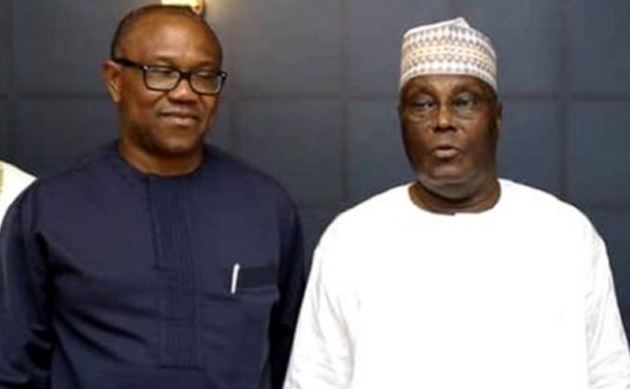
Opposition leaders in attendance included the National Chairman of the African Democratic Congress, David Mark; NNPP chieftain Buba Galadima; former Vice-President Atiku Abubakar; and the 2023 presidential candidate of the Labour Party, Peter Obi.
Also present at the Lagos/Osun Hall of Transcorp, Abuja, were the ADC National Secretary, Rauf Aregbesola; former Rivers State Governor, Rotimi Amaechi; and the party’s National Publicity Secretary, Bolaji Abdullahi, among other stakeholders.
Others included Senator Dino Melaye, former ADC National Chairman Ralph Nwosu, and former Cross River State Governor Liyel Imoke, among others.
By Mike Odiakose, Abuja
The Amir and National Head of the Ahmadiyya Muslim Jama’at of Nigeria, Alatoye Abdulazeez, has urged Nigerian youths to unite politically and strategically, identifying Adewole Adebayo as a potential leader capable of driving national transformation if given collective support.
Speaking during an interview, Abdulazeez emphasized that Nigeria’s progress hinges largely on the ability of young people to organize themselves beyond tribal, religious, and financial inducements, and to rally behind credible leadership.
According to him, while several young candidates have emerged in past elections, their failure to build strong alliances allowed older political forces to maintain dominance.
He noted that the case of Adebayo, a lawyer and businessman who contested under the Social Democratic Party (SDP), presents an opportunity for a different political direction if youths can act in unity.
“If the younger generation is sure that Adewole Adebayo can deliver, they should team up with him, get things right, and encourage other youths across tribes to see themselves as one,” Abdulazeez said.
He stressed that Nigeria is currently in what he described as a “storming stage” of nationhood, where divisions along ethnic and regional lines continue to hinder development.
He warned that unless a “national norm” is established—where citizens prioritize unity over sectional interests—the country may struggle to reach its full potential.
The cleric further advised youths to avoid electoral inducement and reject divisive politics, urging them instead to focus on long-term nation-building.
“We must move from where we are to the next stage. Otherwise, we will keep moving in the same direction,” he added.
Beyond politics, Abdulazeez reiterated the Ahmadiyya motto, “Love for All, Hatred for None,” as a guiding principle for national cohesion, stressing that religion should be a force for peace rather than division.
He condemned terrorism and violence carried out in the name of religion, insisting that such acts contradict Islamic teachings.
On governance, he acknowledged efforts by President Bola Ahmed Tinubu, noting that while progress has been made in some areas, more attention is needed in critical sectors such as power and economic management.
Abdulazeez concluded with a call for collective responsibility among citizens, particularly the youth, to reshape Nigeria’s future through unity, moral discipline, and active participation in governance.
“Leadership is not just about those in office,” he said. “It is also about those who choose them.”
End
From Sylvia Udegbunam, Enugu
The Enugu State Independent Electoral Commission (ENSIEC) have released a revised timetable for the 2026 local government elections.
ENSIEC Chairman, Prof. Christian Ngwu, presented the updated schedule to journalists in Enugu.
Ngwu said the framework outlines activities leading to elections on Sept.
26 and re-run polls on Oct. 10.He explained the adjustments followed the repeal of the Electoral Act 2022 and enactment of the Electoral Act 2026.
“The revised timetable aligns with the new law and other relevant statutes guiding elections in the state,” he said.
He recalled ENSIEC earlier issued a notice on Aug. 20, 2025 alongside an initial timetable.
According to him, party primaries will be held from Jan. 23 to May 26.
“Campaigns will begin on April 29 and end on Sept. 25, 24 hours before polling,” Ngwu added.
He said submission of nomination forms closes on May 29, while candidates’ particulars will be published on June 19.
“The final list of candidates will be released on July 27,” he stated.
Ngwu added that submission of polling agents ends on Aug. 31, while the official notice of poll comes on Sept. 11.
He confirmed elections will be held on Sept. 26, with voting from 8:00 a.m. to 3:00 p.m. using the open secret ballot system.
“In case of inconclusive results, re-run elections will be conducted on Oct. 10,” he said.
Ngwu stressed the timetable was issued under the commission’s constitutional mandate and in compliance with the Electoral Act 2026.
By David Torough, Abuja
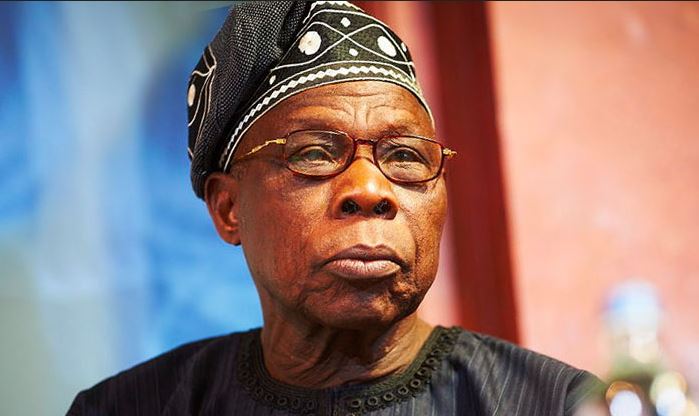
Former Presidents Olusegun Obasanjo and Goodluck Jonathan have issued a strong call for national unity, institutional reforms, and economic transformation, warning that Nigeria’s future depends on collective responsibility and a democracy that delivers tangible results.
Both leaders, who spoke at separate high-level engagements on Thursday, converged on a common message: Nigeria stands at a critical crossroads and requires urgent, coordinated action from citizens, leaders, and institutions.
At the 6th Annual Colloquium marking the 65th birthday of Itua Ighodalo, Obasanjo stressed that no external force would fix Nigeria’s problems unless Nigerians themselves unite across divides.
Represented by Prof. Adedeji Daramola, he emphasised that nation-building is a shared duty requiring contributions from all segments of society.“Until we come together to work and fix Nigeria, nobody will fix it for us,” Obasanjo declared, urging citizens—from grassroots traders to political elites—to take ownership of the country’s development.
He highlighted the importance of youth inclusion, describing young people as central to Nigeria’s future, and called for greater investment in technology and innovation to harness the country’s demographic advantage.
Echoing reformist sentiments, economist Eghosa Osagie advocated for increased local production, while Opeyemi Adamolekun of Enough is Enough Nigeria criticised the commercialization of politics. Technology investor Iyinoluwa Aboyeji pointed to infrastructural imbalances, noting that digital connectivity remains heavily concentrated in Lagos.
Meanwhile, at a policy convening in Abuja organised by the Goodluck Jonathan Foundation, Jonathan underscored the need to align democracy with economic growth to ensure its sustainability.
He warned that democracy, both globally and in Nigeria, faces increasing pressure from economic hardship, insecurity, and declining public trust. According to him, elections alone are insufficient without transparent institutions and policies that foster innovation and enterprise.
Jonathan raised concerns about governance effectiveness, comparing Nigeria’s democratic system with alternative models in countries like China and the United Arab Emirates, where structured leadership selection and economic progress have been notable.
Despite this, he maintained that freedom and justice remain democracy’s defining strengths, cautioning that any system that fails to uphold these values loses its legitimacy.
“Our democracy has endured, but endurance alone is not enough,” Jonathan said, stressing that economic performance is key to sustaining public confidence.
Both leaders agreed that Nigeria must not choose between democracy and development but instead ensure that both reinforce each other. They urged policymakers, civil society, and the private sector to act decisively in bridging governance gaps and delivering inclusive growth.
The convergence of views from the two former presidents reflects a growing consensus among stakeholders that Nigeria’s progress hinges on unity, accountable leadership, youth empowerment, and a democratic system capable of improving the lives of its citizens.


Kogi Pledges Support for Basketball Development
ShareThe Kogi State Government has pledged to prioritise the development of basketball in the state to boost the sport’s profile and promote youth engagement. The Commissioner for Youth...
US Lawmaker Demands FIFA pay World Cup Transport Bill amid Ticket Hikes
ShareA top US lawmaker called on FIFA to pay for World Cup public transportation costs on Tuesday following a report that local authorities in New Jersey are planning...

Kenya Fuel Prices Rise Sharply Despite Reduction in Tax
ShareKenya has sharply raised the cost of petroleum, with diesel prices rising by a record margin despite a fuel tax cut, as the conflict in Iran pushes up global oil prices. In its latest...

Tomato Farmers Predict Steady Price Hike from May
ShareThe Tomatoes Growers and Processors Association of Nigeria (TOPAN) has predicted a steady increase in the price of the produce between May and June 2026. The Kaduna State Chairman TOPAN,...
Benin, Togo, Niger Owe Nigeria $9.55m Electricity Debt
ShareThree West African countries of Benin, Togo and Niger have collectively failed to pay Nigeria $9.55m for electricity supplied to them in the...


FG Predicts Floods in Benue, Plateau, Lagos, Adamawa, 28 Other States
ShareBy David Torough, Abuja As the rainy season sets in, the Federal Government on Wednesday unveiled the 2026 Annual Flood...

Nigeria Loses $226.7bn to Ogoni Oil Shutdown Since 1993 – Report
ShareBy David Torough, Abuja Nigeria has lost an estimated $226.734 billion following the suspension of crude oil production in Ogoni...

Nigeria’s Hidden Killings: One-Man Rule Looms – Adebayo
ShareIn a searing and emotionally charged interview, a presidential aspirant and leader of the Social Democratic Party recounts his harrowing...
Heading Towards Elections with Democracy on Crutches
ShareBy Chidi Amuta Nigerian politicians have once again carried out another successful coup against the people. They have fired up...

2027: Ahmadiyya Leader Sees Hope in Adewole Adebayo if Youths Organise
ShareBy Mike Odiakose, Abuja The Amir and National Head of the Ahmadiyya Muslim Jama’at of Nigeria, Alatoye Abdulazeez, has urged...