
NEWS
Italy Votes on Whether to Change its Constitution

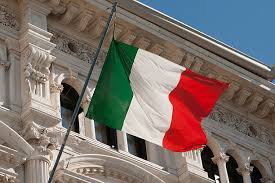
In her push for a “yes” vote in this weekend’s constitutional referendum, Italy’s prime minister has been reaching for new audiences.
On Thursday, Giorgia Meloni sat at the mic between a popular rapper and a personal trainer-turned-podcaster to urge Italians to vote for a judicial system she promised would be “more just” for all.
Opposition parties have been busy too, styling the “historic” reform proposed by the right-wing government as a threat to democracy, and turning it into a protest vote against Meloni’s rule.
In power for three-and-a-half years, close to a record in a land of shaky coalitions, Meloni prides herself on bringing stability to Italy.
But as this referendum has become increasingly personalised, she could be facing her first significant defeat.“She wants to win. If she loses, there will be an impact and she understands that,” political scientist Roberto D’Alimonte of Luiss University explains.
“She needs to mobilise her voters to have a better chance to win this race. But it’s going to be touch and go.”
That’s why the prime minister joined rapper Fedez and Marra on their podcast, Pulp.
Swapping her usual one-tone trouser suit for a woolly jumper with sparkles, Meloni fielded questions for an hour from the tattoo-covered rapper and his popular co-host.
The engagement was meant to encourage younger voters to the polls.
There is no minimum turnout for this kind of referendum – the camp with the most ballots over two days of voting wins. The “no” campaign already has the backing of trade unions.
Recent polls suggested that low participation would favour those against the reform.
So on air Meloni set out her case for “yes” with trademark gusto.
She said changes to how Italy’s judges and prosecutors work would make the system “more meritocratic, more responsible, more efficient”.
She also argued her opponents were only turning all this into a referendum on her rule because they couldn’t fault the reform itself.
In any case, Meloni made clear, she wouldn’t be stepping down.
“If you vote ‘no’ today just to send Meloni home, you’ll find yourself keeping both Meloni and a justice system that doesn’t work,” the prime minister said.
“That doesn’t seem like a good deal to me.”
The system is certainly chronically overloaded, with some of the longest-running trials in the EU.
But the reform won’t address that.
The referendum looks at separating the career paths of judges and prosecutors, as well as creating distinct bodies to govern them. It also proposes a new disciplinary court for both.
The potential impact depends entirely on who you ask: many Italians struggle to understand this referendum at all.
The proposal is a project of the late Silvio Berlusconi’s party, Forza Italia, part of the current coalition.
Italy’s oligarch prime minister of many years was forever in and out of court and railed against the judiciary as a supposed “communist” block on his power.
Meloni herself has also clashed publicly with the courts, claiming that “powerful factions” routinely derail her signature policies, especially on migration.
In Milan recently she claimed – with no evidence – that rejecting the referendum would mean “even more… immigrants, rapists, paedophiles, drug dealers being freed and putting your security at risk.”
Such rhetoric is one reason why opposition parties are so wary of this reform.
They fear Meloni’s real aim is to subjugate the judiciary to her political control.
She and her team deny that.
But at a time of global uncertainty and rising prices caused by an unpopular US war, they also know voters may use the referendum to vent their frustration.
“The geopolitical situation is very tough, of course. People are scared. I completely feel that. But we need to stay focused on the purpose of the referendum,” Andrea di Giuseppe, a member of Meloni’s Fratelli d’Italia party, argues.
He suggested that an assessment of Meloni’s own record could wait for the general election next year.
“If you are not happy about this government, then in 2027 [you can] just kick it off the bus, change to another government. Now, the matter of the referendum is what counts.”
There are some, even on the left wing of politics, who support this reform and see the close ties between judges and prosecutors as too cosy.
“It’s like, I help you for this case, so you help me. It’s like a little parliament where they all act together. It’s not normal,” says Alessandro Sterpa, a constitutional law professor at Tuscia University.
Not usually a Meloni supporter, he points to widespread complaints in the past about the influence of political factions, the so-called “correnti”, within the judiciary.
He also sees nothing in the proposed reform that would increase the degree of government control.
On the other hand, this would be the first time a hard right government has changed Italy’s constitution, written in the 1940s after the defeat of fascism.
“For a long time, the left wing wrote books in the university that only the left can defend the constitution. But we cannot say these kinds of things now,” Sterpa argues.
“My grandparents fought against fascism, with arms. Now I am for the reform because it’s useful for the country.”
The final rally of the “no” campaign was on Rome’s majestic Piazza del Popolo, where some spelled out “Vote No” in white tape on the cobblestones.
An inflatable unicorn with rainbow-coloured tail wandered through the crowd with a sign reading “Leave the Constitution in Peace” round its neck.
From the stage came passionate calls to “defend democracy”.
“The constitution gave us the guarantee of this balance of powers after fascism. We needed that not to fall again in that kind of state,” argues Andrea Malpassi from the CGIL trade union, firmly for the “no” vote.
He’s deeply wary of any constitutional tinkering by a prime minister who began her own political life as an admirer of Mussolini, the dictator.
“In the last few years we have had a lot of inquiries into what… ministers of this government did,” Malpassi says.
“We don’t want that not to be possible in the future.”
If Meloni wins this vote she has grand political ambitions, including increasing the powers of her own office in a future referendum.
But this test comes at a difficult time.
Much has been made in the past of her close friendship with Donald Trump, but his war on Iran is deeply unpopular here.
“Italians don’t like to get involved in these American wars, and the rise in gas prices damages the popularity of the government. The context is very negative for Meloni at this point,” Prof D’Alimonte agrees.
She would survive a “no” vote. But the much-vaunted stability she has brought to Italy would be shaken at a particularly vulnerable time.
“She will not resign,” the professor said. “But she will be politically weakened, there is no question about that.”
From Agbo Emmanuel, Kaduna
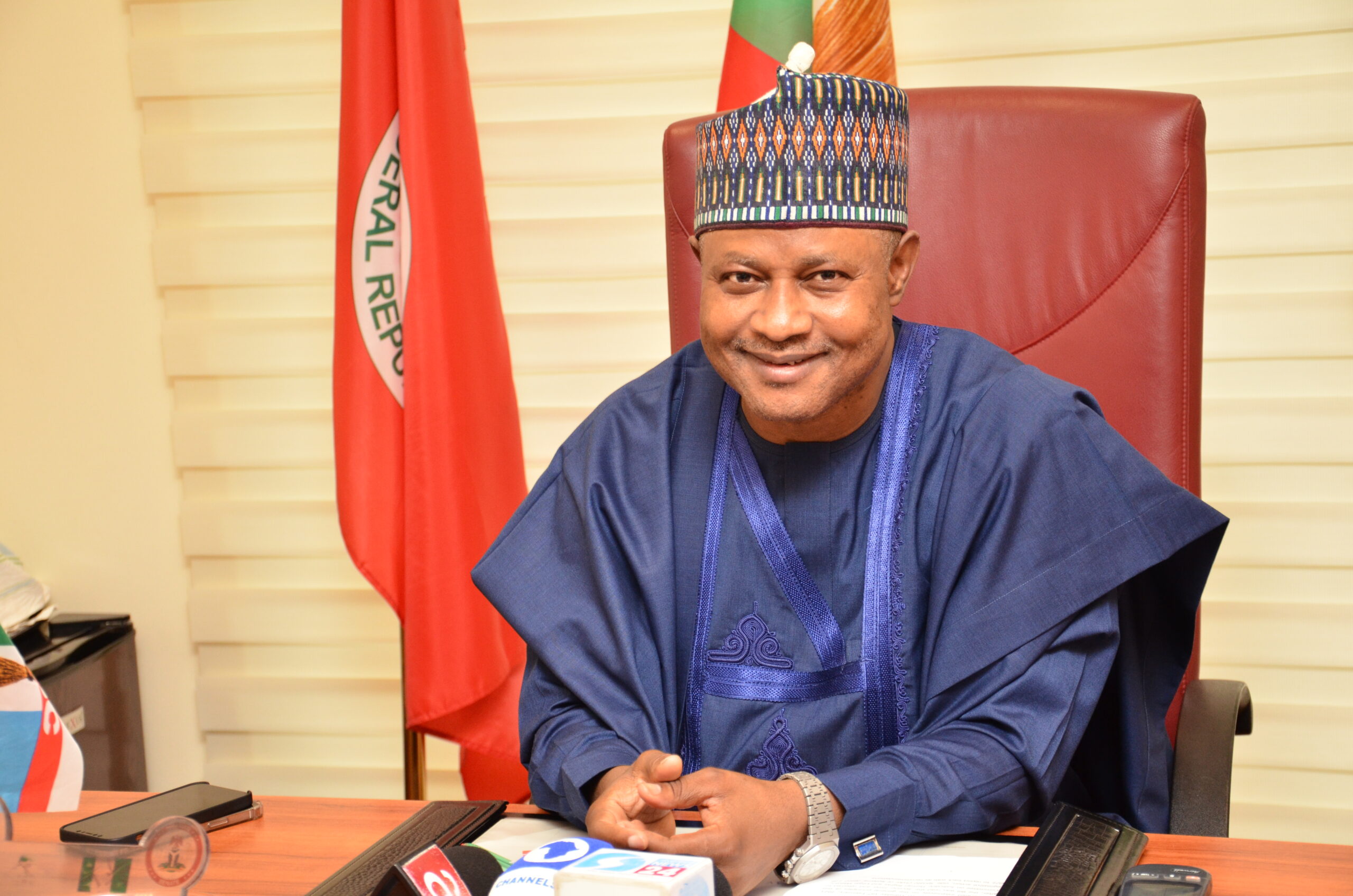
The Kaduna State Government has issued a firm directive for the immediate acceleration and completion of the Nnamdi Azikiwe Western Bypass, declaring ongoing delays “completely unacceptable” in the wake of repeated fatal accidents along the corridor.
The decision followed an emergency stakeholders’ meeting convened at the instance of Governor Uba Sani, who expressed grave concern over the rising number of crashes on the 21.
5-kilometre expressway stretching from Command Junction through the bypass to Mando Roundabout.Addressing journalists after the meeting, the Commissioner for Information & Culture, Mallam Ahmed Maiyaki, conveyed the Governor’s deep concern and urgency:
“His Excellency is profoundly disturbed by the tragic loss of lives recorded on this highway.
No level of progress can justify the continued loss of even a single life. This situation is intolerable, and decisive action must be taken immediately.”The high-level meeting brought together critical stakeholders, including representatives of the Federal Ministry of Works, the Federal Road Safety Corps (FRSC), KASTELEA, the main contractor Dangote Industries, subcontractors Tata & Sao, and leadership of transport unions such as NARTO, NURTW, and ACCOMORAN.
Maiyaki noted that although the project was awarded in 2021, prior to the current administration, progress had been sluggish until Governor Uba Sani personally intervened.
“Since the Governor’s direct engagement, we have seen a marked improvement in the pace of work. However, progress alone is not enough—timely completion is now non-negotiable.”
According to updates from the Federal Controller of Highways and contractors, approximately 19 kilometres of the road have been completed. Despite the official delivery timeline of December 2026, the Governor has now issued a clear directive for an earlier completion date.
“His Excellency has made it unequivocally clear: this project must be delivered ahead of schedule. Any further delay will not beOK tolerated.”
To ensure strict compliance, the government has established a multi-agency task force to monitor construction and enforce safety measures around the clock, particularly during the rainy season.
The task force, chaired by the Permanent Secretary of the Ministry of Public Works, includes the FRSC, KASTELEA, Federal Ministry of Works officials, contractors, community representatives, traditional leaders, and transport unions. The Ministry of Information has been mandated to lead an aggressive public awareness and behavioral change campaign.
Maiyaki underscored that unsafe road use has been a major contributing factor to the accidents, noting that several high-risk crossing points have been identified.
“Beyond infrastructure, human behaviour remains a critical challenge. We are working closely with communities to enforce safer road usage. Recklessness on our roads must stop.”
He further stressed that both construction standards and road usage must align with global best practices:
“We are committed to ensuring that this road meets international safety standards—not just in design, but in how it is used.”
The government’s intervention follows mounting pressure from community leaders and youth groups, who have described the situation along the bypass as a “serious public safety emergency” with far-reaching economic and social consequences.
With the new directive and enforcement mechanisms in place, the Kaduna State Government says it is determined to restore safety, accelerate delivery, and ensure that the Western Bypass serves its intended purpose without further loss of life.
By Tony Obiechina, Abuja
Lagos, Rivers and Kaduna states have emerged as Nigeria’s most indebted subnational governments, according to the latest data released by the National Bureau of Statistics (NBS), highlighting intensifying fiscal pressures across the country’s tiers of government amid a rising national debt profile.
The NBS, in its Nigeria Q4 2025 Domestic and External Debt Report published on Monday, disclosed that Lagos State continues to dominate the debt landscape, recording N1.
22trn in domestic debt alongside $1.17bn in external obligations.The figures reinforce Lagos’ position not only as Nigeria’s commercial hub but also as the most leveraged state, reflecting its extensive infrastructure financing needs and large-scale economic commitments.
Rivers State ranked second in domestic debt with N378.81bn, underscoring its continued reliance on borrowing to support expenditure, particularly in a volatile revenue environment tied to oil receipts. Kaduna State, meanwhile, stood out on the external debt front with $684.29m, placing it among the most exposed states to foreign currency liabilities.
The broader national picture points to a steady escalation in public debt. Nigeria’s total debt stock rose to N159.28trn (approximately $110.97bn) in the fourth quarter of 2025, up from N153.29trn ($103.94bn) recorded in the preceding quarter.
This represents a 3.90 per cent increase quarter-on-quarter, reflecting sustained borrowing at both federal and subnational levels to bridge fiscal gaps and fund critical expenditures.
A closer look at the composition of the debt shows that external borrowings stood at N74.43trn, accounting for 46.73 per cent of the total, while domestic debt reached N84.85trn, representing 53.27 per cent. The near-even split highlights Nigeria’s dual dependence on local and foreign financing sources, even as exchange rate pressures continue to elevate the cost of servicing external debt.
Beyond the top three states, the report identified several other sub-nationals with significant debt burdens. Bauchi State recorded $220.57m in external debt and N156.05bn domestically, while Delta State posted $63.42m in external obligations alongside N248.83bn in domestic debt. Enugu State also featured prominently, with $99.88m in external debt and N157.60bn in domestic borrowings.
In contrast, some states maintained relatively low debt profiles. Jigawa State reported the least domestic debt at N1.60bn, followed by Ondo State with N8.42bn.
On the external side, the Federal Capital Territory recorded the lowest exposure at $26.80m, with Zamfara State following at $41.93m, suggesting varying fiscal strategies and borrowing capacities across the federation.
The growing debt burden has become a focal point of concern for policymakers, economists and citizens alike, particularly as debt servicing obligations continue to absorb a significant share of government revenues.
Analysts warn that this trend could constrain fiscal flexibility and limit the government’s ability to respond to economic shocks or invest in long-term development priorities.
Economic analysts note that while Lagos, Rivers and Kaduna’s positions as leading debtor states partly reflect their economic size, population and development ambitions, the scale of their obligations raises important questions about debt sustainability at the subnational level.
They argue that without commensurate growth in internally generated revenue and more efficient public spending, the reliance on borrowing could heighten fiscal risks over time.
As Nigeria continues to navigate a complex economic environment marked by inflationary pressures, exchange rate volatility and constrained revenues, the trajectory of public debt, particularly at the state level, is expected to remain a critical issue for fiscal policy and economic stability.
From Rabiu Sanusi, Kano
Kano State Governor, Alhaji Abba Kabir Yusuf has lauded the House Prosperity and Empowerment-Cash Transfer program for achieving significant milestones in transparency, operational efficiency, and beneficiary outreach across the state.
He made the statement when reviewing the Minister of Humanitarian Affairs and Poverty Reduction, Dr.
Bernard M. Doro at Government House Kano on Monday.In a statement issued by the Chief Press Secretary to the Governor, Mustapha Muhammad on Monday, Governor Yusuf disclosed that the programme recorded 609,013 beneficiaries within the state.
He further revealed that citizens living below the poverty threshold received a total of N48,276,150,000 through the initiative.
“This achievement reflects the programmes far-reaching commitment to poverty alleviation, social inclusion, and economic empowerment,” the Governor stated.
Yusuf, who was represented by his Chief of Staff, Dr. Sulaiman Wali Sani urged beneficiaries to view the support not merely as temporary assistance, but as a seed and a catalyst for growth.
He expressed appreciation to Minister Dr. Bernard Doro for his visionary leadership, dedication, and consistent support toward the implementation of the National Social Safety Net Project-Scale Up (NA SSP-SU).
The Minister of Humanitarian Affairs and Poverty Reduction, Dr. Bernard Doro, informed the Governor that he was leading a delegation from the Ministry to meet with stakeholders and beneficiaries to assess the progress of the programme.
The minister noted that the volume of funds received by Kano citizens exceeds the combined total of four other states, and he commended the state government for maintaining transparency throughout the process.
In her welcome address, the State Commissioner for Women Affairs, Children and Persons with Special Needs, Hajiya Amina Abdullahi (HOD), confirmed that the programme is proceeding smoothly and noted that beneficiaries have expressed immense gratitude for the gesture.


Tinubu Assigns Kalu to Lead Abia APC, Yari, Bamidele, Others Senate Return Ticket
ShareBy Eze Okechukwu, Abuja President Bola Tinubu has entrusted Senator Orji Uzor Kalu with the responsibility of coordinating the activities...

Kano Gov Warns over Branded Underwear
ShareFrom Aliyu Askira Kano Kano governor Abba Yusuf yesterday expressed displeasure over the display of branded underwear (pants) by some...
Kaduna Youths Move to Purchase Nomination Form for Dankasuwa Ahead Chikun 2027 Elections
ShareBy Agbo Emmanuel, Kaduna Youth groups and grassroots stakeholders in Chikun Local Government Area of Kaduna State have intensified support...
Ekiti 2026: Tight Security at Oyebanji Campaign Flag-off
ShareThere is tight security at the Ekiti Parapo Pavilion, Ado-Ekiti, venue of the flag-off of re-election campaign of Gov. Biodun...

Kano ADC Candidate Forum Demands INEC Chairman Resignation over Alleged Partisanship
ShareFrom Rabiu Sanusi, Kano The African Democratic Congress (ADC) Candidate Forum in Kano State has called for the immediate resignation...

Uba Sani Orders Immediate Completion of Western Bypass
Share From Agbo Emmanuel, Kaduna The Kaduna State Government has issued a firm directive for the immediate acceleration and completion of...

Lagos, Rivers, Kaduna States Emerge Nigeria’s Most Indebted Sub-nationals
ShareBy Tony Obiechina, Abuja Lagos, Rivers and Kaduna states have emerged as Nigeria’s most indebted subnational governments, according to the...

Yusuf Commends Success of Cash Transfer Programme in Kano
ShareFrom Rabiu Sanusi, Kano Kano State Governor, Alhaji Abba Kabir Yusuf has lauded the House Prosperity and Empowerment-Cash Transfer program...
Enugu North Stakeholders Pay Appreciation Visit to Mbah
ShareFrom Sylvia Udegbunam, Enugu Stakeholders from Enugu North Senatorial District on Sunday paid a thank-you visit to Enugu State Governor,...

Enugu Police Rescue Kidnapped Victim, Arrest Suspect
ShareFrom Sylvia Udegbunam, Enugu The Enugu State Police operatives attached to the Anti-Kidnapping Sub-Unit of the Violent Crime Response Unit...