
Foreign News
Ghana Demands Compensation for Slavery in Landmark UN Vote

Slavery was the “most horrendous crime that took place in the history of mankind”, Ghana’s foreign minister said ahead of a landmark vote at the UN General Assembly.
Member states are set to vote on a resolution led by Ghana to recognise the transatlantic slave trade as “the gravest crime against humanity”.
The proposal urges UN member states to consider apologising for the slave trade and contributing to a reparations fund.
The resolution is likely to face resistance, as states like the UK have long rejected paying reparations, saying today’s institutions cannot be held responsible for past wrongs.
But the proposal’s advocates, which include the African Union, said it is a step towards healing and justice.
Samuel Okudzeto Ablakwa, Ghana’s foreign minister, said: “We are demanding compensation and let us be clear, African leaders are not asking for money for themselves.
“We want justice for the victims and causes to be supported, educational and endowment funds, skills training funds.”
Ablakwa also said that, with the resolution, Ghana was not ranking its pain above anyone else’s, but simply documenting a historical fact.
Between 1500 and 1800, around 12-15 million people were captured in Africa and taken to the Americas where they were forced to work as slaves. It is estimated that over two million people died on the journey.
Ablakwa said that the “structures” and “inequalities” created by slavery still persist.
“Many generations continue to suffer the exclusion, the racism because of the transatlantic slave trade which has left millions separated from the continent and impoverished,” he said.
Ghana, one of the main gateways for the trade, has long been a leading advocate for reparations.
Forts, where tens of thousands of enslaved Africans were once held under inhuman conditions, remain standing along the West African country’s coast.
The resolution also calls for cultural artefacts stolen during the colonial era to be returned to their countries of origin.
“We want a return of all those looted artefacts, which represent our heritage, our culture and our spiritual significance. All those artefacts looted for many centuries into the colonial era ought to be returned,” Ablakwa said.
Ghana’s President John Dramani Mahama has called the resolution “historic” and S“safeguard against forgetting”.
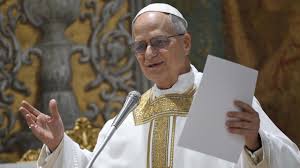
Pope Leo XIV commemorated the first anniversary of the death of his predecessor, Francis, as he addressed worshippers in Equatorial Guinea yesterday.
The pontiff paid tribute to his predecessor’s commitment to the most vulnerable and marginalised groups in society.
As he flew from Angola to Equatorial Guinea, Leo said Francis had given “his witness, his words, and his gestures.
He did so by truly living close to the poorest, to the least, to the sick, to children, and to the elderly.”
In tribute, Leo said, “Let us thank the Lord for the great gift of Francis’ life to the whole Church and to the whole world.
”As Pope, Francis headed the Catholic Church from 2013 to 2025. He died at the age of 88.
The current pope, who was the curia cardinal Robert Francis Prevost, a U.S. and Peruvian citizen, was then elected to succeed him.
Equatorial Guinea is the final stop on the pope’s 11-day tour.
Africa is one of the regions of the world where the Catholic Church is growing.
There are currently around 290 million Catholics living on the continent, and this could rise to more than 700 million by the end of this century, forecasts suggest.
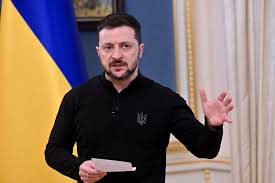
Ukraine’s President Volodymyr Zelensky has condemned a US decision to extend the period during which Russia is allowed to sell oil despite Western sanctions.
The move means countries can purchase Russian oil and petroleum products already loaded on vessels at sea until 16 May.
The US argues that the waiver is meant to ease the energy supply crunch sparked by the US-Israel war with Iran.
But in his remarks on Sunday, Zelensky said “every dollar paid for Russian oil is money for the war” in Ukraine. Widespread sanctions have been in place against Russia since President Vladimir Putin launched his full-scale invasion of its neighbour in February 2022.
The devastating US and Israel attacks against Iran have prompted it to retaliate not only against Israel and US military bases in the Gulf, but also against energy fatalities and other civilian sites across Arab allies of the US in the region.
Additionally, Iran has virtually shut the Strait of Hormuz – the narrow passage where some 20% of the world’s oil and liquefied natural gas (LNG) is usually transported through.
This has led to turmoil in energy markets, with fears that a world recession may ensue if it is not reopened soon.
The US move to ease Russian sanctions on 13 March was widely condemned by Zelensky as well as his European allies.
Extending the waiver on Friday, the US said it wanted “to ensure oil is available to those who need it” as negotiations to end the war “accelerate”.
The Ukrainian leader said Russia had more than 110 tankers from its “shadow fleet” – vessels with obscured ownership designed to help it bypass sanctions – with “over 12 million tons” of oil.
Their sale, he added, would bring $10bn (£7.4bn) to Moscow’s coffers as “a resource that is directly converted into new strikes against Ukraine”.
The Ukrainian leader did not explain what those figures were based on.
But he added that just over the past week, Russia had launched “over 2,360 attack drones, more than 1,320 guided aerial bombs, and nearly 60 missiles of various types at our cities and communities”.
That included the deadliest attack against Ukraine in months on 15 April during which more than 700 drones and missiles were used in multiple waves in one night, killing at least 18 people.
Ukraine has also attacked Russia, particularly focusing on energy facilities.
However, despite ongoing attacks, a stalemate has been reached in the war in Ukraine, with Russia in control of about 20% of Ukrainian territory.
Efforts led by the US to end the war have been put on hold as a result of the war in Iran.

Pope Leo has criticised leaders who spend billions on wars and said the world was “being ravaged by a handful of tyrants” in unusually forceful comments during a visit to Cameroon.
The pontiff blasted those he said had manipulated “the very name of God” for their own gain, while touring a region ravaged by a deadly insurgency.
The remarks come just days after a high-profile spat with US President Donald Trump, who posted a lengthy attack on the Pope, a vocal critic of the US-Israeli military operation in Iran.
The Pope had voiced his concern about Trump’s threat that “a whole civilisation will die” if Iran did not agree to US demands to end the war and open the Strait of Hormuz.
Leo, who last year became the first US-born Pope, has previously also questioned the Trump administration’s approach to immigration.
“Leo should get his act together as Pope,” Trump wrote in a Truth Social post at the time.
The Pope told reporters at the start of his Africa tour that he did not want to get into a debate with Trump but would continue to promote peace.
Speaking in Cameroon, the Pope criticised leaders who “turn a blind eye to the fact that billions of dollars are spent on killing and devastation, yet the resources needed for healing, education and restoration are nowhere to be found”.
“The masters of war pretend not to know that it takes only a moment to destroy, yet often a lifetime is not enough to rebuild,” he said on Thursday.
The Pope also condemned “an endless cycle of destabilisation and death” in a “bloodstained” region of Cameroon that has been gripped by insurgency for nearly a decade.
“Those who rob your land of its resources generally invest much of the profit in weapons, thus perpetuating an endless cycle of destabilisation and death,” he told those gathered at a cathedral in the north-western city of Bamenda – the centre of the violence that has left at least 6,000 people dead and displaced many more.
“Peace is not something we must invent: it is something we must embrace by accepting our neighbour as a brother and as our sister,” the Pope said.
Separatist insurgents in Cameroon’s two Anglophone regions have been fighting the predominantly Francophone government since 2017.
Following Leo’s address, the Archbishop of Canterbury, Sarah Mullally, said that she stood with the Pope in his “courageous call for a kingdom of peace”.
The war in Iran has increasingly placed the Pope and the Trump administration at odds.
Soon after the first US and Israeli attacks on Iran, US Defence Secretary Pete Hegseth recited a highly controversial prayer at a Pentagon worship service that talked of “overwhelming violence” and “justice executed swiftly and without remorse”.
Then, during a Palm Sunday Mass in St Peter’s Square, the Pope said the conflict between Iran, Israel and the US was “atrocious” and that Jesus could not be used to justify war.
“This is our God: Jesus, king of peace, who rejects war, whom no one can use to justify war,” he told tens of thousands of worshippers gathered in Vatican City.
“He does not listen to the prayers of those who wage war, but rejects them.”
The pontiff also quoted the Bible passage Isaiah 1:15: “Even though you make many prayers, I will not listen: your hands are full of blood.”
Earlier this week, Trump launched a scathing attack on the Pope on social media, in which he described the leader of the Catholic Church as “WEAK on Crime and terrible for Foreign Policy” while portraying himself as a Jesus-like figure.
He later doubled-down on his criticism and refused to apologise – but deleted the AI-generated image of himself.
Asked about the US president’s remarks as he arrived in Algiers, the Pope said he had “no fear” of the Trump administration and that he would continue to speak out against war.
The Catholic leader’s wide-ranging Africa tour will include stops in 11 cities across four countries. It is his second major foreign visit since being elected to the papacy last year, and reflects the importance of Catholicism in Africa.
More than a fifth of the world’s Catholics – some 288 million people – live in Africa, according to figures from 2024.


Son Kills Father While Defending Mother in Niger
ShareFrom Dan Amasingha, Minna A tragic domestic incident has left a 60-year-old man dead after he was allegedly assaulted by...

Man City, Inter, Chelsea, Juventus Face Off in Hong Kong for Preseason
ShareEnglish and Italian football giants Manchester City, Chelsea, Inter Milan and Juventus will square up for pre-season friendlies in Hong Kong in August, the clubs...

Pope Leo XIV Pays Tribute to Predecessor on Anniversary of His Death
SharePope Leo XIV commemorated the first anniversary of the death of his predecessor, Francis, as he addressed worshippers in Equatorial Guinea yesterday. The pontiff paid tribute to his...

Labour Party Fixes National Convention April 28
ShareThe Labour Party has fixed its national convention for April 28 in Umuahia, Abia. The party also officially released the list of chairmen and members of its electoral sub-committees for the forthcoming...


Cross River Confirms Case of COVID-19
ShareFrom Ene Asuquo, Calabar The Cross River State Government has confirmed a case of COVID-19 and swiftly activated its public health emergency response mechanisms to contain any potential...

Nigeria Imports 61.7m Barrels US Crude In Two Years
ShareNigeria imported about 61.7 million barrels of crude oil from the United States between January 2024 and January 2026, underscoring...

FG Slams 13-Count Charge against Alleged Coup Plotters
ShareBy David Torough, Abuja The Federal Government has filed a 13-count charge before the Federal High Court in Abuja against...
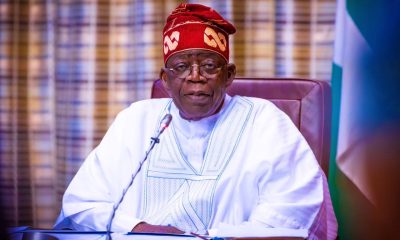

Tinubu Restructures Economic Team, Drops Wale Edun, Dangiwa
ShareBy Tony Obiechina and Raphael Atuu, Abuja President Bola Tinubu has approved a minor reshuffle of the Federal Executive Council,...
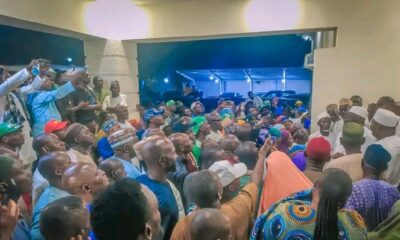

Nasarawa Lawmaker Supports Wadada Endorsement
ShareBy Tambaya Julius, Abuja The Nasarawa State House of Assembly Member Representing Keffi West Hon. Ibrahim Aliyu Nana has pledged...
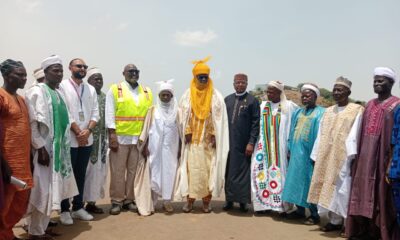

Centenary City Access Road Reaches 35 Per Cent Completion as Community Backing Drives Progress
ShareBy David Torough, Abuja Construction of the 4.3-kilometre access road within Abuja’s Centenary City development has reached 35 per cent...