
NEWS
Nigeria Imports 61.7m Barrels US Crude In Two Years

Nigeria imported about 61.7 million barrels of crude oil from the United States between January 2024 and January 2026, underscoring the country’s growing reliance on foreign feedstock to support domestic refining despite being a major oil producer.
This is despite the fact that Nigeria exported over 300 million barrels of crude in the first 10 months of 2025 and 55.
39 million barrels in January and February 2026.Data obtained from the US Energy Information Administration showed that crude exports from the United States to Nigeria surged during the period, marking a sharp reversal from nearly a decade of negligible crude trade flows between both countries.
Before 2024, American crude shipments to Nigeria were virtually non-existent.
The only notable supply recorded within the period was in March 2016, when exports averaged just 19,000 barrels per day, translating to about 0.589 million barrels for the entire year.However, the trade pattern changed significantly in 2024, coinciding with the commencement of operations at the Dangote refinery, which industry observers said has emerged as the primary buyer of US crude to supplement domestic supply constraints.
The EIA reports its data in thousands of barrels per day, meaning the daily figures must be multiplied by the number of days in each month to derive the total monthly volume.
For 2024, data available for January to June indicated that Nigeria imported a total of 15.701 million barrels from the United States within six months. In January, imports averaged 125,000 barrels per day, translating to 3.87 million barrels. February recorded 110,000 barrels per day or 3.19 million barrels, while March fell to 51,000 barrels per day, amounting to 1.58 million barrels.
Imports rose again in April to 67,000 barrels per day, representing 2.01 million barrels, before dropping to 35,000 barrels per day in May, equivalent to 1.08 million barrels. June recorded the highest inflow for the year at 132,000 barrels per day, which translated to 3.96 million barrels.
The volume increased further in 2025, which accounted for the largest share of the two-year imports. Between February and December 2025, Nigeria imported 41.06 million barrels of US crude.
According to the EIA, the year started with 111,000 barrels per day in February and climbed steadily in the following months.
Imports peaked in June 2025 at 305,000 barrels per day, the highest monthly rate in the dataset, delivering about 9.15 million barrels within 30 days. Another strong inflow was recorded in August at 201,000 barrels per day, equivalent to 6.23 million barrels.
However, the supply slowed sharply towards the end of the year. Imports dropped to 12,000 barrels per day in November, translating to just 0.36 million barrels, before slightly rising to 23,000 barrels per day or 0.71 million barrels in December.
For 2026, data available for January showed that Nigeria imported 159,000 barrels per day, amounting to 4.93 million barrels.
A breakdown of the figures showed that the combined total for 2024, 2025 and January 2026 stood at 61.685 million barrels, which rounds up to 61.7 million barrels.
The development highlights a paradox in Nigeria’s oil sector, where the country exports large volumes of crude oil but still struggles to supply enough feedstock to domestic refineries.
For decades, Nigeria relied heavily on importing refined petroleum products such as petrol and diesel due to limited refining capacity. The commissioning of the Dangote refinery in 2024 shifted the pattern, with the country now importing crude oil for local processing instead of finished fuels.
Aliko Dangote once said the imports from the United States were largely driven by the need to bridge the gap between domestic crude supply and the refinery’s operational requirements.
The Dangote facility, one of the world’s largest single-train refineries, requires substantial daily feedstock to run at optimal capacity, needing over 19 million barrels monthly.
Sources told our correspondent that the Dangote refinery imports crude from Ghana and other African countries even as the country sells crude to other countries.
Data from the Central Bank of Nigeria showed that Nigeria exported an estimated 306.7 million barrels of crude oil between January and October 2025, despite concerns over feedstock shortages faced by domestic refineries.
The figures indicated that while the country produced about 443.5 million barrels during the 10-month period, averaging roughly 1.45 million barrels per day, a significant portion of the output was shipped overseas.
Cumulatively, exports between January and October represented about 69 per cent of total production, leaving roughly 137 million barrels for domestic use.
Similarly, Nigeria exported 55.39 million barrels of crude oil in the first two months of 2026 even as the Dangote refinery continues to struggle with inadequate domestic feedstock supply.
According to CBN data, the country shipped out 31.31 million barrels in January and 24.08 million barrels in February.
In January, crude production averaged 1.46 million barrels per day with exports at 1.01 mbpd. In February, production fell to 1.31 mbpd while exports averaged 0.86 mbpd. Total crude production for the two months stood at 81.94 million barrels, meaning that 26.55 million barrels were left behind for local refineries in the first two months of 2026.
On several occasions, the Dangote refinery complained of low crude supply despite the naira-for-crude arrangement, forcing it to source feedstock from the United States and other countries, including Ghana.
Also, the Crude Oil Refiners Association of Nigeria lamented that some modular refineries under its umbrella shut down intermittently due to inadequate crude supply.

From Dan Amasingha, Minna
A tragic domestic incident has left a 60-year-old man dead after he was allegedly assaulted by his son in Minna, the Niger State capital.
The deceased, identified as Ali Haruna, was reportedly attacked by his son, Usman, at the Shango area of Chanchaga Local Government Area on Monday.
Sources said the incident occurred behind a primary school in the community during a family dispute.
Usman was said to have intervened during an alleged altercation between his parents, in which his mother was reportedly being maltreated by the deceased.
In the process, the son allegedly struck his father, causing him to collapse and slip into a coma.
Haruna was rushed to the Ibrahim Badamasi Babangida Specialist Hospital, where he was later confirmed dead.
Residents of the area said there had been long standing reports of domestic violence within the family.
When contacted for confirmation, the spokesperson of the Niger State Police Command, SP Wasiu Abiodun, could not be reached as of the time of filing this report.
The incident has thrown the Shango community into shock, while investigations are expected to commence into the circumstances surrounding the death.
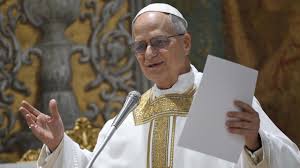
Pope Leo XIV commemorated the first anniversary of the death of his predecessor, Francis, as he addressed worshippers in Equatorial Guinea yesterday.
The pontiff paid tribute to his predecessor’s commitment to the most vulnerable and marginalised groups in society.
As he flew from Angola to Equatorial Guinea, Leo said Francis had given “his witness, his words, and his gestures.
He did so by truly living close to the poorest, to the least, to the sick, to children, and to the elderly.”
In tribute, Leo said, “Let us thank the Lord for the great gift of Francis’ life to the whole Church and to the whole world.
”As Pope, Francis headed the Catholic Church from 2013 to 2025. He died at the age of 88.
The current pope, who was the curia cardinal Robert Francis Prevost, a U.S. and Peruvian citizen, was then elected to succeed him.
Equatorial Guinea is the final stop on the pope’s 11-day tour.
Africa is one of the regions of the world where the Catholic Church is growing.
There are currently around 290 million Catholics living on the continent, and this could rise to more than 700 million by the end of this century, forecasts suggest.

From Ene Asuquo, Calabar
The Cross River State Government has confirmed a case of COVID-19 and swiftly activated its public health emergency response mechanisms to contain any potential spread, health authorities announced.
Making the disclosure in Calabar, The State Commissioner for Health, Dr.
Henry Egbe Ayuk, Tuesday at a press briefing assured residents that the situation is under control and that there is no need for panic, he saidHe said the confirmed case involves a 53-year-old Chinese expatriate who arrived Nigeria about a month ago and works in a company at Akamkpa Local Government Area.
The patient, who initially presented mild symptoms, was later admitted to the University of Calabar Teaching Hospital, where samples were collected and the infection confirmed.“The patient is currently receiving care at the state’s designated isolation and treatment centre and is responding well to treatment,” the commissioner said.
He emphasized that the government deliberately delayed public announcement until all diagnostic protocols were completed to avoid misinformation, adding that the state remains vigilant in disease surveillance and response.
Ayuk noted that global interconnectedness continues to expose populations to infectious diseases, stressing that COVID-19, like other outbreaks, is not peculiar to Nigeria.
“We are living in a world of mobile populations, and public health threats can easily cross borders. What matters is the capacity to detect and contain them promptly, and that is what we are doing.
“The state is safe. There is no cause for alarm, but we must all play our part in preventing the spread,” Ayuk reiterated.
The State Epidemiologist, Dr. Inyang Ekpenyong, confirmed that this is the first officially recorded COVID-19 case in Cross River since 2022, attributing the low visibility of recent cases to widespread vaccination and the prevalence of mild or unreported infections.
She explained that COVID-19 symptoms, such as fever, cough, sore throat, and respiratory distress in severe cases often resemble malaria, which may contribute to underreporting.
“With even a single confirmed case, it qualifies as an outbreak, and that is why we immediately activated the Emergency Operations Centre (EOC),” Ekpenyong said.
She disclosed that rapid response teams have been deployed to Akamkpa LGA, while contact tracing and line-listing of exposed individuals are ongoing. Identified contacts are being monitored daily within the virus’ incubation period of two to 14 days.
WHO State Coordinator, Dr. Olatunde Rebecca, highlighted the importance of sustained surveillance, risk communication, and provision of testing materials. She also warned against misinformation, describing it as a key factor that can worsen outbreak outcomes.
“COVID-19 spreads through respiratory droplets and contaminated surfaces. Preventive measures such as hand hygiene, use of face masks, and physical distancing remain critical,” she said.
Rebecca added that efforts are underway, in collaboration with national health authorities, to determine the specific strain involved in the current case.



Son Kills Father While Defending Mother in Niger
ShareFrom Dan Amasingha, Minna A tragic domestic incident has left a 60-year-old man dead after he was allegedly assaulted by...


Man City, Inter, Chelsea, Juventus Face Off in Hong Kong for Preseason
ShareEnglish and Italian football giants Manchester City, Chelsea, Inter Milan and Juventus will square up for pre-season friendlies in Hong Kong in August, the clubs...

Pope Leo XIV Pays Tribute to Predecessor on Anniversary of His Death
SharePope Leo XIV commemorated the first anniversary of the death of his predecessor, Francis, as he addressed worshippers in Equatorial Guinea yesterday. The pontiff paid tribute to his...


Labour Party Fixes National Convention April 28
ShareThe Labour Party has fixed its national convention for April 28 in Umuahia, Abia. The party also officially released the list of chairmen and members of its electoral sub-committees for the forthcoming...

Cross River Confirms Case of COVID-19
ShareFrom Ene Asuquo, Calabar The Cross River State Government has confirmed a case of COVID-19 and swiftly activated its public health emergency response mechanisms to contain any potential...

Nigeria Imports 61.7m Barrels US Crude In Two Years
ShareNigeria imported about 61.7 million barrels of crude oil from the United States between January 2024 and January 2026, underscoring...

FG Slams 13-Count Charge against Alleged Coup Plotters
ShareBy David Torough, Abuja The Federal Government has filed a 13-count charge before the Federal High Court in Abuja against...


Tinubu Restructures Economic Team, Drops Wale Edun, Dangiwa
ShareBy Tony Obiechina and Raphael Atuu, Abuja President Bola Tinubu has approved a minor reshuffle of the Federal Executive Council,...


Nasarawa Lawmaker Supports Wadada Endorsement
ShareBy Tambaya Julius, Abuja The Nasarawa State House of Assembly Member Representing Keffi West Hon. Ibrahim Aliyu Nana has pledged...
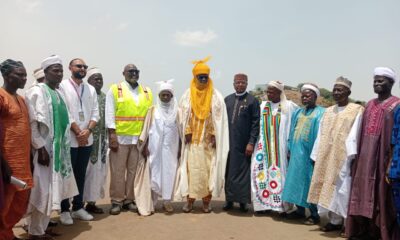

Centenary City Access Road Reaches 35 Per Cent Completion as Community Backing Drives Progress
ShareBy David Torough, Abuja Construction of the 4.3-kilometre access road within Abuja’s Centenary City development has reached 35 per cent...