
NEWS
Kidnappers Kill Oyo Teacher as Pupils, Colleagues Remain in Captivity

From Ayinde Akintade, Osogbo
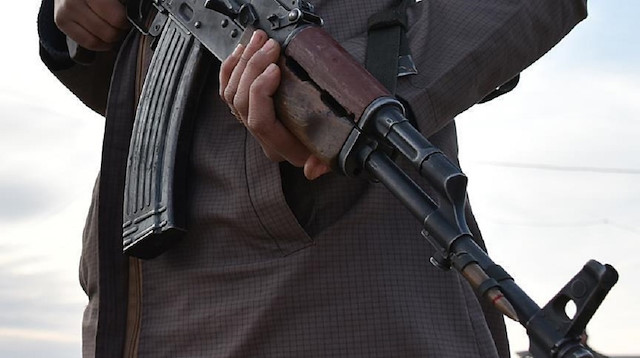
The abduction crisis in Oyo State took a tragic turn on Sunday as one of the kidnapped teachers from Community Grammar School, Ahoro-Esinle in Oriire Local Government Area, Michael Oyedokun, was reportedly beheaded by suspected bandits.
A viral video allegedly released by the kidnappers showed the teacher tied up and forced to speak before he was gruesomely killed, throwing the Esiele community into mourning and sparking outrage across the country.
The attack followed the invasion of Baptist Nursery and Primary School, Yawota; Community Grammar School, Ahoro-Esinle; and L.A. Primary School by gunmen riding motorcycles last Friday, during which dozens of teachers, pupils and school workers were abducted.
Reacting to the development, President Bola Tinubu condemned the killing as “barbaric” and assured Nigerians that security agencies were working round the clock to rescue the remaining victims and apprehend the attackers.
In a statement issued by his Special Adviser on Information and Strategy, Bayo Onanuga, the President said the Inspector-General of Police was personally leading a technology-driven operation aimed at rescuing the victims and dismantling the criminal network behind the attack.
Tinubu sympathised with Governor Seyi Makinde, the government and people of Oyo State, while assuring families of the abducted victims of the Federal Government’s support.
“The bandits and all their local collaborators will be fished out and made to face the full wrath of the law,” the President declared.
He further renewed calls for the establishment of state police, urging the National Assembly to fast-track legislation creating state police structures to improve security in underserved areas.
Meanwhile, the Oluwo of Iwo, Oba Abdulrasheed Akanbi, condemned the attack as a “complete desecration of Yorubaland” and called on the Federal Government to empower traditional rulers with security votes, patrol vehicles and logistics support to combat banditry.
The monarch said palaces were usually the first point of contact during security emergencies and stressed that traditional rulers must be adequately equipped to coordinate local surveillance and community-based security efforts.
He also urged South-West governors and Yoruba stakeholders to convene an emergency security meeting to harmonise strategies against the growing threat of bandit infiltration in the region.
From Joseph Amedu, Lokoja
Traditional rulers from Oworo land in Lokoja Local Government Area of Kogi State, have resolved to work together to tackle insecurity and strengthen unity for the development of their communities.
The royal fathers made the resolution during stakeholders’ meeting of Oworo Traditional rulers and Title Holders at the weekend in Lokoja.
The meeting was convened in line with traditional law to review pressing issues affecting the area, with security, unity, and socio-economic progress at the center of deliberations.
Addressing journalists after the meeting, the Olu of Oworo and Chairman Oworoland Traditional Council, Mallam Mohammed Adoga Baiyerohi, said periodic meetings were necessary to take stock of the community’s challenges.
“As provided by our traditional law, we are supposed to meet from time to time to take stock of situations affecting our community.
“Key issues include unity among the people, security, and the socio-economic activities of our people, and how these are being disrupted,” Oba Adoga said.
The council expressed deep concern over the rising insecurity in Oworo land.
The Olu oworo noted that the area’s location had made it a target for kidnappers, bandits, and other criminal elements who exploit its proximity to the River Niger as a hideout and escape route.
“Our land provides a very easy route for them to sneak in and out. This is a challenge we are contending with,” the royal father stated.
He commended Gov. Ahmed Ododo for his hands-on approach to tackling insecurity across Kogi State, noting that the governor had personally visited forests and troubled areas, day and night, to curb criminal activities.
“We appreciate him and pray that God continues to assist the governor. We will only rest when our people can live in peace.
“As long as these nefarious activities continue, we will keep engaging with the government. The relationship between us and the governor will continue to grow stronger,” the Olu added.
The traditional ruler urged the people of Oworo land to set aside political and historical differences and prioritize unity as the foundation for development.
“For development to thrive, it must be preceded by unity and peace. Peace and unity are the gateway to development. We must come together to promote peace, unity, and progress in our land,” he said.
Other traditional rulers who contributed at the event included the Olu Apata, HRH Oba Fedrick Balogun JP; Bajana III of Obajana, HRH Oba Idowu Isenibi, HRH Oba Ismaila Zakari, the Ohiribo-Keta of Karara; and HRH Oba Abubakar Alugbere, the Masi of Agbaja.
Other traditional title holders at meeting were: Chief Gabiel Agoyi; the Obajemu of Oworoland; Chief (Dr.) Denja Abdul, the Marafa of Oworoland; Chief Aiyedogbon Berida, the Eleson of Oworoland; and Chief A.G Abdullahi, the Baani of Oworoland, among others.
At the close of the meeting, the council resolved to strengthen collaboration between traditional institutions, the Kogi State Government, and security agencies to improve safety and accelerate development in Oworo land.
The council emphasised the need for traditional rulers to unite and carry their subjects along in efforts to advance Oworo land.
The council further proposed the institution of an Oworo Day cultural festival to foster unity and suggested deploying technology to strengthen security against banditry and other crimes.

Thousands of Kenyan commuters have been stranded and businesses paralyzed as public transport operators went on a nationwide strike to protest against recent increases in the cost fuel.
Key roads in the capital Nairobi remained largely empty, forcing some commuters to walk to work, with other parts of the country also affected by the transport crisis.
Businesses in parts of Nairobi remained shut and schools asked students to stay at home.Protesters have been barricading roads and lighting fires on the roads as the protests continue.
The strike comes days after the authorities raised petroleum prices to record levels, with costs increasing by more than 20%.
Kenya, like many other African countries, relies heavily on fuel imports from the Gulf, a supply route disrupted by the US-Israel conflict with Iran that began on 28 February. Even though a ceasefire has been declared, fuel prices have remained high as the Strait of Hormuz, where a fifth of the world’s oil passes through, is still blocked.
In parts of Nairobi and elsewhere across the country, police clashed with protesters, using tear gas to disperse them. This came amid reports of demonstrators stopping and harassing some motorists.
Ahead of the strike, the police assured Kenyans that security measures would be in place and warned against any disruptive conduct.
The association representing transport operators had earlier urged all vehicle users, including private motorists, public transport buses (locally known as matatus) and truckers, to stay off the roads as part of a coordinated shutdown.
“This action is not only for transport operators, but for every Kenyan citizen,” the Transport Sector Alliance (TSA) said in a statement.
The alliance has accused the government of not doing enough to shield Kenyans from the rising fuel prices, amid a broader high cost-of-living crisis.
It has called for the reversal of the price increases announced last week, and for fuel prices to be reduced by about 35%.
The Energy and Petroleum Regulatory Authority (Epra) on Thursday raised prices to a high of 242 shillings ($1.8; £1.4) a litre for diesel and petrol to $1.65.
Treasury Minister John Mbadi told local NTV station on Monday that the increase in fuel prices was “unfortunate” and acknowledged that it was hurting the economy.
He however said the strike was “completely uncalled for” and the government would only make decisions that are “informed and not emotional”.
“Why are we trying to solve a global problem using domestic means?” he asked.
The high cost of fuel is being blamed for increases in the price of food and other basic goods and services, with public service vehicles already raising commuter fares.
Last month, the government cut VAT on fuel from 16% to 8% until July but there have been calls for it to do more.
From Agbo Emmanuel, Kaduna
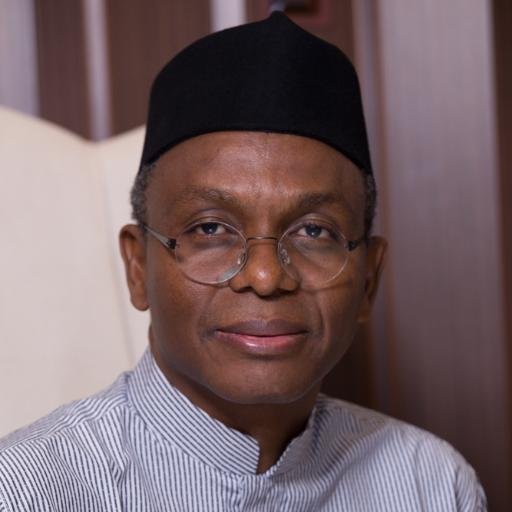
The Federal High Court in Abuja on Monday granted bail to former Kaduna State Governor, Nasir El-Rufai, setting the bail sum at N100 million in a ruling that marks a new phase in his ongoing legal battle.
Delivering the ruling, Justice Joyce Abdulmalik ordered that the former governor must produce a surety in the same amount and meet additional stringent conditions before he can be released from custody.
The court held that the surety must reside within Maitama or Asokoro districts of Abuja and must present the original Certificate of Occupancy of a landed property, which is to be deposited with the court registry.
It further directed that the surety must be a serving federal civil servant not below Grade Level 17 and must show evidence of at least three months’ salary payments. The court also ordered that all financial documents be verified through a formal letter from the surety’s bank manager within the court’s jurisdiction.The decision forms part of a broader set of proceedings involving the former governor, who has made several court appearances in recent times over allegations being investigated by federal agencies. Earlier sittings in the matter were marked by delays and strict judicial scrutiny of bail applications, with the court insisting on full compliance with procedural requirements before any release could be considered.
The allegations, though varying across different cases, are said to relate to financial dealings during El-Rufai’s tenure as governor, alongside other offences currently under investigation. He has, however, consistently denied wrongdoing, maintaining that the cases are politically motivated, while his legal team continues to seek more favourable bail terms and challenge aspects of the prosecution’s case.
With bail now granted under strict conditions, attention is expected to shift to compliance with the court’s requirements and the continuation of substantive hearings as both sides prepare for full trial proceedings.


Kogi Traditional Rulers Unite to Tackle Insecurity
ShareFrom Joseph Amedu, Lokoja Traditional rulers from Oworo land in Lokoja Local Government Area of Kogi State, have resolved to work together to tackle insecurity and...
U-17 WWCQ: Flamingos Off To Abidjan Wednesday for Guinea Showdown
ShareNigeria’s Flamingos will leave for Abidjan, Cote d’Ivoire on Wednesday ahead of the first leg of their 2026 FIFA U-17 Women’s World Cup qualifying fixture...

Strike over High Fuel Prices Paralyses Transport in Kenya
ShareThousands of Kenyan commuters have been stranded and businesses paralyzed as public transport operators went on a nationwide strike to protest against recent increases in the cost fuel. Key roads in...

Military Airstrikes Kill 20 ISIS-ISWAP Terrorists in Borno — DHQ
ShareThe Defence Headquarters said coordinated airstrikes in the Metele general area of Borno have killed more than 20 ISIS/ISWAP fighters in continued counter-terrorism operations in the North-East....
Court Grants El-Rufai N100m Bail amid Ongoing Legal Battle
ShareFrom Agbo Emmanuel, Kaduna The Federal High Court in Abuja on Monday granted bail to former Kaduna State Governor, Nasir El-Rufai, setting the bail sum at N100...


NRS Unveils Single Tax Identifier for Individuals, Businesses
ShareBy Tony Obiechina, Abuja The Nigeria Revenue Service (NRS) has announced the rollout of a unified Taxpayer Identification (Tax ID)...
Kidnappers Kill Oyo Teacher as Pupils, Colleagues Remain in Captivity
ShareFrom Ayinde Akintade, Osogbo The abduction crisis in Oyo State took a tragic turn on Sunday as one of the...

APC Heavyweights Sweep Senatorial Primaries Ahead of 2027
ShareBy David Torough, Abuja The All Progressives Congress (APC) on Monday recorded major victories for several political heavyweights in its senatorial primaries ahead of...


APC Unveils Winners of Adamawa House of Representatives Primaries
ShareFrom Yagana Ali, Yola The All Progressives Congress (APC) has officially announced the winners of its House of Representatives primary...
Northwest Varsity Kano Matriculates 7,929 Students
ShareFrom Rabiu Sanusi, Kano Northwest University Kano on Friday held its 13th Matriculation Ceremony for newly admitted students of the...