
Foreign News
Strike over High Fuel Prices Paralyses Transport in Kenya

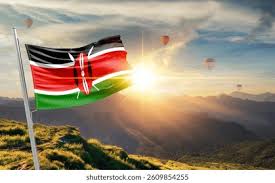
Thousands of Kenyan commuters have been stranded and businesses paralyzed as public transport operators went on a nationwide strike to protest against recent increases in the cost fuel.
Key roads in the capital Nairobi remained largely empty, forcing some commuters to walk to work, with other parts of the country also affected by the transport crisis.
Businesses in parts of Nairobi remained shut and schools asked students to stay at home.Protesters have been barricading roads and lighting fires on the roads as the protests continue.
The strike comes days after the authorities raised petroleum prices to record levels, with costs increasing by more than 20%.
Kenya, like many other African countries, relies heavily on fuel imports from the Gulf, a supply route disrupted by the US-Israel conflict with Iran that began on 28 February. Even though a ceasefire has been declared, fuel prices have remained high as the Strait of Hormuz, where a fifth of the world’s oil passes through, is still blocked.
In parts of Nairobi and elsewhere across the country, police clashed with protesters, using tear gas to disperse them. This came amid reports of demonstrators stopping and harassing some motorists.
Ahead of the strike, the police assured Kenyans that security measures would be in place and warned against any disruptive conduct.
The association representing transport operators had earlier urged all vehicle users, including private motorists, public transport buses (locally known as matatus) and truckers, to stay off the roads as part of a coordinated shutdown.
“This action is not only for transport operators, but for every Kenyan citizen,” the Transport Sector Alliance (TSA) said in a statement.
The alliance has accused the government of not doing enough to shield Kenyans from the rising fuel prices, amid a broader high cost-of-living crisis.
It has called for the reversal of the price increases announced last week, and for fuel prices to be reduced by about 35%.
The Energy and Petroleum Regulatory Authority (Epra) on Thursday raised prices to a high of 242 shillings ($1.8; £1.4) a litre for diesel and petrol to $1.65.
Treasury Minister John Mbadi told local NTV station on Monday that the increase in fuel prices was “unfortunate” and acknowledged that it was hurting the economy.
He however said the strike was “completely uncalled for” and the government would only make decisions that are “informed and not emotional”.
“Why are we trying to solve a global problem using domestic means?” he asked.
The high cost of fuel is being blamed for increases in the price of food and other basic goods and services, with public service vehicles already raising commuter fares.
Last month, the government cut VAT on fuel from 16% to 8% until July but there have been calls for it to do more.
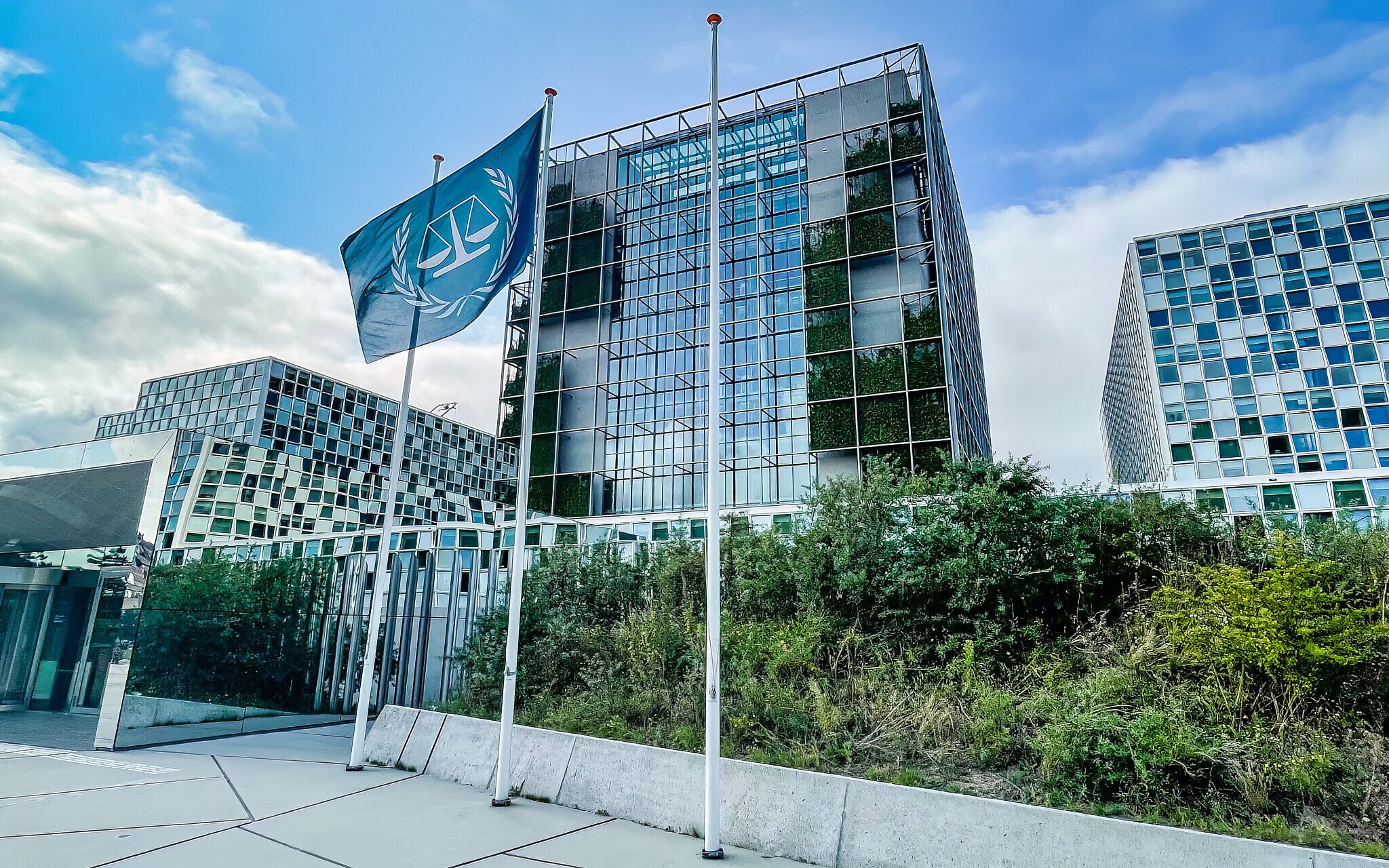
Niger has officially submitted its request to withdraw from the International Criminal Court (ICC), nine months after announcing its intent to leave.
In September 2025, Niger, along with allies Mali and Burkina Faso – which are all under military rule – issued a joint statement saying they would not recognise the ICC’s authority, calling it an “instrument of neo-colonialist repression”.
The court said it had received an “instrument of withdrawal” on 18 June, according to a statement seen by the AFP news agency. Withdrawal takes effect one year after notification.
The ICC added that Niger must honour its obligations to the court until that date.
The ICC – based in The Hague in the Netherlands – was set up in 2002 to pursue cases of genocide, crimes against humanity, war crimes and aggression.
The court’s statement on Tuesday did not make any mention of Mali or Burkina Faso.
When announcing their withdrawal, the three Sahel states said they wanted to set up “indigenous mechanisms for the consolidation of peace and justice”.
Last year, Niger, Mali and Burkina Faso also simultaneously withdrew from the Economic Community of West African States (Ecowas), the regional bloc, and created the Confederation of Sahel States for the three nations.
Juntas have been in control of the countries following coups in the early part of this decade.
Their armies have faced accusations of crimes against civilians, as violence has escalated in the region against jihadist groups linked to al-Qaeda and the Islamic State.
In recent years, the three countries, which are former French colonies, have increasingly become isolated from the West and strengthened their ties to Russia.
There is an outstanding ICC-issued arrest warrant for Russian President Vladimir Putin over alleged war crimes in Ukraine.
Russia, as well as countries such as the US, Israel and China, are not part of the court’s 125 member states. Niger will be the third country to leave the ICC after the Philippines and Burundi.
There have been a number of false dawns when it comes to elections in South Sudan, but the authorities have said the long-delayed first-ever vote will take place in December.
The leaders of the world’s youngest country have not been tested at the ballot box since independence in 2011 and President Salva Kiir has been in office for 15 years.
According to the original plan, the general election was supposed to have happened in 2015 but a civil war meant that had to be postponed.
The 2018 peace deal, which created a unity government with Kiir at its helm and rival Riek Machar as his deputy, envisioned an election in 2022 but the vote was never organised amid tension between the country’s leaders.
Continued issues between the two men could yet delay the vote further.
Machar was sacked as vice-president and arrested earlier last year and charged with murder, treason and crimes against humanity, which he denies. He has been under house arrest in the capital, Juba, since March last year as fighting persists in some areas of the country.
There have been warnings, including form the UN that the violence could once again spill over into full-scale civil war.
When announcing the 22 December date for the vote, electoral chief Abednego Akok Kacuol acknowledged that unresolved legal amendments and persistent funding gaps continued to hamper poll preparations.
“The political will is not ours; it lies with the government,” he said.
Asked what would happen if funds were not secured within six months, Kacuol said his commission would continue planning while adjusting toward a “realistic electoral timeline”.
In a statement on Monday, the presidency said Kiir was committed to implementing the 2018 peace agreement and keeping South Sudan on track toward peaceful, democratic elections.
It said preparations for inter-party dialogue on election-related issues were progressing and would provide a platform for building consensus among political stakeholders.
But opposition groups and civil society organisations have raised concerns over security conditions, political freedoms and electoral readiness.
The Sudan People’s Liberation Movement in Opposition (SPLM-IO), the party of Machar, warned about the poll preparations, saying holding elections remained a “dangerous” matter.
“Anyone coming to register voters and campaign in territories controlled by the mighty SPLM-IO, you will be a prisoner of war,” Nathaniel Pierino, acting chairperson of the group, said in a post on Facebook.
“Be reminded, the country is at war,” he added.
Guinea has banned the export of unrefined gold in an effort to promote domestic processing of the precious metal.
The policy – effective immediately – comes after Guinea’s President Mamadi Doumbouya met industrial and artisanal gold producers and buyers, and aims to boost the economy and create more jobs.
“Guinea will now require its gold to be processed within its own borders.
Raw gold will no longer leave Guinea,” he said, adding that other countries have been reaping the economic benefits of processing and trading their raw materials.Guinea is Africa’s sixth largest gold producer, according to the World Gold Council.
Other African nations have taken similar steps to increase domestic processing and value addition in the mining sector in recent years.
In Tanzania and Uganda, the export of unprocessed minerals and metals such as gold and copper is already banned, while Ghana is set to ban raw gold exports by 2030.
Africa’s top lithium producer, Zimbabwe, has banned concentrate exports of the metal used to make batteries from 2027.
Gold is one of Guinea’s main exports, shipping more than 22 tonnes of the metal in the first quarter of this year, according to the authorities.
A new refinery is near completion in the capital, Conakry, where the country’s gold will be sent before processing and export. It has a reported capacity of 250 tonnes a year so should be able to handle the country’s current production.
Foreign companies operating in the country have been warned that they risk losing their licenses and having their mining contracts terminated if they violate the directive.
Guinea is also the world’s largest producer of bauxite, used to make aluminium.


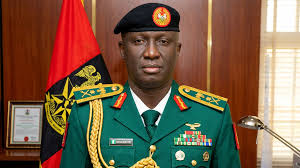

Nigerian Army to Recruit 28,000 More Troops as COAS Unveils NADCEL 2026 Activities
ShareBy David Torough, Abuja The Chief of Army Staff (COAS), Lieutenant General Waidi Shaibu has announced plans by the Nigerian...

Govt ‘ll Ensure Release of Nigerians in Captivity – Akume
ShareBy David Torough, Abuja The Nigerian Government has reiterated its commitment to securing the freedom of all Nigerians held in...
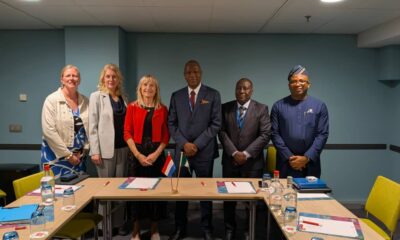

Nigeria, Netherlands Seal Customs Deal to Boost Trade, Border Security
ShareBy Tambaya Julius, Abuja The Nigeria Customs Service (NCS) and the Customs Administration of the Kingdom of the Netherlands have...
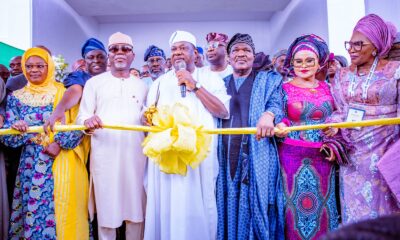

Tinubu Commissions Rebuilt Premier Hotel, Hails Private Sector Investment in Oyo
ShareBy David Torough, Abuja President Bola Tinubu has commissioned the newly transformed Premier Hotel in Ibadan, Oyo State, declaring that...
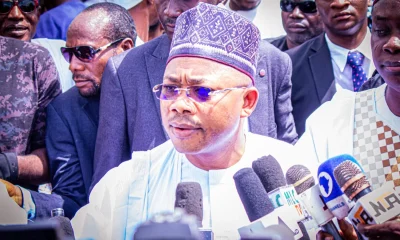

Ododo Vows To Eliminate Criminals From Kogi Forests
ShareFrom Joseph Amedu, Lokoja Kogi State governor, Alhaji Ahmed Usman Ododo has vowed to eliminate criminals across the state’s forest zones, declaring...


Trump to Attend World Cup Final, Present Trophy
ShareUnited States president Donald Trump will attend the World Cup final and help present the trophy, says Fifa president Gianni Infantino. Trump, 80,...

No Extra Revenue for FIFA from Hydration Breaks – Infantino
ShareHydration breaks at the World Cup are “purely a sporting matter” and bring “no additional revenue for Fifa”, president Gianni Infantino has said. Three-minute pauses midway through both...


Niger Pulls out of International Criminal Court
ShareNiger has officially submitted its request to withdraw from the International Criminal Court (ICC), nine months after announcing its intent to leave. In...
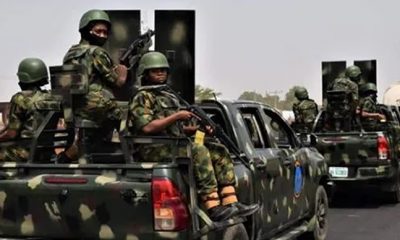

Army Disowns Fundraising for NADCEL 2026
ShareThe Nigerian Army has disowned ongoing fundraising and sponsorship solicitations being carried out in the name of the Nigerian Army Day Celebration (NADCEL) 2026. Army warned...
Bayelsa Establishes Waterways Agency
ShareFrom Mike Tayese, Yenagoa Bayelsa State would soon establish an agency to regulate activities that result in erosion and other environmental menace on its waterways. This...