
NEWS
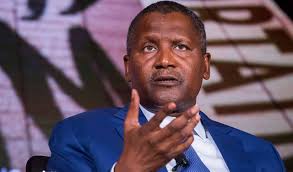
Aliko Dangote: Africa’s Industrialist-in-chief

By Wale Osofisan
Aliko Dangote’s rise from a trader from Kano to the builder of some of Africa’s most important industrial assets marks a defining moment in the continent’s economic journey. His refinery in Lekki, Lagos, and his plan to establish a similar facility in Kenya signal a broad shift in Africa’s development path – one shaped by productive capacity, long term investment, and the steady growth of human capital.
Dangote’s vision, and the scale at which he has pursued it, is changing how Africa engages with the global economy. It is also influencing how countries on the continent absorb external shocks, strengthen domestic stability, and position themselves within increasingly complex supply chains.
A Refinery That Repositioned Nigeria
The Dangote Refinery in Lagos is the largest single train refinery in the world, yet its importance goes far beyond its size. It has become a strategic buffer at a time when global supply chains are under strain, especially with the crisis in the Strait of Hormuz disrupting energy flows.
Nigeria, long vulnerable to swings in global markets, now has a domestic anchor that shields it from sudden disruptions. Its international reach is equally striking. Recent reports show that the refinery has overtaken the United States in supplying jet fuel to Europe.
This development marks a shift in Africa’s place within global industrial flows. Instead of exporting crude and importing refined products, Nigeria is now supplying refined value to major markets. The implications for economic stability, trade, and national confidence are profound and long lasting.
Kenya and East Africa: The Next Industrial Frontier
Dangote’s intention to build a refinery in Kenya represents a significant continental milestone. A facility of that scale would serve the East African market and deepen regional integration. It would support aviation hubs in Nairobi, Kampala, Addis Ababa, Kigali, and Dar es Salaam, while providing a reliable supply of refined products for manufacturing, logistics, and agriculture.
Such an investment would strengthen the promise of the African Continental Free Trade Area by creating industrial corridors that link regions through production rather than consumption. It would also expand skilled employment and technical expertise across East Africa. This is the kind of long-term capital that anchors economies and reduces exposure to global volatility.
A Political Economy Shift Taking Shape
Across Africa, there is a growing recognition that sustainable development depends on productive capacity. Industrialisation, investment, and human capital development are central to this emerging consensus. Dangote’s work shows how these elements can reinforce one another to strengthen national and regional economies.
His investments highlight three essential pillars:
Industrial capacity that turns raw materials into refined products at scale;
Long term capital that builds assets supporting economic stability and regional trade;
Human capital that trains engineers, technicians, and managers who drive industrial growth.
This approach reflects a wider argument that Africa’s future rests on building and producing, and on strengthening internal capability.
If Africa had 10 industrialists with Dangote’s vision and commitment, the continent’s economic landscape would be transformed. Multiple refineries would serve regional markets. Steel and cement plants would support construction and infrastructure. Fertiliser complexes would boost agriculture. Petrochemical hubs would support and supply global markets. Integrated logistics networks would lower the cost of intra-Africa trade.The outcome would be millions of skilled jobs, stronger regional economies, and a more confident Africa able to shape its own development path. This is the scale of ambition that can shift the continent’s position in the global economy.
The Dangote Foundation: A Social Commitment
Alongside his industrial ventures, Dangote has built one of Africa’s most active philanthropic institutions. The Dangote Foundation supports nutrition programmes, health interventions, disaster relief, and education initiatives across the continent. This blend of industrial ambition and social commitment reflects a model of development that is both economically productive and socially grounded. It shows that industrial growth and humanitarian support can reinforce each other, strengthening communities, while building national capacity.
Aliko Dangote’s refinery in Lagos, his planned refinery in Kenya, and his wider industrial footprint represent more than business success. They offer a new vision of what African development can look like when driven by productive capacity, long term investment, and human capital. His work demonstrates that Africa’s future will be shaped by those who build, those who invest, and those who develop the skills and institutions needed for sustained growth.
Dangote is not only constructing refineries. He is helping build a new African confidence, rooted in capability, ambition, and the steady rise of industrial power.
Africa does not need to wait for its moment. It can build it. Dangote’s story shows what becomes possible when ambition meets execution and when vision is backed by the courage to invest at scale. If one man can shift the industrial balance of an entire region, imagine what ten could do. Africa’s next chapter will be written by those who choose to build, and Dangote has shown the continent exactly where that path begins.
Wale Osofisan is a Nairobi‑based governance and institutional‑architecture strategist and director at Harlech Consultancy Services.
By Tony Obiechina, Abuja
The Federation Account Allocation Committee (FAAC), at its July 2026 meeting chaired by the Minister of Finance and Coordinating Minister of the Economy, Mr. Taiwo Oyedele, has shared a total of ₦2.
551 trillion among the Federal Government, the 36 States and the 774 Local Government Councils as Federation Account revenue for June 2026.The meeting, held in Abuja, was attended by the Accountant General of the Federation, State Commissioners of Finance and other members of the Committee.
The amount distributed comprised ₦1.
810 trillion in Statutory Revenue and ₦740.724 billion from Value Added Tax (VAT).From the Statutory Revenue, the Federal Government received ₦849.366 billion, the State Governments ₦430.810 billion, while the Local Government Councils received ₦332.136 billion. The oil producing States also received ₦197.610 billion as 13 per cent derivation.
The VAT distribution saw the Federal Government receive ₦74.072 billion, the State Governments ₦407.398 billion, while the Local Government Councils received ₦259.253 billion.
In all, the Federal Government received ₦923.438 billion, the State Governments ₦838.208 billion, the Local Government Councils ₦591.390 billion, while ₦197.610 billion was shared as 13 per cent derivation to the oil producing States.
FAAC noted that gross revenue available in June 2026 stood at ₦4.501 trillion, comprising ₦3.701 trillion in statutory revenue and ₦799.746 billion in gross VAT collections.
The Committee observed a strong improvement in revenue performance during the month.
Gross statutory revenue increased by ₦1.049 trillion over the figure recorded in May 2026.
The growth was driven largely by higher receipts from Companies Income Tax, Value Added Tax, Import Duty, Customs Excise Tariff Levies, Petroleum Royalties, Gas Flared Penalties, Rental Income and Miscellaneous Oil Revenue.
However, collections from Petroleum Profit Tax, Hydrocarbon Tax, Mineral Royalties and Fees recorded declines.
VAT collections also recorded positive growth.
Gross VAT revenue rose from ₦743.668 billion in May to ₦799.746 billion in June, representing an increase of ₦56.078 billion.
By Eze Okechukwu, Abuja
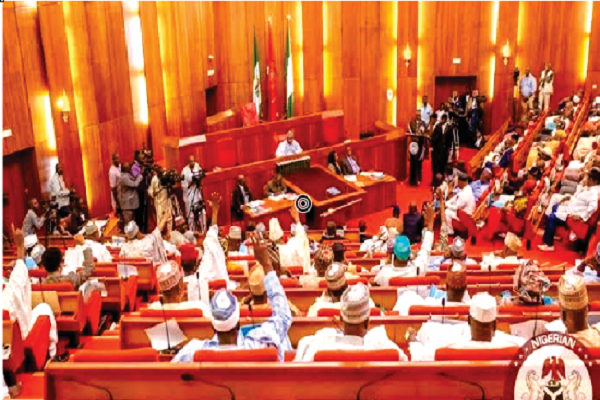
The Senate yesterday took far-reaching decisions on the nation’s worsening security situation, ordering security agencies to track down perpetrators of the latest killings in Benue State while approving a ₦50 million support package for the families of security personnel and teachers who died during the successful rescue of abducted schoolchildren in Oyo State.
The upper legislative chamber strongly condemned the killings and destruction of communities in Benue South Senatorial District, directing the Inspector-General of Police and other security chiefs to immediately deploy all necessary resources to apprehend those responsible and ensure they face justice.
The resolutions followed an urgent motion sponsored by the Senate Minority Leader, Senator Abba Moro, on the recent attacks on Akpauchi-Ugboju, Otukpo-Nobi and Ondo-Ugboju communities in Otukpo Local Government Area of Benue State.
Presenting the motion, Moro said coordinated attacks over the weekend claimed 18 lives in Akpauchi-Ugboju and Otukpo-Nobi, while a fresh assault on Ondo-Ugboju on July 14 left two more people dead, triggering widespread panic, displacement and a deepening humanitarian crisis.
He warned that the sustained attacks appeared to be a deliberate attempt to wipe out affected communities, cautioning that continued insecurity could lead to a breakdown of law and order and worsen food insecurity as farmers abandon their farmlands.
The Senate adopted all prayers contained in the motion, mandating the Inspector-General of Police to conduct a comprehensive investigation, identify the attackers and prosecute them.
It also urged the National Emergency Management Agency (NEMA) and the Federal Ministry of Humanitarian Affairs and Poverty Alleviation to immediately provide relief materials, including food, medical supplies and shelter, to displaced residents and victims receiving treatment.
In addition, the Senate directed its Committees on Police Affairs, Defence, and National Security and Intelligence to engage security agencies on their operational strategies in Benue South and ensure effective implementation of the resolutions.
Speaking with journalists after the plenary, Moro criticised Benue State Governor Hyacinth Alia over what he described as a poor response to security challenges, alleging that intelligence about the attacks had been available before they occurred but was not acted upon.
He claimed the Benue State Commissioner of Police had received intelligence a week before the attacks and was unable to brief the governor despite repeated efforts.
Expressing frustration over the recurring violence, Moro warned that if government authorities failed to adequately protect the people, affected communities might be compelled to defend themselves.
Meanwhile, the Senate also approved a ₦50 million donation to the families of five Nigerians who lost their lives during the operation that rescued schoolchildren abducted in Oyo State after 56 days in captivity.
The resolution followed a proposal by Senate President Godswill Akpabio, who said the donation was in recognition of the sacrifices made by the deceased security personnel and teachers.
Under the arrangement, each of the five bereaved families will receive ₦10 million.
Akpabio recalled that the Senate had earlier commended President Bola Tinubu and the nation’s security agencies for the successful rescue operation and praised the Nigerian Army, the Department of State Services, the Nigeria Police Force, the Ministry of Defence and the President for their roles.
He identified the fallen security personnel as Lieutenant F. A. Isaac, Private Silas Musa and Sergeant Abena John Jerome, while the two teachers who died in captivity were named as Deacon John Olaleye and Michael Oyedokun.
The Senate President directed the leadership of the upper chamber to present the cheques to the affected families, expressing hope that the financial support would provide some relief and underscore the Senate’s appreciation for the sacrifices of the deceased.

By David Torough, Abuja
The Federal High Court in Abuja yesterday ordered the final forfeiture of 48 properties linked to former Attorney-General of the Federation and Minister of Justice, Abubakar Malami (SAN), to the Federal Government, ruling that the Economic and Financial Crimes Commission (EFCC) established that the assets were reasonably suspected to have been acquired with proceeds of unlawful activities.
Justice Joyce Abdulmalik held that Malami, members of his family and companies linked to the properties failed to dislodge the evidential burden placed on them to show that the assets were acquired from legitimate sources of income.
The court dismissed several applications, motions on notice and applications to show cause filed by the respondents, describing them as “Wanting in merit.”
In her judgment, Justice Abdulmalik stressed that the issue before the court was not ownership of the properties but the legitimacy of the funds used to acquire them.
“The issue before the court is not who owns the properties, but how legitimate are the funds used to acquire the properties,” the judge held, adding that the respondents “failed to dislodge the reasonable suspicion that the properties were acquired by unlawful activities.”
Relying on Section 17 of the Advance Fee Fraud and Other Fraud Related Offences Act, the court granted the EFCC’s application for final forfeiture.
Among the forfeited assets are Rayhaan University in Kebbi State, including its permanent and temporary campuses and the Vice Chancellor’s residence; Rayhaan Radio; several hotels in Abuja and Kano; commercial plazas; luxury residential buildings; factories; filling stations; warehouses; agricultural land; and other high-value properties spread across the Federal Capital Territory, Kano and Kebbi States.
The court, however, discharged the interim forfeiture order in respect of nine properties located in Kebbi and Kaduna States after holding that the EFCC failed to establish sufficient evidence linking them to unlawful activities.
The anti-graft agency had in January instituted non-conviction-based civil forfeiture proceedings seeking the permanent forfeiture of 57 properties valued at about N212.8 billion, alleging they were proceeds of unlawful activities linked to the former AGF.
Justice Emeka Nwite had earlier granted an interim forfeiture order and directed the EFCC to publish the order in national newspapers to allow interested parties to show cause why the assets should not be permanently forfeited.
Following the publication, Malami, his wife Nana Hadiza Malami, his son Abdulaziz Abubakar Malami and several companies challenged the interim order, insisting that the properties were lawfully acquired. They argued that the EFCC failed to establish any nexus between the assets and criminal activities, relying instead on speculation without identifying any predicate offence.
At the hearing, the EFCC maintained that investigations showed the properties were acquired with proceeds of unlawful activities and held through family members and companies acting as fronts for Malami. The commission argued that under the law governing civil forfeiture proceedings, it was only required to establish reasonable suspicion rather than prove criminal guilt beyond reasonable doubt.
In affirming the commission’s position, Justice Abdulmalik held that in non-conviction-based forfeiture proceedings, respondents must provide credible evidence showing the lawful sources of funds used to acquire disputed assets, noting that mere claims of ownership were insufficient.
The judgment followed the adoption of final written addresses by the parties in May and brings to a close months of legal contest over one of the country’s largest civil asset forfeiture cases.



Aliko Dangote: Africa’s Industrialist-in-chief
ShareBy Wale Osofisan Aliko Dangote’s rise from a trader from Kano to the builder of some of Africa’s most important...

When a Toothache Turns Fatal: Nigeria’s Silent Antimicrobial Resistance Crisis
ShareBy Racheal Abujah Mrs Amara Obi, a 28-year-old trader at Wuse Market in the FCT, believed that she only had...


World Cup: We Were Not at Our Best – Mbappe
ShareKylian Mpappe said he and his France teammates did not perform well to progress to the 2026 FIFA World Cup...


Police Launch Manhunt as Bandits Abduct Six during NECO Exam
ShareThe Police Command in Kogi has launched a manhunt for gunmen who abducted six persons during the ongoing NECO examination...


Trust NAF, not Rumours, Air Force Spokesman Tells Nigerians
ShareThe Nigerian Air Force (NAF) has urged Nigerians to trust its official communications, saying every statement issued by the service...

FG, States, LGCs Share N2.551trn June Revenue
ShareBy Tony Obiechina, Abuja The Federation Account Allocation Committee (FAAC), at its July 2026 meeting chaired by the Minister of...


Senate Orders Security Agencies to Hunt Benue Killers
ShareBy Eze Okechukwu, Abuja The Senate yesterday took far-reaching decisions on the nation’s worsening security situation, ordering security agencies to...

Court Orders Final Forfeiture of 48 Malami-Linked Assets to FG
ShareBy David Torough, Abuja The Federal High Court in Abuja yesterday ordered the final forfeiture of 48 properties linked to...


Dangote Cement Commissions Multi-million Naira Hospital in Kogi
ShareBy David Torough, Abuja Nigeria’s healthcare sector received a major boost on Friday as Dangote Cement Plc commissioned a multimillion...
Police Arrest Four Suspects over Alleged Armed Robbery, Cultism in Delta
ShareThe Police in Delta has arrested four suspects over alleged armed robbery and cultism in separate operations across the state....