
NEWS
Police Arrest Four Suspects over Alleged Armed Robbery, Cultism in Delta

The Police in Delta has arrested four suspects over alleged armed robbery and cultism in separate operations across the state.
This is contained in a statement by the Command’s Public Relations Officer, Bright Edafe, on Tuesday in Asaba.
Edafe said that on July 14, a joint team of Police operatives and members of the Civilian Anti-Cult group mobilised and trailed a suspected armed robbery gang on the Asaba Benin Expressway.
He said that the suspects, Stephen Danladi, 29 and Jude Christian, 26, were subsequently arrested.
“A search of the suspects led to the recovery of two locally made pistols.
“Preliminary interrogation yielded further intelligence, which led operatives to Issele-Asagba and Ogwashi-Uku, where one Jerry Egenus of Atuma-Iga, Oshimili North Local Government Area was arrested for alleged gun running and receiving stolen property,” Edafe said.
He said that investigations revealed that the suspects were allegedly linked to a series of armed robbery incidents in Okpanam, Asaba and adjoining areas.
“The suspects and recovered exhibits are in custody and investigation is ongoing,” the command’s spokesman said
Edafe also said that in a sustained fight against cultism, operatives of Ogwashi-Uku Police Division responded to a distress call at the Polytechnic area, where a suspected cult member, 24, was arrested.
The statement said the “non-student suspected to be a member of the Eiye confraternity was arrested on July 10.
“Recovered from the suspect were one locally made pistol, three live cartridges, one expended cartridge and one dagger knife.
“The suspect and the recovered exhibits are in police custody, while investigation is ongoing,” he said.
The spokesperson quoted the Commissioner of Police (CP) Yemi Oyeniyi as reiterating the command’s commitment to sustaining intelligence-led and proactive policing aimed at dismantling criminal networks, combating cultism and proliferation of illegal firearms in the state.
Oyeniyi urged residents of the state to continue supporting the Police with timely, credible and actionable information.
The CP assured that the command would do all in its efforts to safeguard lives and property throughout the state.

By Monday Priscillia Ogheneyole
Corruption remains one of the greatest challenges facing Nigeria today. Despite numerous efforts by governments, anti-corruption agencies, and civil society organizations, the problem continues to grow and affect every aspect of national life.
Corruption refers to the abuse of entrusted power for personal gain. It includes bribery, embezzlement, fraud, favoritism, nepotism, and the misuse of public resources. The rising rate of corruption in Nigeria has become a serious concern because it hinders development, weakens institutions, and reduces public trust in government.Nigeria is richly blessed with natural resources, especially crude oil, gas, and vast agricultural land.
However, the benefits of these resources have not been fully enjoyed by the majority of citizens. One major reason for this situation is corruption. Funds meant for development projects are often diverted into private pockets. As a result, many communities lack good roads, quality healthcare facilities, clean water, and functional schools. Corruption has prevented the country from achieving its full potential despite its enormous wealth.One of the major causes of corruption in Nigeria is poverty. Many citizens struggle to meet their daily needs and may become vulnerable to corrupt practices in order to survive. Low wages and poor working conditions in some sectors also encourage workers to seek illegal means of supplementing their income. In addition, unemployment, especially among young people, has created an environment where some individuals engage in fraudulent activities and other forms of corruption.
Another factor contributing to the rise of corruption is weak institutions. Although Nigeria has agencies such as the Economic and Financial Crimes Commission (EFCC) and the Independent Corrupt Practices Commission (ICPC), challenges such as political interference, inadequate funding, and slow judicial processes often limit their effectiveness. When corrupt individuals are not punished promptly, others are encouraged to continue engaging in similar activities without fear of consequences.
Political corruption is another significant problem in Nigeria. During elections, vote buying, election rigging, and misuse of public funds are common allegations. Some politicians see public office as an opportunity for personal enrichment rather than service to the people. Public resources that should be used for infrastructure, healthcare, and education are sometimes mismanaged or stolen. This behavior undermines democracy and weakens public confidence in leadership.
The effects of corruption on the Nigerian economy are devastating. Corruption discourages both local and foreign investors because it creates uncertainty and increases the cost of doing business. Investors are often reluctant to operate in environments where bribery and lack of transparency are widespread. Consequently, economic growth slows down, job opportunities become limited, and poverty levels increase. The nation’s resources are wasted, and development projects are either abandoned or poorly executed.
Corruption also affects the education sector. Funds allocated for schools, teaching materials, and infrastructure may be misappropriated, resulting in inadequate learning facilities. Students sometimes encounter corrupt practices such as examination malpractice and bribery. These actions compromise the quality of education and produce graduates who may lack the skills and knowledge required for national development.
The healthcare sector is equally affected by corruption. Money intended for hospitals, medical equipment, and essential drugs may be diverted for personal gain. This leads to poorly equipped health facilities, shortages of medicines, and inadequate healthcare services. Many citizens suffer because they cannot access quality medical care, while preventable diseases continue to claim lives.
Furthermore, corruption contributes to insecurity in Nigeria. When funds meant for security agencies are mismanaged, the ability of these agencies to combat crime and terrorism is weakened. Corruption within law enforcement institutions can also allow criminals to escape justice. This creates an environment where crime flourishes and citizens feel unsafe.
To address the rising rate of corruption, several measures must be taken. First, anti-corruption agencies should be strengthened and allowed to operate independently without political interference. The judicial system should ensure that corruption cases are handled swiftly and fairly. Those found guilty should face appropriate punishment regardless of their social or political status.
Second, transparency and accountability should be promoted in government activities. Public officials should be required to declare their assets, and government spending should be closely monitored. The use of technology in public administration can help reduce opportunities for corruption by minimizing human interference in financial transactions.
Third, citizens must play an active role in combating corruption. People should refuse to offer or accept bribes and should report corrupt activities whenever they occur. Educational institutions, religious organizations, and the media should continue to promote values such as honesty, integrity, and accountability.
In conclusion, the rising rate of corruption in Nigeria poses a serious threat to national development, economic growth, and social progress. It affects every sector of society and deprives citizens of the benefits of the country’s resources. Combating corruption requires the collective efforts of government, institutions, and citizens. With strong leadership, effective laws, transparent governance, and a commitment to ethical values, Nigeria can reduce corruption and build a more prosperous and equitable society for future generations.

By Chidi Anselm Odinkalu
Three score and three years ago, a defining dispute erupted in the old Western Region of Nigeria over the scope and reach of constitutional conventions in determining or terminating the tenure of high-level political leadership.
The Judicial Committee of the Privy Council, which ultimately had to pronounce on the matter, described conventions in that case as “a body of understanding which no writer can formulate. ” The aftermath of that decision took the country to the brink of ruin.This year, the Nigerian Bar Association (NBA) confronts its own moment of truth concerning how far conventions initially designed to accommodate national diversity in its leadership processes, can be converted into ethno-tribal vetoes by entities that in fact are not part of its institutional or constitutional organs.
The consequences for the association could be far reaching.For context, the NBA elects a new set of leaders every even number year. It has for long been the assumption that “the NBA is too important to be left alone.” Elections into its leadership organs unfold as a political market-place for a complex competition of interests, many of them external to the legal profession. This year, the biggest issue is arguably the role of ethno-tribal caucuses at the Nigerian Bar.
The road to this point was paved by a combination of ordinarily unrelated events. On 14 August 1991, Taslim Elias died. He was Nigeria’s attorney-general at independence, at a time when the position was deservedly prefixed with the honorific “honourable” (hence HAGF), later becoming Chief Justice of Nigeria. At his death, he was a judge of the International Court of Justice (ICJ). To replace Elias for the remainder of his ICJ tenure, Nigeria nominated Bola Ajibola, a Senior Advocate of Nigeria (SAN), who was then serving as HAGF.
That step opened up a vacancy for the designation of a new HAGF. To fill that vacancy, military ruler, Ibrahim Babangida, nominated Clement Akpamgbo (SAN). At the time, Akpamgbo was in the middle of his tenure as the 15th president of the NBA. To succeed Akpamgbo as president and in keeping with its constitution, the NBA’s first Vice-President, Priscilla Kuye, took over as president. She was the first woman in that position.
The next cycle of elections into the leadership of the association were scheduled to occur the following year in 1992. In August of that year, members duly convened in Port Harcourt, capital of Rivers State, for the elections, but the conference broke up in extraordinary fracas. Five years later, as the embers of military rule began to fade, the association was resuscitated.
In the aftermath of that crisis and at the turn of the Millennium, the NBA introduced two reforms into its leadership process, one explicit and the other initially by convention. First, it abolished universal suffrage among its members, replacing it with a delegate system of leadership selection. In 2015, however, universal suffrage returned. Second, it introduced a convention of rotating the most important leadership positions in the association among the founding three regions of the country – Eastern, Northern, and Western regions.
After 15 years, the NBA wrote this convention into its constitution by way of an amendment, which mandated that “the Association shall for the purpose of elections of National Officers be divided into three geographical zones namely – Northern zone, Eastern zone and Western zone.” The positions of
The President, three Vice-Presidents, and General-Secretary rotate among the three zones. In particular, the NBA constitution prescribes that eligibility to run for any of the rotated offices shall be determined with reference to natal origins, not establishment.
Far from stopping here, the NBA constitution goes further to prescribe that “where a position is zoned to any particular geographical zone, the position shall be rotated and held in turn by the different groups and/or sections in the geographical zone.” Remarkably, it does not say who can have a say in deploying these arrangements concerning zoning and micro-zoning.
The result has been a bazaar in nativist interest groups of lawyers in Nigeria, such as the Arewa Lawyers Forum (ALF); Eastern Bar Forum (EBF); Egbe Amofin Oodua (Egbe); Middle-Belt Lawyers Forum (MBLF); and Mid-West Bar Forum MWLF). They are not organs of the NBA in any form. Operating as ethno-tribal caucuses, these interest groups have sought to mediate the jostling for positions in the NBA. Until now, their roles have been informal, operating at best at the level of unwritten conventions.
In 2018, when the presidency of the NBA rotated to the east, the EBF endorsed Arthur Obi-Okafor (SAN) as its preferred candidate. In the election, however, Paul Usoro, who also comes from the same region, was declared winner.
In 2026, the presidency of the NBA rotates to the west. The Egbe (an association of lawyers of Yoruba descent) and the MWBF are both active in this region. In the current election cycle, the MWBF decided not to run any candidate for the presidency, ceding it to lawyers native to the six states of south-west Nigeria.
The Egbe asserts primacy in the role of mediating the ambitions of those from that region desiring to run for the presidency of the association. This year, it put forward Muyiwa Akinboro (SAN) as its candidate. However, Yemi Akangbe (SAN) and Oyinkan Badejo-Okusanya (SAN), who are both from the same region, have declined to step down their ambitions. Egbe argues that it micro-zoned the position to the part of south-west from which Mr Akinboro comes and asked the NBA to elbow the other candidates out of the contest so that he can emerge effectively unopposed.
In reality, this micro-zoning that the Egbe speaks of had been in existence since 2019. But in the 2020 contest for a president of the NBA from the western region, both Dele Adesina (SAN) and Tunde Ajibade (SAN), who contested the position come from outside that micro-zone. In 2008, Rotimi Akeredolu (SAN) emerged unopposed as the 24th president of the NBA by persuading other aspirants informally to stand down for him. The ethno-tribal trump asserted by the Egbe this year would be unprecedented.
In the face of predictable resistance, the association sued at the High Court in Ibadan, seeking to get its way. The court issued rapid fire interim injunctions against the election process of the NBA. The NBA appealed. On 11 June, the Attorney-General of the Federation, who is a named defendant in the suits in Ibadan, claiming ostensible permission from the Court of Appeal, called a meeting of the disputing parties with all living former presidents of the NBA.
The meeting constituted a three-person subcommittee headed by Wole Olanipekun (SAN), the 20th president of the NBA. It included Lanke Odogiyan and Paul Usoro (SAN), respectively the 22nd and 29th presidents of the association, but there is a dispute as to what it asked the sub-committee to do.
An unsigned majority report by Olanipekun and Odogiyan claims that it was constituted to inquire into “the causes of the present conflicts within the NBA” and to make recommendations on the way forward to the HAGF. A separate report by Paul Usoro disputes this and says the sub-committee was confined to helping the HAGF to fulfill his commitment to the Court of Appeal, to broker an amicable settlement among the parties.
The Olanipekun-Odogiyan report makes far-reaching recommendations. Among them, it asks for the postponement of the elections (to August) and mandates the incorporation of the National Identification Number (NIN) as a voter identifier, claiming – rather incredulously – that the enrollment number, a unique identifier assigned by the Supreme Court to each lawyer in Nigeria “is not a security number.” In particular, they want an end to universal suffrage in the NBA and insist that “The micro-zoning done by the Egbe in line with the NBA Constitution should be allowed to stand.” Paul Usoro largely disagreed.
The main recommendations of the report are mutually irreconcilable.
If the Olanipekun-Odogiyan report had investigated the matter, it would have learnt that the bureaucratic and data integrations that should precede NIN integration into the unique identification system for all lawyers in Nigeria can only be implemented by the Supreme Court in collaboration with the National Identity Management Commission (NIMC). This cannot be accomplished before August “or soon thereafter.” By prescribing impossible conditions, that report effectively sought to create conditions for the tenure of the current leadership to lapse, which would enable the government to end the idea of an independent bar, just as the military did in 1992.
Rather than take his proposals to the parties or to the Court of Appeal, from which he claimed his mandate, the HAGF mostly amplified the Olanipekun-Odogiyan report, endorsing nearly all of its recommendations in an error-strewn document ostentatiously headed as “Directions and Outcomes.” But even he could not bring himself to accept Egbe’s insistence on imposing its ethno-tribal preference on the NBA in the current cycle.
On 8 July, the Court of Appeal declined his thinly disguised effort to end-run the cases before the court. Judgment by the court is awaited.
Pending that, the NBA’s leadership election is likely to proceed as scheduled on 18 July under court protection. Two offices will be returned unopposed, while eight will be contested. When the association last voted in 2024, there were 72,071 eligible voters. On 18 July, there were 82,213 eligible voters, (an increase of 14.07 per cent). It is the largest in the history of the association.
Chidi Anselm Odinkalu, a lawyer, teaches at the Fletcher School of Law and Diplomacy and can be reached through chidi.odinkalu@tufts.edu.
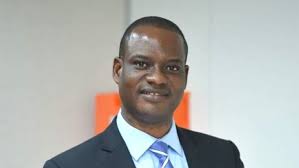
By Tony Obiechina, Abuja
The Federal Government on Tuesday inaugurated a Ministerial Advisory Committee to provide independent, evidence-based reviews of its economic reforms, as it seeks to convert recent policy changes into tangible benefits for Nigerians.
Speaking at the inauguration of the committee at the Federal Ministry of Finance in Abuja, the Minister of Finance and Coordinating Minister of the Economy, Taiwo Oyedele, said the committee would offer external, data-driven advice to strengthen economic policymaking and ensure that reforms translate into improved living standards.
According to the minister, the committee marks a shift towards what he described as a “public-policy-private partnership” aimed at improving the quality of government decisions.
“Today is not simply about constituting another committee. It is about institutionalising a new way of thinking, a new way of solving problems, a new way of connecting ideas with implementation and strengthening the quality of economic decision-making in service of the Nigerian people,” Oyedele said.
He said the administration of President Bola Tinubu had undertaken some of the country’s most difficult economic reforms over the past three years, including the removal of petrol subsidies, exchange rate unification and comprehensive tax reforms, noting that the next phase was ensuring that Nigerians experienced their benefits.
“We want to move from reform to results,” he said.
The minister acknowledged that the reforms had imposed immediate costs on households, businesses and communities, but maintained that they were necessary because “sustainable development cannot be built on fiscal illusion.”
He added that the effectiveness of the reforms would ultimately be judged not by the number of policies introduced but by their impact on the economy and citizens.
“The true measure of reform is not the number of policies announced or macroeconomic indicators cited. It is the number of jobs created, inflation declining, the naira stabilising and businesses investing with confidence. It is about the number of lives improved. That is why this committee has been established,” he said.
Oyedele said the committee would not exercise executive authority or duplicate the work of existing government institutions but would instead provide independent, constructive advice capable of strengthening government decisions.
He urged members to examine the second and third-order effects of government policies, identify emerging risks before they become crises, incorporate international best practices into policymaking and provide feedback on how reforms were affecting businesses and communities.
“The natural instinct in government is often to act quickly, to announce, to declare progress and to move to the next initiative. But quick actions without rigorous analysis frequently create new problems while solving old ones,” the minister said.
He said the committee’s work would be anchored on four pillars comprising economic policy advisory, public financial management, economic coordination and translating reforms into measurable outcomes.
On economic policy, Oyedele said the government required data-driven advice to achieve its development priorities of job creation, stronger economic growth, improved productivity and higher revenue generation.
“The government’s aspiration remains bold, achieving seven per cent annual real GDP growth and building a $1tn economy by 2030. This requires thinking differently, questioning assumptions, challenging long-held theories and developing a strategy that stretches us while remaining deeply grounded in economic reality,” he said.
He added that the committee would also help improve fiscal governance by advising on revenue mobilisation, expenditure quality, responsible borrowing and transparent financial reporting.
The minister stressed that economic reforms could only succeed through effective coordination across government institutions, collaboration with state governments and stronger partnerships with the private sector.
He also urged members to prioritise practical solutions over theoretical recommendations.
“A fiscal reform that looks flawless on paper but fails to improve conditions for Nigerian businesses is not reform; it is disguised bureaucracy,” he said.
Charging members to be bold, Oyedele said they should challenge existing assumptions rather than merely endorse government positions.
“We do not need this committee to validate what we have already decided. We need you to challenge our assumptions, point out the trade-offs we might be papering over and tell us the truth we may not want to hear. Healthy, fact-based disagreement is not a weakness; it is an advantage,” he said.
He further urged the committee to simplify complex economic issues into practical recommendations and remain connected to the experiences of businesses and ordinary Nigerians.
“A young entrepreneur deterred by red tape or a factory manager struggling for a permit, they are not abstractions; they are the living metrics of whether our policies succeed or fail,” he added.
Oyedele assured members that their recommendations would directly influence ministerial decisions and the advice presented to the President.
“I promise you that your counsel will be heard. Your advice will not languish in forgotten files. It will actively inform ministerial decisions and the guidance I provide to the President,” he said.
He also called on the organised private sector to play a greater role in driving economic growth, saying the government alone could not build the Nigeria citizens desired.
“The government’s role is to clear the path by creating predictable policies, macroeconomic stability and a functioning rule of law. The rest depends on your investment, your hiring and your risk-taking,” he said.
Responding on behalf of the committee, its Chairman and Managing Director of Sterling Bank, Abubakar Suleiman, assured the minister that members would focus on providing practical, implementable recommendations rather than theoretical reports.
“We promise you that’s not what we’ll give you,” Suleiman said, referring to lengthy advisory documents.
He said the committee understood that its responsibility was to identify new ideas and practical solutions that government officials, occupied with day-to-day administration, might not have sufficient time to explore.
“Our job is to free you to keep running this ministry and keep coordinating this economy while we take time off to think about things that, if you were not on this job, you would have been able to do yourself,” he said.
Suleiman pledged that the committee would avoid repeating advice already available within government and instead focus on practical, executable recommendations capable of delivering quick results.
He also said members would serve as a bridge between government and citizens by conveying genuine feedback from businesses, farmers and communities on the impact of economic policies.
“We will try to listen and hear what people are really saying, where Nigerians are really feeling the pain, which of the policies is really working, and then we’ll bring that back to you in an environment that you can work with,” he said.
The Permanent Secretary of the Federal Ministry of Finance, Raymond Omachi, said the committee would serve as a strategic platform for evidence-based economic policymaking.
He said its membership comprised economists, public finance experts, governance professionals, development practitioners and private sector representatives who would provide strategic advice on fiscal reforms, government efficiency, stakeholder engagement and economic coordination.
According to him, the committee’s work would support efforts to strengthen fiscal sustainability, boost public confidence and advance Nigeria’s economic transformation agenda.



Police Arrest Four Suspects over Alleged Armed Robbery, Cultism in Delta
ShareThe Police in Delta has arrested four suspects over alleged armed robbery and cultism in separate operations across the state....

DHQ Engages Military Veterans, Reaffirms Commitment to Welfare, Pension Reforms
ShareBy David Torough, Abuja The Defence Headquarters (DHQ) has held a one-day strategic retreat with the leadership of various military...

2027: We’ll Ensure Benue Returns to its Past Glory – Akume
ShareBy David Torough, Abuja As the 2027 general elections draw nearer, the Secretary to the Government of the Federation (SGF),...

Nigerian Army at 163: Legacy of Sacrifice, Service and Transformation
ShareBy Sumaila Ogbaje When officers, soldiers and defence stakeholders gathered in Port Harcourt for the Nigerian Army Day Celebration (NADCEL)...


The Battle before the 2027 Ballots
ShareBy Dakuku Peterside By the time Nigerians file into polling units in 2027, the most consequential battle for the nation’s...

The Rising Rate of Corruption in Nigeria
ShareBy Monday Priscillia Ogheneyole Corruption remains one of the greatest challenges facing Nigeria today. Despite numerous efforts by governments, anti-corruption...

#NBADecides2026: What Future for an Independent Bar?
ShareBy Chidi Anselm Odinkalu Three score and three years ago, a defining dispute erupted in the old Western Region of...

FG Reviews Economic Reforms, Unveils Advisory Committee
Share By Tony Obiechina, Abuja The Federal Government on Tuesday inaugurated a Ministerial Advisory Committee to provide independent, evidence-based reviews...

Suspected Herders Invade Benue Community Again, kill Youth Leader, Injure Scores
ShareBy Attah Ede, Makurdi Fresh violence erupted in Otukpo Local Government Area of Benue State yesterday as gunmen suspected to...

Reps Rescind State Police Bill, Pass Revised Proposal for Second Reading
ShareBy Ubong Ukpong, Abuja The House of Representatives on Tuesday reset the legislative process for the establishment of state police...