
NEWS
#NBADecides2026: What Future for an Independent Bar?


By Chidi Anselm Odinkalu
Three score and three years ago, a defining dispute erupted in the old Western Region of Nigeria over the scope and reach of constitutional conventions in determining or terminating the tenure of high-level political leadership.
The Judicial Committee of the Privy Council, which ultimately had to pronounce on the matter, described conventions in that case as “a body of understanding which no writer can formulate. ” The aftermath of that decision took the country to the brink of ruin.This year, the Nigerian Bar Association (NBA) confronts its own moment of truth concerning how far conventions initially designed to accommodate national diversity in its leadership processes, can be converted into ethno-tribal vetoes by entities that in fact are not part of its institutional or constitutional organs.
The consequences for the association could be far reaching.For context, the NBA elects a new set of leaders every even number year. It has for long been the assumption that “the NBA is too important to be left alone.” Elections into its leadership organs unfold as a political market-place for a complex competition of interests, many of them external to the legal profession. This year, the biggest issue is arguably the role of ethno-tribal caucuses at the Nigerian Bar.
The road to this point was paved by a combination of ordinarily unrelated events. On 14 August 1991, Taslim Elias died. He was Nigeria’s attorney-general at independence, at a time when the position was deservedly prefixed with the honorific “honourable” (hence HAGF), later becoming Chief Justice of Nigeria. At his death, he was a judge of the International Court of Justice (ICJ). To replace Elias for the remainder of his ICJ tenure, Nigeria nominated Bola Ajibola, a Senior Advocate of Nigeria (SAN), who was then serving as HAGF.
That step opened up a vacancy for the designation of a new HAGF. To fill that vacancy, military ruler, Ibrahim Babangida, nominated Clement Akpamgbo (SAN). At the time, Akpamgbo was in the middle of his tenure as the 15th president of the NBA. To succeed Akpamgbo as president and in keeping with its constitution, the NBA’s first Vice-President, Priscilla Kuye, took over as president. She was the first woman in that position.
The next cycle of elections into the leadership of the association were scheduled to occur the following year in 1992. In August of that year, members duly convened in Port Harcourt, capital of Rivers State, for the elections, but the conference broke up in extraordinary fracas. Five years later, as the embers of military rule began to fade, the association was resuscitated.
In the aftermath of that crisis and at the turn of the Millennium, the NBA introduced two reforms into its leadership process, one explicit and the other initially by convention. First, it abolished universal suffrage among its members, replacing it with a delegate system of leadership selection. In 2015, however, universal suffrage returned. Second, it introduced a convention of rotating the most important leadership positions in the association among the founding three regions of the country – Eastern, Northern, and Western regions.
After 15 years, the NBA wrote this convention into its constitution by way of an amendment, which mandated that “the Association shall for the purpose of elections of National Officers be divided into three geographical zones namely – Northern zone, Eastern zone and Western zone.” The positions of
The President, three Vice-Presidents, and General-Secretary rotate among the three zones. In particular, the NBA constitution prescribes that eligibility to run for any of the rotated offices shall be determined with reference to natal origins, not establishment.
Far from stopping here, the NBA constitution goes further to prescribe that “where a position is zoned to any particular geographical zone, the position shall be rotated and held in turn by the different groups and/or sections in the geographical zone.” Remarkably, it does not say who can have a say in deploying these arrangements concerning zoning and micro-zoning.
The result has been a bazaar in nativist interest groups of lawyers in Nigeria, such as the Arewa Lawyers Forum (ALF); Eastern Bar Forum (EBF); Egbe Amofin Oodua (Egbe); Middle-Belt Lawyers Forum (MBLF); and Mid-West Bar Forum MWLF). They are not organs of the NBA in any form. Operating as ethno-tribal caucuses, these interest groups have sought to mediate the jostling for positions in the NBA. Until now, their roles have been informal, operating at best at the level of unwritten conventions.
In 2018, when the presidency of the NBA rotated to the east, the EBF endorsed Arthur Obi-Okafor (SAN) as its preferred candidate. In the election, however, Paul Usoro, who also comes from the same region, was declared winner.
In 2026, the presidency of the NBA rotates to the west. The Egbe (an association of lawyers of Yoruba descent) and the MWBF are both active in this region. In the current election cycle, the MWBF decided not to run any candidate for the presidency, ceding it to lawyers native to the six states of south-west Nigeria.
The Egbe asserts primacy in the role of mediating the ambitions of those from that region desiring to run for the presidency of the association. This year, it put forward Muyiwa Akinboro (SAN) as its candidate. However, Yemi Akangbe (SAN) and Oyinkan Badejo-Okusanya (SAN), who are both from the same region, have declined to step down their ambitions. Egbe argues that it micro-zoned the position to the part of south-west from which Mr Akinboro comes and asked the NBA to elbow the other candidates out of the contest so that he can emerge effectively unopposed.
In reality, this micro-zoning that the Egbe speaks of had been in existence since 2019. But in the 2020 contest for a president of the NBA from the western region, both Dele Adesina (SAN) and Tunde Ajibade (SAN), who contested the position come from outside that micro-zone. In 2008, Rotimi Akeredolu (SAN) emerged unopposed as the 24th president of the NBA by persuading other aspirants informally to stand down for him. The ethno-tribal trump asserted by the Egbe this year would be unprecedented.
In the face of predictable resistance, the association sued at the High Court in Ibadan, seeking to get its way. The court issued rapid fire interim injunctions against the election process of the NBA. The NBA appealed. On 11 June, the Attorney-General of the Federation, who is a named defendant in the suits in Ibadan, claiming ostensible permission from the Court of Appeal, called a meeting of the disputing parties with all living former presidents of the NBA.
The meeting constituted a three-person subcommittee headed by Wole Olanipekun (SAN), the 20th president of the NBA. It included Lanke Odogiyan and Paul Usoro (SAN), respectively the 22nd and 29th presidents of the association, but there is a dispute as to what it asked the sub-committee to do.
An unsigned majority report by Olanipekun and Odogiyan claims that it was constituted to inquire into “the causes of the present conflicts within the NBA” and to make recommendations on the way forward to the HAGF. A separate report by Paul Usoro disputes this and says the sub-committee was confined to helping the HAGF to fulfill his commitment to the Court of Appeal, to broker an amicable settlement among the parties.
The Olanipekun-Odogiyan report makes far-reaching recommendations. Among them, it asks for the postponement of the elections (to August) and mandates the incorporation of the National Identification Number (NIN) as a voter identifier, claiming – rather incredulously – that the enrollment number, a unique identifier assigned by the Supreme Court to each lawyer in Nigeria “is not a security number.” In particular, they want an end to universal suffrage in the NBA and insist that “The micro-zoning done by the Egbe in line with the NBA Constitution should be allowed to stand.” Paul Usoro largely disagreed.
The main recommendations of the report are mutually irreconcilable.
If the Olanipekun-Odogiyan report had investigated the matter, it would have learnt that the bureaucratic and data integrations that should precede NIN integration into the unique identification system for all lawyers in Nigeria can only be implemented by the Supreme Court in collaboration with the National Identity Management Commission (NIMC). This cannot be accomplished before August “or soon thereafter.” By prescribing impossible conditions, that report effectively sought to create conditions for the tenure of the current leadership to lapse, which would enable the government to end the idea of an independent bar, just as the military did in 1992.
Rather than take his proposals to the parties or to the Court of Appeal, from which he claimed his mandate, the HAGF mostly amplified the Olanipekun-Odogiyan report, endorsing nearly all of its recommendations in an error-strewn document ostentatiously headed as “Directions and Outcomes.” But even he could not bring himself to accept Egbe’s insistence on imposing its ethno-tribal preference on the NBA in the current cycle.
On 8 July, the Court of Appeal declined his thinly disguised effort to end-run the cases before the court. Judgment by the court is awaited.
Pending that, the NBA’s leadership election is likely to proceed as scheduled on 18 July under court protection. Two offices will be returned unopposed, while eight will be contested. When the association last voted in 2024, there were 72,071 eligible voters. On 18 July, there were 82,213 eligible voters, (an increase of 14.07 per cent). It is the largest in the history of the association.
Chidi Anselm Odinkalu, a lawyer, teaches at the Fletcher School of Law and Diplomacy and can be reached through chidi.odinkalu@tufts.edu.
The Association of Nigerian Electricity Distributors (ANED) has raised concerns over outstanding electricity debts owed by government Ministries, Departments and Agencies (MDAs).
The Managing Director, Chief Executive Officer of ANED, Sunday Oduntan, said this in an interview with the News Agency of Nigeria on Wednesday in Abuja.
Oduntan said delayed or non-payment by government institutions continued to worsen the financial strain on DisCos.
He urged the Federal Government to treat electricity obligations owed by MDAs as a direct first-line charge on approved budgets to ensure timely payment.
“DisCos need to be empowered to disconnect government agencies that fail to settle their electricity bills and pursue lawful recovery of outstanding debts.
“Access to affordable and long-term financing is critical to the survival, expansion and modernisation of Nigeria’s electricity distribution network,” he said.
Oduntan also called for improved customer service and greater transparency in electricity billing, as well as the expansion of mini-grid and off-grid electricity solutions, particularly in rural and underserved communities.
He recommended stronger accountability mechanisms that would enable electricity consumers and Civil Society Organisations (CSOs) to hold DisCos accountable for service delivery.
He said that a combination of improved metering, stronger revenue collection, affordable financing and greater accountability would be essential to strengthening the financial sustainability of the distribution sector.
He said it would also improve electricity supply across the country.(NAN)
By Tony Obiechina, Abuja
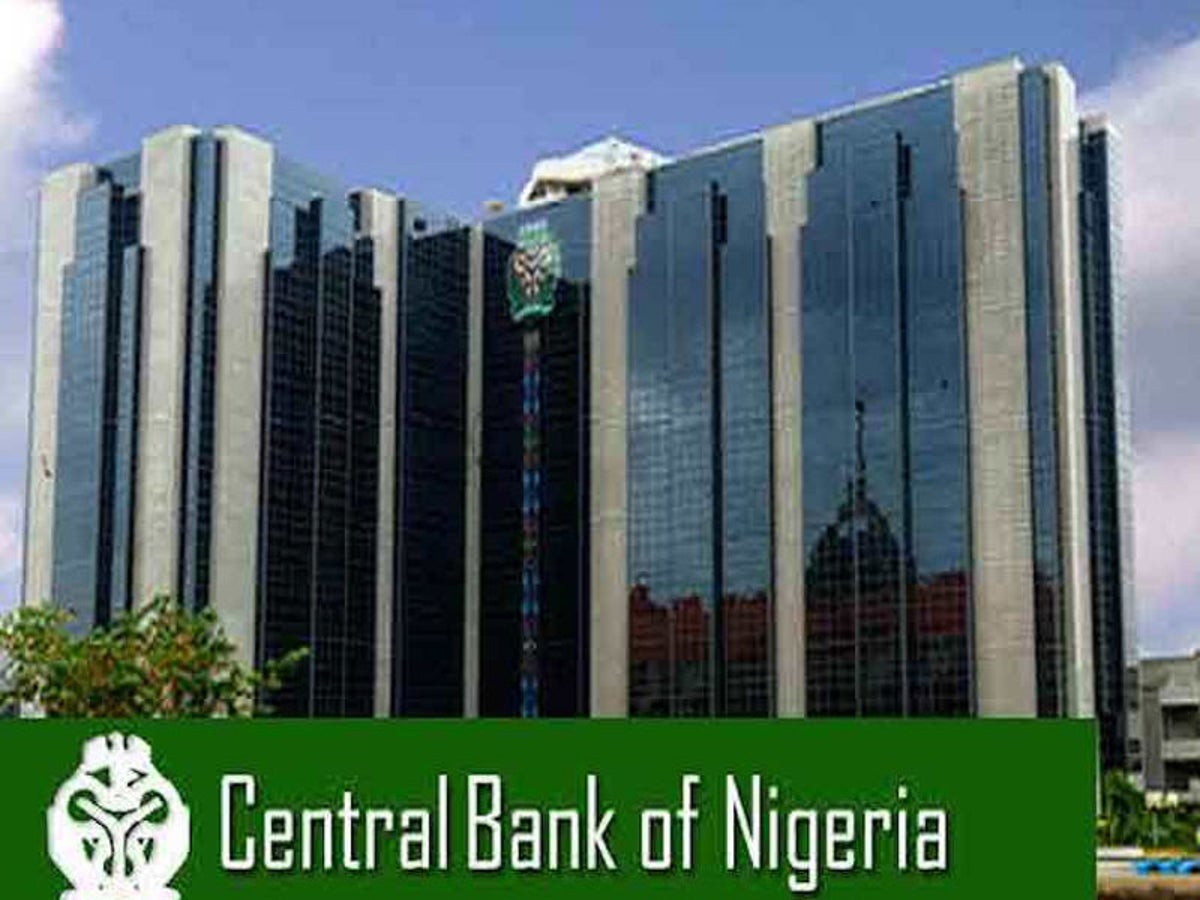
The Central Bank of Nigeria (CBN), on behalf of the Debt Management Office (DMO), has offered N700 billion across the 91-day, 182-day and 364-day Treasury Bills tenors in the second and final Treasury Bills (NTB) auction for August 2026.
The notice of an Invitation to Tender for Nigerian Treasury Bills (NTB) stated that All Money Market Dealers are required to submit bids through the CBN S4 Web Interface between 8:00 a.
m. and 11:00 a.m. on Wednesday, August 26, 2026.The offer is broken down as N100 billion for the 91-day bill, N100 billion for the 182-day bill, and N500 billion for the 364-day bill, and will be conducted through the Dutch auction, maintaining the CBN’s now-familiar preference for longer-dated paper that has defined its Treasury Bills strategy through much of Q3 2026.
Authorised Money Market Dealers are permitted to submit multiple bids for their own accounts, non-Money Market Dealers or interested members of the public.
Each bid must be in multiples of N1,000, subject to a minimum of N50,001,000, with dealers permitted to submit multiple bids on their own account or on behalf of non-Money Market Dealers and members of the public.
The auction result is expected to be announced on Wednesday, August 26, 2026, while allotment letters will be issued on Thursday, August 27, 2026.
Payment for successful bids is due to the CBN not later than 11:00 a.m. on the same day. The apex bank reserves the right to reject any bid or vary the amount on offer in line with prevailing market conditions.
This is the second scheduled Treasury Bills auction of August 2026, following a month that has already seen one cancellation and one unusually eventful sale.
The CBN had initially planned its first August auction for Thursday, August 6, offering N700 billion across the same three tenors, with bids due August 5.
However, that auction was abruptly withdrawn just days after the apex bank absorbed a combined N4.69 trillion from the banking system through back-to-back OMO auctions on August 3 and 4, prompting concerns that a fresh N700 billion Treasury Bills sale so soon after could over-tighten system liquidity.
The CBN returned to the primary market on August 12, offering N700 billion once again.
That auction drew N4.4 trillion in total subscriptions, well above the offer size, with the 364-day bill alone attracting N4.19 trillion in bids against its N500 billion offer, more than eight times oversubscribed.
Rather than ease the one-year stop rate as it had at the previous two auctions, the CBN raised it by 24 basis points to 17.59% from 17.35%, allotting N1.26 trillion on that tenor alone.
The 91-day and 182-day bills held steady at 16.30% and 16.50% respectively, with N148.57 billion and N47.48 billion allotted.
Combined, the August 12 auction saw the CBN allot approximately N1.456 trillion against its N700 billion offer, meaning that with the August 5/6 auction cancelled outright, August 12 stands as the only completed NTB auction of the month prior to today’s sale.
The August 12 rate hike marked a notable reversal from the trend seen through much of July, when the CBN eased the 364-day stop rate at both the July 15 and July 29 auctions despite similarly overwhelming demand, dropping it to as low as 17.35% by month-end.
From Dan Amasingha, Minna
Ten people have been killed and several others injured in a fatal road crash involving a trailer and a Sienna bus at Badeggi in Katcha Local Government Area of Niger State, further highlighting the growing road safety crisis on the state’s major highways.
The trailer, reportedly travelling from one of the northern states to Lagos, was said to be carrying both goods and passengers when it collided with the Sienna bus travelling in the opposite direction.
Two occupants of the Sienna bus died, while eight people in the trailer were killed.Although the Federal Road Safety Corps (FRSC) had yet to issue an official statement on the latest crash, eyewitnesses attributed the accident to the deplorable condition of the Badeggi-Bida section of the Lambata-Lapai-Bida highway, which they described as increasingly dangerous for motorists.
The incident occurred barely four days after another crash on the Bida-Mokwa section of the same highway claimed nine lives and left eight others critically injured. That accident involved a Mazda car and a commercial bus travelling in opposite directions.
The latest fatalities bring the death toll from the two crashes within days to at least 19, intensifying calls for urgent intervention on the increasingly hazardous highway.
In Bida, the Chairman of Bida Local Government Area, Alhaji Usman Mohammed Monko, organised a mass burial for victims of the latest accident following a funeral prayer at the Abdulrahman Bin Auf Juma’at Mosque. The prayer was led by the Chief Imam, Malam Hassan Taye.
Monko described the deaths as painful and prayed for Allah’s forgiveness for the deceased and strength for their families to bear the loss. He urged motorists, particularly trailer drivers, to exercise maximum caution while using the road.
He also appealed to the Federal Government to rehabilitate or completely reconstruct the affected section of the highway, warning that the road should otherwise be closed to prevent further loss of lives and property.
The crash comes against the backdrop of alarming road safety statistics released by the Niger State Command of the FRSC.
The Sector Commander, Aishat Sa’adu, disclosed that 110 people were killed in 234 road crashes across Niger State between January and July 2026, while 892 others sustained varying degrees of injuries. A total of 1,938 people were involved in the crashes.
Of the 234 crashes recorded during the seven-month period, 62 were fatal and involved 309 vehicles, while 169 were classified as serious and three as minor.
Sa’adu said the state had recorded a significant reduction in fatalities compared with 2025, when 233 crashes resulted in 229 deaths and 1,109 injuries. She attributed the improvement partly to sustained public awareness campaigns, sensitisation of road users and regular patrols by FRSC personnel.
Despite the decline, she said the number of casualties remained a major concern.
The FRSC commander identified wrongful overtaking, overloading, speeding and, particularly, the dangerous practice of loading passengers alongside goods in heavy-duty vehicles as some of the major causes of crashes.
She disclosed that the command had established mobile courts to prosecute heavy-truck drivers involved in mixed loading. According to her, 415 traffic offenders had been prosecuted in 14 mobile court sittings in 2026.
The latest Badeggi crash has therefore renewed concerns over the combined effect of unsafe driving practices, dangerous vehicle loading and deteriorating road infrastructure.
With 110 deaths already recorded in seven months and another 10 fatalities in the latest trailer crash, residents and road users are increasingly demanding stronger enforcement of traffic regulations alongside urgent repairs and reconstruction of critical sections of the state’s major highways.
For communities along the Lambata-Lapai-Bida and Bida-Mokwa corridors, the latest tragedy has once again turned calls for safer roads from a routine appeal into an urgent demand for action.


Electricity Distributors’ Association Decries Outstanding Debts by MDAs
ShareThe Association of Nigerian Electricity Distributors (ANED) has raised concerns over outstanding electricity debts owed by government Ministries, Departments and...
Afreximbank Records 30 Per Cent Rise Net Income for First Half 2026
ShareThe African Export-Import Bank (Afreximbank) and its subsidiaries (the Group) recorded a 30 per cent increase in net income to...


CBN Sells N700bn Treasury Bills in Second August Auction
ShareBy Tony Obiechina, Abuja The Central Bank of Nigeria (CBN), on behalf of the Debt Management Office (DMO), has offered...


Niger FRSC Records 234 Crashes, 110 Deaths in Seven Months
ShareFrom Dan Amasingha, Minna Ten people have been killed and several others injured in a fatal road crash involving a...

Fuel Subsidy War Deepens as Presidency, Atiku Clash Again over Policy
ShareBy David Torough, Abuja The political battle over Nigeria’s petrol subsidy regime has intensified, with the Presidency and former Vice-President...

The Man Behind ‘The Ultimate Commander’: A Birthday Tribute to Ambassador Osita Offor
ShareBy David Torough, Abuja Ambassador Osita Offor, popularly known as “The Ultimate Commander,” is being celebrated today for his vision,...
Peace on Paper, Peril in Practice: Why 2027’s Elections Remain at Risk
ShareBy Dakuku Peterside There is something reassuring about the ritual of political rivals gathering beneath the same roof and signing...

2027: Bawa Urges APC Leaders, Supporters on Unity
ShareBy Tambaya Julius, Abuja The Senior Special Assistant (SSA) to the Nasarawa State Governor on Greater Karu Development Control Agency...
NCS Lilypond Export Command Gets New Acting CAC
ShareThe Nigeria Customs Service (NCS), Lilypond Export Command, has appointed Deputy Comptroller Olusola Salako as its Acting Customs Area Controller...

Oyebanji Reappoints Retired Ekiti Accountant-General
ShareEkiti State Governor, Biodun Oyebanji, on Tuesday approved the appointment of Titilayo Olayinka as the new Accountant General of the...