
NEWS
Niger FRSC Records 234 Crashes, 110 Deaths in Seven Months


From Dan Amasingha, Minna
Ten people have been killed and several others injured in a fatal road crash involving a trailer and a Sienna bus at Badeggi in Katcha Local Government Area of Niger State, further highlighting the growing road safety crisis on the state’s major highways.
The trailer, reportedly travelling from one of the northern states to Lagos, was said to be carrying both goods and passengers when it collided with the Sienna bus travelling in the opposite direction.
Two occupants of the Sienna bus died, while eight people in the trailer were killed.Although the Federal Road Safety Corps (FRSC) had yet to issue an official statement on the latest crash, eyewitnesses attributed the accident to the deplorable condition of the Badeggi-Bida section of the Lambata-Lapai-Bida highway, which they described as increasingly dangerous for motorists.
The incident occurred barely four days after another crash on the Bida-Mokwa section of the same highway claimed nine lives and left eight others critically injured. That accident involved a Mazda car and a commercial bus travelling in opposite directions.
The latest fatalities bring the death toll from the two crashes within days to at least 19, intensifying calls for urgent intervention on the increasingly hazardous highway.
In Bida, the Chairman of Bida Local Government Area, Alhaji Usman Mohammed Monko, organised a mass burial for victims of the latest accident following a funeral prayer at the Abdulrahman Bin Auf Juma’at Mosque. The prayer was led by the Chief Imam, Malam Hassan Taye.
Monko described the deaths as painful and prayed for Allah’s forgiveness for the deceased and strength for their families to bear the loss. He urged motorists, particularly trailer drivers, to exercise maximum caution while using the road.
He also appealed to the Federal Government to rehabilitate or completely reconstruct the affected section of the highway, warning that the road should otherwise be closed to prevent further loss of lives and property.
The crash comes against the backdrop of alarming road safety statistics released by the Niger State Command of the FRSC.
The Sector Commander, Aishat Sa’adu, disclosed that 110 people were killed in 234 road crashes across Niger State between January and July 2026, while 892 others sustained varying degrees of injuries. A total of 1,938 people were involved in the crashes.
Of the 234 crashes recorded during the seven-month period, 62 were fatal and involved 309 vehicles, while 169 were classified as serious and three as minor.
Sa’adu said the state had recorded a significant reduction in fatalities compared with 2025, when 233 crashes resulted in 229 deaths and 1,109 injuries. She attributed the improvement partly to sustained public awareness campaigns, sensitisation of road users and regular patrols by FRSC personnel.
Despite the decline, she said the number of casualties remained a major concern.
The FRSC commander identified wrongful overtaking, overloading, speeding and, particularly, the dangerous practice of loading passengers alongside goods in heavy-duty vehicles as some of the major causes of crashes.
She disclosed that the command had established mobile courts to prosecute heavy-truck drivers involved in mixed loading. According to her, 415 traffic offenders had been prosecuted in 14 mobile court sittings in 2026.
The latest Badeggi crash has therefore renewed concerns over the combined effect of unsafe driving practices, dangerous vehicle loading and deteriorating road infrastructure.
With 110 deaths already recorded in seven months and another 10 fatalities in the latest trailer crash, residents and road users are increasingly demanding stronger enforcement of traffic regulations alongside urgent repairs and reconstruction of critical sections of the state’s major highways.
For communities along the Lambata-Lapai-Bida and Bida-Mokwa corridors, the latest tragedy has once again turned calls for safer roads from a routine appeal into an urgent demand for action.
By David Torough, Abuja
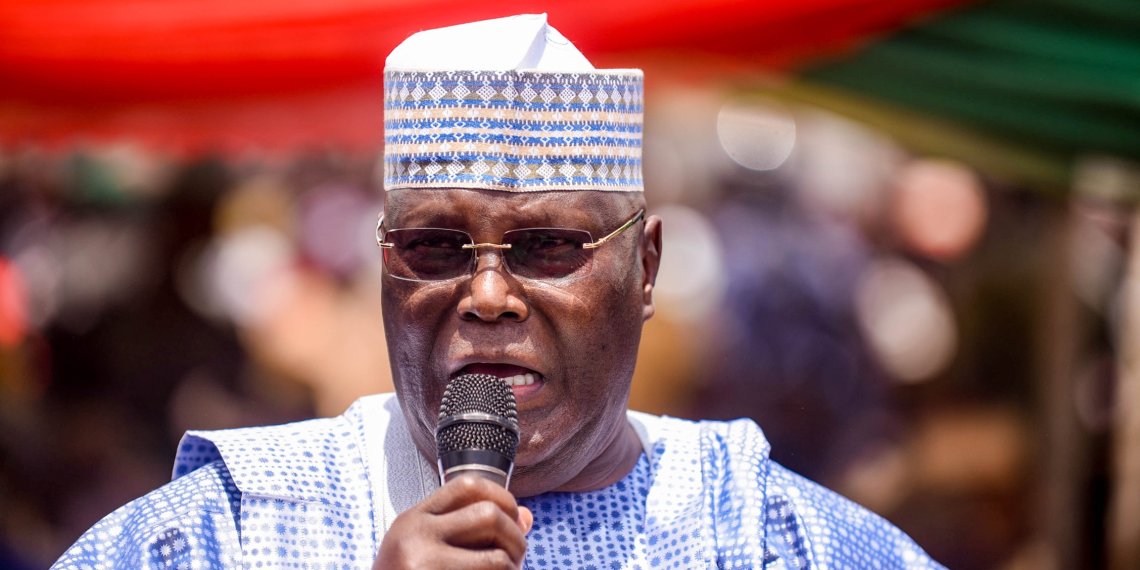
The political battle over Nigeria’s petrol subsidy regime has intensified, with the Presidency and former Vice-President Atiku Abubakar trading accusations over economic policy, accountability and the management of public resources.
The latest confrontation followed conflicting explanations from Atiku and his aides over his proposal to restore petrol subsidy if elected president in 2027.
The Presidency accused the African Democratic Congress presidential candidate of policy inconsistency and playing politics with the economic difficulties confronting Nigerians.In a statement on Wednesday, Special Adviser to President Bola Tinubu on Information and Strategy, Bayo Onanuga, said Atiku’s position had been presented in three different ways within one week.
According to Onanuga, Atiku’s spokesperson, Paul Ibe, initially said the former vice-president would restore petrol subsidy if elected and subsequently phase it out as a temporary intervention to ease pressure on Nigerians and businesses.
A subsequent clarification by another aide, Phrank Shaibu, however, described Ibe’s position as an “unauthorised and misleading characterisation” of Atiku’s policy. Shaibu said the subsidy would instead remain until domestic refining expanded, supply stabilised and competition deepened sufficiently to deliver affordable prices without government support.
Atiku later intervened, insisting that his position had not changed and declaring: “I will restore targeted subsidy and put purchasing power back in the hands of Nigerians.”
The Presidency said the differing explanations amounted to more than semantics, describing them as evidence of a serious policy contradiction.
Onanuga challenged Atiku to provide details of the proposed targeted subsidy, including its cost, beneficiaries, funding mechanism and the economic conditions that would determine its eventual removal.
He also rejected the argument that petrol prices alone were responsible for Nigeria’s cost-of-living crisis, pointing to insecurity, exchange rates, logistics, storage, flooding, agricultural input costs, money supply and supply constraints as other major factors affecting inflation and food prices.
The presidential aide further questioned Atiku’s proposal to link subsidy to crude oil prices, noting that crude oil produces several other petroleum products, including diesel, aviation fuel and kerosene.
Onanuga recalled that diesel was deregulated in 2004 under the administration in which Atiku served as vice-president, while kerosene and aviation fuel were deregulated at different times.
The Presidency maintained that Nigeria needed a comprehensive economic policy addressing the broader drivers of inflation rather than one focused predominantly on petrol prices.
But Atiku has turned the dispute into a broader challenge to the Tinubu administration, shifting attention from subsidy policy to accountability over government expenditure and alleged corruption.
In a separate statement issued through Shaibu, Atiku challenged the Federal Government to investigate and prosecute him if it had evidence connecting him to the alleged $16bn expenditure on power projects during his period in government.
Atiku said allegations concerning the power sector, privatisation and public assets had been repeatedly raised over the years without leading to his prosecution.
He maintained that although he chaired the National Council on Privatisation as vice-president, he disagreed with the concept of the power project and did not preside over its implementation.
The former vice-president said successive governments had had ample opportunity to investigate him since he left office in 2007.
“I have repeatedly asked to be investigated. I left office in 2007 and have spent much of the period since then opposing governments in power. If there is evidence that I stole public money, why has no government produced it before a court?” he said.
Atiku urged the Federal Government to investigate him, produce any evidence against him and prosecute him if a case could be established, arguing that propaganda could not substitute for evidence.
He also accused the Tinubu administration of reviving old allegations to divert attention from his demand for greater transparency over revenues generated following the removal of petrol subsidy.
Atiku argued that Nigerians had endured higher petrol, transportation and food prices on the promise that subsidy savings would be redirected towards development.
“Where is the people’s money?” he asked, alleging that government revenues had increased while fiscal incentives, tax credits, waivers and concessions remained available to powerful economic interests.
President Tinubu announced the removal of petrol subsidy shortly after assuming office in May 2023, arguing that the policy had become financially unsustainable and was placing severe pressure on government finances.
The decision triggered a sharp rise in petrol prices and contributed to increased transportation and living costs, making subsidy removal one of the most contentious issues of the administration.
While the Federal Government has introduced measures aimed at cushioning the impact of the reforms and has defended the policy as necessary for fiscal stability, Atiku has made the cost-of-living crisis and accountability for subsidy savings central to his criticism of the administration.
The emerging political contest therefore goes beyond the question of whether petrol subsidy should return. At its heart is a wider disagreement over how Nigeria should manage fuel prices, public finances and economic reforms, with both sides seeking to persuade Nigerians that their approach offers the better path out of the current hardship.
For the Presidency, Atiku must provide a clear, costed and workable explanation of his proposed targeted subsidy. For Atiku, the Federal Government must account for the revenues generated since subsidy removal and confront any evidence linking him to alleged financial wrongdoing.
The subsidy debate has thus evolved into a broader political showdown over economic credibility, public accountability and the direction of Nigeria’s economy ahead of the 2027 elections.
By David Torough, Abuja
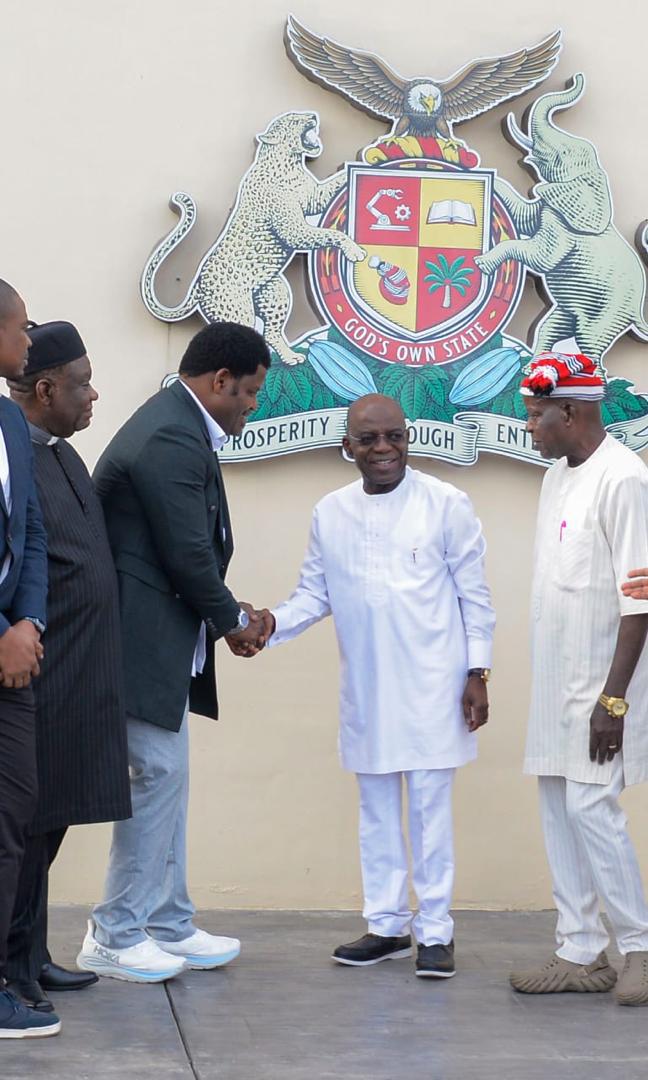
Ambassador Osita Offor, popularly known as “The Ultimate Commander,” is being celebrated today for his vision, entrepreneurial drive, philanthropy, mentorship and commitment to building people and communities.
In a birthday tribute issued on behalf of the Management Team of Aba Commercial Smart City (ACSC), Engr.
Mazen Kalassina and Mr. David Okoro described Offor as a man whose influence extends beyond his business and public engagements to the people and relationships he has built throughout his journey.The tribute noted that the title “The Ultimate Commander” has become closely associated with Offor, reflecting what it described as his determination, courage, resilience and ability to pursue ambitious visions despite challenges.
According to the tribute, Offor is a visionary who sees possibilities beyond present circumstances and continually seeks opportunities to develop businesses, institutions and projects capable of creating lasting impact.
He was also described as a fighter, not because he seeks conflict, but because he refuses to surrender in the face of obstacles.
“Once Ambassador Osita believes in something, he pursues it with extraordinary determination,” the tribute stated, highlighting his persistence in the face of uncertainty, resistance and setbacks.
The birthday message further celebrated Offor as a builder, emphasizing that his contributions go beyond businesses and physical structures to include people, relationships, opportunities and legacies.
His role as a mentor was equally highlighted, with the tribute noting his ability to encourage others to think bigger, work harder and believe in their own potential. It credited him with sharing experience, opening doors and offering guidance to those around him.
Beyond his professional and public life, Offor was celebrated as a father and family man, with the message stressing the importance of responsibility, sacrifice, protection and commitment in defining his character.
His philanthropic activities also received special recognition. The tribute observed that his giving extends beyond financial support to include introductions, opportunities, advice and encouragement.
“True philanthropy is the willingness to look beyond oneself and ask: ‘What can I do to make another person’s journey better?’” the message stated.
As an entrepreneur and businessman, Offor was praised for understanding business as more than buying and selling. The tribute described his entrepreneurial philosophy as one centered on creating value, solving problems, taking calculated risks, generating employment and building sustainable opportunities.
They described him as a friend and a man of relationships, emphasizing his appreciation for trust, loyalty, partnerships and collaboration.
According to the tribute, his leadership philosophy is rooted not in commanding people, but in inspiring them to voluntarily identify with and pursue a worthwhile vision.
“That is why ‘The Ultimate Commander’ is more than a name,” the tribute stated. “It represents the man who commands his vision, his courage, his determination and his capacity to dream.”
They expressed optimism that Offor’s most significant achievements may still lie ahead, pointing to more businesses to build, people to inspire, communities to impact and lives to touch.
The management team of Aba Commercial Smart City also offered prayers for greater wisdom, strength, favour, accomplishments and impact in the years ahead. They prayed for the preservation of his health, the strengthening of his family and continued blessings upon his work.
The tribute saluted Offor in his various roles as businessman, philanthropist, mentor, father, friend, visionary, fighter and builder, while emphasizing that, above all, the celebration was about the man behind the title.
“Happy Birthday, Sir,” the message concluded, expressing the hope that his vision would continue to inspire, his courage would continue to lead and his legacy would continue to speak long after the birthday celebration.
By Dakuku Peterside
There is something reassuring about the ritual of political rivals gathering beneath the same roof and signing their names to a common promise of peace. In a country where elections have too often been accompanied by intimidation, inflammatory rhetoric and violence, the symbolism matters.
It says that political competition need not become warfare; that opponents are adversaries, not enemies; and that the pursuit of power must remain subordinate to the survival of the republic.That is why the National Peace Accord signed in Abuja on August 18, 2026, deserves to be welcomed.
Facilitated by the National Peace Committee in partnership with The Kukah Centre, it commits political actors to peaceful, credible, free, and fair elections, rejects violence and hate speech, and calls for impartiality from the electoral commission and professionalism from security agencies.But Nigeria must be careful not to mistake a declaration of good intentions for an architecture of credible elections.
A peace accord can moderate political behaviour, establish a moral baseline and give citizens a standard by which to judge candidates. What it cannot do is neutralise structural inequalities embedded in the electoral environment.
The greatest threat to the next general election may be quieter than spectacular fraud or election-day violence: the gradual tilting of the political field before voters reach polling units.
An opposition rally denied access to a stadium. A campaign permit delayed without explanation. Billboard charges raised beyond reasonable reach. State-owned media giving disproportionate attention to incumbents. Government events becoming indistinguishable from campaign appearances. Security regulations applied rigorously to one political group and indulgently to another.
Each incident may appear administrative. Taken together, they can alter the character of an election.
This is the danger of electoral tilting: democracy may preserve the rituals of competition while weakening substantive equality. Candidates remain on the ballot, campaigns continue and votes are counted, yet the conditions under which those votes are sought may already be distorted.
The lesson is uncomfortable but essential: elections are not made fair on Election Day alone.
It begins with who may campaign freely, access public facilities, receive reasonable media exposure and advertise without arbitrary obstruction—and whether the government respects the boundary between public office and partisan advantage.
Once participation becomes dependent on administrative discretion, democracy risks becoming a permissioned economy in which those who control the state also influence the conditions under which they are challenged.
A level ballot cannot fully compensate for an uneven field.
The same concern applies to the institution entrusted with managing elections. INEC cannot be expected to command public confidence merely because the Constitution describes it as independent. Independence must be visible in its finances, operations, technology, staffing, and decision-making.
Financial dependence creates vulnerability. Delayed funding can become delayed logistics. Delayed logistics can become disenfranchisement. Administrative weakness may achieve what crude manipulation once required.
The legal framework matters just as much.
Nigeria entered the post-2023 electoral cycle with unresolved questions about electronic transmission, collation and the evidentiary burden on petitioners challenging disputed outcomes. Where the law permits uncertainty between polling-unit results, electronic records and subsequent collation, mistrust grows.
When petitions are extraordinarily difficult to prove because litigants must assemble vast volumes of polling-unit documents and technological evidence, citizens may wonder whether legal remedies are genuinely accessible or merely theoretical.
This is why electoral reform cannot stop at purchasing machines.
Technology can strengthen elections, but technology does not abolish politics.
BVAS and IReV are important efforts to improve accreditation and results transparency. Yet technology is only as credible as the rules, safeguards and audit trails surrounding it. Systems can fail, networks disappear and records be contested. Disinformation can exploit technical uncertainty faster than official explanations can restore confidence.
Artificial intelligence has lowered the cost of convincing falsehoods. Deepfakes, fabricated audio, manipulated images and coordinated disinformation can sweep through political communities before fact-checkers or regulators respond. Digital campaigns can seek not merely to persuade voters, but to confuse, provoke or convince them that voting is pointless.
In such an environment, transparency is no longer an administrative virtue. It is a democratic necessity.
Election technology must therefore be resilient, independently auditable and supported by clear legal rules. Procedures for electronic transmission should not remain open to endless interpretation. Technology must reduce uncertainty, not become another arena in which uncertainty is weaponised.
Security agencies face an equally important test.
The Peace Accord properly asks candidates to restrain their supporters. But restraint loses moral force if enforcement itself becomes selective.
When one rally receives protection while another faces disruption; when organisers fear harassment; or when journalists, donors and campaign workers believe association with certain candidates carries personal risk, democratic space contracts.
A citizen who fears attending a rally may soon fear displaying a poster. Communities may stop reporting intimidation; volunteers and donors may withdraw; journalists may self-censor. Participation narrows without any formal suspension of democratic rights.
That is how democracies can weaken while their institutions remain outwardly intact.
Security neutrality must therefore be enforceable, not ceremonial. Rules of engagement during campaigns and elections should be publicly known. Complaints must be independently monitored. Violations should attract consequences. No commander should be permitted to convert state coercive power into partisan advantage.
Then there is the more familiar problem of incumbency.
Office naturally confers visibility, access to information, public recognition and a record to showcase. These advantages become dangerous when the line between governing and campaigning disappears.
Public advertising may begin to resemble partisan propaganda. Government programmes may be launched to maximise electoral impact. Official travel can become political mobilisation. Public procurement and social interventions may be influenced by campaign timing. State infrastructure can quietly become campaign infrastructure.
The answer is not to freeze government during election season, but to separate legitimate governance from partisan exploitation.
Nigeria needs an enforceable incumbency code because public office must never confer ownership of public resources.
The same discipline is required in political speech.
Hate speech is often dismissed as the excess of heated campaigning. That is a mistake. In a country where political identities frequently intersect with ethnicity, religion and region, reckless rhetoric can turn ordinary political competition into an existential confrontation.
Once voters are persuaded that an election is not merely about policies or competence but about the survival of their community, electoral defeat becomes harder to accept, and political compromise becomes more difficult.
The Peace Accord condemns hate speech. But presidential signatures cannot control thousands of candidates, party officials, influencers, and supporters across the federation. Its principles must therefore travel downwards—from national party leadership to states, local governments, wards, and communities.
Political parties must discipline their own members. Technology companies must take coordinated manipulation seriously. Civil society, religious institutions, traditional leaders, youth organisations, and the media must strengthen early-warning mechanisms to identify and defuse dangerous rhetoric before it acquires a life of its own.
Failure will resonate far beyond the declaration of a winner.
Repeatedly tilted elections deepen regional suspicion, increase alienation and weaken attachment to constitutional processes. Electoral uncertainty raises political risk, discourages investment and complicates economic planning. A society that repeatedly doubts its elections may eventually doubt democracy itself.
Nigeria’s democratic standing has never depended simply on its capacity to organise elections. As one of Africa’s largest democracies, it carries a heavier responsibility: to demonstrate that political competition can be meaningful, that rules can constrain power, and that electoral legitimacy can survive intense rivalry.
The months ahead should therefore be devoted not merely to election preparation but to building an architecture of electoral fairness.
INEC should make preparedness more visible through transparent reporting on logistics, technology, and election-related compliance. Governments should guarantee equal access to public facilities and state-owned media while separating official functions from partisan campaigning.
Security agencies should publish neutrality protocols and submit election-related conduct to credible oversight. Political parties should appoint compliance officers and accept responsibility for supporters who violate agreed standards. Civil society and the media should systematically monitor venue access, airtime, security conduct, campaign financing, and digital integrity, and publish regular election-readiness scorecards for citizens.
None of this diminishes the Peace Accord.
It gives it meaning.
Democracies need rituals. Handshakes matter. Signatures matter. Public promises matter. They express the standards a society expects its leaders to observe.
But the deeper lesson of Nigerian electoral history is that peace cannot rest on goodwill alone.
A peaceful election is not necessarily a credible election. There may be no gunshots at polling stations and yet citizens may still conclude that the field was unfair. Ballots may be accurately counted, and yet confidence may remain weak because the conditions preceding the vote were unequal.
Electoral legitimacy is cumulative.
It is built from the confidence that candidates were free to compete, citizens were free to choose, institutions acted independently, security agencies remained neutral, technology worked transparently, and the same rules applied regardless of who held power.
That is the real test before Nigeria in 2027.
Dakuku Peterside is the author of Leading in a Storm and Beneath the Surface.




Niger FRSC Records 234 Crashes, 110 Deaths in Seven Months
ShareFrom Dan Amasingha, Minna Ten people have been killed and several others injured in a fatal road crash involving a...

Fuel Subsidy War Deepens as Presidency, Atiku Clash Again over Policy
ShareBy David Torough, Abuja The political battle over Nigeria’s petrol subsidy regime has intensified, with the Presidency and former Vice-President...

The Man Behind ‘The Ultimate Commander’: A Birthday Tribute to Ambassador Osita Offor
ShareBy David Torough, Abuja Ambassador Osita Offor, popularly known as “The Ultimate Commander,” is being celebrated today for his vision,...
Peace on Paper, Peril in Practice: Why 2027’s Elections Remain at Risk
ShareBy Dakuku Peterside There is something reassuring about the ritual of political rivals gathering beneath the same roof and signing...


2027: Bawa Urges APC Leaders, Supporters on Unity
ShareBy Tambaya Julius, Abuja The Senior Special Assistant (SSA) to the Nasarawa State Governor on Greater Karu Development Control Agency...
NCS Lilypond Export Command Gets New Acting CAC
ShareThe Nigeria Customs Service (NCS), Lilypond Export Command, has appointed Deputy Comptroller Olusola Salako as its Acting Customs Area Controller...

Oyebanji Reappoints Retired Ekiti Accountant-General
ShareEkiti State Governor, Biodun Oyebanji, on Tuesday approved the appointment of Titilayo Olayinka as the new Accountant General of the...

Eid-el-Maulud: Tinubu, Govs, Others Preach Peace, Compassion, Unity
ShareBy Laide Akinboade, Abuja President Bola Tinubu, state governors, traditional rulers and religious leaders have called on Nigerians to draw...

Niger Mosque Massacre: Tinubu Orders Rescue of over 60 Abductees
ShareFrom Dan Amasingha, Minna President Bola Ahmed Tinubu has ordered the Armed Forces, the Nigeria Police Force, the Department of...


JAMB Breaks New Ground, Allows Home Upload of O’Level Results
ShareCandidates seeking admission into Nigerian tertiary institutions can now upload and verify their O’Level results from the comfort of their...